
Our readers keep the lights on and the weekend projects moving. As an Amazon Associate, I earn from qualifying purchases.
The typical work boot forces your toes into a cramped, triangular wedge, weakening foot muscles and causing fatigue by the end of a shift. A genuine barefoot shoe for work flips that design, offering a wide toe box and a flat, zero-drop sole so your feet can function naturally, even on concrete floors for ten hours straight.
I’m Rikta — the co-founder and writer behind FitlyFast. I’ve spent countless hours analyzing sole thickness measurements, toe-box volume ratings, and safety-toe compliance data to separate real barefoot work footwear from stiff boots that just look the part.
Whether you stand on hard floors, walk a warehouse, or work a construction site, choosing the right minimalist footwear makes a measurable difference. This guide breaks down the best barefoot shoes for work so you can pick a pair that protects your feet without padding them into submission.
How To Choose The Best Barefoot Shoes For Work
Finding a pair that fits your job site, your foot shape, and your transition stage takes more than grabbing the cheapest minimalist sneaker. The following factors separate a boot that lasts a season from one that supports your feet for years.
Toe-Box Volume and Shape
The whole point of barefoot shoes is toe freedom. Look for a foot-shaped last that doesn’t taper at the toes. Your toes should be able to splay flat when you stand — not be stacked on top of each other. Boots with a high-volume toe box allow for thicker socks in cold environments without compressing your toes against the side wall.
Sole Stack Height and Flexibility
A genuine barefoot work shoe keeps the stack height under 15mm to allow proper ground feedback. The sole must also be flexible enough to twist and bend with your foot. A thick, rigid slab defeats the purpose of natural movement, even if it has a zero-drop measurement. Verify that the outsole has a non-marking, slip-resistant compound if you work on slick surfaces.
Safety Certifications (Steel Toe, Composite, Slip Rating)
Many worksites require protective footwear. Some barefoot-compatible boots now offer steel or composite safety toes that comply with ASTM standards without adding a heavy platform. Check the label for ASTM F2413-18 ratings if you need impact protection. Slip-resistance ratings (ASTM F3445 or Mark II) matter for wet or oily floors and are often separate from the safety toe certification.
Transition Period and Foot Strength
If you have worn raised-heel cushioned boots for years, your foot muscles may need several weeks to adjust. Start by wearing your barefoot work shoes for short shifts, then build up. Expect some calf soreness as your Achilles tendon adapts to the zero-drop position. This discomfort signals that your feet are strengthening, not that the shoe is wrong for you.
Quick Comparison
On smaller screens, swipe sideways to see the full table.
| Model | Category | Best For | Key Spec | Amazon |
|---|---|---|---|---|
| Jim Green African Ranger | Barefoot Boot | All-day wear & light hiking | Zero-drop; full-grain leather; wide toe box | Amazon |
| Blundstone Steel Toe | Chelsea Work Boot | Farm / outdoor work | Steel toe; lightweight; elastic side | Amazon |
| Belleville Mini-Mil TR102 | Tactical Boot | EMS / military / security | Zero-drop; slip-resistant; breathable | Amazon |
| Timberland PRO Nashoba | Composite Toe Boot | Construction / heavy trades | Composite safety toe; slip-on; waterproof | Amazon |
| Xero HFS II | Training Shoe | Walking / casual workplace | Zero-drop; thin flexible sole; breathable | Amazon |
| Xero Prio Neo | Training Shoe | Transition from regular shoes | Zero-drop; wide toe box; durable upper | Amazon |
| Vivobarefoot Primus Lite 3.5 | Training Shoe | Versatile daily & gym | Zero-drop; puncture-resistant sole; vegan | Amazon |
| Altra Lone Peak 8 | Trail Shoe | Walking / uneven terrain | Zero-drop; wide toe box; grippy outsole | Amazon |
| Carhartt Chelsea Boot | Work Boot | Standing on hard floors | Steel toe; slip-resistant; wedge outsole | Amazon |
In‑Depth Reviews
1. Jim Green African Ranger

The Jim Green African Ranger boot is a rare beast: a true zero-drop, barefoot-constructed work boot made from thick full-grain leather that actually breathes and molds to your foot over time. The toe box is genuinely wide and high-volume, allowing your toes to splay naturally even with a heavy wool sock. Unlike many minimalist boots that skimp on material quality, this one uses a durable leather interior that resists odor and a soft outsole that delivers excellent ground feel on gravel or concrete.
The break-in period is longer than synthetic trainers — several users report hot spots and minor blistering for the first couple of weeks. The lacing system is functional but basic, and the boot is not 100% zero-drop by some barefoot purist standards, sitting slightly above true flat. The unfinished leather also means you must oil it regularly to keep it water-resistant and prevent drying and cracking, especially if you wear it in wet conditions.
For the price, you get a boot that can handle a full day of standing and walking on uneven ground, then transition seamlessly to a casual evening out without looking like a tactical boot. If you need a safety toe certification, this boot does not provide one — it prioritizes foot health over impact protection. It is ideal for warehouse, retail, maintenance, or light construction roles where dropped-object risks are low.
Why it’s great
- Generous toe box that eliminates toe crowding even after hours on your feet
- Superior leather quality that molds to your foot and resists odor naturally
Good to know
- Significant break-in period with possible blistering for the first two weeks
- No safety toe rating; not suitable for jobs requiring OSHA-compliant protective footwear
2. Blundstone Steel Toe Chelsea Boot
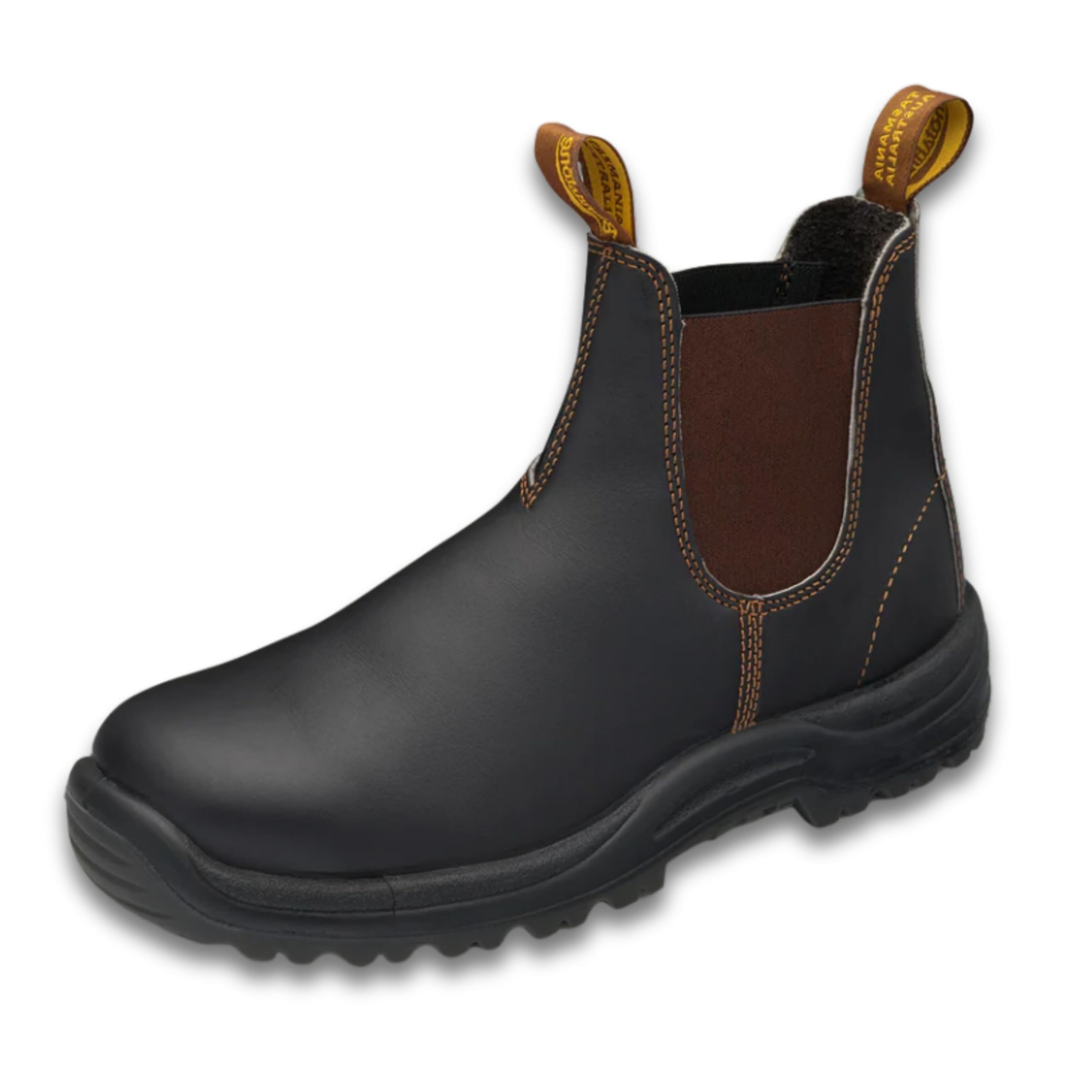
Blundstone’s iconic Chelsea silhouette meets workplace protection without the heavy, clunky feel. The elastic side panel allows quick on-off convenience, and the sole, while not fully barefoot in the true minimalist sense, is low-profile enough to give decent ground feedback without the rigid plank feel of traditional steel-toe boots.
The outsole is the weak point — it wears down within a year and a half in demanding environments like farming or heavy construction, and it can become slippery on oily surfaces. The leather scuffs easily, which is typical for work boots, but some users felt the scuffing was excessive given the price tier. You should also apply wax or conditioner to keep the leather supple in damp environments.
For anyone who needs a safety-rated steel toe boot but still wants a natural toe splay and low heel-to-toe drop, the Blundstone is a solid compromise. It is not a true barefoot shoe due to its slight internal shaping and thicker-than-ideal sole, but it offers the closest experience to barefoot among mainstream safety boots. Ideal for warehouse, farm work, or any job requiring an ASTM-rated steel toe with above-average daily comfort.
Why it’s great
- Comfortable right out of the box with minimal break-in needed for a steel toe boot
- Elastic side panel makes putting on and taking off fast during busy shifts
Good to know
- Sole wears relatively quickly in heavy use, needing replacement after a year or so
- Slippery on oily or greasy surfaces, so not ideal for mechanic environments
3. Belleville Mini-Mil TR102

The Belleville Mini-Mil TR102 is one of the few boots built explicitly for tactical users who demand zero-drop geometry and a wide toe box. It has a surprisingly low stack height that allows precise foot placement on technical terrain, even when carrying a heavy load. The outsole provides solid grip on wet floors and loose rock, which makes it popular among EMS personnel and security officers who spend 12-hour shifts on their feet.
The upper quality has been a point of contention — some users report the leather coating scuffs and flakes within a month, and the lace loops can dig into the top of the foot if the fit is not perfect. There is also no rubber toe wrap, which limits kneeling protection. The sizing is tricky; many users need to go down a full size and opt for the wide version. It is not Gore-Tex, despite some listing claims, so waterproofing is limited.
If you need a true minimalist boot that can handle a vest and a long shift on mixed surfaces, the TR102 delivers on movement and ground feel. It is less cushioned than any other boot on this list, so transition carefully if you are coming from heavily padded footwear. Best for law enforcement, emergency medical services, and security roles where stealthy movement and foot dexterity matter more than pure impact protection.
Why it’s great
- Excellent ground feel and stability for tactical movements with a heavy pack
- Lightweight enough for long walking shifts without wearing down foot muscles
Good to know
- Leather upper can scuff and flake faster than expected for the price range
- Lacing loops may press into the top of your foot if you wear them snug
4. Timberland PRO Nashoba

The Timberland PRO Nashoba is a slip-on composite safety toe boot built for construction and industrial environments where you need quick entry and certified toe protection. It uses an internal footbed system designed for all-day standing comfort, and the outsole is rated slip-resistant, which makes it viable for wet or slick job sites. The composite toe is lighter than steel, reducing overall boot weight and helping you stay mobile during long days.
Leather quality is a split issue: many users report satisfying durability after a year of daily use on construction sites, while a smaller group experienced chunks of leather peeling off after light work. The boot is hard to pull on initially — you may need a boot jack or a deliberate effort to get it seated properly. The break-in period takes a few days, and some users noted heel blisters before the leather softened.
If your job requires an ASTM-rated safety toe but you want the convenience of a Chelsea-style slip-on, the Nashoba is one of the few options built with composite rather than steel, reducing metal detector issues. It is not a true barefoot boot by any measure — it has internal arch support and a moderate heel-to-toe drop — but for workers who cannot wear minimalist footwear legally but still want lower weight and decent foot room, it represents a practical middle ground.
Why it’s great
- Composite safety toe provides impact protection without adding excessive weight
- Slip-resistant outsole instills confidence on wet or oily surfaces
Good to know
- Can be difficult to get on and off; a boot jack makes a big difference
- Leather quality has been inconsistent, with some pairs showing early peeling
5. Xero Shoes HFS II

The Xero HFS II is a lightweight, zero-drop shoe that feels closer to a thin sock with a protective sole than to a traditional shoe. It is extremely flexible, packs flat for travel, and offers solid ventilation for warm-weather work environments. The outsole has adequate grip for pavement and dry trails, making it a viable option for jobs that involve walking between buildings or outdoor inspection routes.
The sole is noticeably stiffer than the previous version, which improves durability for all-day walking but reduces the ground feel that barefoot purists value. Sizing runs small; most users recommend going up half a size from your standard measurement. Some batches from the FW25 production run showed catastrophic outsole failure within months, so you should confirm the manufacturing date before purchasing. The upper fabric also shows wear quickly if you walk through abrasive terrain or brush.
For office workers, retail staff, or anyone whose job involves standing and moving on clean, dry surfaces, the HFS II offers great foot muscle activation without the bulk of a boot. It has no safety rating and offers minimal cold-weather protection. It excels as a barefoot walking shoe for non-industrial work settings where appearance and breathability rank high.
Why it’s great
- Extremely flexible and breathable for warm-weather work environments
- Thin sole provides excellent proprioceptive feedback for better balance
Good to know
- Outsole durability is inconsistent; some batches have shown early failure
- Runs small — order half a size up from your usual shoe size
6. Xero Shoes Prio Neo
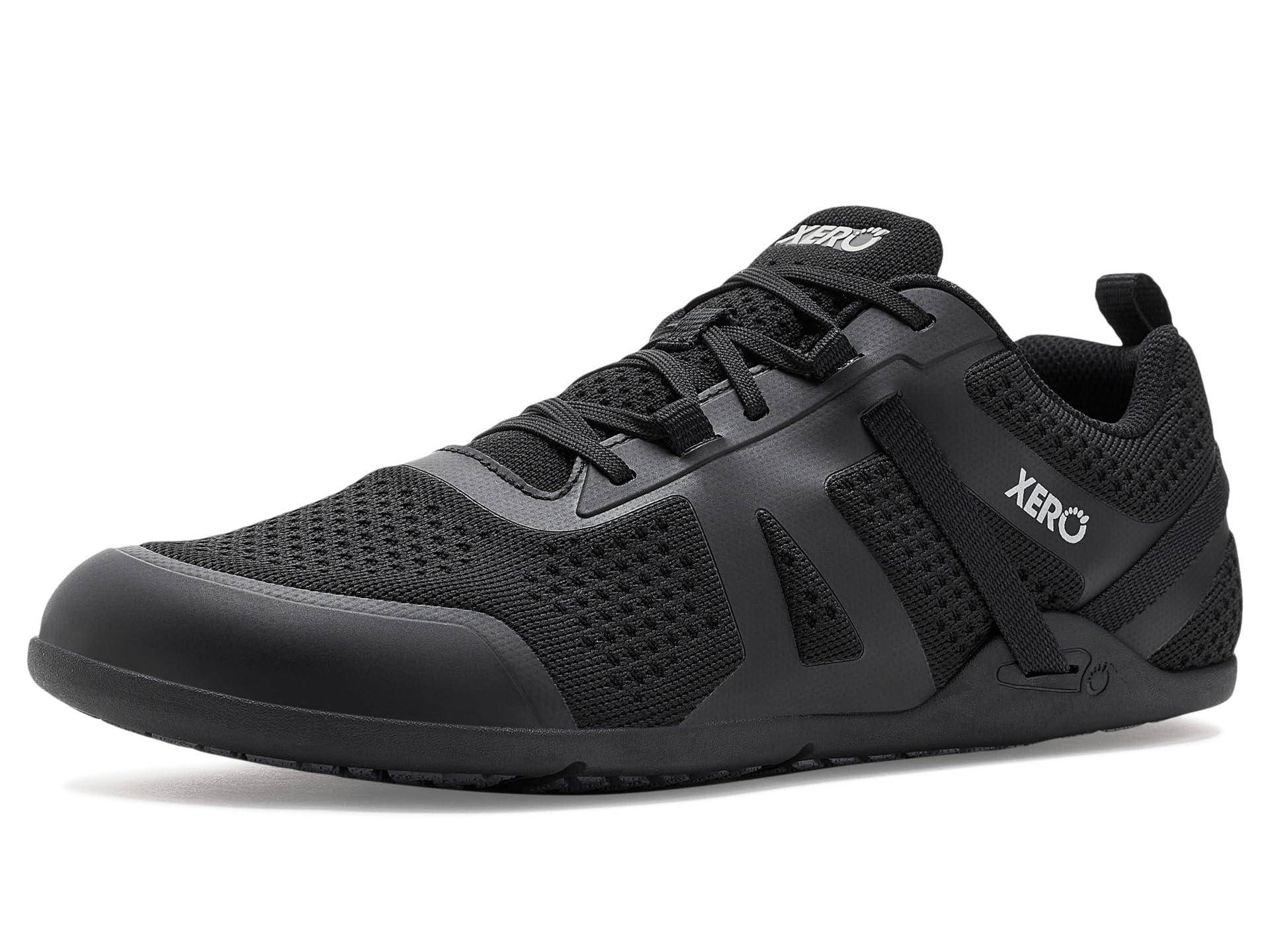
The Xero Prio Neo is designed as a hybrid training shoe that works well for standing and walking during work hours, especially for those new to barefoot footwear. Its wide toe box gives ample space for toe splay, and the upper is built from a durable, breathable mesh that holds up well to daily friction. The sole is thin and flexible, providing enough ground feel for you to notice how your foot lands while still offering basic protection from small debris.
Some users report a period of foot soreness during the first two weeks as the foot muscles engage in ways they are not used to. This is a sign of adaptation, not a design flaw. The light gray color option shows dirt easily and requires hand washing to maintain appearance. The Prio Neo is not a work boot and has no safety toe or puncture-resistant plate, so it is best for light industrial, retail, or office settings where dropped objects are not a threat.
Compared to cheaper minimalist options, the build quality is noticeably better, with reinforced stitching and a sole that resists delamination through hundreds of miles. If you are looking for an affordable entry point into barefoot work footwear without risking a large investment, the Prio Neo is a smart choice that will last through the transition period and beyond for daily casual work use.
Why it’s great
- Reinforced construction with better stitching than budget barefoot alternatives
- Breathable upper prevents sweat buildup during full-day wear
Good to know
- Light gray color stains easily and requires gentle hand cleaning
- Not suitable for jobs requiring puncture resistance or safety toe certification
7. Vivobarefoot Primus Lite 3.5

The Vivobarefoot Primus Lite 3.5 is a staple in the minimalist community, known for its lightweight build, zero-drop platform, and a proprietary thin sole that still blocks sharp objects from poking through. The seamless upper construction reduces friction points, making it comfortable to wear with or without socks, and the wide toe box accommodates a wide range of foot shapes without pinching the pinky toe.
The white colorway is a magnet for dirt and stains, and the synthetic fabric does not respond well to aggressive cleaning methods — stains tend to set in permanently. Sizing is tricky: Vivobarefoot recommends measuring your foot length in millimeters and matching it to their chart precisely. Many users size down significantly compared to their regular sneaker size. The lack of internal lining means the shoe can develop odor if worn daily without adequate air drying.
For a modern, low-profile shoe that works in a casual office, a gym, or a standing desk environment, the Primus Lite 3.5 delivers consistent ground feel and foot health benefits. It does not offer any safety toe or slip-resistant rating, so it should stay out of construction zones. If you value a sleek silhouette and are willing to baby the cleaning, this is the most refined barefoot shoe on the list.
Why it’s great
- Smooth, seamless upper prevents rubbing and hot spots even sockless
- Puncture-resistant sole offers reassurance against small debris on paths
Good to know
- White fabric stains permanently and is difficult to keep clean
- Sizing is non-standard; carefully measure your foot length before ordering
8. Altra Lone Peak 8
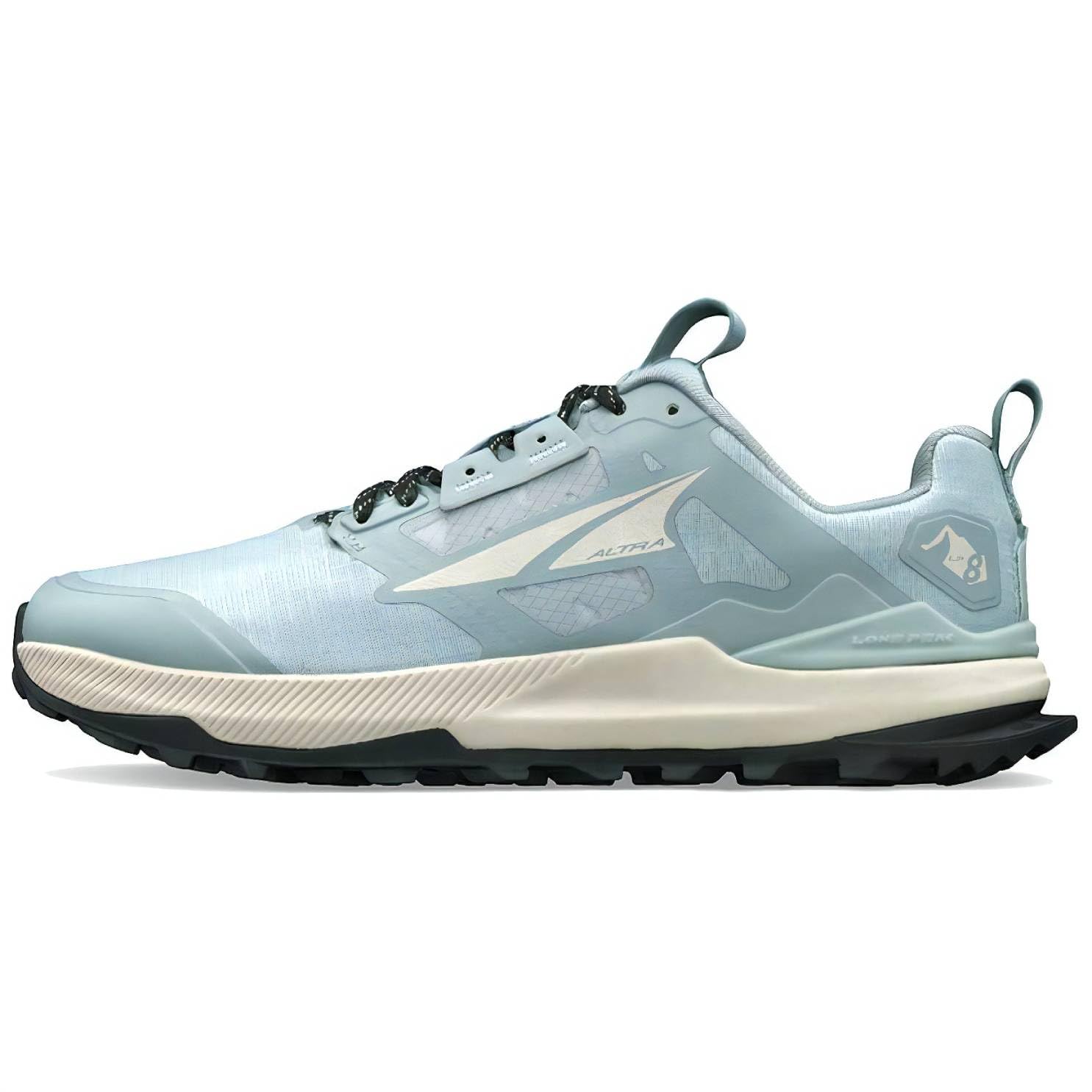
The Altra Lone Peak 8 is primarily a trail running shoe, but its zero-drop platform and famously wide toe box make it a popular choice for standing work environments, especially in outdoor or agricultural settings. The outsole uses a sticky rubber compound that grips loose dirt, wet grass, and uneven terrain better than any other shoe on this list. The toe guard protects the upper from abrasion, and the shoe is compatible with gaiters for dusty environments.
The stack height is slightly higher than true barefoot shoes — around 25mm — which provides some cushion without introducing a heel-to-toe drop. This makes it a gentler transition for people coming from traditional work boots. Some users report that the traction can wear down faster than expected on pavement, and the upper mesh is prone to tearing if you brush against rough surfaces regularly. It also lacks any kind of safety toe or electrical hazard rating.
If your work involves moving over mixed terrain — a landscape contractor, a park ranger, or a wildlife technician — the Lone Peak 8 offers the foot health benefits of a wide toe box with the traction you need for uneven ground. It is not a boot, so it provides no ankle support, but that is consistent with the barefoot philosophy of letting your ankle muscles do the stabilizing work.
Why it’s great
- Excellent traction on loose and uneven terrain, outperforming most minimalist shoes
- Roomy toe box with a toe guard that protects against brush and rocks
Good to know
- Thicker sole reduces ground feel compared to true barefoot designs
- Upper mesh can tear if rubbed against abrasive surfaces regularly
9. Carhartt Chelsea Boot

The Carhartt Chelsea Boot in the wedge-style outsole version is a classic work boot that prioritizes comfort for standing on hard surfaces all day. It has a steel toe cap for safety compliance, and the slip-on design with elastic panels makes it easy to remove during breaks. The wedge outsole distributes your weight across a flat surface, reducing pressure points on the soles of your feet compared to a lugged boot.
This boot is not a barefoot shoe — it has a slight heel rise, internal arch support, and a stiffer midsole that restricts natural foot movement. Users report that the leather scratches easily, and the boot may feel moderately comfortable rather than exceptional in terms of cushioning. It is best suited for workers who need a safety toe but cannot wear genuine minimalist footwear due to workplace policy, and who want a more natural-feeling option than a standard heavy work boot.
If your employer requires steel toes but you are interested in the benefits of a wide toe box and lower drop, the Carhartt Chelsea is a durable compromise at a reasonable price point. It will not strengthen your foot muscles like a zero-drop shoe, but it will reduce the fatigue associated with a traditional high-heel construction boot. For workers in manufacturing, distribution centers, or maintenance roles, it offers a safer step toward natural foot mechanics without violating safety codes.
Why it’s great
- Wedge outsole spreads pressure evenly for long periods of standing on concrete
- Durable Carhartt construction with a steel toe for OSHA-compliant job sites
Good to know
- Not a true barefoot shoe; has a slight heel lift and internal arch support
- Leather scuffs easily, and the upper may show wear quickly in rough conditions
FAQ
Can I wear barefoot shoes on a construction site with safety requirements?
How long does it take to adjust to zero-drop work boots?
Do barefoot work shoes help with plantar fasciitis?
What is the best sole material for barefoot work boots in cold climates?
Can I wear barefoot shoes with orthotics?
Final Thoughts: The Verdict
For most users, the barefoot shoes for work winner is the Jim Green African Ranger because it pairs a genuinely wide toe box with durable full-grain leather and a zero-drop platform that supports foot health all day without sacrificing style. If you need a certified safety toe with a more natural fit, the Blundstone Steel Toe is your best compromise. And for non-industrial work environments where low weight and breathability are top priorities, the Xero Prio Neo delivers the most accessible entry into barefoot work footwear at a fair price.