
Our readers keep the lights on and the weekend projects moving. As an Amazon Associate, I earn from qualifying purchases.
The promise of a subwoofer is simple: it should make your music feel alive and your movies rumble. The reality of shopping for a budget model is that many units produce a muddy, indistinct hum instead of tight, controlled low-end. You need a subwoofer that delivers accurate, chest-thumping bass without vibrating your wallet apart, and finding that perfect balance of value and performance requires digging past vague specs and marketing hype.
I’m Rikta — the co-founder and writer behind FitlyFast. My approach to audio gear is rooted in hours of comparing amplifier topologies, analyzing driver excursion limits, and cross-referencing real user feedback with manufacturer claims to identify the true standouts in the sub- market.
I assembled this guide to separate the performers from the pretenders. After extensive research, these picks represent the most compelling options for anyone looking for a bargain subwoofer that doesn’t compromise the audio experience.
How To Choose The Best Bargain Subwoofer
Finding a powerful, accurate subwoofer without spending a fortune requires focusing on the right engineering principles. A low price often means corners were cut, so you need to know which specs are non-negotiable and which are smoke and mirrors. Here are the critical factors that separate a great value from a waste of money.
Amplifier Power: RMS is the Only Truth
Manufacturers love to flaunt “Peak Power” or “PMPO” wattage, which is a meaningless number for sustained performance. The only spec that matters is RMS (Root Mean Square), which measures continuous power output. A subwoofer with 100W RMS is significantly more capable of delivering clean, undistorted bass than a unit claiming 400W Peak. In the bargain category, look for models with at least 50-75W RMS for small rooms and 100-200W RMS for larger spaces.
Driver Size and Enclosure Material
While a larger 12-inch driver can move more air, a well-engineered 8-inch or 10-inch driver in a stiff, braced cabinet can sound tighter and more accurate. The enclosure material is just as critical: MDF (Medium-Density Fiberboard) is the industry standard because its density resists resonance and vibration, which causes distortion. Cheaper particleboard or plastic enclosures will buzz and color the sound, negating any benefit from the driver itself. Always prioritize a solid MDF cabinet.
Connectivity and Controls Matter
A truly versatile bargain subwoofer must offer more than just a single RCA input. Look for LFE (Low-Frequency Effects) input for home theater receivers, speaker-level inputs for older stereo amplifiers, and a variable crossover control to blend the sub’s output with your main speakers. A phase switch (0°/180°) is also crucial for correcting phase cancellation in your specific room, which can make your bass vanish entirely. Auto-on functionality is a convenience that saves energy and extends the unit’s life.
Quick Comparison
On smaller screens, swipe sideways to see the full table.
| Model | Category | Best For | Key Spec | Amazon |
|---|---|---|---|---|
| Dayton Audio CS1200 | Premium Value | Clean, Deep 26Hz Bass | 12” driver, 200W RMS | Amazon |
| PreSonus Eris Sub 8BT | Studio & Desktop | Accurate Studio Monitoring | 8” driver, 30Hz low-end | Amazon |
| Rockville Rock Shaker 12 | Room-Shaking | Extreme Home Theater Output | 12” driver, 800W Peak | Amazon |
| Fluance DB10 | Musical & Tight | Music and Movie Balance | 10” long-throw driver | Amazon |
| Edifier T5s | Desktop Companion | Near-Field Audio Integration | 8” driver, 35Hz extension | Amazon |
| Dayton Audio CS800 | Compact Power | Small Room, Big Performance | 8” driver, 150W RMS | Amazon |
| Rockville Rock Shaker 10 | Mid-Range Power | Chest-Thumping Home Theater | 10” driver, 300W RMS | Amazon |
| Bestisan SW65C | Entry-Level | Simple Bass for Small Spaces | 6.5” down-firing driver | Amazon |
| Bestisan SW65D | Budget Pick | Minimum Outlay for Bass | 6.5” side-firing driver | Amazon |
In‑Depth Reviews
1. Dayton Audio Classic CS1200
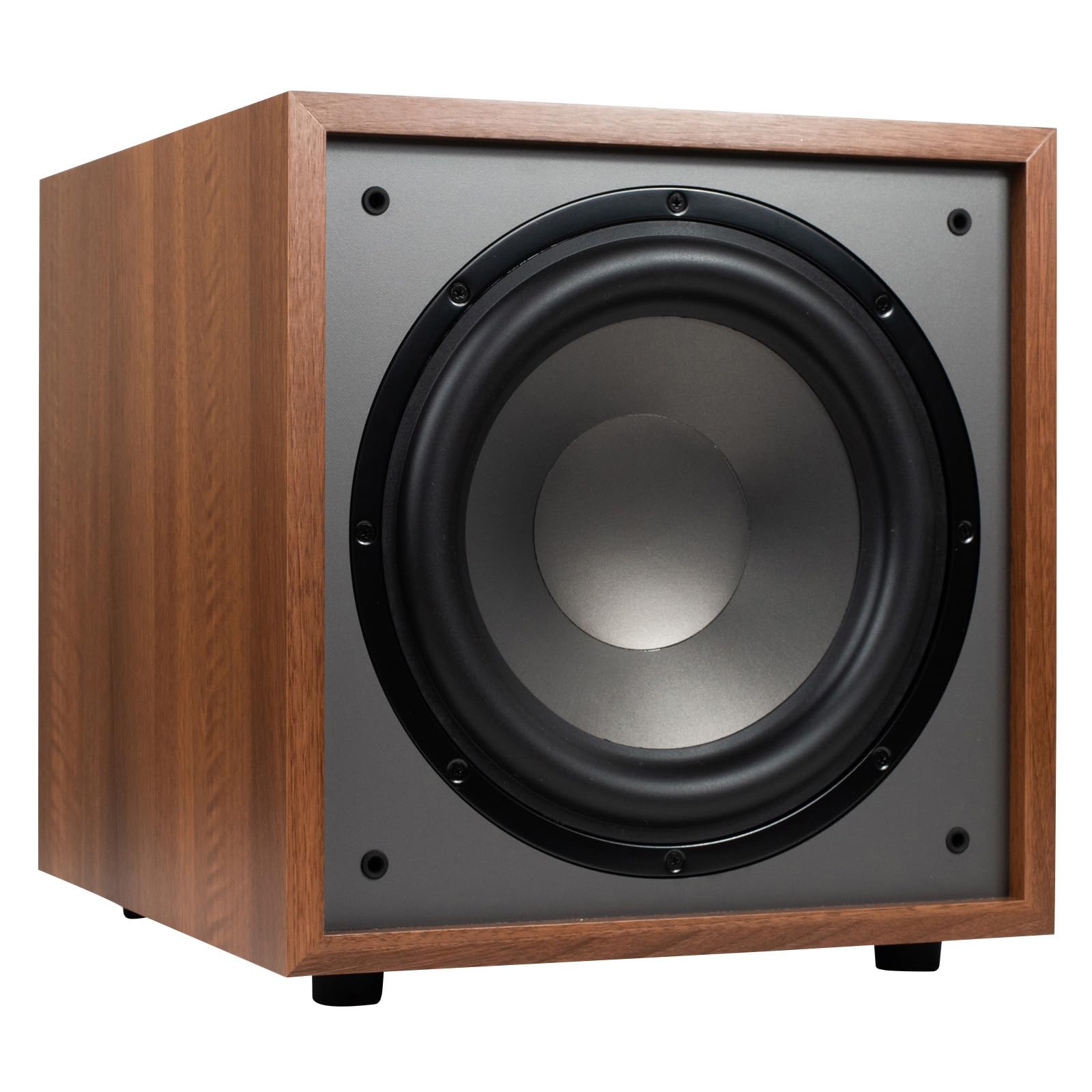
The Dayton Audio CS1200 redefines what a bargain subwoofer can deliver. Its 12-inch driver, powered by a 200W RMS Class-D amplifier, produces deep, authoritative bass that extends down to a remarkable 26Hz. This is not a one-note thumper; the rigid, braced MDF cabinet ensures that every low-frequency note is tight and controlled, free from the cabinet resonance that plagues budget competition.
Connectivity is generous for the price point, featuring stereo RCA, LFE, and speaker-level inputs for easy integration with any system, from a basic two-channel stereo to a full 5.1 receiver. The auto-on feature works reliably, and the simple controls make dialing in the perfect blend effortless. The included wood-grain finish and swappable grille allow it to blend into a living room as easily as a dedicated media space.
Backed by an industry-leading 5-year warranty, the CS1200 is a long-term investment. While it does not include Bluetooth, its core mission of delivering clean, deep, and powerful bass for music and movies is executed flawlessly. For anyone wanting a single subwoofer that can handle a medium-to-large room with authority and accuracy, this is the clear champion.
Why it’s great
- Exceptional 26Hz low-end extension for music and movies.
- Solid MDF cabinet eliminates distortion at high volumes.
- 5-year warranty provides unbeatable peace of mind.
Good to know
- No wireless connectivity; wired connection only.
- Large cabinet may dominate a very small room.
2. PreSonus Eris Sub 8BT

The PreSonus Eris Sub 8BT bridges the gap between pro-audio accuracy and home listening convenience. Its 8-inch woven-composite driver is powered by a 100W RMS amplifier and reaches down to a tactile 30Hz. More importantly, it is designed for neutrality, providing tight, clean bass that is ideal for critical music production, mixing, or simply hearing your music as the artist intended.
Its feature set is remarkably comprehensive for its price. You get balanced 1/4-inch TRS inputs for studio gear, unbalanced RCA inputs, a front-panel aux input, and a headphone output. The variable low-pass filter and high-pass filter (crossover) allow for perfect integration with studio monitors like the Eris 3.5 or 5. The inclusion of Bluetooth 5.0 is a genuine bonus for casual listening from a phone or laptop.
For a desktop studio or a critical listening setup, the Sub 8BT excels due to its accuracy and control. It lacks the sheer output of a 12-inch home theater sub, but it delivers far superior precision and detail. The power saver mode and solid build quality make it a reliable workhorse for daily use, all wrapped in a package that performs way above its asking price.
Why it’s great
- Accurate, uncolored bass perfect for studio monitoring.
- Flexible inputs including Bluetooth and balanced TRS.
- Impressive 30Hz low-end extension for an 8-inch driver.
Good to know
- Not designed for maximum home theater room-shaking output.
- Bluetooth introduces slight latency, unsuitable for production.
3. Rockville Rock Shaker 12

If your primary goal is to make your couch vibrate during action movies, the Rockville Rock Shaker 12 is your weapon of choice. This subwoofer uses a massive 12-inch driver driven by a Class-D amplifier, boasting an 800-watt peak rating that translates to seriously potent low-end impact. It is built to fill large rooms with deep, physical bass without distortion at high levels.
The controls are straightforward, with adjustable crossover (50-150Hz), volume, and a phase switch to help battle room modes. Connectivity includes RCA and speaker-level inputs, ensuring compatibility with almost any home theater receiver or stereo amplifier. The MDF cabinet is solidly built for the price, with a flared port that reduces chuffing noise at high output.
Where the Rock Shaker 12 truly shines is pure output per dollar. It will easily outperform smaller subs in raw volume and depth. Be aware that some units may have minor cosmetic imperfections on the vinyl laminate, and the cabinet can resonate at specific frequencies. However, for dedicated home theater duty where SPL matters most, this sub is a phenomenal value.
Why it’s great
- Massive low-end output for room-shaking home theater.
- Excellent value for a 12-inch powered subwoofer.
- Variable crossover and phase for basic room integration.
Good to know
- Cabinet buzz can appear at certain resonant frequencies.
- Not the most accurate for critical music listening.
4. Fluance DB10

The Fluance DB10 is designed for the listener who values musicality and seamless integration over sheer brute force. Its 10-inch long-throw driver is engineered for extended excursion and linearity, resulting in deep, precise bass that sounds natural with music. It is not a one-note wonder; it handles complex bass lines with authority, adding texture and weight without bloat.
The cabinet is a precision-crafted MDF with a front-firing port, which is a major advantage for placement. You can position it closer to a wall without the bass becoming muddy. It includes a standard LFE input, auto-on/off functionality, and a clean, elegant finish that looks excellent in any room. The double-boxed shipping from Fluance ensures it arrives in perfect condition.
While its low-end extension is rated at 38Hz and trails off below that, it delivers punch and slam within its range that rivals more expensive subs. It is the perfect partner for bookshelf speakers in a medium-sized room, providing a foundation that improves every aspect of the listening experience. For a balanced mix of music and movie performance, the DB10 is a standout choice.
Why it’s great
- Excellent musicality with tight, accurate bass reproduction.
- Front-ported design allows for flexible room placement.
- Beautiful build and finish that fits home decor.
Good to know
- Low-end extension is limited to 38Hz.
- Requires a break-in period to reach full performance.
5. Edifier T5s
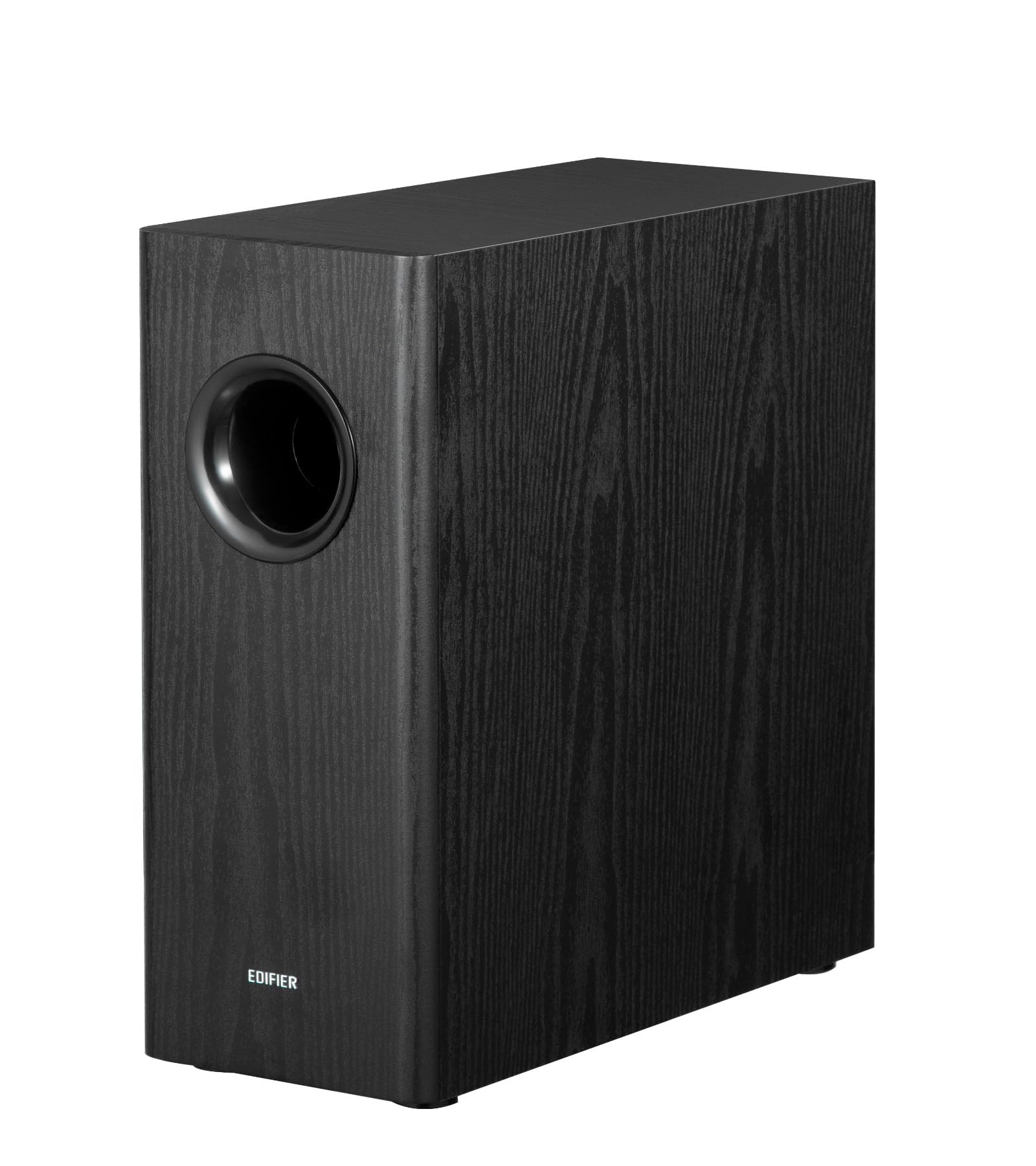
The Edifier T5s is specifically engineered for near-field listening, making it the ultimate desktop companion for gamers and music lovers. Its 8-inch long-throw woofer and 70W RMS Class-D amplifier deliver surprisingly deep 35Hz bass from a cabinet that has a small footprint. The vertical orientation and slim profile allow it to tuck neatly beside a desk or under a monitor stand.
Where the T5s truly differentiates itself is in its integration features. The low-pass filter (30Hz–160Hz) and phase selector ensure seamless blending with Edifier’s popular line of bookshelf speakers, like the R1280Ts or R1700BTs. The smart auto-standby saves power after 15 minutes of inactivity, making it an energy-efficient addition to a computer setup.
This subwoofer is not designed to rattle windows in a living room. Instead, it focuses on delivering a potent, tactile bass experience in a small to medium-sized room. The included RCA cables and straightforward setup make it ridiculously easy to get started. For a desktop build where accuracy and integration are paramount, the T5s is a masterclass in value engineering.
Why it’s great
- Compact vertical design ideal for desktop setups.
- Excellent integration features for Edifier speakers.
- Smart auto-standby saves energy.
Good to know
- Lacks the output to fill a large living room.
- Not recommended as a high-volume home theater LFE subwoofer.
6. Dayton Audio Classic CS800
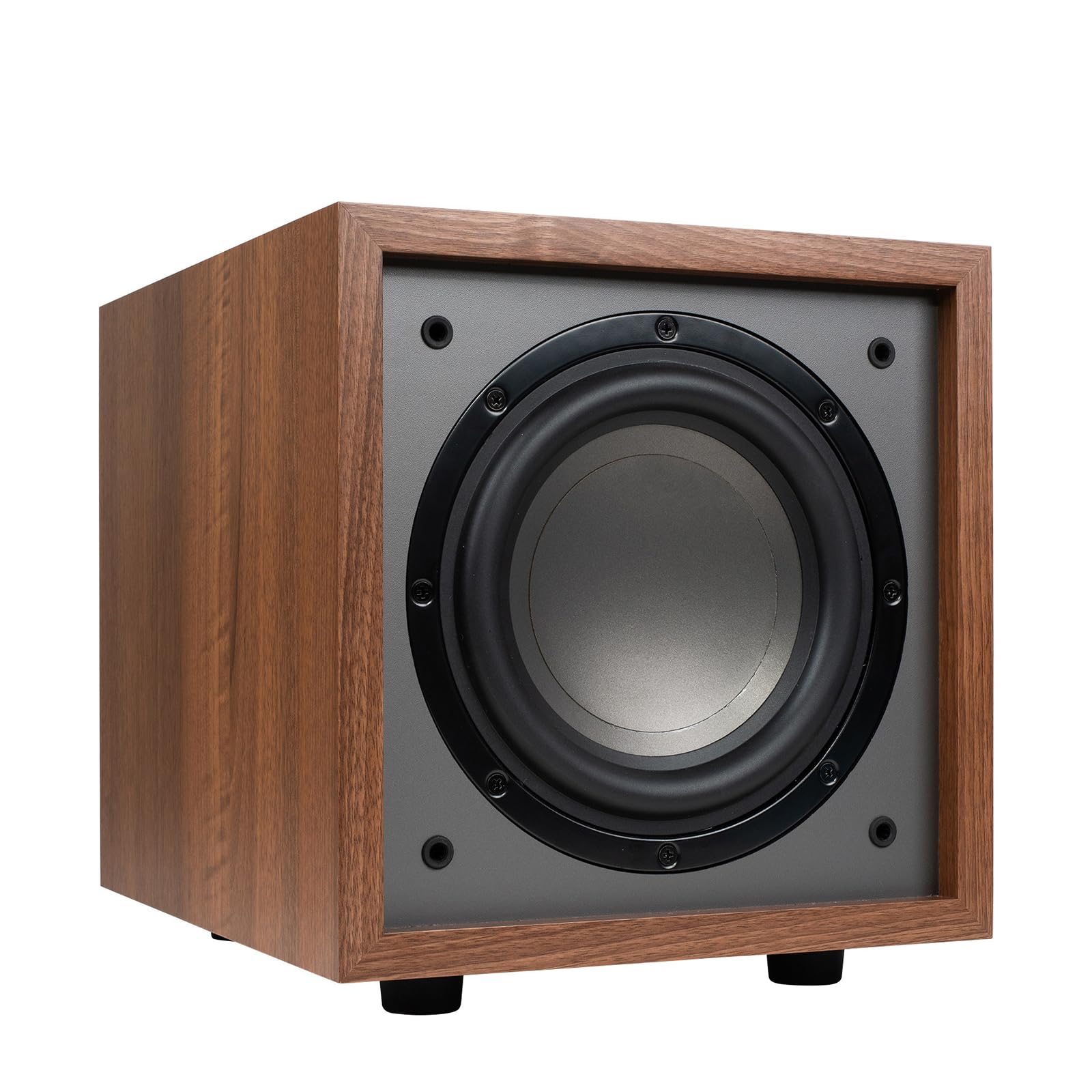
The Dayton Audio CS800 proves that an 8-inch subwoofer can deliver serious performance when properly engineered. Its 150W RMS Class-D amplifier and rigid, braced MDF cabinet produce clean, punchy bass that is noticeably tighter than many larger, cheaper competitors. It is designed for small to medium-sized rooms where space is at a premium but performance cannot be sacrificed.
Connectivity is comprehensive, with stereo RCA, LFE, and speaker-level inputs that allow it to work with virtually any system. The auto-on feature is responsive, and the simple controls for gain, crossover, and phase make setup quick. The wood-grain finish and swappable grille are a nice aesthetic touch that adds to its perceived value.
Like its larger CS1200 sibling, the CS800 is backed by a 5-year warranty, making it a low-risk investment. It delivers a frequency response that reaches near 35Hz, providing a satisfying low-end foundation for music and movies. It outperforms many older, budget 10-inch subs due to its superior cabinet damping and amplifier quality. This is the go-to option for those wanting high-quality bass in a compact package.
Why it’s great
- Tight, accurate bass with no cabinet resonance.
- Powerful 150W RMS amplifier for its size.
- 5-year warranty provides exceptional value.
Good to know
- Driver mounting screws can vibrate loose over time; requires periodic tightening.
- Not suitable for large open-concept rooms.
7. Rockville Rock Shaker 10

The Rockville Rock Shaker 10 is the sweet spot in the Rock Shaker lineup, offering a significant step up in output from 8-inch subs without the cabinet size of the 12-inch model. Its 10-inch driver, powered by a 300W RMS (600W peak) Class-D amplifier, delivers chest-thumping bass that will energize any medium-to-large room for movies and gaming.
It features the same practical connectivity of its larger sibling: RCA line-level and high-level speaker inputs and outputs. The adjustable crossover (50Hz-150Hz), volume control, and phase switch give you the tools to tune it to your room. The MDF enclosure is solid and helps keep distortion in check, even when pushed hard.
This subwoofer is a fantastic choice for a dedicated home theater system where you want big, impactful sound without spending mid-range prices. The bass is slightly loose compared to a premium sub, but it offers exceptional value for its raw power. If your goal is to feel the explosions in your seat at a budget-friendly price, the Rock Shaker 10 delivers the goods.
Why it’s great
- Powerful 300W RMS output for serious home theater impact.
- Full set of controls for custom tuning.
- Shakes the room without breaking the bank.
Good to know
- Bass is more powerful than tight and controlled.
- Crossover is a shelf filter, not a true low-pass filter for mains.
8. BESTISAN SW65C

The BESTISAN SW65C is an entry-level powered subwoofer that focuses on adding a foundational bass layer to small systems without overwhelming the room. Its 6.5-inch down-firing driver is designed to couple with the floor, maximizing perceived bass output while keeping the cabinet footprint minimal. It is an ideal upgrade for a soundbar or a pair of small bookshelf speakers.
Setup is incredibly simple, with an LFE input and a stereo RCA input that works with most receivers. The separate knobs for bass level and master volume allow for fine-tuning, preventing the sub from overpowering your main speakers. The compact 9.3-inch cube design slides easily onto a shelf or into a corner.
Do not expect this sub to shake the walls. Its performance is best suited for bedrooms, offices, or small living rooms where subtle low-end reinforcement is the goal. It handles music and movies well at moderate volumes but runs out of steam with demanding, subsonic content. For the price, it offers a simple, effective way to add noticeable depth to your audio for the first time.
Why it’s great
- Extremely compact size fits in tight spaces.
- Simple setup offers a high “wow” factor for new users.
- Down-firing design maximizes floor coupling for better bass.
Good to know
- Lacks the output for deep, room-filling bass in larger rooms.
- Not powerful enough for bass-heavy rap or action movies.
9. BESTISAN SW65D

The BESTISAN SW65D is the most affordable option on this list and serves as a perfect introduction to adding a dedicated subwoofer. Its 6.5-inch side-firing driver is unique in this price tier and aims to provide a wider soundstage and room-filling audio. It is an extremely accessible product designed for beginners who want better bass without complexity.
A key differentiator for this model is the inclusion of Bluetooth and optical inputs, though unit consistency regarding these features has been reported. The foundational connectivity includes LFE, Aux, and RCA inputs. The simple controls allow you to adjust the bass and volume to match your environment, and its compact size makes it easy to place.
Like the SW65C, this unit is best for small rooms and moderate listening levels. It pairs excellently with Edifier bookshelf speakers to create a cohesive, balanced sound. It adds a subtle, non-overpowering warmth that improves the listening experience. However, compatibility issues with some AV receivers have been noted, and it is not the choice for high-impact, distortion-free output at loud volumes.
Why it’s great
- Lowest entry point for adding a subwoofer to a system.
- Bluetooth and optical inputs offer versatility.
- Compact design and simple setup for beginners.
Good to know
- Potential inconsistencies in feature availability across units.
- Limited power output; not for high-volume applications.
FAQ
What is the ideal crossover setting for a bargain subwoofer?
Can I use a powered subwoofer with an older stereo receiver without a sub out?
Why does my bargain subwoofer sound boomy or muddy?
What does the phase switch on a subwoofer do?
Final Thoughts: The Verdict
For most users, the bargain subwoofer winner is the Dayton Audio CS1200 because it delivers unmatched low-frequency extension at 26Hz and clean, powerful output in a cabinet backed by a 5-year warranty. If you want accurate, studio-grade bass for a desktop or near-field setup, grab the PreSonus Eris Sub 8BT. And for sheer, room-shaking home theater impact at a price that makes you smile, nothing beats the Rockville Rock Shaker 12.