
Our readers keep the lights on and the weekend projects moving. As an Amazon Associate, I earn from qualifying purchases.
That afternoon coffee crash or the restless night from one too many cups of caffeine—barley tea sidesteps both with a deep, roasted, nutty flavor that satisfies without the stimulant. Whether you call it mugicha, boricha, or orzo, this traditional Japanese and Korean staple delivers a rich, toasty aroma and a smooth, earthy taste that works hot on a cold morning or iced on a summer afternoon.
I’m Rikta — the co-founder and writer behind FitlyFast. I’ve spent countless hours analyzing consumer reports, nutritional data, and brewing specs to separate the truly aromatic, well-roasted barley teas from the watery, bland imposters.
If you are looking for a caffeine-free alternative to coffee that still delivers a satisfying, full-bodied brew, this guide to the best barley tea options on the market will help you find the perfect bag or box for your pantry.
How To Choose The Best Barley Tea
Barley tea seems simple—just roasted grain in hot water—but the difference between a flat, cardboard-like sip and a deeply aromatic, almost coffee-like brew comes down to a few key factors. Understanding roast depth, grain origin, and format will save you from wasting money on a bag that just smells like dusty cereal.
Roast Level and Aroma Intensity
Barley tea’s signature flavor comes from the roasting process. Light roasts yield a mild, subtly sweet taste, while dark roasts produce a bold, smoky, almost espresso-like character with noticeable bitterness. Japanese mugicha tends toward a medium, balanced roast, whereas Korean boricha often leans darker. For coffee drinkers transitioning off caffeine, a dark-roast ground barley (like orzo) mimics the mouthfeel of coffee most closely.
Format: Tea Bags, Loose Grain, or Ground
Tea bags offer convenience—drop one in a pitcher, cold brew overnight, and you have a gallon of tea ready by morning. Loose grain allows you to control strength and is more cost-effective for daily bulk brewing, but requires a pot, strainer, or dedicated brewer. Ground barley (sold as orzo or coffee alternative) brews exactly like coffee grounds in a drip machine or French press, delivering a richer, oilier extraction that tea bags cannot match.
Origin and Certifications
Barley grown in Japan, Korea, or Italy carries distinct regional taste profiles shaped by soil and roasting tradition. Organic certifications (USDA, CCOF, organic JAS) guarantee no synthetic pesticides or additives, which matters because barley hulls can absorb chemicals during growth. For those with celiac disease or gluten sensitivity, 100% barley tea is not gluten-free—the protein is present in the grain itself, even after roasting.
Quick Comparison
On smaller screens, swipe sideways to see the full table.
| Model | Category | Best For | Key Spec | Amazon |
|---|---|---|---|---|
| Maeda-En Mugi-cha 64 Bags | Japanese Tea Bags | Traditional mugicha lovers | 64 individually wrapped bags | Amazon |
| Worldwide Botanicals Organic Barley | Ground Coffee Alt | Replacing coffee flavor | Dark roast ground, 1 lb | Amazon |
| Damtuh Korean Roasted Barley | Korean Tea Bags | Bulk value and fast steep | 100 count individual bags | Amazon |
| YAMASAN Organic Barley | Organic Japanese Bags | Certified organic, baby-safe | 30 large tea bags, organic JAS | Amazon |
| McCabe Organic Barley | Loose Grain | Hearty homemade brews | USDA organic, 1.5 lb loose grain | Amazon |
| ITO EN Kaori Kaoru | Japanese Bulk Bags | High-volume cold brew | 108 bags, biodegradable | Amazon |
| L’Oro del Sud Organic Pearled Barley | Whole Grain | Cooking & pantry staple | 3.3 lb whole pearled grain | Amazon |
In‑Depth Reviews
1. Maeda-En Mugi-cha Barley Tea 64 Tea Bags
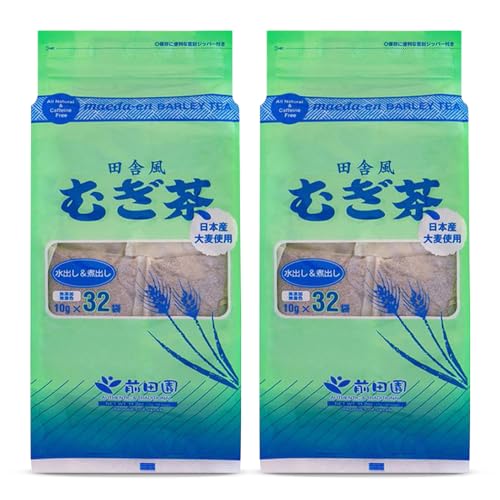
This is the real deal for traditional mugicha drinkers. Each bag yields over a liter of tea with a heavy, smoky, toasted barley flavor that tastes like a proper Japanese roasted brew—not weak, not watery. The 64-count pack comes in two 32-bag boxes, and every bag is individually wrapped, making it ideal for lunchboxes, office drawers, or travel.
A single tea bag in a half-gallon of cold water, refrigerated for a few hours, produces a full-bodied iced tea that rivals what you get at a Japanese restaurant. For hot tea, five minutes in boiling water releases a deep amber color and an aroma that fills the kitchen. Reviewers consistently note that one bag holds up for multiple reuses without losing its character.
The bag is not resealable, so you will want to keep the inner box itself closed tightly. Some users observed a slight oil layer on the surface when boiling—that is the natural barley oils surfacing and is perfectly normal. If you want authentic mugicha that does not mess around with weak flavors, this is the benchmark.
Why it’s great
- Bold, smoky roasted flavor from genuine Japanese barley
- One bag makes a full liter or more—excellent yield
- Individually wrapped for freshness and portability
Good to know
- Outer package is not resealable after opening
- Natural oils may surface during boiling—normal but may surprise new users
2. Worldwide Botanicals Organic Barley, Dark Roast – 1 lb
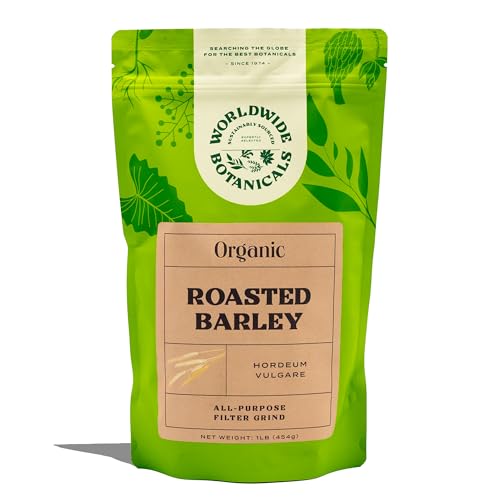
This is not tea—this is ground, dark-roasted barley intended to be brewed exactly like coffee. Italians call it orzo, and it is their go-to drink when they want the ritual of coffee without the caffeine jitters. The grind is medium-coarse, designed to work in drip machines, espresso makers, and French presses. It produces a dark, nearly black brew with a nutty, slightly smoky taste and minimal bitterness.
One to two tablespoons per two cups of water yields a cup that looks and feels like a medium roast coffee. Many reviewers blend it with their regular coffee to cut caffeine and acidity while preserving the dark color and mouthfeel. The organic certification (USDA) and Kosher status add confidence for clean-label shoppers.
It is not instant—you must brew it. The one-pound bag lasts a while, but the ground format means you cannot simply toss a bag into a pitcher for cold brew. The only downside mentioned by a few users is that the fine barley particles can slip through a standard coffee filter and leave pulp at the bottom of the cup, so a fine-mesh strainer helps for a cleaner finish.
Why it’s great
- Brews dark and rich like real coffee, perfect for transitioning off caffeine
- Certified organic and Kosher with a satisfying nutty roast
- Versatile: use in drip, French press, espresso, or blend with coffee
Good to know
- Fine pulp may pass through filters—use a fine strainer for a clean cup
- Not instant; requires actual brewing equipment
3. Damtuh Korean Roasted Barley Tea Bags, 100 Count
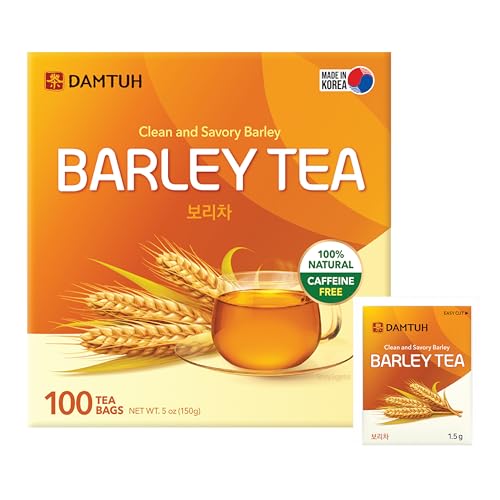
One hundred individually wrapped bags at this price point make Damtuh the clear value champion for households that go through barley tea daily. The roast profile is classic Korean boricha—a smooth, toasted, nutty flavor that is slightly darker than Japanese mugicha and brews quickly. Multiple customers confirm that it steeps in just three to five minutes, compared to other barley teas that require thirty minutes or more.
The single-ingredient nature (100% roasted barley) keeps it vegan, sugar-free, and caffeine-free. A clever real-world use case reported by one reviewer: brewing eight to ten bags in 1.5 liters of water and refrigerating creates a dark, amber liquid that looks strikingly like whiskey, making it a great non-alcoholic stand-in for social settings. The taste alone carries woody and coffee-like notes that convince the eye and the nose.
Each bag is small—0.05 ounces total per bag—so you need multiple bags for a pitcher. The bags are not sealed in a secondary pouch, so the outer box must be kept closed to maintain freshness. For the price per bag, the convenience is hard to beat.
Why it’s great
- Brews quickly—ready in minutes, not half an hour
- Massive 100-bag count for daily drinkers and families
- Rich boricha flavor with natural woody and coffee notes
Good to know
- Small bag size requires multiple bags for a full pitcher
- Bags are not individually sealed beyond the box
4. YAMASAN Organic Barley Tea Bags, 30 Large Bags
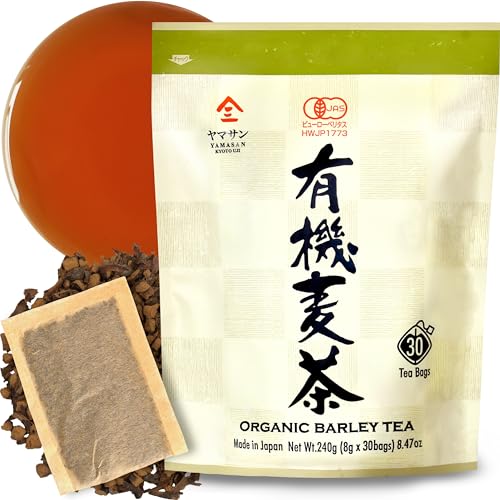
Only about 0.8% of Japanese barley is certified organic, and YAMASAN sources their grain from Uji, Kyoto—a region known for premium tea production. The bags are large and undyed, steep five minutes for a bold and slightly tobacco-tinged roasted brew that is noticeably darker and richer than most bagged mugicha. The organic JAS certification, backed by a FSSC 22000-certified facility, makes this one of the most rigorously tested barley teas available.
The tea is naturally caffeine-free and tannin-free, making it gentle on the stomach and safe for children and the elderly. Japanese families have historically served this as a hydrating, calming drink for babies and seniors because it does not interfere with sleep or irritate the digestive tract. The aroma alone is described as stress-reducing—a claim backed by studies on roasted barley scent compounds.
The 30-bag count is lower than bulk options, but each bag is larger and yields a full pitcher. Some drinkers note that the bold, slightly tobacco-like roast is an acquired taste. If you prioritize clean organic sourcing and a traditional Kyoto roast, this is the premium choice.
Why it’s great
- Rare organic JAS-certified barley from Kyoto, Japan
- Bold, dark roast with complex tobacco and roasted notes
- Tannin-free and gentle on the stomach—safe for kids and seniors
Good to know
- 30 bags provide fewer servings per purchase than bulk competitors
- Bold flavor profile may not appeal to those preferring mild tea
5. McCabe Organic Barley Tea – 1.5 Lbs Loose Grain

If you prefer loose grain over tea bags for stronger, more customizable brewing, McCabe delivers a hefty 1.5-pound bag of USDA and CCOF-certified organic roasted barley. The recommended ratio is about three tablespoons per gallon of water, boiled for five to seven minutes, producing a clean, toasty flavor that multiple reviewers describe as delicious and fresh. You can adjust the strength by varying the boil time and grain amount.
The grain format gives you complete control. Leave the kernels in the pot overnight and re-boil the next day for an even darker, more extracted brew—something you cannot do with a tea bag. Reviewers note that the roasted barley holds up well to multiple boils without turning bitter, effectively giving you two to three batches from the same grains. The bag itself is resealable, which is a practical touch for loose bulk storage.
The primary trade-off is convenience: you need a pot, a strainer, and about ten minutes of active time for each batch. The loose grains also take up more pantry space than a box of tea bags. But for daily drinkers who want maximum control over strength and prefer buying organic in bulk, this is a solid performer.
Why it’s great
- Dual organic certification (USDA and CCOF) for purity assurance
- Reusable grains yield multiple batches without flavor loss
- Resealable bag keeps grain fresh between uses
Good to know
- Requires boiling and straining—no instant or bag convenience
- Loose grain format needs active brewing time and equipment
6. ITO EN Japanese Barley Tea Kaori Kaoru, 108 Bags
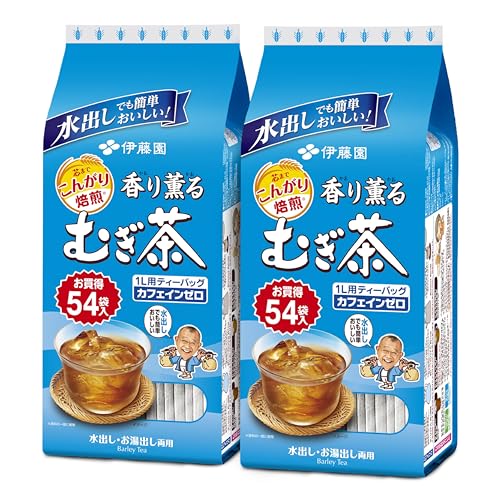
ITO EN is a heavyweight in Japanese tea, and their Kaori Kaoru (meaning “aromatic”) barley tea lives up to the name. The 108-bag count comes in two 54-bag packs, and each bag is made from biodegradable material—a rare and welcome feature in a category where most bags are polyester or nylon. The tea brews aromatic, smooth, and deeply flavorful, especially when cold-brewed.
The easiest method: drop two bags into a two-liter bottle of cold water, refrigerate for three hours, and serve. No boiling, no waiting for the pot to cool. Reviewers love that one bag is enough for a standard pitcher, making the 108-bag supply last two to three months for heavy drinkers. The biodegradable bags also dissolve more easily in compost than plastic mesh bags.
The labeling is predominantly in Japanese on some batches, but the brewing instructions are straightforward enough that language is not a barrier. A few users noted the bags are not individually wrapped, so the outer box needs to be kept sealed. For anyone who drinks barley tea daily by the pitcher and values eco-friendly packaging, this is the smart buy.
Why it’s great
- Biodegradable tea bags—a meaningful eco-friendly advantage
- Exceptional yield: two bags make a full 2L pitcher of cold brew
- Aromatic, smooth flavor that works hot or cold with minimal effort
Good to know
- Bags are not individually wrapped; reseal box for freshness
- Labeling may be entirely in Japanese on some shipments
7. L’Oro del Sud Organic Pearled Barley, 3.3 lb
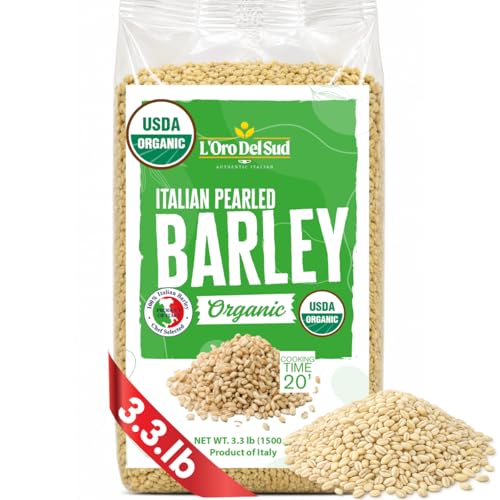
This product is raw, pearled barley—not roasted for tea. It is included here for readers who want to roast their own barley at home or who are looking for a versatile whole grain for soups, stews, and risottos. Italian-grown and USDA-certified organic, this 3.3-pound bag offers a massive quantity of clean, well-pearled kernels that cook in about half the time of hulled barley.
To make tea from scratch: spread the kernels on a baking sheet, roast at 350°F until golden-brown and fragrant (about 15-20 minutes), then boil like loose grain. Home roasting lets you control the roast level precisely—lighter for sweeter tea, darker for a coffee-like brew. Beyond tea, the pearled barley works beautifully in mushroom barley soup, grain bowls, and Mediterranean salads.
The bag size is family-scale and ideal for meal prep. Pearled barley has had the outer hull removed, so it cooks faster than whole-grain barley but still delivers chewy texture and significant fiber. Do not buy this if you want instant tea bags—but if you enjoy DIY control in the kitchen and want a single ingredient that serves both brewing and cooking purposes, this is a smart pantry addition.
Why it’s great
- Versatile ingredient: use for homemade roasted tea and cooking
- USDA organic and imported from Italy with excellent grain quality
- Family-size 3.3 lb bag is cost-effective for bulk cooking
Good to know
- Raw, unroasted—requires home roasting before brewing as tea
- Pearled barley contains gluten, not suitable for gluten-free diets
FAQ
Is barley tea gluten-free?
Can I cold brew barley tea?
How much caffeine is in barley tea?
What is the difference between mugicha, boricha, and orzo?
Final Thoughts: The Verdict
For most users, the best barley tea winner is the Maeda-En Mugi-cha 64 Bags because it delivers authentic, bold Japanese roasted flavor, high yield per bag, and individually wrapped convenience at a mid-range cost. If you want a dark, coffee-like brew you can blend or drink straight, grab the Worldwide Botanicals Organic Barley. And for high-volume cold brewing with biodegradable bags, nothing beats the ITO EN Kaori Kaoru 108 Bags.