
Our readers keep the lights on and the weekend projects moving. As an Amazon Associate, I earn from qualifying purchases.
Standing in four inches of freezing mud while a chicken pecks at your ankle is a specific kind of farm ritual — one that either proves your boots are worthy or condemns them to a dusty corner of the shed. The wrong pair leaves you with soggy socks, cold toes, and a slipping hazard every time you cross a wet concrete aisle. The right pair becomes an extension of your routine: pull on, latch the gate, finish the chores.
I’m Rikta — the co-founder and writer behind FitlyFast. I’ve spent months analyzing rubber compounds, neoprene thicknesses, steel shank placements, and outsole lug patterns to understand what separates a boot that fails in month four from one that still seals out slurry after two hard winters.
This guide breaks down the seven most reliable models currently on the shelf, covering workhorse rubber, insulated neoprene, and pull-on leather options so you know exactly which pair fits your daily muck, your foot shape, and your budget. Read on for the definitive list of the best barn boots you can buy right now.
How To Choose The Best Barn Boots
Barn boots live in a unique middle ground — they need the sealed waterproofing of a rain boot, the insulation of a winter work boot, and the walking comfort of a mid-height shoe. Choosing incorrectly usually means blisters from a stiff shaft, cold feet from thin neoprene, or a boot that cracks at the flex point after one season.
Neoprene Thickness and Insulation Grade
Most barn boots use 3mm to 6mm neoprene for the upper shaft. The thicker the neoprene, the warmer the boot in sub-freezing temperatures, but the stiffer the ankle movement. If you work in a heated barn and only step outside for feed runs, 3mm is enough. If you’re standing in frozen mud for hours, look for 5mm or 6mm with a fleece or mesh lining that wicks sweat without trapping moisture.
Outsole Rubber Compound and Lug Depth
The rubber under your foot matters more than the brand on the outside. A soft compound (Shore A 55–60) grips wet concrete and muddy slopes but wears faster on gravel. A harder compound (Shore A 65+) lasts longer on abrasive barn floors but slides on slick, algae-covered surfaces. Self-cleaning lugs with at least 5mm depth push mud out rather than packing it into a slippery flat sole.
Steel Shank and Arch Support
Barn work involves standing on gravel, shoveling, and walking over uneven paddocks. A steel or composite shank provides the torsional rigidity that prevents the boot from folding under the arch. Without it, the midsole collapses after a few months, leading to foot fatigue and plantar strain. The best barn boots embed the shank between a rubber outsole and a cushioned EVA or PU midsole.
Quick Comparison
On smaller screens, swipe sideways to see the full table.
| Model | Category | Best For | Key Spec | Amazon |
|---|---|---|---|---|
| MUCK Women’s Wetland Boot | Tall Premium | Deep mud & wooded trails | 5mm neoprene, fold-down cuff | Amazon |
| ARIAT Women’s Anthem Waterproof Western Boot | Leather Riding | Equestrian & towing work | Composite toe, oil-slip sole | Amazon |
| MUCK Men’s Edgewater Tall Boot | Unisex Tall | All-day farm & woods work | 4mm neoprene, calf-hugging shaft | Amazon |
| Trudave Rubber Boots with Steel Shank | Mid-Range Insulated | Snowy chore days & shovel work | 6mm neoprene + steel shank | Amazon |
| MUCK womens Originals Ankle | Short Premium | Quick dog walks & light yard work | Pull-on ankle, cushion insole | Amazon |
| HISEA Women’s Mud Rain Boots | Tall Mid-Range | Narrow feet with high arches | Hands-free entry, roomy toe box | Amazon |
| Trudave Rubber Boots for Women | Budget Garden | Chicken coops & light garden work | Mid-calf, wide calf, traction outsole | Amazon |
In‑Depth Reviews
1. MUCK Women’s Wetland Boot
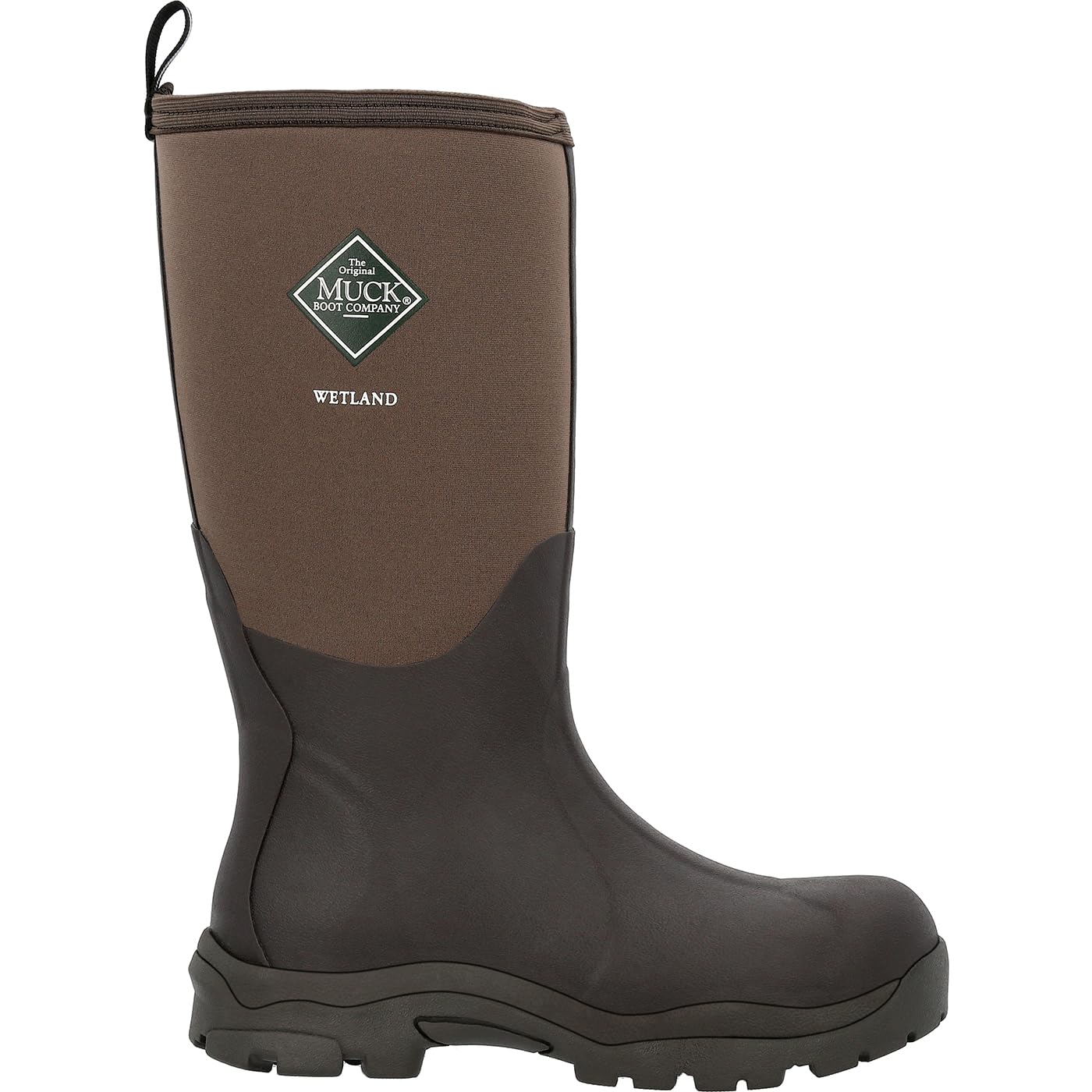
The MUCK Wetland is the benchmark for a reason: the 5mm neoprene shaft wraps your calf like a wetsuit while the rubber foot seals out standing water completely. Owners report standing in creeks and muddy forest trails for hours with zero leakage and warm toes even when the air temperature drops below freezing. The fold-down cuff gives you the option to ventilate during warmer months, making this a true four-season barn boot.
The outsole uses deep, self-cleaning lugs that bite into soft mud and shed debris rather than packing into a smooth slab. The footbed sits on a thick EVA midsole that absorbs shock from gravel and uneven paddock ground. Multiple reviews mention wearing these for metal detecting, fishing, and daily wooded walks on rocky terrain without foot fatigue. The calf-hugging fit also helps block debris and splashes from getting into the shaft during deeper crossings.
One sizing note: the Wetland runs large. If you are between sizes, order down. The neoprene stretches slightly over the first few wears, so a snug initial fit gives you the best long-term seal. The breathable mesh lining prevents sweat buildup even during high-output chores like bailing mud or splitting wood.
Why it’s great
- Proven long-term waterproofing after a year of daily use
- Fold-down cuff adds versatility across seasons
- Thick EVA midsole absorbs shock on rocky ground
Good to know
- Runs large — size down if between half sizes
- Neoprene shaft can feel snug for wider calves
2. ARIAT Women’s Anthem Waterproof Western Boot
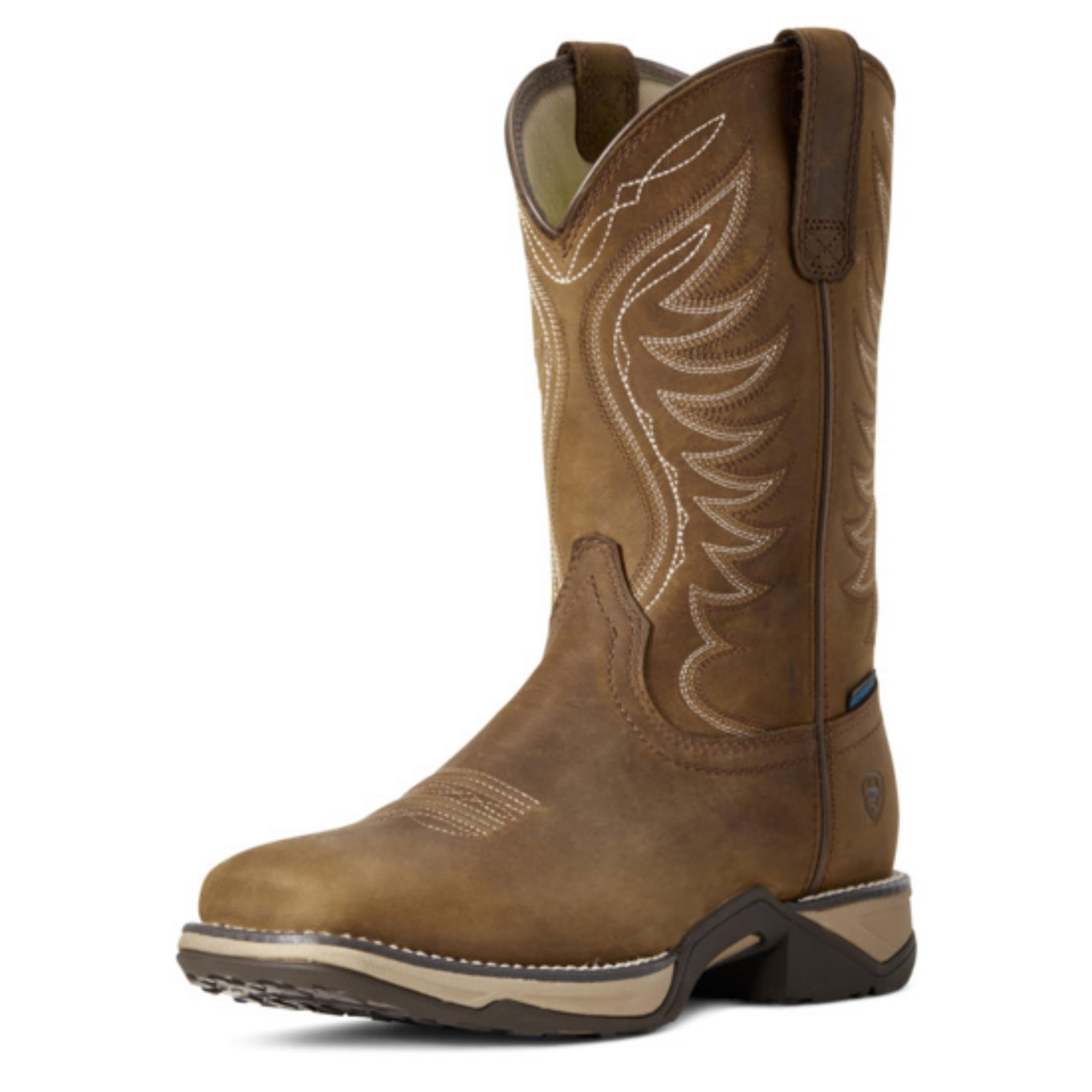
The Ariat Anthem takes a different approach: full-grain waterproof leather with a composite safety toe designed for riding and heavy diesel work. The initial fit is extremely tight — multiple buyers describe a 30-minute break-in period where the boot feels almost painfully snug before the leather molds perfectly to their foot shape. After that, the boot becomes one of the most comfortable westerns available, with zero hot spots even during 12-hour shifts on concrete or gravel barn floors.
The oil-slip outsole uses Ariat’s proprietary Duratread rubber compound, which several long-haul truckers and towing operators praise for keeping them upright on greasy shop floors. The composite toe offers the protection of steel without conducting cold, and the waterproof membrane stays sealed through rain and mud. Reviewers who bought a second pair noted that after a year of daily use the outsole traction wears down, but the leather upper holds up exceptionally well with basic conditioning.
This boot is not a pull-on rubber muck boot — it’s a proper western work boot for people who ride, tow, or need the ankle support of a lace-less leather boot. If your barn work involves stirrups or driving heavy equipment, the Anthem is a more capable tool than any neoprene wellie. Order true to your sneaker size but expect a snug first day.
Why it’s great
- Excellent oil-slip resistance for greasy concrete and wet ramps
- Composite toe protects without conducting cold
- Breaks in to a custom foot mold after 30 minutes
Good to know
- Hard to pull on initially — very tight before break-in
- Outsole traction wears down around the one-year mark with heavy use
3. MUCK Men’s Edgewater Tall Boot

The MUCK Edgewater is the unisex workhorse that farm owners and electricians reach for when they need a boot that disappears from their mind. The 4mm neoprene shaft balances warmth and flexibility — warm enough for early morning chores in New York snow, flexible enough to climb ladders and hop over fence lines without the stiff resistance of thicker rubber. The calf-hugging fit is designed to keep out splashes and debris while still allowing full ankle articulation.
The rubber outsole uses a multi-directional tread pattern that bites into wet grass, loose gravel, and metal rungs equally well. Multiple reviewers report the Edgewater lasting years of heavy outdoor use, including daily work on a farm and regular hikes through swampy forest. The boot is lightweight enough to wear for casual errands after chores, which is a rarity in the tall rubber boot category.
Sizing is consistent with street shoe size, and the comfortable insole provides enough arch support for standing on concrete for hours. The shaft height is sufficient to protect against tick bites in tall grass, and the boot retains its waterproofing integrity after a full year of daily wear. If you need a single boot that handles the full spectrum of barn, woods, and wet concrete, the Edgewater is the most versatile option on this list.
Why it’s great
- Lightweight construction reduces leg fatigue during all-day wear
- Excellent grip on slippery, muddy, and metal surfaces
- Proven multi-year durability under heavy outdoor use
Good to know
- Not available in half sizes
- Calf-hugging design may be too snug for very wide calves
4. Trudave Rubber Boots with Steel Shank
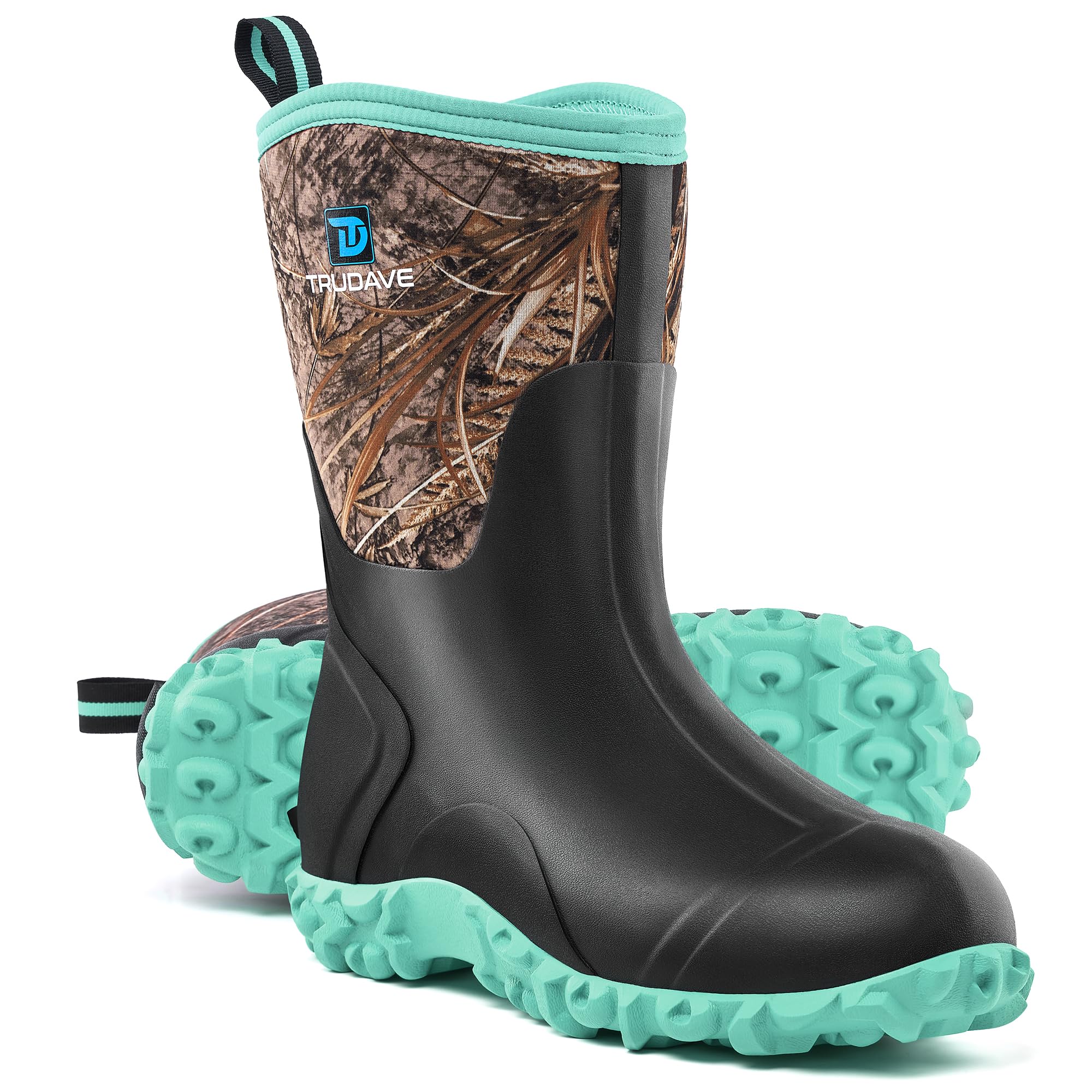
The Trudave with steel shank punches well above its mid-range price bracket. The 6mm neoprene insulation is thicker than most competitors in this tier, providing genuine warmth in deep snow without excessive bulk. The steel shank adds torsional rigidity that prevents the boot from folding under the arch when you’re shoveling manure or pushing a wheelbarrow over uneven ground — a feature typically reserved for boots that cost twice as much.
Owners highlight the pillowy support underfoot and the ease of pulling the boots on and off, thanks to the back loop and step-on tab. The outsole tread is aggressive enough for snowy hills and muddy horse pens, and the waterproof seal holds up well during the first months of daily use. The boot fits true to size for most users, though a few reviewers noted the ankle area stretched slightly after extended wear.
The main concern reported by a few long-term users involves seam separation at the junction between the rubber base and the neoprene shaft after three months of heavy use. This appears to be an isolated quality-control issue rather than a design flaw, and most buyers report no problems. Given the thick insulation and the steel shank, this is the best value option for cold-climate barn work where warmth and arch support are non-negotiable.
Why it’s great
- 6mm neoprene keeps feet warm in sub-freezing temperatures
- Steel shank prevents mid-foot collapse during heavy lifting
- Pillowy EVA midsole for all-day standing comfort
Good to know
- Isolated reports of seam separation after 3 months
- Limited color options unless paying extra for black
5. MUCK womens Originals Ankle

Not every barn visit requires a tall shaft. The MUCK Originals Ankle boots are designed for quick slip-on trips: dog walks, feeding runs, light yard work, and errands where you need waterproof protection but don’t want to wrestle a high shaft. The pull-on design has an appropriately wide ankle opening that accommodates thicker socks, and the cushion insole provides enough comfort for hour-long walks on wet pavement or muddy grass.
The rubber outsole uses a standard MUCK tread pattern that performs well on rain, snow slush, and packed mud. The boots are sturdy enough for casual hiking and keep feet warm with a medium sock in cold conditions. Multiple reviewers mention the attractive styling — these do not look like clunky work boots and blend in well with casual outdoor wear. The easy entry is the standout feature, making them the pair you actually use for every short trip outside.
Sizing is where these boots get tricky. They are roomy but true to length, and the lack of half sizes means some buyers need to add an insole to dial in the fit. If you are between a women’s 6 and 7, the 7 works with an extra insole. The ankle height is less than ten inches, so deep puddles or tall wet grass will breach the shaft — these are not replacement for a tall barn boot.
Why it’s great
- Ultra-easy slip-on design for quick outdoor trips
- Comfortable enough for casual walking and errands
- Attractive styling that doesn’t look like a work boot
Good to know
- No half sizes — may require an insole for perfect fit
- Ankle height offers no deep-water or tall-grass protection
6. HISEA Women’s Mud Rain Boots
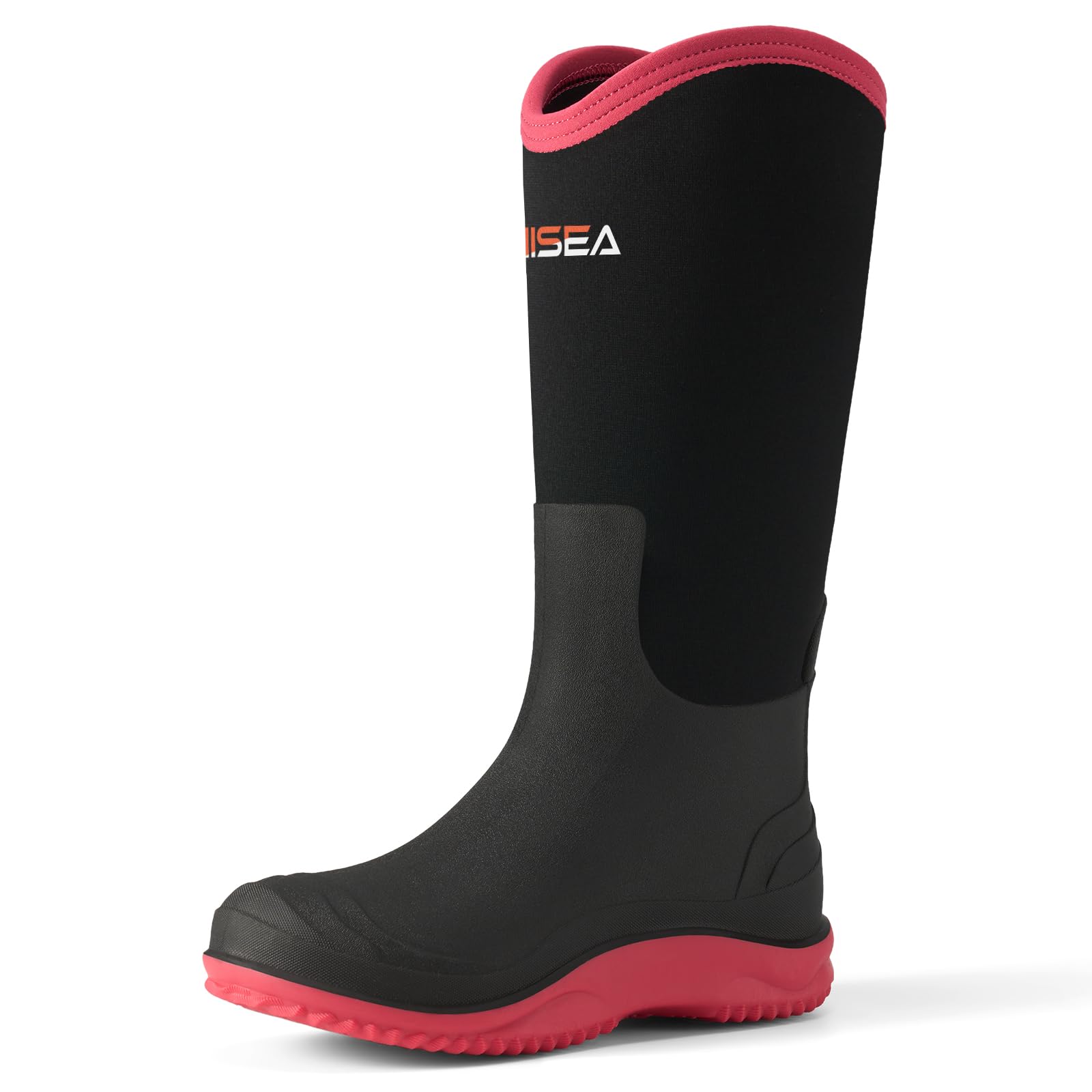
The HISEA mud boots solve a specific problem that many barn boots ignore: a good fit for narrow feet with high arches. The internal shape runs narrow through the heel while providing a roomy toe box that accommodates bunions or wider forefeet. The hands-free entry feature uses a reinforced heel counter that collapses slightly for easy foot insertion, which is a rare luxury in tall rubber boots that usually require two hands and a lot of grunting.
The neoprene shaft is lined with a thick, chicken-print material that can be rolled down for easier on/off access, and the waterproof rubber base extends high enough to keep feet dry in tall grass and shallow puddles. The outsole offers good slip resistance on wet concrete and muddy garden beds. Multiple owners report using these for daily chicken tending, gardening, and even helping split wood — a testament to the boot’s durability beyond casual garden use.
HISEA recommends sizing up. Most reviewers suggest ordering at least a half size larger than your normal shoe size to accommodate a thick sock. The wide calf design fits comfortably without being loose, and the boot is easy to clean with a hose. If you have narrow heels and high arches and have struggled to find a tall barn boot that doesn’t slip at the back, the HISEA is the most accommodating option in this review.
Why it’s great
- Excellent for narrow feet with high arches
- Hands-free entry saves time with every wear
- Roll-down shaft provides ventilation and easy removal
Good to know
- Runs large — size up at least a half size
- Wide calf design may be too loose for very slender legs
7. Trudave Rubber Boots for Women
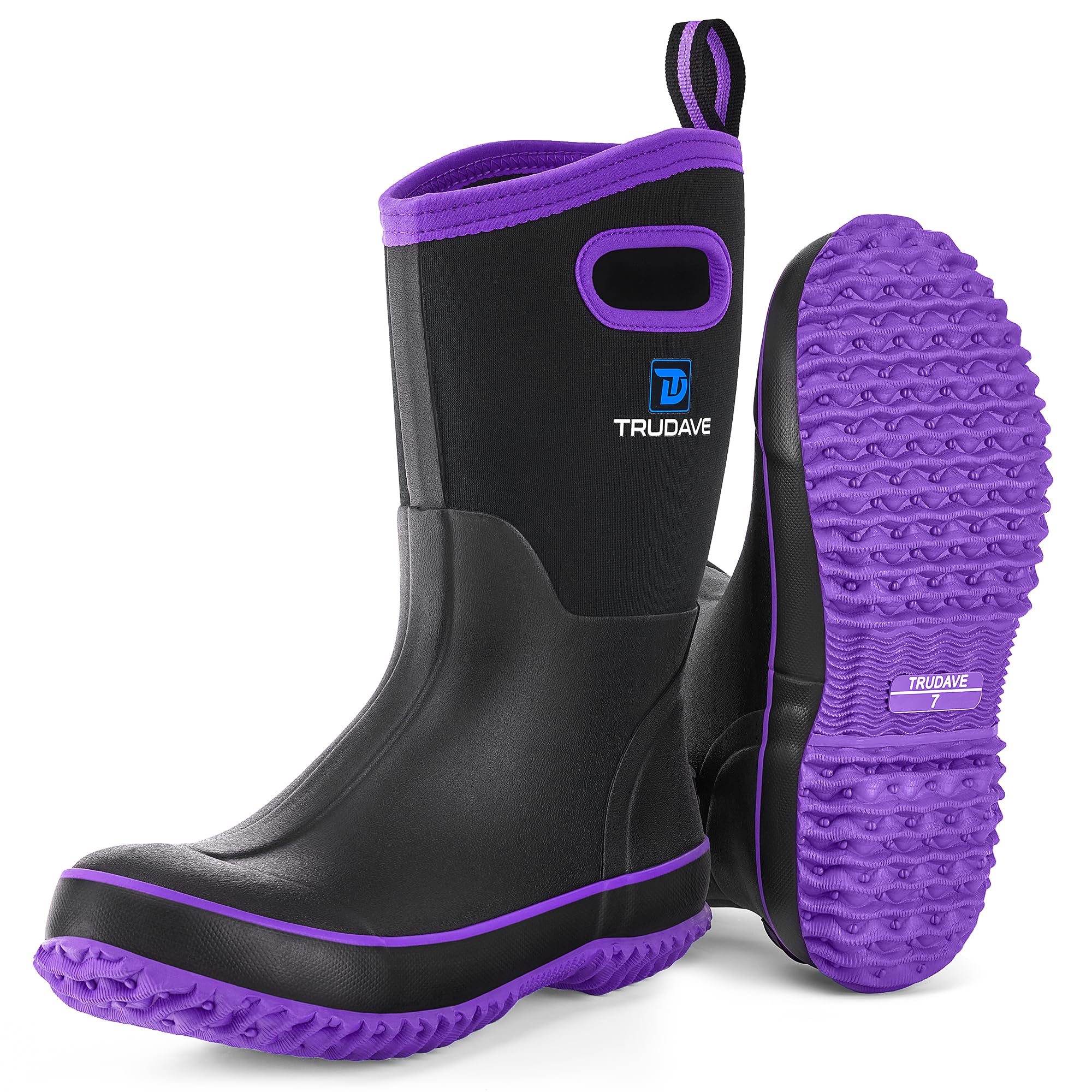
The Trudave women’s rubber boot is the entry-level champion for light barn work, specifically chicken coop maintenance, garden watering, and quick trips through muddy paddocks. The mid-calf height keeps your lower leg dry while making the boot easy to pull on and off with the integrated handles. The tread pattern is substantial enough for wet grass and snow, and the rubber construction is completely waterproof with no fabric upper to soak through.
The fit is notably generous through the calf and toe box. Reviewers with wide calves and bunions report that these boots accommodate them without pinching, and the loose fit can be tightened with thick wool socks. The boot is well-constructed for its tier, with strong seams and a durable rubber compound that resists cracking at the flex point. The cute chicken-themed design is a bonus for poultry keepers who appreciate a bit of personality in their chore gear.
The main trade-off is insulation — the Trudave lacks the thick neoprene lining of mid-range and premium boots. In sub-freezing temperatures, you will need heavy socks to keep your feet warm. The insole is flat without dedicated arch support, so standing on concrete for extended periods may cause foot fatigue. For light daily chores and moderate climates, the value is excellent.
Why it’s great
- Excellent value for light garden and chicken coop work
- Wide calf and toe box accommodates bunions and thick socks
- Non-slip tread performs well on wet grass and snow
Good to know
- No insulation — cold feet in sub-freezing temperatures without thick socks
- Flat insole lacks arch support for long standing sessions
FAQ
Can I wear barn boots in snow or is that only for cold-weather boots?
How do I stop barn boots from smelling after daily use in mud and manure?
Are steel shank barn boots necessary for chicken coop and garden use?
Why do my rubber barn boots crack at the flex point after one season?
Final Thoughts: The Verdict
For most users, the best barn boots winner is the MUCK Women’s Wetland Boot because it combines proven waterproofing, 5mm neoprene warmth, and a fold-down cuff that adapts to changing seasons. If you want a steel shank for serious shoveling and sub-freezing chores, grab the Trudave Rubber Boots with Steel Shank. And for equestrian use or heavy towing work where leather support matters, nothing beats the ARIAT Women’s Anthem Waterproof Western Boot.