
Our readers keep the lights on and the weekend projects moving. As an Amazon Associate, I earn from qualifying purchases.
A basement floor endures moisture, temperature swings, and heavy storage. The wrong paint peels, chips, or lets moisture seep through, ruining the surface and your effort. Choosing a coating that bonds to concrete and resists humidity is the difference between a one-time project and a recurring headache.
I’m Rikta — the founder and writer behind FitlyFast. I analyze concrete coatings by their adhesion chemistry, moisture vapor transmission rates, and real-world durability data reported across thousands of buyer experiences.
After evaluating seven top contenders on coverage, moisture resistance, and finish durability, this guide breaks down the best basement concrete floor paint options for your specific floor conditions and budget.
How To Choose The Best Basement Concrete Floor Paint
Basement concrete is porous, often damp, and chemically alkaline. A paint must bond to that surface while blocking moisture vapor that pushes up from the ground. Picking the right type means understanding three core factors that determine whether your floor stays sealed for years.
Moisture Vapor Transmission & Surface Prep
Below-grade concrete continuously releases water vapor. A paint with a high moisture vapor transmission rate will bubble and peel. The best basement paints act as vapor barriers or include elastomeric properties that flex with the concrete. Proper etching—using muriatic acid or a mechanical grinder—opens pores so the coating can anchor mechanically, not just sit on top.
Paint Chemistry: Epoxy vs. Acrylic Latex vs. Elastomeric
Two-part epoxy forms a hard, impermeable shell ideal for finished basements with low moisture. Acrylic latex floor paints are simpler to apply, lower in odor, and bond well to concrete but offer less moisture resistance. Elastomeric liquid rubber, like the Ames Blue Max, stretches up to 900% and seals cracks but needs a top coat if exposed to direct UV—fine for basements that stay dark.
Coverage & Finish Durability
Coverage rates vary from 40 square feet per gallon (thick textured coatings) to 450 square feet per gallon (thin acrylics). For basement floors, a satin or semi-gloss finish balances cleanability with traction. Slip-resistant additives matter if the floor gets wet. High-traffic paths and workshop areas need coatings that resist scuffing from tool boxes and furniture legs without chipping.
Quick Comparison
On smaller screens, swipe sideways to see the full table.
| Model | Category | Best For | Key Spec | Amazon |
|---|---|---|---|---|
| Rust-Oleum EpoxyShield | Epoxy Kit | Finished basements | 250 sq ft per kit | Amazon |
| KILZ Decorative Concrete Coating | Textured Acrylic | Slip-resistant areas | 40–60 sq ft per gallon | Amazon |
| INSL-X Tough Shield | Acrylic Enamel | Porch & patio floors | 350–450 sq ft per gallon | Amazon |
| EVOLVE Porch & Floor Paint | Acrylic Latex | DIY mid-range projects | 300–400 sq ft per gallon | Amazon |
| Rust-Oleum Metallic Floor Coating | Polycuramine | Showroom finish | 100 sq ft per kit | Amazon |
| Ames Blue Max | Elastomeric Rubber | Below-grade waterproofing | 900% elongation | Amazon |
| INSL-X Traffic Paint | Acrylic Latex | Budget line marking | 680–960 ft of 4″ line | Amazon |
In‑Depth Reviews
1. Rust-Oleum EpoxyShield Basement Floor Coating Kit

The Rust-Oleum EpoxyShield kit is a two-part water-based epoxy that creates a hard, stain-resistant barrier against moisture and wear. One coat covers up to 250 square feet without primer, and the included decorative color chips give the floor a textured, finished look that hides imperfections.
Buyers report excellent results on rough 1969-era basement floors after crack repair and TSP cleaning. The epoxy dries walkable in 8 hours and accepts foot traffic in 24, though the satin finish becomes slippery when wet—adding a non-slip additive is recommended. The kit includes one base can, one activator, stir stick, and chips, so mixing multiple kits for larger spaces avoids color mismatch.
Low odor compared to solvent-based epoxies makes it comfortable in enclosed basements. The main trade-off is the fast drying time that can create visible roller overlaps if you don’t maintain a wet edge. For a single-coat system that bonds below grade and resists stains from storage and workshop use, this kit sets the standard.
Why it’s great
- Two-part epoxy seals against moisture vapor better than single-coat acrylics
- Includes decorative chips for a professional textured finish
- Low VOC and low odor for indoor basement application
Good to know
- Fast drying requires careful wet-edge rolling technique
- Slippery when wet; plan to add a non-slip additive
- One kit covers 250 sq ft—measure your floor before ordering
2. KILZ Decorative Concrete Coating

KILZ Decorative Concrete Coating uses a thick, textured formula that builds a stone-like, speckled finish while filling hairline cracks. The tan color masks dust and stains better than smooth paints, and the slip-resistant surface adds safety in basements prone to dampness.
The coating is thick—buyers compare it to pancake batter with sand—and requires application with a 1/4” adhesive roller. Coverage is low at 40–60 square feet per gallon, and rough concrete may need three or more coats for full hiding. Proper surface etching is critical; skipping this step leads to peeling within months. One buyer reported five years of excellent durability on a front porch with no more prep than a power wash.
This is not a clear sealer or a thin paint. It is a heavy decorative layer that adds texture and hides flaws. The main downsides are the need for multiple coats and the potential for color variation between batches, so buying all the paint at once is wise.
Why it’s great
- Thick textured formula fills hairline cracks and adds slip resistance
- Stone-like speckled finish hides dirt and floor imperfections
- Resists hot tire pick-up and UV damage for multi-surface use
Good to know
- Low coverage (40–60 sq ft/gal) means multiple gallons needed
- Requires 1/4” adhesive roller and thorough surface etching
- Color may appear darker or grayer than the can label shows
3. INSL-X Tough Shield Floor and Patio Paint

INSL-X Tough Shield is a waterborne acrylic enamel that delivers a satin finish with good abrasion resistance. It resists ponding water, detergents, oils, and scrubbing, making it suitable for basement floors that see occasional wet mopping or light workshop use.
Buyers describe it as a tough paint that dries fast and flows out nicely. A single gallon covers 350–450 square feet, and two coats 24 hours apart produce a hard, non-slip finish on primed wood or concrete. The color selection—Gray Pearl, Desert Sand—offers subtle tones that hide dust well. One buyer dragged a metal glider across a coated porch without leaving scratches, confirming the abrasion resistance.
The manufacturer explicitly warns against using this paint on garage floors or car parking surfaces. It is designed for foot traffic only. The satin finish provides a clean look but may require a primer coat on bare, porous concrete for best adhesion.
Why it’s great
- Satin finish with genuine abrasion resistance and easy cleaning
- High coverage rate reduces number of gallons needed
- Resists ponding water and stands up to repeated scrubbing
Good to know
- Not rated for vehicular traffic or garage floors
- Full curing between coats is essential for maximum durability
- Price per gallon is noticeably higher than basic acrylic floor paints
4. EVOLVE Porch & Floor Paint
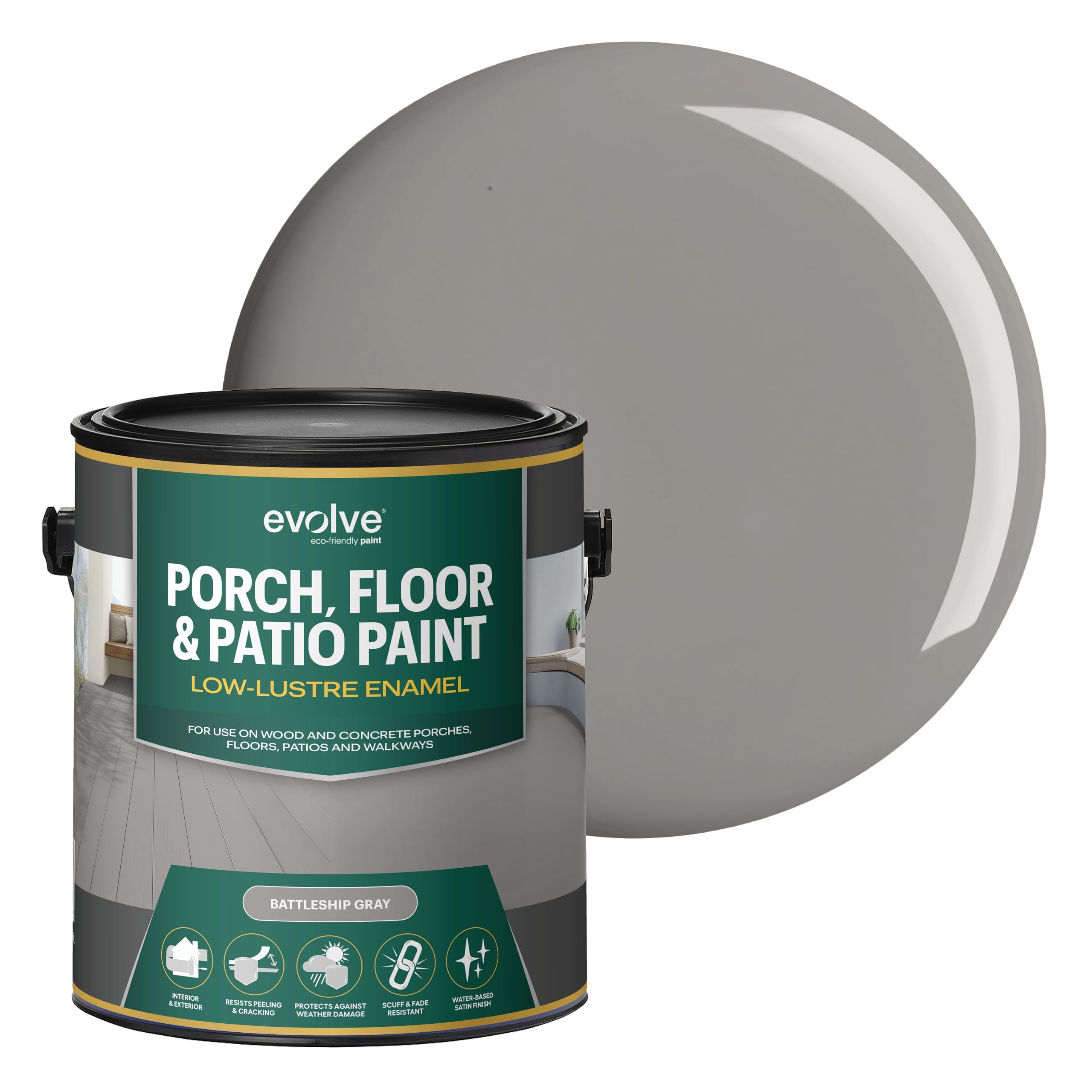
EVOLVE Porch & Floor Paint is a water-based acrylic latex that lays down a semi-gloss finish with scuff and scratch resistance. It covers 300–400 square feet per gallon and dries to the touch in one hour, allowing a quick turnaround for basement renovation projects.
Buyers note the paint is thick and needs thorough mixing to achieve consistent color. The Battleship Gray shade runs slightly darker than expected, and some experience color variation between batches—a risk when reordering for touch-ups. One homeowner applied two coats on a minimal-prep basement floor and reported excellent hold after six months of foot traffic.
The formula is low VOC and cleans up with soap and water, which matters in enclosed basement spaces. The trade-off is that black rubber soles can leave marks on the finish, and the paint is not elastomeric, so it will not bridge large cracks or resist heavy moisture vapor pressure.
Why it’s great
- Low VOC and water cleanup make it safe for indoor basement use
- Fast drying—rec oat in one hour speeds up multi-coat projects
- Semi-gloss finish provides a smooth, professional-looking surface
Good to know
- Color consistency varies between batches; buy all paint at once
- Black rubber shoe soles can leave visible marks on the finish
- Not a vapor barrier—may peel on concrete with high moisture emission
5. Rust-Oleum Metallic Floor Coating Kit

The Rust-Oleum Metallic Floor Coating Kit uses a polycuramine base with pearlescent and iridescent accents to produce a marbleized, high-gloss finish. It is industrial-grade, chemical resistant, and VOC-free, making it suitable for indoor basement spaces where aesthetics matter.
Buyers consistently warn that actual coverage is lower than the advertised 100–125 square feet per kit. Most report 80–85 square feet of practical coverage, and for a 2-car garage or large basement, four to five kits are often necessary. The translucent nature of the metallic layer means a solid undercoat is essential, and the included roller sheds lint if not replaced with a premium low-lint roller.
The metallic effect requires a swirling application technique to create the mottled look. Spike shoes are useful for touch-ups while the coating is wet. The finish is stunning when done right—friends and neighbors notice—but the cost per square foot is the highest of any coating here. Prep work cannot be rushed.
Why it’s great
- Unique marbleized high-gloss metallic finish for a premium look
- Chemical resistant, VOC-free, and no hot-tire pickup
- Works in basements, laundry rooms, and family rooms
Good to know
- Actual coverage is about 20–30% less than advertised
- Translucent—requires a solid-color undercoat for best effect
- Expensive per square foot; multiple kits needed for large areas
6. AMES Blue Max Liquid Rubber Waterproofer

Ames Blue Max is a liquid rubber elastomeric membrane that elongates 900% without cracking or peeling. It is designed specifically for below-grade waterproofing—basement foundations, concrete walls, and underlayment—rather than decorative floor painting. This is a functional vapor barrier first, a cosmetic finish second.
Buyers use it on cement board subfloors, shower window sills, and even pet-stained subfloors to seal odors and moisture. The white color is a flat matte, not meant to be a final walking surface. One user noted it requires a top coat if exposed to direct sun, but in a dark basement, the coating holds up well on its own. Application is straightforward by brush, roller, or spray, and it cleans up with soap and water.
The product is non-toxic, eco-friendly, and VOC compliant in all 50 states. It is not a heavy-duty floor coating for high traffic—use it under tile, carpet, or a decorative top coat. If moisture seepage is your primary issue, this is the right tool.
Why it’s great
- 900% elongation seals cracks as the concrete moves and settles
- True vapor barrier for below-grade concrete with moisture issues
- Non-toxic and VOC compliant for enclosed basement application
Good to know
- Not a decorative top coat—needs a top layer for foot traffic
- White matte finish stains easily if used as a walking surface
- Requires 24 hours between coats and good surface ventilation
7. INSL-X Acrylic Latex Traffic Paint

INSL-X Acrylic Latex Traffic Paint is a fast-drying line-marking paint designed for parking lots and warehouse aisles, not decorative basement floors. It applies as a matte black or dark grey coating that covers well on clean concrete and dries to the touch in 30 minutes.
Buyers use it successfully on outdoor asphalt and concrete to restripe parking areas cheaply. One user reported no visible wear after six months in a high-traffic parking spot. The paint includes a can opener and stir stick, and the coverage rate for a 4-inch line is 680–960 linear feet per gallon—extremely efficient for marking purposes.
This is not a general-purpose floor coating. The finish is flat, not designed for foot traffic aesthetics, and the color is limited to black. For a budget-friendly solution to mark pathways or storage zones in a basement workshop, it works. For a finished living space, look to the epoxy or acrylic enamel options above.
Why it’s great
- Excellent coverage for line marking at a budget-friendly cost
- Dries to touch in 30 minutes for quick project turnaround
- Water-based formula cleans up with soap and water
Good to know
- Matte finish is not decorative—suited for functional marking only
- Color limited to black; not a residential floor coating
- Low moisture resistance compared to epoxy or elastomeric coatings
FAQ
Can I paint over old basement floor paint without stripping it?
What happens if basement floor paint bubbles after application?
Final Thoughts: The Verdict
For most users, the basement concrete floor paint winner is the Rust-Oleum EpoxyShield because it combines genuine two-part epoxy vapor blocking with a professional decorative finish in a single-coat system. If you want slip resistance and a textured finish that hides crack, grab the KILZ Decorative Coating. And for below-grade waterproofing where moisture is your main enemy, nothing beats the Ames Blue Max Liquid Rubber.