
Our readers keep the lights on and the weekend projects moving. As an Amazon Associate, I earn from qualifying purchases.
A basement floor that flakes, chips, or stays tacky is a constant source of frustration. The wrong paint not only looks bad but can trap moisture, leading to more serious problems. The choice comes down to how the coating bonds with concrete and handles the unique humidity of a below-grade space.
I’m Rikta — the co-founder and writer behind FitlyFast. My approach to this guide was built on hundreds of hours researching surface chemistry, reading field reports on moisture vapor transmission rates, and cross-referencing real-world durability claims against listed solids content and adhesion specs.
This analysis cuts through the marketing noise to identify the truly effective basement floor paint options that provide lasting adhesion and moisture resistance without requiring an industrial prep crew.
How To Choose The Best Basement Floor Paint
Selecting the right coating for your basement floor starts with understanding that a below-grade slab is chemically and physically different from a garage or porch surface. Moisture rising through the concrete, alkalinity, and the need for a strong mechanical bond all dictate which type of paint or coating will hold up over time.
Resin Type: Epoxy vs. Acrylic vs. Polycuramine
Standard acrylic latex porch paints are the most affordable and easiest to apply but offer the weakest bond to concrete in damp basements. Two-part epoxy systems create a thick, impermeable film that blocks moisture vapor and resists chipping. Polycuramine is a newer hybrid that combines the strength of epoxy with the flexibility of polyurethane and is often found in premium one-coat kits. For a true moisture barrier, epoxy or polycuramine are the only reliable choices.
Solids Content and Coverage
The percentage of solids in the paint directly determines film thickness and durability. Water-based acrylics typically have 30-40% solids and require multiple coats to build enough film. 100% solids epoxy creates the thickest barrier in a single application. Coverage numbers (sq ft per gallon) are always ideal-case numbers; rough or porous concrete will consume significantly more material. Always buy an extra gallon or kit to avoid running short mid-project.
Moisture Tolerance and Surface Prep
No paint can overcome a wet slab. Before buying, test for moisture by taping a plastic sheet to the floor for 24 hours. If condensation forms, you need a vapor barrier or a specialized moisture-tolerant epoxy. All coatings require the concrete to be clean, etched, and free of sealers or old paint. Skipping the etch step is the single most common reason for adhesive failure within the first year.
Quick Comparison
On smaller screens, swipe sideways to see the full table.
| Model | Category | Best For | Key Spec | Amazon |
|---|---|---|---|---|
| Rust-Oleum EpoxyShield | Epoxy | All-around basement use | Water-based epoxy, 250 sq ft/kit | Amazon |
| Dove Gray Epoxy (Colored Epoxies) | 100% Solids Epoxy | Maximum durability and gloss | 100% solids, 3-gallon kit | Amazon |
| Rust-Oleum RockSolid Metallic | Polycuramine | Showroom finish and strength | 20x stronger than epoxy, 125 sq ft/kit | Amazon |
| Clear Floor Epoxy (Magic Resin) | Clear Epoxy | Custom pigment or flake topcoats | Self-leveling, 1.5-gallon kit | Amazon |
| KILZ Decorative Concrete Coating | Textured Acrylic | Slip-resistant surfaces | Speckled finish, fills hairline cracks | Amazon |
| EVOLVE Porch & Floor Paint | Acrylic Latex | Budget-friendly quick refresh | Low VOC, 300-400 sq ft/gal | Amazon |
| RUSTINS Quick Dry Floor Paint | Satin Enamel | Small area or touch-up | Touch dry in 30 minutes, 1 liter | Amazon |
In‑Depth Reviews
1. Rust-Oleum EpoxyShield Basement Floor Coating Kit

The Rust-Oleum EpoxyShield is formulated specifically for basement concrete, making it the most targeted solution in this guide. It uses a two-part water-based epoxy that cures into a satin finish capable of blocking moisture vapor transmission better than any acrylic. The kit covers up to 250 square feet with a single coat and requires no primer, which dramatically simplifies the prep schedule for a weekend project.
Users consistently report that the coating holds up well against foot traffic and light loads after the full 24-hour cure. The kit includes decorative color chips, which help hide minor surface imperfections and add a professional speckled look. The low odor and easy water cleanup make it safer to use in enclosed basement spaces compared to solvent-based epoxies.
Some reviews note that the chip density in the kit is modest, so plan to buy an extra bag if you want a heavy flake finish. The surface can be slippery when wet, so applying a non-slip additive in laundry or utility areas is a smart precaution. With proper surface etching and crack repair, this coating delivers a durable finish that can last for years.
Why it’s great
- One-coat coverage saves time and material cost on typical basement slabs.
- Water-based formula with low odor is safer for indoor application.
- Kit includes color chips, stir stick, and detailed instructions for a complete project.
Good to know
- Chip quantity is limited; add extra chips for heavy flake coverage.
- Surface can be slippery; consider anti-skid additive for wet areas.
- Requires strict adherence to prep steps for long-term adhesion.
2. Dove Gray Epoxy Resin Coating 100% Solids (Colored Epoxies)
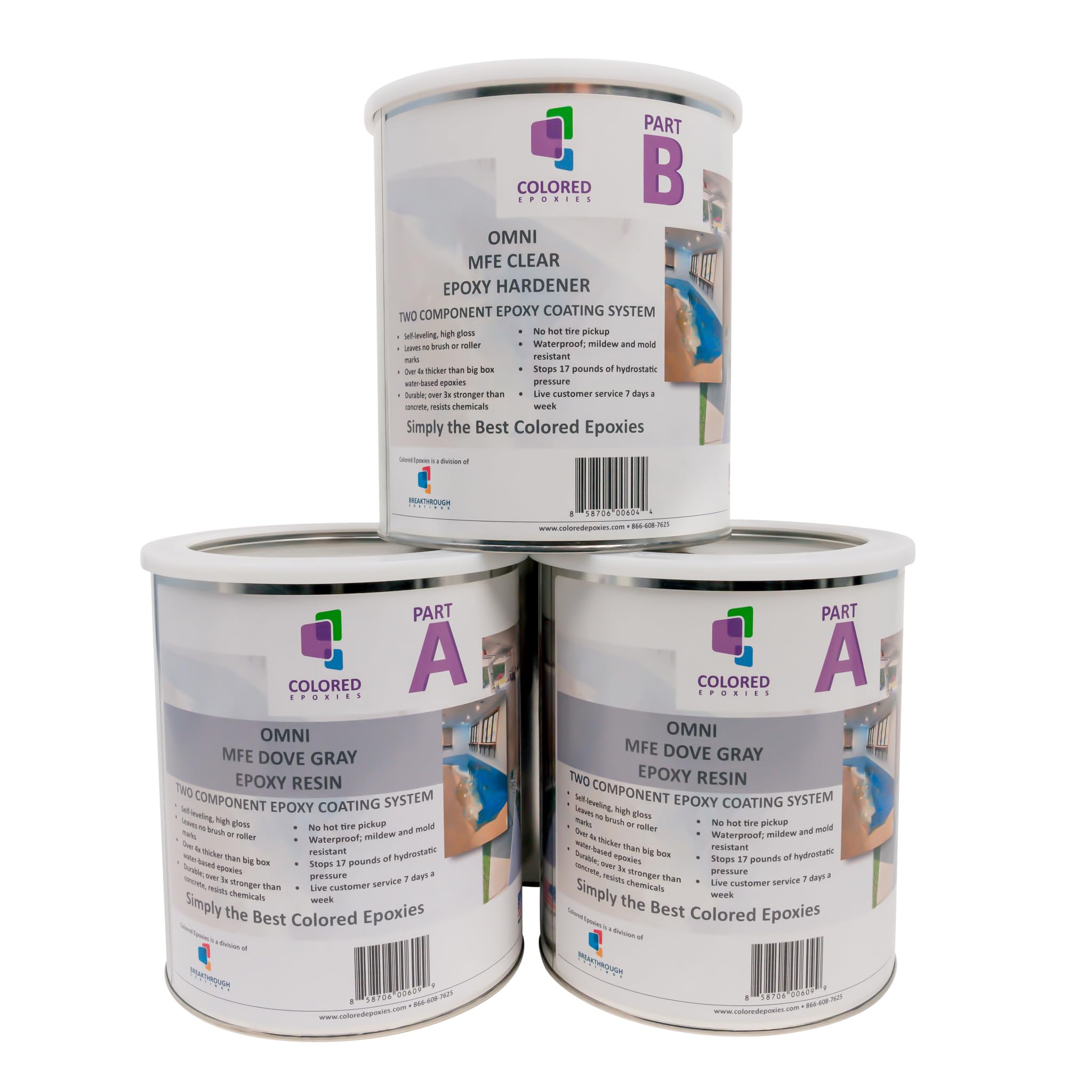
This is the heavy lifter for anyone serious about creating a long-term, industrial-grade floor. At 100% solids, this epoxy contains no solvents or water that evaporate during curing, meaning the entire volume of material stays on your floor as a thick, impermeable film. A 3-gallon kit provides enough material to cover a larger basement or garage with a single flood coat that can handle moisture, chemical spills, and heavy loads.
DIY users praise the clarity of the resin and the even pigmentation of the dove gray color. The self-leveling nature of 100% solids epoxy means it flows out to a mirror-like high-gloss finish when applied correctly with a squeegee and spiked roller. The manufacturer’s customer support is repeatedly highlighted as responsive, helping first-timers through temperature-related issues and application technique.
This is not a quick weekender project. The material is unforgiving of poor mixing ratios or cold temperatures, and the full cure time can extend to 7 days before heavy furniture can be placed. Torch work is almost mandatory to pop bubbles. For those willing to invest the prep time, this system produces a professional-grade floor that outperforms virtually any canned paint.
Why it’s great
- 100% solids means zero VOC evaporation and maximum film thickness in one coat.
- High-gloss finish brightens dark basements and is easy to sweep clean.
- Excellent customer support from the manufacturer for DIY troubleshooting.
Good to know
- Requires meticulous surface grinding or acid etching for bond strength.
- Must be applied within a specific temperature window to prevent flash curing.
- Full cure takes up to 7 days before the floor can handle furniture weight.
3. Rust-Oleum RockSolid Metallic Garage Floor Coating Kit

The RockSolid Metallic uses a polycuramine chemistry that Rust-Oleum claims is 20 times stronger than standard epoxy. This translates to a coating that resists hot tire pick-up, chemical spills, and impact far better than water-based alternatives. The metallic pigment creates a shimmering, multi-dimensional effect that transforms a dull concrete slab into a visual centerpiece, making it popular for finished basements and home workshops.
Application requires a specific swirling technique to distribute the metallic particles evenly, and the supplied roller is noted as being prone to shedding lint unless a premium replacement is used. Each kit covers only 125 square feet, so a typical two-car garage project requires multiple kits. The low-odor, low-VOC formulation is a distinct advantage for indoor use, and the surface is walkable within 8 to 10 hours.
Customer experiences are split between those who get a stunning finish and those who struggle with consistency between kits. Color matching between batches is a known challenge, so buying all needed kits at once is strongly advised. The metallic look is dramatic but will show every floor imperfection, making surface prep even more critical than with solid colors.
Why it’s great
- Polycuramine formula offers exceptional impact and chemical resistance.
- Eye-catching metallic finish adds significant aesthetic value to a basement.
- Fast cure time allows light foot traffic in under 12 hours.
Good to know
- Coverage is limited; budget for multiple kits for a standard room.
- Color consistency between kits can vary; buy all material at once.
- Metallic nature highlights every concrete imperfection and roller mark.
4. Clear Floor Epoxy Resin (Magic Resin)

This clear epoxy kit from Magic Resin is designed for those who want to create a fully custom floor finish. Because the resin is unpigmented, you can mix in your own color tints, broadcast decorative flakes, or even embed logos or art into the floor. The self-leveling formula makes it easier to achieve a smooth, bubble-free surface compared to thicker pigmented epoxies, provided you use a squeegee and not a roller.
The 1.5-gallon kit covers roughly 225 to 300 square feet when applied as a thin flood coat. Users highlight the durability and scratch resistance once fully cured, noting it holds up well in garage and workshop environments. The clear finish creates a high-gloss look that amplifies lighting in a dark basement, making the space feel more open and clean.
A common issue reported is that the resin can arrive in a partially crystallized or separated state if stored improperly by the seller. This is a shipping risk that can be mitigated by warming the containers in warm water before mixing. The product is also susceptible to yellowing over time, especially if exposed to direct UV light, so it is best suited for basements without windows or for use under a UV-stable topcoat.
Why it’s great
- Clear formula allows total creative freedom with pigments and flakes.
- Self-leveling design minimizes brush and roller marks during application.
- Strong, non-porous finish is easy to clean and resists chemical staining.
Good to know
- Risk of receiving crystallized resin if shipping conditions are poor.
- Clear epoxy can yellow in UV light; best for windowless basements.
- Requires torch or heat gun to eliminate air bubbles for a perfect finish.
5. KILZ Decorative Concrete Coating

KILZ brings its coating expertise to the floor with this acrylic-based decorative system that creates a stone-like, speckled finish. Unlike a smooth epoxy, the built-in texture provides excellent slip resistance, making this a strong candidate for basement stairs, entryways, or any area that might get wet. The coating is also designed to fill hairline cracks, which helps unify a fractured concrete surface without extensive patching.
Coverage is the weakest point of this product. At only 40 to 60 square feet per gallon, a typical basement floor will require a substantial number of gallons. The coating is thick, almost like pancake batter with sand mixed in, and requires a sturdy brush or roller to apply evenly. Users consistently note that multiple coats are needed for full coverage, and using a white primer underneath is essential for color consistency.
On the positive side, the durability over several years is well-documented by owners who used it on patios and garage floors. The finish resists UV fading better than many epoxies, and the slip resistance is a genuine safety feature. For a basement that doubles as a workshop or play area, the textured grip is a practical advantage over high-gloss alternatives.
Why it’s great
- Integrated texture provides real slip resistance for wet basement floors.
- Fills small hairline cracks to create a more uniform surface without patching.
- UV resistant formula is suitable for basement areas with windows or light wells.
Good to know
- Very low coverage; expect to need multiple gallons for an average room.
- Thick, gritty mixture requires a high-quality brush and thorough mixing.
- Needs multiple coats with primer for even color and full opacity.
6. EVOLVE Porch & Floor Paint
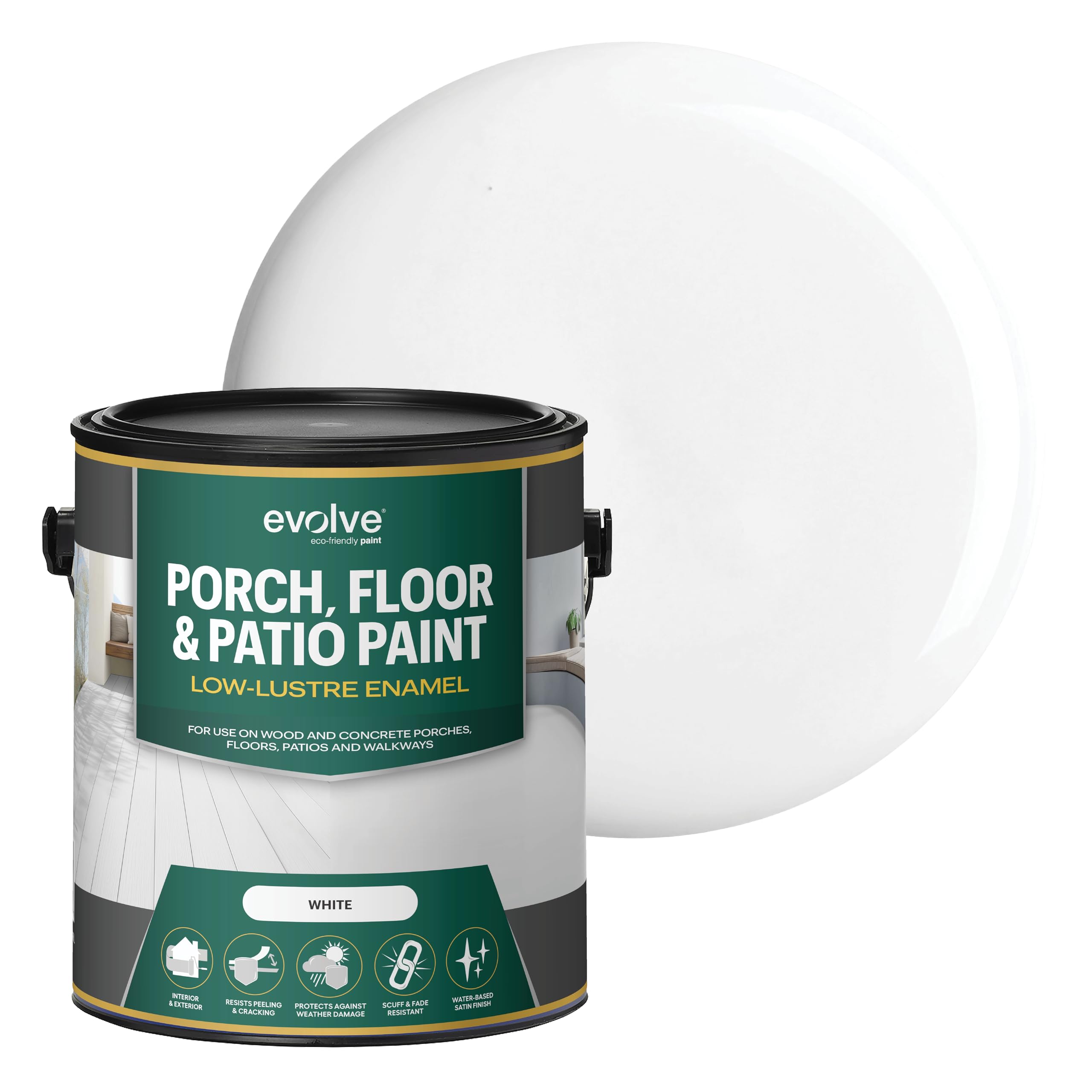
EVOLVE is a water-based acrylic latex paint that offers a fast-drying, low-odor option for basement floors that do not suffer from severe moisture problems. It is a standard porch and floor paint, not a specialized epoxy, so it relies on good surface preparation for adhesion. The semi-gloss finish is attractive and easy to clean, and the low-VOC formulation makes it comfortable to apply in enclosed spaces without respiratory protection.
Coverage is generous at 300 to 400 square feet per gallon, making it one of the most economical options per square foot. Users report that this paint works well on properly primed, dry concrete and holds up to foot traffic for several months. The white color option is helpful for brightening a dark basement, and the product is available in a range of colors beyond the basic white and gray offered by many competitors.
The major limitation is that the paint is not waterproof and can break down when exposed to standing water or high moisture. Several reviews describe the paint washing away after water exposure, even after a week of drying time. This makes it unsuitable for basements with any history of flooding, seepage, or condensation. It is best viewed as a temporary refresh for a dry, finished space rather than a long-term protective coating.
Why it’s great
- Excellent coverage per gallon reduces the number of coats needed.
- Low odor and soap-and-water cleanup make application easy for DIYers.
- Wide color selection offers more aesthetic flexibility than many competitors.
Good to know
- Not waterproof; can wash away if exposed to standing water or moisture.
- Requires a dry, sealed slab; unsuitable for damp basements or high humidity.
- Less durable than epoxy; may need recoating within a year in high-traffic zones.
7. RUSTINS Quick Dry Floor Paint

RUSTINS Quick Dry Floor Paint is a satin enamel formulation designed for small-scale projects and touch-ups. Its key selling point is the 30-minute dry-to-touch time, which allows for rapid recoating and minimizes the time the floor is out of service. It is suitable for interior and exterior use on concrete, brick, stone, and wood surfaces, making it a versatile option for patching worn spots or painting a small basement landing.
The 1-liter can is small, and the coverage is correspondingly limited. Users who bought this expecting to paint a full room were surprised by the size, so it is essential to check the volume before purchasing. The paint is available in grey, red, and black, but the limited color range restricts design options. Some users note the finish has a gritty texture, which may or may not be desirable depending on the intended use.
Long-term durability on basement floors is mixed. While it holds up well on primed concrete with light foot traffic, it is not a heavy-duty coating and may scuff or wear in active areas. It is best suited for a small workbench area, a storage closet floor, or for refreshing a section of floor that has been damaged, rather than as a full-room coating. Its best use is likely as a fast-drying primer or base for a more durable topcoat.
Why it’s great
- Ultra-fast drying allows for quick project completion and early foot traffic.
- Versatile formula works on concrete, wood, stone, and even brick surfaces.
- Affordable option for small touch-ups or painting a single closet floor.
Good to know
- 1-liter can is very small; not intended for full room coverage.
- Limited color selection (grey, red, black) reduces design flexibility.
- Not designed for high-traffic durability; may scuff or wear in active zones.
FAQ
Can I paint a basement floor that has moisture problems?
Do I need to acid etch the concrete before painting?
How long should I wait before walking on a painted basement floor?
Final Thoughts: The Verdict
For most users, the basement floor paint winner is the Rust-Oleum EpoxyShield because it combines a water-based epoxy formula designed for basement moisture with one-coat coverage and a complete kit. If you want a show-quality, ultra-durable finish that will last a decade, grab the Dove Gray 100% Solids Epoxy (Colored Epoxies). And for a budget refresh on a dry slab, nothing beats the value and coverage of the EVOLVE Porch & Floor Paint.