
Our readers keep the lights on and the weekend projects moving. As an Amazon Associate, I earn from qualifying purchases.
Few spaces in a home feel as lifeless as a windowless or dimly-lit basement. But keeping lush, healthy greenery in these low-light zones is not about luck—it is about choosing the right genus. Most houseplants wilt or yellow within weeks if they cannot photosynthesize with standard indirect light, yet several hardy species actually thrive under fluorescent tubes or weak north-facing light from a single small window.
I’m Rikta — the co-founder and writer behind FitlyFast. I’ve analyzed hundreds of plant shipments, studied root-system health reports, and cross-referenced light tolerance data from growers to identify exactly which live plants survive—and flourish—inside the lower-light corners of a home.
Whether you are working with a deep concrete basement or a partially finished low-light room, the right selection turns a dark void into a living sanctuary. This guide breaks down the best basement plants that can handle minimal sunlight and still deliver vibrant foliage, air purification, and emotional lift.
How To Choose The Best Basement Plants
Not every houseplant can handle the restricted light and often cooler air of a basement. Three factors separate the survivors from the casualties: light tolerance, watering rhythm, and root system resilience at the point of purchase.
Light tolerance is non-negotiable
Plants advertised as “low light” still need a measurable minimum. Snake plants (Sansevieria) and Peace Lilies (Spathiphyllum) are among the few that can persist on ambient fluorescent lighting alone. If your basement has zero natural windows, avoid any plant labeled “bright indirect” or “full sun.” Stick to species tested in windowless commercial spaces.
Watering discipline separates success from rot
Cooler basement temperatures slow evaporation dramatically. A plant that needs weekly watering in a living room may only need a soak every two to three weeks underground. Pairing a moisture-retentive soil with a pot that has drainage holes is critical—standing water in a dark, cool room is a direct invitation to root rot.
Quick Comparison
On smaller screens, swipe sideways to see the full table.
| Model | Category | Best For | Key Spec | Amazon |
|---|---|---|---|---|
| Snake Plant (Zeylanica) | Snake | Absolute low-light corners | 13-inch height | Amazon |
| 3 Assorted Snake Plants | Snake Variety | Curated multi-plant setup | 3 plants, assorted varieties | Amazon |
| Peace Lily | Flowering | Air purification & bloom | 4-inch growers pot | Amazon |
| Spider Plant Variety Pack | Spider | Four-variety collection | 4 starter plants, bare root | Amazon |
| Lemon Lime Maranta | Maranta | Pet-safe prayer plant | 12–16 inch height | Amazon |
| Anthurium Red | Flowering | Colorful low-light bloomer | 4-inch pot, multiple blooms | Amazon |
| Chinese Evergreen | Evergreen | Minimal care foliage | 4-inch pot, partial shade | Amazon |
In‑Depth Reviews
1. Altman Plants Live Snake Plant (Zeylanica), Approx. 13″ Tall

The Snake Plant (Sansevieria Zeylanica) is the single most forgiving plant for a basement environment. This 13-inch specimen arrives fully rooted in a 4.25-inch growers pot and tolerates low, medium, and bright light equally—meaning it won’t slow down under a single fluorescent ceiling fixture. The variegated sword-shaped leaves are biologically adapted for CAM photosynthesis, which lets them absorb carbon dioxide at night and conserve water during the day.
Altman Plants ships these with biodegradable packaging and a robust root mass. Multiple verified reviews confirm that the plant arrives well wrapped even in freezing temperatures, and customers report new growth within two weeks of repotting. The one recurring note is that the advertised 13-inch total height includes the pot—so the actual leaf height is closer to 8 inches—but the health of the root system and leaf density more than compensate for the modest size.
For absolute beginners or seasoned plant owners building a basement collection from scratch, this snake plant delivers the highest chance of success with the lowest maintenance overhead. It filters airborne toxins like benzene and formaldehyde, giving you actual air quality improvement in a sealed basement space.
Why it’s great
- Extreme light flexibility—survives in pure fluorescent environments
- Strong root system at arrival leads to faster growth after repotting
- Engineered for drought—tolerates weeks of missed waterings
Good to know
- Leaf height measures about 8 inches above the pot, not the full 13 inches quoted
- Occasional leaf-tip damage reported in transit during severe weather
2. 3 Snake Plant – Sansevieria Assorted Variety from California Tropicals

California Tropicals offers three assorted snake plant varieties in a single purchase, giving you instant curation without having to hunt for different types. Each plant arrives fully rooted in its own 4-inch pot, and the seller chooses the specific mix, so you typically get one dwarf, one tall upright, and one patterned leaf cultivar. This variety is valuable for basement styling because you can cluster them at different heights for a layered visual effect.
Buyers who ordered multiples report that the plants arrived with moist soil and were individually wrapped, preventing leaf breakage during shipping. A small number of customers noted that the dwarf variety in the assortment was smaller than expected, but the overall health score is overwhelmingly positive. Sansevieria species share the same low-light tolerance, so every plant in this pack is equally suited to basement conditions.
Snake plants are listed as pet-friendly by the ASPCA, so this bundle is a safe bet if your basement doubles as a laundry room or pet sleeping area. The three pots give you enough material to separate into different rooms or consolidate into one large planter for a dramatic floor display.
Why it’s great
- Three distinct varieties in one order—instant visual variety
- Excellent packaging survives hot shipping conditions
- Pet-safe foliage for basement pet zones
Good to know
- Variety selection is at the seller’s discretion, not customer-chosen
- Some plants arrive smaller than a single-store purchase would yield
3. Thorsen’s Greenhouse Live Peace Lily Plant, Spathyphylum, 4″ Pot
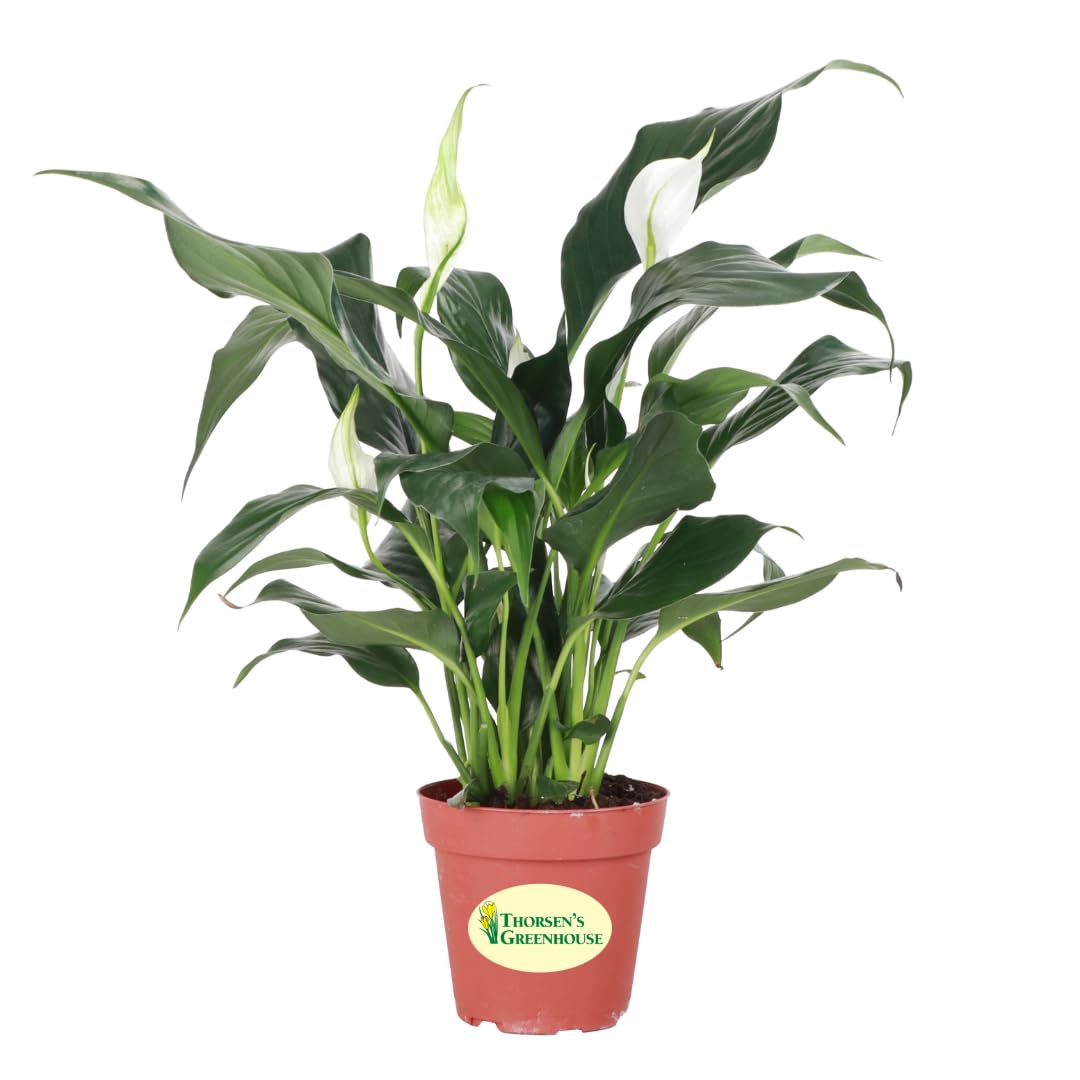
The Peace Lily (Spathiphyllum) is one of the few flowering plants that will actually produce blooms in low-light conditions—making it a rare find for dark basement rooms. Thorsen’s Greenhouse ships this in a 4-inch growers pot with drainage holes, and the plant’s dark green leaves indicate it was grown under proper shade conditions before shipping. Peace Lilies drop a clear visual cue when they need water (the leaves droop), which is a huge advantage for basement growers who tend to overwater.
Buyers consistently mention that the plant arrived with several strong green leaves, and in many cases already had blooms emerging. The NASA Clean Air Study identified Peace Lilies as effective removers of trichloroethylene and benzene, which is relevant for basements where stored paints, solvents, or car exhaust fumes may accumulate. The 4-inch size is compact enough for a shelf or windowsill above a basement window.
One limitation: Peace Lilies are toxic to cats and dogs, so if your basement is a pet hangout, choose a different option from this list. The plant also prefers consistent moisture, unlike snake plants—so you need to check soil dryness weekly, not monthly.
Why it’s great
- Produces white blooms even in partial shade and low fluorescent light
- Drooping leaves provide an unmistakable water-need signal
- Proven toxin-removal capability for sealed basement air
Good to know
- Toxic to cats and dogs if ingested
- Needs more consistent watering than snake plants—weekly schedule recommended
4. Spider Plant Variety Pack – 4 Spider Plants Live – Ocean, Hawaiian, Green, Bonnie Curly
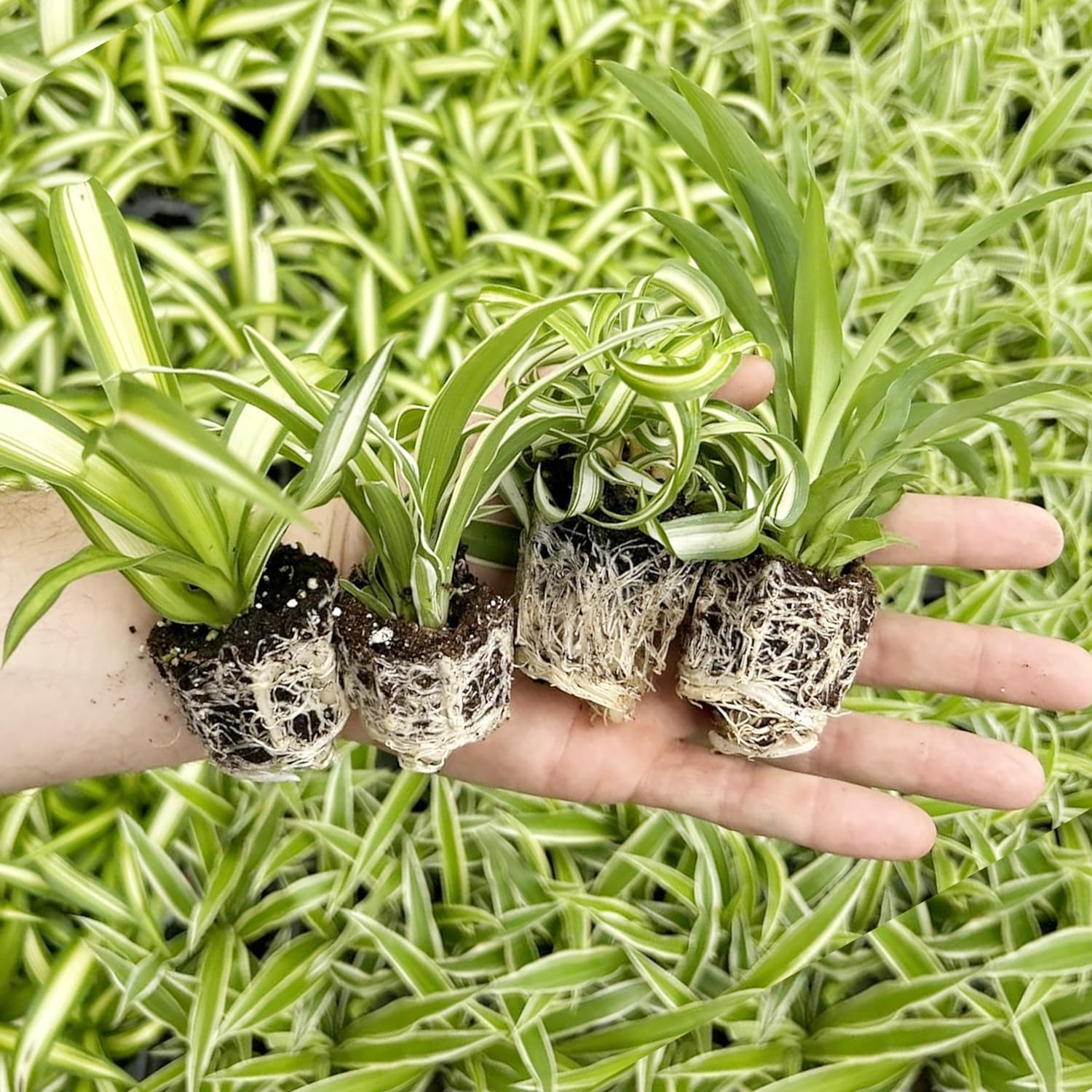
Spider plants (Chlorophytum comosum) are legendary for their resilience in indirect light, and this variety pack from August Breeze Farm gives you four distinct genotypes: Ocean, Hawaiian, Green, and Bonnie Curly. The Bonnie Curly variety in particular has twisted, rippled leaves that add a sculptural element to a plain corner. These are shipped as bare-root starter plants with well-developed root systems—customers consistently describe them as having “incredible” root growth for the size.
Each starter is ready to drop into a 4-inch pot. The Ocean variety grows upright with broad green leaves, the Hawaiian has a cream-striped center, and the standard Green stays compact. Because they share similar care profiles, you can use a single watering schedule for all four, which simplifies maintenance in a busy household. Buyers noted that the bare roots tolerate transit well, even in hot weather, and rebound quickly after potting.
One factor to consider: spider plants are non-toxic to pets, so this is a safe pack for cat owners who store litter boxes in the basement. The drought-tolerant nature of these starters means they can handle the slower evaporation of a cool basement without rotting.
Why it’s great
- Four distinct spider plant varieties in a single order
- Excellent bare-root root systems for fast establishment
- Drought tolerant—ideal for cool, slow-drying basement soil
Good to know
- Bare-root format requires immediate potting upon arrival
- Bonnie Curly variety may need slightly more light to maintain tight curl pattern
5. Lemon Lime Maranta Prayer Plant, Pet Friendly, 12-16 inch Tall, 4″ Pot by Hopewind Plants

The Lemon Lime Maranta Prayer Plant is a vibrant choice for basement shelves where you want active movement—its leaves fold upward at night in a “praying” motion triggered by the absence of light. Hopewind ships this variety at 12–16 inches tall in a 4-inch nursery pot. The vivid yellow-green leaf veins create a patterned texture that reads well even under a single grow light or fluorescent tube.
Buyer reports consistently praise the packaging quality, with foam and tape securing the pot and leaves against USPS mishandling. Even when shipments were delayed or left sideways in mailboxes, the plants arrived without broken stems or soil spillage. This plant needs bright, indirect light to maintain its variegation, so position it within a few feet of a basement window or under a dedicated LED grow lamp rated at 1000+ lumens.
ASPCA-certified as non-toxic, the Maranta is completely safe for cats and dogs, which makes it a strong contender for basements used as pet rec rooms. The organic material features and organic potting mix used by Hopewind reduce the risk of chemical shock when repotting.
Why it’s great
- Unique nyctinastic leaf movement adds dynamic living element to static spaces
- Excellent packaging survives USPS delays without damage
- 100% pet-safe per ASPCA standards
Good to know
- Needs bright indirect light—not suitable for deep windowless corners
- Requires higher humidity than snake plants; misting recommended in dry basements
6. California Tropicals Anthurium Red – Live House Plants Indoor, 4 Inch Pot
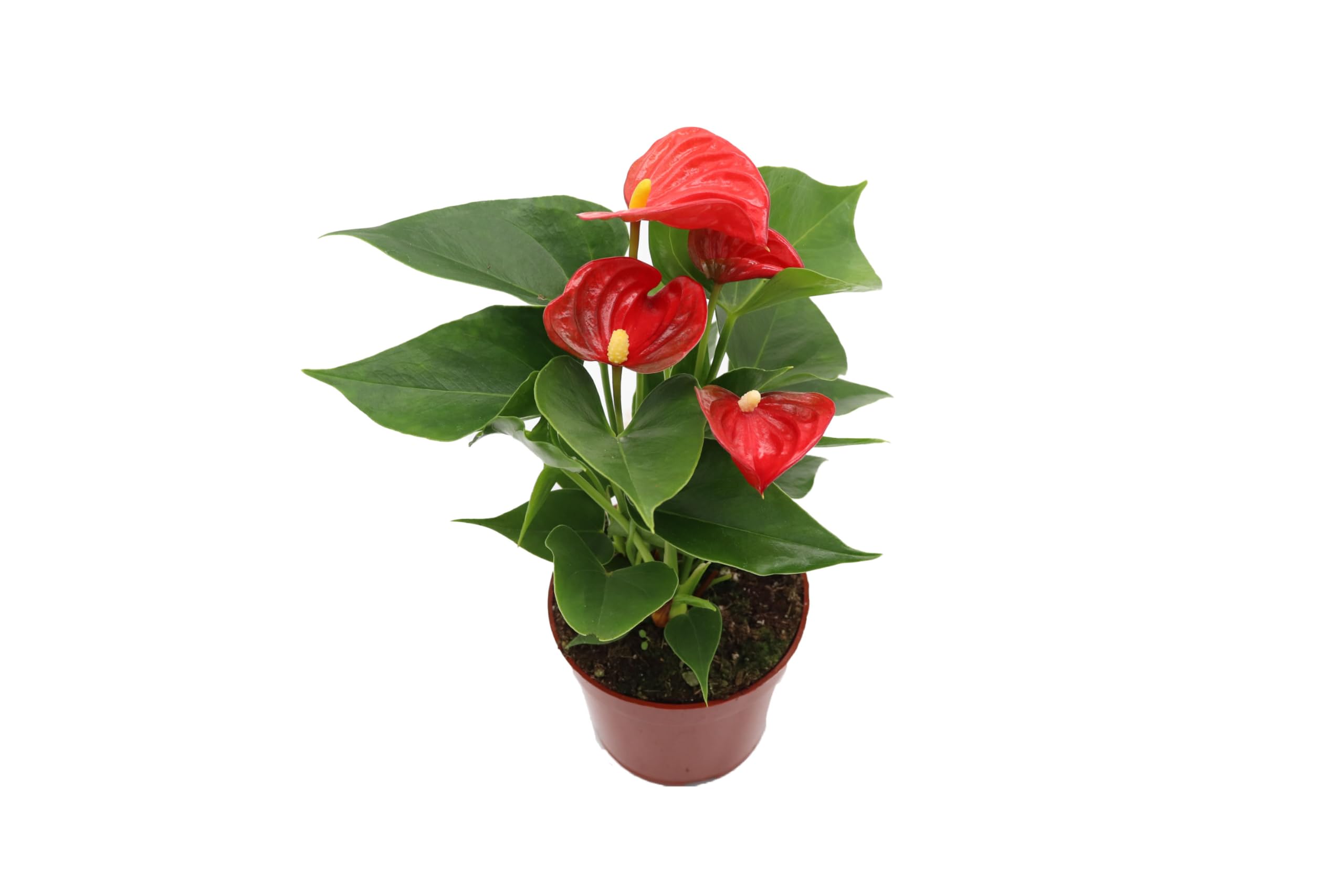
The Anthurium Red provides a rare burst of bright red spathe color that persists for weeks in indirect light. California Tropicals ships this with typical dimensions of 10–11 inches tall and a 4-inch pot diameter, and customers generally receive plants with 2–3 blooms already open. The waxy, heart-shaped spathes hold their color far longer than cut flowers, giving you a pop of saturation against the neutral gray tones of a basement wall.
Anthuriums prefer medium to bright indirect light—they can handle a north-facing basement window well, but they will not rebloom reliably under fluorescent-only lighting. Buyers who received this plant were impressed by the packaging; even when a shipment was mistakenly held in a mailroom for five days, the plant remained hydrated and healthy. A small number of reports mention fungus or less vibrant color at arrival, suggesting that the seller’s inventory control varies.
The Anthurium’s air purification capability is documented, though less potent than a Peace Lily’s. Its real strength is aesthetic: placing a red Anthurium in a dark basement creates a visual anchor that draws the eye away from raw walls or exposed pipes.
Why it’s great
- Long-lasting red spathes provide months of visual interest in low light
- Packaging protects blooms effectively during shipping delays
- Sub-irrigation watering works well—once weekly is sufficient
Good to know
- Needs medium indirect light to maintain bloom cycle—not for fully dark rooms
- Occasional quality variation—some shipments reported less vibrant color
7. Agloenema Chinese Evergreen – 4” from California Tropicals

Chinese Evergreen (Aglaonema) is one of the most shade-tolerant foliage plants on the market, thriving in partial shade where many other species would yellow. California Tropicals sends this fully rooted in a 4-inch pot, and buyers consistently report that the plant arrives healthy, well-packed, and larger than anticipated. The green leaves feature silver or cream variegation, which provides subtle visual texture without needing bright light to develop.
Customer feedback emphasizes that this plant handles temperature fluctuations well—one reviewer noted the plant was placed in a mailbox on a hot day and still arrived in good condition. The Chinese Evergreen’s growth rate is slower than a Spider Plant’s, which actually works in a basement’s favor: it maintains its shape without outgrowing its pot quickly. It clusters well with other low-light plants in a large planter for a fuller display.
Watering needs are moderate, but the Aglaonema is sensitive to cold drafts—keep it away from basement doors or vents that produce cool air. Its foliage is toxic to pets, so it is not a choice for cat-inhabited spaces. For a purely minimalist, hard-to-kill option under a single light source, the Chinese Evergreen delivers steady, low-maintenance greenery.
Why it’s great
- Exceptional shade tolerance—performs well in partial and low indirect light
- Arrives well-packaged and often larger than expected
- Slow growth reduces repotting frequency in tight spaces
Good to know
- Toxic to cats and dogs—avoid in pet-accessible basements
- Sensitive to cold drafts; needs stable basement temperatures above 60°F
FAQ
Can any plant survive in a basement with zero windows?
How often should I water basement plants compared to normal houseplants?
Why do my basement plants keep developing yellow leaves?
Final Thoughts: The Verdict
For most users, the best basement plants winner is the Altman Plants Snake Plant (Zeylanica) because it tolerates the widest light range and requires the least attention of any option here, thriving under pure fluorescent tubes. If you want three distinct varieties in one affordable bundle, grab the California Tropicals 3 Assorted Snake Plants. And for a bloom-producing air purifier that signals when it needs water, nothing beats the Thorsen’s Greenhouse Peace Lily.