
Our readers keep the lights on and the weekend projects moving. As an Amazon Associate, I earn from qualifying purchases.
A basement setup should feel like a personal cinema, not a cave with a dull screen. The biggest headache for a basement install isn’t the lack of windows—it’s the harsh overhead cans, reflected table lamps, or that one glass door that turns your screen into a mirror. You need a panel with enough luminance headroom to cut through ambient light without washing out the blacks.
I’m Rikta — the co-founder and writer behind FitlyFast. I’ve sifted through a mountain of brightness measurements, dimming zone counts, and real-world viewing-angle reports to separate the sets that punch above their weight from those that go flat in a finished room.
Whether you are converting a rec room into a sports den or a spare-level theatre, this guide breaks down the specs that matter for darker spaces, culminating in a clear verdict on the best basement tv for your specific ceiling height and lighting layout.
How To Choose The Best Basement TV
Your basement has unique lighting: recessed cans, a pool table fixture, or maybe a walk-out door. A standard living-room TV often feels murky here. The three specs below directly control how watchable a panel will be when the lights aren’t off.
Peak Brightness: The Basement Glare Killer
Measure brightness in nits. A set hitting 600–800 nits handles pot lights and reflections well enough for casual viewing. For sports on a Saturday afternoon with the overheads on, look for 1,000 nits or more. Mini-LED and high-end QLED panels typically hit this range; entry-level EDGE-lit models often top out around 350–400 nits, which feels dim the moment any light hits the screen.
Local Dimming Zones: The Contrast Secret
More zones means the TV can dim a dark part of a scene while keeping a bright object (like a lamp or a logo) punchy. A set with 200+ zones delivers noticeable depth without halo artifacts. Mini-LED backlights with 500–600 zones approach OLED-like black levels at a fraction of the cost, which is huge for a basement where a little ambient light already reduces the perceived contrast of an OLED.
Refresh Rate & Motion Handling
If your basement doubles as a gaming cave, 120Hz or 144Hz native panels prevent motion blur during fast-paced shooters or racing games. For purely movie and show streaming, a 60Hz panel is perfectly adequate. But if you plan to watch live sports, the smoother motion of a high-refresh panel makes a visible difference, especially on a larger screen.
Quick Comparison
On smaller screens, swipe sideways to see the full table.
| Model | Category | Best For | Key Spec | Amazon |
|---|---|---|---|---|
| Samsung S90F OLED | Premium OLED | Ultimate contrast | NQ4 AI Gen3 / 144Hz | Amazon |
| Sony BRAVIA 5 | Mini-LED Flagship | Bright + cinematic | XR Backlight Master Drive | Amazon |
| Hisense U6 | Mini-LED QLED | Bright room value | 1,000 nits / 600 zones | Amazon |
| Ember Mini-LED | Mini-LED QLED | Gaming + HDR | 144Hz / 512 zones | Amazon |
| TCL T7 | QLED 144Hz | Fast-paced sports | 144Hz / Google TV | Amazon |
| Samsung M70H | Mini-LED Mid | Vivid color | One Billion Color Spectrum | Amazon |
| Sony BRAVIA 2 II | Entry Sony | PS5 pairing | 4K Processor X1 | Amazon |
| Panasonic W70 | Mid-Range Fire TV | Smart features | HDR Bright Panel | Amazon |
| Roku Plus Series | Mid-Range QLED | Ease of use | Mini-LED / QLED | Amazon |
| Roku Select Series | Budget QLED | Large screen price | 65″ at entry price | Amazon |
| Ember QLED | Budget QLED | Office / casual | Dolby Vision / HDR10+ | Amazon |
In‑Depth Reviews
1. Samsung S90F OLED

The S90F uses a QD-OLED panel to deliver the best contrast in this list. Each pixel emits its own light, so black areas are truly black — no halos around bright objects. With the NQ4 AI Gen3 processor handling upscaling, even sub-4K content appears sharp and well-detailed. The 144Hz native refresh rate makes it a top-tier gaming panel for PS5 or PC.
Peak brightness on the S90F is strong for an OLED, but it still falls behind high-nit Mini-LED models if your basement has direct overhead lights constantly on. The anti-reflective coating is effective but fragile — cleaning requires care to avoid smearing. The remote is minimalist, which some may find lacking buttons.
For a dedicated home-theater basement where you control the lighting, the S90F is the ultimate choice. The color volume from the quantum dot layer is unmatched, delivering vibrant reds and greens that LED-based panels can’t replicate. It is the benchmark for pure picture quality in a dim room.
Why it’s great
- Reference-level black levels and contrast
- Incredible color volume from QD-OLED tech
- 144Hz VRR for smooth gaming
Good to know
- Not ideal for rooms with constant bright overhead lighting
- Anti-reflective coating is easily damaged
- Premium price point
2. Sony BRAVIA 5

Sony’s XR Backlight Master Drive controls thousands of Mini LEDs to deliver both high brightness and near-OLED black levels. The XR processor uses AI to analyze scenes in real-time, boosting color and clarity without creating artifacts. The built-in speakers are decent, but you will want a soundbar to take full advantage of the Dolby Atmos support.
This set excels at upscaling lower-resolution content, making it perfect for a basement used for a mix of streaming, broadcast sports, and Blu-rays. The 120Hz panel handles motion well with XR Motion Clarity, though it is not as high as some competitors’ 144Hz offerings. It includes exclusive PlayStation 5 features like Auto HDR Tone Mapping.
If you want a set that can handle a basement with variable lighting — from dark movie nights to brighter sports gatherings — the BRAVIA 5 is a versatile powerhouse. It costs more than budget Mini-LED options, but the image processing and build quality justify the difference.
Why it’s great
- Excellent upscaling and motion handling
- High peak brightness with great contrast
- PS5 integration features
Good to know
- Only 2 of 4 HDMI ports are HDMI 2.1
- Built-in speakers need supplementing
- Premium price bracket
3. Hisense U6
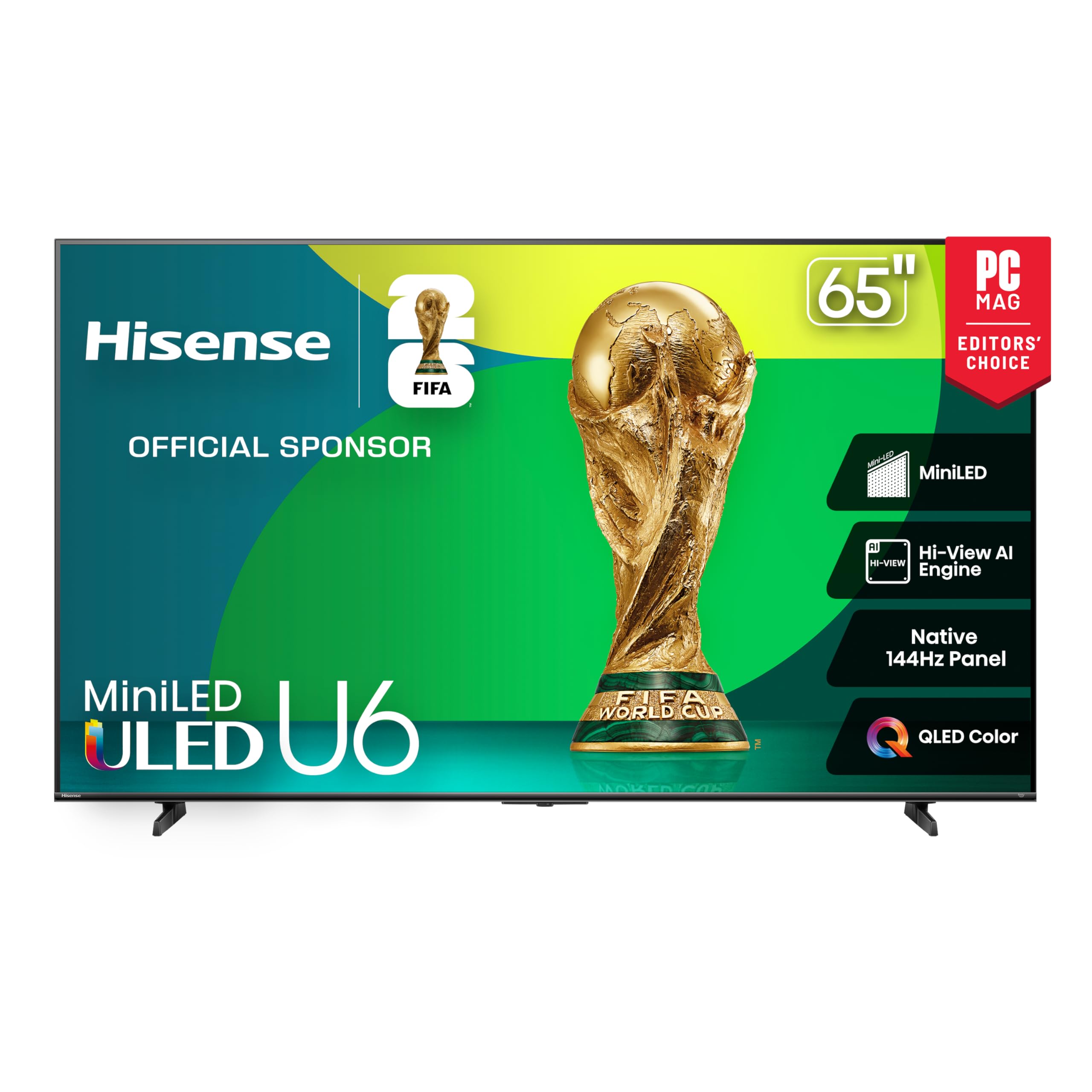
The Hisense U6 is a dark horse for bright basements. With up to 1,000 nits of peak brightness and 600 local dimming zones, it punches far above its price point. The Mini-LED backlight creates deep shadows and punchy highlights without the haloing you see on cheaper edge-lit TVs. QLED color covers a wide DCI-P3 gamut for vibrant hues.
Built on the Fire TV platform, app navigation is responsive, and Alexa is integrated for voice commands. The native 144Hz panel with AMD FreeSync Premium is great for gaming. The built-in subwoofer delivers surprisingly usable low-end, though purists will still want a separate sound system for serious movie nights.
This is the set to grab if your basement has recessed cans or a pool table light that often stays on. The high brightness cuts through ambient light better than sets costing much more. The only catch is that only two of the four HDMI ports handle the 144Hz signal.
Why it’s great
- High peak brightness for the price
- Good local dimming with 600 zones
- Solid built-in subwoofer
Good to know
- Only 2 HDMI ports are 2.1 with 144Hz
- Initial setup may require Wi-Fi app
- Panel weight requires a helper for mounting
4. Amazon Ember Mini-LED
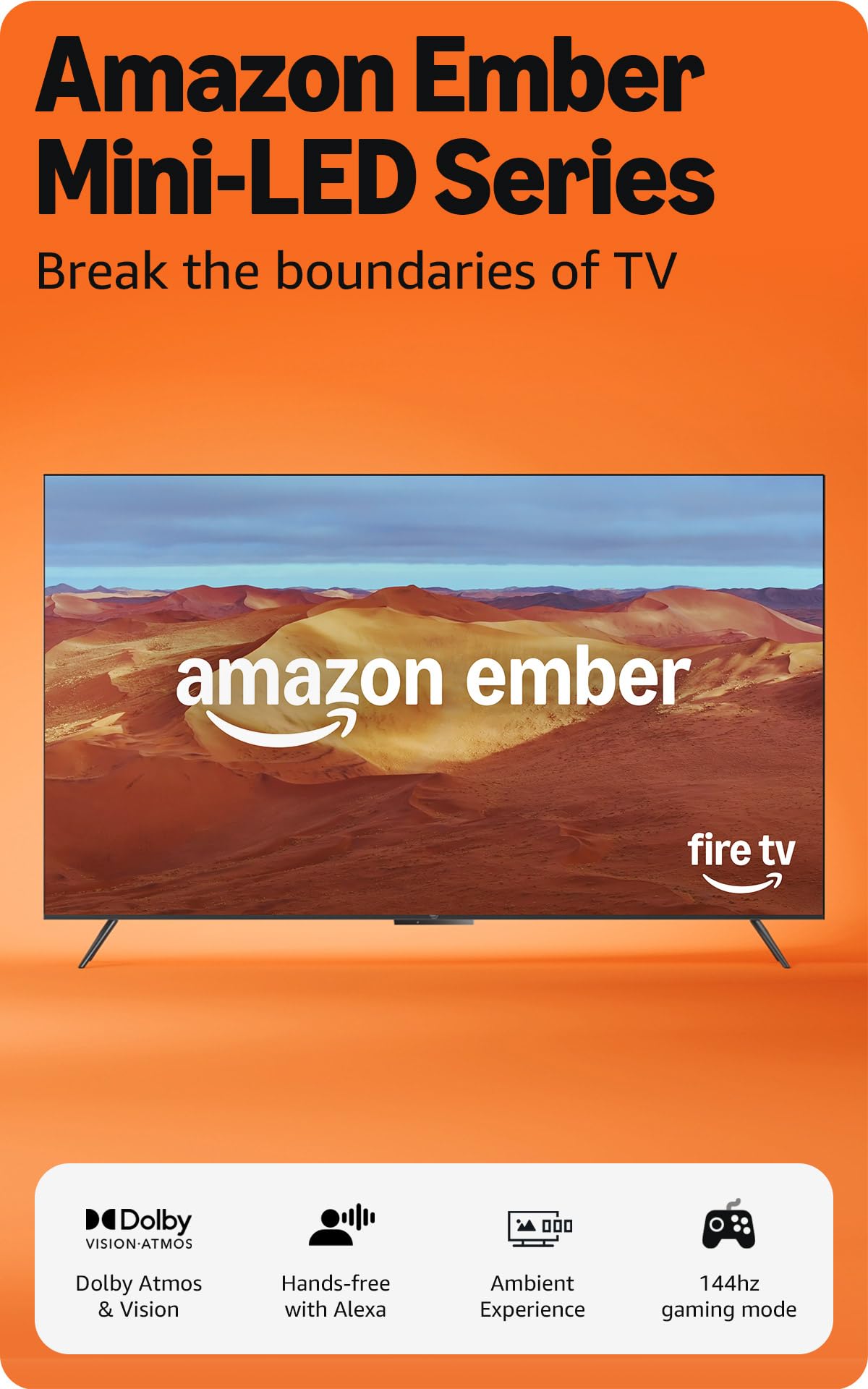
Amazon’s Ember Mini-LED is a strong contender for gamers who want a high-refresh panel without jumping to OLED pricing. At 144Hz with AMD FreeSync Premium Pro certification, it delivers tear-free, fluid motion during fast-paced titles. The 512 dimming zones provide excellent contrast for an LCD-based set, and the peak brightness of around 1,400 nits is among the highest here.
The Fire TV experience is integrated deeply, with Alexa+ hands-free voice control and the Omnisense feature that wakes the TV as you enter the room. Picture quality for HDR content is impressive, with Dolby Vision IQ and HDR10+ Adaptive support. Some users report occasional menu lag after extended use, and the home screen is filled with Amazon ads.
If your basement is a dedicated gaming space, the combination of high brightness, low input lag, and 144Hz native refresh makes this a very compelling choice. The sound from the 2.1 Dolby Atmos speakers is above average for built-in TV audio.
Why it’s great
- 144Hz with FreeSync Premium Pro
- Very high peak brightness for HDR
- 512 dimming zones for deep blacks
Good to know
- Fire TV interface has Amazon ads
- Some users report occasional lag over time
- Not as bright as Sony XR in some comparisons
5. TCL T7

The TCL T7 is an Amazon exclusive that offers a 144Hz panel with MEMC frame insertion for exceptionally smooth motion. The QLED display covers nearly the entire DCI-P3 color space, and the AIPQ Pro processor optimizes contrast and clarity intelligently. For a basement sports den, this set handles fast-action plays without noticeable blur.
Google TV interface is clean and responsive, with built-in Chromecast and Apple AirPlay 2. The bezel-less FullView design looks modern and helps the screen feel larger. The built-in speakers are adequate for casual watching but lack low-end punch; pairing with a soundbar is recommended.
This is a solid mid-range pick for someone who values motion clarity above raw brightness. It doesn’t hit the same peak luminance as the Hisense U6, but it handles typical basement lighting well and offers excellent value for the feature set. PC monitor use is possible, though wake-from-sleep can be finicky over HDMI.
Why it’s great
- 144Hz native with excellent motion handling
- Vibrant QLED color coverage
- Bezel-less design looks premium
Good to know
- Speakers lack bass
- PC monitor wake can be inconsistent
- Not as bright as competitors for very lit rooms
6. Samsung M70H Mini-LED
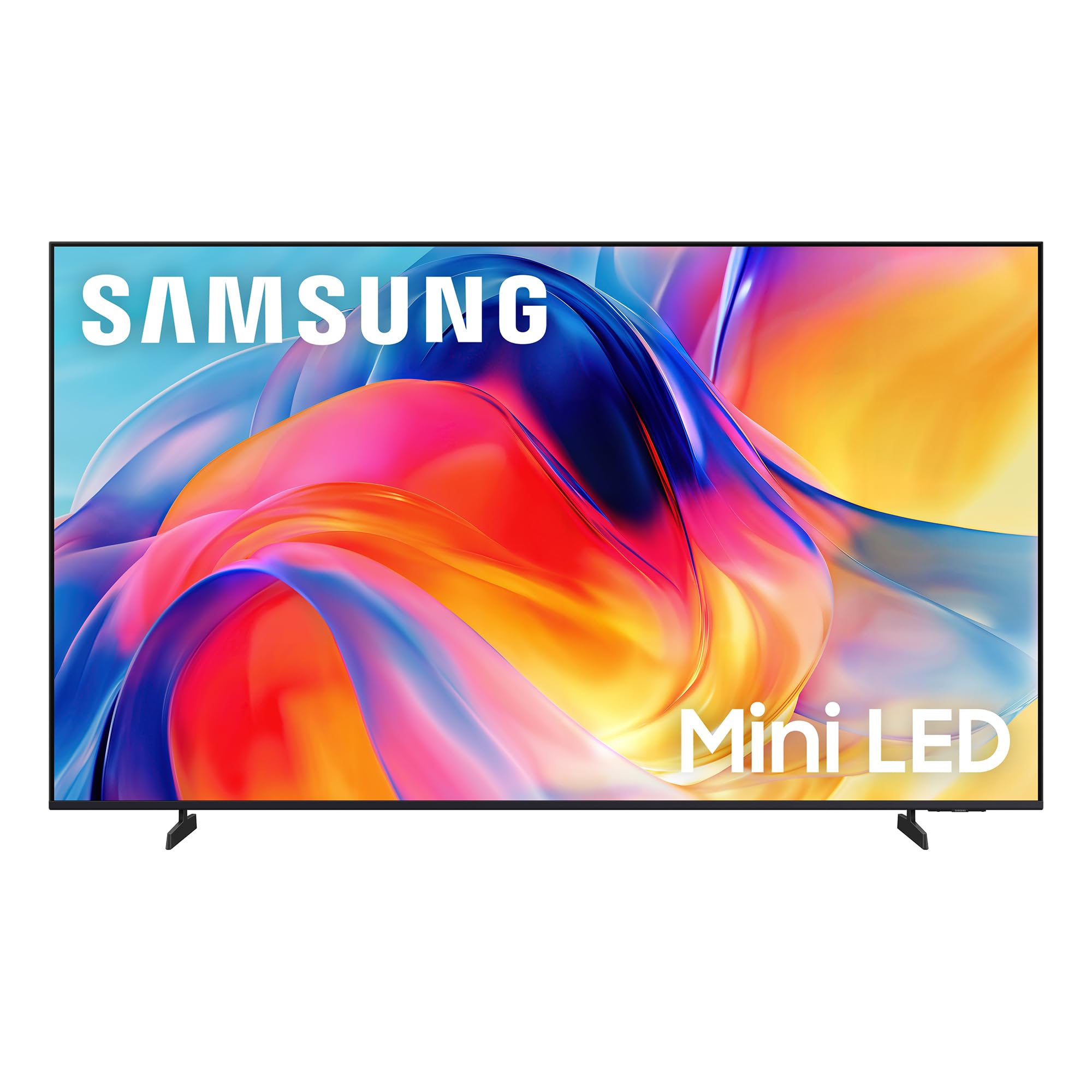
Samsung’s M70H series uses a Mini-LED backlight to deliver one billion true-to-life colors via Pure Spectrum technology. The Color Booster feature makes reds, greens, and blues pop in a way that enhances sports viewing. The 60Hz refresh rate is fine for movies and shows, but gamers should look elsewhere for 120Hz+ performance.
The Motion Xcelerator + DLG 120Hz mode provides some motion smoothing, though it’s not a true 120Hz panel. The Samsung Tizen OS is fast and offers over 2,700 free channels via Samsung TV Plus. Some users note a 10–12 second startup time, and the remote lacks number buttons, which can be a minor inconvenience.
This set is suited for a casual basement lounge where color quality takes priority over raw gaming specs. It handles ambient light well thanks to the Mini-LED brightness, and the build quality is solid for the mid-range price. Consider it if you watch mostly sports and streaming content.
Why it’s great
- Vibrant color output from Pure Spectrum
- Good Mini-LED brightness
- Samsung TV Plus free channels
Good to know
- 60Hz panel, not ideal for high-refresh gaming
- Slower startup compared to competitors
- Remote lacks number pad
7. Sony BRAVIA 2 II

The BRAVIA 2 II offers Sony’s excellent 4K Processor X1 for natural, precise picture quality at a more accessible price. The Motionflow XR technology keeps fast sports and action sequences blur-free. Exclusive PS5 features like Auto HDR Tone Mapping make it a great companion for PlayStation owners without spending on the premium BRAVIA 5.
This is a 60Hz panel, so it’s not aimed at competitive gaming. The LED backlight is standard edge-lit, meaning black levels are decent but not deep compared to Mini-LED or OLED sets. The Google TV interface is clean and responsive, and the included Sony Pictures Core app provides access to free movies.
For a secondary basement TV used for family movie nights or PS5 gaming at 60fps, this is a reliable choice with good color accuracy. It’s energy efficient and stays cool, making it suitable for enclosed media cabinets. Some users report software glitches like freezing, which may require occasional restart.
Why it’s great
- Excellent upscaling and color accuracy
- PS5 Auto HDR Tone Mapping
- Energy efficient operation
Good to know
- 60Hz panel only
- Edge-lit LED, not deep black levels
- Some software stability reports
8. Panasonic W70
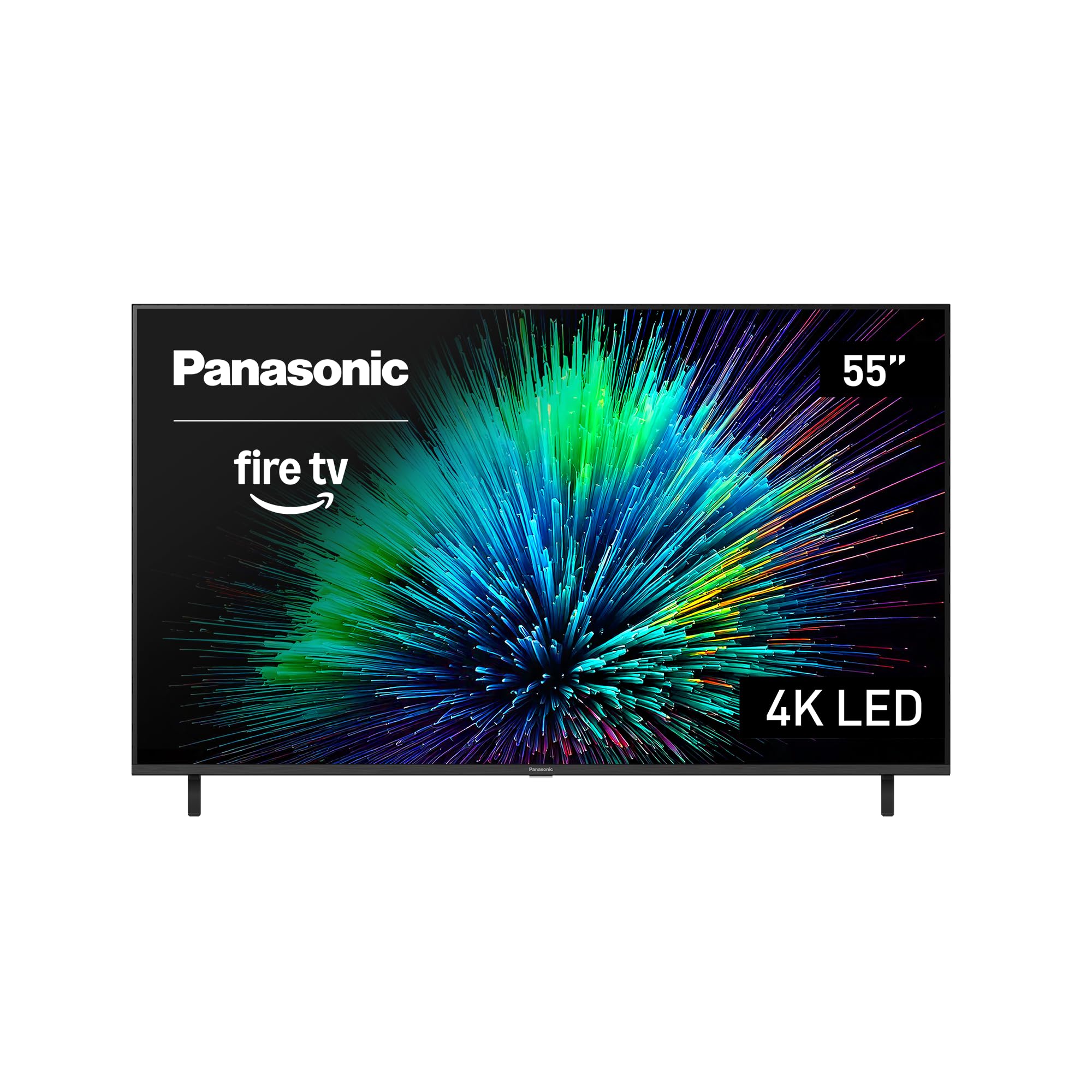
Panasonic’s W70 series brings the reliable Fire TV platform to a well-built panel with an HDR Bright Panel and 4K Studio Color Engine. The 60Hz panel is good for streaming and sports, and the four HDMI ports including one HDMI 2.1 offer solid connectivity. MEMC technology keeps motion smooth on fast-paced content.
The build quality is sturdy with metal stands that give it a premium feel. Setup is quick via QR code if you have a Fire TV account. The main downside is the Fire TV processor can feel a bit sluggish when switching between apps, and some users have reported defective units with screen or remote issues.
This is a good choice for a basement where you want a brand-name TV with a built-in smart platform that works well with Amazon’s ecosystem. It handles typical basement lighting fine but doesn’t offer the high brightness needed for rooms with strong direct overhead lights.
Why it’s great
- Sturdy build with metal stands
- Fire TV integration with Alexa
- Four HDMI ports including 2.1
Good to know
- Processor can be slow in menu navigation
- Not suitable for very brightly lit rooms
- Some quality control concerns reported
9. Roku Plus Series
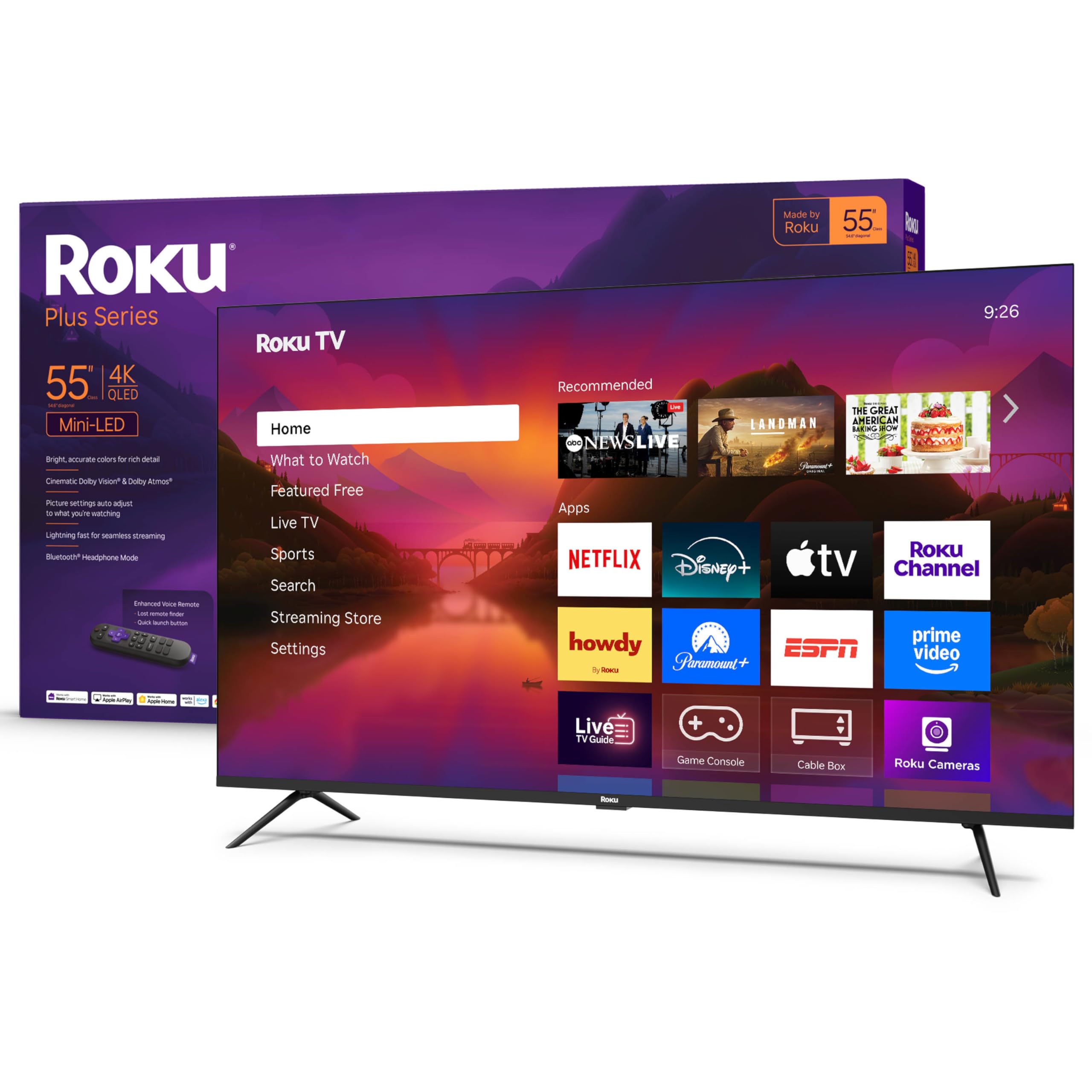
The Roku Plus Series 55-inch combines Mini-LED backlighting with a QLED panel to deliver a bright, colorful picture at a mid-range price. The Dolby Vision and HDR10 support ensures good HDR performance, and the built-in subwoofer provides genuinely impressive sound for a TV — the best in this list for built-in audio. The Roku OS is fast and intuitive, with automatic updates and a huge free channel library.
The AI-powered Roku Smart Picture Max automatically adjusts picture settings based on content. The Enhanced Voice Remote has a lost-remote finder feature. The 60Hz refresh rate is fine for movies and shows but limits its appeal for serious gamers. It lacks a USB port, which may be a minor inconvenience for some users.
If you want a mid-range set for a basement where you don’t plan to add a soundbar, this is the clear choice. The audio quality with the built-in subwoofer is excellent for a flat-screen TV. The picture is vibrant and handles ambient light well, making it a versatile performer.
Why it’s great
- Excellent built-in sound with subwoofer
- Vibrant QLED and Mini-LED picture
- Intuitive Roku OS
Good to know
- 60Hz panel only
- No USB port
- Not OLED-level black depth
10. Roku Select Series
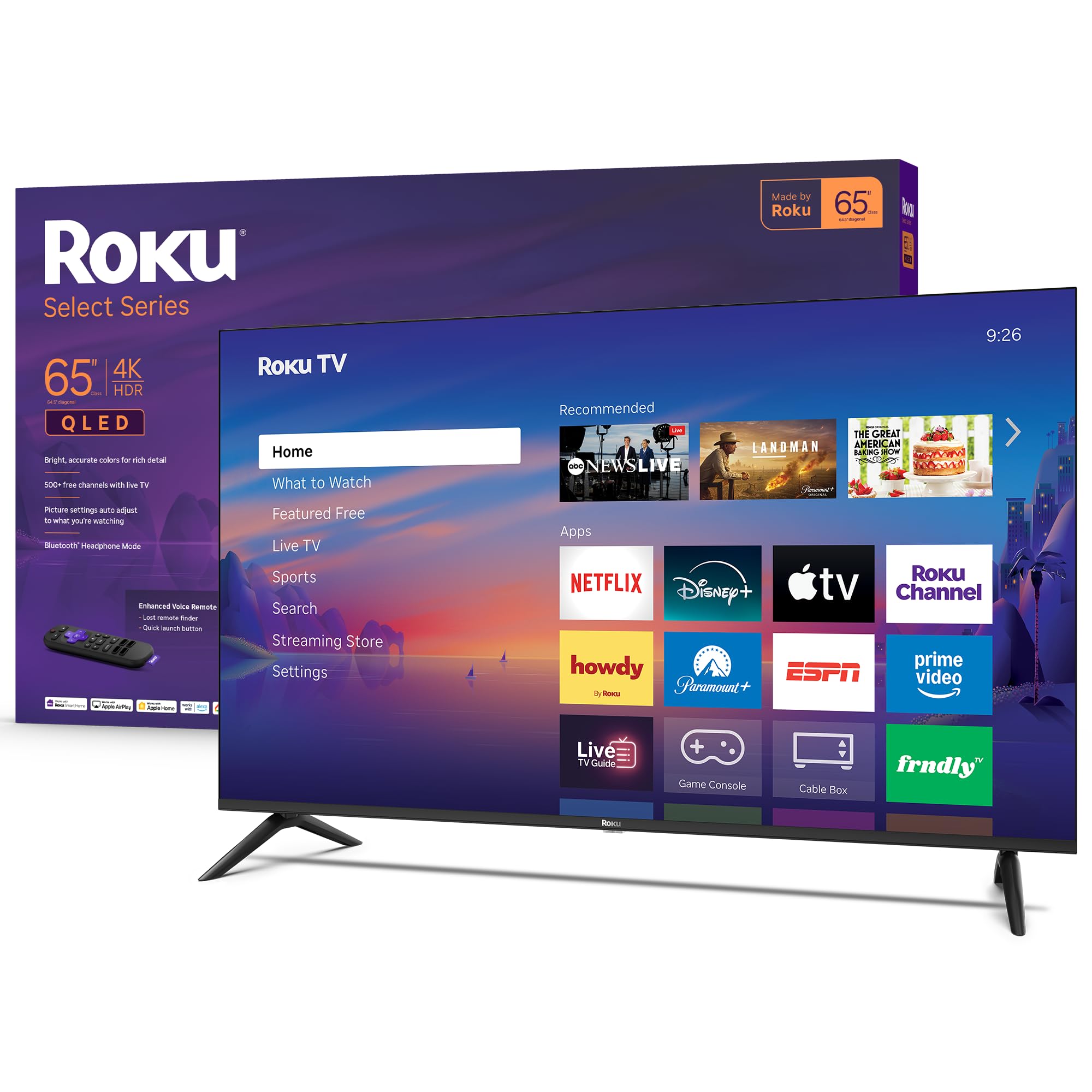
The Roku Select Series offers a 65-inch 4K QLED screen with HDR10 at a budget-friendly price point. The direct LED backlight is not as refined as Mini-LED, but the QLED layer provides good color saturation. The Roku OS is snappy and easy to navigate, and the Bluetooth Headphone Mode is a welcome feature for late-night viewing without disturbing others.
The sound is decent for the price, with clear speech and reasonable volume, but it lacks the bass of higher-end models. The frameless design looks modern, and setup is straightforward. The 60Hz panel is adequate for most content, but motion blur is noticeable during fast sports scenes.
This is the best choice for a basement on a tighter budget where screen size is the priority. You get a 65-inch QLED panel at a price that rivals smaller sets. It handles dim basements well but is best suited for spaces where you control the lighting. Perfect for a kid’s game room or a secondary entertainment area.
Why it’s great
- Low price for a 65-inch QLED
- Simple, fast Roku OS
- Bluetooth headphone mode
Good to know
- Direct LED backlight, not Mini-LED
- 60Hz panel with some motion blur
- Sound lacks bass depth
11. Amazon Ember QLED
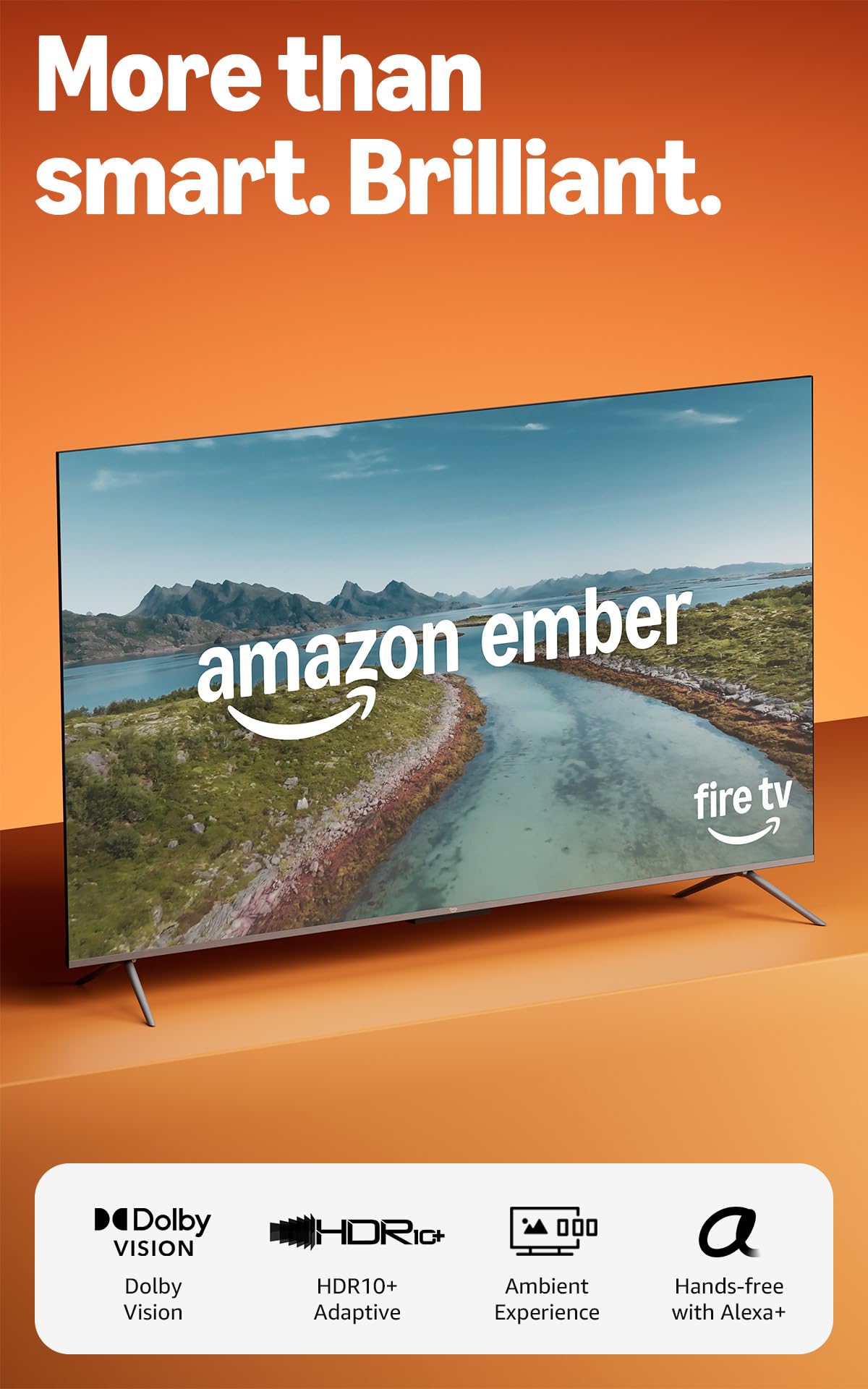
The Amazon Ember QLED series provides a 4K QLED display with Dolby Vision and HDR10+ Adaptive at an entry-level price. The quad-core processor and Wi-Fi 6 support make it snappy for app loading and streaming. The Fire TV interface is comprehensive, though it does come with Amazon-sponsored ads on the home screen.
The sound is average for a TV at this price — clear for dialog but lacking bass impact. The full-array local dimming is present but has fewer zones than Mini-LED models, so blooming can occur around bright objects on dark backgrounds. Some users report occasional audio desync issues with specific apps.
This is a solid entry-level TV for a basement where budget is the primary concern. It looks good for streaming movies and casual TV shows in a dim setting. The hands-free Alexa feature is convenient for controlling playback. If you can stretch the budget slightly, the extra dimming zones of a Mini-LED model offer a significant upgrade in picture quality.
Why it’s great
- Dolby Vision and HDR10+ at low price
- Wi-Fi 6 for fast streaming
- Hands-free Alexa voice control
Good to know
- Fire TV home screen full of ads
- Average sound quality
- Blooming from limited local dimming
FAQ
Is OLED or Mini-LED better for a basement TV?
How much brightness do I need for a bright basement?
Can I use a 60Hz TV for gaming in the basement?
What screen size is best for a basement?
Final Thoughts: The Verdict
For most users, the best basement tv winner is the Hisense U6 because its combination of high brightness (1,000 nits) and 600 local dimming zones offers the best balance of contrast and glare resistance for the price. If you want the absolute best picture quality for a dedicated dark theatre room, grab the Samsung S90F OLED. And for a budget-friendly large screen that still delivers QLED color, nothing beats the Roku Select Series.