
Our readers keep the lights on and the weekend projects moving. As an Amazon Associate, I earn from qualifying purchases.
A damp basement wall isn’t just an inconvenience — it’s a structural threat. Water infiltration through concrete and masonry causes efflorescence, spalling, mold growth, and a musty smell that can ruin your living space. The right waterproofing paint creates a bonded, hydrostatic-pressure-resistant barrier that stops moisture at the foundation level. But not all sealers are built the same: some penetrate deep into pores, while others form a thick elastomeric membrane, and the choice between them depends entirely on your wall’s surface, moisture level, and finish preference.
I’m Rikta — the co-founder and writer behind FitlyFast. For this guide, I spent hours analyzing real customer durability reports, hydrostatic pressure ratings, elongation specs, and silane-siloxane concentrations across seven leading products to separate the true performers from the temporary fixes.
Whether you need a clear penetrating sealer that won’t change the look of your masonry or a heavy-duty liquid rubber coating that can withstand 12 psi of water pressure, understanding a few key specifications will steer you to the right choice. The best basement waterproofing paint balances adhesion strength, breathability, coverage rate, and ease of application for your specific basement wall condition.
How To Choose The Best Basement Waterproofing Paint
Basements present unique challenges because they’re often below-grade, meaning they face constant hydrostatic pressure from the surrounding soil. A general-purpose concrete sealer may work fine on a driveway but fail completely on a foundation wall. You need a product specifically engineered to block water under pressure while still allowing trapped vapor to escape so the wall itself doesn’t degrade.
Penetrating Sealer vs. Film-Forming Coating
Penetrating sealers like silane-siloxane formulas bond chemically inside the pores of the concrete, creating a hydrophobic barrier that repels water while leaving the surface unaltered. These are ideal for surfaces where you want the natural concrete look preserved. Film-forming coatings (acrylic, liquid rubber, or elastomeric paint) create a thick visible layer on the surface. They’re better for stopping high-pressure leaks or for walls where appearance matters less than absolute moisture blockage.
Hydrostatic Pressure Resistance
When a manufacturer lists a hydrostatic pressure figure, it indicates how much water pressure the coating can withstand from behind the wall. Standard numbers range from 8 psi to 12 psi. The higher the number, the more aggressive the water pressure the product can hold back. For a typical poured concrete basement wall with visible seepage, a product rated at 10 psi or higher is recommended.
Coverage Rate and Number of Coats
Coverage per gallon varies widely — from 75 square feet for thick liquid rubber to 225 square feet for thin penetrating sealers. A low-coverage product means you’ll need more gallons for the same wall area, but it also typically indicates a thicker film that provides stronger protection. Factor in that most manufacturers recommend at least two coats for maximum effectiveness, so calculate your total wall square footage before buying.
Quick Comparison
On smaller screens, swipe sideways to see the full table.
| Model | Category | Best For | Key Spec | Amazon |
|---|---|---|---|---|
| Armor SX5000 WB | Silane-Siloxane | Long-term clear protection | Up to 95% water absorption reduction | Amazon |
| INSL-X WaterBlock | Acrylic Paint | Hydrostatic pressure stopping | 12 psi hydrostatic pressure | Amazon |
| Ames Block & Wall | Liquid Rubber | Thick membrane for severe leaks | 900% elongation | Amazon |
| AMES Blue Max | Liquid Rubber | Below-grade foundation coating | 900% elongation | Amazon |
| Rust-Oleum Moisture Stop | Fortifying Sealer | Primer before epoxy painting | Seals against radon gas | Amazon |
| MasonryDefender All Purpose | Silane-Siloxane | Invisible brick and stone protection | Waterproof barrier on masonry | Amazon |
| MasonryDefender Deep Penetrating | Silane-Siloxane | Clear concrete driveway seal | Water-repellent beading effect | Amazon |
In‑Depth Reviews
1. Armor SX5000 WB Water-Based Silane-Siloxane Sealer

The Armor SX5000 WB stands at the premium tier for a reason — it’s a professional-grade water-based silane-siloxane sealer that reduces water absorption by up to 95%. Unlike film-forming coatings, this sealer chemically reacts below the surface to create a hydrophobic barrier, meaning the concrete or brick looks and feels exactly as it did before sealing. The water-based formula carries zero VOCs and has no odor, making it safe for enclosed basement applications where ventilation is limited.
With coverage of 175 to 225 square feet per gallon, it’s one of the most efficient products on this list, lowering the total number of gallons you’ll need for a standard basement wall. Customers consistently confirm the 7-to-10-year longevity claim, with one user noting their driveway was still effectively repelling water after seven years. The ready-to-use formula applies easily with a pump sprayer and dries to a matte finish with no gloss or residue.
The key trade-off is the higher upfront cost per gallon compared to acrylic paints. For heavily efflorescing or spalling walls that need structural surface correction, a liquid rubber coating may be a better first step. But for sound concrete or brick walls where you want invisible, long-lasting protection, this is the most refined silane-siloxane option available.
Why it’s great
- Reduces water absorption by up to 95%
- Zero VOC, no odor, safe for enclosed spaces
- Lasts 7-10 years on properly prepared surfaces
Good to know
- Higher per-gallon cost than acrylic alternatives
- Won’t fill cracks or cover surface imperfections
2. INSL-X WaterBlock Acrylic Masonry Waterproofer Paint

The INSL-X WaterBlock is a film-forming acrylic paint specifically engineered to withstand up to 12 psi of hydrostatic pressure, making it one of the toughest coatings in this roundup for below-grade basement walls. It’s designed for vertical concrete, cinder block, stucco, and brick surfaces, and its high alkali resistance (up to pH-13) means it can survive the alkaline chemistry of fresh masonry without breaking down.
Coverage is on the lower end at 75 to 125 square feet per gallon, reflecting the thicker coating required to achieve that 12 psi resistance. Users report that two coats are necessary for stopping existing leaks — and that this approach has successfully sealed decade-long seepage problems after heavy rains. The paint includes a convenient can opener and stir stick with each purchase.
Because it’s a film-forming coating, it will change the surface appearance, leaving a white semi-gloss finish. This is fine if you’re painting over bare concrete or block, but it won’t preserve a natural stone or brick look. Also, application temperatures must be between 50°F and 90°F, which can limit your working season in colder climates.
Why it’s great
- Withstands 12 psi hydrostatic pressure
- High alkali resistance up to pH-13
- Proven to stop long-term basement leaks
Good to know
- Lower coverage means more gallons per project
- Not suitable if you want a clear, invisible sealer
3. Ames Block & Wall Liquid Rubber Waterproofer

The Ames Block & Wall Liquid Rubber Waterproofer is a thick, elastomeric coating that’s practically a different material from the penetrating sealers on this list. Users describe it as having the consistency of cake frosting — it doesn’t run on vertical surfaces, fills small cracks and voids, and dries into a tough, rubberized membrane. While elongation data isn’t explicitly listed for this specific variant, AMES’s Blue Max sibling offers 900% elongation, and this product shares that same elastomeric DNA.
Customer reports mention 10+ years of effective waterproofing on tornado shelters, stucco-to-slab interfaces, and block walls. The thick consistency means you can build up substantial film thickness in fewer coats, and cleanup is easy with soap and water before the material cures. The brilliant white finish with a slight shimmer provides good visual coverage on ugly block walls.
The downsides are the learning curve with application — going too thick can lead to extended dry times, and the product is best applied with a brush for edges and a roller for large flat areas. It’s not designed for surfaces where you want to maintain the natural concrete appearance, but for severe moisture problems where brute-force blocking is needed, this is a top contender.
Why it’s great
- Thick rubber membrane fills cracks
- Proven 10+ year durability in real-world use
- Easy soap-and-water cleanup
Good to know
- Thick consistency requires careful application
- Not a clear sealant — covers the surface completely
4. AMES Blue Max White Liquid Rubber Waterproofer

The AMES Blue Max is a heavy-duty elastomeric liquid rubber with a standout specification: 900% elongation. This means the dried coating can stretch to nine times its original length without cracking — critical for basement walls that experience seasonal expansion and contraction or minor settlement. The formulation is a special blend of high-strength adhesive elastomers designed specifically for below-grade concrete foundations, insulated concrete forms, and underlayment applications.
Users praise its non-toxic, eco-friendly composition, and it’s VOC compliant in all 50 states, making it one of the safer options for interior basement sealing. The application versatility is broad — brush, roller, or sprayer — and it adheres to concrete, wood, and metal surfaces. One creative use reported was sealing pet-stained subfloors, which speaks to the tenacity of the bond.
A key nuance: Blue Max requires a top coat if used in exterior sun-exposed applications because UV degrades the rubber. This isn’t an issue for interior basement walls, but if you plan to use any leftover for outdoor projects, plan accordingly. Also, each coat requires 24 hours of drying time, so the overall project schedule stretches compared to fast-drying acrylics.
Why it’s great
- 900% elongation prevents cracking with movement
- Non-toxic and VOC compliant nationwide
- Adheres to concrete, wood, and metal surfaces
Good to know
- Needs UV top coat if used outdoors
- 24-hour drying time between coats
5. Rust-Oleum 301239 Concrete Moisture Stop Fortifying Sealer

The Rust-Oleum Moisture Stop is a penetrating fortifying sealer that plays a specific role in the basement waterproofing ecosystem — it’s designed to be applied BEFORE an epoxy or paint coating. It bonds and seals concrete from the inside out without altering the surface appearance, and crucially, it helps prevent moisture from bleeding through and lifting a subsequent paint or epoxy layer.
One of its unique features is the ability to seal against radon gas infiltration, which is a concern in many basements built on radon-prone soil. The clear formula penetrates the surface and requires a 45-minute absorption period before the surface is ready for painting. Coverage is rated at up to 200 square feet per gallon, making it one of the most economical options for large pre-coat priming projects.
Users report success even on floors with substantial hydrostatic pressure — one note mentions nearly three years of crack-free performance under epoxy on a floor with high water pressure. The main limitation is that it’s not a standalone waterproofing paint. If you’re looking for a one-and-done solution, this isn’t it, but as a critical first layer before a topcoat, it’s a reliable workhorse.
Why it’s great
- Seals against radon gas and moisture
- Excellent primer for epoxy or paint topcoats
- Up to 200 sq ft per gallon coverage
Good to know
- Not a standalone finish — requires topcoat
- 45-minute absorption wait between coats
6. MasonryDefender All Purpose Brick Stone & Concrete Sealer

The MasonryDefender All Purpose sealer is a silane-siloxane penetrating formula designed for a broader range of substrates than its stablemate — it’s rated for concrete, brick, stone, cultured sandstone, limestone, and granite. This makes it a strong choice for basement walls with mixed masonry, such as a fieldstone foundation or brick-walled basement. The clear waterproof barrier preserves the natural look of each material without adding gloss or film.
Customer reports confirm its effectiveness on challenging application points: one user stopped water seepage from a basement ceiling under a stone porch post, which is a notoriously hard-to-seal junction. The spray application is straightforward with a garden sprayer, and the sealer dries quickly. Coverage sits at 90 to 150 square feet per gallon, which is mid-range and reasonable for the price tier.
The main consideration is that like all penetrating sealers, it won’t bridge cracks or fill surface imperfections. For walls with significant structural cracks, you’ll need to address those with hydraulic cement or a rubberized patching compound first. Also, the liquid can clog spray nozzles if not shaken thoroughly before use — a consistent user-reported issue that’s easy to avoid with proper prep.
Why it’s great
- Works on concrete, brick, stone, limestone, granite
- Preserves natural surface appearance
- Easy garden sprayer application
Good to know
- Doesn’t fill cracks — requires prep work
- Needs vigorous shaking to avoid nozzle clogs
7. MasonryDefender Concrete Sealer – Deep Penetrating Water Repellent
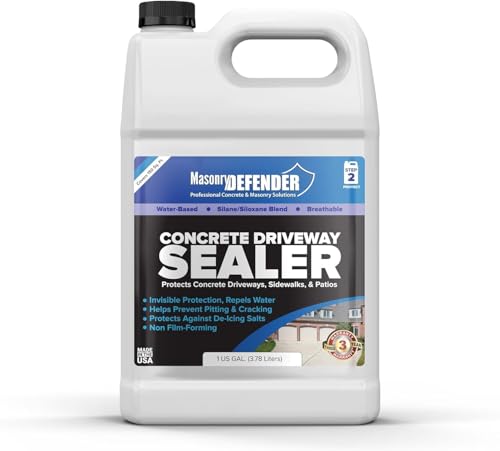
The MasonryDefender Deep Penetrating Concrete Sealer is a silane-siloxane formulation aimed primarily at concrete driveways, sidewalks, and patios — but its chemistry works equally well on poured concrete basement walls where you want invisible protection. The formula penetrates deep into the concrete pores, bonding chemically to block water infiltration without forming a surface film. Water beads up and rolls off the treated surface rather than soaking in.
Customer reviews from the Pacific Northwest, an area known for relentless rain, report excellent beading action and long-lasting results, with one user noting that treated driveway squares remained whiter and cleaner than untreated areas even after three years. The application is simple with a low-pressure garden sprayer, and the clear finish means zero visual change to your concrete walls.
The primary limitation for basement use is coverage — at 90 to 150 square feet per gallon, it’s on the lower end compared to some other penetrating sealers. Also, this product is marketed specifically for concrete, not brick or stone, so if your basement wall features mixed masonry, the All Purpose variant from the same brand would be a better fit. For poured concrete walls specifically, this is a clean, effective choice.
Why it’s great
- Deep penetration for invisible protection
- Proven long-term performance in wet climates
- No surface film, no visual change
Good to know
- Concrete-only formula — not for brick or stone
- Moderate coverage at 90-150 sq ft per gallon
FAQ
Can I apply basement waterproofing paint over existing paint or whitewash?
How many coats of basement waterproofing paint should I apply?
Will silane-siloxane sealer stop active leaks in my basement wall?
How long does basement waterproofing paint last before needing reapplication?
Final Thoughts: The Verdict
For most users, the best basement waterproofing paint winner is the Armor SX5000 WB because it combines professional-grade silane-siloxane chemistry, a 95% water absorption reduction, zero-VOC safety, and a 7-to-10-year lifespan without altering the look of your concrete or masonry. If you need brute-force hydrostatic pressure resistance for a visibly seeping wall, grab the INSL-X WaterBlock with its 12 psi rating. And for a heavy-duty liquid rubber membrane that stretches 900% and fills small cracks on block walls, nothing beats the AMES Blue Max.