
Our readers keep the lights on and the weekend projects moving. As an Amazon Associate, I earn from qualifying purchases.
Adding a subwoofer to your home audio system is the single most effective way to transform flat, lifeless sound into a visceral, room-filling experience. The right bass speaker doesn’t just add low-end rumble—it provides the foundation for every explosion in a movie, the thump of a kick drum, and the weight of a synth pad, making your entire system feel more cohesive and powerful.
I’m Rikta — the founder and writer behind FitlyFast. I’ve spent years dissecting home audio specifications, comparing driver materials, amplifier topologies, and cabinet construction across hundreds of models to find the subwoofers that deliver genuine performance for their price.
Whether you are building a dedicated theater room or upgrading a modest bookshelf setup, finding the right bass foundation starts with understanding a few critical specs. This guide breaks down the best bass speakers for home use, from compact entry-level units to high-end reference designs.
How To Choose The Best Bass Speakers For Home
Selecting the perfect subwoofer for your home isn’t about picking the biggest box with the highest wattage. The ideal choice balances driver size, amplifier power, cabinet design, and connectivity to match your specific room dimensions, audio gear, and listening habits. Missteps in any of these areas can lead to boomy, one-note bass or a subwoofer that struggles to integrate at all.
Driver Size and Cabinet Type
The driver diameter—typically 8, 10, or 12 inches—dictates how much air the subwoofer can move. An 8-inch driver in a sealed cabinet offers tight, fast bass ideal for music in small to medium rooms, while a 12-inch driver in a ported cabinet can pressurize a large living room for cinematic impact. Sealed cabinets generally provide more accurate, articulate bass, whereas ported (bass reflex) designs deliver greater volume and deeper extension at the cost of some tightness.
Amplifier Power and Frequency Response
RMS wattage tells you the sustained output capability; higher RMS numbers mean the subwoofer can play louder without distortion. A 100-watt unit can adequately support a small room, while 300 watts or more is appropriate for larger spaces. The frequency response spec (e.g., 30Hz–200Hz) reveals how low the sub can go. Look for a response that reaches below 35Hz for true sub-bass in movies and electronic music.
Connectivity and Controls
An LFE (Low-Frequency Effects) input is essential for connecting to a modern AV receiver’s dedicated subwoofer output. If your receiver lacks a subwoofer out, you’ll need speaker-level inputs and outputs to wire the sub in series with your main speakers. Variable crossover, phase (0/180 degrees), and volume controls are crucial for blending the subwoofer with your satellites, preventing muddy or overlapping frequencies.
Quick Comparison
On smaller screens, swipe sideways to see the full table.
| Model | Category | Best For | Key Spec | Amazon |
|---|---|---|---|---|
| Bestisan 6.5″ | Entry-Level | Small bookshelf speaker upgrade | 6.5″ driver, 35Hz–200Hz | Amazon |
| Rockville Rock Shaker 8 | Budget | Desktop or small room music | 8″ driver, 200W RMS | Amazon |
| Rockville Rock Shaker 10 | Budget | Thumpy low end for media | 10″ driver, 300W RMS | Amazon |
| Edifier T5s | Mid-Range | Desktop audio & small rooms | 8″ driver, 70W RMS | Amazon |
| PreSonus Eris Sub 8BT | Mid-Range | Studio monitoring & music | 8″ driver, 100W RMS | Amazon |
| Polk Monitor XT12 | Premium | Home theater immersion | 12″ driver, 100W RMS | Amazon |
| Klipsch SPL-120 | Premium | High-output home theater | 12″ driver, 600W peak | Amazon |
| Klipsch Reference 12″ | High-End | Reference-level clarity | 12″ TCP driver, digital amp | Amazon |
| SVS SB-1000 Pro | High-End | Accurate music & home theater | 12″ driver, 325W RMS | Amazon |
In‑Depth Reviews
1. PreSonus Eris Sub 8BT

The Eris Sub 8BT is a rare subwoofer that excels in both accuracy and flexibility, making it the top pick for anyone who wants clean, musical bass without sacrificing modern convenience. Its 8-inch woven-composite driver, driven by a 100-watt amplifier, delivers a remarkably tight and controlled low end down to 30 Hz. The variable crossover and highpass filter ensure seamless blending with studio monitors or bookshelf speakers, avoiding the flabby, smudged sound that plagues lesser subs.
The inclusion of Bluetooth 5.0 wireless connectivity is a standout feature, allowing you to stream audio directly from a phone or tablet without touching your main system. Balanced 1/4-inch TRS inputs for professional gear and unbalanced RCA inputs for consumer devices further expand its compatibility. The front-panel headphone output with its own amplifier is a thoughtful addition for late-night listening or critical mixing sessions.
In real-world use, the Eris Sub 8BT performs beautifully across genres. It handles deep synth bass in electronic music with crystalline clarity and delivers punchy, articulate low end for rock and metal without muddying the midrange. The auto power-saving mode engages after 40 minutes of inactivity, saving energy. While it won’t pressurize a large living room like a 12-inch ported design, for medium rooms and dedicated desktop setups, it strikes an ideal balance of precision, power, and connectivity.
Why it’s great
- Accurate, tight bass down to 30 Hz
- Bluetooth 5.0 for wireless streaming
- Flexible inputs: balanced TRS, RCA, and aux
- Front-panel headphone output with amp
Good to know
- 100W RMS may be insufficient for very large rooms
- Sealed design limits extreme low-end extension
2. Polk Monitor XT12

The Monitor XT12 is Polk Audio’s modern reimagining of an affordable home theater subwoofer that doesn’t skimp on build quality. Its 12-inch Dynamically Balanced woofer, paired with a 100-watt Class A/B amplifier, delivers authoritative bass down to 24 Hz. The critically braced MDF cabinet and removable precision-fit grille minimize unwanted resonances, keeping the sound clean even during intense action scenes. The design is understated and fits well with modern decor.
Connectivity is straightforward with line-level RCA and LFE inputs, making it a simple drop-in addition to any AV receiver with a subwoofer output. The variable crossover (80–160 Hz) and phase polarity controls allow precise integration with your main speakers. The XT12 is fully compatible with Dolby Atmos and DTS:X systems, ensuring it works seamlessly with the latest surround sound formats. Multiple Polk owners report that it performs at a level comparable to subs costing two to three times as much.
For movie enthusiasts, the XT12 delivers room-shaking impact that makes explosions feel visceral and soundtracks immersive. Music reproduction is surprisingly articulate for a ported design, with enough control to handle complex bass lines without sounding boomy. The auto-on feature works reliably, though some users wish for a front-facing LED indicator. If you need a single subwoofer that can do double duty for films and music in a medium to large room, this is a compelling option.
Why it’s great
- Deep 24 Hz extension for cinematic bass
- Solid build with braced MDF cabinet
- Compatible with Dolby Atmos & DTS:X
- Excellent value for performance
Good to know
- Limited to RCA/LFE inputs only
- Class A/B amp runs warmer than Class D
3. Edifier T5s
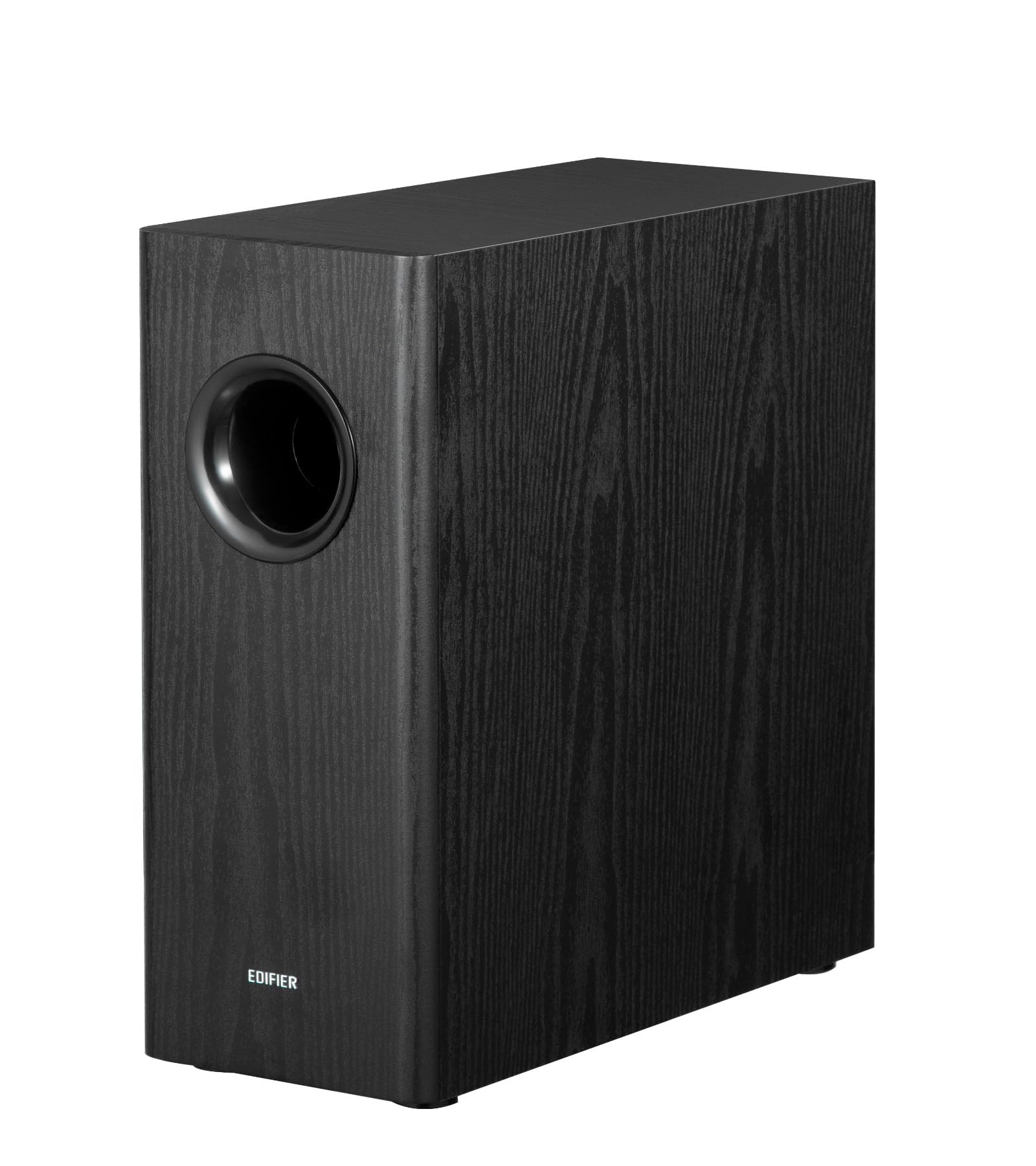
The Edifier T5s is purpose-built for desktop and small-room setups where space is at a premium but sound quality cannot be compromised. Its vertical, space-saving cabinet houses an 8-inch long-throw woofer and a 70-watt RMS Class-D amplifier, producing deep, clean bass down to 35 Hz. The 18mm MDF construction with a front-firing driver and right-firing acoustic port minimizes distortion, delivering tight, articulate low end that integrates beautifully with bookshelf speakers.
Adjustable low-pass filter (30–160 Hz) and a 0/180-degree phase selector give you precise control over blending with your main speakers. The T5s is officially compatible with Edifier’s own speaker lineup (R1280Ts, R1700BTs, R1850DB, and others), but it also works with any active speaker or AV amp that has a subwoofer out or RCA ports. The auto-standby feature kicks in after 15 minutes, saving power when not in use. Included cables simplify an already easy setup.
In practice, the T5s adds a satisfying weight to music without overwhelming the mix. It reproduces the low-end thump on tracks like Tracy Chapman’s “Fast Car” with authority, though it naturally struggles with sub-35 Hz content. It is designed to augment small speakers, not to rattle windows. For a near-field listening position at a desk or in a modest living room, it provides a musical, unobtrusive bass foundation that is hard to beat at this price tier.
Why it’s great
- Space-saving vertical design fits desks
- Clean, musical bass down to 35 Hz
- Auto-standby saves energy
- Easy integration with Edifier speakers
Good to know
- 70W RMS is modest for larger rooms
- Not ideal as an LFE sub for home theater
4. Rockville Rock Shaker 10

The Rockville Rock Shaker 10 proves that you don’t need to spend a lot to get chest-thumping bass for your home theater. Its 10-inch woofer is powered by a 300-watt RMS Class-D amplifier, capable of shaking a 30-by-30-foot room with the gain at just 50 percent. The MDF enclosure with a detachable foam grille provides a durable foundation, while the adjustable volume, crossover, and phase controls allow basic tuning to suit your space.
Connectivity is simple with RCA line-level inputs and outputs, plus high-level speaker inputs for systems without a dedicated subwoofer output. The built-in Class-D amplifier is efficient and stays cool, even during extended listening sessions. While the bass is powerful and thumpy, reviewers note that it can be slightly loose compared to more expensive subs. The crossover is a shelf-type control rather than a true low-pass filter, which can muddy upper bass if set too high, but at this price, the trade-off is understandable.
For movies like action blockbusters or bass-heavy electronic music, the Rock Shaker 10 adds a palpable physical presence that smaller subs simply cannot match. It pairs well with Rockville bookshelf speakers and compact amplifiers, offering the cheapest path to genuine low-end rumble. If your priority is maximum output per dollar and you can accept a bit of imprecision, this is a solid entry-level choice.
Why it’s great
- Powerful 300W RMS output for room-shaking bass
- Inexpensive way to add real low end
- Flexible RCA and speaker-level inputs
- Efficient Class-D amplifier
Good to know
- Bass can sound slightly loose or boomy
- Crossover is a shelf control, not a true filter
5. Klipsch SPL-120
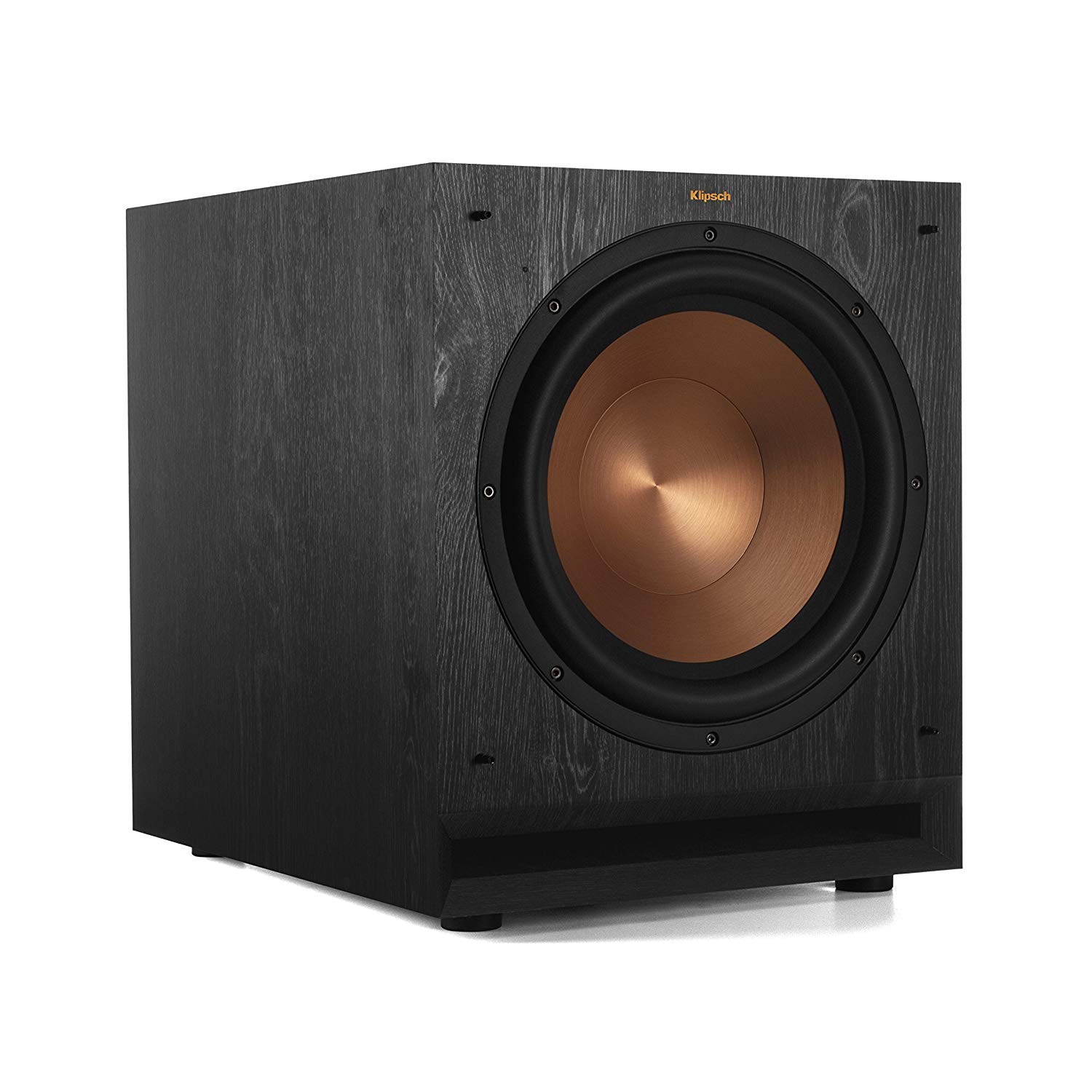
The Klipsch SPL-120 is a brute of a subwoofer that brings the signature Klipsch sound to the low end with authority. Its 12-inch long-throw Cerametallic woofer, paired with a 600-watt peak amplifier, achieves a maximum acoustic output of 118 dB—enough to pressurize even large dedicated theater rooms. The scratch-resistant ebony finish and front-firing design give it a premium look that fits well in high-end systems.
Connectivity is standard with RCA LFE inputs, and the subwoofer supports wireless connectivity via the optional Klipsch WA-2 accessory, offering placement flexibility without running long cables. The adjustable low-pass crossover, phase control, and bass boost allow you to dial in the sound. Users report that it plays a clean note from 18 Hz, outperforming its rated 24 Hz specification, and handles demanding content like the low-frequency effects in “2001: A Space Odyssey” without distortion.
Compared to other subs in its bracket, the SPL-120 delivers tight, impactful bass that integrates seamlessly with both Klipsch speakers and other brands. It replaced the often-rattling Polk PSW505 in one reviewer’s setup, providing house-shaking bass without any cabinet noise. While its price is premium, the build quality and output capability make it a serious contender for anyone prioritizing raw power and clean low-end extension.
Why it’s great
- Massive 118 dB max output with 600W peak
- Clean, tight bass extends below 20 Hz
- Optional wireless kit for flexible placement
- Solid build with scratch-resistant finish
Good to know
- Premium price point
- Best suited for medium to large rooms
6. Klipsch Reference 12″

The Klipsch Reference series subwoofer updates the classic formula with a new 12-inch spun-copper thermoformed crystalline polymer (TCP) woofer. This driver is exceptionally light, providing fast transient response and minimal cone breakup, which translates to cleaner, more accurate bass. The built-in all-digital amplifier delivers high efficiency and abundant power, ensuring that even the deepest frequencies are reproduced with authority and control.
As a front-firing design, this subwoofer offers flexible room placement without the directional constraints of a down-firing unit. The low-pass crossover and phase controls allow precise integration with other Klipsch Reference speakers or any full-range system. Line/LFE inputs ensure compatibility with any AV receiver. The subwoofer is larger than expected, and its black vinyl finish is understated but attractive.
In a real-world 850-square-foot space, this subwoofer provides tactile, room-filling bass that covers the 28 Hz to 120 Hz band with authority. It handles the demands of action movies without any rattle or pop, and it remains articulate with music genres from metal to house. Owners upgrading from older 12-inch subs report a massive improvement in clarity and force. It is a reference-grade component that performs well beyond its stature in the lineup.
Why it’s great
- Light, stiff TCP woofer minimizes distortion
- Efficient all-digital amplifier
- Front-firing design for flexible placement
- Excellent clarity across music and movies
Good to know
- Larger and heavier than expected
- Premium pricing tier
7. SVS SB-1000 Pro
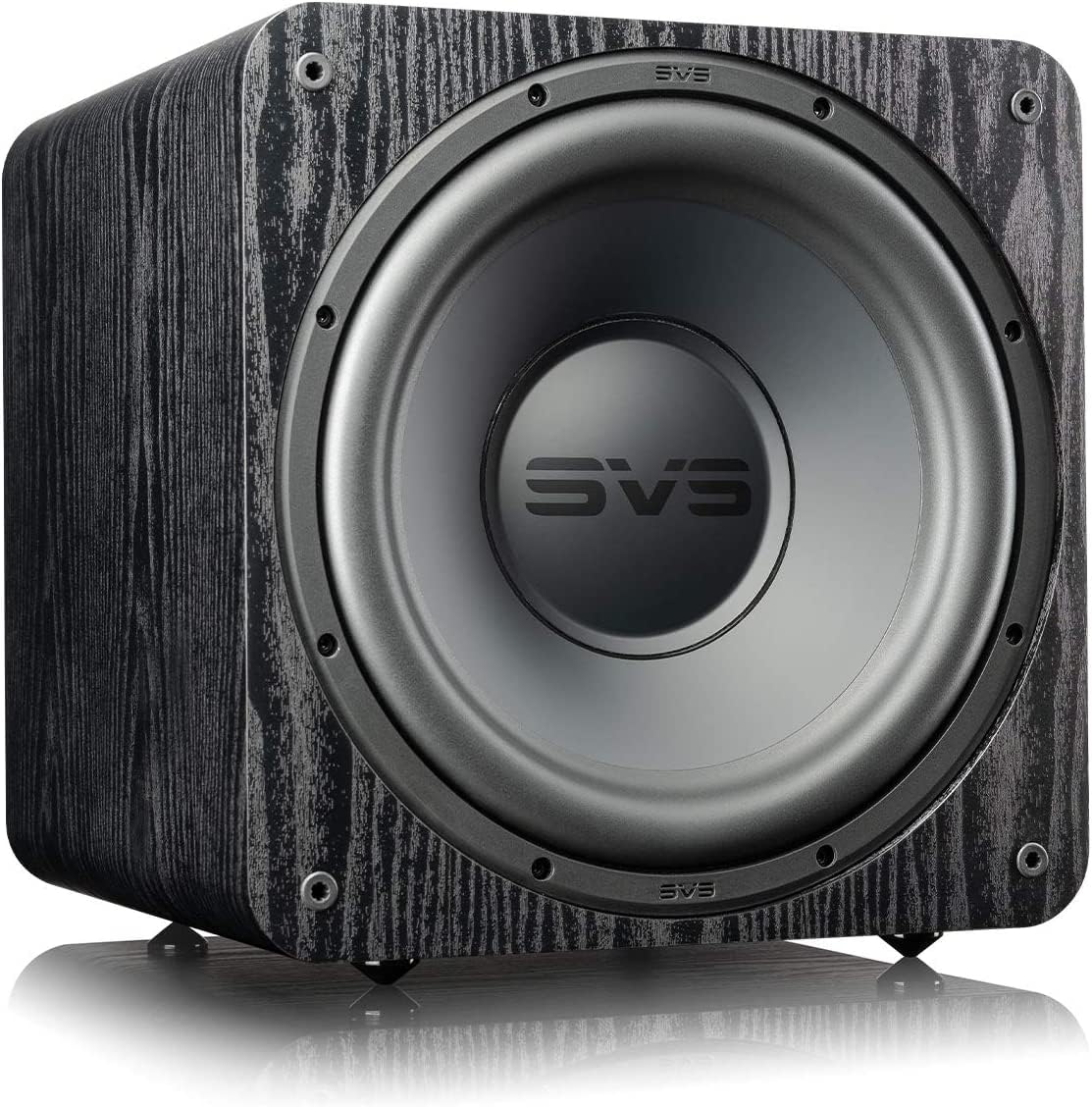
The SVS SB-1000 Pro is a benchmark for compact, high-performance subwoofers. Its sealed cabinet houses a high-excursion 12-inch driver driven by a 325-watt RMS Sledge STA-325D amplifier (820+ watts peak), delivering massive output with vanishingly low distortion. The 50 MHz Analog Devices DSP allows for pinpoint-accurate frequency response, while the sealed design ensures fast, articulate bass that excels in music reproduction. The cabinet is acoustically inert with a thick MDF front baffle and rigid internal bracing.
The standout feature is the SVS Subwoofer DSP Smartphone App, which provides easy control over volume, crossover, phase, parametric EQ, and custom presets from your listening position. This eliminates the guesswork of room integration and allows fine-tuning on the fly. Connectivity includes both wired and Bluetooth options. The compact cabinet size belies its output capacity, fitting into spaces where larger ported designs cannot.
For music lovers, the SB-1000 Pro is exceptional. Its sealed alignment produces tight, textured bass that never sounds boomy, making it ideal for genres like jazz, classical, and acoustic music. In home theater use, it delivers impactful effects, though ported models (like the SVS PB-1000) offer more extreme low-end extension for dedicated cinema rooms. The app’s integration is a genuine game-changer, enabling real-time adjustments that traditional knobs cannot match. It is the best sub under for accuracy and control.
Why it’s great
- Superior DSP control via smartphone app
- Tight, accurate bass from sealed design
- Compact cabinet fits small spaces
- High 325W RMS output with low distortion
Good to know
- Sealed design sacrifices absolute low-end extension
- Premium price point
8. Rockville Rock Shaker 8

The Rockville Rock Shaker 8 is a compact but potent subwoofer that delivers surprising output for its size. Its 8-inch high-excursion driver, powered by a 200-watt RMS Class-D amplifier, provides clean, punchy bass that adds real weight to desktop systems and small living rooms. The woofer uses a Y30 magnet and 1.5-inch 4-layer voice coil for responsive performance, while the MDF cabinet with poly fill keeps the sound cleaner than expected at this price.
Connectivity is versatile with both RCA and speaker-level inputs and outputs, allowing easy integration with receivers, amplifiers, and powered speakers. The compact dimensions (11.8 x 13.8 x 15 inches) make it easy to tuck into tight spaces. However, buyers should note that the cabinet is made from relatively thin wood, and the stock power cord has been reported to cause some bass bloat—an easy fix with an audiophile-grade cord for those seeking maximum performance.
For its price, the Rock Shaker 8 is a fantastic upgrade for small bookshelf speakers. It produces tight, articulate bass that blends seamlessly, outperforming units that cost two to three times as much in direct comparisons. It is ideal for desktop use with small passive speakers or as a budget-friendly addition to a basic home theater system. The build quality is adequate for the price, and the sound quality far exceeds expectations for an entry-level subwoofer.
Why it’s great
- Clean, punchy bass for small setups
- Flexible RCA and speaker-level inputs
- Compact size for desks and small rooms
- Outstanding value for the performance
Good to know
- Cabinet feels lightweight and thin
- Stock power cord may introduce bass bloat
9. Bestisan 6.5″ Powered Subwoofer

The Bestisan 6.5-inch powered subwoofer is an ultra-compact solution for those who want to add a modest bass foundation to a small bookshelf or soundbar system. Its unique side-firing satellite speaker design aims to distribute sound more evenly, and the 6.5-inch dynamic driver provides subtle, non-overpowering low-end reinforcement. Setup is straightforward via the included cable from the receiver’s subwoofer out to the LFE input.
It features bass boost, remote control, and compatibility with Bluetooth and optical inputs—though some units have shipped with these features missing, so buyers should confirm the specific model variant. In a small 8-by-7-foot room, it pairs well with bookshelf speakers like the Edifier R1280T, adding punch and presence without overwhelming the mix. The compact dimensions (6.3 x 12.6 x 12.6 inches) make it easy to place on a bookshelf or under a desk.
This subwoofer is best suited for first-time subwoofer owners in very small spaces who want a taste of bass without a big investment. It will not pressurize a large room or deliver chest-thumping impact, but for adding a bit of warmth and bottom end to a small desktop or bedroom setup, it is a capable and affordable option. Some users report no audible output from certain receivers, so compatibility with your specific amp should be verified before purchase.
Why it’s great
- Very compact and easy to place
- Simple, straightforward setup
- Adds subtle bass without being overwhelming
- Affordable entry into subwoofer ownership
Good to know
- Limited output; best for small rooms only
- Compatibility issues reported with some receivers
- Feature set can vary by unit
FAQ
What size subwoofer do I need for my room?
Should I get a sealed or ported subwoofer for home use?
Can I use a subwoofer with a soundbar or active speakers?
What does a crossover do on a subwoofer?
Final Thoughts: The Verdict
For most users, the bass speakers for home winner is the PreSonus Eris Sub 8BT because it combines studio-grade accuracy, flexible connectivity including Bluetooth, and a compact footprint that fits any medium-sized room. If you want powerful, room-shaking low end for a dedicated home theater and have the space, grab the Klipsch SPL-120. And for a tight budget or desktop use where space is limited, nothing beats the value and performance of the Rockville Rock Shaker 8.