
Our readers keep the lights on and the weekend projects moving. As an Amazon Associate, I earn from qualifying purchases.
The chalky white crust on your shower head and the stubborn brown ring at the bottom of your toilet bowl both point to one enemy: hard water scale. While a general bathroom spray might mask soap scum, it usually lacks the acid concentration needed to break down mineral deposits that have bonded to porcelain, glass, and chrome.
I’m Rikta — the co-founder and writer behind FitlyFast. I’ve spent dozens of hours cross-referencing chemical formulations, reading verified user reports, and weighing the real-world effectiveness of each product against hard water’s toughest deposits.
After analyzing the specs and user feedback for seven top contenders, I’ve built this guide to help you find the best bathroom cleaner for hard water stains that matches your specific cleaning challenge and preferred method.
How To Choose The Best Bathroom Cleaner For Hard Water Stains
Hard water stains aren’t just dirt — they are crystallized mineral deposits. A cleaner’s ability to dissolve these deposits depends on its acid type, concentration, and physical form. Here are the key factors to consider before making your pick.
Acid Type and Concentration
The most effective bathroom cleaners for hard water use acids. Hydrochloric acid (HCl) is the strongest and works instantly on heavy calcium crust, but it’s harsh on surfaces and fumes. Sulfamic acid and citric acid are milder options that still dissolve mineral scale with less risk of etching. Check the label — if an acid isn’t listed as an active ingredient, the product is likely just a detergent with limited stain removal power.
Form: Spray, Gel, Cream, or Stone
The physical form dictates how the cleaner interacts with the stain. Sprays are good for light maintenance on horizontal surfaces but drip off vertical tile instantly. Cling gels are designed to coat vertical toilet bowls and shower walls so the acid has time to work. Cream cleansers contain fine abrasives for scrubbing rust and embedded stains. Pumice stones are a mechanical option — they physically scrape deposits off without chemicals. Each form has a specific best-use scenario.
Surface Compatibility
Not every hard water cleaner is safe on every surface. Hydrochloric acid can etch natural stone like marble and granite. Abrasive creams can dull glossy chrome and acrylic. Strong acids may also damage colored grout. Always test on a small, hidden patch first. For delicate surfaces like glass shower doors, a dedicated water stain remover with micro-abrasives is usually the safer bet.
Quick Comparison
On smaller screens, swipe sideways to see the full table.
| Model | Category | Best For | Key Spec | Amazon |
|---|---|---|---|---|
| CLR CLING Gel | Cling Gel | Vertical surfaces & toilet rings | Cling Technology | Amazon |
| CLR Free & Clear | Spray | Multi-surface descaling | EPA Safer Choice | Amazon |
| CRL Bio-Clean | Cream Paste | Glass shower doors & chrome | 4000 grit abrasives | Amazon |
| Zud Cream Cleanser 2-Pack | Cream Cleanser | Sinks, tubs & rust removal | Bleach-free formula | Amazon |
| CREW 04560 Toilet Cleaner | Liquid Acid | Extreme calcium & rust rings | 23% Hydrochloric Acid | Amazon |
| Pumice Stone + Handle | Mechanical Tool | Stubborn rings, no chemicals | 16.7-inch handle | Amazon |
| Clorox ToiletWand System | Disposable Tool | Touch-free weekly maintenance | Disposable scrub pads | Amazon |
In-Depth Reviews
1. CLR CLING Gel Calcium, Lime & Rust Remover
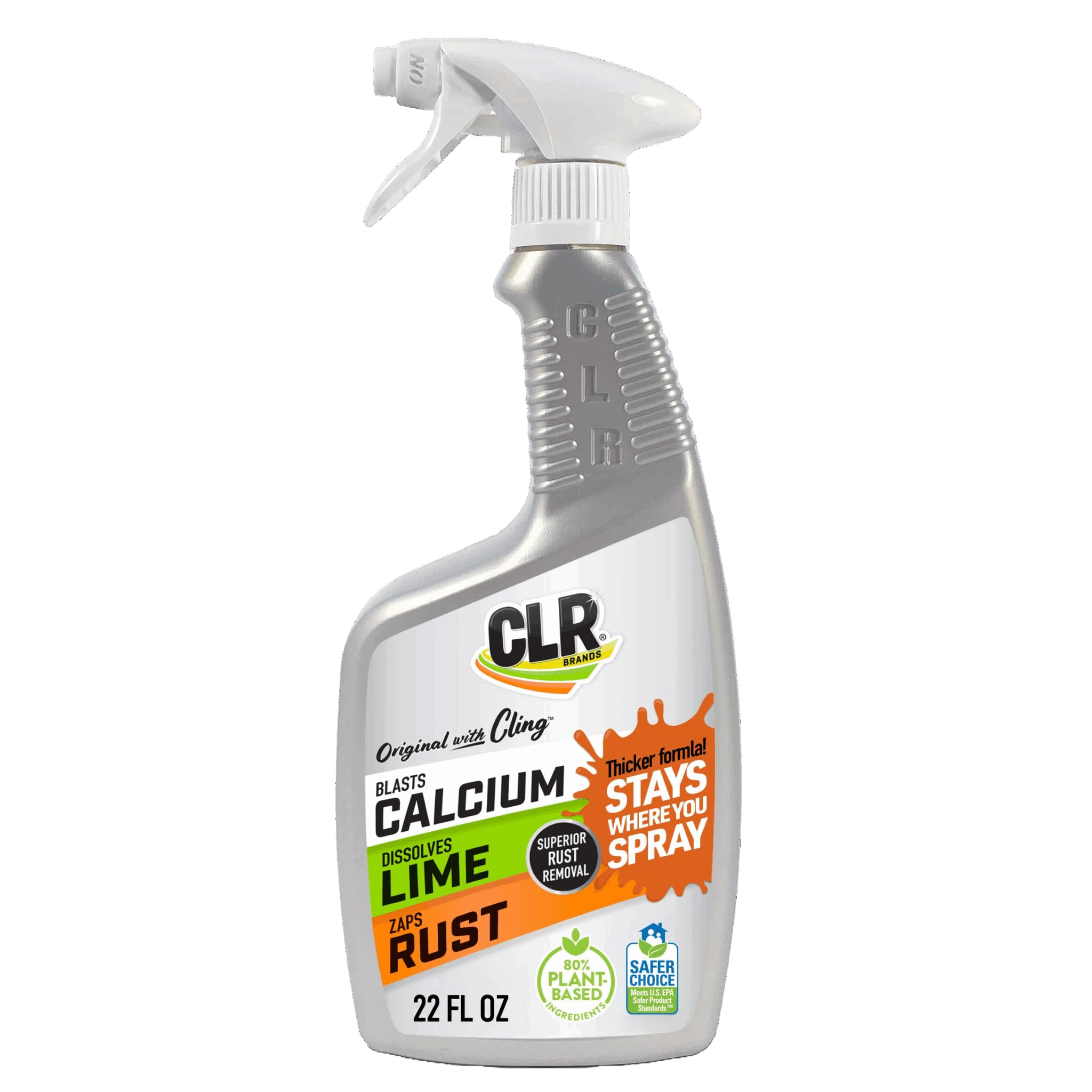
The CLR CLING Gel is exactly what its name suggests — a thickened formula that adheres to vertical toilet walls and shower tile without running off. This dwell time is critical when fighting hard water stains because the acid needs minutes, not seconds, to break down calcified deposits. Users consistently report that spraying it on, waiting a few minutes, and lightly scrubbing reveals a surface that looks brand new.
Unlike standard sprays that drip away instantly, this gel stays put on the bowl’s curved surfaces and even on the underside of faucets. It tackles calcium crust, rust, and lime scale in a single application. The formula is certified under the EPA’s Safer Choice program, so it avoids harsh additives like phosphates and bleach while still delivering professional-grade removal.
A few buyers note the smell is strong for a few hours after use, which is typical of acid-based descalers. The gel texture means you use less product per application compared to a liquid that runs off, making the bottle last longer even for heavy buildup. For anyone dealing with a stubborn ring that a regular scrub brush can’t touch, this is the first product to try.
Why it’s great
- Gel clings to vertical surfaces for maximum contact time
- Works on calcium, lime, rust, and soap scum in one pass
- EPA Safer Choice certified
Good to know
- Strong chemical odor that lingers for a few hours
- Slow-acting on extremely thick, old deposits
2. CLR Free & Clear Calcium, Lime & Rust Remover
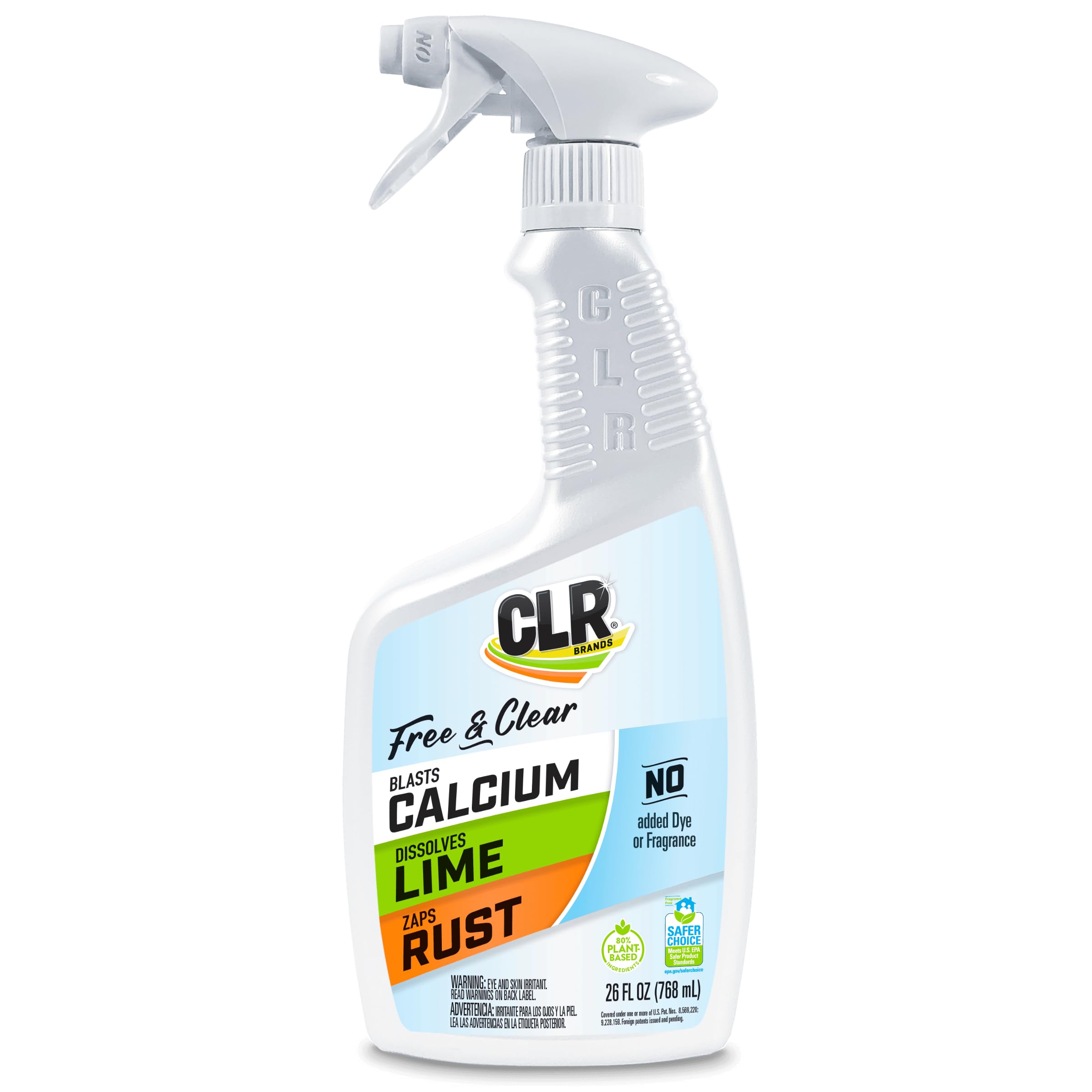
The CLR Free & Clear version removes the dyes and fragrances that many people find irritating, while keeping the same descaler formula. This is particularly useful for households with sensitivities or for use in smaller bathrooms where chemical fumes accumulate quickly. It works well on infrequently used toilets where calcium deposits have had time to harden — a few minutes of soak time lifts the ring without intensive scrubbing.
Because it’s a spray rather than a gel, it excels on horizontal surfaces like sink basins, countertops, and shower floors. Users found it effective on resin sinks and glass shower enclosures for soap scum removal. The formula is also rated under the EPA’s Safer Choice program, giving peace of mind about the chemicals you’re applying to surfaces you touch daily.
One trade-off is that the fragrance-free formula still carries a noticeable chemical scent due to the acids working. It also struggles with very old, thick limescale layers that have built up over years — those may require repeated applications or a stronger acid. For weekly maintenance and moderate buildup, this is a versatile all-around choice.
Why it’s great
- No dyes or fragrances for sensitive users
- Works on many surfaces including resin and stainless steel
- EPA Safer Choice certified
Good to know
- Not as effective on thick, old limescale without multiple applications
- Still has a chemical smell
3. CRL Bio-Clean Water Stain Remover

CRL Bio-Clean is in a different class — it’s a fine abrasive cream that physically polishes away hard water spotting rather than dissolving it chemically. The abrasive particles are approximately 4000 grit, which is fine enough to remove water spots from glass shower doors without leaving noticeable scratches. Users with years-old hard water stains on glass, chrome fixtures, and even copper surfaces report it works where standard acid sprays failed.
The application requires a bit more elbow grease than a spray. You apply a small amount to a damp sponge or cloth and buff the surface. It’s particularly effective on glass shower doors where mineral deposits have bonded to the silica itself. The product also works on stage one corrosion, making it useful for removing very early rust spots before they become permanent pits.
The downside is that the abrasive nature means it can cause micro-scratches on highly polished or soft surfaces if you press too hard. It also requires two to three applications for heavy buildup and a dry sponge to work the paste in. If your main concern is glass doors and chrome fixtures, this is the specialized answer most general cleaners can’t provide.
Why it’s great
- Removes years-old water spots from glass
- Works without harsh chemical acids
- Effective on chrome, tile, and copper
Good to know
- Requires manual buffing and multiple applications
- May cause micro-scratches on soft surfaces
4. Zud Cream Cleanser 2-Pack
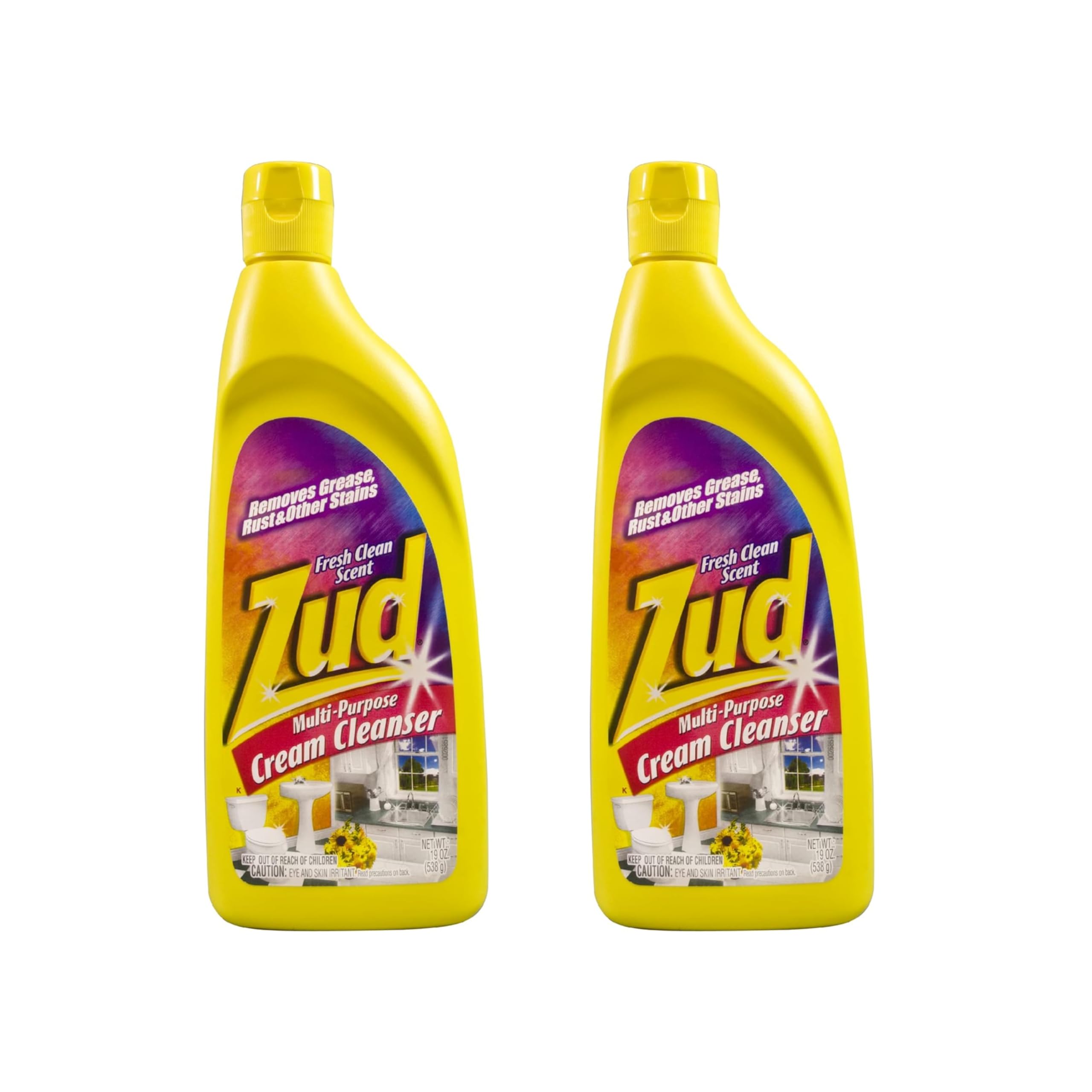
Zud has been a staple in heavy-duty cleaning for generations, and this bleach-free cream cleanser carries that legacy forward. Its unique formula dissolves yellow mineral buildup and rust stains from bathroom surfaces that many standard cleaners simply smear around. Users specifically point to its performance on shower walls where orange iron stains accumulate from well water, reporting that a simple spread-and-soak method makes the stains rinse away.
The cream consistency allows you to apply it exactly where you need it — on a bathtub ring, around a sink drain, or inside a toilet bowl. Because it contains no bleach, it’s safe on colored surfaces like marble and fiberglass that can yellow from harsh chemicals. The two-pack provides excellent value for households that tackle multiple bathrooms or kitchens.
As a cream cleanser, it works best with a lightly damp sponge or cloth rather than a brush. It’s less effective for quick spray-and-wipe scenarios because you need to let it sit for a few minutes to break down the stain. If your primary battle is rust spots and mineral yellowing, Zud earns its place as a reliable specialist.
Why it’s great
- Excellent on rust stains and yellow mineral deposits
- Bleach-free and safe for colored surfaces
- Two-pack offers great value for multiple bathrooms
Good to know
- Requires a few minutes of soak time
- Not a spray — best applied with a sponge
5. CREW 04560 Heavy Duty Toilet Bowl Cleaner

For extreme cases of calcium and lime scale, the CREW 04560 is the nuclear option. Its 23% hydrochloric acid concentration is far beyond what typical household cleaners contain, and it is designed specifically for periodic deep cleaning rather than weekly use. Users living in areas with severe hard water report that letting this pour into the toilet bowl for 20 minutes dissolves the ring with only light scrubbing — no exhausting elbow grease required.
Beyond descaling, this product also kills harmful bacteria and viruses including Pseudomonas aeruginosa and Staphylococcus aureus. The ready-to-use liquid doesn’t require mixing — just pour it directly into the bowl and let it work. The industrial-grade chemistry is reflected in the packaging: a plain bottle that prioritizes function over aesthetics.
The major risks are surface damage and fumes. Hydrochloric acid at this concentration can damage chrome finishes, colored grout, and natural stone if dripped on those surfaces. The smell is strong, and adequate ventilation is essential. This is not a casual cleaner — it’s a specialist tool for when gentler options have failed. Several users also noted that batch consistency varies, with some bottles seeming weaker than previous orders.
Why it’s great
- 23% HCI dissolves the hardest calcium rings with minimal scrubbing
- Kills bacteria and viruses as a disinfectant
- Ready-to-use — no mixing required
Good to know
- Can damage chrome, natural stone, and colored grout
- Strong fumes require good ventilation
6. YINGMORE Pumice Stone Toilet Bowl Cleaner with Handle

This pumice stone system is a completely chemical-free approach to hard water stain removal. The natural volcanic stone is softer than porcelain but harder than mineral deposits — so when used wet, it physically scrapes away calcium and rust rings without scratching the toilet bowl surface. Users who tried multiple chemical cleaners with no success found that this stone finally removed their rust rings in just a few minutes of light rubbing.
The standout feature is the 16.7-inch handle, which extends far longer than a standard toilet brush. This is a game-changer for tall users or anyone with back pain who struggles to reach the bottom of the bowl. The handle is made from stainless steel for durability, and the stone attaches securely via a button-release mechanism. The package also includes eight replacement stones, keeping you equipped for months of cleaning.
The drawbacks are practical. The stones are brittle — if you press too hard or at an angle, they can snap chunks off. You must wet the stone thoroughly before use and store it dry to prevent degradation. The handle has no hook or cover for storing a used stone, so you’ll need to rinse and air-dry it between uses. For those who want to avoid chemical fumes, this mechanical solution is a solid workhorse.
Why it’s great
- Removes rings without harsh chemicals
- Long handle reaches deep into the bowl comfortably
- Comes with 8 replacement stones
Good to know
- Stones are brittle and can snap under pressure
- No storage cover for used stone
7. Clorox ToiletWand Disposable Cleaning System
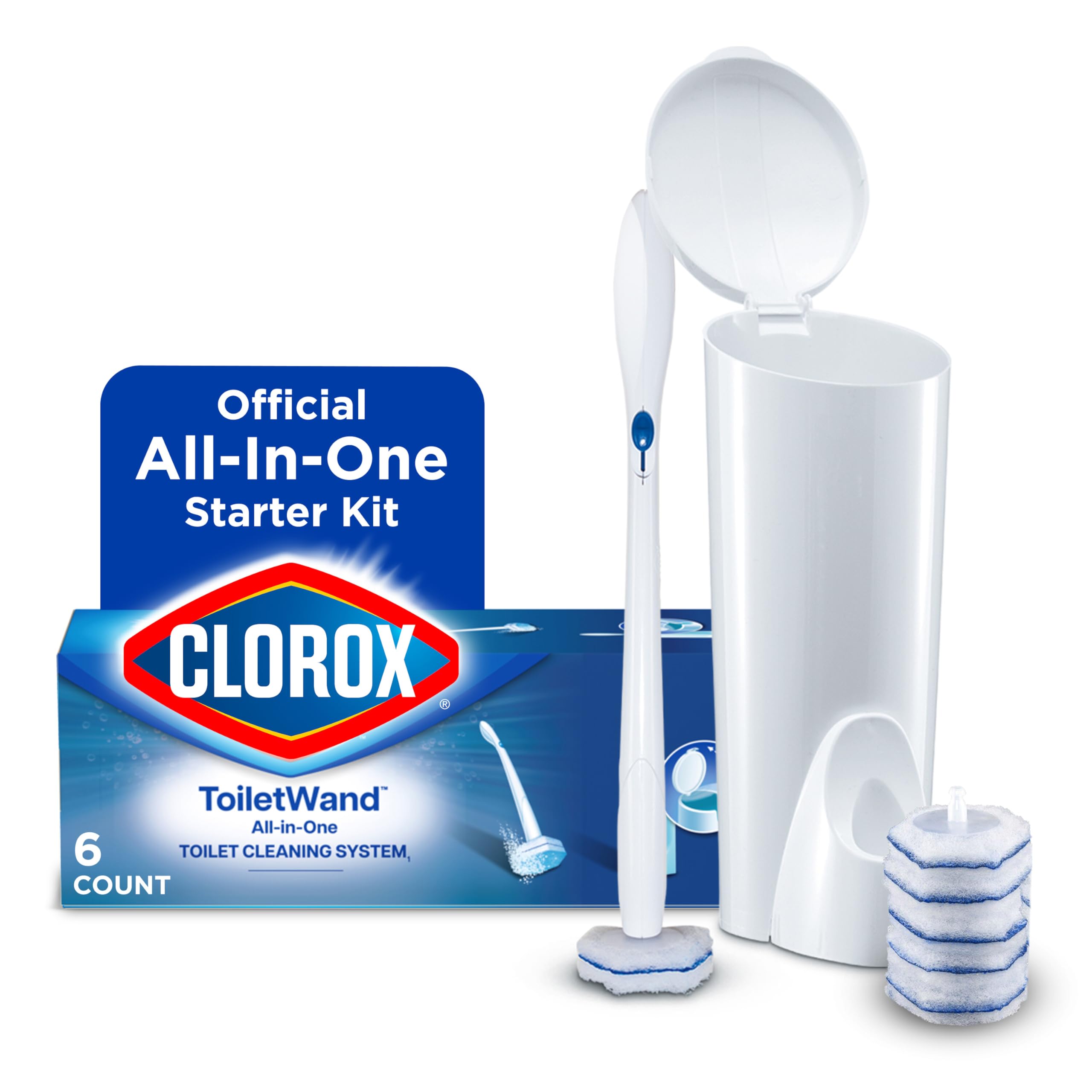
The Clorox ToiletWand replaces the traditional germ-ridden toilet brush with a hygienic disposable pad system. Each pad is preloaded with Clorox cleaner that kills 99.9% of germs, and the pad clicks directly into the bin after a single use — no rinsing, no storing a wet brush. For bathrooms with heavy foot traffic, this is an efficient way to keep the toilet clean without cross-contamination.
Clorox claims this system removes hard water stains 2X faster than a brush with manual bowl cleaner, and users generally confirm it works well on light to moderate lime scale and iron stains. The pad’s shape contours to the bowl rim and under the rim, covering areas that a standard brush can miss. The caddy keeps the wand and six included refills organized and accessible.
The system has limitations. It is not powerful enough for thick, established calcium rings — those require a dedicated acid-based gel first. The plastic caddy is somewhat flimsy, with multiple users noting that the lid doesn’t close properly after a few uses. The refill pads are not cheap, making this an ongoing cost compared to a single bottle of liquid cleaner. For weekly touch-ups and hygiene at small homes, however, this system is very convenient.
Why it’s great
- Touch-free disposal eliminates dirty brush storage
- Preloaded cleaner kills 99.9% of germs
- Pad contours under bowl rim for full coverage
Good to know
- Not powerful enough for heavy, established limescale
- Plastic caddy is flimsy and lids may warp
FAQ
Can I use a hard water bathroom cleaner on a marble countertop?
Why does my toilet bowl ring keep coming back after cleaning?
Is it safe to mix different hard water cleaners together?
Final Thoughts: The Verdict
For most users, the bathroom cleaner for hard water stains winner is the CLR CLING Gel because its thickened formula attacks stubborn rings on vertical surfaces without wasting product, making it effective and efficient for regular use. If you want a fragrance-free option for daily descaling on sinks and showers, grab the CLR Free & Clear. And for polished glass shower doors or chrome fixtures that standard acid sprays can’t fix, nothing beats the CRL Bio-Clean.