
Our readers keep the lights on and the weekend projects moving. As an Amazon Associate, I earn from qualifying purchases.
You want a bathroom wall that looks like you spent a fortune and a weekend with a trowel, but you also want to be done in an afternoon with nothing more than scissors and a steady hand. That is exactly what modern peel-and-stick and interlocking wall tiles deliver — realistic stone and ceramic finishes that are fully waterproof and made for DIY installation, with no grout, no mortar, and no contractor. The trick is picking the right tile for your wall’s surface and your steam load, because not all stick-on tiles handle moisture the same way.
I’m Rikta — the co-founder and writer behind FitlyFast. This guide is built by comparing the manufacturers’ published specifications and the patterns across verified customer reviews, so you get each pick’s real strengths and trade-offs instead of marketing spin.
Whether you are updating a master bath, refreshing a powder room, or tackling a rental-friendly renovation, this breakdown of the best bathroom wall tiles will show you exactly which panel fits your skill level, your wall type, and your style expectations.
How To Choose The Best Bathroom Wall Tiles
Choosing bathroom wall tiles comes down to three things: how much moisture the wall sees, how smooth the surface is, and how much you want it to look like real stone versus a vinyl sheet. Peel-and-stick tiles work brilliantly for bathroom walls that get splashed but not soaked — think the wall behind a vanity or a half-bath. For shower walls that take direct spray, the thicker interlocking panels with silicone-sealed edges are the safer bet. Material counts, too: PVC composite tiles at 0.16 inches thick feel sturdy and hide wall dimples, while thinner 0.08-inch vinyl tiles are cheaper but show every imperfection underneath. And coverage math is simple — measure your wall’s width by height, subtract the area of windows and fixtures, then add 10 percent for cutting errors and pattern matching. That extra 10 percent saves you from hunting for a matching dye lot mid-project.
Material and Thickness: What Holds Up to Humidity
Thicker is better in a bathroom. Tiles at 0.16 to 0.2 inches (about 4 to 5 millimeters) are rigid enough to bridge small wall bumps and resist warping from steam. Thinner tiles at 0.08 inches will work on a perfectly smooth painted wall, but they flex more and may curl at the edges over time in a high-humidity shower. The material matters too: polyvinyl chloride (PVC) composite laminate is fully waterproof and won’t swell, while resin-based tiles offer a harder, more scratch-resistant surface that mimics marble. Vinyl tiles are water-resistant rather than fully waterproof — fine behind a toilet or sink, but not for a direct spray zone.
Adhesion vs. Interlocking: Which Stays Put
Peel-and-stick tiles rely on a pressure-sensitive adhesive layer that bonds to smooth, clean, dry walls. These are perfect for painted drywall, glass, or existing ceramic tile — but the adhesive is often one-shot; once it touches the wall, repositioning can be extremely difficult. Interlocking tiles, by contrast, use a tongue-and-groove edge that snaps together, and you secure them to the wall with glue or adhesive strips. For a shower enclosure where moisture will seep behind the tile over time, interlocking panels sealed with silicone at every seam give you a waterproof barrier that peel-and-stick simply cannot match. For a vanity backsplash or a wall that only sees occasional splashes, peel-and-stick is simpler and faster.
The Real Cost of “Easy to Cut”
Every manufacturer says their tile is easy to cut, but the reality varies. Tiles thinner than 0.1 inches can be cut with heavy scissors or a sharp utility knife, but reviewers consistently note that very sticky adhesive gums up blades and requires multiple scores. Thicker tiles at 0.16 to 0.2 inches demand a sharp utility knife, tin snips, or even a table saw with a fine-tooth blade for clean edges around outlets. If you are doing a full bathroom wall with multiple outlets and corners, budget for a vinyl tile cutting kit or a hook-blade utility knife — the time it saves is worth the ten-dollar investment.
Quick Comparison
On smaller screens, swipe sideways to see the full table.
| Model | Category | Best For | Key Spec | Amazon |
|---|---|---|---|---|
| Vamos Tile 100-Piece | Premium | Realistic subway tile look | 100 pieces / 12.08 sq ft coverage | Amazon |
| STICKGOO 10-Sheet | Premium | Seamless glossy marble finish | 0.16″ thick PVC panels | Amazon |
| Palisade Interlocking | Premium | Full shower waterproofing | 25.6″ x 14.8″ panels / 21 sq ft | Amazon |
| Reovatile 2026 Upgrade | Mid-Range | Thick textured panels | 0.16″ thick PVC, 10 packs | Amazon |
| Art3d Heavy-Duty | Mid-Range | Large 12×12 sheets | 0.08″ thick vinyl sheets | Amazon |
| BeNice Subway Tiles | Value | Budget-friendly subway look | 23 tiles / 4.84 sq ft coverage | Amazon |
In‑Depth Reviews
1. Vamos Tile 100-Piece Glossy Dolomite White Peel and Stick Backsplash Tile
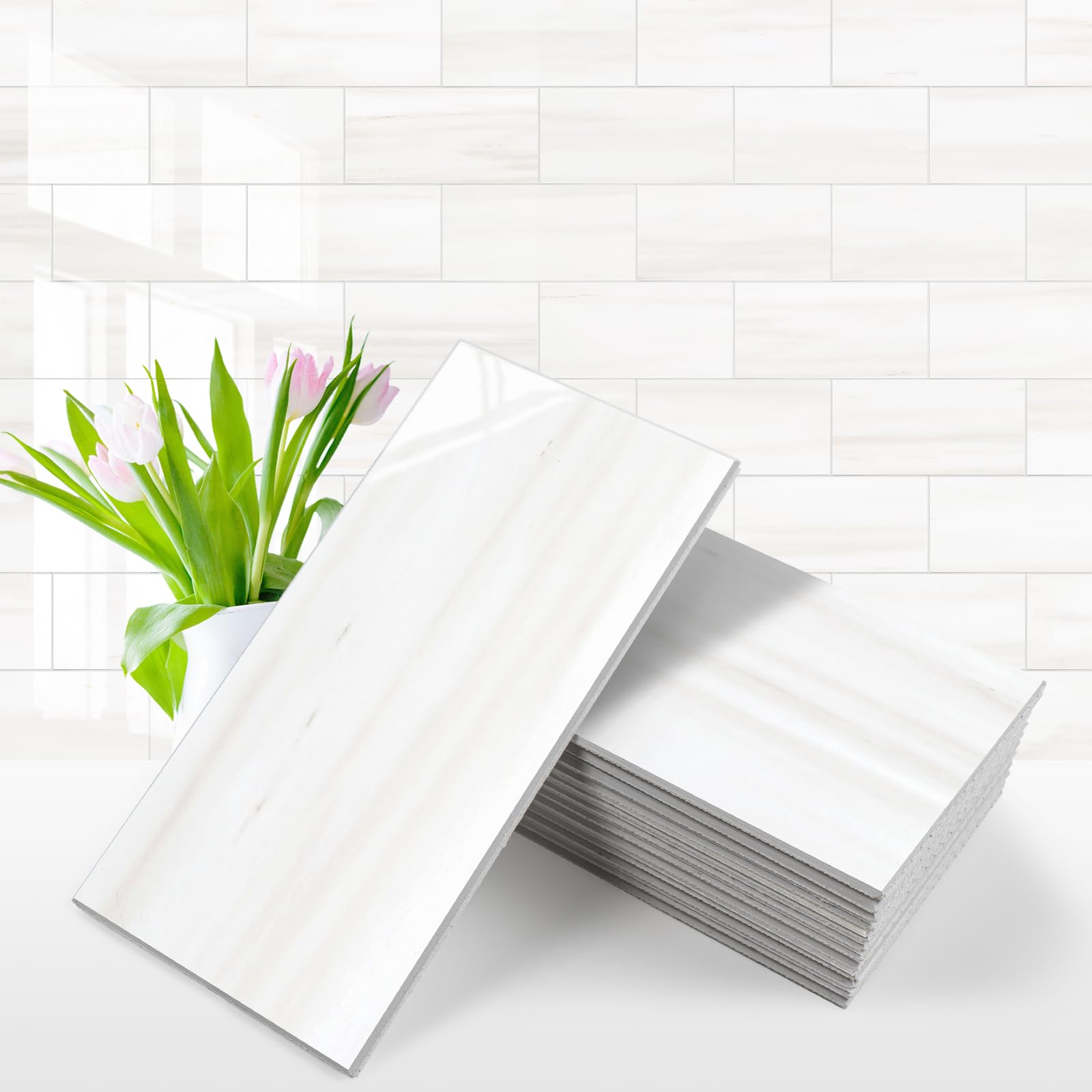
You get 100 individual subway tiles that are thick enough at 0.16 inches to hide small wall bumps and feel realistic, not flimsy — reviewers call them “thick, sturdy, high quality.” Each tile is 6 inches by 3 inches, and the glossy surface has white grout lines already baked in, so you press it on and instantly have a classic subway tile look. One buyer installed them in a travel trailer bathroom and reported they were “still great” months later, with no lifting edges. That makes this the pick for anyone who wants a ceramic look without the mortar mess. The adhesive is powerful — a reviewer warns removal is “hard to remove (use a blow dryer)” — so line up your layout carefully before you stick. This beats the thinner 0.08-inch Art3d sheets by hiding wall flaws far better. For a clean white subway wall on a budget, this is the box.
Why it’s great
- Thick, realistic tile feel at 0.16 inches — hides wall bumps
- 100 pieces cover 12.08 square feet, enough for a small bathroom wall
- Glossy finish with built-in grout lines for instant subway look
Good to know
- Very strong adhesive; repositioning is nearly impossible without heat
- Cutting around outlets requires a sharp utility knife and patience
2. STICKGOO 10-Sheet Subway Tile Peel and Stick Backsplash
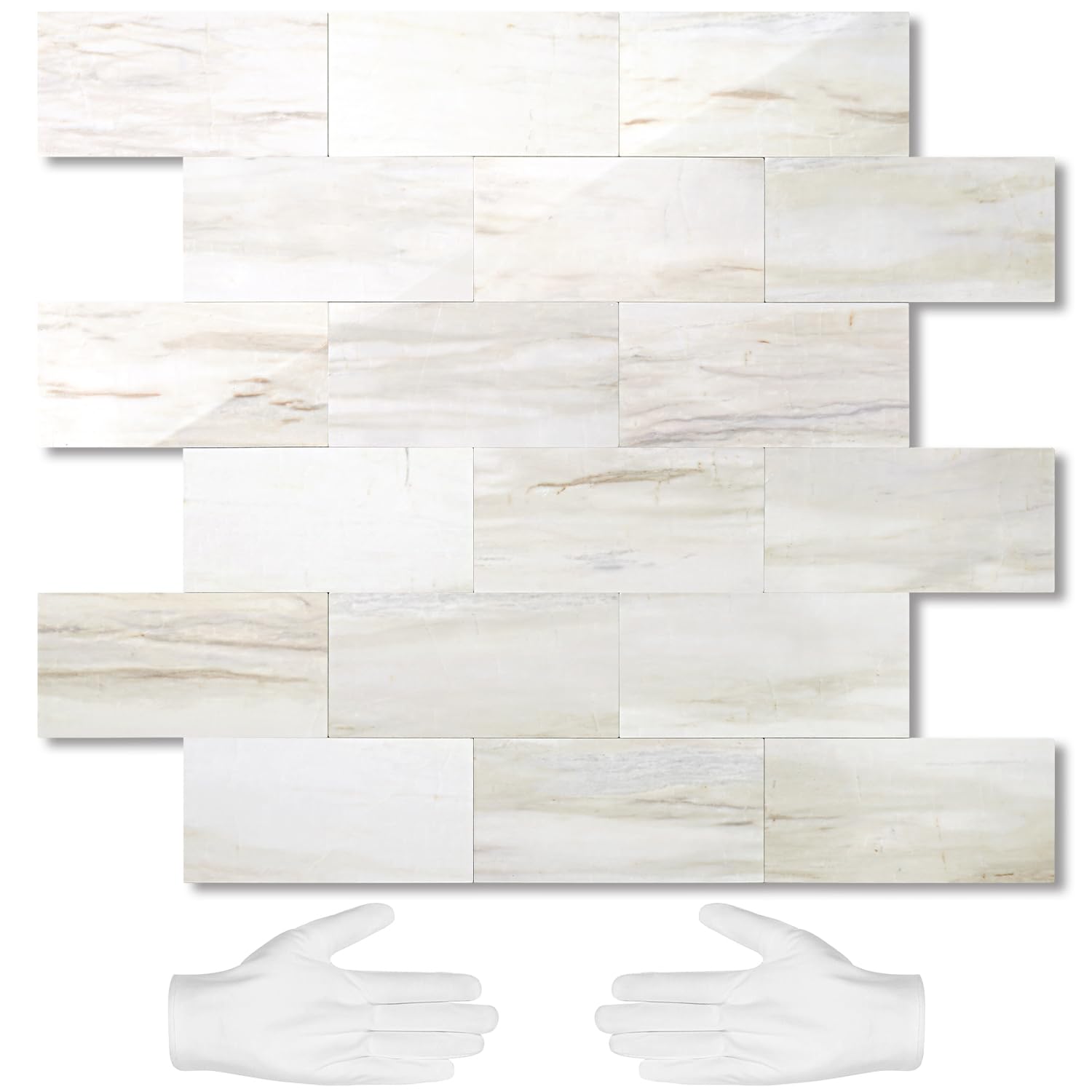
This tiles your wall faster than the Vamos, because you press one 11.58-by-11.35-inch sheet at a time instead of 100 small pieces. The glossy beige marble finish has no visible grout lines — just a smooth, seamless surface that buyers report has a “realistic texture” and a “slick coating” that wipes clean easily. At a thickness of 0.16 inches, it hides wall imperfections as well as the Vamos. The 10 sheets cover 9.12 square feet overall, so it fits a backsplash or vanity wall, not a full shower surround. One perfectionist reviewer spent six hours on their kitchen backsplash and called the result “high-quality.” Pick this over the Vamos if you want a marble look with fewer seams and do not mind the beige hue leaning slightly warm-gray. The included gloves are a helpful touch for handling the sharp cut edges of thick PVC.
Where it shines
- Seamless glossy surface with realistic marble texture — no grout lines to scrub
- 0.16-inch PVC is thick enough to hide minor wall issues
- Comes with a pair of gloves for safe handling of cut edges
Worth noting
- Adhesive is unforgiving; dry-fit the layout before peeling the backing
- 9.12 sq ft is best for a backsplash, not a full wall
3. Palisade 25.6 in. x 14.8 in. Vinyl Wall Tiles in Carrara Marble (8 Pack)

Peel-and-stick tiles hit their limit on a daily-use shower, because moisture eventually finds the seams. The Palisade system solves that with interlocking tongue-and-groove edges — you snap the panels together and run clear silicone sealant along each seam to create a waterproof barrier. Each panel is a large 25.6 by 14.8 inches, and eight panels cover 21 square feet, which is enough for a standard tub surround. Owners mention they “redid my entire shower” with these and that they are “easy to cut on a table saw” using a high-tooth-count blade. At 0.2 inches thick, these feel the most solid of the group — they do not flex under pressure. The Carrara marble pattern shifts per panel so it never looks like a repeating stamp. But installation is more involved: you glue the interlocking panels and use silicone caulk; it is not a simple peel-and-stick project. This is the right choice only if you need a truly waterproof shower wall rather than splash protection.
What stands out
- Interlocking edges with silicone sealant create a waterproof shower wall
- Large panels cover 21 square feet per pack — fast installation
- 0.2-inch thickness feels solid and hides wall imperfections
The trade-offs
- Requires glue-down installation plus silicone caulk; not a simple peel-and-stick
- Cutting with a utility knife is tough; a table saw with a fine blade is recommended
4. Reovatile 2026 New Upgrade Peel and Stick Backsplash Tile (Beige Ecru, 10 Packs)
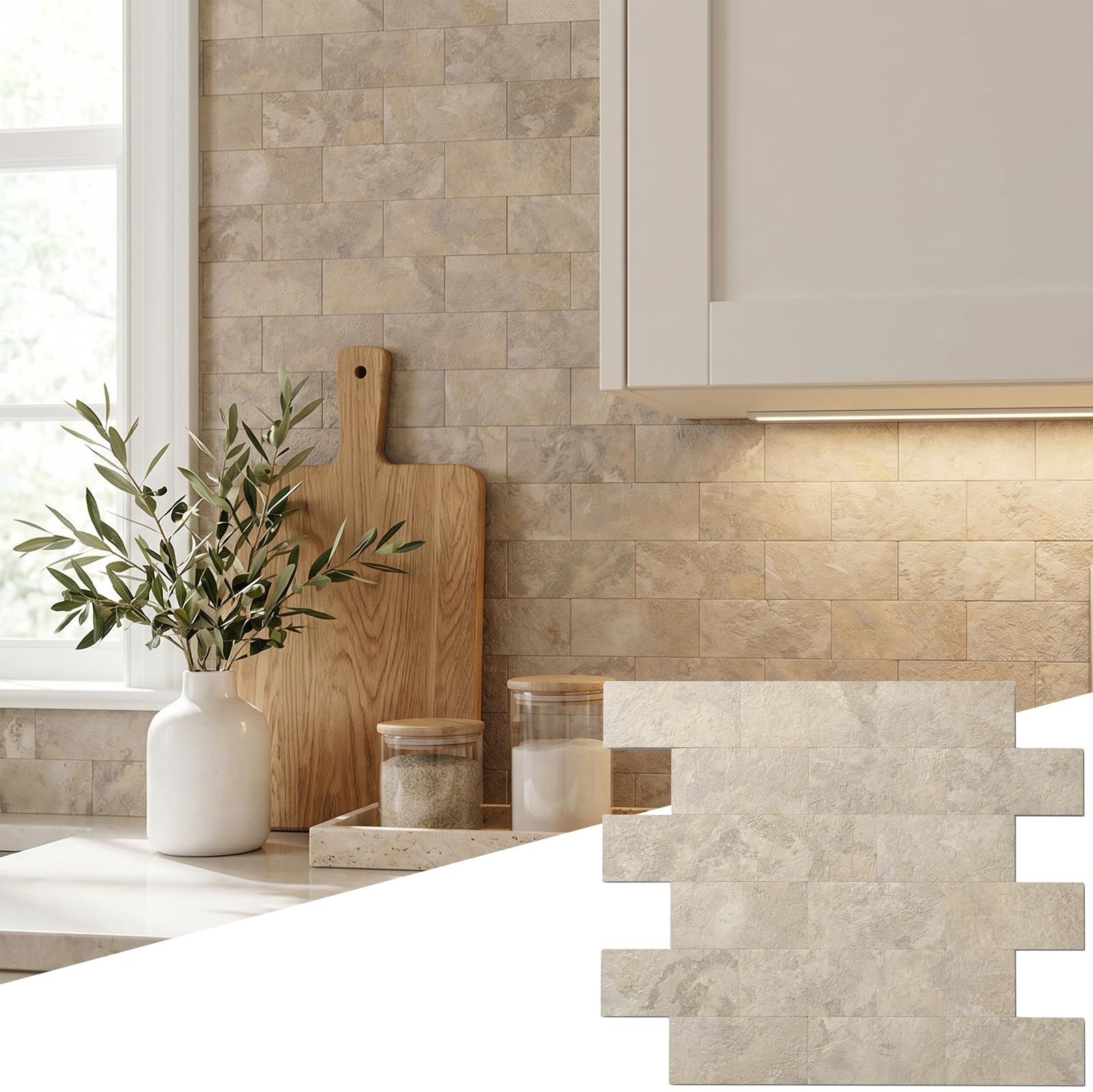
This is the heaviest peel-and-stick panel on the list at 3.65 kilograms per 10-pack — that weight comes from dense PVC composite, which resists warping from steam far better than the 0.08-inch Art3d vinyl. Each sheet is roughly 11.34 by 11.57 inches, and the beige ecru has a realistic distressed texture that reviewers describe as “great texture” and “easy to clean.” The adhesive sticks so aggressively that reviewers caution it “sticks too quickly, preventing adjustment” — so you must place each sheet perfectly on the first try. One reviewer also noted that a “protective film” on the surface is difficult to remove, which adds a few minutes per tile. This is the pick for someone who values a thick, textured, substantial wall and is confident they can nail the placement every time. The rustic wood-style texture is quite different from the smooth STICKGOO marble, so make sure it fits your decor.
The upsides
- 0.16-inch thick PVC composite resists steam warping better than thin vinyl
- Realistic distressed texture adds depth to the wall
- 3M adhesive holds firmly on glossy painted surfaces
Keep in mind
- Adhesive grabs instantly; repositioning is nearly impossible
- Protective film on each tile is tricky to peel off
5. BeNice Peel and Stick Backsplash Large Bathroom Subway Tiles (23Tiles) Beige

At 23 tiles covering only 4.84 square feet, this pack is the smallest and most affordable — it is meant for a tiny backsplash behind a pedestal sink or an accent strip, not a full wall. Each tile is 7.8 by 3.86 inches with a glossy beige imitation-marble finish that customers note “looks like the real thing.” The material is resin plastic, not PVC, which gives it a harder, shinier surface that resists scratches better than soft vinyl. But the 0.08-inch thickness means any wall bump or paint drip will show through, so your wall must be perfectly smooth. This is the pick for a renter who wants a cheap weekend project that comes off easily when the lease ends. If your wall is wider than about two feet, buy a second box.
Why we’d pick it
- Lowest entry price for a realistic marble-look subway tile
- Resin plastic is harder and more scratch-resistant than soft vinyl
- Peel-and-stick installation with no grout or special tools
A few caveats
- Only 4.84 sq ft per pack — insufficient for full walls
- 0.08-inch thickness reveals every wall bump underneath
6. Art3d 10-Sheet Heavy-Duty Peel and Stick Backsplash (Beige & White)
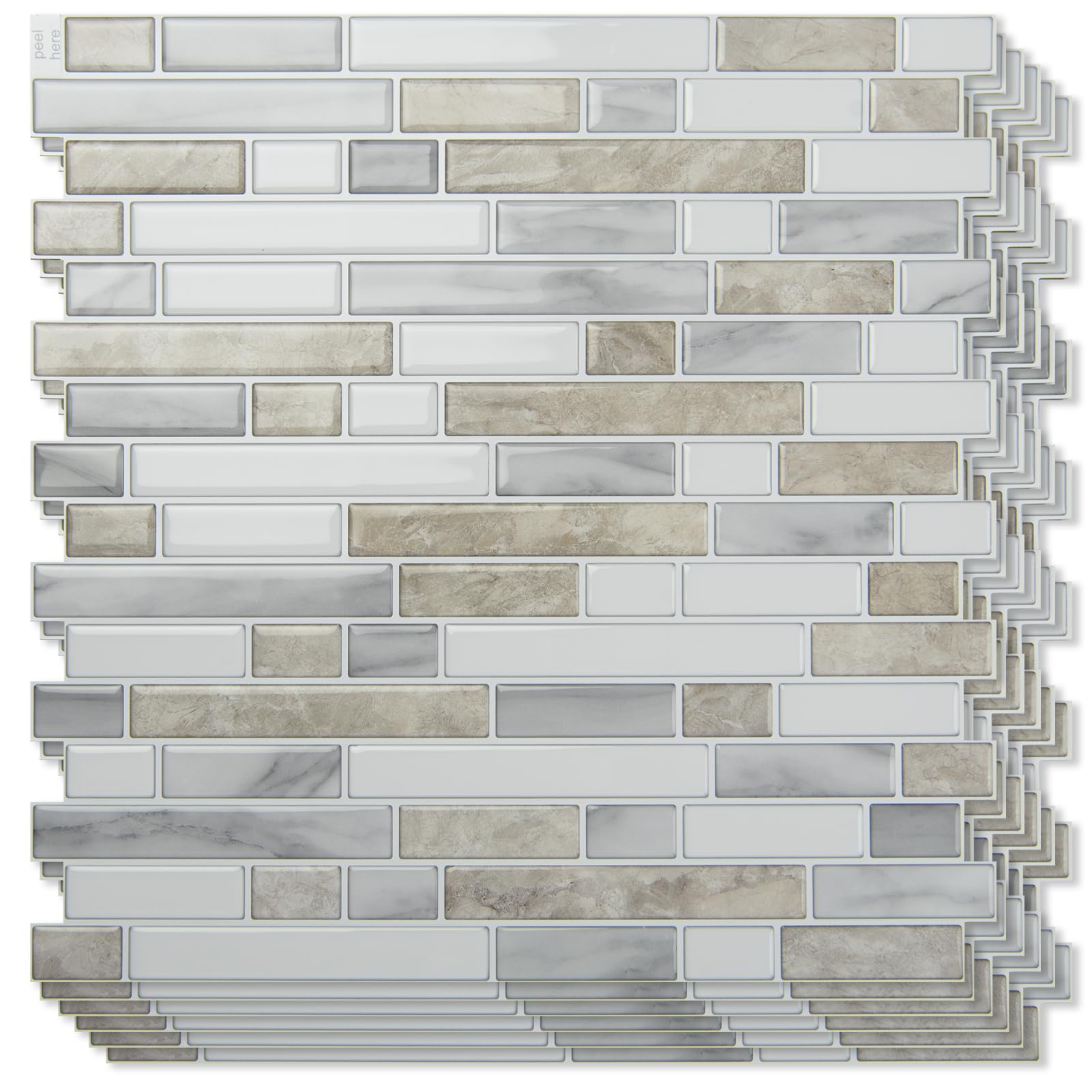
Ten 12-by-12-inch sheets cover more wall area per dollar than the BeNice pack, at a price that stays close to entry-level. At 0.08 inches thick, the vinyl is thin, but the maker states it is “2–3 times sturdier than standard ones” thanks to a denser formulation — reviewers confirm the tiles “stay on and lay flat” with “quality that is great.” The big advantage over the BeNice is the large sheet size: fewer seams and faster coverage. The beige-and-white polished finish is modern, and one reviewer noted it “upgraded my kitchen look.” A heads-up: some reviewers on painted walls needed spray adhesive to secure it, so test a single sheet first. If you want to cover a decent-sized bathroom wall on a budget without the hassle of individual small tiles, this is the sweet spot.
Strong points
- Large 12×12 sheets cover walls faster with fewer visible seams
- Denser vinyl formulation resists warping better than basic 0.08-inch tiles
- Polished beige-and-white finish modernizes any bathroom
Before you buy
- Adhesion can struggle on painted walls; spray adhesive may be needed
- 0.08-inch thickness will not hide wall surface imperfections
Understanding the Specs
Thickness
Measured in inches or millimeters, this is the single most important spec for bathroom walls. A tile at 0.08 inches thick (about 2 millimeters) is lightweight and easy to cut with scissors, but it will flex against wall bumps and the pattern of your wall’s texture may telegraph through. A tile at 0.16 inches (4 millimeters) or 0.2 inches (5 millimeters) is stiff enough to bridge small dents and imperfections, giving you a smooth finished wall even if the surface underneath is not perfectly flat. In a humid bathroom, thicker tiles also resist curling at the edges over time.
Coverage
Listed in square feet per pack, this tells you how much wall area one box covers before cutting waste. Standard bathroom backsplashes run 10 to 15 square feet; a full wall behind a tub might need 30 to 40 square feet. Always add 10 to 15 percent to the measured wall area to account for cuts around outlets, corners, and pattern matching. A 12-square-foot pack will not cover a 12-square-foot wall if you have to cut around a window and a faucet.
Material Type
PVC composite laminate is the most common material for peel-and-stick bathroom tiles — it is fully waterproof, flexible enough to cut, and resists heat from a nearby shower steam. Resin-based tiles are harder and shinier, giving a more authentic marble or ceramic look, but they are less flexible and may crack if forced around a curve. Vinyl tiles are the cheapest but least waterproof; save them for low-moisture areas behind a toilet or sink rather than a shower.
Adhesion vs. Interlocking
Peel-and-stick tiles use a pressure-sensitive adhesive that bonds directly to the wall — installation is fast, but removal often damages the wall surface, and the adhesive grabs immediately so there is no sliding into position. Interlocking tiles use a tongue-and-groove edge that snaps panels together, and you secure them with construction adhesive or silicone. For a shower wall that gets direct water spray, interlocking with silicone sealant at each seam gives you a true waterproof membrane; peel-and-stick is splash-resistant but not waterproof at the seams.
FAQ
Can peel-and-stick bathroom wall tiles go directly over existing ceramic tile?
How do I cut PVC bathroom wall tiles around an electrical outlet?
Will peel-and-stick tiles damage my wall when I remove them?
Do I need to seal the edges of peel-and-stick bathroom tiles?
Final Thoughts: The Verdict
For most people updating a bathroom wall, the bathroom wall tiles winner is the Vamos Tile 100-Piece because it gives you the classic subway look with thick, realistic PVC tiles at a price that undercuts ceramic by a mile. If you want a seamless marble finish with no grout lines to clean, grab the STICKGOO 10-Sheet. And for a full shower surround that needs to be waterproof at every seam, the Palisade Interlocking Panels are your only choice among these six.