
Our readers keep the lights on and the weekend projects moving. As an Amazon Associate, I earn from qualifying purchases.
Batt insulation is the silent workhorse of your home’s thermal envelope, but not all fiberglass blankets, mineral wool boards, or reflective rolls deliver the same resistance to heat flow. Choose the wrong density or facing, and you’re basically paying to heat the outdoors. This guide strips away the marketing and focuses on the real-world metrics — R-value per inch, fire rating, fiber type, and vapor retarder strategy — that determine whether your project pays back or wastes money.
I’m Rikta — the co-founder and writer behind FitlyFast. I’ve spent the past decade analyzing building-material supply chains, reading ASTM test reports, and cross-referencing contractor feedback to separate durable insulation products from the ones that settle, sag, or fail to perform.
Whether you’re insulating a workshop, sealing a wood stove draft, or adding a radiant barrier to your attic, finding the best batt insulation means matching the physical form factor and thermal spec to your specific climate and installation surface.
How To Choose The Best Batt Insulation
Selecting the right batt isn’t just about grabbing the thickest roll. You need to consider the operating temperature, whether moisture is a factor, and how the material handles compression during installation. A mismatch here means either a fire hazard or an energy bill that never drops.
Match the Material to the Temperature
Fiberglass batts (typically R-13 to R-19) work fine for standard wall and attic cavities exposed to normal household temperature ranges. For high-heat applications like wood stoves, forges, or kilns, you need a ceramic fiber blanket rated to 2,300°F or higher. Mineral wool sits in between — it handles up to 2,000°F but excels at sound dampening and is completely non-combustible.
Facing and Vapor Retarder Strategy
Kraft-faced batts include a paper vapor retarder that should face the warm side of the wall. In humid climates, unfaced batts paired with a separate vapor barrier give you more control. Reflective foil products (bubble or foam core) act as both a radiant barrier and a vapor retarder — ideal for metal buildings or attics where condensation risk is high.
Quick Comparison
On smaller screens, swipe sideways to see the full table.
| Model | Category | Best For | Key Spec | Amazon |
|---|---|---|---|---|
| US Energy Products 48″x100′ White Double Bubble | Reflective | Radiant barrier in attics & metal buildings | R-8 to R-24, 1/4″ thick | Amazon |
| SmartSHIELD -5mm 24”X50ft R17 Reflective | Foam Core | Vapor barrier + radiant control | R-17, 5mm foam core | Amazon |
| Lynn Manufacturing Rockwool ProRox 10 pk | Mineral Wool | Soundproofing + fire blocking | 6 lb/ft³, 1″ thick panels | Amazon |
| Lynn Manufacturing Ceramic Fiber 2″x16″x48″ | Ceramic | High-temp forge & kiln lining | 2,400°F rating, 8 lb/ft³ | Amazon |
| BACLAUGH Ceramic Fiber Blanket 1″x16″x48″ | Ceramic | Small furnace & pizza oven wrap | 2,400°F rating, 1″ thick | Amazon |
| R-13 EcoRoll Kraft Faced Fiberglass | Fiberglass | Standard wall & ceiling cavities | R-13, 3.5″ thick, 40 sq. ft. | Amazon |
| UBMove Reflective Bubble Insulation 24″x125′ | Reflective | HVAC duct wrap & greenhouse insulation | 3/16″ bubble layer, R-4.9 to R-14.1 | Amazon |
In‑Depth Reviews
1. US Energy Products 48″ x 100′ White Double Bubble Reflective Foil Insulation

This double-bubble reflective insulation delivers the broadest application range in the premium tier — it works as a radiant barrier, a vapor retarder, and a thermal break in one roll. The white side on one face reduces glare, making it practical for metal buildings and garage doors where all-foil reflections create visual discomfort. At 6mm thickness with a Class A fire rating, it meets the strictest building codes while providing an effective R-8 to R-24 depending on the installation cavity depth.
Real-world performance data backs the claims. Users reported interior temperature reductions of 10-15°F in unconditioned shops after single-layer installation between studs, and RV owners saw interior temps rise 15-20°F above ambient with proper taping. The 48-inch width covers standard stud bays without splicing, and the material cuts cleanly with standard scissors despite being tear-resistant.
One roll covers 400 square feet, which is enough for a typical two-car garage ceiling or a large attic gable wall. The manufacturer also ships replacement rolls promptly if packaging errors occur, which suggests solid quality control from a US-based supplier.
Why it’s great
- Class A fire rating with ASTM certification
- Reflects 99.7% of radiant heat
- White face reduces glare in metal buildings
Good to know
- Double bubble compresses under heavy loads — not for floor underlayment
- Requires taped seams for maximum vapor barrier performance
2. SmartSHIELD -5mm 24”X50ft R17 Reflective Insulation Roll
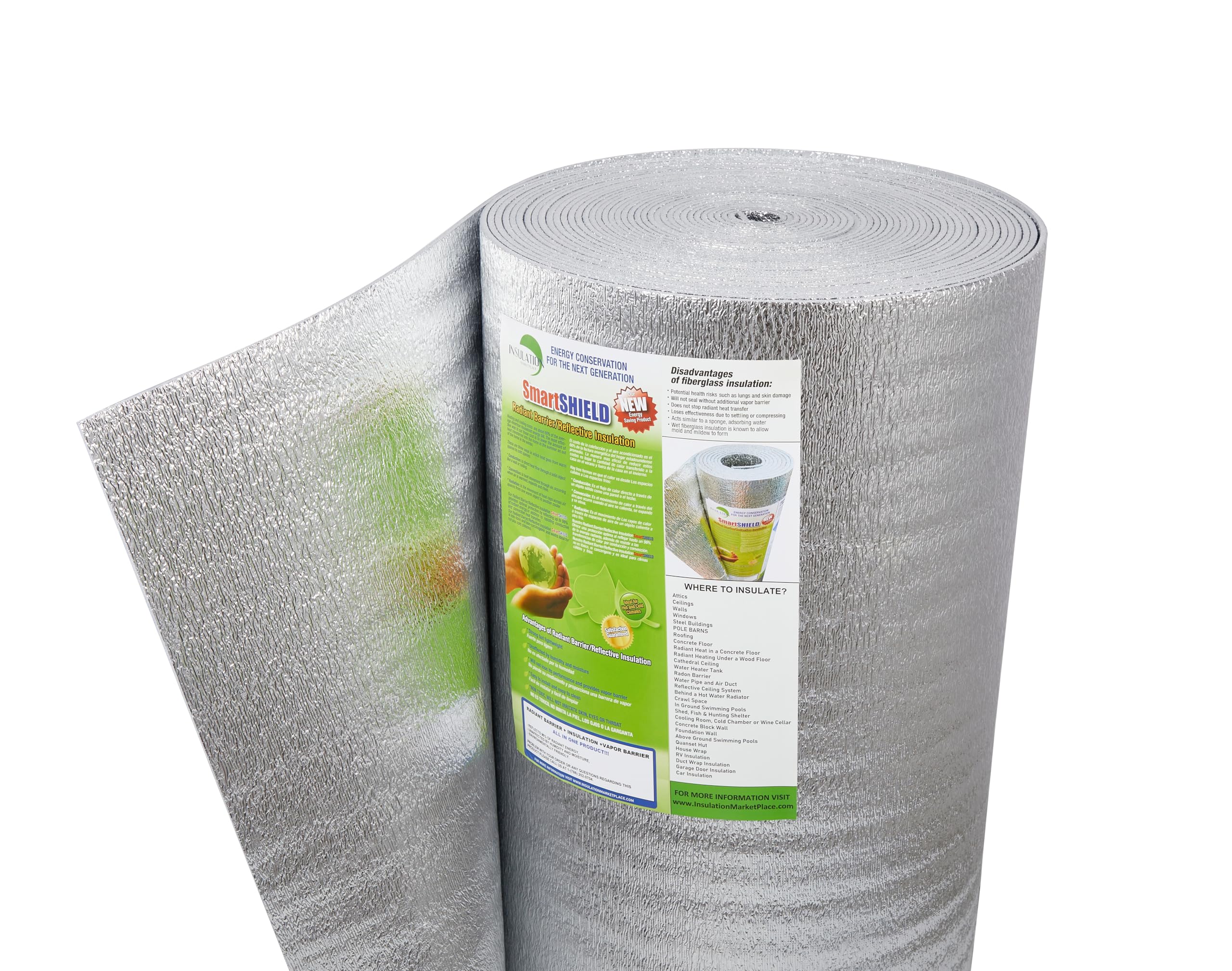
SmartSHIELD takes a different approach from air-gap reflective products by embedding a 5mm closed-cell foam core between two reflective foil surfaces. This construction gives it an R-17 rating independent of air space depth, making it one of the highest R-value-per-thickness options available in a flexible roll. The foil layers reflect 95% of radiant energy while the foam core provides a conduction and convection break.
Energy engineers and HVAC specialists consistently rate this product highly for its ability to block heat flow in attics, crawl spaces, and around ductwork. One verified reviewer reported an 8°F temperature drop across the entire house after installing this on windows and doors. The closed-cell foam also acts as a vapor barrier, preventing condensation buildup in humid environments — a common failure point for fiberglass batts in basements.
The 24-inch width and 50-foot length suit smaller projects like window inserts, RV modifications, or localized attic hatch seals. It cuts easily with utility scissors and staples cleanly to wood framing without tearing, though the foam core means it won’t compress into irregular cavities as well as loose fiberglass.
Why it’s great
- R-17 independent of air space — consistent performance
- Corrosion-resistant coating on foil surface
- Non-toxic and non-irritating to skin
Good to know
- Narrower width (24″) requires more seams for wide areas
- Less flexible than bubble wrap for wrapping irregular shapes
3. Lynn Manufacturing 10 pk 24″ x 24″ x 1″ Rockwool ProRox Mineral Wool
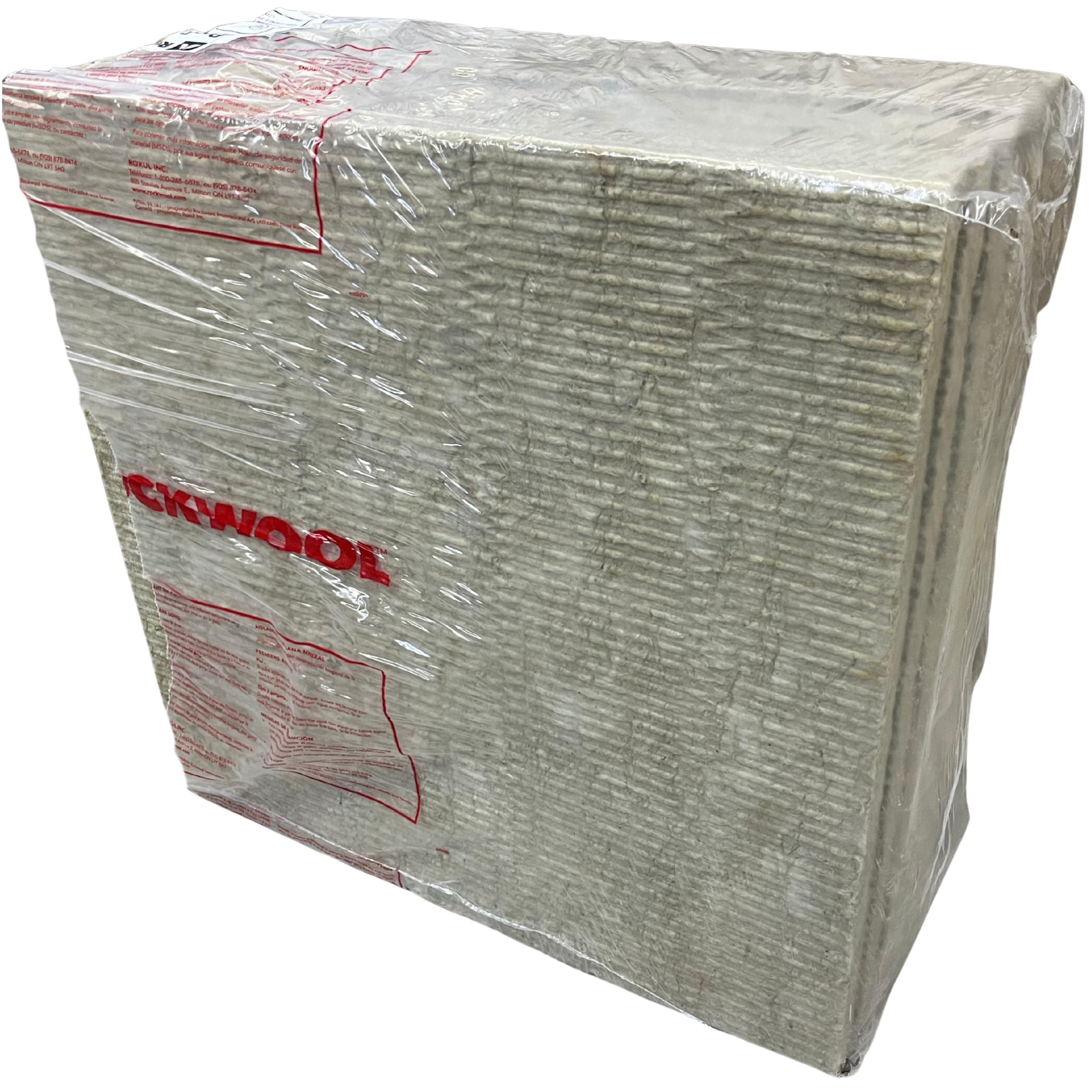
Mineral wool occupies a unique niche in the batt insulation world — it’s non-combustible up to 2,000°F, resists moisture better than fiberglass, and its dense fiber structure absorbs sound more effectively than any fluffy alternative. This 10-pack of ProRox SL960 boards packs a 6 lb/ft³ density into 1-inch thick panels, making it the go-to choice for acoustic treatment in recording studios, home theaters, and generator enclosures where both sound dampening and fire resistance are required.
The boards come in precise 24×24-inch squares that fit standard drop-ceiling grids and stud bays without trimming. Users building bass traps and acoustic panels report a noticeably flatter room response after installation. The material is rigid enough to hold its shape under compression but can be cut with a utility knife for custom fits around recessed lighting or irregular framing.
Unlike ceramic fiber, mineral wool doesn’t irritate skin as aggressively, though gloves and a mask are still recommended during cutting. The lack of any adhesive binders means zero VOC off-gassing, and the panels won’t settle over time like lower-density fiberglass batts.
Why it’s great
- Excellent STC rating for soundproofing applications
- Water-repellent formulation resists mold growth
- Rigid panels hold shape for easy installation
Good to know
- 1-inch thickness yields lower R-value per layer than fiberglass
- Heavier than fiberglass — shipping adds to total cost
4. Lynn Manufacturing Ceramic Fiber Insulation 2″x16″x48″ 2400F Fireproof Blanket

When your project involves temperatures that would melt fiberglass or ignite mineral wool’s organic binder, ceramic fiber is the only practical choice. This 2-inch thick blanket from Lynn Manufacturing is rated to 2,400°F continuous service and is manufactured in the USA with a density of 8 lb/ft³ — dense enough to resist air infiltration but flexible enough to wrap curved surfaces like kiln walls or furnace shells.
Real-world testing confirms its thermal performance: one user built a kiln for bisque firing clay at cone 04 (approximately 1,950°F) and measured the exterior steel shell at just 289°F after nearly 8 hours of operation. The fiber structure is rugged and cuts cleanly with a long razor knife, though the ceramic fibers will cause skin irritation if handled without gloves and a dust mask — this is not a product to install without proper PPE.
The 16×48-inch size covers 5.33 square feet per sheet, making it suitable for small forges, wood stove baffles, and pizza oven insulation. It can be layered for thicker applications, but the 2-inch thickness already provides significant thermal mass for most hobbyist and light industrial uses.
Why it’s great
- Continuous service up to 2,400°F
- USA-sourced material with consistent density
- Excellent thermal hold — exterior stays cool to touch
Good to know
- Ceramic fibers are irritants — always wear gloves and a mask
- Not intended for soundproofing or general building insulation
5. BACLAUGH 1″x16″x48″ Ceramic Fiber Fireproof Insulation Blanket

This entry-level ceramic fiber blanket shares the same 2,400°F temperature rating as the premium Lynn Manufacturing option but comes at a more accessible price point for hobbyists who are building their first forge, furnace, or pizza oven. The 1-inch thickness covers 5.33 square feet per sheet — enough to line a small propane forge or wrap a wood stove baffle with material to spare.
User feedback highlights the blanket’s effectiveness in real-world high-heat scenarios. One user reported that a single layer wrapped around a perlite pizza dome kept the interior temperature above 1,100°F while the exterior remained barely warm to the touch. Another built a double-burner forge from an old 10-gallon propane tank and found the sheet size perfectly adequate for the project.
The material cuts easily with a sharp utility knife, but the dust will cause itching if you skip gloves and a mask. Some users noted that the 1-inch thickness required layering for applications where 2-inch insulation was needed, so measure your cavity depth before ordering.
Why it’s great
- High temp rating at a lower entry cost
- Easy to cut and shape with basic tools
- Great for hobbyist forge and kiln builders
Good to know
- 1-inch thickness may require layering for full insulation
- Dusty during cutting — proper PPE is mandatory
6. UBMove Reflective Bubble Insulation Roll 24″ Width x 125′ Length
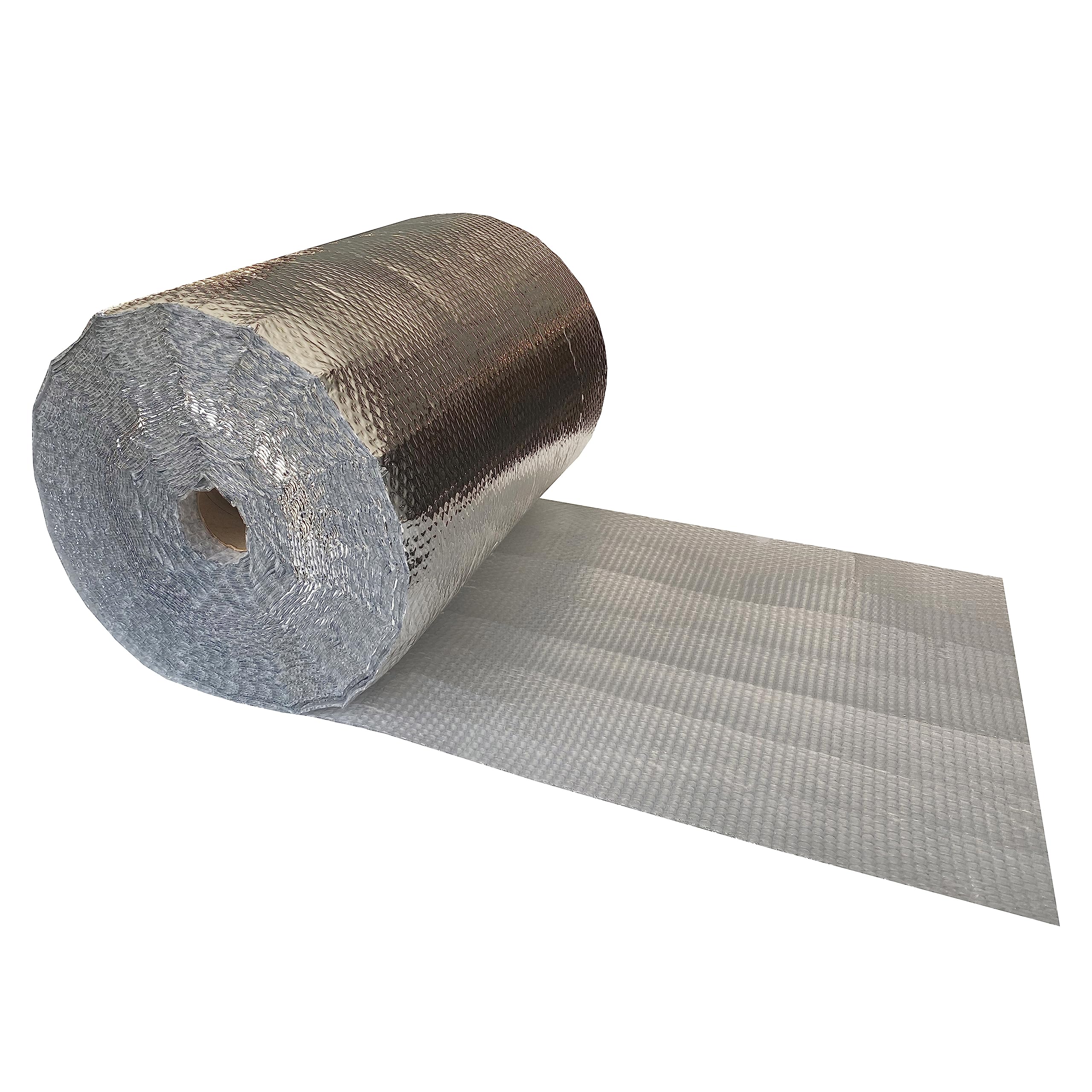
This one-sided bubble foil insulation from UBMove provides a budget-friendly radiant barrier for applications that don’t demand the highest R-values or double-sided reflectivity. The 3/16-inch bubble layer offers an R-value range of 4.9 to 14.1 depending on the installation depth and air gap, making it suitable for greenhouse insulation, HVAC duct wrapping, and crawl space covers where cost effectiveness matters more than peak thermal performance.
Users in specialized trades have found creative applications — chocolatiers use it for packaging temperature-sensitive shipments, and homeowners wrap attic ducts to reduce cooling load. The material cuts with scissors, weighs only 5 pounds for the full 125-foot roll, and won’t irritate skin like fiberglass. However, the single reflective side means one face is plain polyethylene, which limits its effectiveness in applications requiring two-way radiant reflection.
The 24-inch width is narrower than premium alternatives, which means more seams and tape joints for large-area installations. Some users reported receiving rolls that were slightly short of the advertised length, though the material itself performed as expected for those who measured carefully.
Why it’s great
- Lightweight and easy to cut with standard scissors
- Versatile for packaging, ducts, and greenhouse use
- Non-irritating — no gloves required for handling
Good to know
- Single reflective side limits two-way radiant blocking
- 24-inch width means more seams for broad coverage
7. R-13 EcoRoll Fiberglass Insulation Roll (Kraft Faced)

The EcoRoll fiberglass batt is the most traditional option in this lineup — a standard R-13 kraft-faced roll designed for 2×4 wall cavities and attic floor applications. It uses a naturally brown binder made from corn, sand, and recycled glass instead of the pink or yellow dyes common in other brands, and it holds GREENGUARD Gold certification for low chemical emissions, which matters for indoor air quality in finished living spaces.
This is a straightforward product: 3.5 inches thick, 15 inches wide to fit standard stud spacing, and 32 feet long for 40 square feet of coverage per roll. The kraft facing acts as a vapor retarder and should be stapled to the warm side of the cavity. Users report it cuts cleanly, splits easily around electrical boxes, and compresses enough to fit tightly against irregular framing.
The primary drawback is the darker brown color compared to typical yellow fiberglass — some users found the visual difference distracting when installed next to existing insulation from the same manufacturer. Additionally, the roll may be found cheaper at local big-box stores, so factor in shipping costs when comparing total project expense.
Why it’s great
- GREENGUARD Gold certified for low VOCs
- Recycled glass and bio-based binder
- Easy to cut, split, and fit around obstructions
Good to know
- Darker color may mismatch existing insulation visually
- Local hardware stores may offer better per-roll pricing
FAQ
Can I use ceramic fiber insulation in a standard wall cavity?
What is the difference between faced and unfaced batt insulation?
Does reflective bubble insulation need an air gap to work?
Final Thoughts: The Verdict
For most users, the best batt insulation winner is the US Energy Products White Double Bubble because it combines a Class A fire rating, broad 48-inch width, and dual reflective layers that work across attics, metal buildings, and garage doors. If you need a high-density acoustic and fire solution for a studio or generator enclosure, grab the Lynn Manufacturing Rockwool ProRox 10-pack. And for high-temperature forge and kiln applications, nothing beats the Lynn Manufacturing 2″ Ceramic Fiber Blanket with its 2,400°F continuous rating.