
Our readers keep the lights on and the weekend projects moving. As an Amazon Associate, I earn from qualifying purchases.
That moment your flashlight dims at the worst possible second — during a power outage, on a dark trail, or when you’re searching for something under the sink — isn’t a battery problem; it’s a chemistry and voltage stability problem. Not all AA cells deliver the same sustained power under load, and the wrong choice turns a reliable light into dead weight. This guide breaks down the specific performance traits that actually matter when pairing a cell with a flashlight.
I’m Rikta — the co-founder and writer behind FitlyFast. I’ve spent countless hours analyzing discharge curves, cold-temperature performance specs, and customer longevity reports to identify which cells truly hold up under the sustained drain of high-lumen flashlights versus which ones fade fast.
The right cell maintains a steady 1.5V output under load, resists voltage sag in cold weather, and won’t leak corrosive fluid inside your expensive light. Here we focus on the batteries for flashlights that pass these critical real-world demands.
How To Choose The Best Batteries For Flashlights
Selecting the right battery for your flashlight comes down to matching the cell chemistry to the device’s draw. A low-drain remote control can get away with cheap alkaline cells, but a high-lumen tactical flashlight needs a battery that holds a steady voltage when the current demand spikes. Here are the three most critical factors to evaluate.
Chemistry: Lithium Primary vs. Alkaline vs. Rechargeable Lithium-Ion
Lithium primary cells (like the Energizer Ultimate Lithium) are the top choice for high-drain flashlights because they maintain a near-flat 1.5V discharge curve until they are nearly empty. Alkaline cells start strong but their voltage drops steadily under load, causing the flashlight to dim noticeably long before the battery is dead. Rechargeable lithium-ion cells (1.5V regulated) offer the best long-term value if you use a flashlight daily, but they require a dedicated charging system and have a finite cycle life.
Voltage Stability Under Load
A flashlight’s brightness is directly tied to voltage. Alkaline cells often sag from 1.5V down to 1.2V or lower under the high current draw of a 1000+ lumen LED. This sag triggers the flashlight’s voltage-sensing circuitry early, causing it to step down to a lower mode or shut off entirely. Lithium primary and regulated rechargeable lithium-ion cells maintain a steadier voltage, giving you full brightness for a much longer runtime.
Cold Weather Performance
Standard alkaline batteries lose significant capacity below freezing. At -4°F, an alkaline cell may deliver only 20-30% of its rated capacity. Lithium primary cells are rated to operate from -40°F to 140°F with minimal capacity loss. If you use a flashlight outdoors in winter, for emergency kits, or in unheated spaces, lithium chemistry is not optional — it’s essential.
Quick Comparison
On smaller screens, swipe sideways to see the full table.
| Model | Category | Best For | Key Spec | Amazon |
|---|---|---|---|---|
| Energizer Ultimate Lithium AA | Lithium Primary | Cold weather & high-drain lights | 8800 mAh per 8-pack | Amazon |
| PUJIMAX 4255mWh Rechargeable AA | Li-ion Rechargeable | Daily-use & high-drain lights | 4255 mWh, 2000+ cycles | Amazon |
| INSZIII 4100mWh Rechargeable AA | Li-ion Rechargeable | Smart home & portable lights | 4100 mWh, USB-C charge | Amazon |
| Energizer Max Alkaline AA (48-pack) | Alkaline | Low-drain lights & bulk storage | 12-year shelf life | Amazon |
| Tenergy Alkaline AA (48-pack) | Alkaline | Budget household lights | 48-pack, 1.5V alkaline | Amazon |
| Duracell CR123A Lithium (12-pack) | CR123A Primary | Tactical & security lights | 3V, 1500 mAh per cell | Amazon |
| Tughlax 3-Pack Rechargeable Flashlights | Integrated Light | Emergency kits & backup lights | 700 lumens, built-in Li-ion | Amazon |
In‑Depth Reviews
1. Energizer Ultimate Lithium AA Batteries (8 Pack)

The Energizer Ultimate Lithium AA is the gold standard for flashlight use. Its lithium manganese dioxide chemistry maintains a flat 1.5V discharge curve under high current draw, meaning your flashlight stays at full brightness until the cell is nearly exhausted. That’s a dramatic difference from alkaline cells that dim progressively. With an operating range from -40°F to 140°F, this battery is the only reliable choice for winter camping, emergency kits, or any cold-environment flashlight use.
At 8800 mAh total for the 8-pack, these cells offer exceptional runtime in high-drain lights. The lightweight construction — they weigh about a third less than equivalent alkaline cells — reduces the overall heft of a multi-cell flashlight. The leak-proof design is backed by a guarantee against damaging leaks, which is critical for protecting expensive flashlight internals from corrosive damage if a cell is left in the light for years.
The trade-off is the higher upfront cost per cell. However, when you factor in the extended runtime and the fact that a single lithium cell can outlast two or three alkaline cells in a high-drain light, the cost-per-hour-of-use often favors the lithium option. For anyone who relies on a flashlight for more than occasional use, this is the safest and most capable choice.
Why it’s great
- Maintains full 1.5V output under high drain until nearly empty
- Works reliably from -40°F to 140°F
- Leak-proof construction with manufacturer guarantee
Good to know
- Higher per-cell cost compared to alkaline
- Not rechargeable
2. PUJIMAX 4255mWh Rechargeable AA Batteries (8 Pack)
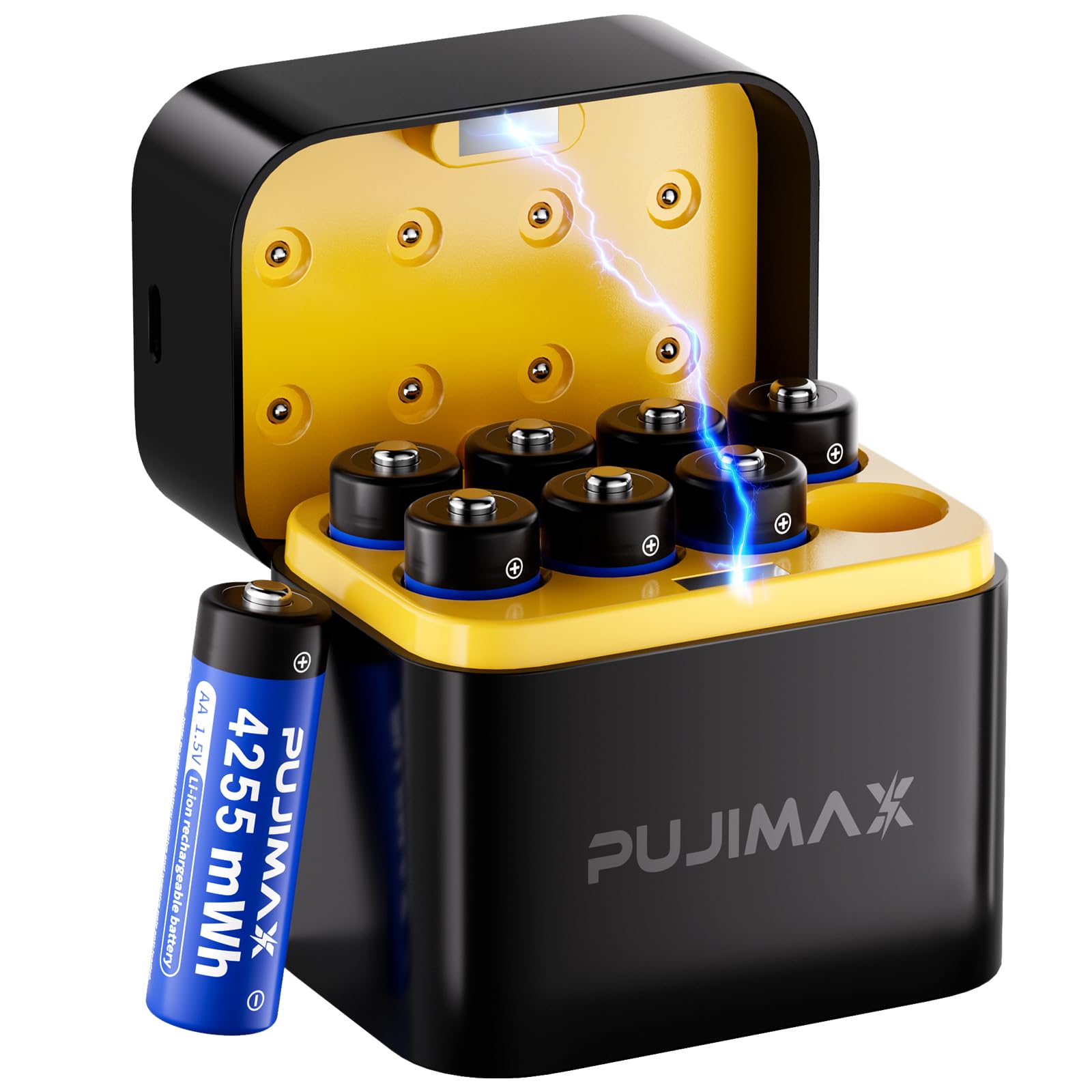
The PUJIMAX 4255mWh cell solves the biggest frustration with rechargeables: inconsistent voltage. These lithium-ion cells use internal regulation circuitry to deliver a steady 1.5V output throughout the entire discharge cycle, which is crucial for flashlights that depend on voltage to maintain their highest brightness mode. The 4255 mWh capacity translates to impressive runtime even in power-hungry tactical lights and Blink-style security cameras.
The included USB-C charger handles up to 8 cells simultaneously and fully charges them in about 2.5 hours. With a rated cycle life of over 2000 recharges, the cost-per-cycle becomes negligible compared to buying disposable cells repeatedly. The internal protection circuit guards against overcharge, over-discharge, and short circuits, making these safe to leave in a drawer or charge overnight.
The main caveat is that these cells require their own dedicated charger — they are not compatible with standard nickel-metal hydride (NiMH) chargers because the internal regulation circuit causes the charger to read them as fully charged. Also, the physical length is slightly longer than a standard AA, which can be a tight fit in some flashlights with spring-loaded battery tubes. Check your light’s internal depth before buying.
Why it’s great
- Regulated 1.5V output maintains flashlight brightness
- Fast USB-C charging in 2.5 hours for eight cells
- 2000+ recharge cycles drastically reduces waste
Good to know
- Requires proprietary charger; incompatible with NiMH chargers
- Slightly longer than standard AA; verify fit
3. INSZIII 4100mWh Rechargeable AA Batteries (4 Pack)
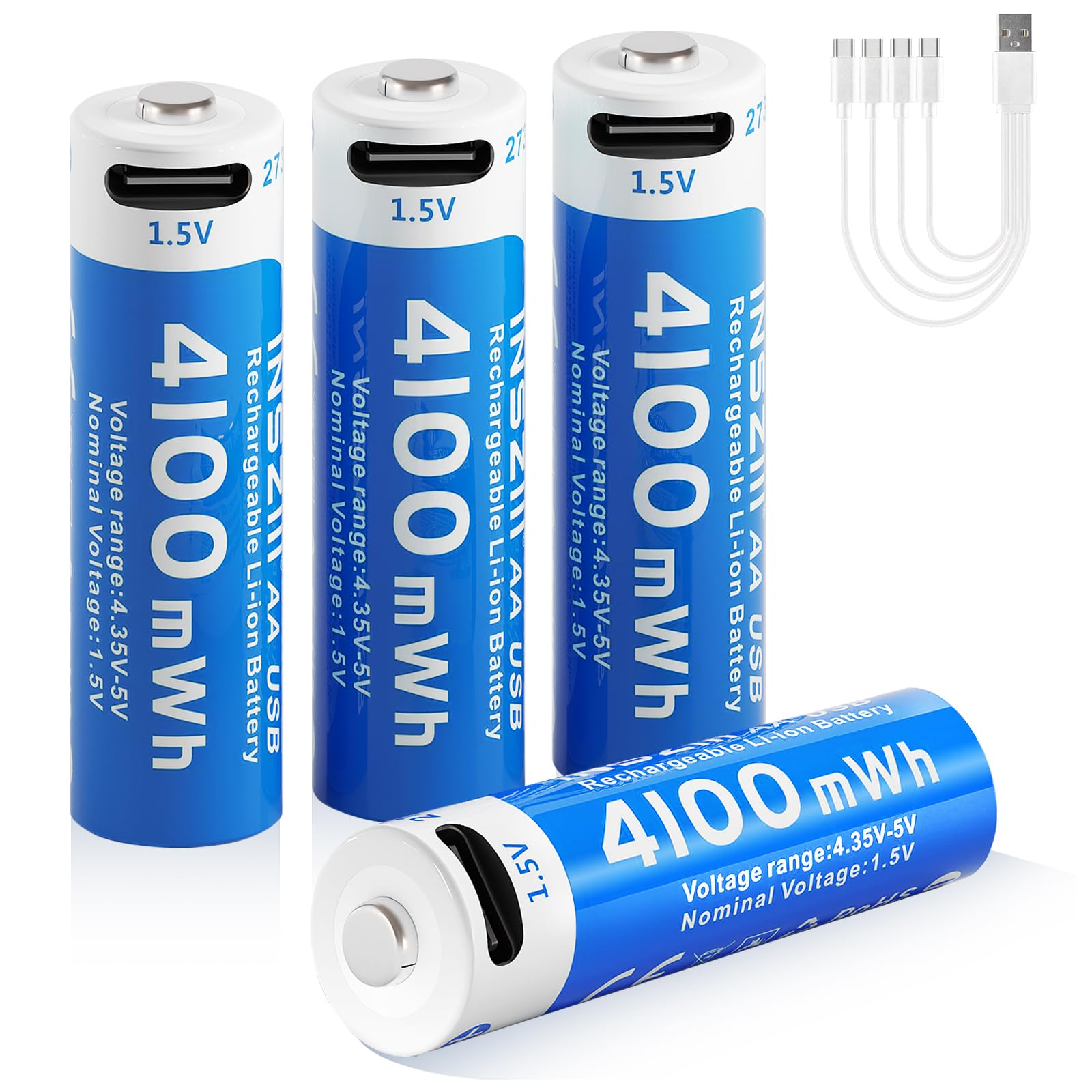
The INSZIII 4100mWh rechargeable AA is a strong mid-range contender that brings sensible convenience to the table. The standout feature here is the individual USB-C charging port on each cell — no bulky cradle required. You can charge each battery independently using any standard USB-C cable and power source, which is ideal for travelers or people who want to charge cells in different locations simultaneously. The built-in LED indicator flashes green during charging and turns solid green when full.
With 4100 mWh capacity and a regulated 1.5V output, these cells deliver consistent brightness in high-drain flashlights. The 1200-cycle rating is lower than the PUJIMAX option but still represents years of use before replacement. The integrated safety circuit provides protection against overcharging, overcurrent, and short circuits. Users report excellent results in smart door locks, digital cameras, and daily-use flashlights.
The 4-pack size is a limiting factor if you need to power a flashlight that takes six AA cells simultaneously. At this price per cell, the overall value is good, but there have been occasional reports of one cell in a batch arriving with a charging fault. Testing the first charge cycle soon after purchase is recommended to ensure all cells are functional within the return window.
Why it’s great
- Each cell has a built-in USB-C port; no separate charger needed
- Regulated 1.5V output ensures steady flashlight brightness
- LED charging indicator provides clear charge status
Good to know
- Only 4 cells per pack
- Occasional quality variation — test upon arrival
4. Energizer Max Alkaline AA Batteries (48 Pack)
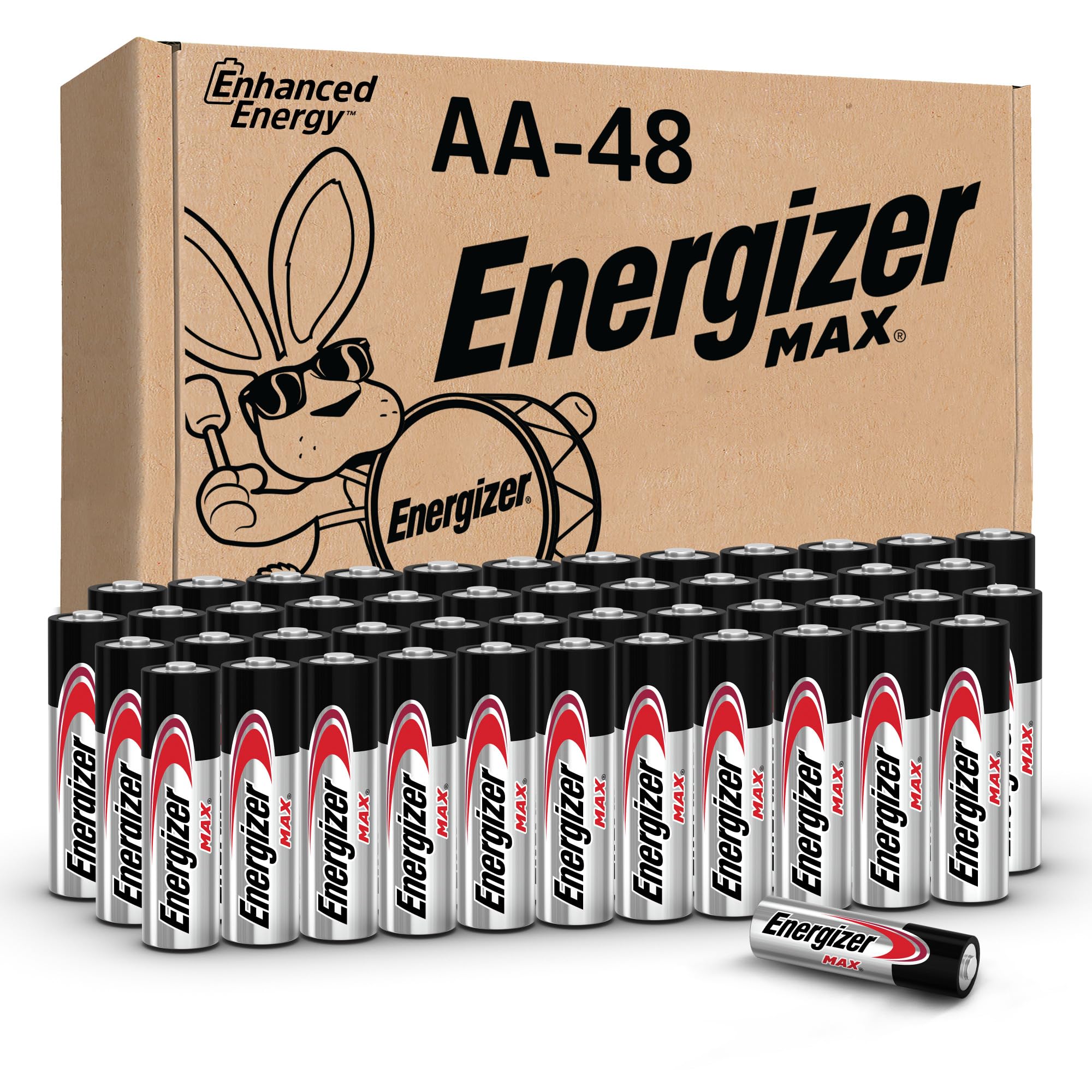
The Energizer Max AA is the default alkaline workhorse for a reason. It delivers the longest runtime of any Energizer alkaline AA and offers a robust 12-year shelf life, making it a reliable choice for emergency kits and low-drain devices. For flashlights that see occasional use — like a glove-box light or a kitchen drawer backup — the Max provides solid performance at a much lower per-cell price than lithium alternatives.
The leak-resistant design is a notable improvement over budget alkaline brands. Energizer claims these batteries protect devices against damaging leaks for up to two years after full use, which is a crucial safety factor when cells sit untouched in a flashlight for extended periods. The 48-pack configuration offers excellent value for households that need to power multiple devices simultaneously.
However, these are still alkaline cells. Under the sustained high-current draw of a modern LED flashlight, the voltage will sag significantly, causing the light to dim well before the battery is technically dead. Keep these for low-drain devices like remotes and clocks, and use lithium for your primary flashlight.
Why it’s great
- 12-year shelf life — great for emergency kits
- Leak-resistant design protects flashlight internals
- Excellent per-unit value in the 48-pack
Good to know
- Voltage sags under high drain — flashlight dims early
- Not suitable for sustained high-lumen use
5. Tenergy 1.5V AA Alkaline Battery (48 Pack)

The Tenergy AA alkaline battery competes directly with the Energizer Max on price per cell, often undercutting it while still offering a respectable 10-year storage life. The anti-leaking seal design and date-coded freshness give it a reasonable safety profile for long-term storage in flashlights that see sporadic use. The operating temperature range of -4°F to 129°F is decent for an alkaline cell, though not in the same league as lithium.
User reports on longevity are mixed but generally positive, with one reviewer noting that a 1500-lumen LED flashlight running six Tenergy AA cells maintained full brightness for over two months of daily evening use. That level of performance in a high-drain light is surprising for an alkaline cell and suggests Tenergy’s chemistry holds up better than many ultra-budget brands. For low-drain devices like clocks, remotes, and toys, these cells are an excellent value.
The primary limitation is the same as any alkaline cell: voltage sag under sustained high current. In a tactical flashlight used continuously for more than 10-15 minutes, the output will drop noticeably. The sturdy plastic storage case is a nice bonus for organization, but the cells themselves are not suitable as the primary power source for a serious flashlight user.
Why it’s great
- Very low per-cell cost in the 48-pack
- 10-year storage life is solid for emergency prep
- Anti-leaking seal adds protection
Good to know
- Voltage sags under sustained high load
- Not designed for cold weather below -4°F
6. Duracell CR123A 3V Lithium Battery (12 Pack)

The Duracell CR123A is the defining cell for many tactical and compact flashlights that use this 3V lithium primary format. Unlike the AA cells in this guide, the CR123A offers a higher nominal voltage (3V) and a lithium manganese dioxide chemistry that performs exceptionally well in high-drain pulsed applications. Many high-lumen pocket lights and weapon-mounted lights are designed specifically around the CR123A’s power delivery profile.
With 1500 mAh capacity per cell and a 10-year storage guarantee, these cells are ideal for emergency lights, security systems, and smoke alarms — any device where long-term reliability is non-negotiable. The lithium chemistry provides excellent cold-weather performance and resists voltage drop even under the heavy current demand of a high-output LED. Duracell’s quality assurance is backed by a material and workmanship guarantee.
The cost per cell is significantly higher than any AA option, and this format is not rechargeable. For frequent users, the ongoing expense can add up quickly. A single 18650 rechargeable lithium-ion cell can often replace two CR123A cells in compatible lights, offering a more cost-effective long-term solution. Reserve these for lights that are CR123A-specific and for emergency kits where shelf life is critical.
Why it’s great
- 3V output provides higher power density for compact lights
- 10-year shelf life is ideal for emergency preparedness
- Reliable performance in extreme cold
Good to know
- Non-rechargeable format creates ongoing cost
- High per-cell price compared to AA options
7. Tughlax 3-Pack Rechargeable Flashlights High Lumens
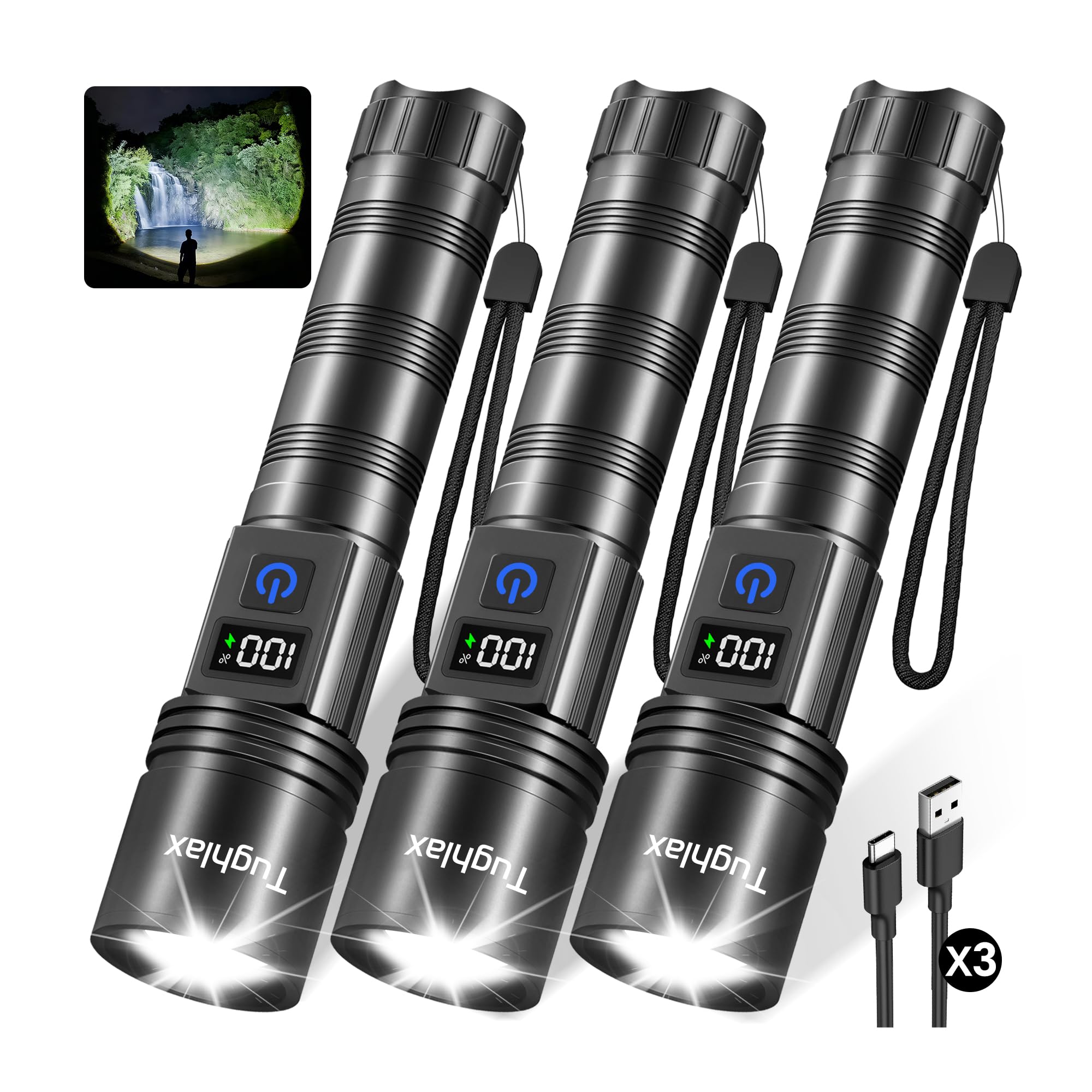
The Tughlax 3-pack is a different category of product — integrated flashlight and battery units rather than replaceable cells. Each light houses a built-in 18650-class lithium-ion battery with a USB-C charging port and an LCD display that shows remaining battery percentage. This is a practical solution for emergency kits, glove boxes, and household backup because you never have to worry about finding the right size replacement cell.
At 700 lumens per light with adjustable focus, these perform well above the typical budget flashlight. The five lighting modes (high, medium, low, strobe, SOS) and retractable head for flood-to-spot transition make them versatile for both close-up work and distance illumination. Each light runs for up to 12 hours on a single charge on lower modes, and the fast USB-C charging fills the battery in about 3 to 3.5 hours.
The downside is the built-in battery — when it eventually degrades after several hundred charge cycles, the entire light needs replacement unless you have the technical skill to swap the 18650 cell. Additionally, the waterproof rating is not specified precisely, so these are best kept dry or used in light rain rather than fully submerged. For anyone who wants a grab-and-go light without managing separate batteries, this bundle is a smart, convenient choice.
Why it’s great
- LCD battery percentage display — no guessing remaining power
- 3 lights per pack for multi-location use
- Adjustable focus and 5 modes for versatile use
Good to know
- Built-in battery cannot be easily user-replaced
- Exact waterproof rating is not clearly specified
FAQ
Why does my flashlight dim long before the batteries are dead?
Can I use rechargeable lithium-ion AA batteries in any flashlight?
What is the practical difference between CR123A and 18650 cells in a flashlight?
Final Thoughts: The Verdict
For most users, the batteries for flashlights winner is the Energizer Ultimate Lithium AA because it delivers unmatched voltage stability, temperature tolerance, and leak-proof reliability in a disposable format. If you want the cost savings and environmental benefits of rechargeable cells, grab the PUJIMAX 4255mWh Rechargeable AA for its regulated 1.5V output and 2000-cycle lifespan. And for emergency kits where convenience matters most, nothing beats the Tughlax 3-Pack Rechargeable Flashlights with integrated batteries and LCD power displays.