
A power outage mid-save on a critical project, a surge that fries your PSU, or a brownout that silently shortens the lifespan of your network gear — these are the moments a cheap power strip simply cannot handle. Choosing the wrong battery backup leaves you with a brick that beeps uselessly or, worse, connected equipment insurance that won’t pay out because your unit wasn’t listed. The difference between a reliable backup and a paperweight comes down to VA vs. watt ratios, AVR capability, and the specific waveform your devices actually need.
I’m Rikta — the co-founder and writer behind FitlyFast. After analyzing hundreds of datasheets, warranty policies, and VA/watt efficiency curves across the major UPS tiers, I built this guide around the measurable specs that dictate real-world performance for home offices, gaming rigs, and network closets.
Whether you are securing a home lab, a high-end gaming PC, or a router stack that keeps your family online during storms, this guide to the best battery backup and surge protector for 2025 will help you choose based on runtime, waveform type, and outlet configuration — not marketing jargon.
How To Choose The Best Battery Backup And Surge Protector
Selecting the correct UPS starts with one number: the real continuous wattage your connected gear draws, not the peak advertised VA. A 900VA unit might only deliver 480W, which is insufficient for a gaming PC with a high-end GPU under load. Always calculate your total load and add a 20% headroom buffer to avoid overloading the inverter during a prolonged outage.
Waveform Type: Pure Sine vs. Simulated Sine
Simulated sine wave (stepped approximation) runs most basic computer PSUs and networking gear without issue, but active PFC power supplies found in many modern desktops and servers will hum, run hot, or simply shut down when fed simulated power. Pure sine wave units are mandatory for Active PFC hardware, medical devices, and sensitive audio/video equipment.
Automatic Voltage Regulation (AVR)
AVR corrects voltage sags (brownouts) and overvoltages by boosting or trimming the line voltage without switching to battery power. This preserves battery runtime for true outages instead of wasting cycles on flickers. Units without AVR will toggle to battery far more frequently, drastically reducing battery lifespan over a few years.
Quick Comparison
On smaller screens, swipe sideways to see the full table.
| Model | Category | Best For | Key Spec | Amazon |
|---|---|---|---|---|
| APC Back-UPS Pro Gaming BGM1500B | Premium Gaming UPS | High-end gaming PCs / Consoles | Pure Sine Wave / 900W | Amazon |
| Eaton Tripp Lite OMNI1500LCDT | Mid-Range Tower UPS | Home office / Servers / Security | 810W / AVR / LCD Screen | Amazon |
| GOLDENMATE 1000VA LiFePO4 | Lithium Battery UPS | Long lifespan / Weekly cycling | Pure Sine Wave / 600W | Amazon |
| CyberPower AVRG900LCD | Mid-Range AVR UPS | Workstations / Networking | 480W / 12 Outlets / LCD | Amazon |
| SKE SK1500 1500VA | High-Power Standby UPS | High-wattage PC / Generator bridge | 900W / AVR / LCD | Amazon |
| CyberPower OR500LCDRM1U | Rackmount UPS | Small server racks / Homelabs | 300W / 1U / Network-ready | Amazon |
| APC BE600M1 | Compact Desktop UPS | Routers / Modems / Small PCs | 330W / USB Charging | Amazon |
| Tripp Lite INTERNET550U | Entry-Level UPS | Home networking / Modems | 300W / 316 joules | Amazon |
| UGREEN US3000 NAS UPS | NAS-Specific DC UPS | UGREEN NAS data protection | 120W DC / Li-ion / 12000mAh | Amazon |
In‑Depth Reviews
1. APC Back-UPS Pro Gaming BGM1500B

The APC BGM1500B is the only UPS in this lineup specifically engineered for high-performance gaming rigs with Active PFC power supplies, delivering true sine wave output at 1500VA / 900W. Users report it handling a Ryzen system paired with an RX 7900 XTX without the humming or instability that plagues simulated sine wave units on modern PSUs. The pure sine wave output also ensures cooler operation of the PSU’s internal components over the long term.
Its 10 outlet configuration — six battery-backed and four surge-only — allows the entire battle station, including monitors and peripherals, to stay online during a blackout. The custom RGB lighting ring and the angled “Reactor Circle” display provide real-time runtime and load wattage readouts without leaning over the desk. Reviews confirm seamless self-testing and a smooth transfer time that keeps a 1200W PSU from stuttering. The unit weighs nearly 31 pounds, reflecting the large lead-acid battery and robust transformer required for clean sine wave delivery.
One review noted a failure after three months where the battery dropped to zero in minutes under no load, though APC support resolved the issue with a replacement under warranty. For a premium home theater or competition-grade gaming setup that demands clean power, the BGM1500B justifies its price with build quality, runtime transparency, and waveform fidelity that entry-level units simply cannot match.
Why it’s great
- True pure sine wave output supports Active PFC power supplies without noise.
- Real-time LCD display shows remaining runtime and load wattage at a glance.
- Customizable RGB lighting and Type-C charger add modern convenience.
Good to know
- Heavy at 31 pounds — not portable between rooms.
- Faint high-frequency coil whine reported by some users.
2. Eaton Tripp Lite OMNI1500LCDT

The Tripp Lite OMNI1500LCDT delivers 810W of battery backup across ten outlets — six surge-only and four battery-backed — making it a fitting choice for a home office running a desktop PC, dual monitors, and a network stack. Its Automatic Voltage Regulation (AVR) keeps output steady between 92V and 150V without draining the battery, which is critical in areas with frequent brownouts. The built-in RJ45 Ethernet surge protection adds a layer of defense for wired network gear that most consumer UPS units omit.
Real-world reviews report the OMNI running a tower PC, a 32-inch monitor, and a router at a 16% load, delivering roughly 50 minutes of runtime. One user with a security camera setup noted over three hours of backup on the 5-year-old battery, which speaks to the unit’s efficient inverter and low self-discharge. The LCD screen displays input voltage, load wattage, and battery runtime in minutes, removing guesswork. The internal battery uses Tripp Lite’s RBC51 cartridge, which is user-replaceable without tools — a key longevity feature that separates this from sealed, disposable units.
A common complaint is the bundled PowerAlert software, which some users found difficult to set up for automatic shutdown. The unit also emits a noticeable electronic smell during the first few hours of operation, which fades over time. For anyone needing a long-lived, AVR-equipped tower UPS with dataline protection, the OMNI1500LCDT offers substantial value without the gaming premium.
Why it’s great
- AVR handles brownouts without cycling the battery, preserving cell lifespan.
- RJ45 and RJ11 surge protection guards network lines.
- User-replaceable RBC51 battery cartridge extends product life.
Good to know
- PowerAlert software has compatibility issues on some systems.
- Strong electronic smell out of the box that dissipates over days.
3. GOLDENMATE 1000VA LiFePO4

The GOLDENMATE breaks from tradition by using a Lithium Iron Phosphate (LiFePO4) battery pack rated for over 5000 charge cycles and a ten-year lifespan, compared to the 3-to-5-year average of sealed lead-acid units. This chemistry is lighter, charges four times faster (around 10 hours vs. 6-8 for lead-acid), and maintains consistent voltage output until near depletion. The pure sine wave inverter delivers 1000VA / 600W, sufficient for a mid-range desktop, a NAS, and networking gear.
Owners praise its compact footprint and low weight — roughly half that of a comparable lead-acid 1000VA unit. The eight NEMA outlets are divided, but reviewers note the outlets are too closely spaced for wall-wart style adapters, which may block adjacent ports. The LCD panel provides input/output voltage and load percentage, and a buzzer mute function silences the alarm during nighttime backups. The built-in cooling fan is quiet under normal load but ramps up audibly during heavy battery discharge.
A significant limitation is the lack of a USB data port or network card for automated shutdown communication with a PC or NAS — users must rely on the audible alarm alone. One reviewer also reported a faint plastic smell during the initial burn-in period. For those who cycle their UPS frequently (multiple times per week) or want a maintenance-free decade-long service life, the GOLDENMATE’s LiFePO4 chemistry redefines total cost of ownership.
Why it’s great
- LiFePO4 battery lasts over 10 years with minimal capacity fade.
- Charges fully in about 10 hours — much faster than lead-acid rivals.
- Lightweight and compact for a 1000VA pure sine wave unit.
Good to know
- No USB or network data port for automated system shutdown.
- Outlet spacing is tight; large AC adapters may block adjacent ports.
4. CyberPower AVRG900LCD
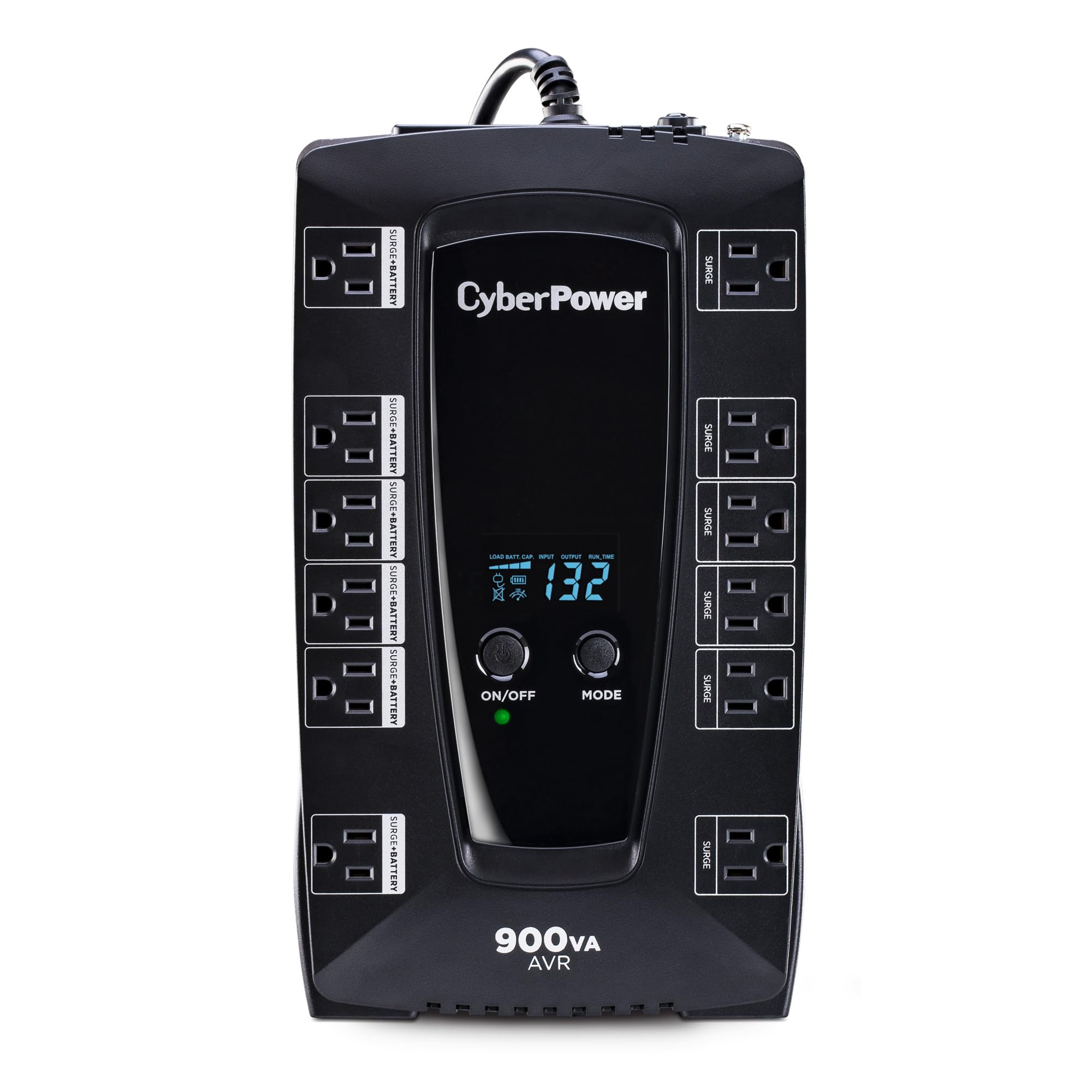
The CyberPower AVRG900LCD packs 12 total outlets — six battery-backed and six surge-only — within a compact tower body, making it one of the most outlet-dense units in this class. Its simulated sine wave output is fine for standard PC power supplies without Active PFC, and the Automatic Voltage Regulation corrects brownouts from 89V to 147V without tapping the battery. The LCD panel shows runtime, load, and voltage levels, and the free PowerPanel software enables scheduled self-tests and automatic shutdown of connected workstations.
At a 72W load (tower PC and an 18-inch monitor), reviewers measured roughly 62 minutes of runtime. A more demanding setup with two machines and dual monitors drawing 175W-200W yielded 18-20 minutes — enough for a graceful shutdown or to bridge the gap until a generator engages. The right-angle NEMA 5-15P plug with a five-foot cord saves space behind desks. The unit is UL certified, with a connected equipment guarantee and a three-year warranty covering the battery.
Some users received units that appeared dead on arrival, with no LCD display and non-functional battery outlets, though CyberPower’s support was responsive, sending prepaid return labels and replacements within two weeks. The initial setup can be finicky — the mode button is easier to navigate via the software than the front panel. For a mid-range workstation or networking cluster needing ample outlet capacity and AVR, the AVRG900LCD delivers strong runtime density per dollar.
Why it’s great
- 12 outlets — most in class for a compact tower UPS.
- PowerPanel software enables unattended shutdown scheduling.
- UL certified with K connected equipment guarantee.
Good to know
- Simulated sine wave — not suitable for Active PFC power supplies.
- DOA rate mentioned in reviews, though support handles replacements well.
5. SKE SK1500 1500VA

The SKE SK1500 punches above its price tier by offering 900W of real continuous output with Automatic Voltage Regulation in a metal-enclosed tower — a spec that typically belongs to units costing significantly more. It includes six battery-backed and two surge-only outlets, plus an intelligent LCD that auto-dims after thirty seconds but wakes with a touch. The simulated sine wave output is adequate for most desktop PSUs, and the AVR engine keeps output stable during brownouts without wasting battery cycles.
Users running a generator with a 15-second startup delay found the SK1500 bridged the gap flawlessly, preventing the PC from rebooting during the transition. The free management software provides text and email alerts on power failure, which is rare at this price point. The internal lead-acid battery is user-replaceable and costs roughly a fifth of the unit’s price to swap when it degrades after 2-3 years.
The main ergonomic flaw is the outlet spacing — the bottom set extends past the chassis, making it impossible to plug in two bulky adapters side by side. Some units initially only charged to 80% but reached full capacity after a few discharge cycles. For a high-wattage desktop, a small home server, or as a buffer between utility power and a generator, the SK1500 offers spec-for-dollar value that competes directly with well-known brands.
Why it’s great
- Real 900W output with AVR at a mid-range price point.
- Management software provides remote alerts on power events.
- Metal enclosure enhances durability versus plastic competitors.
Good to know
- Bottom outlets are flush with the chassis; large adapters may protrude.
- Simulated sine wave — cannot power Active PFC PSUs reliably.
6. CyberPower OR500LCDRM1U

The OR500LCDRM1U is a 1U rackmount UPS designed for homelab and small-rack environments where vertical space is at a premium. It delivers 500VA / 300W of simulated sine wave output across six outlets — four battery-backed and two surge-only — with AVR that corrects voltage swings without engaging the battery. The LCD panel reports runtime in minutes, load percentage, and input voltage, all readable through the front bezel. The unit supports an optional RMCARD205 for remote network management, though the card must be purchased separately.
Reviews from homelab users are consistent: the unit works out of the box with TrueNAS and Linux using native .deb packages over USB, enabling graceful shutdown during outages. At an 81W load (a small switch, router, and a couple of SBCs), the unit delivers roughly 27 minutes of runtime. One user reported the unit ran reliably for a year, passing weekly self-tests without issue. The 10-foot power cord provides flexibility in rack placement, and the straight NEMA 5-15P plug fits standard PDU outlets.
The main trade-off is the simulated sine waveform — not suitable for servers with Active PFC power supplies. The optional network card adds cost that some buyers may not anticipate. One review noted a one-time burning smell on the first outage, which did not recur. For a low-power homelab, network closet, or telecom rack requiring AVR in a 1U footprint, the OR500LCDRM1U is a reliable, serviceable choice.
Why it’s great
- True 1U rackmount form factor saves space in shallow racks.
- Works with Linux/TrueNAS for automated shutdown via USB.
- 10-foot power cord enables flexible rack routing.
Good to know
- Simulated sine wave — not compatible with Active PFC servers.
- Remote management card (RMCARD205) is sold separately.
7. APC BE600M1

The APC BE600M1 is a desktop UPS that balances size and capability, providing 600VA / 330W of simulated sine wave backup across seven outlets — five battery-backed and two surge-only. Its compact footprint fits under most desks without interfering with legroom, and the recessed power button is deliberately designed to prevent pets from accidentally triggering a shutdown. The built-in 1.5A USB port keeps a phone charged during an outage, a small but appreciated feature for home office setups.
At a 100W load, the BE600M1 delivers a tested 23 minutes of runtime, which is sufficient for a Wi-Fi router and modem to stay online for an extended period. Users running a small desktop PC report 10-15 minutes — enough to save work and shut down cleanly using APC’s PowerChute software. The battery is user-replaceable (APC RBC154), avoiding the need to discard the entire unit when the cells age out after 3-5 years.
The unit lacks AVR, meaning any voltage sag triggers an immediate battery transfer, which wears the battery faster in areas with frequent brownouts. The simulated sine wave is adequate for standard desktop PSUs but may cause audible coil whine in some power supplies. For a budget-friendly, space-saving backup that keeps a router stack or a non-gaming PC running through short outages, the BE600M1 hits the mark with solid APC build quality.
Why it’s great
- Compact design fits easily under a desk without interfering with legs.
- Built-in USB port charges phones during blackouts.
- User-replaceable battery extends the unit’s usable life.
Good to know
- No AVR — battery cycles on every voltage fluctuation.
- Simulated sine wave may cause coil whine on some PSUs.
8. Tripp Lite INTERNET550U
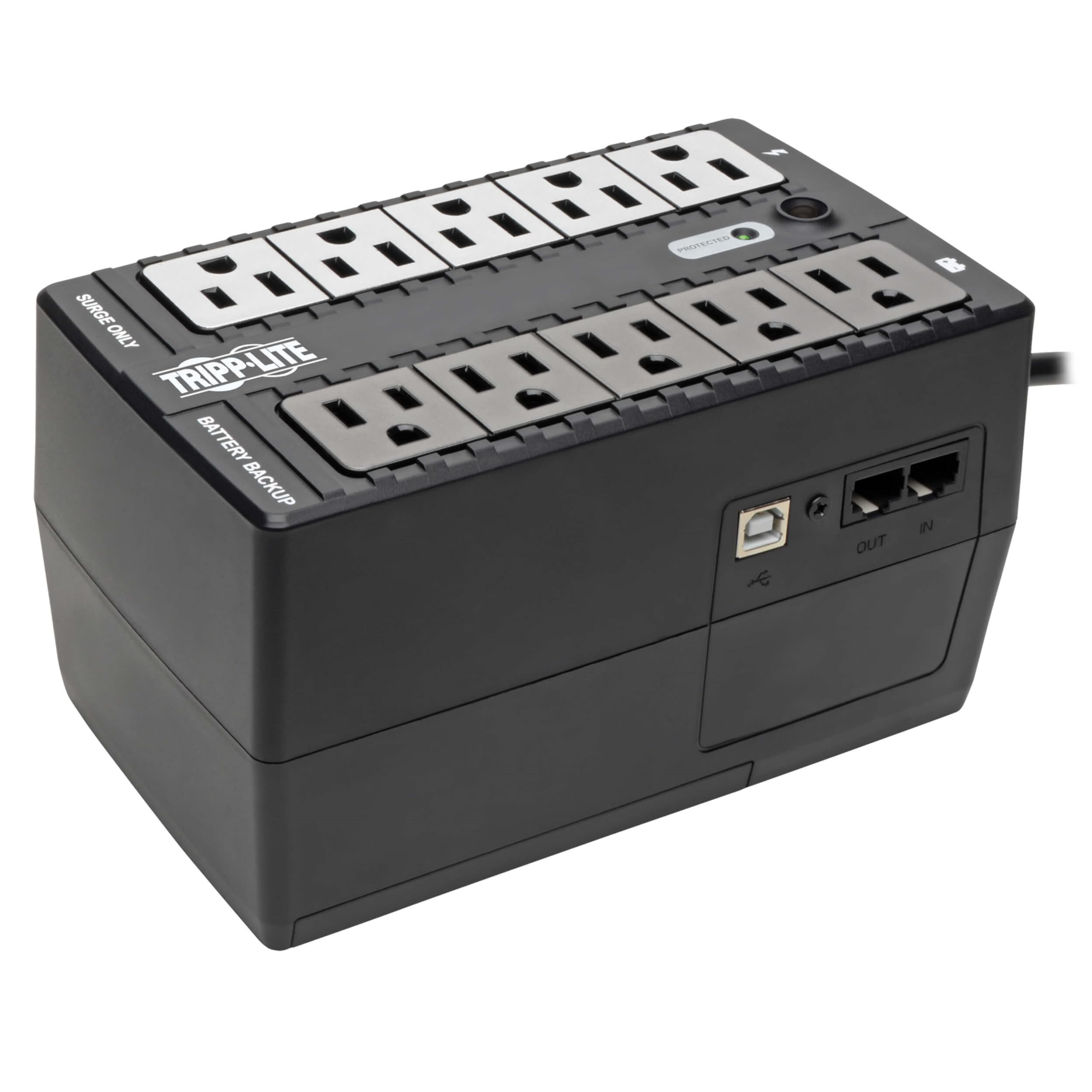
The Tripp Lite INTERNET550U is a no-frills UPS with 550VA / 300W of simulated sine wave backup, spreading its ten outlets across five battery-backed and five surge-only. It offers 316 joules of surge protection, which is modest but acceptable for basic peripherals. The unit includes bottom keyhole tabs for wall-mounting and a five-foot power cord, making it a flexible option for under-desk or behind-entertainment-center placement. The internal lead-acid battery is user-replaceable, and the unit remains silent during normal operation, only beeping during actual battery discharge.
Reviewers report reliable operation for low-power setups: a 20W Wi-Fi router runs for 67 minutes, a 100W TV lasts 9.2 minutes, and a 200W desktop PC provides about 2.9 minutes — enough for a quick save and shutdown. Users running audio mixers and networking gear note that the unit does not emit the annoying beeping of some older APC models during backup, a welcome detail for performance environments. The connected equipment insurance and three-year warranty provide a safety net for the gear plugged into it.
The 316-joule surge rating is low by modern standards; a nearby lightning strike could overwhelm it. Some units arrived defective (backup outlets non-functional), requiring a return process that involved removing the soldered battery — an unnecessary hurdle. For a space-constrained setup that primarily needs to keep a router and modem online, the INTERNET550U delivers core functionality without paying for features you won’t use.
Why it’s great
- Ten outlets provide plenty of connectivity for a home office stack.
- Wall-mountable design frees up desk space.
- Silent operation during normal mode — no fan or coil hum.
Good to know
- Low 316-joule surge rating limits protection against major spikes.
- No AVR — battery engagement is triggered by every voltage fluctuation.
9. UGREEN US3000 NAS UPS
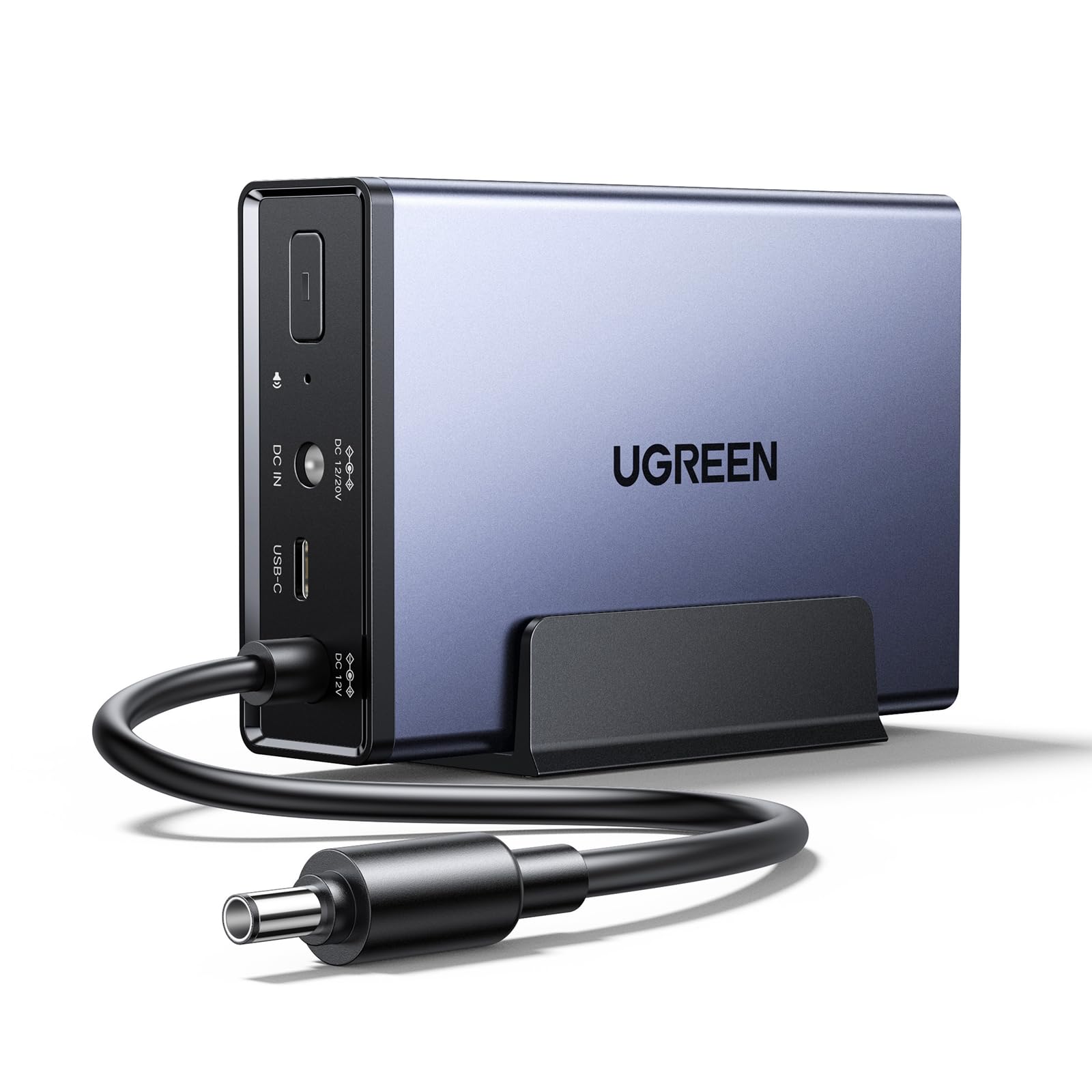
The UGREEN US3000 is a specialized DC UPS designed exclusively for select UGREEN NAS models (DXP2800, DXP4800 series, DH2300, DH4300 Plus). It delivers 120W of pure DC power from a 12000mAh lithium-ion battery, with a transfer time of effectively zero seconds — the NAS never detects a power interruption. This instant handoff prevents the file system corruption that can occur when a NAS loses power during a write operation. The unit communicates with the NAS via app to trigger an orderly shutdown at a configurable battery level (e.g., 15% remaining).
Owners of the DXP2800 report the unit fits snugly next to the NAS, maintaining a clean desktop aesthetic without the bulk of a traditional AC UPS. The USB connection is plug-and-play — the UGREEN OS recognizes it immediately and enables the shutdown policy. For a four-bay NAS under moderate load, the 12000mAh battery provides roughly ten minutes of runtime, which is sufficient for a safe shutdown but not for extended operation. The unit automatically restarts the NAS when utility power returns.
This UPS is not compatible with any non-UGREEN device, limiting its use to a single ecosystem. The included DC cable is only about one foot long, so the NAS and UPS must sit side by side. For anyone running a UGREEN NAS in an area with unreliable power, the US3000 eliminates the risk of array degradation from hard power-offs in a compact, silent, and purpose-built package.
Why it’s great
- Zero-second transfer time prevents file system corruption on NAS.
- App-controlled automatic shutdown and restart — fully hands-off.
- Compact Li-ion design takes up minimal desk space next to the NAS.
Good to know
- Only compatible with specific UGREEN NAS models — not a universal UPS.
- Short DC cable forces the UPS within one foot of the NAS.
FAQ
How do I calculate the wattage I need for my desktop PC setup?
Why does my UPS beep continuously during a power outage?
Can I plug a power strip into a UPS?
Final Thoughts: The Verdict
For most users, the best battery backup and surge protector winner is the APC Back-UPS Pro Gaming BGM1500B because it combines pure sine wave output, real-time runtime display, and sufficient wattage for high-performance desktops and consoles. If you want long-term battery life without replacement every three years, grab the GOLDENMATE 1000VA LiFePO4. And for a compact, budget-friendly backup that keeps your router and modem online, nothing beats the APC BE600M1.