
Our readers keep the lights on and the weekend projects moving. As an Amazon Associate, I earn from qualifying purchases.
Specs are compiled from manufacturer listings and verified buyer reviews and can change over time — please confirm the key details on the product page before buying.
Every ounce in your pack matters when you are miles from the nearest outlet. Choosing a backpacking battery bank means balancing capacity against weight and durability.
I’m Rikta — the founder and writer behind FitlyFast. This guide is built by comparing the manufacturers’ published specifications and the patterns across verified customer reviews, so you get each pick’s real strengths and trade-offs instead of marketing spin.
Whether you are thru-hiking the PCT or weekend camping, focus on specs that matter on the trail. battery bank for backpacking.
Quick Picks
- INIU Smallest 20000mAh Power Bank — Best Overall
- ASWAYKE Rugged 20000mAh Power Bank with Lantern — Tough & Bright
- INIU Ultra Mini 10000mAh 45W Power Bank — Ultralight Champion
- Anker Zolo 10000mAh 30W Power Bank — Reliable Daily Companion
- Nitecore NB Plus 10000mAh Power Bank — Runner’s Dream
- Nitecore NB Plus Carbon Fiber 10000mAh Power Bank — Carbon Fiber Premium
How To Choose The Best Battery Bank For Backpacking
On the trail, weight, durability, and shape determine how well the bank fits your pack.
Capacity vs. Weight Trade-Off
A 20000mAh bank delivers roughly four full phone charges, but it typically weighs twice as much as a 10000mAh bank — the INUI Smallest weighs 320 grams versus INIU Ultra Mini’s 160 grams. If you are out for a weekend, 10000mAh is usually enough. For a week-long trip without resupply access, the extra weight of 20000mAh makes sense. Assess your daily power needs honestly to choose the right capacity.
Charging Speed and Port Versatility
Fast charging matters when you have limited time at a trailhead cafe or a hostel outlet. Look for USB-C Power Delivery (PD) output of at least 22.5W — enough to give a phone a meaningful charge in under 30 minutes. Also check that the bank itself recharges quickly, since a bank that takes five hours to fill is a drag when you are moving fast. A built-in cable saves you from carrying an extra cord, but make sure it is detachable in case it frays.
Durability and Weather Resistance
Backpacking gear gets dropped, rained on, and shoved into damp packs. An IPX7 rating means the bank can survive being submerged in a meter of water for 30 minutes — genuine confidence for river crossings or sudden downpours. Rugged builds with rubberized shells or metal housings also handle knocks better than glossy plastic. If you camp in wet conditions, prioritize waterproofing over ultra-light materials.
Quick Comparison
| Model | Best For | Capacity | Weight | Water Rating | Amazon |
|---|---|---|---|---|---|
| INIU Smallest 20000mAh | Extended trips, high power needs | 20000mAh | 320g | Not rated | Amazon |
| Anker Zolo 10000mAh | Reliable daily and weekend use | 10000mAh | 223g | Not rated | Amazon |
| INIU Ultra Mini 10000mAh | Ultralight packing | 10000mAh | 160g | Not rated | Amazon |
| ASWAYKE Rugged 20000mAh | Camping and survival kits | 20000mAh | 467g | IP68 | Amazon |
| Nitecore NB Plus 10000mAh | Fast-and-light adventures | 10000mAh | 155g | IPX7 | Amazon |
| Nitecore NB Plus Carbon Fiber 10000mAh | Weight-conscious trail runners | 10000mAh | 155g | IPX7 | Amazon |
In-Depth Reviews
1. INIU Smallest 20000mAh Power Bank
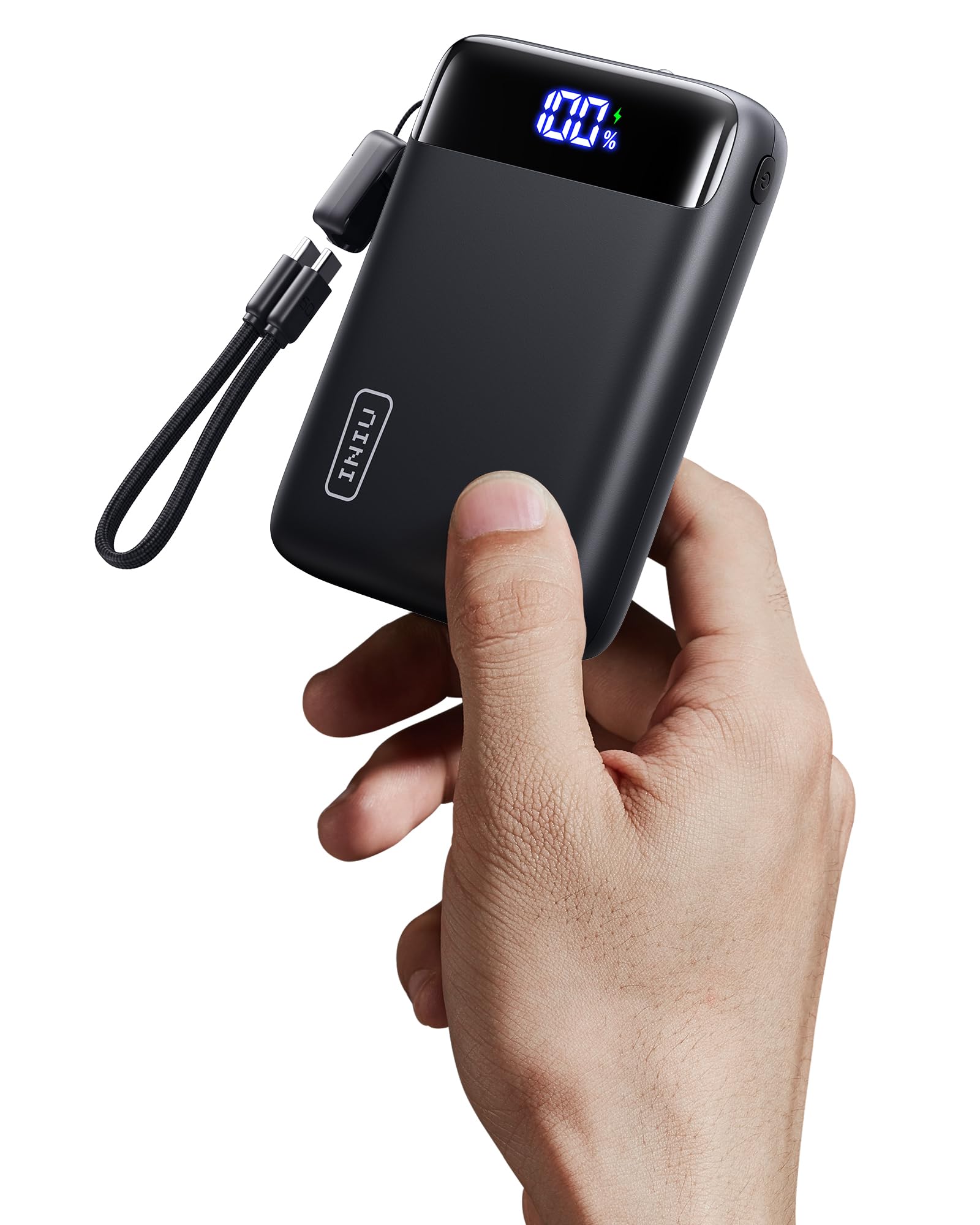
A 20000mAh beast that somehow fits in a pants pocket without sagging your belt.
This is the bank for backpackers who refuse to choose between capacity and portability. At 320 grams and just 4.1 x 2.8 x 1.2 inches, it packs enough power for four full phone charges — a 2.0x capacity gap over the 10000mAh Anker — without feeling like a brick. The 22.5W Power Delivery (a fast-charging standard that pushes power through a USB-C port) gets an iPhone 16 to 60% in 25 minutes, so you can top up during a short resupply stop. The detachable nylon-braided USB-C cable doubles as a lanyard, which means one less cord to lose in the bottom of your pack.
The LED display shows exact remaining percentage — no guessing whether you have power for one more night or zero. The catch is the 5.4-hour recharge time; you will want to plug it in overnight at a hostel. For multi-day trips where you need serious reserves, the weight-to-power ratio here is tough to top, especially compared to the 467-gram ASWAYKE Rugged that carries the same 20000mAh but adds a pound of armor.
Why This One Works on the Trail
- Double the capacity of 10000mAh banks without feeling twice as heavy
- Built-in detachable cable acts as both charger and lanyard
- Fast 22.5W PD charging for quick top-ups
- 3-year low-maintenance replacement warranty
Where It Falls Short
- No waterproofing — keep it in a dry bag in wet conditions
- 5.4-hour recharge time is slow; needs an overnight plug-in
- Detachable cord is easy to misplace according to some buyers
Reach for this if: you need multi-day endurance without hauling a brick, and you prioritize raw capacity over ultra-light weight.
Look elsewhere if: you consistently travel in heavy rain or river-crossing conditions and need guaranteed waterproofing.
2. ASWAYKE Rugged 20000mAh Power Bank with Lantern

This 467-gram power bank doubles as a 420-lumen lantern with IP68 waterproofing for camp use.
This is not a bank you slide into a running vest pocket; it is a 1.03-pound (467-gram) tactical tool built for camp life and survival kits. The 20000mAh capacity matches the INUI Smallest, but the ASWAYKE trades portability for extreme durability and a built-in 420-lumen LED lantern with five modes (high, soft, SOS, strobe, warm) that can illuminate a 50-square-meter area. The IP68 rating (dust-tight and submersible beyond 1 meter) means this bank survives river dunkings and heavy rain that would kill most other packs. A smart digital display shows battery percentage, input current, and output current in real time — no guessing left.
Buyers report the “rugged metal build with protective caps” and that the lantern is “very bright,” making this a favorite among campers and Army veterans who use it for hiking. The standard tripod mount on the base lets you hang it from a tent pole or use it as a photography fill light. The trade-off is weight: at 467 grams it is more than twice the weight of the 155-gram Nitecore NB Plus, and the 8.85-inch length makes it awkward to stuff into a pack pocket. For basecamp-style backpacking where you set up and stay put for a few days, the dual function saves carrying a separate lantern. For fast-paced trekking, it is overkill.
Why It Earns Its Spot
- IP68 waterproof and dustproof — survives submersion
- 420-lumen built-in lantern with SOS mode for emergencies
- Smart display with real-time power readouts
- Tripod mount for hands-free camp lighting
What Holds It Back
- Heavy at 467g — more than double the Nitecore NB Plus
- Long and awkward shape; hard to pack efficiently
- Slow to recharge; owners mention the charge lasts a long time but topping up takes a while
Best for: car-campers, stationary basecamp setups, and emergency kits where water resistance and a built-in light justify the bulk.
skip it if: you are counting grams for a thru-hike — the Nitecore NB Plus or INIU Ultra Mini will serve you better.
3. INIU Ultra Mini 10000mAh 45W Power Bank
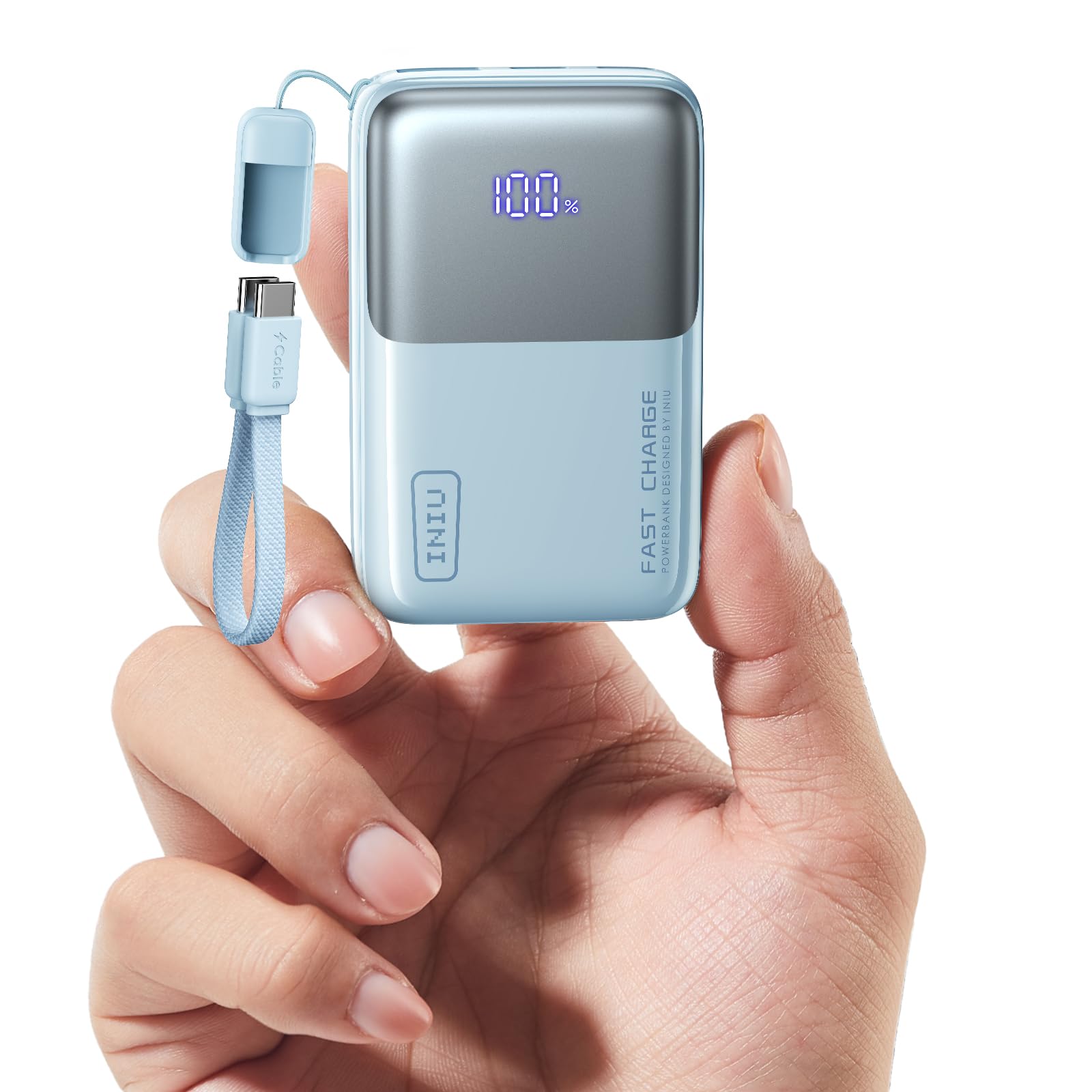
The featherweight that charges your phone from 50% in 36 minutes — and barely registers in your pack.
At 160 grams with dimensions of 3.29 x 2.09 x 1 inches, this is the bank you forget you are carrying until you need it. The 10000mAh capacity provides roughly 1.5 full charges for most phones, which is plenty for a weekend trip or as a daily carry for long day hikes. The detachable nylon-braided USB-C lanyard cable is rated to outlast standard cords by 3X, addressing the common complaint that built-in cables are the first thing to fail.
Reviewers report it “charged phone from 50% in 36 min with super fast charging” and did not get hot during use — a solid sign of decent thermal management in a tiny chassis. The light blue color makes it easy to spot in a dark pack, a small but appreciated detail. The main limitation is that the bank itself takes time to charge (buyers mention overnight at a hotel). At 10000mAh, this is not for week-long pushes without access to electricity, but for the weight-obsessed backpacker, it is a near-perfect balance of speed and size.
Why Ultralight Hikers Love It
- Only 160 grams — the lightest in this lineup alongside the Nitecore NB Plus
- 45W fast charging is unusually high for a bank this small
- Detachable, replaceable lanyard cable prevents cord-fray frustration
- Compact 3.29 x 2.09 inch footprint slides into any pocket
Where It Compromises
- Only 10000mAh — about 1.5 phone charges, not enough for extended trips
- No waterproof rating; keep it dry
- Takes a long time to recharge itself
Grab this for: ultralight trips, daily summit hikes, and any situation where every gram in your pack is accounted for.
Not for: multi-day wilderness stretches without power access — the 20000mAh INUI Smallest is the better call.
4. Anker Zolo 10000mAh 30W Power Bank
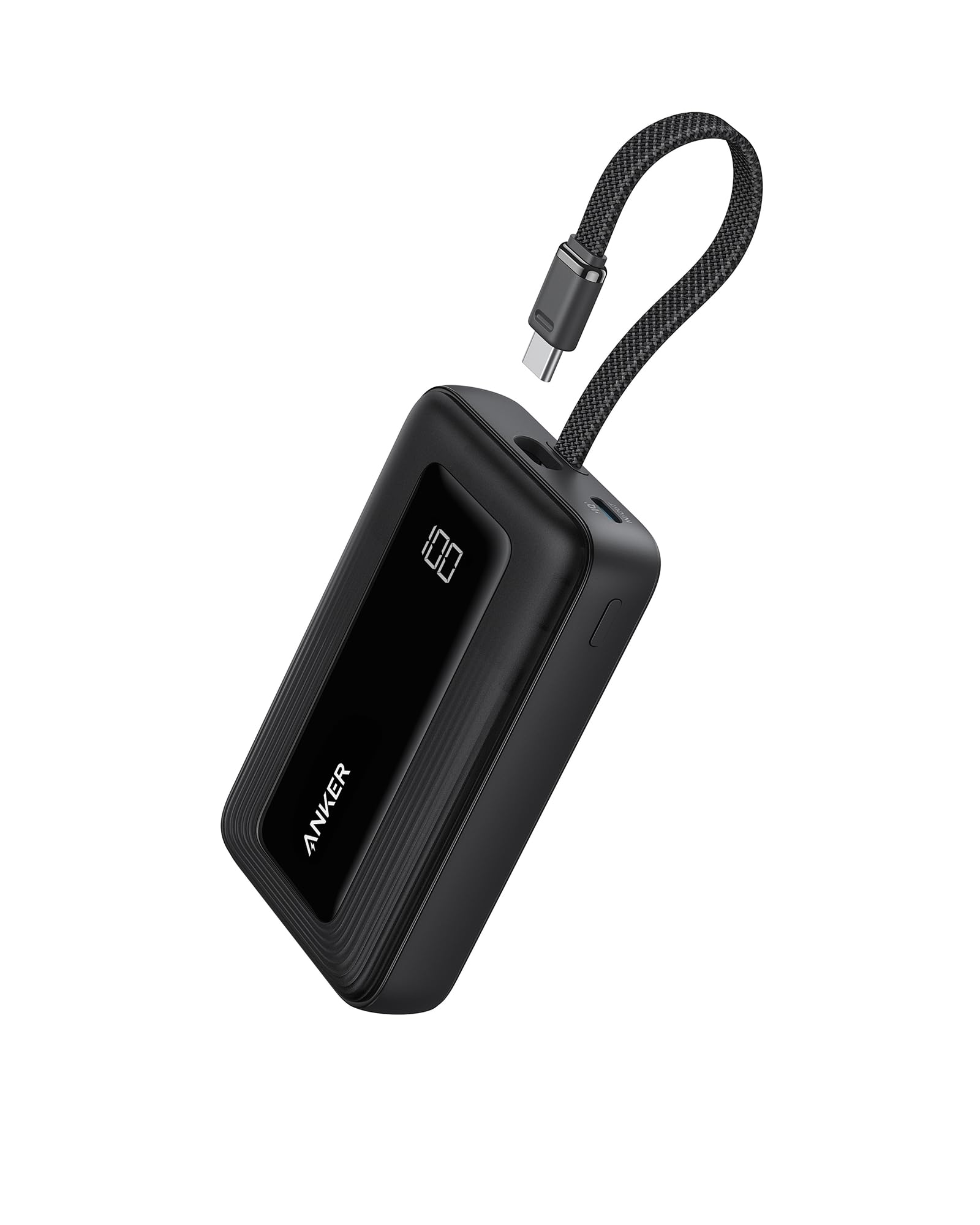
Anker’s reputation for durability meets a compact 10000mAh design that survives drops and 12-hour shifts.
The Anker Zolo is the bank you grab when you want something that just works, no fuss. At 4.32 x 2.58 x 0.98 inches and 223 grams, it is noticeably chunkier than the 160-gram INIU Ultra Mini — but that extra bulk comes from a tank-like build that buyers describe as having “survived drops” with a built-in USB-C cable tested to endure over 10,000 bends. The 30W Power Delivery (PD) charging matches the speed of the INIU Smallest, pushing an iPhone 16 Pro Max to 50% in 27 minutes. The built-in cable is only 5.4 inches long — short enough to avoid tangling but long enough for normal use.
Buyers call it “reliable, inexpensive, convenient” and note “excellent battery capacity for 12hr shifts; fast 30W charging.” The on-screen percentage display removes the guesswork. The biggest drawback is the weight and thickness: at 223 grams and nearly an inch thick, this is not a pocket-dweller for ultralight enthusiasts. The similarly priced INIU Ultra Mini is 63 grams lighter and significantly smaller. The Zolo also lacks any water resistance rating, so it needs a dry bag in wet weather. For durability-focused backpackers who prioritize longevity over grams, this is a solid choice.
What Makes It a Trusty Pick
- 30W fast charging — same speed tier as the INIU Smallest
- Built-in USB-C cable tested to 10,000 bends
- Bright LED percentage display
- Proven reliability from a well-known brand
Where It Lags
- 223 grams is 39% heavier than the INIU Ultra Mini at 160 grams
- No waterproofing; avoid rain exposure
- Thicker profile makes it less pocket-friendly
Choose this if: you value build toughness and brand warranty over shaving grams, and you do not mind a slightly heavier pack.
Pass on it if: you are optimizing every ounce — the INIU Ultra Mini or Nitecore NB Plus beats it on weight by a wide margin.
5. Nitecore NB Plus 10000mAh Power Bank
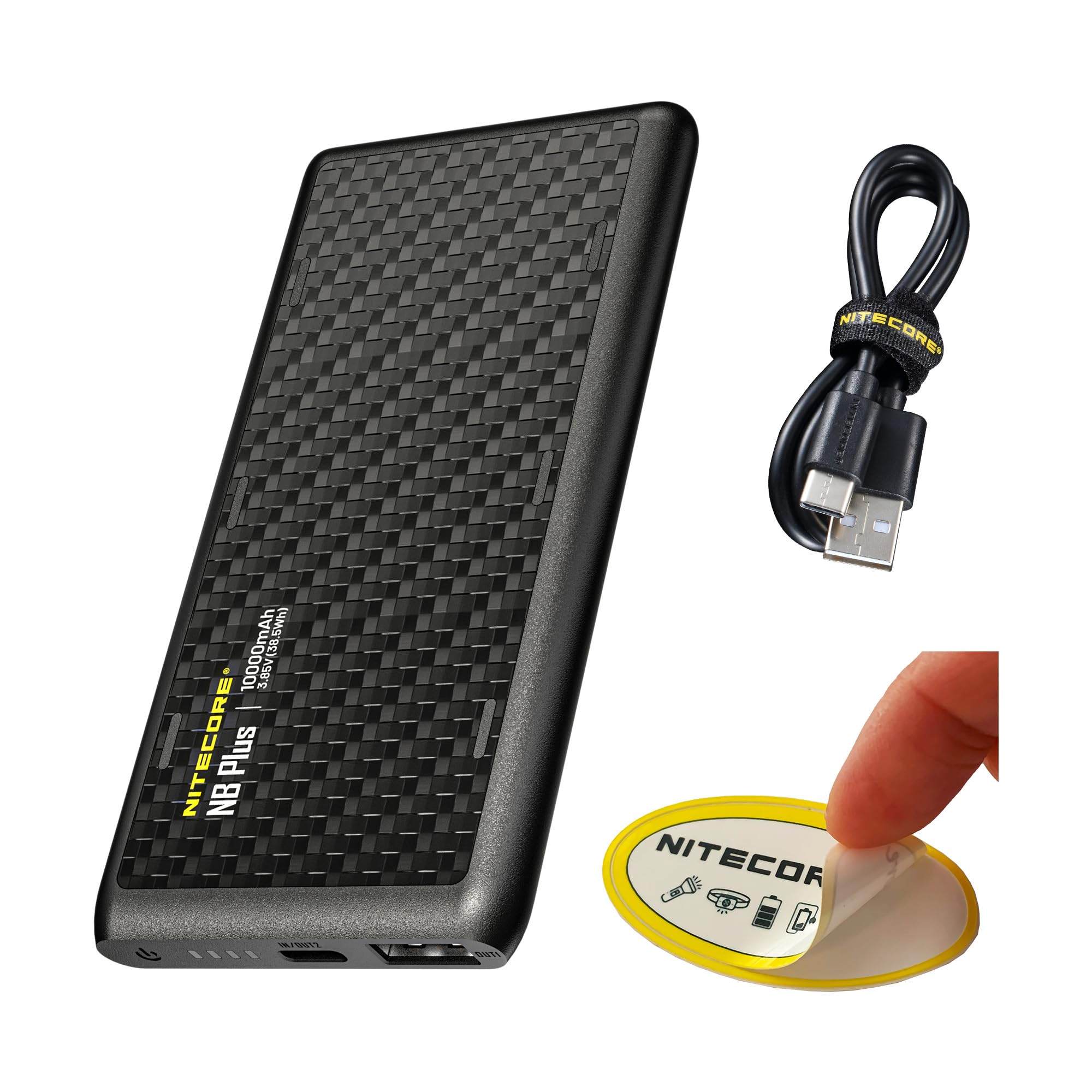
An IPX7-rated sliver that weighs less than a deck of cards and fits in a running vest pocket.
The Nitecore NB Plus is the bank for fast-and-light travelers who treat every gram like a mortgage payment. At just 0.34 pounds (154 grams) with dimensions of 4.82 x 2.35 x 0.46 inches — thinner than most phones — it slides into a shoulder strap pocket without bulging. The IPX7 rating means it can survive being submerged in a meter of water for 30 minutes, which is rare in a bank this slim. It supports 5V/3A QC PD fast charging (a Qualcomm Quick Charge and Power Delivery standard that works across most modern devices) via both USB-A and USB-C ports.
Customers note using it for “bike packing” and charging “with dynamo hub during the day and charge my phone and watch at night” — a true adventure-tool vibe. The rounded corners reduce abrasion against your gear, and the “self-developed composite anti-torsion structure” (a fancy way of saying the body is reinforced against twisting) makes it surprisingly tough for its weight. The only real downside is that the 5V/3A max output is slower than the 45W INIU Ultra Mini — you get weather protection and weight savings, but not speed. At a premium price point in the mid-range tier, you are paying for the engineering, not the raw specs.
Why It Wins for Speed Hikers
- Only 154 grams — tied for the lightest in this guide
- IPX7 waterproof — survives rain, splashes, and brief submersion
- Ultra-slim 0.46-inch profile fits in any pocket
- Reinforced composite structure resists drops and abrasion
Where Speed Suffers
- 5V/3A output is slower than the 45W INIU Ultra Mini
- Only 10000mAh — about 2.5 charges for a phone
- Higher price for the capacity compared to budget options
Ideal for: trail runners, bike packers, and any fast-moving adventure where water resistance and weight are non-negotiable.
Look elsewhere if: you need faster charging or more capacity — the INUI Smallest gives you double the power at a similar price.
6. Nitecore NB Plus Carbon Fiber 10000mAh Power Bank
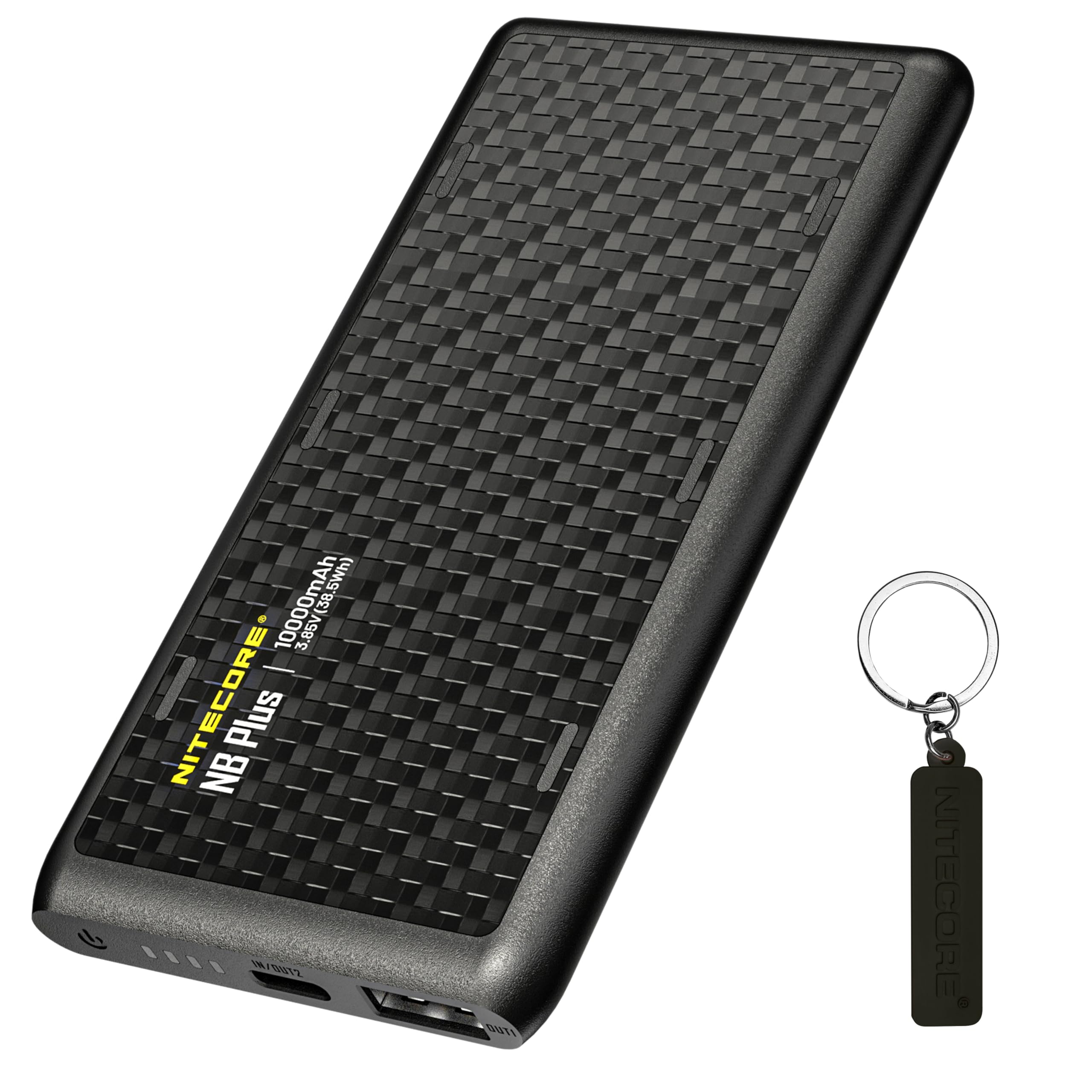
The carbon-fiber-shelled version of the NB Plus that shaves every corner for comfort and style.
This is the same core as the standard Nitecore NB Plus — 10000mAh capacity, IPX7 waterproofing, 155-gram weight, and a slim 4.8 x 2.4 x 0.5-inch profile — but wrapped in a carbon fiber composite body with a “self-developed composite anti-torsion structure” and four rounded corners for a more comfortable grip. The max output is 22.5W via the USB-C port (up from 15W on the standard model), and it uses high-density Li-ion cells with an energy density up to 300mWh/g — meaning the battery itself is more efficient per gram than typical packs.
Buyers measured the actual energy capacity at 39,107mWh versus the advertised 38,500mWh, which is rare accuracy in the battery bank world. The touch button and “multiple waterproof protection both inside and out” give extra confidence in wet conditions. The killer feature here is the pass-through charging function, which lets you charge the bank and your phone simultaneously from a single outlet — handy when wall plugs are scarce. The premium price tag puts it in the same bracket as the standard NB Plus, with the main trade-off being the same 10000mAh limitation and slower charging compared to the 45W INIU Ultra Mini. For gram-counters who also want style and verified energy density, this is the top-shelf pick.
What Justifies the Premium
- Carbon fiber body with anti-torsion reinforcement
- Verified high energy density — buyers measured 39,107mWh vs 38,500mWh advertised
- IPX7 waterproof with multi-layer internal sealing
- Pass-through charging (charge bank and device from one outlet)
What You Give Up
- Only 10000mAh — 2x less capacity than the 20000mAh INUI Smallest
- 22.5W max output is slower than the 45W INIU Ultra Mini
- Premium price for what is ultimately a 10000mAh bank
Buy this for: the combination of verified energy density, IPX7 protection, and a comfortable low-profile shape that disappears in a pocket.
pass on it if: you need more than one full phone recharge per charge of the bank — go with the 20000mAh INUI Smallest for less money.
Understanding the Specs
Milliampere-Hours (mAh)
This is the number that tells you how much electrical charge the battery can hold — think of it as the fuel tank size. A 10000mAh bank roughly gives you 1.5 to 2 full charges for a smartphone like an iPhone 15, while a 20000mAh bank delivers about 4 charges. The catch is that bigger mAh numbers mean bigger, heavier batteries: the 20000mAh INUI Smallest weighs 320 grams versus the 10000mAh INIU Ultra Mini at 160 grams. For a weekend trip, 10000mAh is usually enough. For a week-long stretch without access to power, the 20000mAh capacity is worth the extra weight.
Wattage (W) and Power Delivery (PD)
Wattage measures how fast the bank can push power into your device. A 30W or 45W Power Delivery (PD) bank can charge a phone from empty to 50% in roughly 25-30 minutes, while a standard 5V/3A (15W) bank takes about twice as long. PD is a universal fast-charging protocol that works across iPhones, Samsung Galaxy phones, iPads, and even some laptops. If you are stopping at a trailhead cafe for a quick lunch, faster wattage means more juice before you hit the trail again. The trade-off is that high-wattage banks often cost more and can run warmer.
IPX Ratings and Water Resistance
An IP (Ingress Protection) rating tells you how well the bank resists dust and water. For backpacking, IPX7 is the gold standard — it means the bank can survive being submerged in 1 meter of water for 30 minutes, which covers river crossings and heavy rain. IP68 goes even further, with deeper submersion protection plus dust-tight sealing. Banks without an IP rating (like the INUI and Anker picks) are fine in dry conditions but need a dry bag or ziplock in wet weather. If you hike in the Pacific Northwest or cross creeks regularly, prioritize IPX7 or higher.
Weight and Form Factor
Weight is measured in grams or ounces, and it directly affects how the bank feels in your pack. The lightest in this guide — the Nitecore NB Plus and INIU Ultra Mini — hover around 155-160 grams, about the weight of a smartphone. The heaviest — the ASWAYKE Rugged at 467 grams — feels like carrying a second water bottle. Form factor matters too: a thin, narrow bank like the Nitecore NB Plus (0.46 inches thick) slides into a side pocket or running vest, while a boxier bank like the INUI Smallest (1.2 inches thick) may bulge awkwardly. Test the dimensions against your pack’s pockets before committing.
FAQ
Is 10000mAh enough for a multi-day backpacking trip?
Can I use a battery bank while it is raining?
What does Power Delivery PD mean for backpackers?
How long does a 20000mAh battery bank take to recharge?
Can a battery bank charge a laptop on the trail?
What does IPX7 mean on a battery bank?
Are built-in cables on battery banks worth it?
How do I know if a battery bank is flight approved for air travel?
What is the lightest battery bank for backpacking in this guide?
Can a battery bank charge multiple devices at the same time?
Final Thoughts: The Verdict
For most backpackers, the best battery bank for backpacking is the INUI Smallest 20000mAh because it delivers four full phone charges in a compact 320-gram package with 22.5W fast charging and a detachable cable — the best balance of capacity, weight, and price for multi-day trips. If you want ultra-light performance with IPX7 waterproofing, grab the Nitecore NB Plus at 155 grams. And for camp-focused trips where a built-in 420-lumen lantern and IP68 waterproofing justify the weight, the standout is the ASWAYKE Rugged 20000mAh.
How We Picked
We do not accept paid placement. Every pick is matched to a real buyer and a real use-case; we do not hands-on test units.
Sources & Methodology
Specifications: manufacturer listings and product documentation. Review insights: verified customer reviews, as of July 2026. Pricing: not shown on this page (it changes often); check the current price via the retailer link.
As an Amazon Associate, FitlyFast earns from qualifying purchases. This does not affect which products we feature.