
Our readers keep the lights on and the weekend projects moving. As an Amazon Associate, I earn from qualifying purchases.
A dead phone battery miles from the nearest outlet isn’t just an inconvenience — it’s a safety risk. You need a power station that can recharge your devices reliably, survive a drop on a rocky trail, and not add a ton of weight to your pack. The right charger for camping balances capacity, portability, and output ports to keep your gear running through the weekend.
I’m Rikta — the co-founder and writer behind FitlyFast. I have spent countless hours analyzing the specifications, customer feedback, and real-world performance data of compact power stations and solar generators to find the models that actually deliver on their promises for outdoor use.
After comparing capacity, output wattage, battery chemistry, and charging flexibility across dozens of models, I have identified the units that offer the best blend of performance and portability for the campsite. This guide breaks down the top contenders for the best battery charger for camping.
How To Choose The Best Battery Charger For Camping
Selecting the right power station for your tent or RV means more than just picking the biggest number. You need to match the unit’s output and capacity to the specific devices you carry, while also considering how you will recharge it in the field.
Capacity: Watt-Hours vs. Milliamp-Hours
Ignore the mAh rating on portable power stations. Watt-hours (Wh) is the true measure of energy storage. A 192Wh unit can run a 10W device for over 19 hours, while a high-mAh phone bank running at 5V might only hold enough juice to charge a laptop once. For camping, look for at least 150Wh if you plan to power anything beyond a smartphone.
Output Ports: AC vs. USB-C PD
A standard USB-A port is fine for an old phone, but modern laptops and fast-charging tablets require USB-C Power Delivery (PD) at 60W or higher. If you need to run a small fan, a CPAP machine, or a camera charger, a pure sine wave AC outlet is a must. Count your devices and match the port types before you buy.
Battery Chemistry: LiFePO4 vs. Lithium-Ion
Lithium Iron Phosphate (LiFePO4) batteries last for 3,000 to 3,500 charge cycles before degrading to 80% capacity. Standard lithium-ion packs typically last 500 cycles. For a camping charger that you depend on for years, the extra upfront cost of LiFePO4 chemistry pays off in longevity and safety, especially in varying temperatures.
Solar Input: MPPT and Panel Wattage
If you plan to go off-grid for multiple days, a built-in MPPT solar charge controller makes a significant difference in charging efficiency. Check the maximum solar input wattage — a unit that accepts 60W or more can recharge in a single day with a good panel. Many budget units cap input at lower levels or lack MPPT entirely, slowing down your re-supply.
Quick Comparison
On smaller screens, swipe sideways to see the full table.
| Model | Category | Best For | Key Spec | Amazon |
|---|---|---|---|---|
| Anker SOLIX C200 + Solar | Premium Bundle | Long weekends off-grid | 192Wh / 200W AC output | Amazon |
| VTOMAN Jump 600X | High Output | Powering tools & jump starts | 299Wh / 600W AC output | Amazon |
| DaranEner NEOZ | Mid-Range | Overnight CPAP use | 192Wh / 300W pure sine wave | Amazon |
| Apowking 300W | Value | Budget family camping | 220Wh / 300W peak output | Amazon |
| GENSROCK H120 | Compact AC | Laptop & drone charging | 88Wh / 150W peak AC outlet | Amazon |
| HOWEASY H120 Max | Airline Safe | Plane & day hikes | 98Wh / 135W AC output | Amazon |
| MINRISE 40000mAh | Budget Solar | Max capacity on a budget | 40000mAh / 20W PD output | Amazon |
In‑Depth Reviews
1. Anker SOLIX C200 DC + 60W Solar Panel

The Anker SOLIX C200 bundles a 192Wh LiFePO4 power station with a 60W foldable solar panel, creating a complete off-grid charging kit right out of the box. The unit is 39% smaller than competitors with similar capacity, and its two USB-C ports (140W and 100W) can fast-charge a MacBook or an iPad simultaneously without needing an AC inverter. The included solar panel features XT-60 connectors for efficient energy transfer, and users report it recharges the battery in about 3 to 4 hours under full sun.
This system is built for long weekends away from the grid. The 140W two-way USB-C port means you can also recharge the battery itself from a wall outlet to 80% in under 1.3 hours, making it one of the fastest-resupplying units in its class. At 5.7 pounds for the station alone and a packable solar panel, the C200 set is light enough to throw into a daypack or keep in the trunk for emergencies.
One important detail: the C200 is a DC-only station, meaning it lacks traditional AC outlets. This design choice keeps it smaller and more efficient, but it will not power small appliances like a fan or a coffee maker. For campers who only need to charge laptops, phones, tablets, cameras, and drones, this is the most portable and efficient solution on this list.
Why it’s great
- Includes a high-quality 60W foldable solar panel.
- LiFePO4 battery lasts over 3000 cycles.
- Ultra-fast 140W USB-C PD two-way charging.
Good to know
- No AC outlets — only USB-C and USB-A ports.
- 12V output requires an accessory cable.
2. VTOMAN Jump 600X

The VTOMAN Jump 600X is a 299Wh power station built with a LiFePO4 battery that can deliver a continuous 600W (1200W surge) through its two AC outlets. What sets it apart is the built-in car jump starter — you can jump-start a truck or SUV directly from the unit without needing separate jumper cables. This 2-in-1 design eliminates a bulky piece of gear from your vehicle, making it ideal for overlanders and road trippers.
The AC inverter produces pure sine wave power, which is essential for sensitive electronics like CPAP machines and camera battery chargers. Users have reported running a CPAP machine for over 10 hours on a single charge, plus keeping phones and a light running all night. The three regulated 12V/10A DC outputs are perfect for powering a car fridge or a portable tire inflator without voltage drop issues.
The unit weighs 14.6 pounds and has a chunky footprint at 10.2 x 8.7 x 8.6 inches, so it is not a backpack-friendly option. It also takes about 3 hours to fully recharge from a wall outlet. However, for car campers who need serious AC power and the convenience of a built-in jump starter, the Jump 600X offers exceptional versatility for its price tier.
Why it’s great
- Built-in car jump starter with high cranking power.
- Pure sine wave AC for sensitive medical devices.
- Expandable capacity up to 939Wh with extra battery.
Good to know
- Heavy and bulky at 14.6 pounds.
- Slow AC recharge speed.
3. DaranEner NEOZ 192Wh
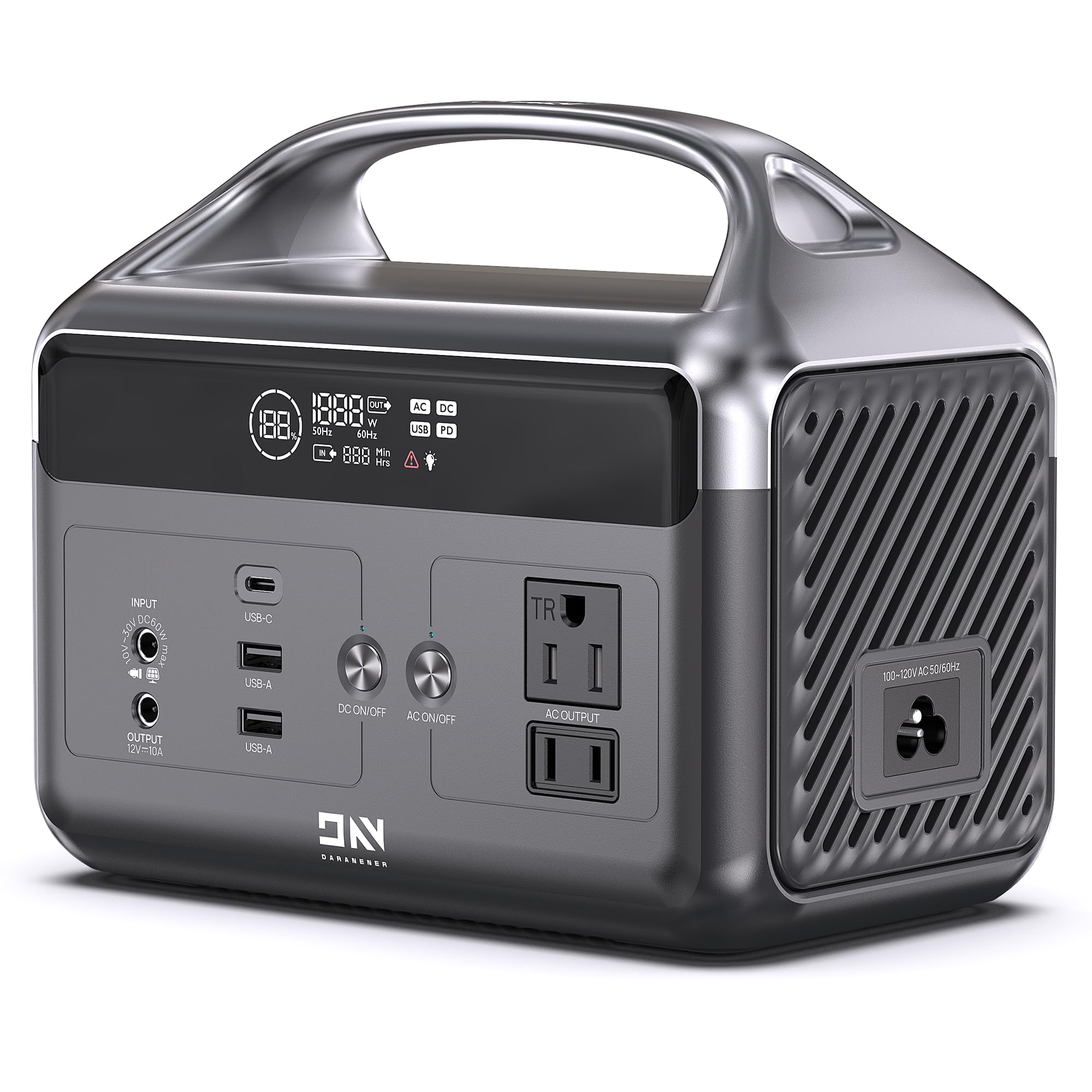
The DaranEner NEOZ packs 192Wh of LiFePO4 battery capacity into a compact chassis that weighs just 5.7 pounds, making it small enough to fit in a large tote or a duffel bag. It features two 300W (600W surge) pure sine wave AC outlets, a USB-C PD port that outputs up to 60W, and two USB-A ports with QC 3.0. The pure sine wave inverter is clean enough to run a CPAP machine, a projector, or a small fan without humming or interference.
Campers who rely on medical equipment will appreciate the NEOZ’s ability to run a CPAP machine for most of the night while simultaneously charging a tablet. The LiFePO4 cells are rated for over 3,500 cycles, which means this unit will still be delivering reliable power a decade from now if looked after. The integrated LED light has four brightness modes, including an SOS signal, adding a practical layer of utility for nighttime emergencies.
One caveat: the AC outlets are grounded, and some units have shipped with a defective ground pin that prevents three-prong plugs from working correctly. Customer support appears responsive and replaces defective units quickly. For those who need a light, long-lasting power station for overnight medical device use, this is a smart mid-range buy.
Why it’s great
- Lightweight at 5.7 pounds.
- Long-lasting LiFePO4 battery with 3500+ cycles.
- Pure sine wave AC suitable for CPAP machines.
Good to know
- Some units have had grounded outlet issues.
- Solar panel and car cable sold separately.
4. Apowking 300W Power Station
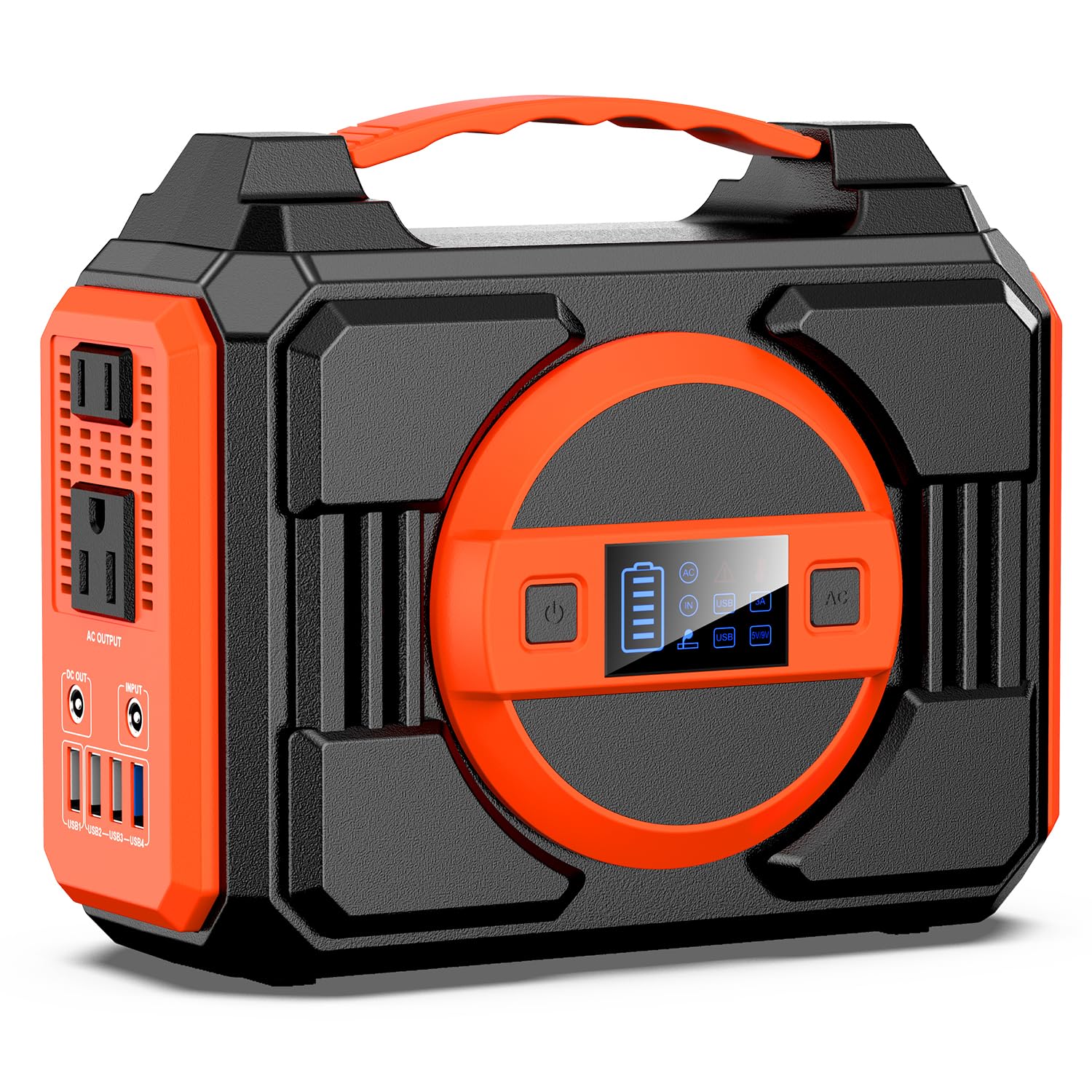
The Apowking 300W unit stores 220Wh in a lithium-ion battery pack and delivers up to 300W of continuous power (600W peak) through two AC outlets. It weighs 5 pounds and has dimensions small enough to tuck under a car seat. The AC inverter is pure sine wave, which means quiet operation and clean power for laptops and camera batteries without the buzz of modified sine wave units.
This station is designed for family camping where you need to power a phone, a tablet, a modem, and a dish all evening. Users report it holds a charge for about 8 hours under moderate load, and it features a large back-lit LED light that illuminates a wide area. The unit can be recharged via a wall adapter, a car charger, or an optional 60W solar panel, though the solar input is relatively slow — expect a full day of sun to fully recharge.
The biggest limitation is the lack of a USB-C PD port. All USB ports are USB-A, which means you cannot fast-charge modern laptops or phones. AC charging via the wall adapter is also slow at around 4 hours for a full fill. For campers who only need standard USB charging and occasional AC power for small gear, this is a quiet and capable budget-friendly option.
Why it’s great
- Pure sine wave inverter with silent cooling vents.
- Large, bright rear LED light for campsite use.
- Compact and lightweight at just 5 pounds.
Good to know
- No USB-C PD port for fast laptop charging.
- Slow AC and solar recharge times.
5. GENSROCK H120 Power Bank

The GENSROCK H120 squeezes an 88Wh lithium-ion battery and two AC outlets (150W peak, 120W continuous) into a package that weighs just 2.3 pounds. It is one of the lightest units that can still power a laptop natively through its AC ports. The unit also features two QC 3.0 USB-A ports, a USB-C port, and two 12V DC ports, giving you 8 total output options for charging multiple devices simultaneously.
This power bank is small enough to fit in a large jacket pocket or a bike bag, making it a strong choice for ultralight campers and cyclists who need a laptop or drone charged at the campsite. Users report it fits perfectly in a pocket and can fast-charge a Samsung Galaxy Ultra in under 30 minutes via the QC 3.0 port. The digital screen displays remaining battery life clearly, so you always know how much juice is left.
The main trade-off is capacity — at 88Wh, you will get roughly one full laptop charge or 3 to 4 phone charges. It is best for short trips or as a daily power companion for one or two essential devices.
Why it’s great
- Extremely light at 2.3 pounds with AC outlet.
- 8 output ports including 2 AC and 2 QC 3.0.
- Compact size fits in a large pocket.
Good to know
- Only 88Wh capacity — best for 1-2 nights.
- AC ports share total output limit.
6. HOWEASY H120 Max
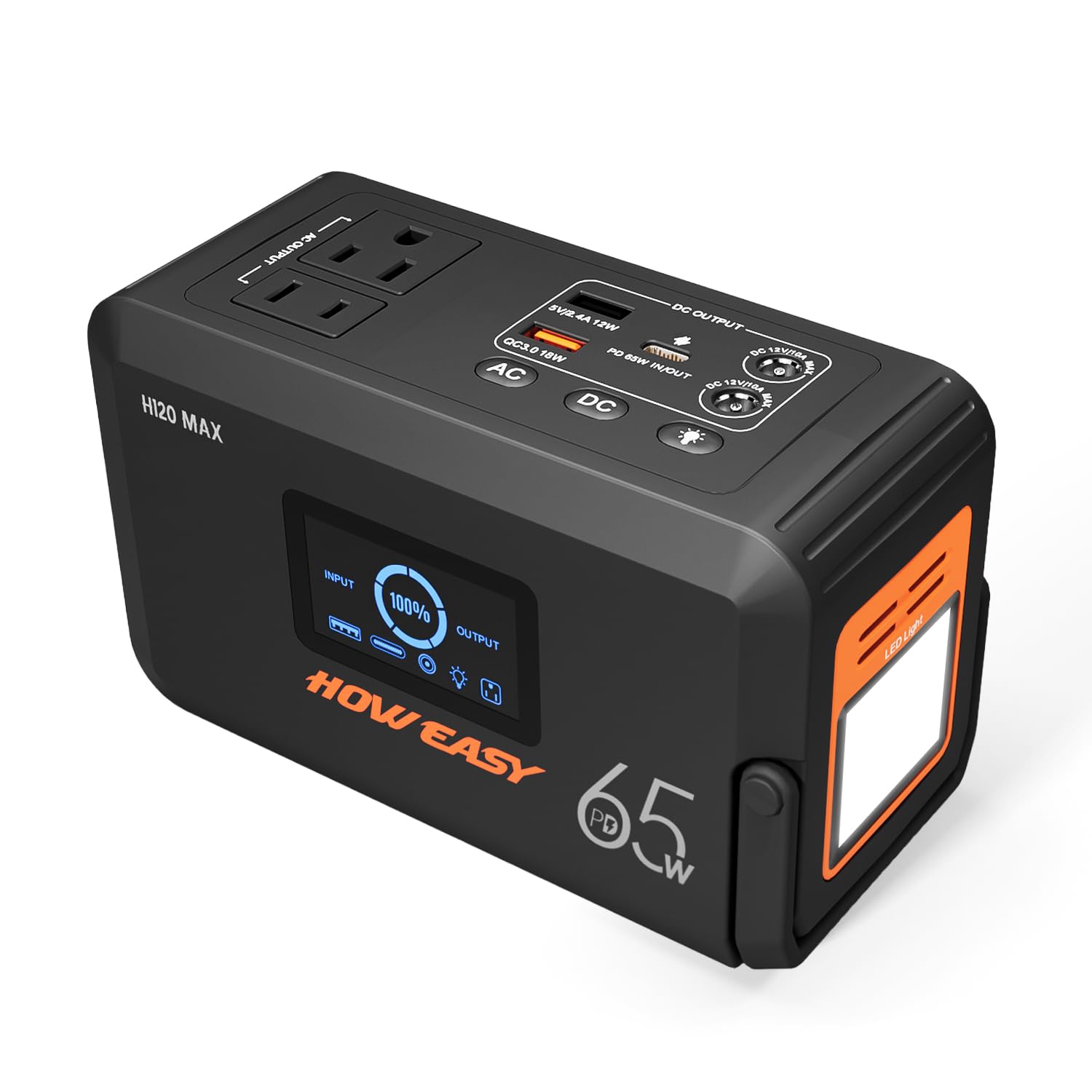
The HOWEASY H120 Max hits the sweet spot for travelers who fly to their camping destinations. Its 98Wh capacity is FAA-approved for carry-on luggage, so you can bring it on a plane without hassle. The unit weighs 2.3 pounds and measures just 6.6 x 3 x 4 inches, yet it packs two AC outlets (135W continuous, 270W peak), a 65W USB-C PD port, a QC 3.0 port, and two DC ports — enough to charge a laptop, phone, tablet, and camera all at once.
The 65W PD port can charge a laptop to 80% in about an hour, which is genuinely useful for digital nomads who camp and work. The built-in LED light offers four modes (low, medium, high, SOS), and the unit can be recharged via a wall adapter, car charger, or solar panel (15V-24V input). The six-layer BMS system protects against overvoltage, overload, overheating, and short circuits.
The fan noise can be noticeable under load, and there is no dedicated on/off switch — you have to press the DC button to wake it up. Some users report that the battery drains quickly when powering high-wattage devices like projectors. Still, for a fly-in camping trip where you need to keep a laptop and phone running, this is the most portable and compliant option available.
Why it’s great
- FAA-compliant 98Wh capacity for air travel.
- 65W USB-C PD fast-charges laptops quickly.
- Two AC outlets in a sub-2.5 pound package.
Good to know
- Fan noise is audible during AC operation.
- Not powerful enough for high-drain appliances.
7. MINRISE Solar Power Bank 40000mAh
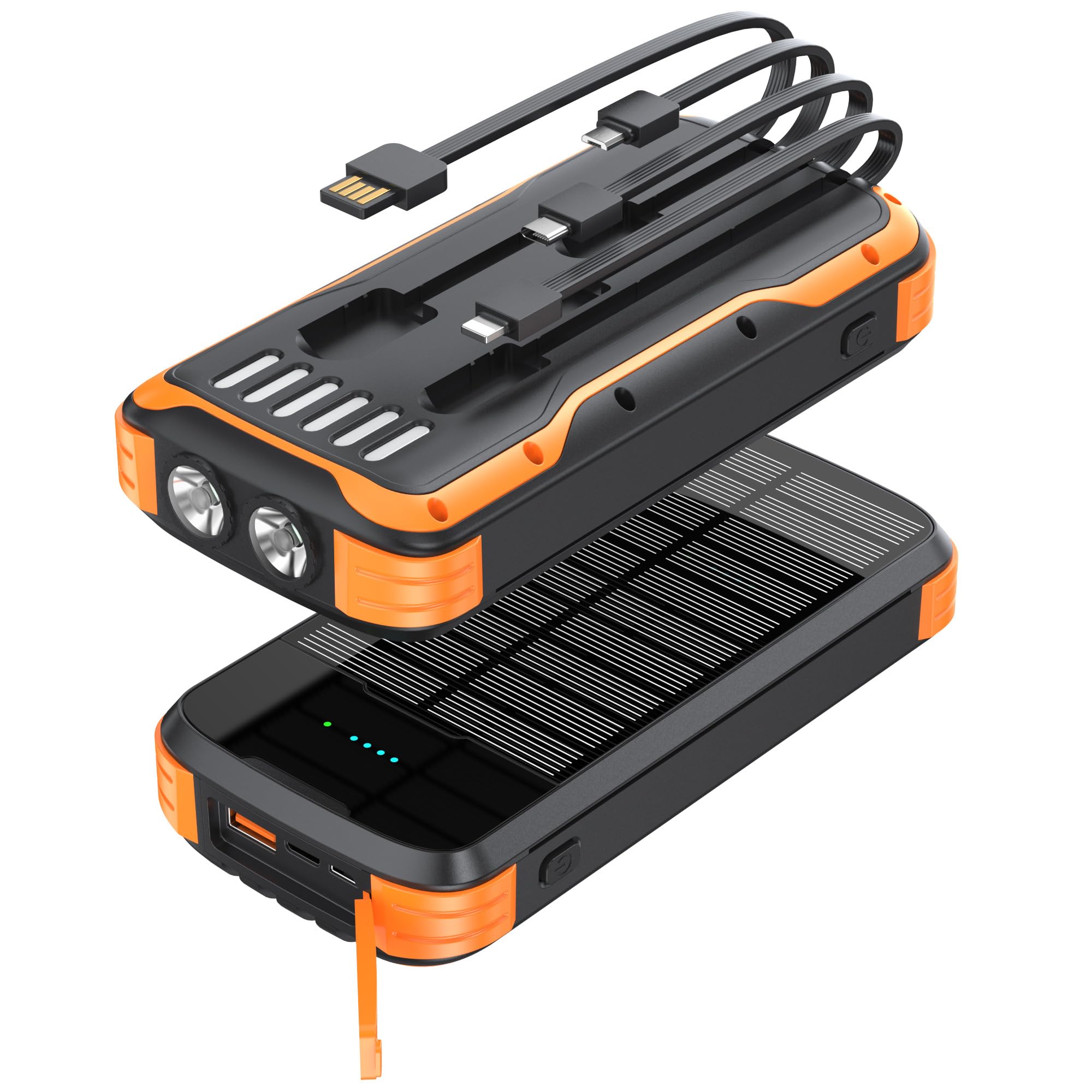
The MINRISE 40000mAh solar power bank is the most affordable entry on this list and offers the highest raw capacity in milliamp-hours. It features four built-in charging cables (Type-C, iOS, Micro USB, and a USB-A input cable), so you never have to carry separate cords. With 20W PD output via USB-C, it can charge an iPhone 15 from 15% to 65% in 30 minutes, which is competitive for a small solar bank.
The unit is built with a rugged ABS body and silicone corner bumpers that protect against drops, and it includes two bright LED flashlights with a claimed 165-foot range and 25-hour runtime. It weighs 1.07 pounds, which is heavier than a standard phone bank but still packable. The solar panel on the back is a slow emergency trickle charger — it is not intended to fully recharge the 40000mAh battery in a day. Still, for day hikers and short overnight trips, it provides plenty of power for phones, tablets, and small USB devices.
The biggest drawback is the lack of AC output and the slow solar recharge rate. It also uses a lithium-polymer cell, not LiFePO4, so its lifespan is shorter. Some units have arrived with non-functional solar panels. For ultralight backpackers who only need to charge phones and a headlamp, and who want a dirt-cheap backup solution with built-in cables, this is a decent value pick.
Why it’s great
- Massive 40000mAh capacity for multiple phone charges.
- Four built-in cables eliminate cord clutter.
- Rugged, drop-resistant outdoor design.
Good to know
- Solar charging is extremely slow — emergency use only.
- No AC outlet for laptops or CPAP machines.
FAQ
Can a camping battery charger run a CPAP machine all night?
How fast does a solar panel charge a power station at a campsite?
Is it safe to leave a portable power station in a tent or car during summer?
Can I fly with a camping battery charger?
Final Thoughts: The Verdict
For most campers, the best battery charger for camping winner is the Anker SOLIX C200 with Solar Panel because it packs a long-life LiFePO4 battery, a high-quality solar panel, and fast USB-C charging into a small, portable package. If you need serious AC power for CPAP machines or power tools, grab the VTOMAN Jump 600X. And for ultralight fly-in trips where every ounce matters, nothing beats the HOWEASY H120 Max for its FAA-compliant capacity and dual AC outlets.