
Our readers keep the lights on and the weekend projects moving. As an Amazon Associate, I earn from qualifying purchases.
You rely on your CPAP every night for restorative sleep, and nothing disrupts that trust faster than a power outage cutting your therapy short. The gap between standard power banks and a true CPAP-compatible battery is defined by reliable DC voltage output, sufficient watt-hour capacity for a full night’s sleep, and a critical spare.
I’m Rikta — the co-founder and writer behind FitlyFast. For this guide, I spent dozens of hours analyzing watt-hour ratings, DC plug compatibility across ResMed and Philips models, and real-world runtime data for CPAP-specific batteries and multi-purpose power stations.
After comparing capacity, portability, and pass-through charging ability, I organized this review of the battery for cpap machine choices that keep your therapy uninterrupted through outages, camping trips, and travel.
How To Choose The Best Battery For CPAP Machine
Selecting the right battery backup for your sleep therapy machine requires matching capacity to your device’s power draw and understanding the difference between standard power banks and medical-grade DC battery packs. Not all portable power stations are created equal for this specific use case.
Watt-Hour Capacity vs CPAP Power Draw
CPAP machines consume between 30 and 60 watts per hour depending on pressure settings and accessories, with heated humidifiers and tubing adding significantly to that draw. A battery rated at 100Wh will power a standard CPAP without humidification for roughly one to two nights. Budget buyers often underestimate this calculation and end up with insufficient runtime.
DC Output vs AC Inverter
Most CPAP machines can run directly on DC power through a dedicated cable, which is far more efficient than converting battery DC to AC and then back to DC. A battery pack with native DC ports matching your machine’s voltage (typically 12V, 15V, or 24V) will deliver 20 to 30 percent more runtime than the same capacity used through the AC outlet. Premium CPAP-specific batteries include the correct DC cables for ResMed and Philips models right in the box.
Pass-Through Charging Protection
When the grid fails, a battery with pass-through charging allows your CPAP to draw power from the wall while simultaneously topping off the battery, so if the outage extends beyond a few hours the transition is seamless. This feature matters most for users in areas with frequent short blackouts during storms or rolling brownouts.
Quick Comparison
On smaller screens, swipe sideways to see the full table.
| Model | Category | Best For | Key Spec | Amazon |
|---|---|---|---|---|
| EASYLONGER ES720 PRO | CPAP Battery | Multi-night camping | 276.48Wh / DC adjustable output | Amazon |
| BLUETTI X30 | CPAP Battery | Hurricane preparedness | 297Wh / 3 DC ports + cable set | Amazon |
| LIBRIDS C600 | Power Station | Home backup plus CPAP | 640Wh / Pure sine wave AC | Amazon |
| EASYLONGER ES270 | Travel Battery | Airline travel | 99.9Wh / FSA & HSA eligible | Amazon |
| Krisdonia AC Outlet | Power Bank | Laptop + CPAP emergency | 60000mAh / 110V AC outlet | Amazon |
| EBL EB300 | Power Station | Budget RV backup | 288.6Wh / Wireless charger | Amazon |
| DARAN NEOZL | Power Station | Entry-level camping | 288Wh / LiFePO4 cells | Amazon |
In‑Depth Reviews
1. EASYLONGER ES720 PRO CPAP Battery Backup
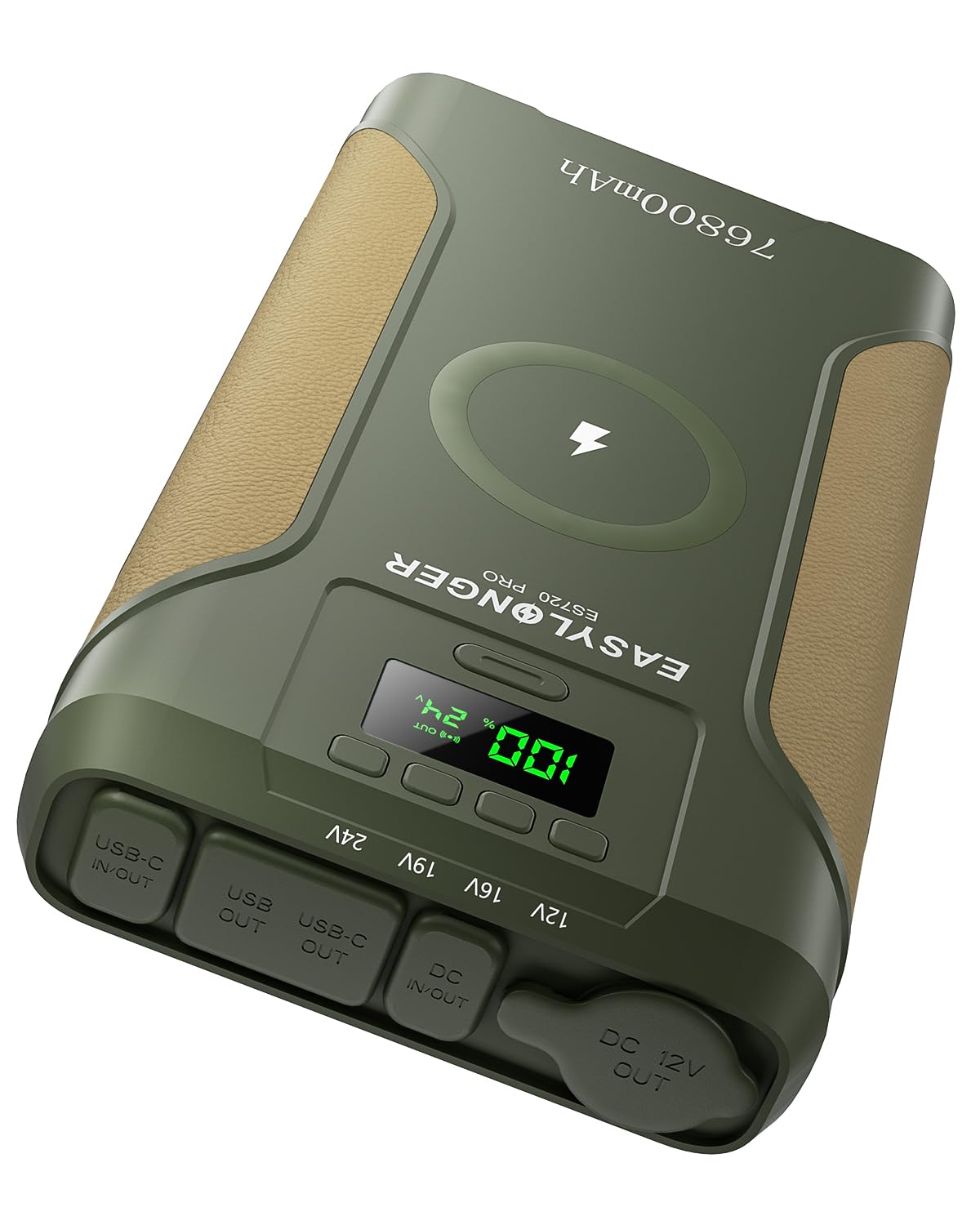
The ES720 PRO packs 276.48Wh into a purpose-built CPAP battery that delivers two to three full nights of therapy when humidification is switched off. Its adjustable DC output covers 12V, 16V, 19V, and 24V, making it compatible with ResMed AirSense 10 and 11, AirCurve units, Philips DreamStation series, and Luna TravelPAP straight out of the box using the four included dedicated cables.
Beyond CPAP duty, the smart display shows real-time battery level and voltage, while the built-in MPPT controller accepts a 100W solar panel for off-grid recharging. The unit weighs 3.3 pounds and comes with a carrying bag, making it a viable companion for car camping and road trips where multi-night runtime is the priority.
Customer feedback confirms it powers an AirSense 11 for two nights dry camping with over half the charge remaining, and support resolves issues promptly. The unit is not TSA approved due to capacity exceeding 100Wh, so air travelers should look at the smaller ES270 instead.
Why it’s great
- Runs CPAP for 2-3 nights on a single charge
- Adjustable voltage covers all major machine brands
- MPPT solar charging and pass-through support
Good to know
- Not airline approved due to capacity
- Buttons feel slightly quirky to operate
2. BLUETTI CPAP Battery Backup X30

The BLUETTI X30 delivers 297Wh of power specifically tuned for CPAP machines, with three DC output ports covering 12V at 5A, 15V at 4A, and 24V at 4A. This voltage range accommodates ResMed S9, AirSense 10 and 11, AirCurve 10, AirMini, and Philips DreamStation models, and BLUETTI includes five color-coded DC cables with clear labeling so you grab the right one immediately.
Weighing just 3.9 pounds with a built-in handle and a large accessory bag, the X30 is designed for quick deployment during hurricane season or power outages. Real-world testing shows a Philips System One running nine hours per night uses about 16 percent of the capacity per night, translating to roughly five to six nights of backup without humidification.
The battery promises 2,000 recharge cycles, a long service life for frequent use, and recharges fully in about four hours. The primary downside is the short cable length and the requirement for 110V AC to recharge, but the cable set’s compatibility and the compact footprint make it the go-to choice for storm-prone regions.
Why it’s great
- Estimated 5-6 nights of CPAP runtime
- Includes five color-coded DC cables
- Ultra-lightweight at 3.9 lbs
Good to know
- Powers only one device at a time
- Stated weight is 0.3 lbs heavier in practice
3. LIBRIDS Portable Power Station C600
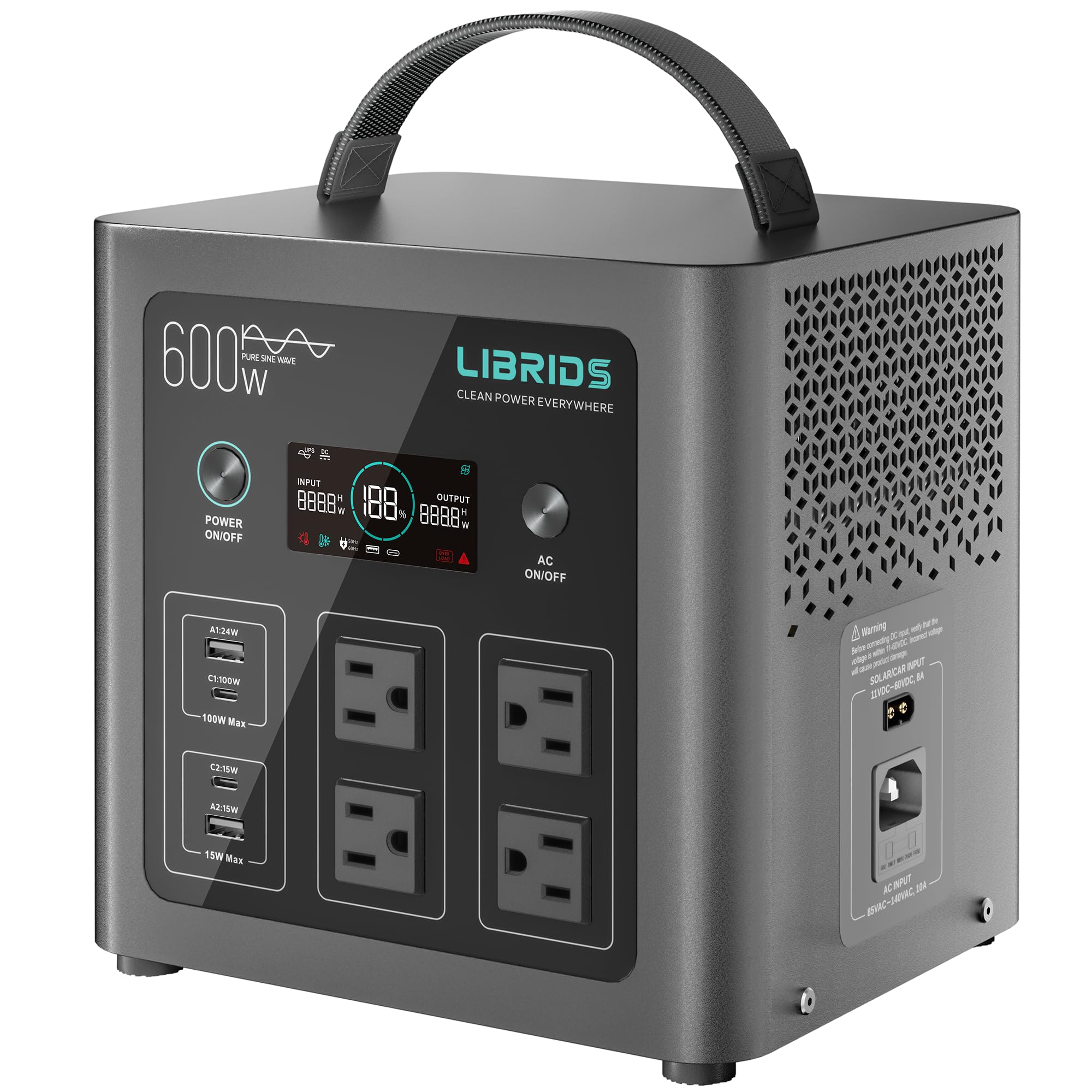
The LIBRIDS C600 is a full-sized power station with 640Wh capacity and a 600W pure sine wave inverter that delivers clean power to sensitive electronics including CPAP machines. The built-in 10ms UPS auto-switches battery power during an outage, meaning there is no gap in therapy — your CPAP doesn’t even blink during a brownout.
Charging from zero to full takes only 1.5 hours via AC, and the automotive-grade LiFePO4 battery is rated for 4,000 cycles, offering a decade of daily use. The unit includes four AC outlets plus USB-A and USB-C ports, letting you power your CPAP on one outlet while keeping phones and laptops running on others.
Owners report using the C600 with a ResMed AirSense 11 for seven hours and consuming only 24 percent of the battery with humidification turned off. That extrapolates to over four nights of backup. The metal enclosure improves heat dissipation, and the quiet fan operation makes it bedroom-friendly during use.
Why it’s great
- 10ms UPS for seamless power transitions
- 1.5-hour full recharge time
- 4,000-cycle LiFePO4 battery
Good to know
- Heavier at 18 lbs, not for backpacking
- Indoor use only per UL safety warning
4. EASYLONGER ES270 CPAP Battery
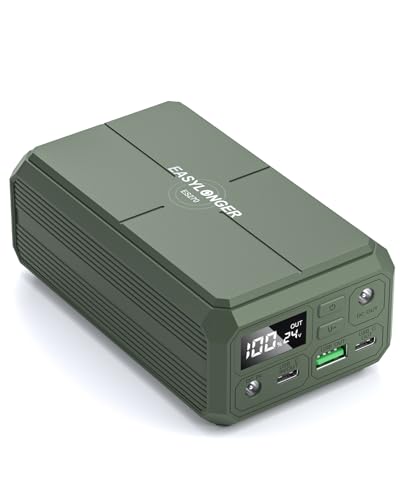
The ES270 is engineered specifically for air travelers, with a 99.9Wh capacity that stays under the FAA 100Wh limit for carry-on batteries. The compact brick measures 5.1 by 2.9 by 1.9 inches and weighs 1.3 pounds, fitting easily into a backpack pocket alongside your travel CPAP like the ResMed AirMini.
EASYLONGER includes four dedicated CPAP charging cables covering ResMed AirSense 10 and 11, AirCurve 10 and 11, AirMini, Philips DreamStation and DreamStation 2, and Luna TravelPAP. The battery supports PD 100W fast charging for laptops — it charges a MacBook Pro 14 from zero to 50 percent in 30 minutes — and includes a 5W wireless charging pad for your phone.
Pass-through charging allows the CPAP to stay powered even while the battery itself recharges, a critical feature during multi-leg travel where you might have access to wall power only during layovers. Owners confirm it powers an AirSense 11 for eight hours using about 40 percent of the battery, leaving reserve for phone charging.
Why it’s great
- FAA-compliant for carry-on luggage
- PD 100W fast charging for laptops too
- Wireless charging pad included
Good to know
- Not enough for multiple nights
- Disable humidifier for full night runtime
5. Krisdonia AC Outlet Portable Charger 60000mAh

The Krisdonia AC power bank delivers 222Wh capacity through a 110V AC outlet rated at 130W continuous, plus two 18W QC 3.0 USB-A ports and a 20W USB-C port. This configuration is ideal for users who need to power both a laptop and a CPAP machine from one compact brick during work trips or emergency stays away from home.
The pass-through function lets you charge the battery while devices draw power, activated by a two-second button press while the bank is recharging itself. The aluminum case provides flame retardancy and a polished feel, and the bright LED display shows remaining capacity at a glance.
Machine owners note the AC outlet drains noticeably faster when a laptop runs on high load — 100 percent to 89 percent in ten minutes — but the modified sine wave output works fine for CPAP machines and most electronics that are not sensitive to waveform purity. At 4 pounds it is travel-friendly for car trips, though backpackers will find it bulky.
Why it’s great
- Built-in AC outlet for CPAP without DC cables
- Aluminum flame-retardant body
- Pass-through charging support
Good to know
- Modified sine wave, not pure sine
- Drains fast under continuous AC load
6. EBL Portable Power Station EB300
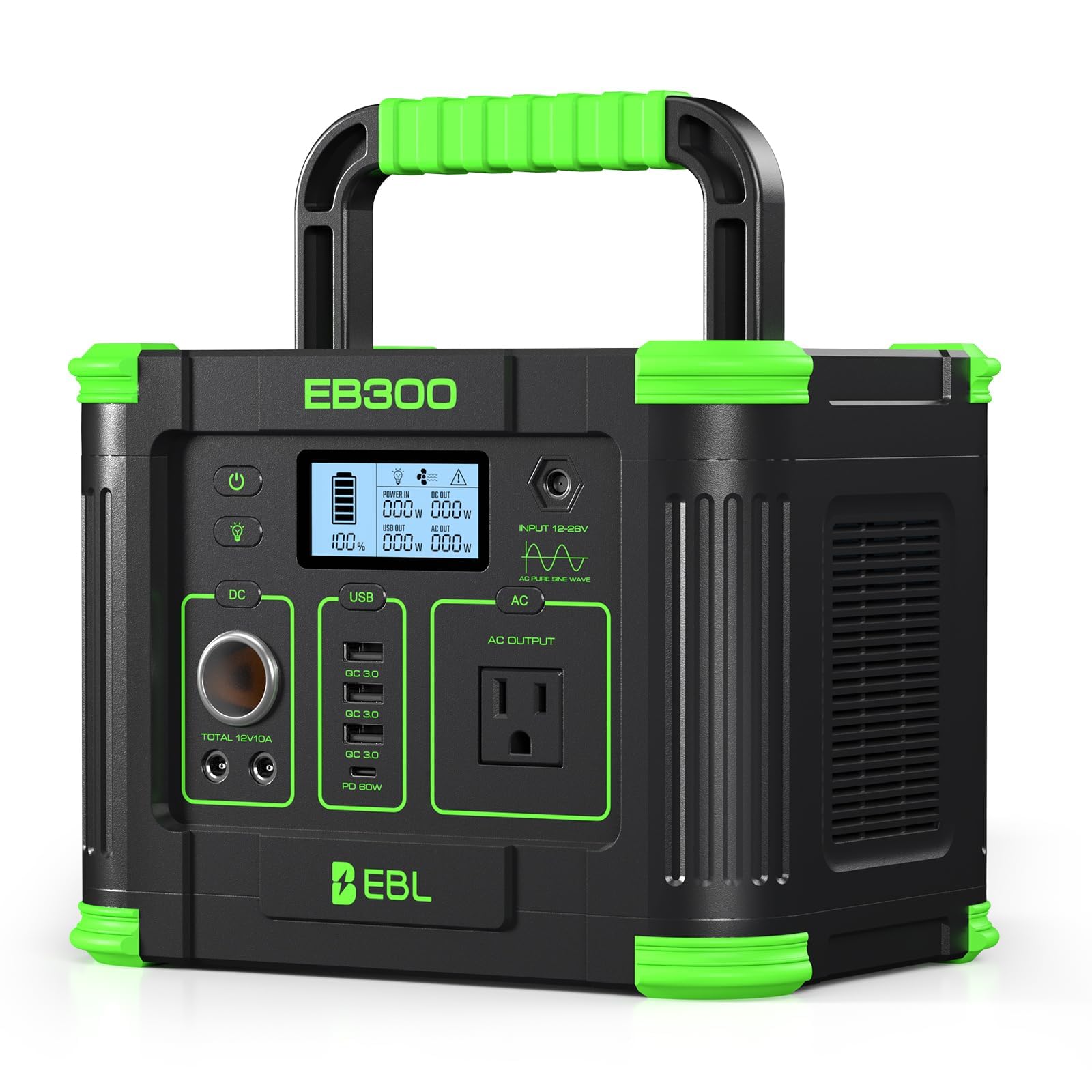
The EB300 from EBL packs 288.6Wh of capacity with a 330W pure sine wave AC outlet capable of 600W peak surge, making it suitable for running a CPAP machine plus a few small accessories from one unit. The green compact body weighs 7.94 pounds and includes a folding handle for easy transport to an RV or campsite.
A standout feature is the 5W wireless charging pad on top, letting you top off a smartphone without fumbling for cables. The rear SOS LED light operates independently of the main power, providing emergency illumination even when the battery is off. Three recharging methods — AC wall, car 12V, and 60-120W solar — give flexibility for various scenarios.
Customers running CPAP machines confirm the unit works well for a full night with the proper DC settings, though the wireless charger may not function through thick cases. AC charging takes six to seven hours, which is slower than modern competitors, and some users report the solar port is incompatible with certain third-party 100W panels.
Why it’s great
- Pure sine wave AC output for sensitive devices
- 5W wireless charging pad built in
- SOS LED light works without main power
Good to know
- Slow AC recharge time (6-7 hours)
- Solar port may not fit all panels
7. DARAN Portable Power Station 288Wh
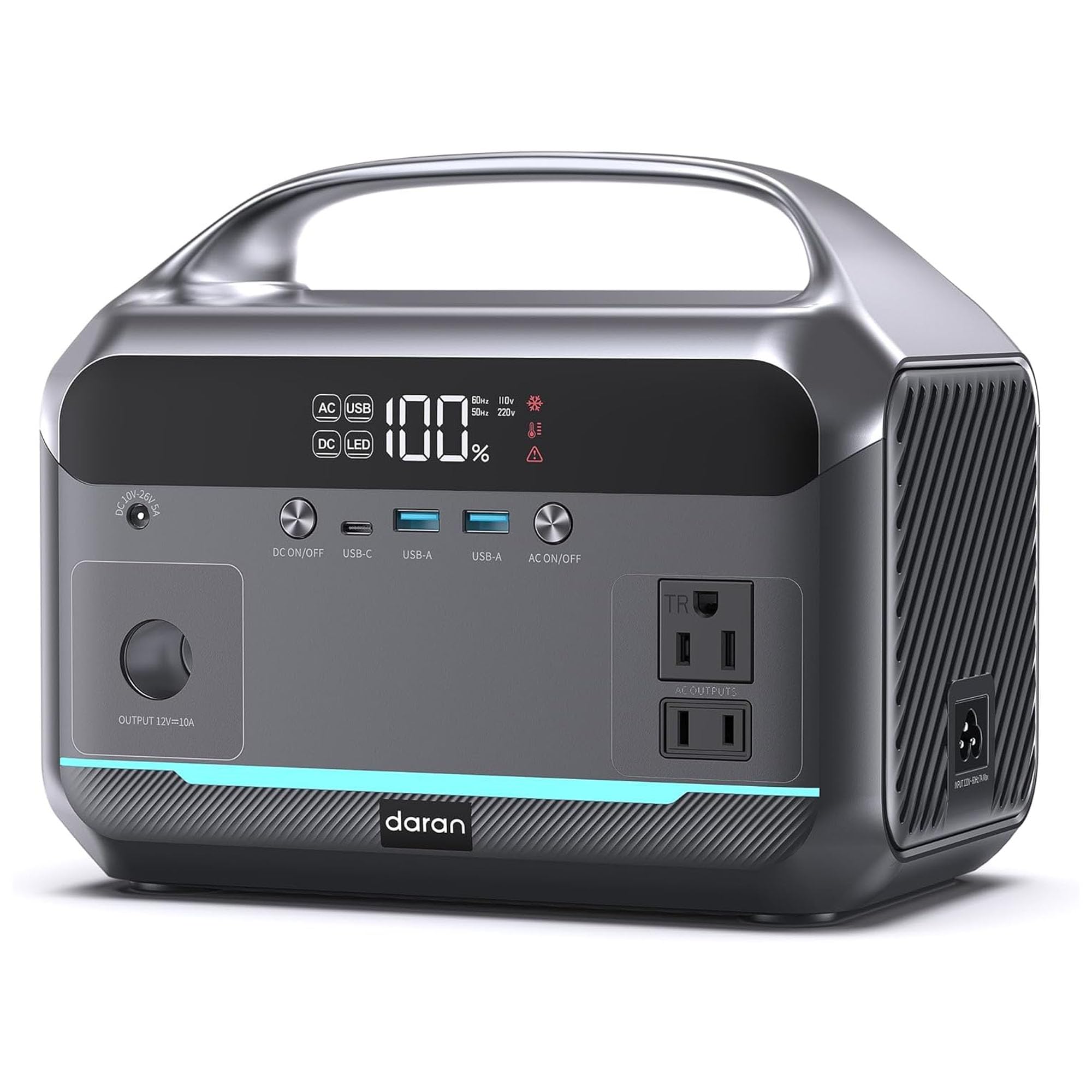
The DARAN NEOZL power station offers 288Wh capacity with a 300W continuous AC output and 600W surge, built on a lithium iron phosphate battery platform rated for over 3,000 charge cycles. The digital display shows estimated power usage and battery percentage, and the rear LED light cycles through constant, strobe, and emergency SOS modes.
Seven ports — two AC outlets, one 60W USB-C, two 18W USB-A, one DC input, and one cigar socket — let you power a CPAP machine through the AC outlet while charging other devices. The unit charges to 80 percent in two hours via AC, and supports 100W solar input for off-grid recharging, though solar panels are not included.
Customer reviews are mixed regarding long-term reliability — one owner reported the unit stopped turning on after seven months of light use. For the price point, the LiFePO4 chemistry provides excellent cycle life, but users needing absolute medical-device reliability may prefer a more established brand with a stronger track record.
Why it’s great
- 3,000+ cycle LiFePO4 battery life
- Fast AC charge to 80% in 2 hours
- Lightweight and compact for camping
Good to know
- Mixed long-term reliability reports
- Solar cable and car cable not included
FAQ
Can I use any portable power station for my CPAP machine?
How many nights will a 300Wh battery run my CPAP?
What does voltage compatibility mean for ResMed and Philips machines?
Is a TSA-approved CPAP battery worth the extra cost for air travel?
What does pass-through charging mean for overnight use?
Final Thoughts: The Verdict
For most users, the battery for cpap machine winner is the EASYLONGER ES720 PRO because it delivers two to three nights of runtime with adjustable DC voltage covering ResMed and Philips machines, plus solar charging for extended off-grid use. If you want a lightweight option for air travel and weekend trips, grab the EASYLONGER ES270 — it slides into a backpack and meets FAA carry-on limits. And for the ultimate home backup that powers your CPAP through multi-day outages while also running a mini-fridge and charging laptops, nothing beats the LIBRIDS C600 with its 640Wh capacity and 10ms UPS transfer.