
Our readers keep the lights on and the weekend projects moving. As an Amazon Associate, I earn from qualifying purchases.
An inverter is only as reliable as the battery feeding it. When the grid goes down, that gap between the voltage drop of a drained lead-acid and the steady output of a modern lithium iron phosphate battery determines whether your fridge stays cold or your laptop dies mid-work. Choosing the wrong chemistry or capacity means buying a heavy brick that fails years too early.
I’m Rikta — the co-founder and writer behind FitlyFast. I’ve spent weeks analyzing battery chemistry specs, BMS protection logic, cycle life claims, and real-world user data for deep-cycle and LiFePO4 power storage to separate true value from marketing hype in this category.
Understanding the real difference between AGM and LiFePO4 chemistry, balancing capacity with inverter wattage, and identifying a genuinely safe BMS are the critical decisions when buying the best battery for inverter.
How To Choose The Best Battery For Inverter
Selecting an inverter battery isn’t just about buying the biggest amp-hour number. You need to consider chemistry, cycle life, BMS safety, physical dimensions, and how your inverter draws power. A mismatch here means wasted money or frustrating downtime.
Chemistry: Lithium vs. Lead-Acid
LiFePO4 batteries deliver 4000 to 15000 deep cycles, weigh one-third as much as AGM, and discharge fully without damage. Lead-acid batteries are cheaper upfront but degrade after 200-500 cycles and cannot be discharged below 50% without permanent capacity loss. For inverter use where daily cycling is common, lithium pays for itself over a few years.
Capacity and Inverter Compatibility
Your battery’s amp-hour (Ah) rating determines runtime. A 100Ah battery at 12V delivers 1280Wh of usable energy. A 1000W inverter running a fridge pulling 150W will last roughly 7-8 hours on a 100Ah LiFePO4 battery. Always calculate runtime based on your inverter’s continuous load, not peak surge wattage.
BMS Protection
A Battery Management System prevents overcharge, deep discharge, short circuits, and overheating. For inverter use, a 100A BMS (capable of handling 1280W continuous at 12.8V) is the baseline. Premium units add low-temperature charging cutoff and Bluetooth monitoring, which adds visibility into your system’s health.
Physical Size and Weight
LiFePO4 batteries in Group 24 and Group 31 sizes are roughly 10-13 inches long and weigh 23-25 lbs. AGM batteries of equivalent capacity weigh 60+ lbs. Measure your battery compartment before purchasing, especially if upgrading from lead-acid to lithium for a drop-in replacement.
Quick Comparison
On smaller screens, swipe sideways to see the full table.
| Model | Category | Best For | Key Spec | Amazon |
|---|---|---|---|---|
| Litime 12V 100Ah | LiFePO4 | All-around home backup | 15000 cycles @60% DoD | Amazon |
| ECO-WORTHY 12V 280Ah | LiFePO4 | High-capacity off-grid | 280Ah, 3584Wh | Amazon |
| Power Queen 12V 100Ah | LiFePO4 | Marine and trolling motor | Grade-A cells, 1280Wh | Amazon |
| Wattcycle 12V 100Ah | LiFePO4 | Compact BCI Group 24 fit | 15000 cycles, 23.2 lbs | Amazon |
| Dumfume 12V 150Ah | LiFePO4 | High capacity at low cost | 1920Wh, 100A BMS | Amazon |
| WEIZE 12V 100Ah | AGM | Budget-friendly stationary use | 3% self-discharge | Amazon |
| Mighty Max 12V 100Ah | AGM | Entry-level deep cycle | UL certified, 28 lbs | Amazon |
| Newport 12V 50Ah AGM | AGM | Compact marine backup | 32 lbs, sealed maintenance-free | Amazon |
| SEFEPODER 12V 20Ah 2 Pack | LiFePO4 | Light-duty and toys | 4000+ cycles, 7.93 lbs/2pack | Amazon |
In‑Depth Reviews
1. Litime 12V 100Ah Lithium Battery
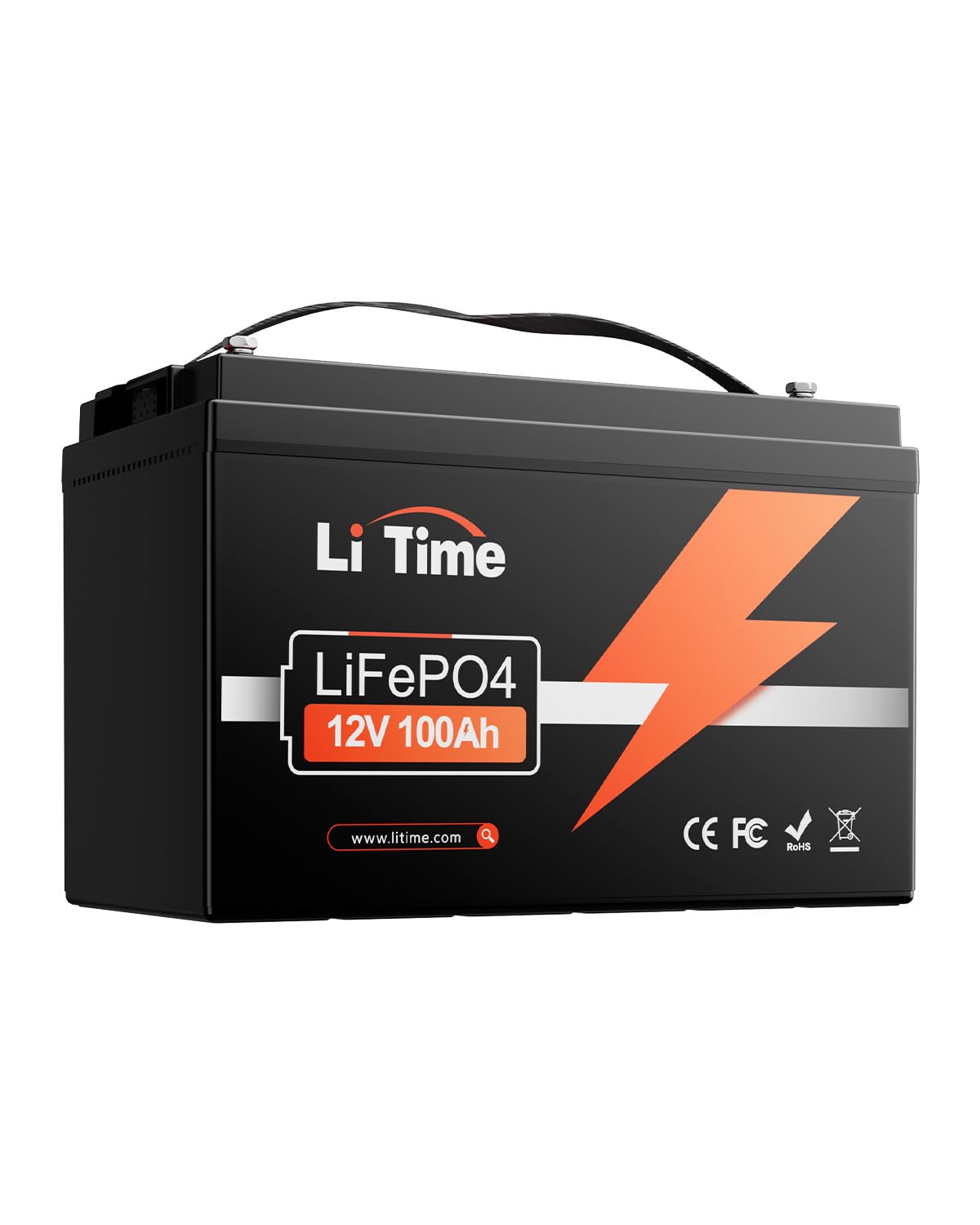
The Litime 12V 100Ah LiFePO4 battery uses automotive-grade A+ cells and a 100A BMS with 20+ safeguards, making it a drop-in replacement for Group 31 lead-acid at a fraction of the weight (24.25 lbs). The 1280Wh usable capacity at 100% depth of discharge means you get every watt-hour you paid for, unlike AGM batteries that require a 50% discharge floor.
With 4000 cycles at 100% DoD and up to 15000 cycles at 60% DoD, this battery outlasts AGM by roughly a decade in daily inverter use. The optional Bluetooth 5.0 app monitor lets you check voltage, SOC, and temperature from 50 feet away, giving you real-time insight into your power reserve without lifting the battery lid.
Its expandability to 4P4S configuration (20.48kWh) means you can scale from a small RV setup to a whole-home backup over time. The IP65 rating adds dust and splash resistance for outdoor compartments, and the built-in low-temperature charging protection keeps cells safe in freezing weather.
Why it’s great
- Automotive-grade A+ cells deliver stable voltage and long cycle life
- Bluetooth app provides real-time voltage and SOC monitoring
- 4000 cycles at 100% DoD maximizes usable capacity
Good to know
- Bluetooth app can be glitchy during charging, requiring disconnect and reconnect
- BMS may need jump start if battery arrives in deep discharge state
2. ECO-WORTHY 12V 280Ah Metal Case LiFePO4
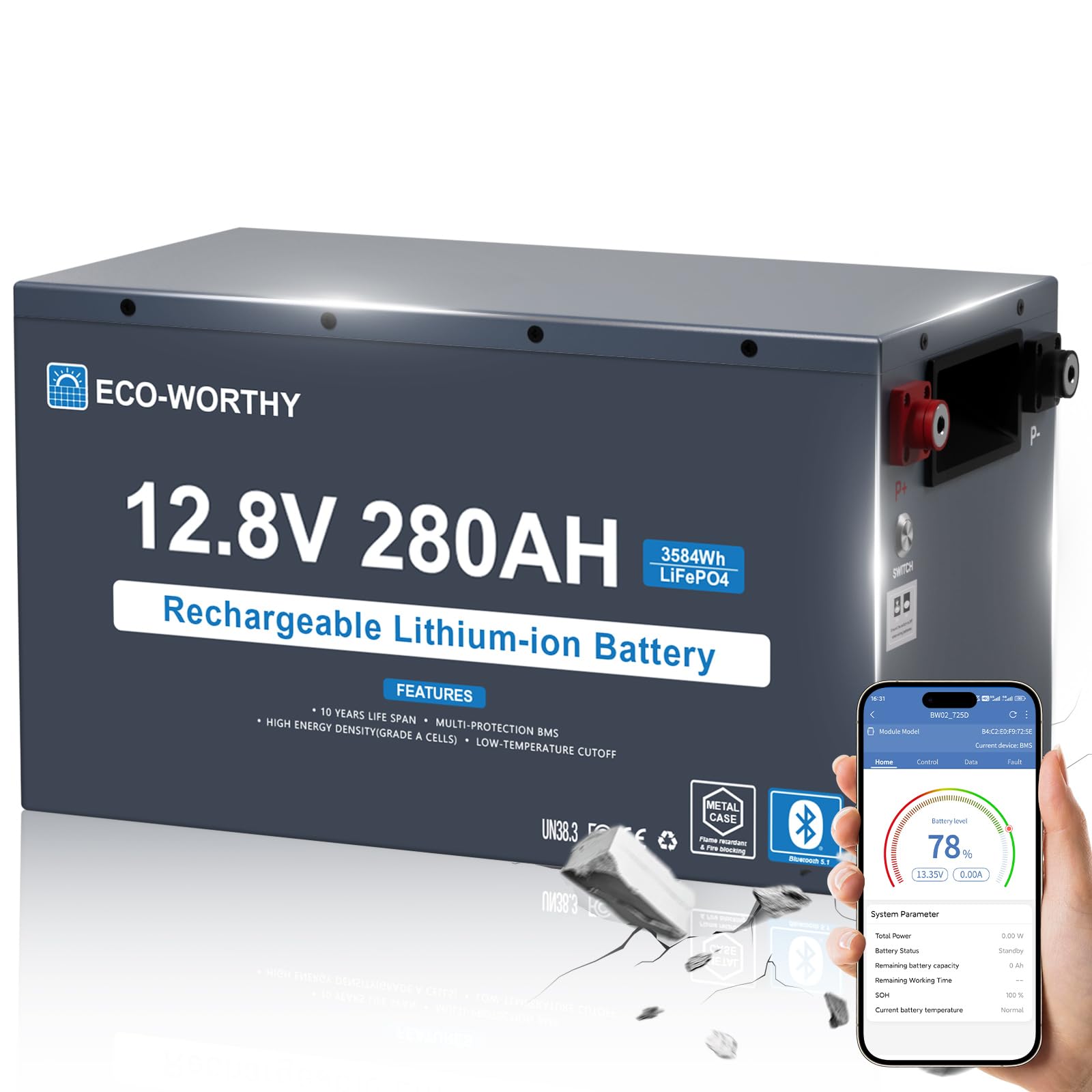
The ECO-WORTHY 280Ah LiFePO4 battery delivers 3584Wh of usable energy from a single unit, enough to run a 1500W inverter for over two hours or power a medium refrigerator for a full day. The heavy-duty metal enclosure enhances fire safety and includes four mounting feet, allowing direct installation in an RV bay without requiring an external battery box.
A built-in 200A BMS handles high-current loads like induction cooktops and microwave ovens without tripping, while low-temperature charging protection shuts off the input below freezing to protect Grade A cells. The integrated Bluetooth monitoring app displays voltage, remaining capacity, and charge/discharge status in real time, giving you full visibility into your power bank.
The front-mounted terminals and one-touch on/off switch simplify wiring and maintenance, and the reinforced metal shell resists vibration during travel. Users report measured capacity exceeding the rated 280Ah, and the JBD BMS is compatible with the Overkill Solar app for advanced diagnostics.
Why it’s great
- Metal case with mounting feet eliminates need for external battery box
- 200A BMS handles high-draw appliances without tripping
- Bluetooth monitoring for real-time voltage and SOC tracking
Good to know
- Weighs 68.5 lbs, significant for a lithium battery of this size
- Requires lithium-compatible converter for RV charging systems
3. Power Queen 12V 100Ah LiFePO4 Battery
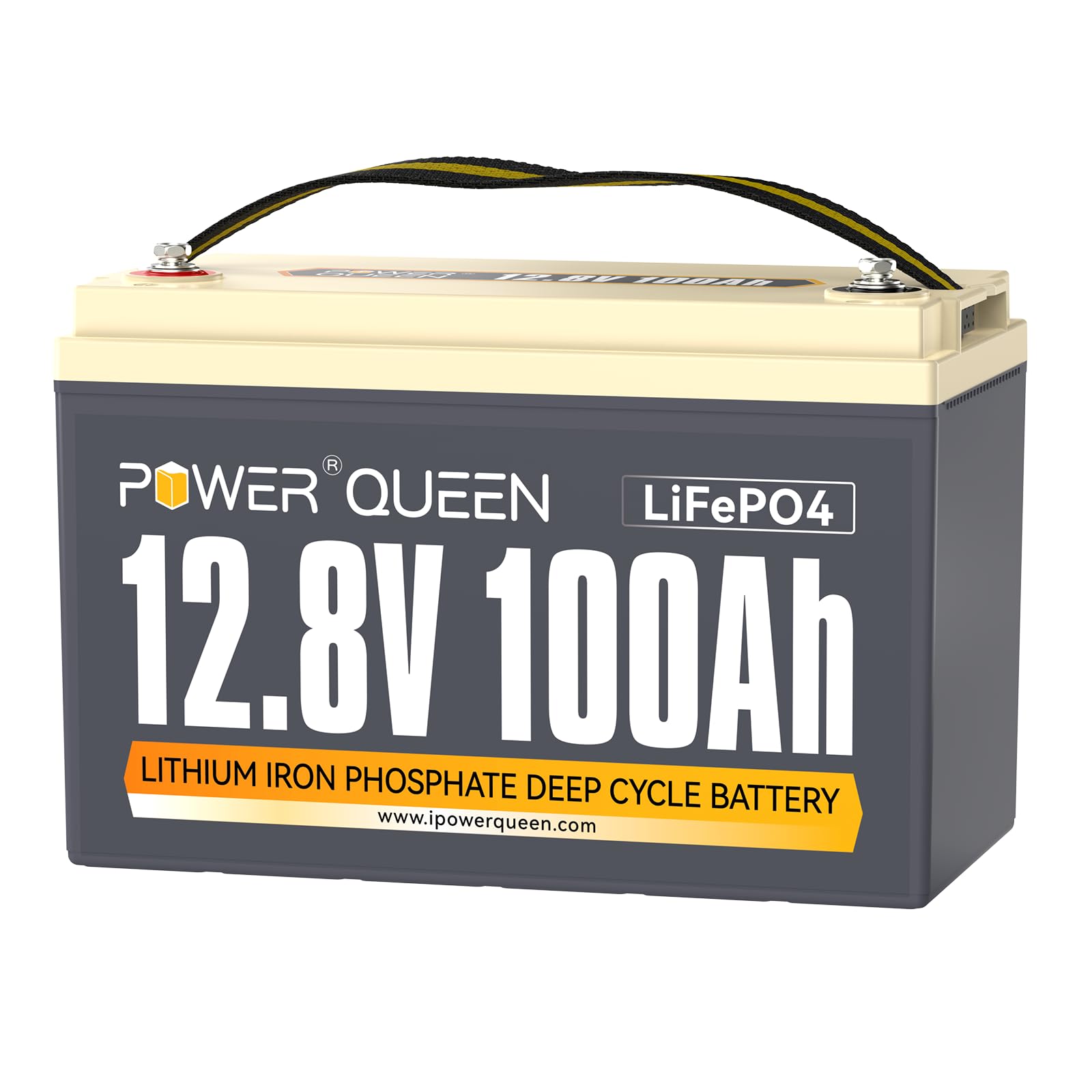
Power Queen’s 12V 100Ah LiFePO4 battery uses Grade-A prismatic cells and a 100A BMS, delivering 1280Wh of stable power in a Group 31 form factor that weighs only 24 lbs. The 15000-cycle rating at 60% DoD makes it a serious long-term investment for daily inverter use, whether powering a trolling motor or running lights and electronics in a travel trailer.
The unit supports up to 4S4P configurations, enabling a 51.2V 400Ah system with 20.48kWh capacity for larger off-grid or marine installations. Real-world user tests confirm it provides over 102Ah from a full charge, and the voltage stays above 13.0V after 12 hours of moderate use, indicating excellent capacity retention.
With a 5-year manufacturer warranty and universal fit for RVs and marine applications, this battery is built for environments where vibration and partial submersion are concerns. The low self-discharge rate of 3% per month means it holds a charge during storage better than AGM alternatives.
Why it’s great
- Grade-A prismatic cells provide stable voltage output
- Weighs 24 lbs, easy to lift and install compared to AGM
- 5-year warranty adds long-term peace of mind
Good to know
- BMS may shut off on delivery requiring initial activation
- 6mm bolts can be easy to cross-thread during installation
4. Wattcycle 12V 100Ah LiFePO4 Battery
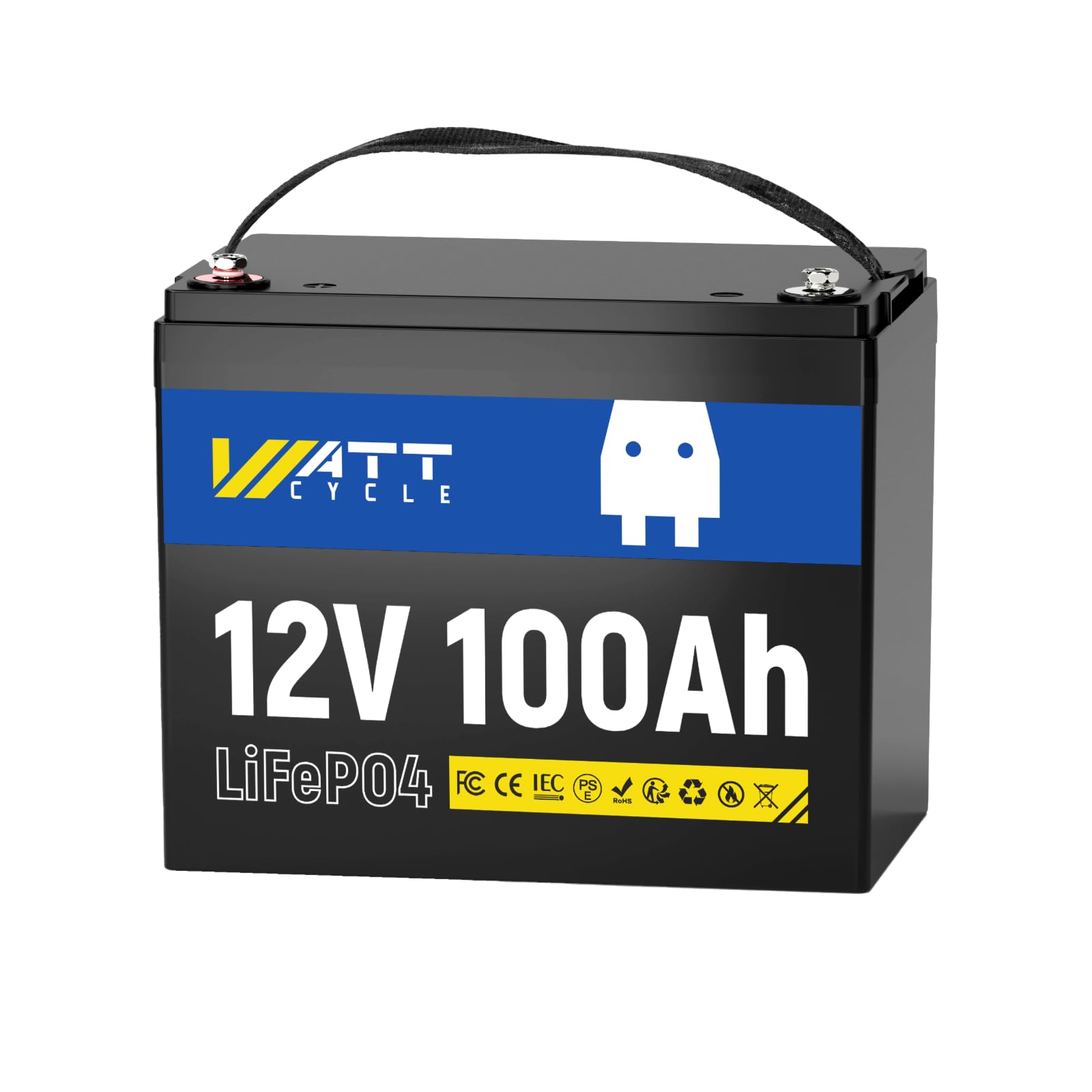
The Wattcycle 12V 100Ah LiFePO4 battery is built to fit standard BCI Group 24 battery boxes with its compact dimensions of 10.2 x 6.6 x 8.2 inches, making it a true drop-in replacement for lead-acid without modifying your compartment. At 23.2 lbs, it weighs roughly one-third of an equivalent AGM battery, freeing up payload for other gear.
Its A+ grade cells are certified under SDS, UN38.3, FCC, CE, and ROHS standards, and the 100A BMS includes low-temperature protection that cuts charging below -4°F. The 15000-cycle endurance rating at 60% depth of discharge translates to 40+ years of daily cycling for most users, though real-world lifespan depends on charge and discharge patterns.
The parallel and series capability allows up to 4 units in series or 4 packs in parallel for a maximum 20.48kWh system. Users running 300W inverters report stable voltage even under continuous draw, and the stainless steel M8 bolts included offer corrosion resistance for marine installations.
Why it’s great
- Compact BCI Group 24 size fits standard battery boxes
- Multiple safety certifications ensure quality and reliability
- Low-temperature protection prevents charging below -4°F
Good to know
- Bolt posts are short, may require longer M8x16mm bolts for parallel connections
- No built-in Bluetooth monitor on base model
5. Dumfume 12V 150Ah LiFePO4 Battery
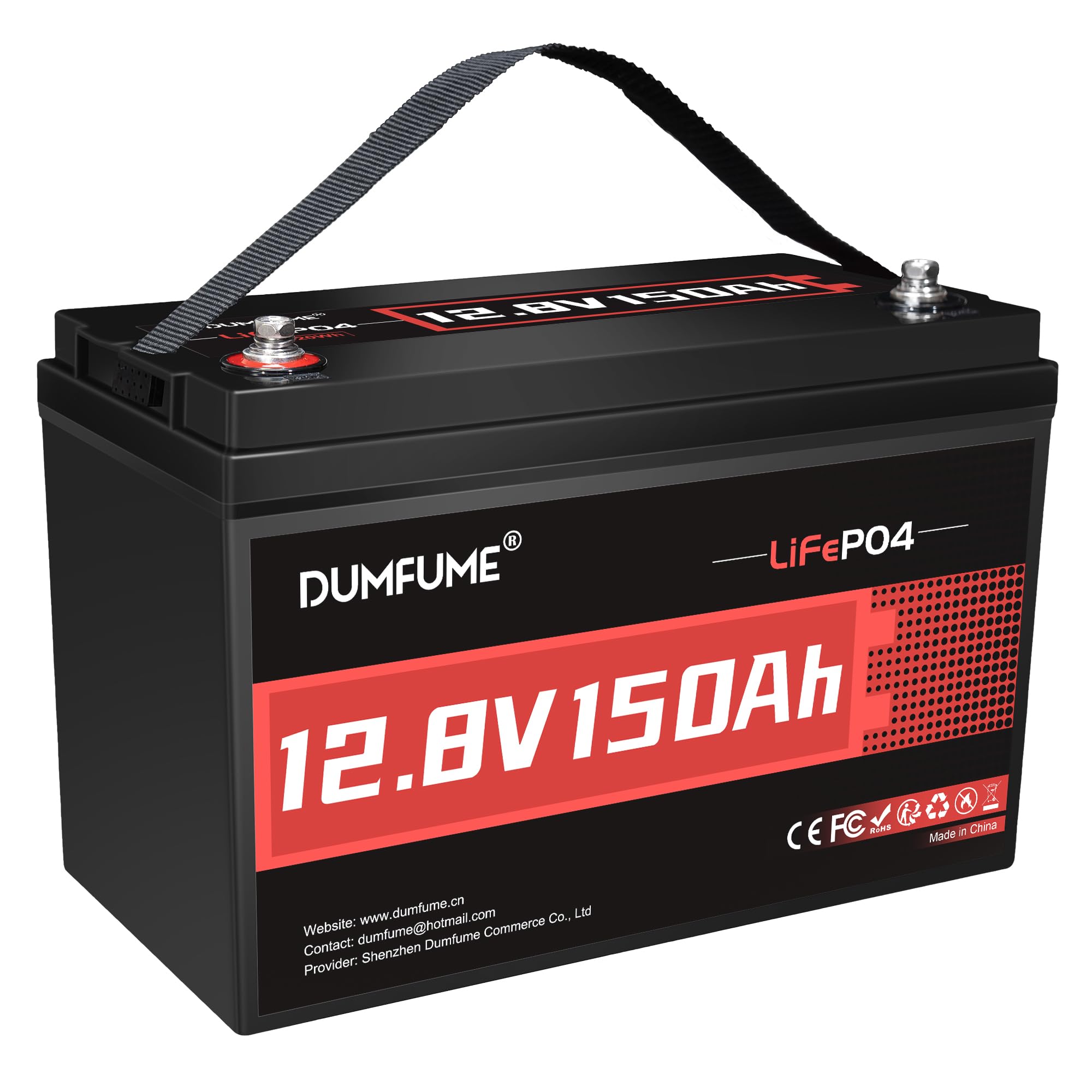
The Dumfume 12V 150Ah LiFePO4 battery packs 1920Wh into a compact 13.05 x 6.78 x 8.66-inch package weighing just 22.05 lbs, delivering over 4000 cycles to 80% capacity. This is a cost-effective mid-range option for RV, marine, and solar energy storage where weight savings and high usable capacity are priorities over premium brand names.
The built-in 100A BMS provides overcharge, over-discharge, short circuit, and overheating protection, though it lacks low-temperature charging cutoff. Users running 2000W inverters with this battery report stable power delivery, and the 4S4P parallel/series capability allows expansion to a 51.2V 600Ah system for larger home backup setups.
Quality control feedback is mixed: some units arrive at partial charge and require initial jump-starting, while others exceed rated capacity by 7Ah. The 5-year warranty applies to direct purchases, not Amazon orders, so buyers should verify the return path before purchasing.
Why it’s great
- 150Ah capacity at 22 lbs provides excellent energy-to-weight ratio
- 1920Wh usable energy for 2000W inverter backup
- Cost-effective per amp-hour compared to premium LiFePO4 brands
Good to know
- No low-temperature charging protection included
- Amazon purchases not covered by the 5-year manufacturer warranty
- Some units arrive at partial charge requiring jump start
6. WEIZE 12V 100Ah Deep Cycle AGM Battery

The WEIZE 12V 100Ah AGM battery offers a maintenance-free, spill-proof design at 59.98 lbs, making it a solid entry-level deep-cycle option for stationary inverter use. Its sealed AGM construction eliminates the need for water refilling and resists vibration, making it suitable for RV, cabin, and solar off-grid setups where weight is less of a concern.
With a 3% self-discharge rate per month, this battery can sit on a trickle charger between uses without significant capacity loss. Real-world users pair four of these in parallel for 4.8kWh backup, powering 2000W inverters for furnace, fridge, and fan loads during outages. The dimensions (12.99 x 6.73 x 8.34 inches) fit standard Group 31 compartments.
The key limitation is cycle life: AGM batteries degrade after 200-500 cycles at 50% depth of discharge, requiring replacement every 2-3 years in daily use. For infrequent emergency backup or seasonal cabin power, the lower upfront cost makes sense. For daily inverter cycling, lithium pays off within a few years.
Why it’s great
- Spill-proof sealed AGM design requires zero maintenance
- 3% monthly self-discharge stores well on trickle charge
- Cost-effective for infrequent or seasonal backup use
Good to know
- Heavy at 60 lbs makes handling difficult
- Only 200-500 cycles before capacity degrades significantly
7. Mighty Max 12V 100Ah AGM Battery

The Mighty Max ML100-12 is a UL-certified 12V 100Ah sealed lead-acid AGM battery in a Group 27 form factor (12.09 x 6.65 x 8.48 inches, 28 lbs). This battery is lighter than typical AGM batteries of similar capacity because it uses a Group 27 case, but still delivers the same 100Ah rating for deep-cycle inverter and solar applications.
Users report running a 500W inverter for 4 hours on a 32-inch TV and Roku with only 1% drain, and others rely on it for 8+ hours on trolling motors. The spill-proof design allows mounting in any position, and the high discharge rate capability suits applications where short bursts of high current are needed, such as starting small generators.
The primary drawback is the 200-300 cycle lifespan typical of AGM chemistry, along with the 28-pound weight that, while lighter than some AGM units, still outweighs lithium counterparts by 25%. The 1-year warranty is standard, but return shipping for the heavy hazardous battery can be expensive.
Why it’s great
- UL certified for safety assurance
- Versatile mounting in any position, spill-proof
- Lightweight for its capacity at 28 lbs among AGM options
Good to know
- Short 200-300 cycle life for daily inverter use
- Return shipping for heavy hazardous battery can be costly
8. Newport 12V 50Ah AGM Marine Battery
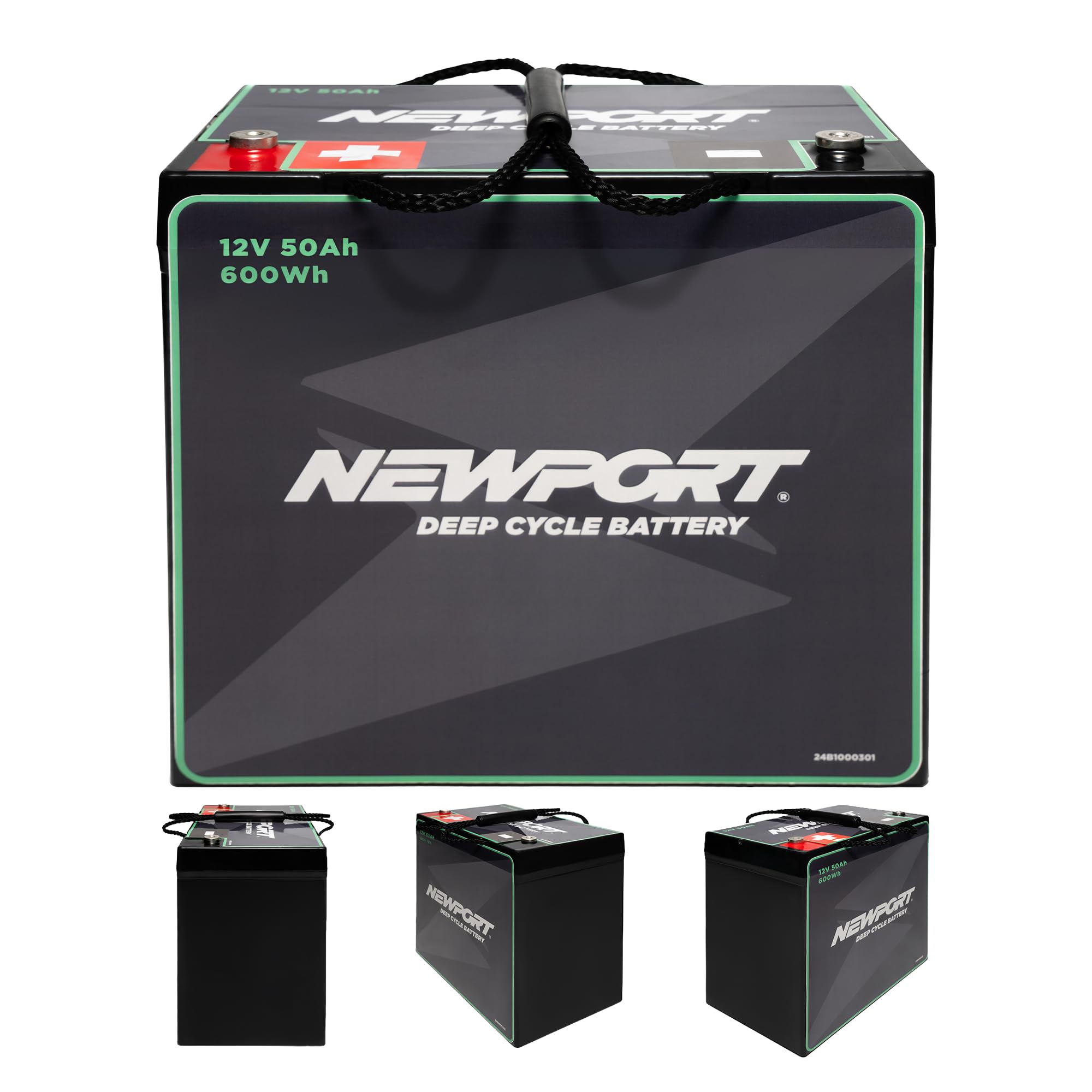
The Newport 12V 50Ah deep-cycle AGM marine battery is a compact, sealed unit designed for boats, kayaks, and small inverter setups. At 32 lbs, it is the lightest AGM option on this list, making it a practical choice for applications where weight is a constraint, such as portable fish finders and backup sump pump systems.
The trolling motor compatibility is well-documented by users running 55lb thrust motors for 4+ hours at moderate speeds, with stable voltage output and no sag under load. The sealed, leak-proof construction allows installation in any orientation, and the marine terminals accept standard ring terminals without adapters.
The 50Ah capacity limits runtime for larger inverters: a 500W inverter drawing 40A would exhaust this battery in roughly 1 hour at maximum safe discharge. It performs best as a backup for low-draw devices like bilge pumps, LED lighting, or a small 200W inverter for charging phones and laptops during outages.
Why it’s great
- Compact 50Ah size suits tight compartments and portable setups
- Sealed, maintenance-free design for marine environments
- Stable voltage output under continuous trolling motor load
Good to know
- No built-in charge indicator requires external meter
- Limited 50Ah capacity restricts runtime on larger inverters
9. SEFEPODER 12V 20Ah LiFePO4 2 Pack

The SEFEPODER 12V 20Ah LiFePO4 2-pack delivers 40Ah total capacity in an ultra-lightweight package weighing 7.93 lbs total. Each battery uses high-quality cylindrical LiFePO4 cells with a built-in 40A BMS protection plate, supporting series and parallel connection up to 4S4P for custom voltage and capacity configurations.
With 4000+ cycle life at 80% DoD and 10A fast charging capability, this pack is designed for low-draw applications like electric scooters, ride-on toys, fish finders, and small 12V routers. Users report successfully powering 200W inverters with solar charge controllers, outperforming equivalent power banks in both reliability and cycle life.
The batteries arrive at approximately 30% state of charge and require a LiFePO4-specific charger for full capacity. They are not suitable for high-draw inverter loads exceeding 240W continuous (20A x 12V) per battery, making them ideal only for small electronics backup, camping lights, or as a starter pack for experimenting with lithium rather than powering a whole-home inverter system.
Why it’s great
- Extremely lightweight at 7.93 lbs for 40Ah total
- 4000+ cycles with 10A fast charging capability
- Compact 5.94 x 3.85 x 3.74 inches fits in tight spaces
Good to know
- 20Ah per battery only supports loads under 240W continuous
- Requires LiFePO4-specific charger; SLA chargers may not fully charge
FAQ
Can I use a car starting battery for my inverter?
How long will a 100Ah LiFePO4 battery run my 1500W inverter?
What happens if I discharge my LiFePO4 battery below 0%?
Is it safe to connect different brands of LiFePO4 batteries in parallel?
Final Thoughts: The Verdict
For most users, the best battery for inverter winner is the Litime 12V 100Ah because it combines automotive-grade cells, 15000-cycle endurance, and Bluetooth monitoring at a balanced price point that outperforms both entry-level and premium options. If you need extreme capacity for whole-home backup, grab the ECO-WORTHY 12V 280Ah with its metal case and 200A BMS. And for a lightweight marine or portable setup, the Power Queen 12V 100Ah delivers Grade-A cell reliability in a compact 24-pound package.