
Our readers keep the lights on and the weekend projects moving. As an Amazon Associate, I earn from qualifying purchases.
A remote that goes dead mid-show is a specific kind of household friction. The fix isn’t grabbing whatever battery pack is on sale — it’s finding a formula that delivers stable 1.5V output, resists terminal corrosion, and matches your device’s drain profile. Cheap cells sag under load, leak after a few months, and force twice the swaps. The right choice either delivers years of shelf-stable power or thousands of recharge cycles that cut landfill waste and long-term cost.
I’m Rikta — the founder and writer behind FitlyFast. I spend my research time dissecting battery chemistry datasheets, comparing mAh retention curves, and testing how alkaline vs. NiMH formulas perform inside everyday household hardware like remote controls.
This guide covers seven contenders that pass the real-world remote test, from budget bulk packs to premium rechargeable cells. After reviewing capacity claims, leakage resistance, and voltage stability, here is the definitive list of the battery for remote control that actually delivers on its promises.
How To Choose The Best Battery For Remote Control
Not all 1.5V cells are created equal when the load is intermittent and low. Remote controls draw micro-amps in standby and spike briefly during button presses. The wrong chemistry drains faster than the device needs, leaks electrolyte, or self-discharges while sitting unused. Here are the three specs that separate a good remote battery from a frustrating one.
Leak Resistance Matters More Than Raw Capacity
Alkaline batteries corrode when they fully discharge and continue sitting in the device. The potassium hydroxide electrolyte eats through terminals, ruins contact springs, and often destroys the remote entirely. Look for triple-layer leak protection or explicit anti-corrosion guarantees. Brands that advertise a post-use leak warranty (like Energizer MAX and Duracell Coppertop) use separator technologies that keep the anode and cathode stable even after the cell is depleted.
Voltage Retention Under Low Drain
A remote’s IR (infrared) LED needs a clean 1.2V–1.5V to fire consistently. Alkalines start at 1.5V but droop steadily as they discharge. NiMH rechargeables (like Eneloop) hold a flat 1.2V plateau for most of their capacity, which means the remote keeps working at full signal strength until the very end of the charge. Low-drain devices actually prefer this stable voltage curve because they don’t experience the slow fade that alkalines produce in their final 20% of life.
Shelf Life vs. Cycle Life for Your Usage Pattern
If you have six remotes and change batteries twice a year, a premium alkaline with a 12-year shelf life (Duracell Coppertop) lets you store a bulk pack without degradation. If you blow through batteries every few weeks with heavy gaming or TV use, a NiMH cell rated for 2100 recharge cycles (Panasonic Eneloop) becomes cheaper than disposables after about eight recharges and eliminates the waste stream entirely. Match the chemistry to your replacement cadence.
Quick Comparison
On smaller screens, swipe sideways to see the full table.
| Model | Category | Best For | Key Spec | Amazon |
|---|---|---|---|---|
| Eneloop AAA 8-Pack | Rechargeable NiMH | Heavy use / eco-conscious | 2100 recharge cycles | Amazon |
| Duracell Coppertop AA 24ct + AAA 28ct | Alkaline Combo | Whole-house stockpile | Reclosable storage box | Amazon |
| Energizer MAX AAA 24-Pack | Alkaline | Longest-lasting alkaline AAA | 12-year storage life | Amazon |
| Duracell Coppertop AA 24-Pack | Alkaline | Premium AA longevity | Power Boost Ingredients | Amazon |
| Energizer MAX AA 48-Pack | Alkaline Bulk | High-volume AA household | 48-count bulk pack | Amazon |
| Amazon Basics AA+AAA 24ct | Alkaline Value | Budget mixed-size starter | 12 AA + 12 AAA pack | Amazon |
| Amazon Basics AA 48-Pack | Alkaline Bulk | Lowest per-cell cost | 48 AA, 10-year shelf life | Amazon |
In‑Depth Reviews
1. Eneloop Panasonic AAA 2100 Cycle 8-Pack

The Eneloop AAA is the gold standard for any remote that sees daily use. Pre-charged at the factory using solar energy, each cell delivers a consistent 1.2V plateau that keeps IR transmitters firing at full strength until the very end of the discharge curve. Independent testing routinely shows these cells exceeding their rated 800mAh minimum — one verified user reported an average of 1,052mAh across twelve cells, or 131% of the advertised capacity.
The 2100-cycle rating means a single set of eight batteries can replace roughly 16,800 disposable AAA cells over their lifespan. For households with multiple remotes, game controllers, and wireless peripherals, the break-even point against budget alkalines comes after about eight full recharges. These also retain up to 70% of their charge after ten years of storage, so a fully charged set pulled from a drawer still has plenty of juice for a remote.
They are made in Japan and packaged in the USA, which accounts for the higher upfront cost. One reviewer noted a single weak cell (974mAh vs. the 1,052mAh average), so it is worth cycling new sets once to identify any variance before relying on them in critical devices. They also require a smart charger — dumb trickle chargers will shorten their lifespan.
Why it’s great
- Flat 1.2V discharge keeps remote signal strong
- 2100 cycles drastically reduce waste and long-term cost
- Pre-charged and holds 70% charge for a decade in storage
Good to know
- Requires purchase of a compatible smart charger
- Slightly lower nominal voltage (1.2V) may drain faster in some 1.5V-only devices
- Occasional cell-to-cell capacity variance in a pack
2. Duracell Coppertop AA + AAA 56-Count
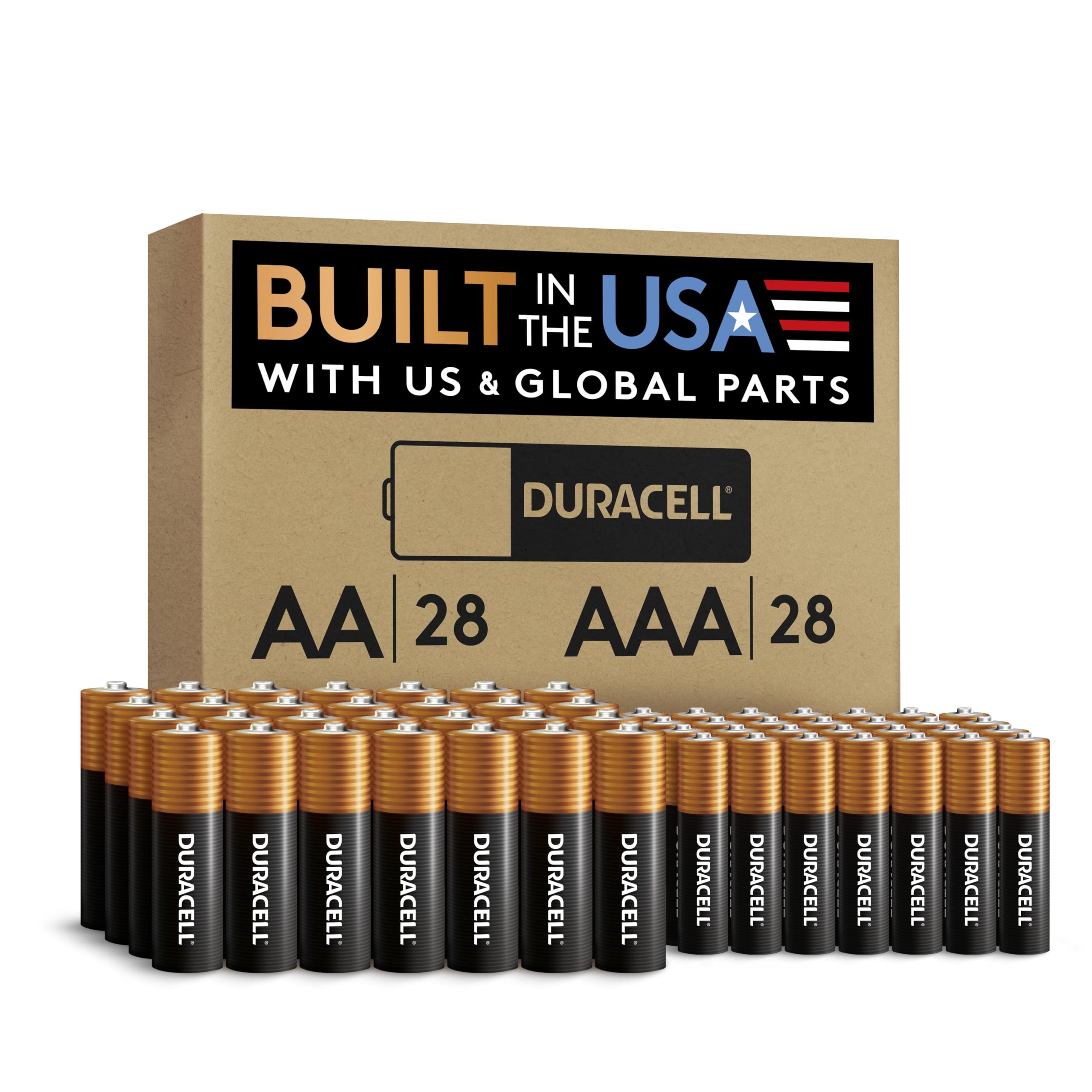
The Duracell Coppertop twin-pack solves the most common household battery frustration: running out of the right size. With 28 AA and 28 AAA cells in one box, you can stock every remote, toy, flashlight, and clock in the house without buying separate containers. The Power Boost Ingredients formulation delivers up to 50% more power in high-drain devices compared to standard alkaline cells, which translates to noticeably longer intervals between remote battery changes.
Duracell guarantees these cells for 12 years in storage, so a bulk pack tucked in a drawer will still be fresh when the TV remote dies three years from now. The reclosable packaging is a genuine quality-of-life upgrade — no more taping a cardboard flap shut or dumping loose batteries into a junk drawer. Each cell features Duracell’s corrosion-resistant construction, and the brand’s defect guarantee covers material and workmanship.
The per-cell cost sits above generic bulk packs, and these are single-use alkaline cells — they cannot be recharged. Some users report that in extremely low-drain devices like wall clocks, the battery lasts well over a year, which makes the higher upfront cost justifiable for the convenience of a unified stockpile.
Why it’s great
- Equal mix of AA and AAA covers all common remote sizes
- Reclosable box keeps batteries organized and accessible
- 12-year storage guarantee means no power loss from sitting
Good to know
- Higher per-cell cost than generic value packs
- Alkaline chemistry — not rechargeable
- Overkill if you only need one size
3. Energizer MAX AAA 24-Pack
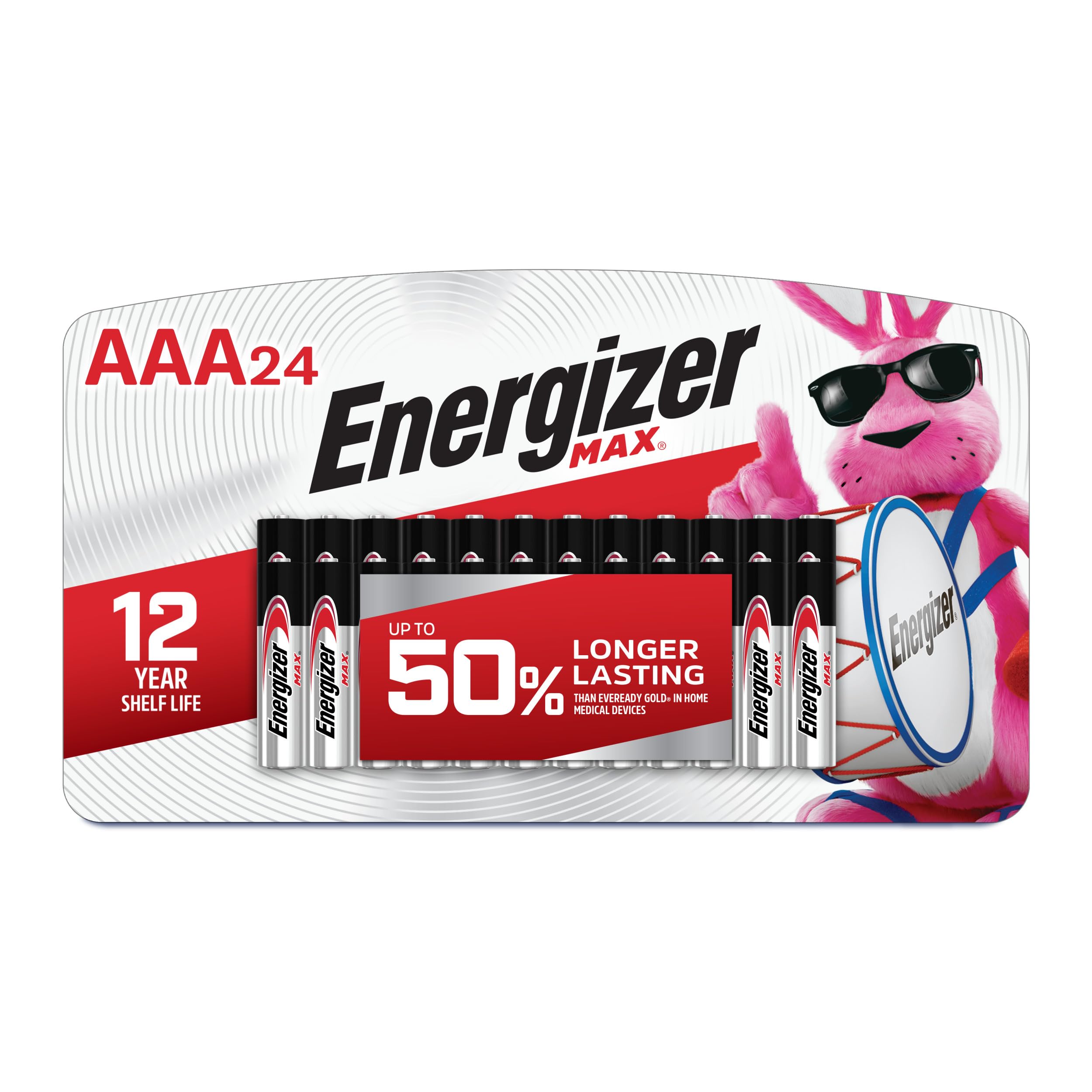
Energizer claims its MAX AAA lasts up to 50% longer than Eveready Gold in medical devices, and that engineering carries over directly to remote control performance. The key difference is the dual-layer leak protection — Energizer guarantees these cells will not damage devices for up to two years after full depletion, a feature that matters when a remote battery dies and sits unnoticed for months before replacement.
Each cell holds power for up to 12 years in storage, so you can rotate fresh batteries into your remote drawer without worrying about expiration dates. Verified buyers consistently report zero corrosion or swelling, even in devices that went dead and were forgotten.
The trade-off is that these are standard alkaline cells — they will not outperform a premium NiMH in devices that drain batteries quickly. For the typical low-drain remote that gets 30-40 button presses a day, the MAX delivers reliable runtime and a clean shutoff when depleted. The 24-count format is convenient, but the per-cell price is higher than Amazon Basics or other house-brand alternatives.
Why it’s great
- Top-tier leak protection for two years after depletion
- 12-year shelf life allows confident bulk storage
- Up to 50% longer life than budget alkaline brands
Good to know
- AAA-only pack — no AA option in this bundle
- Per-cell cost sits above value-tier alternatives
- Alkaline chemistry — cannot be recharged
4. Duracell Coppertop AA 24-Pack

The Duracell Coppertop AA has been the benchmark household alkaline for decades, and the Power Boost Ingredients formula justifies the premium price. In real-world remote use, the Coppertop consistently outlasts generic alkalines by a noticeable margin — verified buyers report a TV remote lasting multiple weeks of daily use before showing any drop in signal strength. The manganese dioxide chemistry is engineered for a clean, gradual voltage decline rather than the sudden cliff that cheaper cells exhibit.
Duracell backs the Coppertop with a 12-year storage guarantee and a defect warranty on material and workmanship. The triple-layer leak protection is effective enough that the brand actively promotes it for devices that might sit unused for long periods. Each cell is manufactured with strict quality controls, and the 24-pack format hits a sweet spot between bulk value and manageable household storage.
The main drawback is that these are single-use alkaline cells. For a household that burns through AA batteries rapidly, the per-cycle cost of a rechargeable solution like Eneloop becomes cheaper within weeks. The Coppertop also commands a price premium over Amazon Basics or generic bulk packs, which makes sense only if you actually benefit from the extended runtime and leak resistance.
Why it’s great
- Consistently outlasts budget alkaline brands in remote tests
- 12-year storage guarantee with defect warranty
- Triple-layer leak protection prevents terminal corrosion
Good to know
- Non-rechargeable — higher long-term cost than NiMH
- Premium pricing compared to value-tier alternatives
- AA-only — no AAA included in this pack
5. Energizer MAX AA 48-Pack
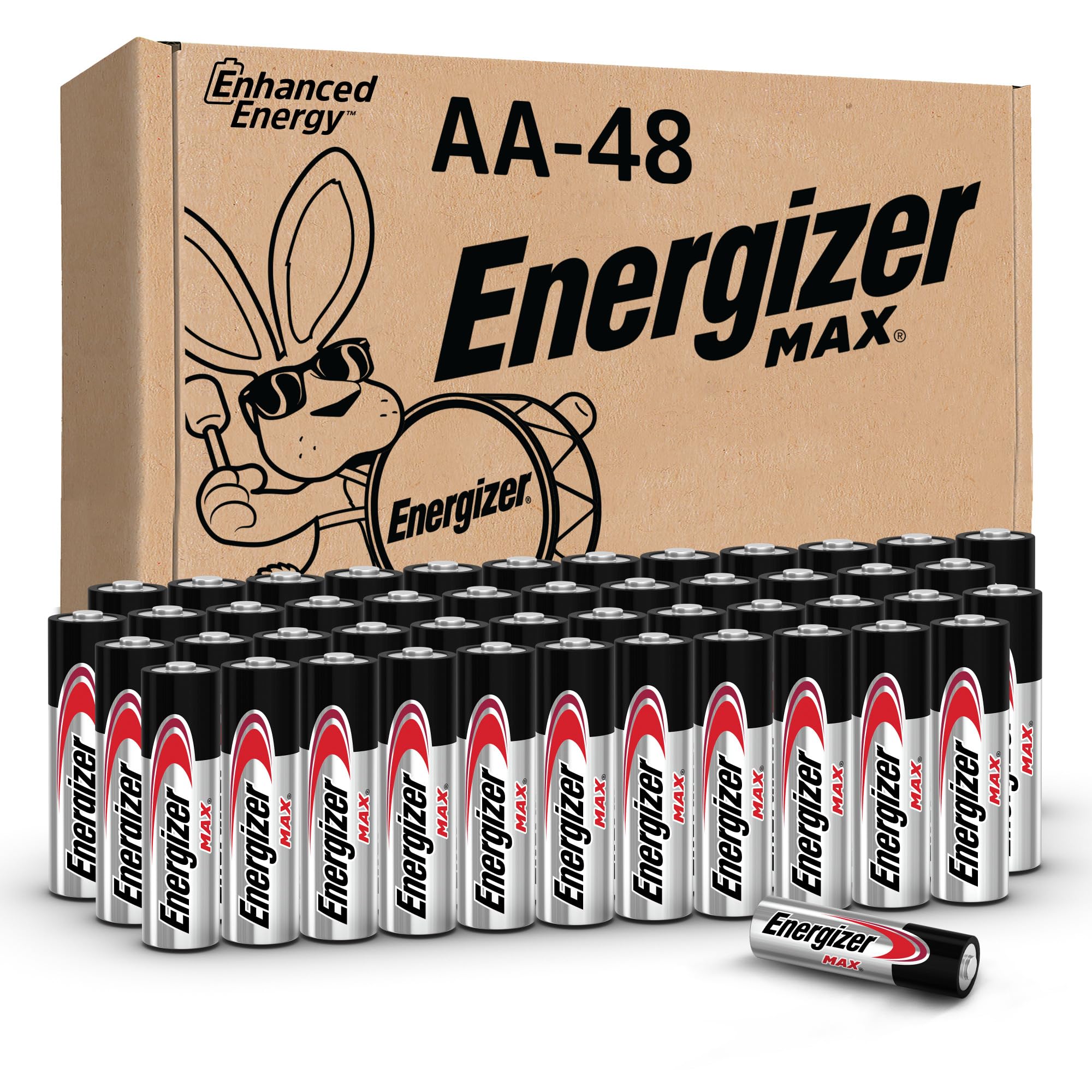
For households that run through AA batteries at a high clip, the Energizer MAX 48-pack delivers the lowest per-cell cost of any name-brand premium alkaline. Each cell is engineered with Energizer’s longest-lasting MAX chemistry, which maintains voltage stability better than the standard MAX formulation in low-drain devices. The 12-year shelf life means a 48-pack can be stored for emergency use without degradation.
Verified buyers consistently praise the leak resistance, with multiple long-term users reporting zero corrosion across thousands of cells used in remotes, flashlights, and toys. The packaging is dense and compact for the quantity — the 48 cells fit in a footprint similar to a standard 24-pack, which makes drawer storage practical. For homes with multiple AA-only devices (remote controls, wireless keyboards, game controllers), this pack provides a full year or more of supply at a single purchase.
The obvious limitation is that it is AA-only — not a single AAA in the box. If your household uses both sizes, you will need a separate AAA purchase. The overall per-cell price is excellent for the Energizer brand, but it still sits above Amazon Basics or Kirkland on a pure cost basis. For buyers who prioritize brand reliability and leak protection over absolute lowest price, this is the default bulk choice.
Why it’s great
- Lowest cost-per-cell among name-brand premium alkalines
- 12-year shelf life for worry-free bulk storage
- Proven leak resistance across thousands of user reviews
Good to know
- AA-only — no AAA cells in the pack
- Non-rechargeable chemistry
- Still costs more per cell than generic bulk packs
6. Amazon Basics 24-Count AA & AAA Value Pack

The Amazon Basics 24-count value pack is the entry point for anyone who needs a balanced mix of AA and AAA cells without spending premium money. With 12 of each size, this pack covers the two most common remote battery formats in a single purchase. The high-performance alkaline formula delivers adequate voltage for low-drain devices, and the 10-year shelf life means you can stash the box in a drawer and forget about it until the remote dies.
Verified buyers report that these batteries perform well in remotes, clocks, and toys — devices that draw minimal current in short bursts. The leak resistance is solid for the price tier, with multiple long-term users stating they have never experienced corrosion, a common complaint with ultra-budget cells. The packaging is simple and compact, and the cells arrive ready to use with no priming required.
The limitations become apparent in high-drain devices like digital cameras or motorized toys, where the runtime drops by roughly 20% compared to Duracell or Energizer. In a remote control, that difference translates to maybe one extra battery change per year, which most users will never notice. The 24-pack strikes an excellent balance between cost and reliability for households with light-to-moderate battery consumption.
Why it’s great
- Balanced AA+AAA mix covers most household remotes
- 10-year shelf life for convenient bulk storage
- Reliable leak resistance at an entry-level price
Good to know
- Shorter runtime in high-drain devices vs. premium brands
- Non-rechargeable alkaline chemistry
- Not ideal for frequent heavy use (game controllers, toys)
7. Amazon Basics 48-Pack AA Alkaline

The Amazon Basics 48-pack AA is the ultimate cost-per-cell champion if your household primarily uses AA batteries. Independent capacity testing shows these cells deliver approximately 1900mAh under low-drain conditions, which is comparable to standard alkaline performance from name brands. The triple-layer leak protection is a meaningful upgrade from generic dollar-store cells — Amazon specifically designed this line to prevent the potassium hydroxide leakage that ruins remote terminals.
The 10-year shelf life and Certified Frustration-Free Packaging make this an easy bulk purchase for stocking up during a sale. Verified buyers with multiple wildlife cameras or large families consistently report that the 48-pack supplies their AA needs for six months or more without any duds or premature failures. The quality control appears solid, with none of the capacity variance or swelling issues that plague no-name imports.
The drawback is that this is an AA-only pack with no AAA option, and in high-drain devices, the runtime is about 80% that of Duracell Coppertop or Energizer MAX. For the typical remote control that sips power slowly, that difference is irrelevant — the remote will work fine until the battery dies. For anyone running heavy-drain gear like camera flashes or RC cars, the premium brands are a better fit. This pack is best viewed as a smart, low-cost stockpile for low-stakes devices.
Why it’s great
- Rock-bottom per-cell price for bulk AA storage
- Triple-layer leak protection prevents remote damage
- 10-year shelf life with consistent quality control
Good to know
- AA-only — no AAA cells included
- ~80% of premium-brand runtime in high-drain devices
- Non-rechargeable chemistry
FAQ
Will rechargeable NiMH batteries damage my remote if they only output 1.2V?
Why do my batteries sometimes leak white powder inside the remote?
How many recharge cycles do I need before NiMH becomes cheaper than disposables?
Final Thoughts: The Verdict
For most users, the battery for remote control winner is the Panasonic Eneloop AAA 8-Pack because it eliminates the recurring cost and waste of disposable cells while delivering a flat, stable voltage that keeps remotes working consistently for thousands of cycles. If you prefer the grab-and-go convenience of a single-use alkaline with maximum leak resistance, grab the Duracell Coppertop AA+AAA 56-Count for a stockpile that covers every remote in the house. And for the strictest budget that still prioritizes peace of mind, nothing beats the Amazon Basics 24-Count AA & AAA Value Pack — it provides adequate runtime, solid leak protection, and the lowest entry cost on the list.