
Our readers keep the lights on and the weekend projects moving. As an Amazon Associate, I earn from qualifying purchases.
Choosing the right energy buffer for your solar array means deciding between lithium iron phosphate chemistry’s long cycle life and the upfront savings of lead-acid. The best batteries hold their voltage under heavy inverter loads and last through thousands of daily discharge cycles without capacity fade. Most homeowners find that a 48-volt LiFePO4 rack battery with a built-in 100A or 200A BMS delivers the balance of safety, depth of discharge, and total cost per kilowatt-hour that makes solar storage actually economical.
I’m Rikta — the co-founder and writer behind FitlyFast. I’ve spent months analyzing discharge curves, BMS communication protocols, and parallel expansion limits across dozens of lithium solar batteries to help you avoid the common pitfalls of under-specced storage.
This guide compares 11 of the most competitive units on the market, from portable power stations to server-rack battery packs, so you can confidently choose the right battery for solar power storage.
How To Choose The Best Battery For Solar Power Storage
Solar storage is a multi-year investment where chemistry, voltage, and communication protocol matter far more than brand name. The wrong battery will either limit your inverter’s performance or die prematurely from shallow cycling.
Capacity and Voltage Matching
Your battery’s nominal voltage must match your inverter’s DC input range. Most modern hybrid inverters accept a 48-volt nominal bank. Using a 12-volt battery in series to reach 48 volts adds balancing complexity; a single 48-volt rack battery simplifies the install and reduces inter-battery cell drift. Capacity, measured in kilowatt-hours (kWh), should cover your daily load plus a buffer for cloudy days. A 5.12 kWh pack (100Ah at 51.2V) supports a small off-grid cabin; a 10+ kWh bank is more realistic for a family home running a refrigerator, lighting, and electronics overnight.
Chemistry and Cycle Life
LiFePO4 (lithium iron phosphate) is the dominant chemistry for solar storage because it delivers 3000 to 5000 cycles at 80% depth of discharge, compared to 500 cycles for sealed lead-acid. The stable cathode chemistry resists thermal runaway and lasts 10 years with minimal capacity fade. Lead-acid remains cheaper per upfront amp-hour, but the total cost per cycle over ten years is 2-3 times higher when you factor in replacement and maintenance.
BMS and Communication Protocol
A built-in Battery Management System (BMS) protects the cells from overcharge, over-discharge, and temperature extremes. For solar systems, the BMS also handles communication with the inverter via CAN bus or RS485. This handshake allows the inverter to adjust charge voltage and current based on the battery’s state of charge. Without proper communication, the inverter may overcharge or undercharge the pack, shortening its life. Look for batteries that explicitly list compatibility with major inverter brands like Growatt, Victron, SMA, or EG4.
Parallel Expansion and Future-Proofing
Your energy needs will grow as you add more appliances or an electric vehicle. Batteries that support parallel connection—up to 4, 8, or even 15 units—let you scale storage without replacing the entire bank. When planning parallel expansion, ensure all batteries share the same model, firmware, and BMS firmware to prevent circulating currents and SOC mismatch. Some server rack batteries come with pre-terminated parallel cables and bus bars, which simplifies the wiring.
Quick Comparison
On smaller screens, swipe sideways to see the full table.
| Model | Category | Best For | Key Spec | Amazon |
|---|---|---|---|---|
| TEMGO 48V 100Ah | LiFePO4 Kit | Golf cart conversion with solar backup | 200A continuous BMS, 10.24kW peak | Amazon |
| OGRPHY 48V 105Ah | LiFePO4 Kit | High peak current for steep terrain | 1000A peak (3-5s), 4000+ cycles | Amazon |
| LOSSIGY 48V 100Ah | LiFePO4 Kit | Balanced performance with 5-year warranty | 1000A peak, LCD monitor included | Amazon |
| EF ECOFLOW DELTA 2 Max | Portable Station | Home backup and camping with solar panels | 2048Wh, 30 dB quiet charging | Amazon |
| ABOK Ark3600 | Portable Station | High-wattage home appliances and DIY backup | 3840Wh expandable to 11520Wh | Amazon |
| AOUSK 48V 200Ah (2-Pack) | Server Rack | Off-grid solar with inverter communication | CAN/RS485, 10.24kWh total | Amazon |
| VATRER POWER 51.2V 200Ah (2-Pack) | Server Rack | Touchscreen monitoring and dual terminals | 5000+ cycles, touch display + app | Amazon |
| ECO-WORTHY 48V 280Ah (4-Pack) | LiFePO4 Bundle | Large-capacity series/parallel 48V banks | 14.34kWh, Bluetooth BMS monitoring | Amazon |
| Jackery HomePower 3000 | Portable Station | Quiet emergency backup with UPS switch | 3072Wh, ≤20ms UPS, 7200W surge | Amazon |
| Anker SOLIX F3800 | Portable Station | Whole-home backup and EV charging | 6000W dual-voltage, expandable to 26.9kWh | Amazon |
| SaiJiaoYang 51.2V 314Ah | Server Rack | High-capacity single-unit power walls | 16kWh, 200A BMS, CAN/RS485 | Amazon |
In‑Depth Reviews
1. VATRER POWER 51.2V 100Ah LiFePO4 (2 Pack)
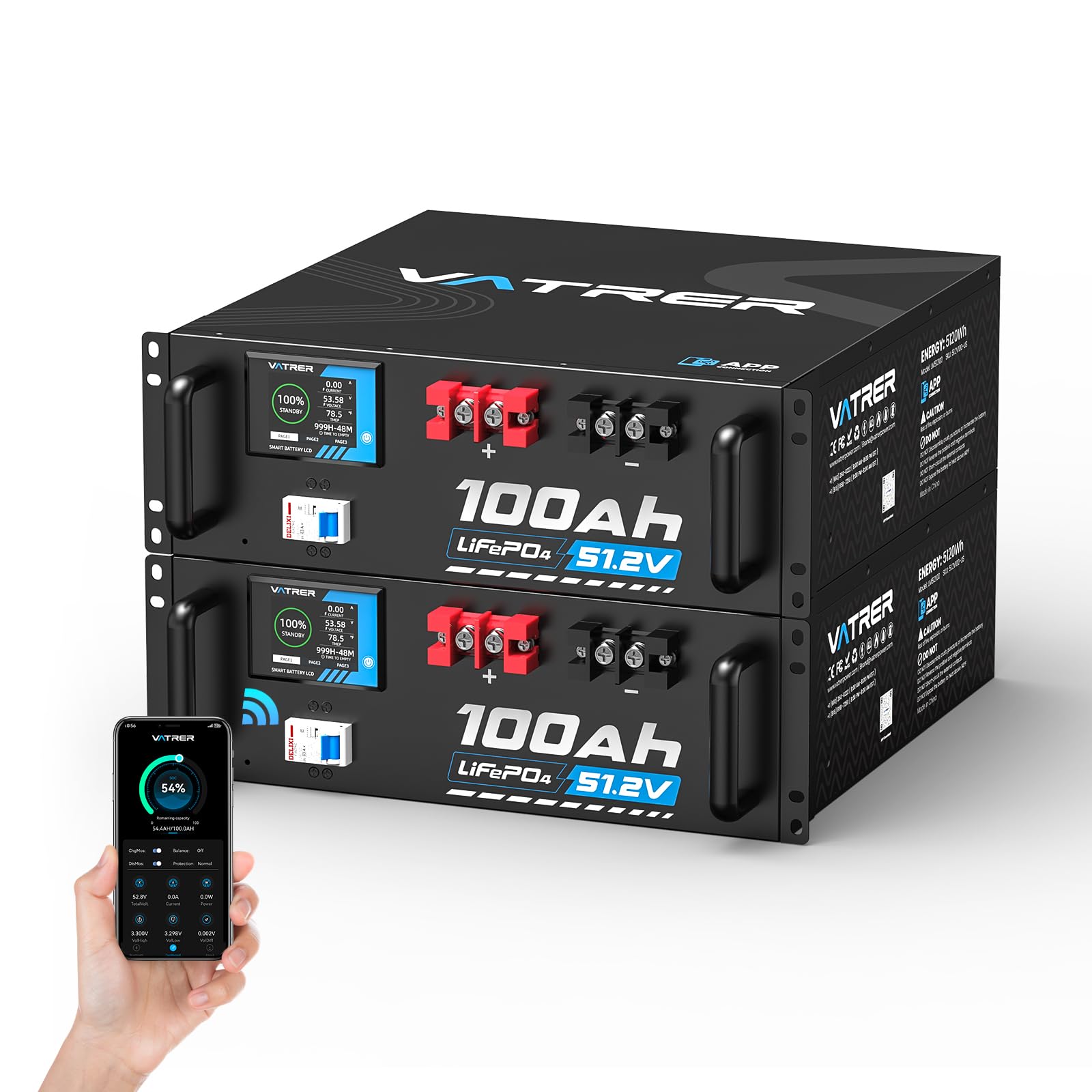
This two-pack delivers 10.24 kWh of usable energy with a built-in 100A BMS that handles 13.5A to 14A loads without breaking a sweat. The prismatic grade-A cells maintain a cell balance span of only 7 millivolts in testing, which is tighter than many server rack units costing 30% more.
The integrated touch screen lets you scroll through voltage, current, and SOC without pulling out your phone. The Bluetooth app mirrors the same data and allows BMS parameter changes. The dual positive and dual negative terminals spread current evenly across the bus bars, reducing heat at the lug connections during continuous high loads.
Some users report that 2/0 or 4/0 cable lugs do not fit the terminal post diameter without a bus bar adapter. The rack-mount wings are included and fit standard 3U cabinets, making vertical stacking clean. Over five months of continuous use with an EG4-3000 inverter, these batteries showed no significant cell imbalance.
Why it’s great
- Exceptional cell balance with minimal drift over months
- Touch display plus app for real-time monitoring
- Dual terminals reduce hot spots in high-current setups
Good to know
- Terminal post diameter may require bus bar adapters for large cable lugs
- Newer design changed the terminal layout compared to older versions
2. Anker SOLIX F3800 Portable Power Station

The F3800 outputs a true 6000W at 120V or 240V through a NEMA 14-50 port, which is enough to run a well pump, dryer, or even charge a small EV. The internal 3840Wh LFP battery can be expanded with up to six additional battery packs to reach 26.9kWh—enough to power a home for two days.
ChargeShare 2.0 technology combines AC and solar input to reach 80% in under an hour. The built-in MPPT is optimized for Anker solar panels but accepts up to 2400W from third-party panels. On the firmware side, version 2.1.5 enabled simultaneous AC and DC charging, which was a common request from early adopters.
The unit weighs 132 pounds and comes with casters, but you will want a ramp if you plan to move it between garage and patio. Some users note that the BMS limits charging current below 50°F to protect the cells, which can slow winter solar recharge. The Anker app lacks a time-of-use charging scheduler, though this feature may arrive in a future firmware update.
Why it’s great
- True 240V output for heavy appliances and EV charging
- Expandable capacity up to 26.9kWh for whole-home backup
- Very fast recharge with combined AC and solar input
Good to know
- Heavy unit; casters help but ramps are needed for stairs
- BMS limits charging in cold conditions below 50°F
- App missing some advanced scheduling features
3. SaiJiaoYang 51.2V 314Ah LiFePO4 Battery
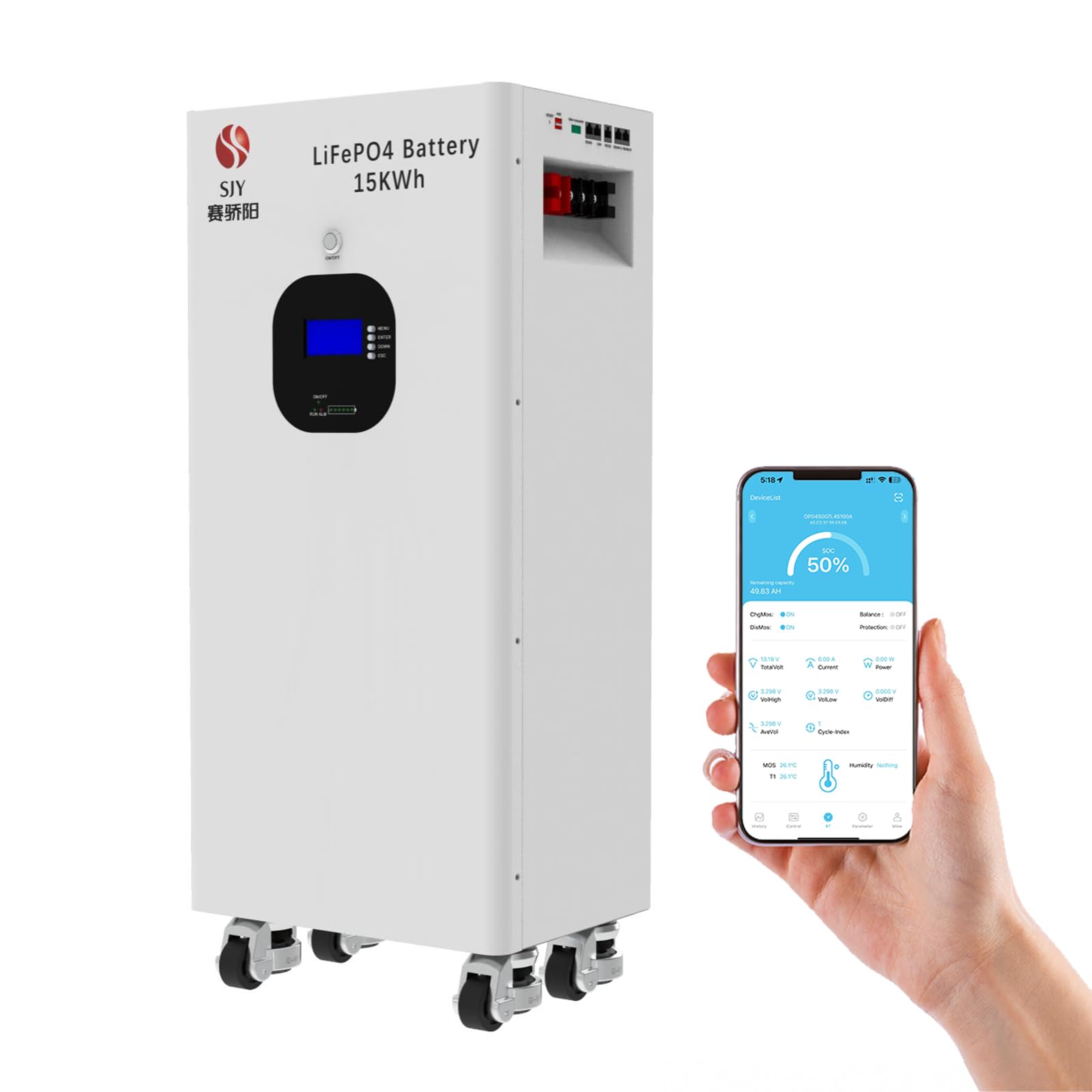
This single-unit power wall stores 16 kWh of usable energy, making it one of the most capacity-dense options that still fits in a standard equipment rack. The 314Ah grade-A prismatic cells give you a true 15.3+ kWh of real-world capacity, with a built-in 200A BMS that can peak at 100A continuous for a 10kW inverter without breaking a sweat.
The BMS supports CAN and RS485 communication with multiple inverter brands including Growatt, Victron, SMA, Pylontech, and Lux Power Tek. The external LCD screen lets you cycle through communication protocols on the fly, which eliminates the guesswork of dip switches. In testing with an EG4 6000XP, the battery handshake was seamless and the SOC tracking stayed accurate.
The battery weighs about 247 pounds, so you will need a second person or a dolly for installation. The included parallel cables are sized for up to 200A, but if your inverter can pull more, upgrading to 2/0 AWG is recommended. Users who paired two of these units reported that they consistently ran a whole house including an electric oven without tripping the BMS.
Why it’s great
- 16 kWh in a single unit with excellent capacity retention
- Supports multiple inverter communication protocols via LCD menu
- 200A BMS handles continuous inverter loads without sag
Good to know
- Very heavy; requires help or equipment to move
- Included parallel cables may be undersized for max continuous current
4. AOUSK 48V 200Ah LiFePO4 (2 Pack)
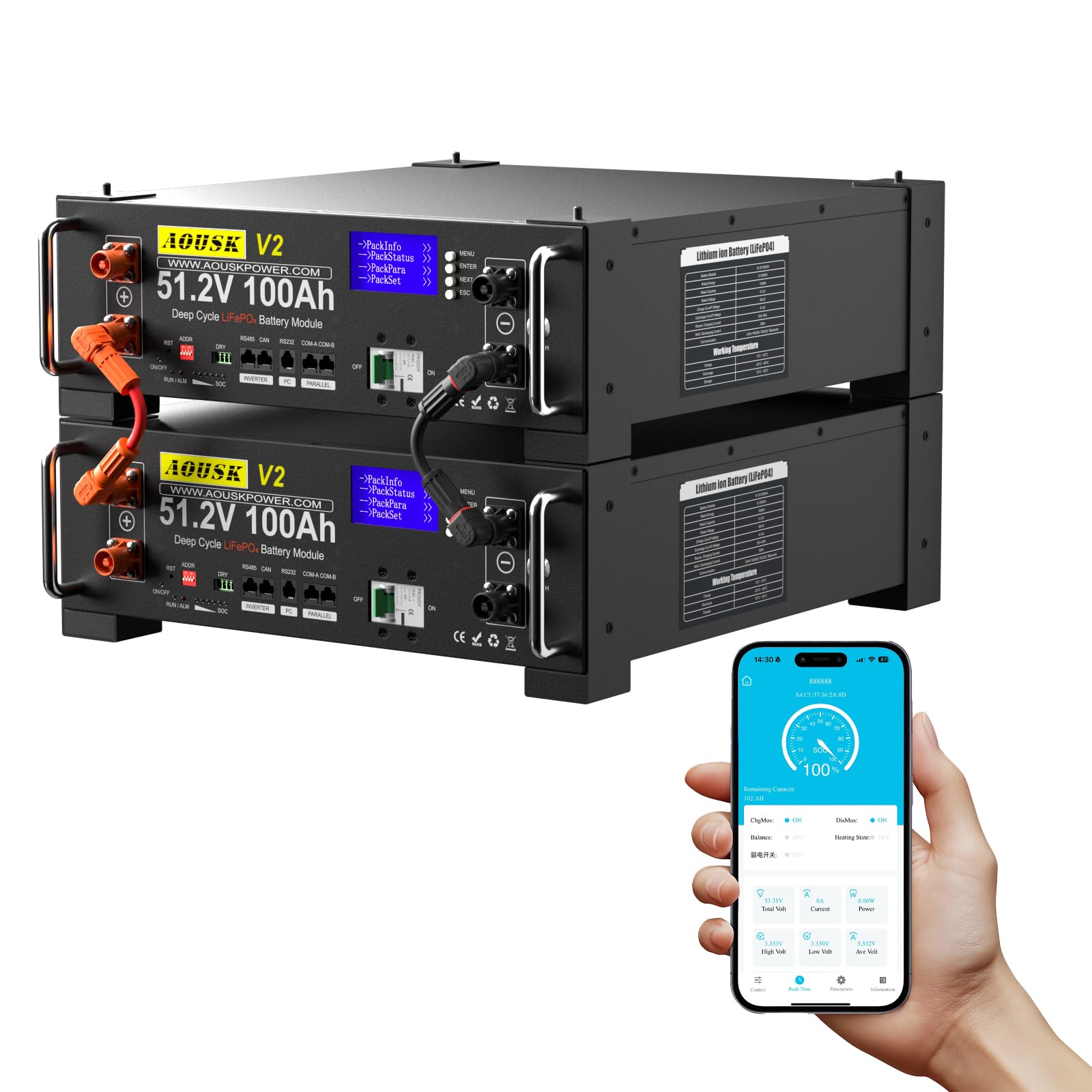
The AOUSK two-pack provides a full 10.24 kWh in a slim 5.23-inch tall rack form factor. The compact height allows vertical installation in tight 3U cabinets, which is a space saver for small off-grid sheds or RV compartments. Each battery weighs 94.8 pounds, manageable for one person to mount on sliding rack rails.
The 100A BMS supports CAN and RS485 communication with popular all-in-one inverters. The Bluetooth app lets you read individual cell voltages, SOC, and cycle count. The full-metal shell doubles as a heat sink, and the integrated 125A air switch provides a visible disconnect point for maintenance. The kit includes pre-terminated parallel cables and communication cables, so you can link the batteries right out of the box.
After two weeks of continuous off-grid use, the cells held a balance within 0.02V of each other. The BMS trips cleanly at the programmed thresholds without causing nuisance disconnects. Users who expanded to 8 units (40.96 kWh) reported that the parallel cabling and bus bar design scaled easily without voltage drop issues.
Why it’s great
- Slim 3U form factor fits in tight cabinet spaces
- Full-metal shell with integrated air switch for safe disconnects
- CAN/RS485 communication with broad inverter compatibility
Good to know
- 100A BMS may be limiting for large inverters over 5000W
- Bluetooth range limited to about 15 meters
5. Jackery HomePower 3000
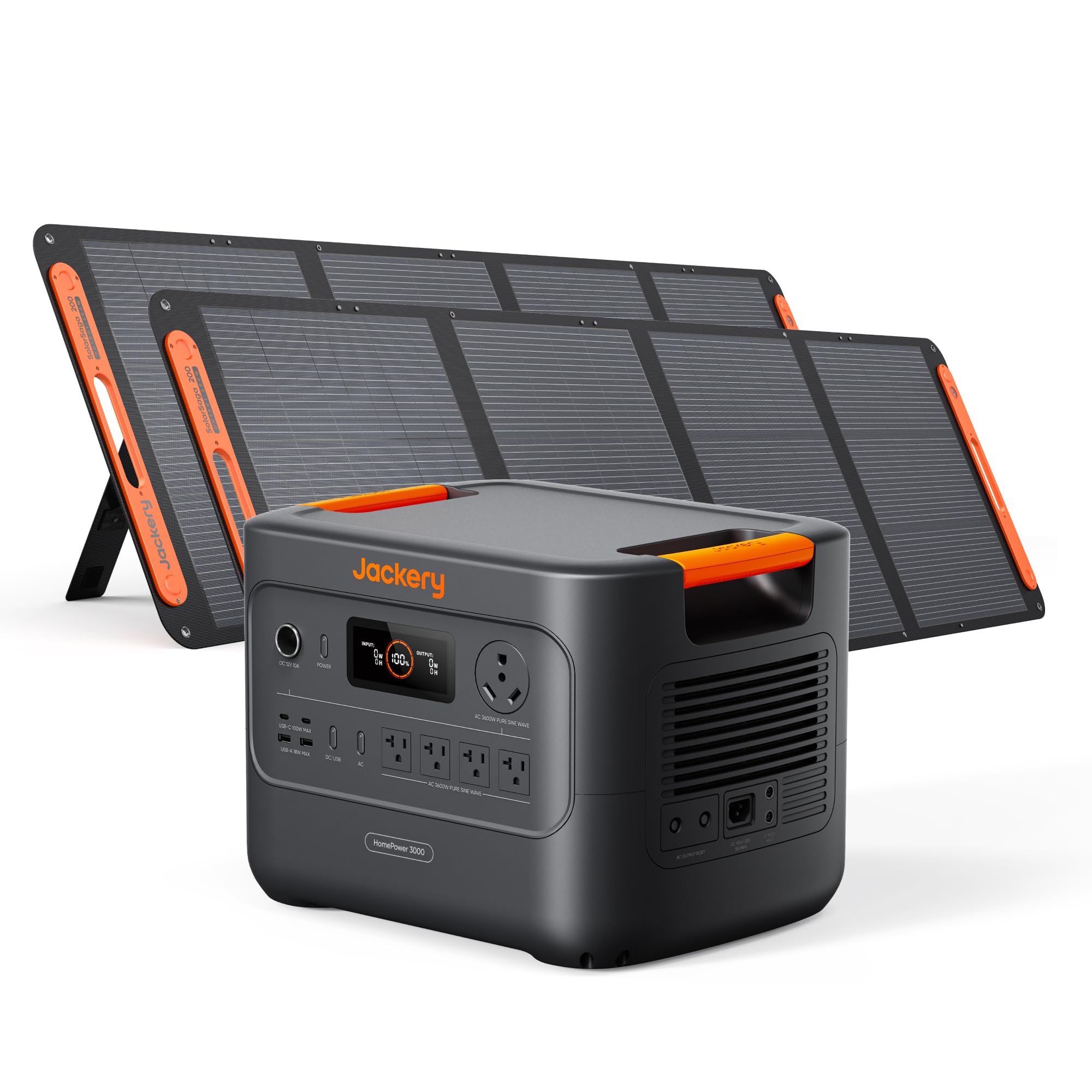
The HomePower 3000 combines a 3072Wh LFP battery with a 3600W inverter that can surge to 7200W for motor startup. The UL-certified UPS switches within 20 milliseconds, which is fast enough to keep a desktop computer, sump pump, or medical device running without interruption during a grid dropout.
ChargeShield 2.0 algorithms adjust the charging curve based on temperature and cycle count, extending the battery to 4000 cycles at 70% retained capacity. The dual 100W USB-C PD ports charge laptops at full speed. The TT-30 RV port lets you plug directly into your RV’s shore power inlet without a separate adapter.
It recharges fully in 2.2 hours from AC or in about 9 hours with two 200W solar panels. The unit weighs 59.5 pounds—lighter than many 3kWh competitors thanks to CTB (cell-to-body) architecture that integrates the cells into the structure. A separate wheel kit is available, but a cheap furniture dolly works just as well for occasional moves.
Why it’s great
- UL-certified UPS with ≤20ms switch time for sensitive electronics
- Lightweight for its capacity at only 59.5 pounds
- 4000 cycles to 70% retained capacity with ChargeShield 2.0
Good to know
- Cannot expand capacity with additional batteries
- Wheel kit sold separately
6. EF ECOFLOW Solar Generator DELTA 2 Max
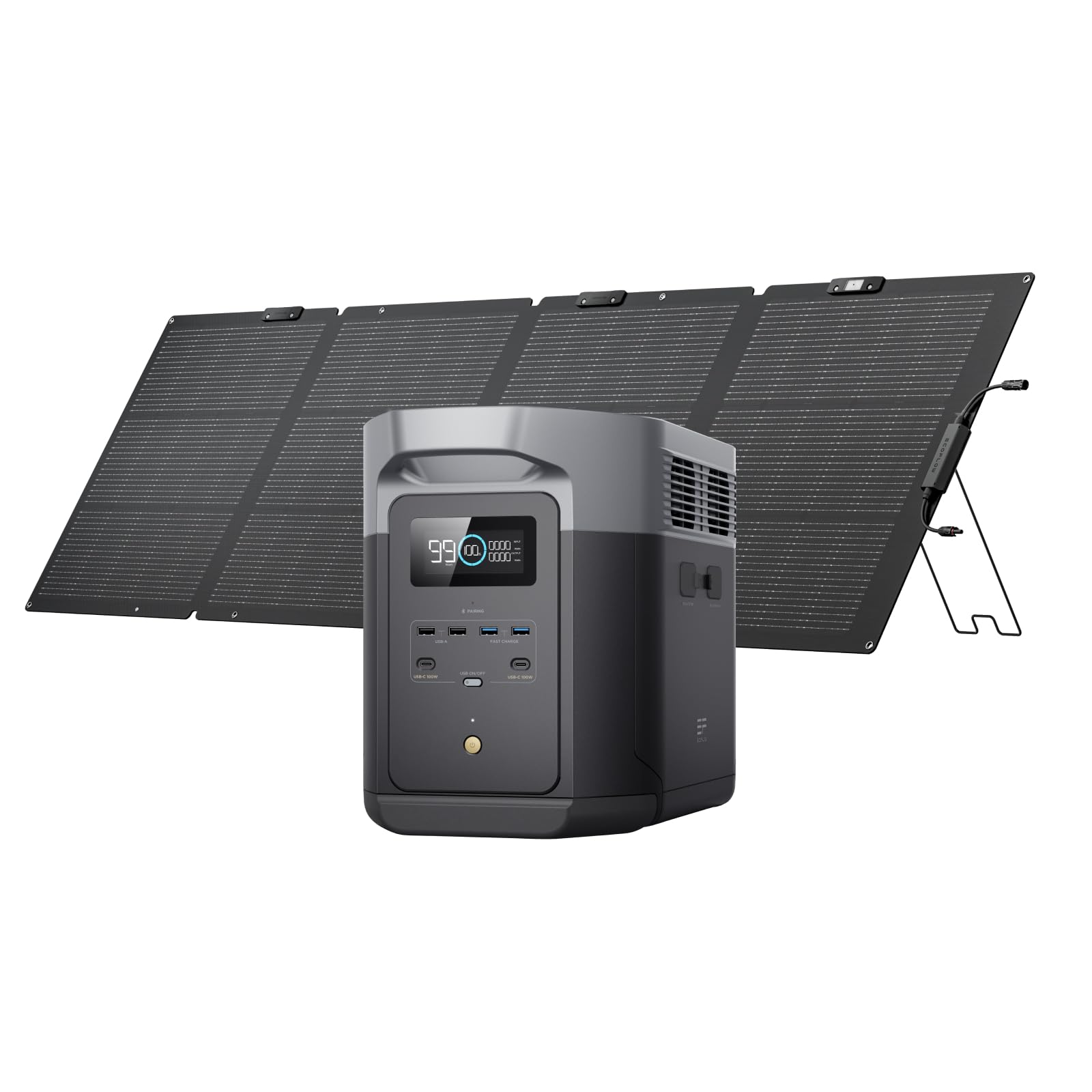
The DELTA 2 Max charges to 80% in just 43 minutes when you combine AC input with 1000W of solar. That is the fastest recharge in its class, made possible by EcoFlow’s X-Stream technology that pushes 1600W AC into the 2048Wh LFP battery. The 2400W AC output with X-Boost supports up to 3400W for resistive loads like space heaters.
The 15 outlets include six 120V AC ports, USB-A, USB-C, and a car outlet. The MPPT controller accepts solar input from 11V to 65V, which makes it compatible with both 12V and 24V panels.
In real-world testing, the unit ran a refrigerator, freezer, and lights for 2-3 days. Solar efficiency under cloud cover was about 40W, compared to 0W from some competitors. The 30 dB noise level during low-load operation means it won’t disturb sleep in a bedroom.
Why it’s great
- World-class recharge speed (80% in 43 minutes with AC+ solar)
- 3000 cycles to 80% retained capacity
- 30 dB quiet operation for overnight use
Good to know
- Solar charging can be slow under heavy overcast conditions
- Unit is heavy at 71 pounds for occasional transport
7. ABOK Ark3600 Portable Power Station
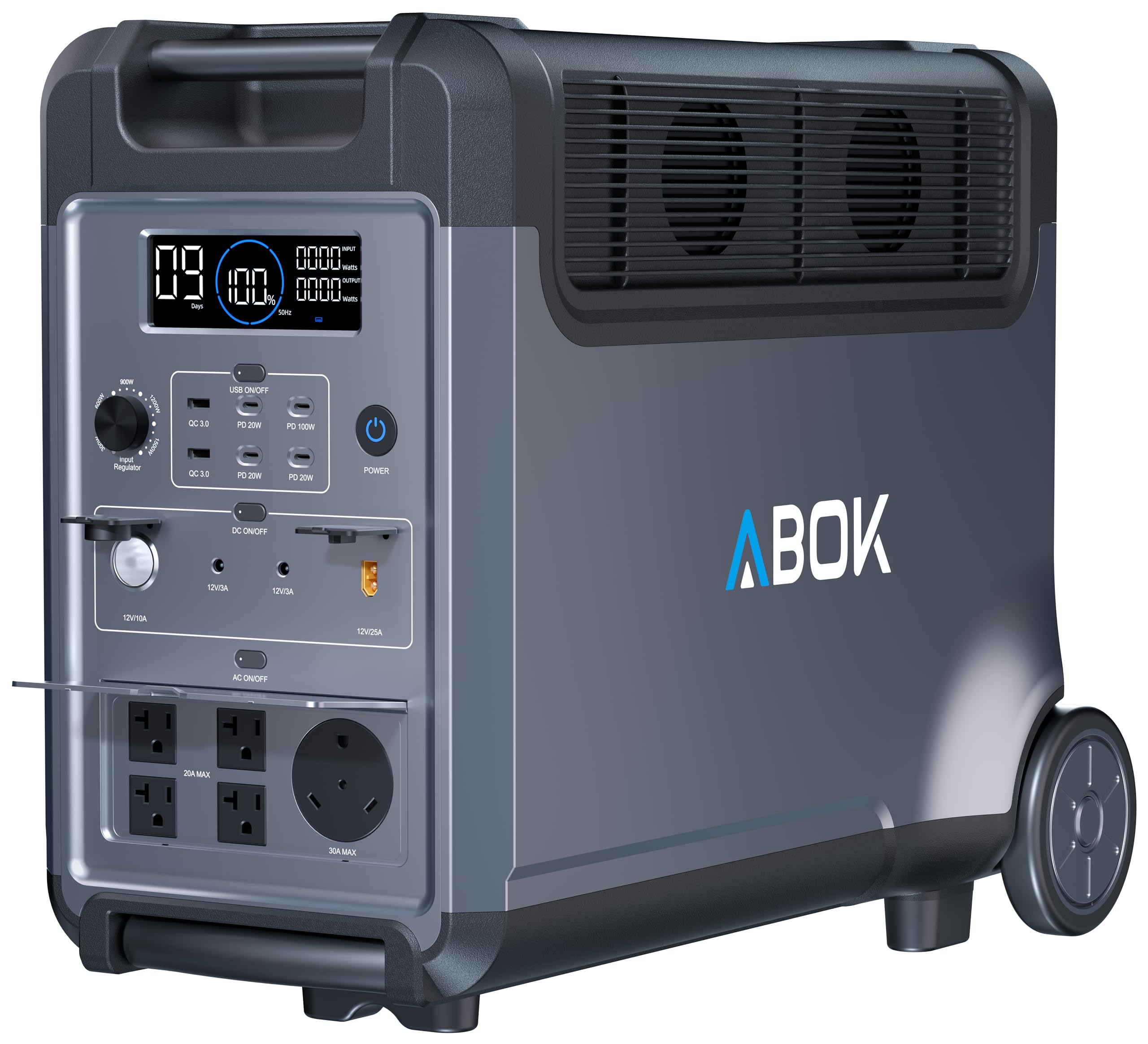
The Ark3600 packs 3.84 kWh of LFP capacity and can expand to 11.52 kWh with two additional battery packs, giving you a modular power wall that grows with your needs. The 3600W pure sine wave inverter powers 99% of household appliances, including a wetvac, heat gun, and SDS-Max drill simultaneously in a workshop test.
It recharges from AC in 3 hours or in 1.29 hours with AC plus 2000W solar input. The 15 output ports include a 30A AC outlet for heavy loads, a 100W USB-C PD port, and dual DC5521 ports. The built-in Bluetooth app lets you monitor battery levels and adjust output settings remotely, though some users found the app interface sparse in data logging.
The 92-pound unit comes with a telescoping handle and wheels, which makes it easier to roll across a driveway than to carry. The IP rating is not officially stated, so keeping it out of rain is essential. Customer support is responsive, with one user receiving a return label despite the Amazon “non-returnable” policy after a quick email exchange.
Why it’s great
- Expandable capacity up to 11.52 kWh for future growth
- 3600W output handles heavy workshop and home appliances
- Telescoping handle and wheels for manageable mobility
Good to know
- No official IP rating; must be sheltered from rain
- App data logging features are basic
8. ECO-WORTHY 48V 280Ah LiFePO4 (4 Pack)
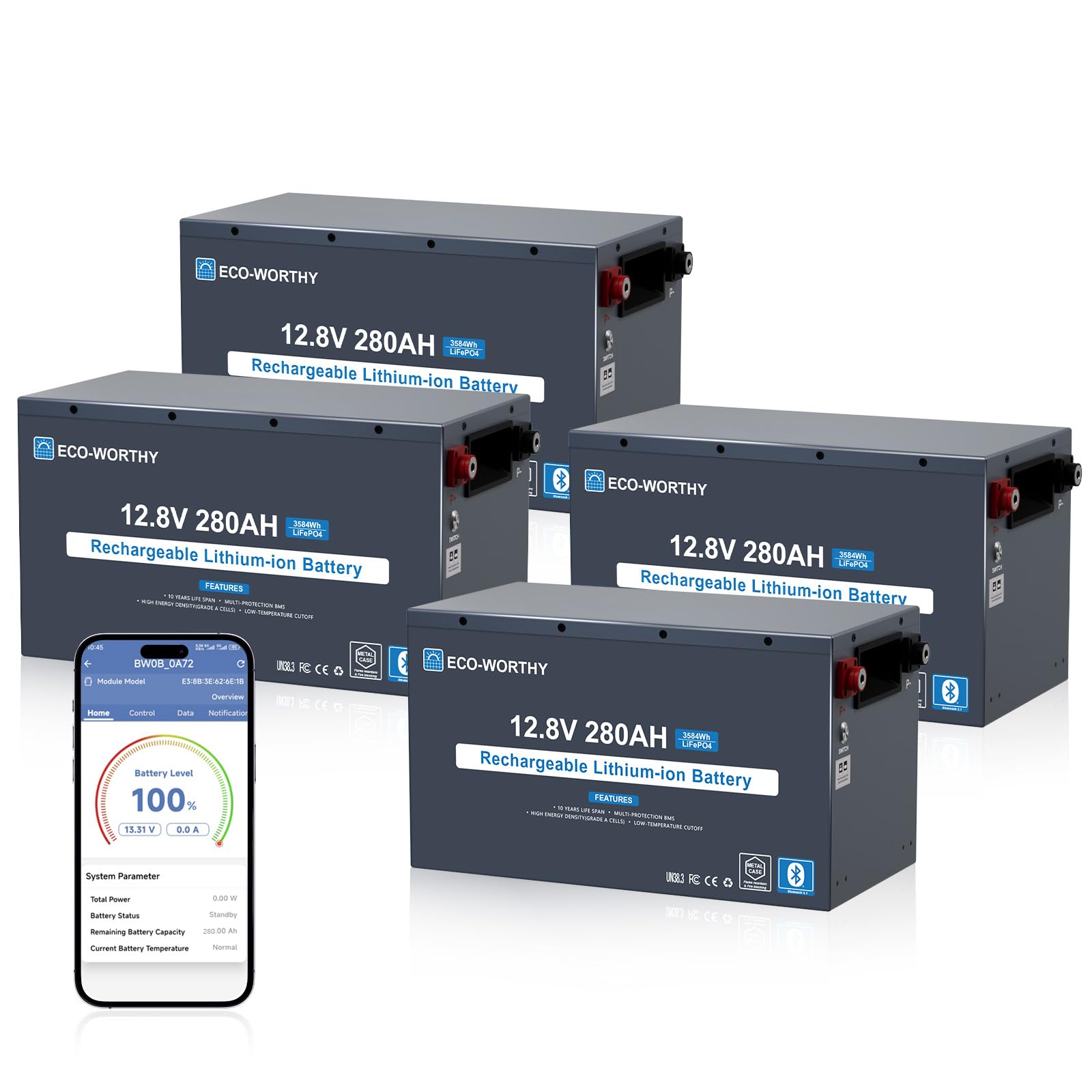
This four-pack of 12V 280Ah batteries can be wired in series to make a 48V 280Ah bank delivering 14.34 kWh. Each battery contains a 200A BMS with low-temperature protection that stops charging below 19.4°F and resumes at 32°F, preventing freeze damage in unheated garages or RV compartments.
The Bluetooth 5.1 module gives real-time cell voltage readings through the ECO-WORTHY app. In testing, one unit delivered 290Ah—slightly above the rated capacity. The metal case upgrade (as of mid-2026) improves heat dissipation and structural rigidity compared to the earlier plastic enclosure. The batteries support up to 4 in parallel for 1120Ah at 12V, or 4 in series for 48V.
The BMS overvoltage protection trips at 14.2V in a 12V configuration, which can cause nuisance cycling if your charge controller’s absorption voltage exceeds that. Users running 24/7 off-grid systems should set their charge controller to a maximum of 14.1V in user-defined mode to maintain smooth operation. The batteries are heavy at 61 pounds each, so shipping arrives in multiple boxes.
Why it’s great
- Very high total capacity at 14.34 kWh for the price
- Low-temperature protection for cold-environment use
- Metal case upgrade improves durability and heat dissipation
Good to know
- BMS overvoltage protection may conflict with some charge controllers at 14.2V
- Heavy; shipping may arrive in separate boxes
9. TEMGO 48V 100Ah LiFePO4 Golf Cart Battery Kit
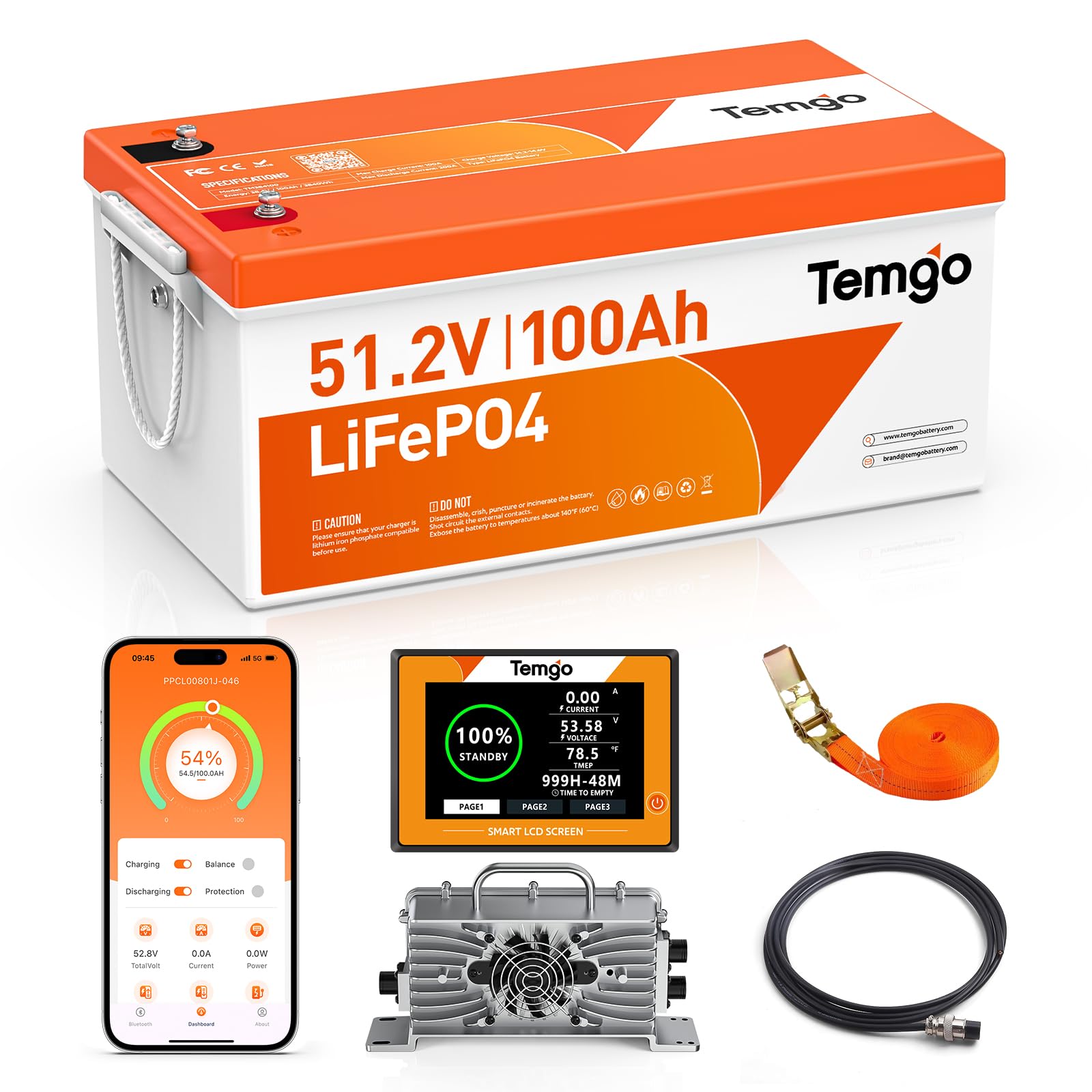
This complete conversion kit includes the 48V 100Ah LiFePO4 battery, a 58.4V 18A charger, a 2.8-inch LCD touch display, and a retention strap—everything you need to replace six lead-acid batteries in a golf cart. The 200A BMS can burst 600A for 3 seconds, which handles the high inrush current of a 3kW motor on a steep incline.
The battery supports parallel connection with up to three additional units for a total of 20.48 kWh, making it viable for small solar backup systems. The LCD display shows voltage, current, SOC, and cell balance in real time. Users report a 10-year lifespan expectancy with 5000+ deep cycles at 80% DoD, compared to 300-500 cycles for lead-acid.
In a 2004 Club Car DS conversion, the battery improved acceleration from 0-32 mph by 5.6 seconds and delivered 18 miles on a 71% charge. The dimensions are slightly taller than a standard lead-acid bank, so some carts need a 1.5-inch seat riser. The charger is not mountable to a wall without drilling, and the positive cable may need an extension depending on the vehicle layout.
Why it’s great
- Complete drop-in kit with charger, display, and strap included
- 600A burst current for demanding golf cart motors
- 5000+ cycles at 80% DoD for 10-year service life
Good to know
- Battery is about 1 inch taller than many lead-acid banks
- Charger is not designed for permanent wall mounting
10. OGRPHY 48V 105Ah LiFePO4 Golf Cart Battery
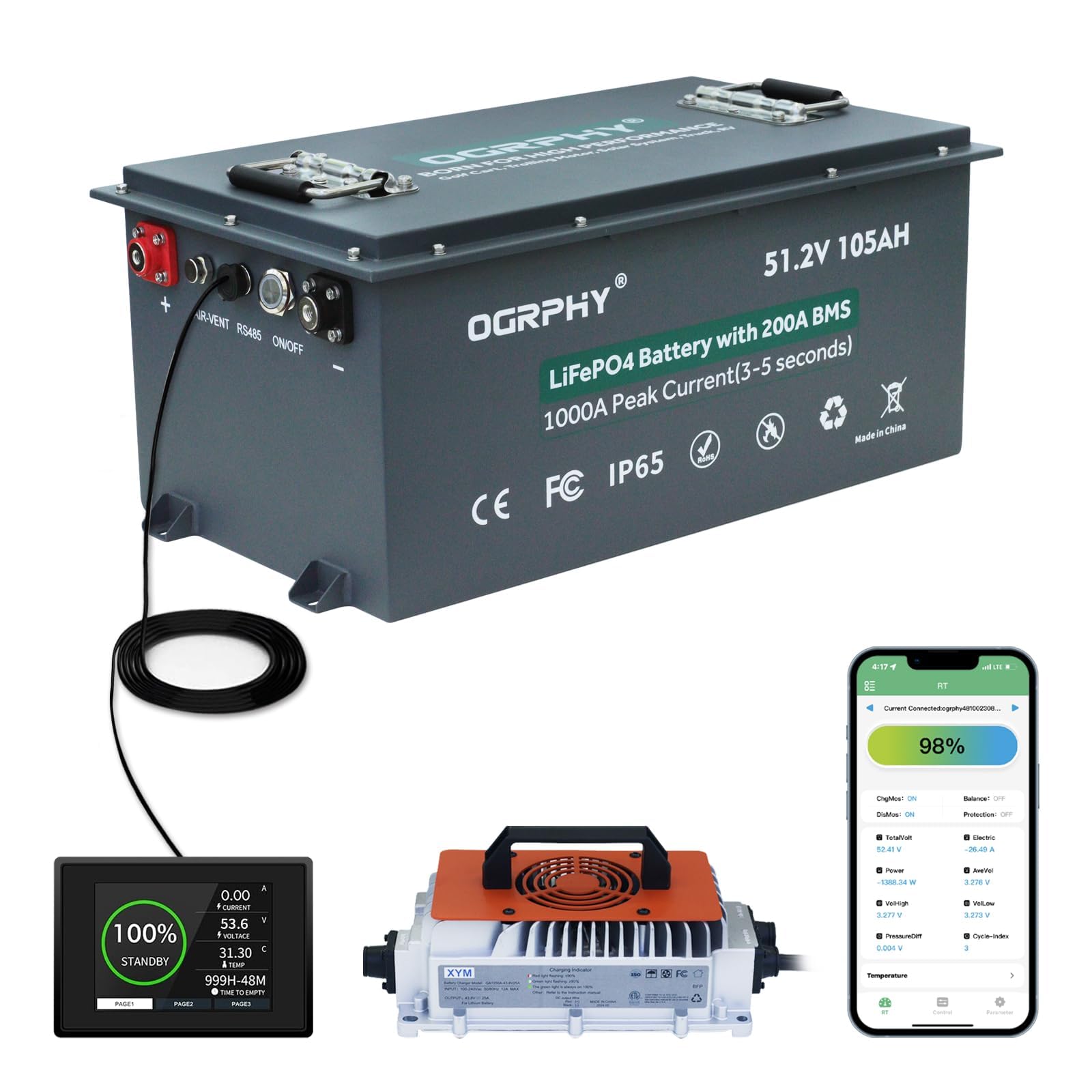
The OGRPHY battery uses grade-A prismatic cells certified to UL standards and delivers a 200A continuous BMS with a staggering 1000A peak for 3-5 seconds. That peak current supports 51.2kW bursts, which is 50% more than standard lithium batteries and essential for climbing steep hills in a loaded golf cart.
It provides 5.37 kWh of usable energy, enough for 50 miles of range on a 3kW motor. The LCD touch monitor and mobile app give you cell-level data, cycle count, and fault diagnostics. The BMS handles 600A for 30 seconds and 300A for 32 seconds before throttling, so short bursts of high current never trip the protection.
The compact size (19.7 x 11.6 x 8.66 inches) fits most cart battery trays. In an EZGO RXV Freedom, the battery ran 36 holes of golf on a hilly course and still showed over 70% SOC. After 8 months of daily use, the 16 cells balanced within 0.012V of each other. The button on the RS485 screen can become stiff over time, but the Bluetooth app provides a reliable alternative for monitoring.
Why it’s great
- Industry-leading 1000A peak current for extreme torque
- 50+ mile range on a standard 3kW motor
- Touch monitor with comprehensive cell-level data
Good to know
- Heavy at 99 pounds; may require reinforced tray mounting
- Instructions are minimal for installation in some cart models
11. LOSSIGY 48V 100Ah LiFePO4 Golf Cart Conversion Kit
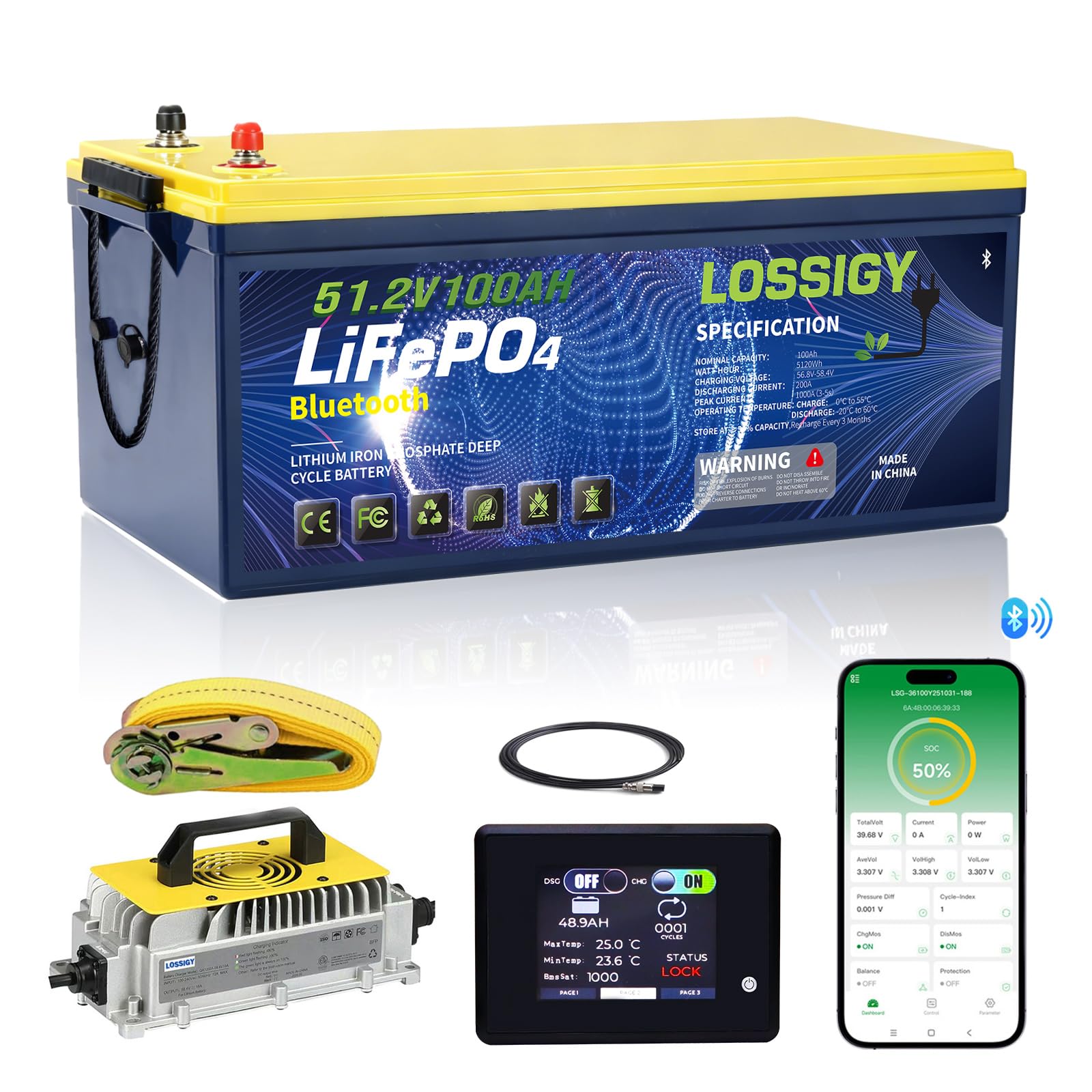
The LOSSIGY kit includes the 48V 100Ah battery, an LCD monitor, and a 51.2V charger. The built-in 200A smart BMS breaks through the typical 3x peak limit to deliver 1000A for 3-5 seconds, matching the demands of nearly any golf cart controller. The grade-A cells are rated for 4000 cycles, backed by a 5-year warranty that covers replacement even for manufacturing defects that surface after months of use.
In a 2010 Club Car conversion, the battery lasted 2-3 days on a single charge with daily neighborhood driving. When the internal temperature sensor failed after a year, the company honored the warranty and shipped a replacement unit at no cost, including prepaid return shipping for the defective unit. The installation is straightforward for someone comfortable with sparky work: two cables connect the battery to the cart’s controller, and the LCD plugs into the RS485 port.
Some users report that the included ratchet strap and short cables do not match the product photos. The remote monitor’s USB cable has a poor design for flush mounting, and the user manual for calibration is vague. Despite those fit-and-finish annoyances, the battery delivers a reliable speed boost—one user gained 3 mph on a Star EV 48V cart after swapping eight 6V lead-acid batteries.
Why it’s great
- 5-year warranty with real customer support backing
- 1000A peak BMS handles hill climbing without sag
- 4000 cycles from premium grade-A LiFePO4 cells
Good to know
- Included ratchet strap and cables may differ from photos
- Monitor calibration instructions are poorly written
- Customer service contact via web form can be slow
FAQ
What does the BMS continuous current rating need to be for a 5000W inverter at 48V?
Can I mix a new LiFePO4 battery with an older one in parallel?
Why does my solar battery show a higher voltage than the inverter expects?
How many solar batteries can I connect in parallel?
Does low temperature affect LiFePO4 solar battery performance?
Final Thoughts: The Verdict
For most users, the battery for solar power storage winner is the SaiJiaoYang 51.2V 314Ah because it delivers 16 kWh of usable energy with a robust 200A BMS and broad inverter protocol support in a single, serviceable unit. If you need a portable backup that can charge your EV during an outage, the Anker SOLIX F3800 is your best bet. And for a budget-friendly off-grid bank that balances cost and capacity, the AOUSK 48V 200Ah (2-Pack) provides 10.24 kWh with solid inverter communication for a mid-range price.