
Our readers keep the lights on and the weekend projects moving. As an Amazon Associate, I earn from qualifying purchases.
Specs are compiled from manufacturer listings and verified buyer reviews and can change over time — please confirm the key details on the product page before buying.
You are living in a van and every watt you carry is a trade-off between space, weight, and how long you can stay off the grid. The right battery bank decides whether your fridge, lights, and laptop run for three days or just one — and whether you can recharge when clouds block the sun. This guide looks past the marketing to find the cells, the amp-hour (Ah) ratings (the energy storage measure, like gallons in a tank), and the build quality that actually holds up in a van.
I’m Rikta — the founder and writer behind FitlyFast. This guide is built by comparing the manufacturers’ published specifications and the patterns across verified customer reviews, so you get each pick’s real strengths and trade-offs instead of marketing spin.
The goal is simple: find the best battery for van life that stops your battery from being the weak link in your home on wheels, whether you care most about raw capacity or a smart monitoring system.
Quick Picks
- ECO-WORTHY 3584Wh 12V 280Ah LiFePO4 Battery — Best Overall
- TEMGO 12V 300Ah Self-Heating LiFePO4 Battery — Premium Pick
- 12V 300Ah LiFePO4 Battery (Rvpozwer) — High Capacity
- VATRER POWER 12.8V 460Ah Self-Heating LiFePO4 RV Battery — Max Capacity
- Litime 12V 230Ah LiFePO4 Battery — Mid-Range
- Battle Born 100Ah 12V LiFePO4 Battery — Established Brand
- Power Queen 12V 100Ah LiFePO4 Battery — Reliable Entry
- Redodo 12V 100Ah LiFePO4 Battery — Budget Champion
How To Choose A Battery For Van Life
Picking a battery for your van is mostly about three numbers: amp-hours (Ah), the BMS (battery management system) rating, and whether the battery can handle cold weather charging. Here is what each means for your daily life on the road.
Capacity (Amp-Hours) — How long you stay powered
Amp-hours tell you how much energy the battery stores. A 100Ah battery gives you 100 amps of current for one hour, or 5 amps for 20 hours. For van life, most people find 200Ah to 300Ah enough for a fridge, lights, and charging devices for a day or two. If you run an electric cooler, a laptop, and a fan overnight, calculate your daily draw before choosing.
BMS (Battery Management System) — The safety guard
The BMS is a small circuit board inside the battery that prevents overcharging, over-discharging, short circuits, and overheating. It also balances the individual cells so they wear evenly. A 100A BMS can support a 1200W inverter (a device that turns DC battery power into AC household power); a 200A BMS can handle a 2400W inverter. Higher is safer for running appliances like a microwave or induction cooktop.
Self-Heating — A must for cold climates
LiFePO4 batteries cannot be charged below freezing (32°F / 0°C) without damage. Self-heating batteries warm themselves internally before accepting a charge. If you plan to camp in winter or travel to cold areas, this feature prevents permanent capacity loss.
Physical Size and Weight — Fits your van’s space
A 300Ah battery can weigh between 55 and 65 pounds, while a 460Ah battery can weigh over 100 pounds. Measure your battery compartment before buying. Some models are Group 31 size (a standard 13 x 6.77 x 8.43 inch tray fit), while others are much longer. Also check terminal placement — front terminals are easier to wire in tight spaces.
Quick Comparison
| Model | Best For | Capacity | BMS | Weight | Amazon |
|---|---|---|---|---|---|
| ECO-WORTHY 280Ah | Best Overall Value | 280Ah | 200A | 61.7 lbs | Amazon |
| TEMGO 300Ah Self-Heating | Premium Cold Weather Pick | 300Ah | 200A | 64.9 lbs | Amazon |
| Rvpozwer 300Ah | High Capacity Budget | 300Ah | 200A | 56.3 lbs | Amazon |
| VATRER POWER 460Ah | Max Capacity Powerhouse | 460Ah | 300A | 104.7 lbs | Amazon |
| Litime 230Ah | Mid-Range balance | 230Ah | 200A | 45.3 lbs | Amazon |
| Battle Born 100Ah | Established Premium Brand | 100Ah | Internal BMS | 31 lbs | Amazon |
| Power Queen 100Ah | Reliable Entry-Level | 100Ah | 100A | 22 lbs | Amazon |
| Redodo 100Ah | Budget Champion | 100Ah | 100A | 25.4 lbs | Amazon |
In‑Depth Reviews
1. ECO-WORTHY 3584Wh 12V 280Ah LiFePO4 Battery
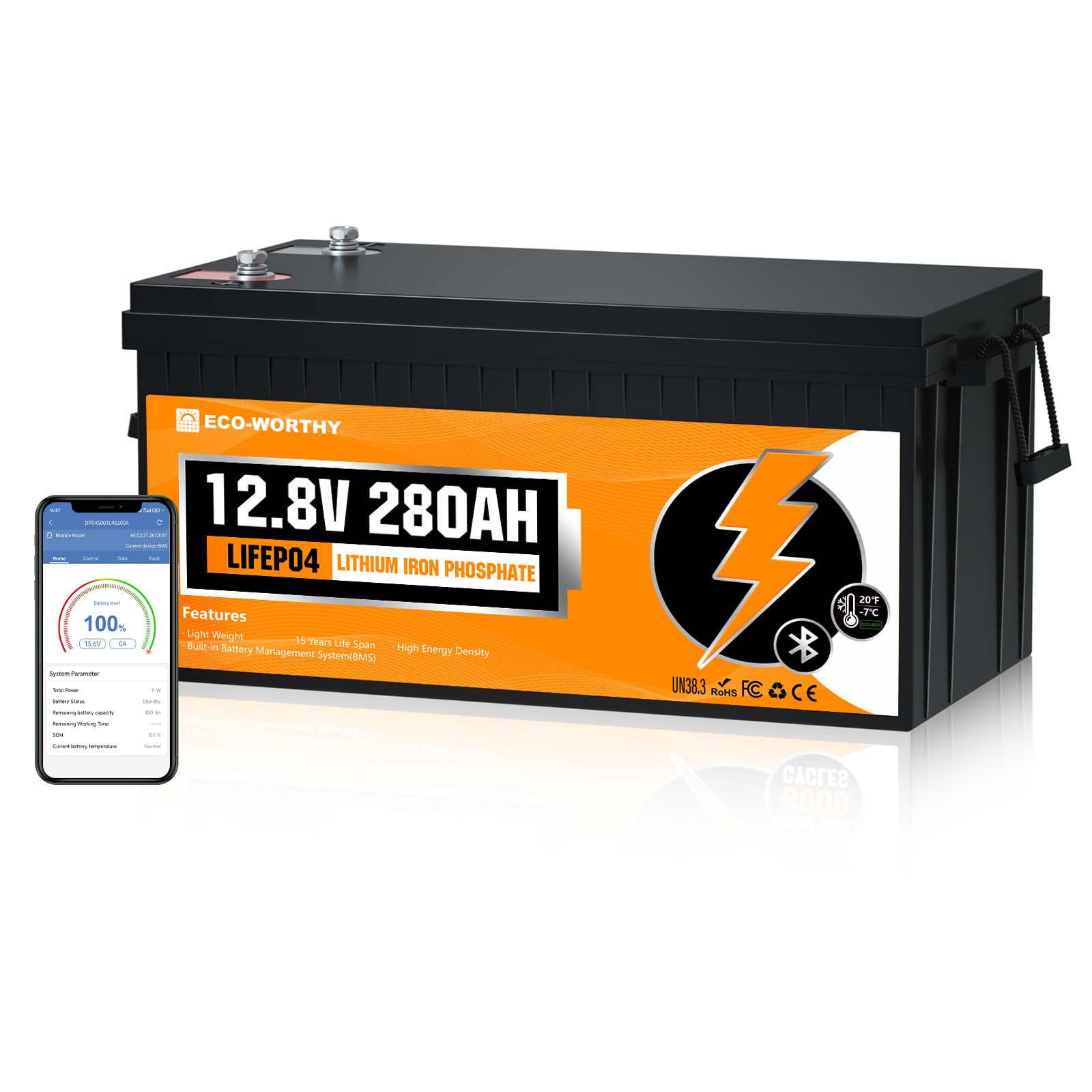
This 280Ah battery gives you 3584Wh of usable energy, runs your fridge for days, and adds Bluetooth and a metal case — all at a mid-range price.
You get 3584 watt-hours (Wh) — the total energy stored — which translates to running a typical van fridge for three to four days without sun. The built-in 200A BMS handles a 2000W inverter without issues, so you can run a microwave or induction burner. Unlike the cheaper Redodo or Power Queen 100Ah units, this one supports up to 4 batteries in parallel for a total of 1120Ah at 12V — serious scalability for larger systems.
Buyers report the metal case is a real advantage: you can screw it to your van floor. One reviewer noted they installed two (560Ah total) in a travel trailer for two months with flawless performance. The Bluetooth app lets you track voltage, current, and capacity in real time. The low-temperature cutoff (a safety feature that stops charging to prevent damage) kicks in below 19.4°F (-7°C) to protect the cells. Another reviewer said it “exceeds rated capacity” and praised the JBD (a BMS brand) BMS for thermal management. Compared to the TEMGO 300Ah, this battery lacks self-heating but costs less and weighs about 3 pounds less.
What Stands Out
- 3584Wh capacity with Bluetooth monitoring and a metal case for secure mounting.
- 200A BMS supports high-power appliances and paralleling up to 4 units.
- Low-temp cutoff protects cells in freezing weather.
Potential Drawbacks
- At 61.7 pounds, it is heavier than many 100Ah options for the same total Ah.
- One buyer mentioned receiving a defective unit (0V), though customer service responded quickly with a replacement.
Ideal for: van dwellers who want a single, large-capacity battery with easy monitoring and enough headroom to run most appliances.
A caveat: the physical size (17.83″D x 9.37″W x 8.7″H) means you need to measure your compartment first; it won’t fit standard Group 31 trays.
2. TEMGO 12V 300Ah Self-Heating LiFePO4 Battery
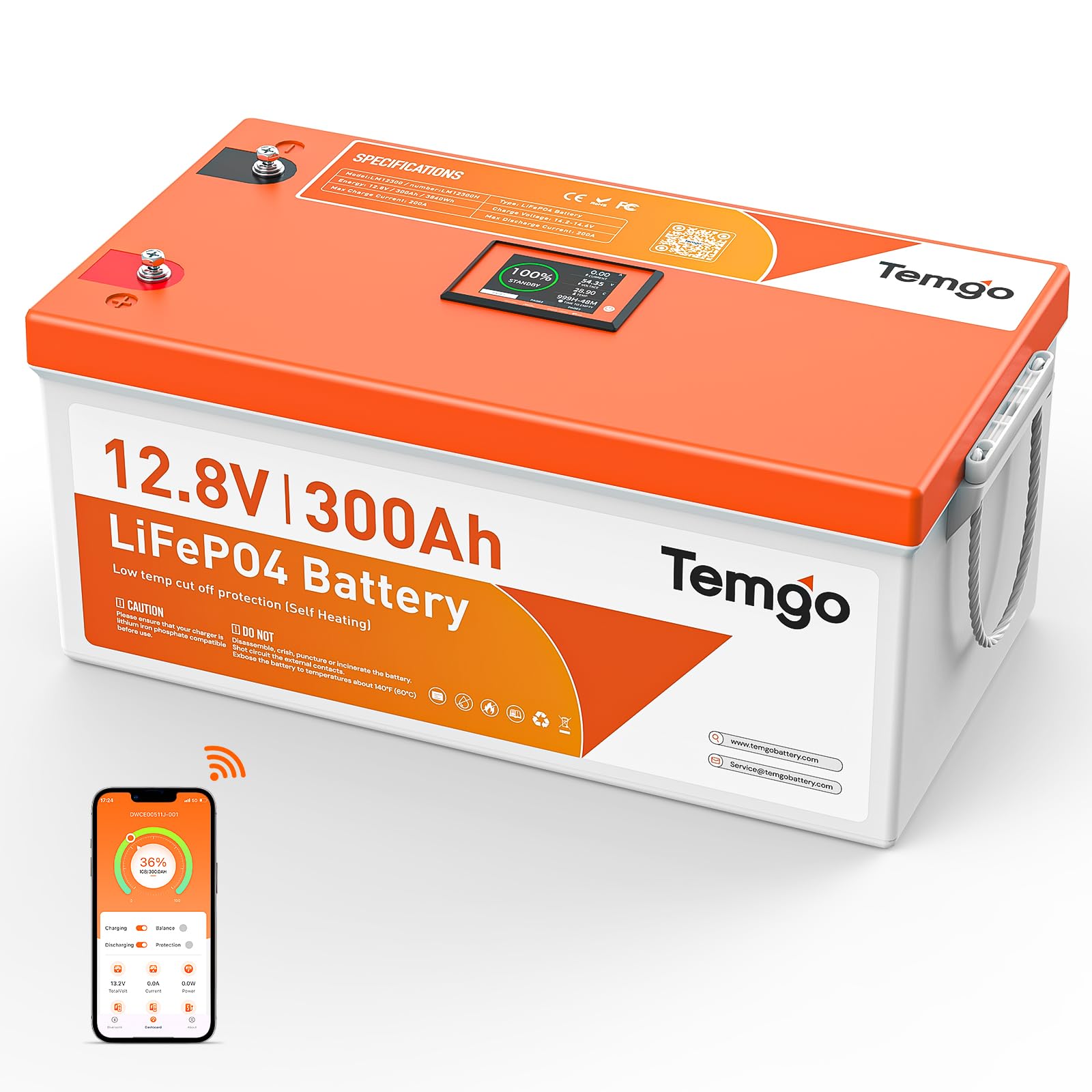
A 300Ah battery that warms itself up so you can charge in below-freezing weather — no damage, no guessing.
If you plan to live in your van through a real winter, this is the pick. The self-heating function kicks on when the battery drops below 32°F (0°C), warming the cells to 41°F (5°C) before charging begins. This prevents the permanent damage that kills standard LiFePO4 batteries in cold weather. The 300Ah capacity delivers 3840Wh, enough to run a heater fan, fridge, and lights for a full evening. The touch screen and Bluetooth app (via the TEMGO app) let you see remaining battery level, input/output current, and estimated runtime without needing a separate battery monitor.
Owners mention the self-heating is “critical for cold solar charging,” and one reviewer who bought five TEMGO units over 15 months said the display and heaters are great. The 200A BMS safely handles a 2000W inverter. Unlike the ECO-WORTHY, this one has a front-facing touch screen, making status checks a quick glance rather than a phone unlock — a small but real convenience when you are crawling into your van at night. This is the best choice if you live where snow falls; for warm-weather builders, the ECO-WORTHY offers similar capacity for less.
Why It Leads
- Self-heating enables safe charging down to -4°F (-20°C).
- Smart touch screen and Bluetooth app for real-time monitoring.
- Confirmed by buyers to exceed rated capacity in tests.
Keep in Mind
- At 64.9 pounds, it is heavier than the ECO-WORTHY 280Ah.
- One owner reported the SOC (state of charge, how full the battery is) can be slightly off on the app.
Grab this if: you camp in snow or regularly face sub-freezing nights where charging needs to happen.
Look elsewhere if: you only travel in warm weather and want to save weight — a standard 300Ah would be simpler and cheaper.
3. 12V 300Ah LiFePO4 Battery (Rvpozwer)

A 300Ah battery that stores 3840Wh and fits standard Group 31 trays — and costs less than the TEMGO.
This is the budget-conscious way to get 300Ah without the self-heating premium. The 200A BMS supports up to 3840W of continuous load, enough for a 2000W inverter plus overhead. It is 56.3 pounds — noticeably lighter than the TEMGO’s 64.9 pounds — and is designed to meet Group 31 standards, so it fits standard battery trays without custom brackets. You can connect up to 4 in series for 51.2V or 4 in parallel for 1200Ah.
Customers note real-world capacity runs closer to 281Ah rather than the advertised 300Ah. One reviewer who uses two batteries said they “powered fridge/freezer, furnace, water pump, lights, slides for 7 days without solar.” Another reviewer noted the battery worked well in a 24V system for high-power amps. The big trade-off against the TEMGO and the ECO-WORTHY is the lack of Bluetooth or any smart monitoring: you need an external battery monitor or shunt (a device that measures current flow) to know your state of charge. Compared to the ECO-WORTHY, you lose Bluetooth but gain 20Ah for a similar price.
Strengths
- 300Ah at a price well below the TEMGO and similar to 200Ah competitors.
- Fits standard Group 31 trays, making drop-in replacement easy.
- Compact dimensions (20.47″D x 9.45″W x 8.58″H) relative to its capacity.
Weaknesses
- No Bluetooth or display — you need your own monitoring system.
- Some units measured 281Ah instead of 300Ah, and one review reported a DOA (dead on arrival) battery.
The value angle: if you already own a battery monitor and just want the most amp-hours per dollar, this is your battery.
If you want convenience instead: the ECO-WORTHY 280Ah gives you Bluetooth and a metal case for a similar price-per-Ah.
4. VATRER POWER 12.8V 460Ah Self-Heating LiFePO4 RV Battery
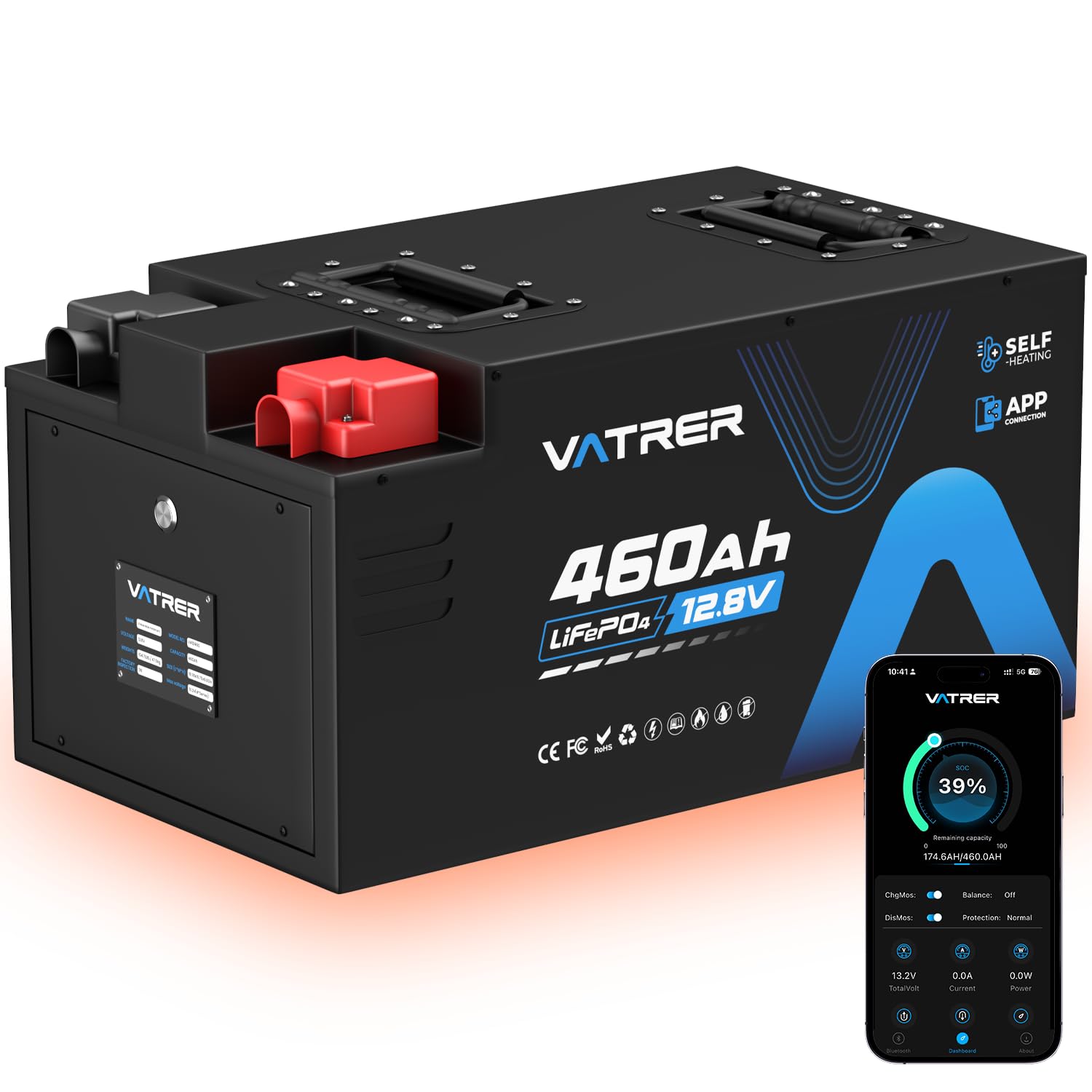
A single 460Ah battery that holds 5880Wh and replaces five 100Ah units — but you need a buddy to lift the 104.7 pounds.
This is the battery for van lifers who want to wire once and forget about it. With 5880Wh usable energy, you can run a 12V fridge, lights, a laptop, a fan, and a 12V TV for a full week without solar. The 300A BMS can handle a 3000W inverter, so running a microwave or an air conditioner is realistic. It also has automatic self-heating that activates between -4°F to 41°F, protecting the cells during winter charging — a feature shared with the TEMGO but with double the capacity.
Reviewers point out the battery came charged to 49% and reached 100% in about 4 hours at 45 amps. One reviewer who used it for off-grid RV with 600W solar said it “powers a desktop computer all night.” The Bluetooth app (monitoring current, voltage, temperature, cycle life) is built-in, though one customer observed the app was recently updated with a great display. The physical size is L18.9in x W10.82in x H9.84in — you need a large compartment, and at 104.7 pounds, plan for two people to lift it. Compared to the ECO-WORTHY 280Ah, this gives you 180Ah more in one box without paralleling, but at nearly double the weight.
What You Get
- 5880Wh in a single battery — no paralleling needed for most vans.
- 300A BMS supports high-power appliances.
- Self-heating plus Bluetooth app monitoring.
What You Pay (in Weight)
- 104.7 pounds is heavy; installation may require two people.
- Large dimensions require dedicated space — not a drop-in replacement for standard trays.
Choose this for: a large van or RV where weight is less of a concern and you want absolute maximum capacity in one box.
skip it if: your battery compartment is small or you move the battery regularly — the weight is real.
5. Litime 12V 230Ah LiFePO4 Battery
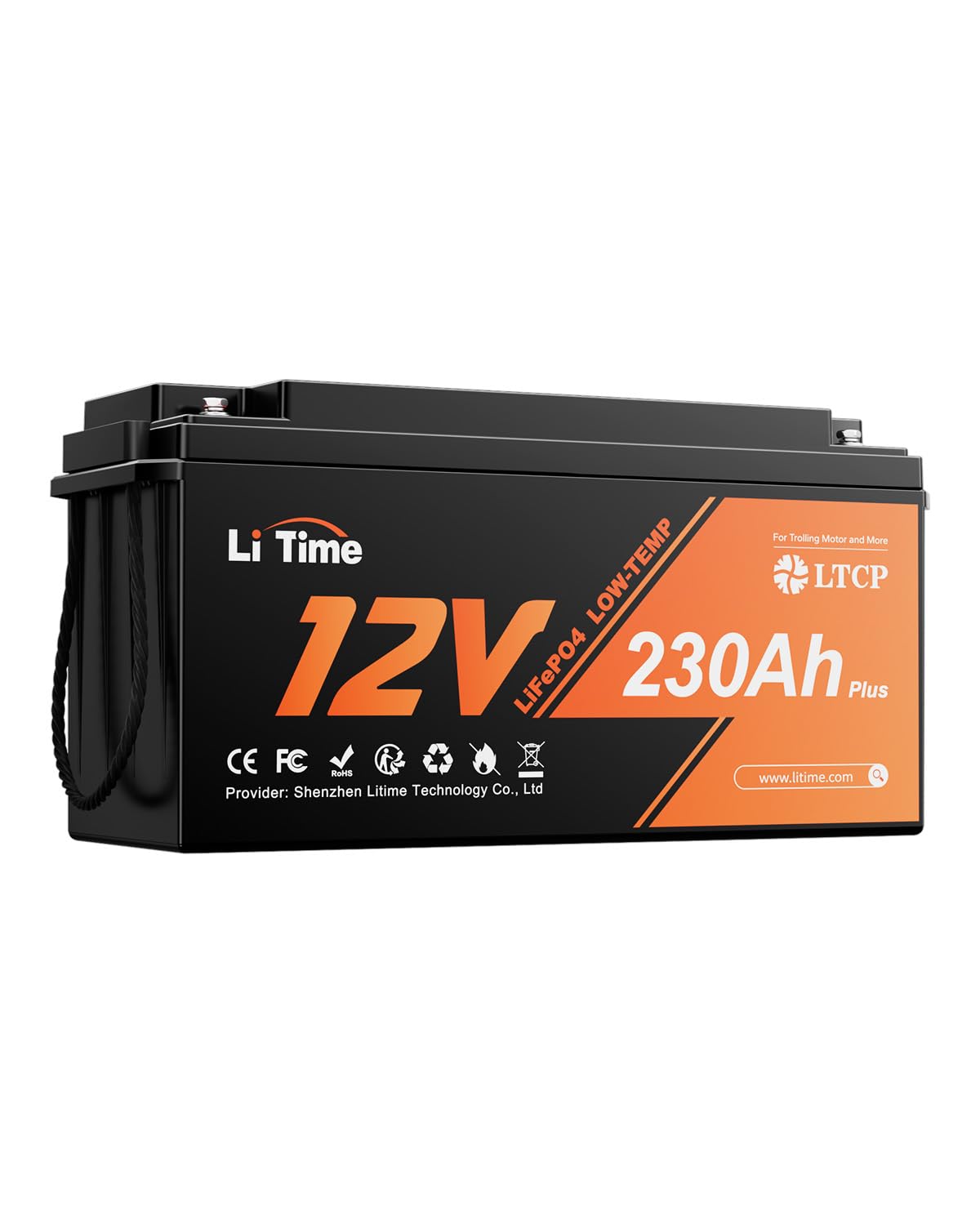
A 230Ah battery that gives you 2944Wh at 45.3 pounds — a smart middle ground for smaller vans that do not need 300Ah.
Not everyone needs 300Ah or can fit a 64-pound battery. The Litime 230Ah gives you 2944Wh of energy at 45.3 pounds, lighter than the ECO-WORTHY 280Ah (61.7 lbs) and the Rvpozwer 300Ah (56.3 lbs). The 200A BMS handles a 2000W inverter, and the battery supports up to 4 units in parallel. It is 3x denser than lead-acid, meaning you get the same usable capacity as a 230Ah lead-acid battery in a fraction of the weight. Shoppers say the Bluetooth app (on the 100Ah version) is useful for monitoring charge and discharge rates, and one user highlighted it replaced lead-acid in a tent trailer with “usable full 100Ah capacity vs 50% of lead-acid.” Compared to the ECO-WORTHY, this battery is about 16 pounds lighter but has 50Ah less capacity.
The catch is that some reviewers noted the battery can be dead on arrival, and the charging system in older RVs may need an upgrade because the battery draws high current (50A) from the converter. This is a common issue with lithium conversions — you may need a lithium-compatible charger or a DC-DC charger. Compared to the Power Queen 100Ah, the Litime offers more than double the capacity for a similar weight increase.
Why It Works
- 230Ah capacity at a manageable 45.3 pounds — easier to handle than 280Ah+ options.
- 200A BMS supports high loads and paralleling.
- Buyers confirm the Bluetooth app is genuinely useful for monitoring.
Possible Issues
- Some units arrive dead; check immediately on receipt.
- Your RV’s existing converter may need a lithium-compatible upgrade to avoid overcharging.
Perfect for: van owners who want a single 200+Ah battery without the weight penalty of larger units and who are comfortable with a possible charger upgrade.
Consider instead: the ECO-WORTHY 280Ah if you need Bluetooth and a metal case for a similar capacity tier.
6. Battle Born 100Ah 12V LiFePO4 Battery
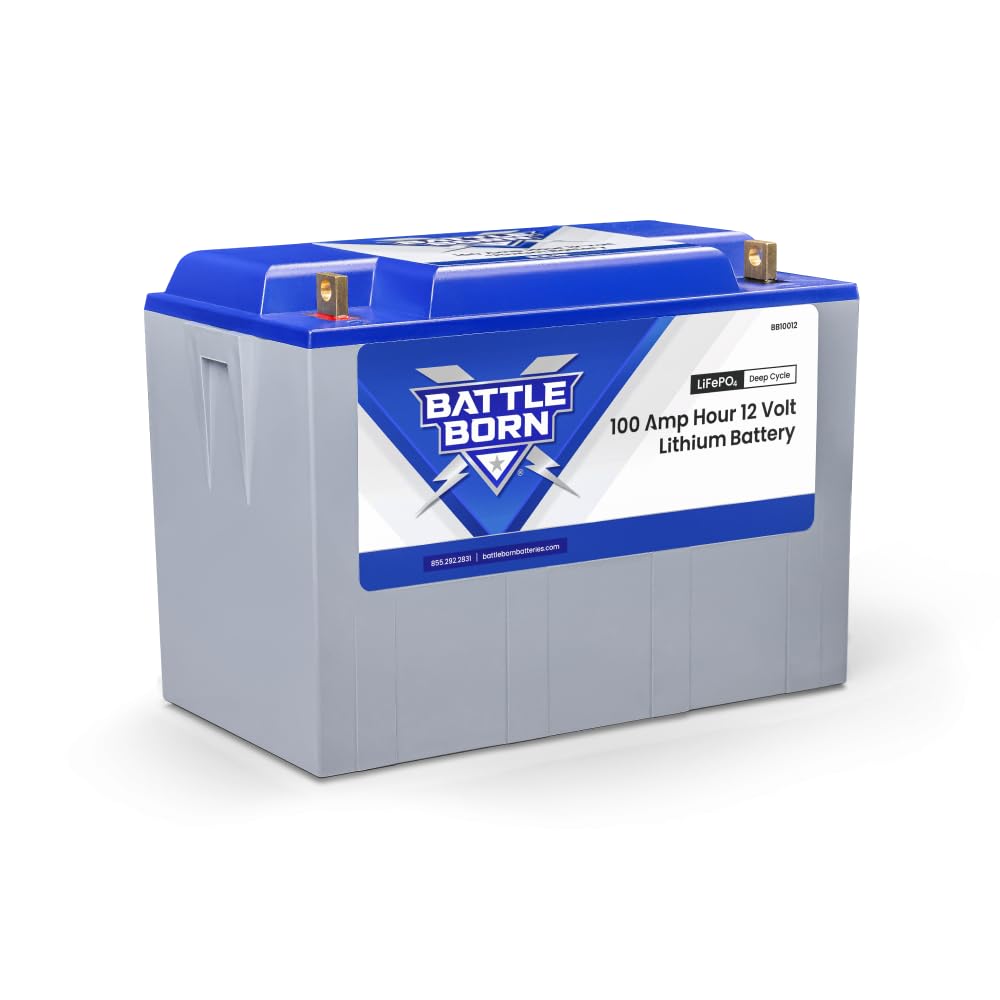
The 100Ah battery from the brand that kickstarted LiFePO4 for RVers — now with a 10-year warranty, but at a premium price.
Battle Born is the name most experienced van builders trust, and the 100Ah model is a direct drop-in replacement for Group 27 and Group 31 lead-acid battery trays. It weighs 31 pounds — about one-third of a comparable lead-acid battery — and delivers 100Ah of usable power with an internal BMS that handles low-temperature protection, high/low voltage, and short circuits. Buyers report it runs a 450W heater for 1.5 hours (raising RV temp from 55°F to 67°F) and powers a fridge, lights, and devices on a 3,000-mile trip.
The downside is the price: at a higher premium than any other 100Ah battery here, you are paying for the reputation and the 10-year warranty. However, one shopper added the warranty process took 8 weeks and required original packaging, costing in postage — so the warranty is not as simple as it sounds. Compared to the Redodo 100Ah, the Battle Born offers no extra capacity or features, just brand trust and US-based support. You could buy two Redodo 100Ah batteries for one Battle Born and get 200Ah instead of 100Ah.
The Appeal
- Drop-in replacement for Group 27 and 31 trays; lightweight at 31 lbs.
- 10-year warranty with US-based support (though some buyers found the process slow).
- Strong real-world performance for fridge, heater, and devices.
The Cost
- High price for 100Ah — you can get 200-300Ah for the same money.
- Warranty claims can be expensive and slow.
Buy it if: brand trust and US support matter more than raw capacity per dollar, and you only need 100Ah.
pass on it if: you want the most amp-hours for your van — two Redodo 100Ah batteries cost less than one Battle Born.
7. Power Queen 12V 100Ah LiFePO4 Battery
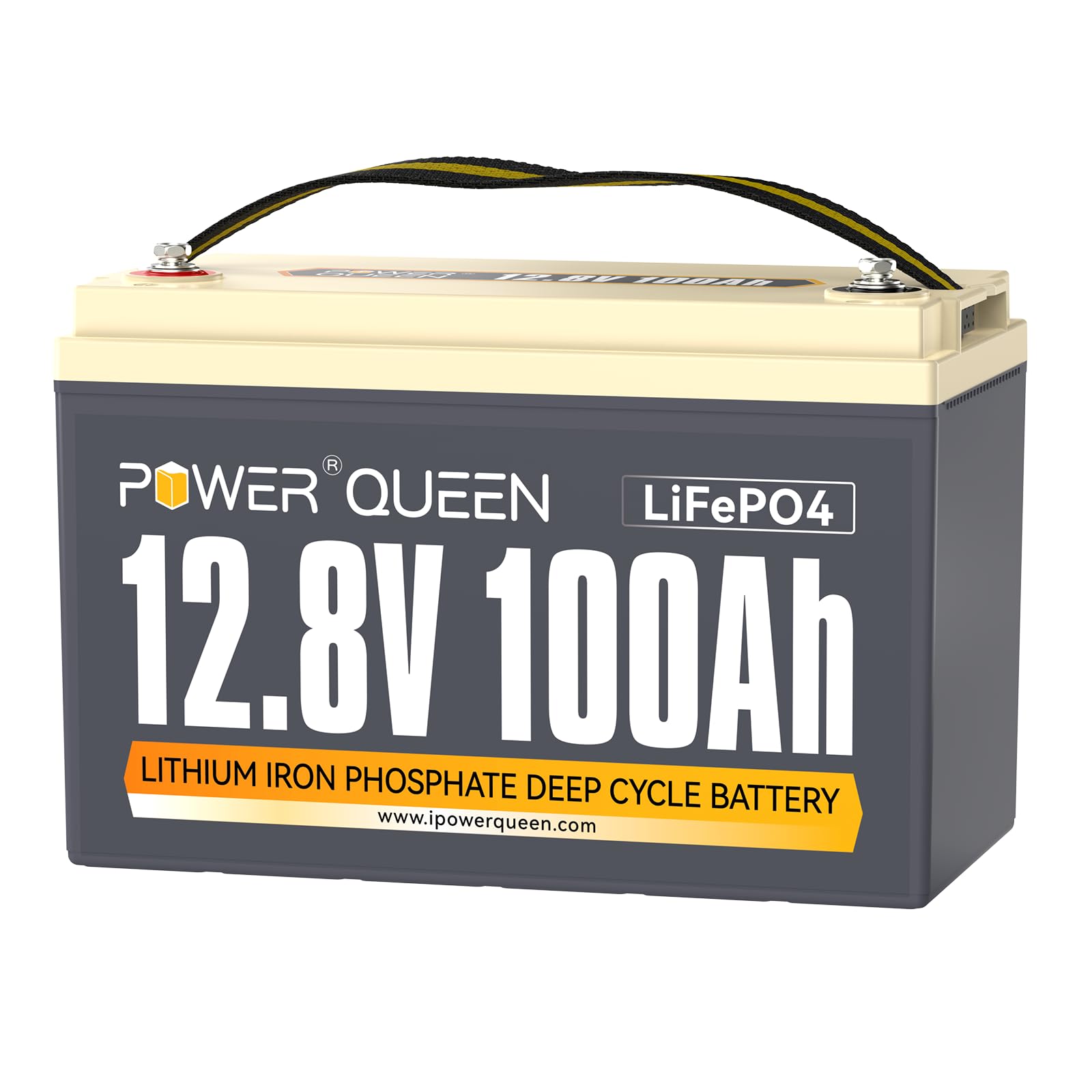
A 100Ah battery that weighs just 22 pounds and tested by buyers to deliver a true 102Ah — the lightest entry-level pick.
At 22 pounds, this is the lightest 100Ah lithium battery here, making it a great choice for van conversions where every pound matters. The 100A BMS protects against overcharge, over-discharge, and short circuits, and the battery supports up to 4S4P configuration (up to 4 in series and 4 in parallel, max 51.2V 400Ah). Owners mention it tested at “102 AH from full charge,” meaning you get slightly more than advertised. On a sailboat, one reviewer installed three units and said “build quality is solid, performance as expected.” The 5-year warranty offers more coverage than the Redodo’s standard policy. Compared to the Redodo 100Ah, the Power Queen is lighter by 3.4 pounds and has a slightly longer warranty, but both are similarly priced.
The limitation is the same as any 100Ah battery: for van life, you may need two or three in parallel to get enough capacity for a fridge and lights overnight. One reviewer noted the 6mm bolts with 13mm head may cross-thread, so use care during installation. Compared to the Redodo 100Ah, the Power Queen is lighter by 3.4 pounds and has a slightly longer warranty, but both are similarly priced.
Good Points
- Very lightweight at 22 pounds — easy to move and install.
- Confirmed to deliver ≥102Ah actual capacity.
- 5-year warranty provides decent coverage.
Limits
- 100Ah is only enough for light van use; larger builds need multiple units.
- Some buyers reported potential cross-threading with bolt hardware.
Pick this for: a small van or weekend setup where weight is a priority and 100Ah meets your energy budget.
Think twice if: you run a fridge 24/7 plus devices — you will need at least two, and the ECO-WORTHY 280Ah may be simpler.
8. Redodo 12V 100Ah LiFePO4 Battery
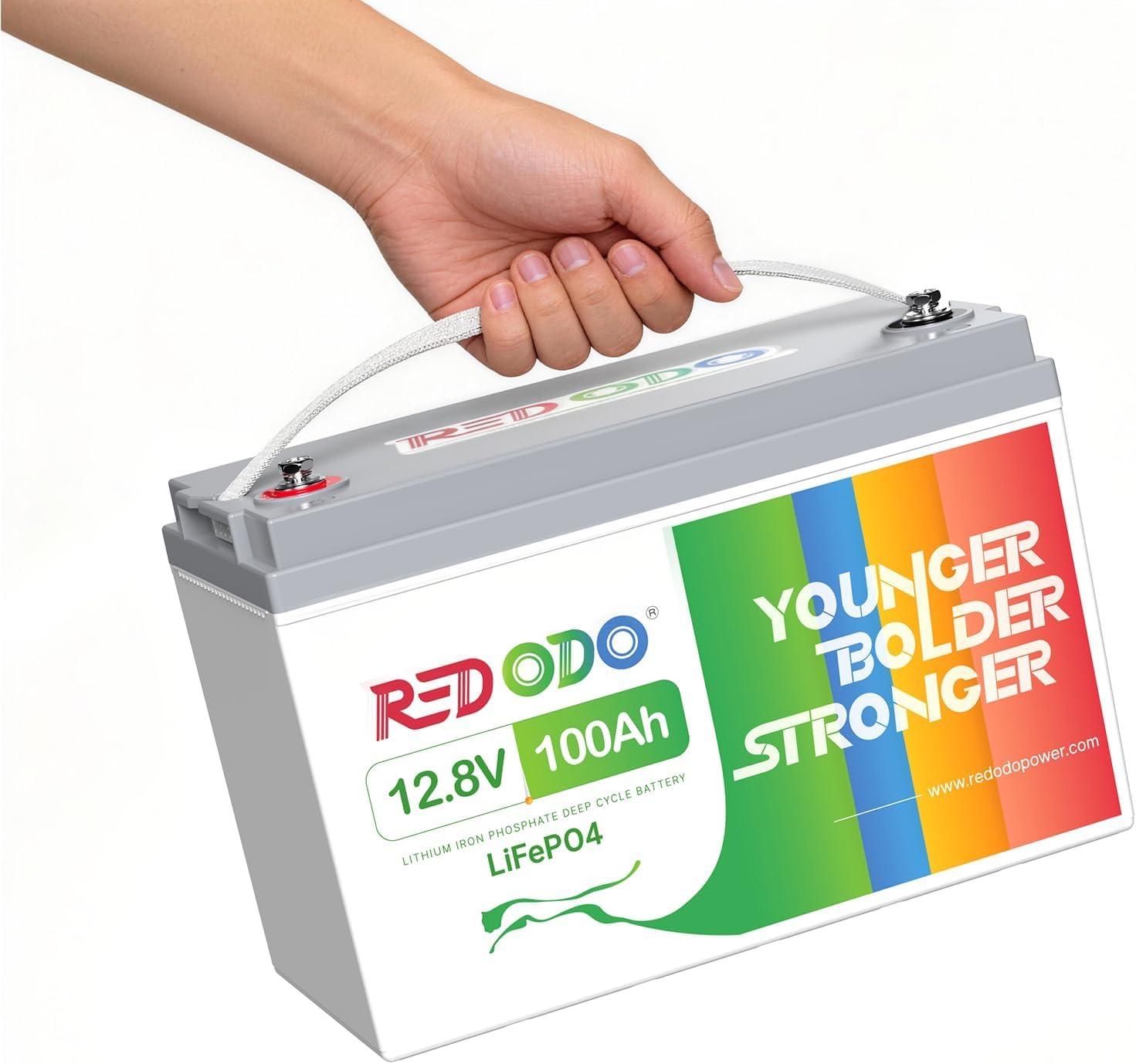
The cheapest way to get a reliable 100Ah lithium battery — proven by builders and DIY mower conversions, but you will need more than one for a van.
At a budget-friendly price, this 100Ah LiFePO4 battery gives you the same core specs as the Power Queen and Battle Born: 100Ah capacity, 100A BMS protection, and a design rated for 4000 charge cycles at 100% DoD (depth of discharge — how much you drain it each time). It fits BCI Group 31 battery boxes at L13″ x W6.77″ x H8.43″ and weighs 25.4 pounds — 60% lighter than a lead-acid equivalent. Customers note using four of these in a Ryobi RM480e mower (a drop-in replacement) and running a router, wifi, two desktops, and a freezer 24/7 without the batteries ever dropping below 80%. Another review noted it powers a kayak trolling motor all afternoon.
The trade-off is that you need to parallel multiple units to get van-life capacity. The Redodo supports up to 4 in parallel or series (max 48V or 400Ah). For van life, you would likely buy two to four of these to reach 200-400Ah — at which point the total cost approaches the ECO-WORTHY 280Ah or the Rvpozwer 300Ah, but you gain redundancy (if one fails, you still have power). Compared to the Power Queen, the Redodo is slightly heavier (25.4 pounds vs 22 pounds) but often available at a lower price.
Why It Wins on Budget
- Lowest price per 100Ah among all picks here.
- Excellent real-world reviews, including 24/7 home backup and mower conversions.
- Fits standard Group 31 trays for easy installation.
Where It Falls Short
- Multiple units needed for most van setups — total cost and wiring complexity add up.
- No Bluetooth or smart monitoring.
Best for: budget-conscious builders who want to start with 100Ah and expand later, or who prefer the redundancy of multiple smaller batteries.
Not ideal for: anyone wanting a single, simple battery setup — you will end up wiring multiple units, and a single 280Ah may be cleaner.
Understanding the Specs
Depth of Discharge (DoD)
This tells you how low you can drain the battery before damage. LiFePO4 batteries handle 100% DoD, meaning you can use all the stored energy. Lead-acid batteries should not go below 50% DoD. So a 100Ah LiFePO4 delivers 100Ah of usable energy, while a 100Ah lead-acid gives only 50Ah. That is why lithium batteries feel like double the capacity in real use.
Cycles
A cycle is one full discharge and recharge. LiFePO4 batteries typically offer 4,000 to 15,000 cycles depending on how deep you discharge. At 80% DoD, you get around 6,000 cycles; at 60% DoD, up to 15,000. That translates to 10-15 years of daily use — versus 200-500 cycles for lead-acid. For van life, cycle life matters less than capacity, but it explains the higher upfront cost.
FAQ
Can I use a standard car battery charger for a LiFePO4 battery?
How many amp-hours do I need for van life?
What is the difference between 100A BMS and 200A BMS?
Can I connect different brands of LiFePO4 batteries in parallel?
How long does a LiFePO4 battery last in van life?
Do I need a battery monitor or shunt?
Can I install a LiFePO4 battery in any orientation?
Is self-heating necessary for van life?
What size solar panel do I need to charge a 300Ah battery?
How do I dispose of a LiFePO4 battery?
Final Thoughts: The Verdict
For most van lifers, the best battery for van life is the ECO-WORTHY 280Ah because it gives you 3584Wh, Bluetooth, a metal case, and low-temp protection at a mid-range price. If you want self-heating for winter camping and a built-in touch screen, grab the TEMGO 300Ah Self-Heating. And for absolute maximum capacity without wiring multiple batteries, the standout is the VATRER POWER 460Ah.
How We Picked
We do not accept paid placement. Every pick is matched to a real buyer and a real use-case; we do not hands-on test units.
Sources & Methodology
Specifications: manufacturer listings and product documentation. Review insights: verified customer reviews, as of July 2026. Pricing: not shown on this page (it changes often); check the current price via the retailer link.
As an Amazon Associate, FitlyFast earns from qualifying purchases. This does not affect which products we feature.