
Our readers keep the lights on and the weekend projects moving. As an Amazon Associate, I earn from qualifying purchases.
That notification you dread — the 10% battery warning on your wrist — it kills your flow mid-run, interrupts your sleep tracking, and often means you forgot the charger. For anyone serious about fitness, a tracker that needs a daily top-up is a liability, not a tool. The real test of a endurance-focused wearable isn’t the feature list; it’s how many days in a row you can wear it without thinking about the charger.
I’m Rikta — the founder and writer behind FitlyFast. I spend my days buried in battery capacity specs, solar charging efficiency ratios, and power-draw data from GPS chipsets to separate real-world marathon from marketing theater.
This buying guide cross-references battery test data with real user reports to help you find the best battery life fitness tracker for your routine, whether you’re training for an ultra or just want to stop charging mid-week.
How To Choose The Best Battery Life Fitness Tracker
Battery life in a fitness tracker is a battleground of trade-offs. A massive battery can mean a bulky case. Solar charging adds weight and requires hours of direct light for meaningful gain. AMOLED screens are gorgeous but drain faster than memory-in-pixel (MIP) displays. Your choice depends on your training volume, screen preference, and tolerance for charging cycles.
Smartwatch Mode vs. Continuous GPS Hours
Every manufacturer lists two battery specs. “Smartwatch mode” is the longest possible runtime with basic step tracking, notifications, and occasional heart rate checks. “GPS mode” measures how long the watch lasts while actively tracking your route, pace, and elevation — the battery drain here is 10x to 20x higher. For runners and hikers, GPS hours are the more critical spec. A watch claiming 20 days of smartwatch life might only offer 30 hours of continuous GPS. Always match the spec to your activity.
Display Type: AMOLED vs. MIP
The display is the largest single power drain on any smartwatch. AMOLED panels (used by COROS PACE Pro, Amazfit Active Max, and Samsung Galaxy Watch Ultra) offer richer colors and higher brightness, but they consume significant power even with always-on mode. Memory-in-pixel (MIP) displays, found on Garmin Instinct 3 and Enduro 3, use ambient light to stay readable without a backlight, dramatically extending battery life. If you train in direct sunlight and prioritize runtime over vibrant graphics, MIP is the battery winner.
Solar Charging: Real Utility or Marketing Hype?
Solar charging in watches like the Garmin Instinct 3 and Enduro 3 is real but misunderstood. The solar lens extends battery life rather than fully recharging it from zero. Garmin assumes 3 hours per day in 50,000 lux (direct sunlight) to achieve “unlimited” smartwatch mode for the Instinct 3. That’s achievable for outdoor athletes but less realistic for indoor commuters. Solar is a battery extender, not a charger replacement.
Quick Comparison
On smaller screens, swipe sideways to see the full table.
| Model | Category | Best For | Key Spec | Amazon |
|---|---|---|---|---|
| Garmin Enduro 3 | Premium Solar | Ultra-Endurance Athletes | 90 days smartwatch / 320hr GPS | Amazon |
| COROS PACE Pro | Mid-Range AMOLED | Runners & Monthly Training | 20 days smartwatch / 38hr GPS | Amazon |
| Garmin Instinct 3 (Solar) | Rugged Solar | Outdoor Adventurers | Unlimited smartwatch (solar) | Amazon |
| COROS PACE 4 | Lightweight Runner | Daily Training & Racing | 17 days smartwatch / 41hr GPS | Amazon |
| Samsung Galaxy Watch Ultra | Premium Smartwatch | Smartwatch First, Fitness Second | 60hr typical / 590mAh | Amazon |
| Amazfit Active Max | Budget AMOLED | Value-Focused Daily Users | 24 days smartwatch / AMOLED | Amazon |
| Amazfit Bip 5 Unity | Entry-Level Budget | Step Counting & Sleep Tracking | 11 days typical / 264hr battery | Amazon |
In‑Depth Reviews
1. Garmin Enduro 3

The Garmin Enduro 3 is built for the extreme: ultra-endurance athletes who spend days on the trail. Its 51mm case houses a solar-charging MIP display that delivers up to 90 days in smartwatch mode and 320 hours in GPS mode, all while weighing just 63 grams. The sapphire crystal and DLC titanium bezel ensure it survives tumbles onto rock and gravel without scratching.
TopoActive maps and dynamic round-trip routing let you navigate remote routes without a phone. The UltraFit nylon band breathes during long efforts and dries quickly after stream crossings. Real-time stamina tracking and sport-specific training plans from Garmin Coach provide structured preparation for ultramarathons and multi-day events.
Users report the Enduro 3 drops from 100% to just 13% after 21 days of mixed use, including daily GPS runs. The MIP display is fully readable under direct sun, and the built-in LED flashlight with red light mode is useful for pre-dawn starts. The lack of a speaker and microphone keeps it distraction-free, focused purely on performance data.
Why it’s great
- Extraordinary battery life — weeks between charges even with GPS sessions
- Lightweight titanium build with scratch-resistant sapphire glass
- Preloaded TopoActive maps for off-grid navigation
Good to know
- 51mm size may overwhelm smaller wrists
- No speaker or microphone for calls
- Firmware updates require a computer connection
2. COROS PACE Pro

The COROS PACE Pro bridges the gap between premium AMOLED clarity and mid-range pricing. Its 1.3-inch always-on AMOLED panel delivers 1,500 nits of brightness — crisp enough for direct sunlight readability — while still achieving 20 days of smartwatch battery. In all-GPS mode with dual-frequency accuracy, it runs 38 hours, easily covering a week of daily training.
WiFi transfer and a more powerful processor make navigation and data sync noticeably faster than previous COROS generations. The route planner in the COROS app supports custom topographical maps, and the USB-C charging port with the included keychain adapter is a thoughtful design for traveling athletes. Sleep tracking and HRV recovery insights are integrated into the morning report.
Customer feedback highlights 15 to 16 days of real-world battery with four GPS runs per week, plus the crown button and touchscreen interface being easy to use during sweaty workouts. The stiff silicone band is a minor complaint. This is the best battery life you’ll find on a modern AMOLED sports watch at this price point.
Why it’s great
- True 20-day smartwatch battery with brilliant AMOLED display
- Fast WiFi sync and USB-C charging for convenience
- Free global offline maps with turn-by-turn navigation
Good to know
- Stiffer silicone band may need replacement for comfort
- Limited third-party watch face selection
- Smaller 1.3-inch screen for detailed map views
3. Garmin Instinct 3 (50mm Solar)

The Garmin Instinct 3 50mm Solar is a rugged, almost indestructible smartwatch that draws power from the sun. Its MIP display stays always-on without draining the battery, and the solar charging lens extends smartwatch mode indefinitely — provided you get three hours of direct sunlight daily. The fiber-reinforced polymer case and metal-reinforced bezel meet MIL-STD-810 standards.
Multi-band GPS with SatIQ technology dynamically switches between satellite modes to balance accuracy and battery drain. Built-in features like a 3-axis compass, barometric altimeter, and a bright LED flashlight with red and white strobe modes cater directly to hikers, campers, and trail runners. Garmin Pay lets you leave the wallet at home.
Reviewers who switched from Apple Watch Ultra 2 praise the Instinct 3 for stripping away the phone-on-wrist experience and delivering 38 days of battery out of the box. The MIP display is most readable under direct sun, and the buttons are large enough to press with gloves. Solar charging adds meaningful runtime but won’t charge the battery from flat.
Why it’s great
- Unlimited smartwatch mode with sufficient daily solar exposure
- Military-grade durability with 10 ATM water resistance
- Buttons-only interface works perfectly in rain and with gloves
Good to know
- Solar charging is a battery extender, not a full charger
- 49g weight feels noticeable on smaller wrists
- Garmin Connect app must run in background for sync
4. COROS PACE 4
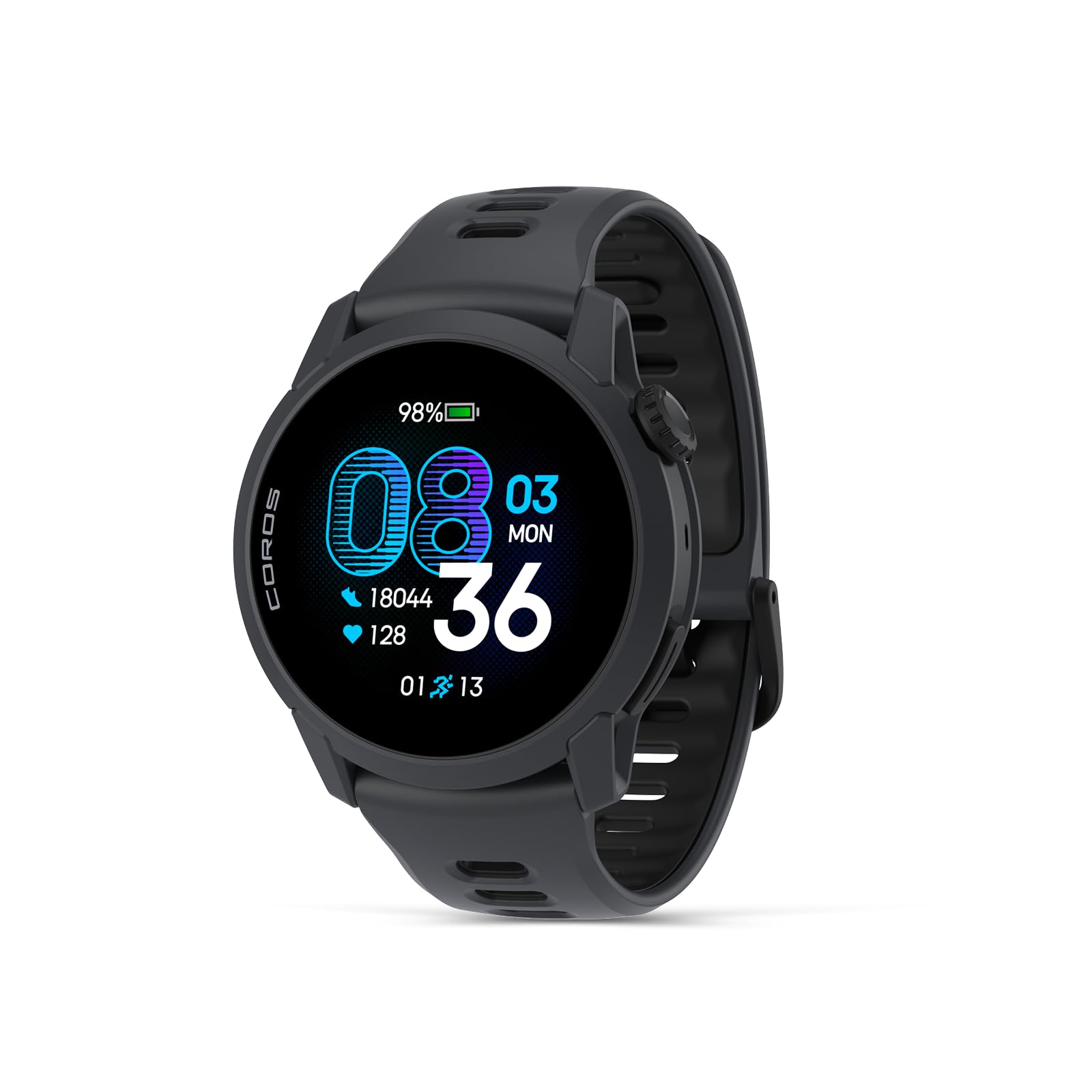
Weighing just 32 grams with the nylon band, the COROS PACE 4 is lighter than most wristbands — you genuinely forget it’s there. Yet it packs 41 hours of continuous GPS tracking and 19 days of daily use, making it one of the most power-efficient running watches available. The 1.2-inch AMOLED touchscreen offers 164% higher resolution than its predecessor, with auto-adjusting brightness.
New voice features allow you to record training logs and set alarms hands-free using voice control. The digital crown and dual-button system provide tactile control during high-intensity intervals, and the Action Button is customizable for one-tap access to media controls or breadcrumb navigation. Recovery time, HRV, and menstrual cycle tracking are built into the COROS app ecosystem.
Users who switched from Garmin Forerunner models call the PACE 4 “better in every way” for running-focused training. GPS accuracy reliably matches or beats more expensive watches, and the battery drops only 25% after 12 miles with music and all-GPS mode active. A screen protector is recommended as the lens sits flush with a thin bezel.
Why it’s great
- Ultra-light 32g design for all-day, all-night wear
- 41-hour continuous GPS battery for long ultras
- Voice recording for training logs without typing
Good to know
- Nylon band requires drying after heavy sweat or rain
- Touchscreen is sensitive during rainy runs
- No onboard music storage or maps
5. Samsung Galaxy Watch Ultra (2024)
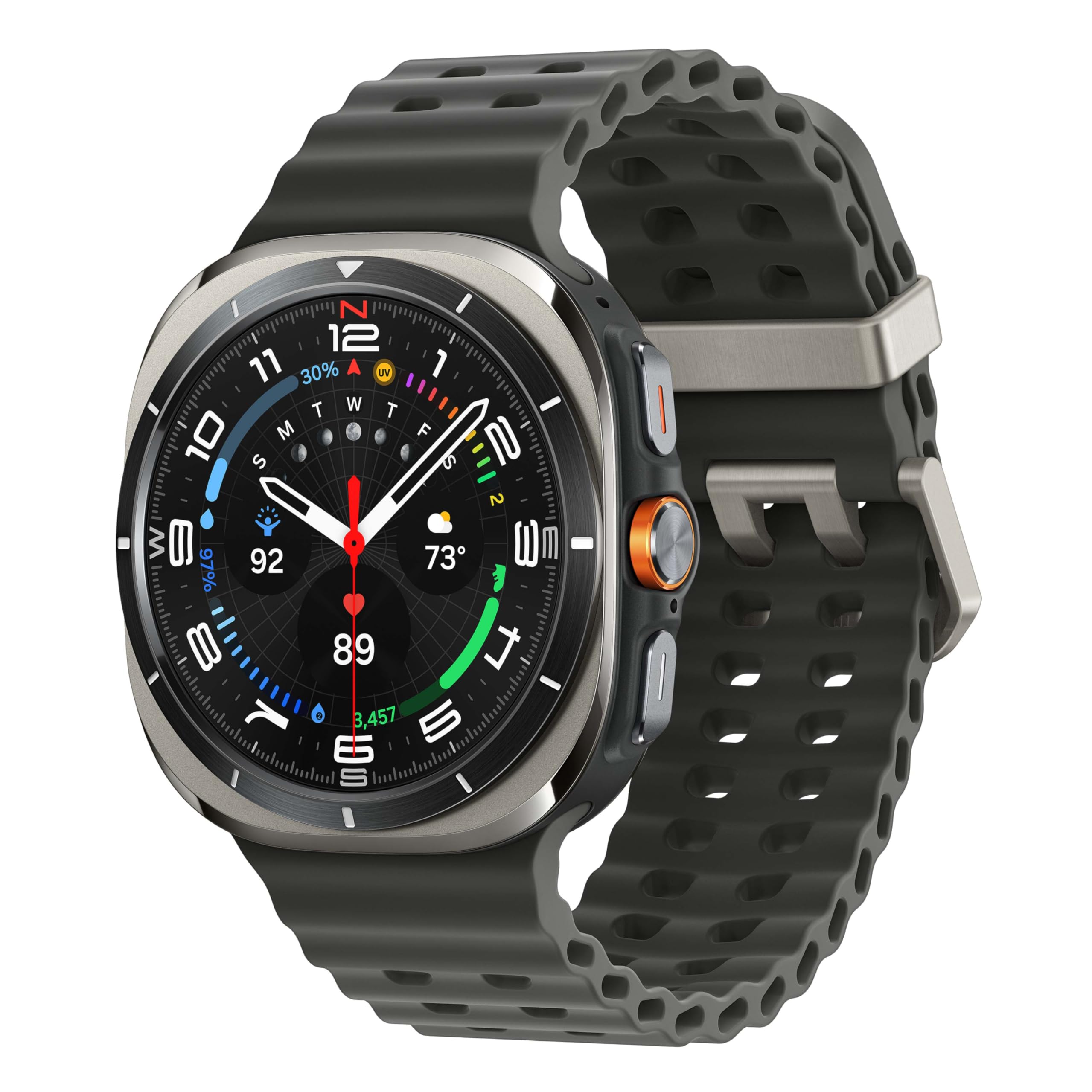
The Samsung Galaxy Watch Ultra is a premium smartwatch first and a fitness tracker second, but its battery life is a clear step up from standard Galaxy Watches. The 590mAh cell delivers around 60 hours of typical use — roughly 3.5 days on a single charge — which is competitive for a full-featured watchOS wearable with LTE, always-on display, and Galaxy AI features.
The titanium case is Samsung’s most durable build, rated for ocean swimming and dusty trails. Energy Score uses Galaxy AI to combine sleep, heart rate, and step data into a daily readiness metric. Heart rate tracking filters out motion artifacts during workouts, providing cleaner data for interval training. The programmable Quick Button launches workouts or apps instantly.
Reviewers report that the Ultra comfortably lasts a weekend trip without needing a charger, and the fast charging reaches full in about two hours. The device runs Wear OS, which means access to Google Play apps, Google Maps navigation, and voice calls via LTE. It is bulkier than standard Galaxy Watches, and health tracking depth is not on par with Garmin or COROS.
Why it’s great
- 3.5 days of battery with always-on display and LTE off
- Titanium case is tough enough for ocean swimming
- Galaxy AI wellness tips and Energy Score for daily readiness
Good to know
- 47mm case is bulky for smaller wrists
- Health metrics like HRV are less detailed than dedicated sports watches
- Requires Samsung phone for full feature access
6. Amazfit Active Max
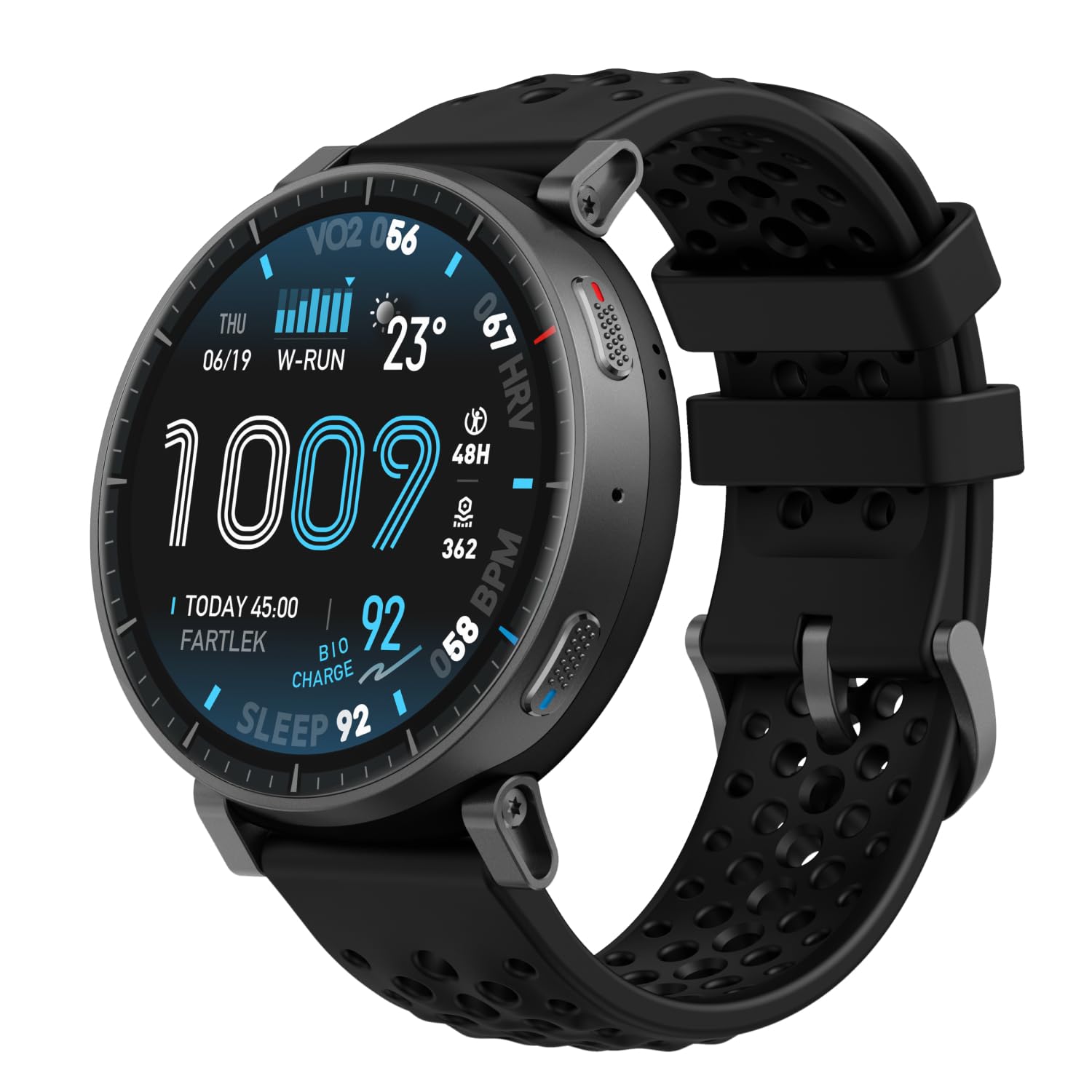
The Amazfit Active Max punches far above its price tier with a 1.5-inch AMOLED display that hits 3,000 nits and a battery that lasts up to 25 days on a single charge. For a bright-screen smartwatch, this is an exceptional endurance figure. It also includes 4GB of onboard storage for music and offline maps, plus five satellite systems for accurate GPS tracking.
BioCharge energy monitoring uses your daily workout and stress data to suggest when to push and when to rest. Zepp Coach generates personalized AI-driven training plans for distances from 3K to full marathon. The watch supports Bluetooth calls and hands-free message replies when connected to an Android phone. Sleep tracking captures deep, REM, and light stages, plus daytime naps.
Customers note the Active Max holds 5 days of heavy use with GPS workouts and still shows significant remaining battery. The always-on display mode does cut runtime to around 6 days. The magnetic charging base is easy to connect but the cable does not include a USB Type-C plug. Some users find the Zepp app’s food AI occasionally misidentifies items but the database is editable.
Why it’s great
- 25-day battery life with a 3000-nit AMOLED display — best-in-class for this price
- Onboard music storage and offline maps for phone-free workouts
- AI-driven training plans from Zepp Coach adapt to your recovery
Good to know
- Always-on display reduces runtime to about 6 days
- Magnetic charger uses a proprietary connector, not USB-C
- Food log AI has occasional errors
7. Amazfit Bip 5 Unity

The Amazfit Bip 5 Unity is a no-frills, budget-friendly entry point for anyone who prioritizes battery over bells and whistles. Its 300mAh battery delivers 11 days of typical use, and in battery saver mode it stretches to 26 days — ideal for users who just want step counting, sleep tracking, and occasional heart rate checks without reaching for a charger every week.
The 1.91-inch display is large for the price, with an anti-fingerprint coating that keeps it clean during daily wear. The stainless steel frame adds a touch of durability uncommon in this bracket. Health monitoring covers heart rate, blood oxygen, stress, and sleep stages including daytime naps. It syncs with Strava, Apple Health, and Google Fit for centralizing your data.
Real-world reviews confirm the 11-day rating is accurate for moderate use. The Zepp app is praised for its barcode food scanning, but the lock screen function can be frustrating, occasionally requiring a factory reset if triggered accidentally. The silicone band traps sweat during exercise, so a nylon replacement is a common upgrade. For the price, the battery value is undeniable.
Why it’s great
- 11 days of battery in typical mode — no weekly charging required
- Large 1.91-inch screen with stainless steel frame for durability
- Easy data sharing with Strava, Apple Health, and Google Fit
Good to know
- No speaker or microphone for calls
- Silicone strap can be sweaty during exercise
- Lock screen may require factory reset if accidentally activated
FAQ
How does solar charging affect battery life on watches like the Garmin Instinct 3 and Enduro 3?
Which display type — AMOLED or MIP — gives longer battery life in a fitness tracker?
Can I use a Garmin Enduro 3 or COROS PACE Pro for sleep tracking without charging every night?
Final Thoughts: The Verdict
For most users, the battery life fitness tracker winner is the COROS PACE Pro because it gives you AMOLED clarity with 20 days of battery — a rare balance of visuals and endurance. If you want virtually unlimited battery life for ultra-endurance events, grab the Garmin Enduro 3. And for a budget-friendly entry point that still delivers 11 days of reliable battery, nothing beats the Amazfit Bip 5 Unity.