
Our readers keep the lights on and the weekend projects moving. As an Amazon Associate, I earn from qualifying purchases.
No more nightly charging anxiety. For anyone who wants a fitness tracker that keeps pace without needing a pit stop every evening, battery endurance has become the single most critical decision factor. This guide cuts through the noise to benchmark the longest-lasting options and the smart trade-offs behind their marathon stamina.
I’m Rikta — the co-founder and writer behind FitlyFast. I’ve spent hundreds of hours analyzing silicon wafer sizes, milliampere-hour capacities, power-management firmware, and display panel efficiency to separate the genuinely long-lasting from the marketing-hype endurance claims.
Whether you train daily or simply want a wearable that keeps tracking without constant recharges, this guide breaks down the real-world metrics behind the battery life fitness watch you can count on.
How To Choose The Best Battery Life Fitness Watch
Battery life on a fitness watch isn’t just one number — it’s a range that shifts depending on how you use the device. A watch that claims 50 days of standby may last only three with the always-on display and continuous heart rate enabled. Understanding the variables lets you pick the right tool for your routine.
Battery Capacity Versus Efficiency
Raw milliampere-hour (mAh) figures tell only part of the story. A 500 mAh cell paired with a power-sipping reflective LCD may outlast a 1000 mAh battery driving a bright AMOLED panel. Look beyond capacity and check the processor architecture — newer chips with dedicated low-power co-cores sip energy during sleep and idle periods.
Display Technology
AMOLED panels deliver stunning color and contrast but demand more current, especially with the always-on mode enabled. Sunlight-readable memory-in-pixel (MIP) or transflective LCDs use microscopic power to maintain a static readout. If your priority is maximum days between charges, a well-engineered MIP display often wins over vibrant AMOLED.
Sensor Load & GPS Mode
Continuous heart rate, SpO2 spot-checks, stress monitoring, and multi-band GPS all draw from the same reservoir. A watch that offers 14 days in smartwatch mode may drop to 12 hours of continuous GPS tracking. Runners and hikers should prioritize the GPS-on battery rating, while casual users can focus on the standard mode life.
Quick Comparison
On smaller screens, swipe sideways to see the full table.
| Model | Category | Best For | Key Spec | Amazon |
|---|---|---|---|---|
| Soudorv S50 | Rugged | Extended off-grid trips | 1000 mAh / 50-day standby | Amazon |
| Smart Watch 2026 | GPS Focus | Multi-day GPS tracking with maps | 550 mAh / 21-day typical | Amazon |
| Garmin Forerunner 965 | Premium | Serious runners & triathletes | 260 mAh / 23-day smartwatch mode | Amazon |
| Amazfit Falcon | Premium | Outdoor explorers needing durability | 500 mAh / 14-day typical | Amazon |
| Garmin Venu 4 | Fitness All-rounder | Daily fitness & smart features | AMOLED / 12-day smartwatch mode | Amazon |
| Garmin Vívoactive 5 | Wellness | Health-focused everyday wear | 400 mAh / 11-day smartwatch mode | Amazon |
| Withings Scanwatch Nova | Hybrid | Style without sacrificing health data | 180 mAh / 30-day typical use | Amazon |
| Motorola Moto Watch 120 | Mid-range | Solid battery at a reasonable price | 300 mAh / 10-day typical | Amazon |
| Bestinn P900 | Budget | Entry-level health tracking | 1.58″ display / 120+ sports modes | Amazon |
In‑Depth Reviews
1. Soudorv S50 Smart Watch
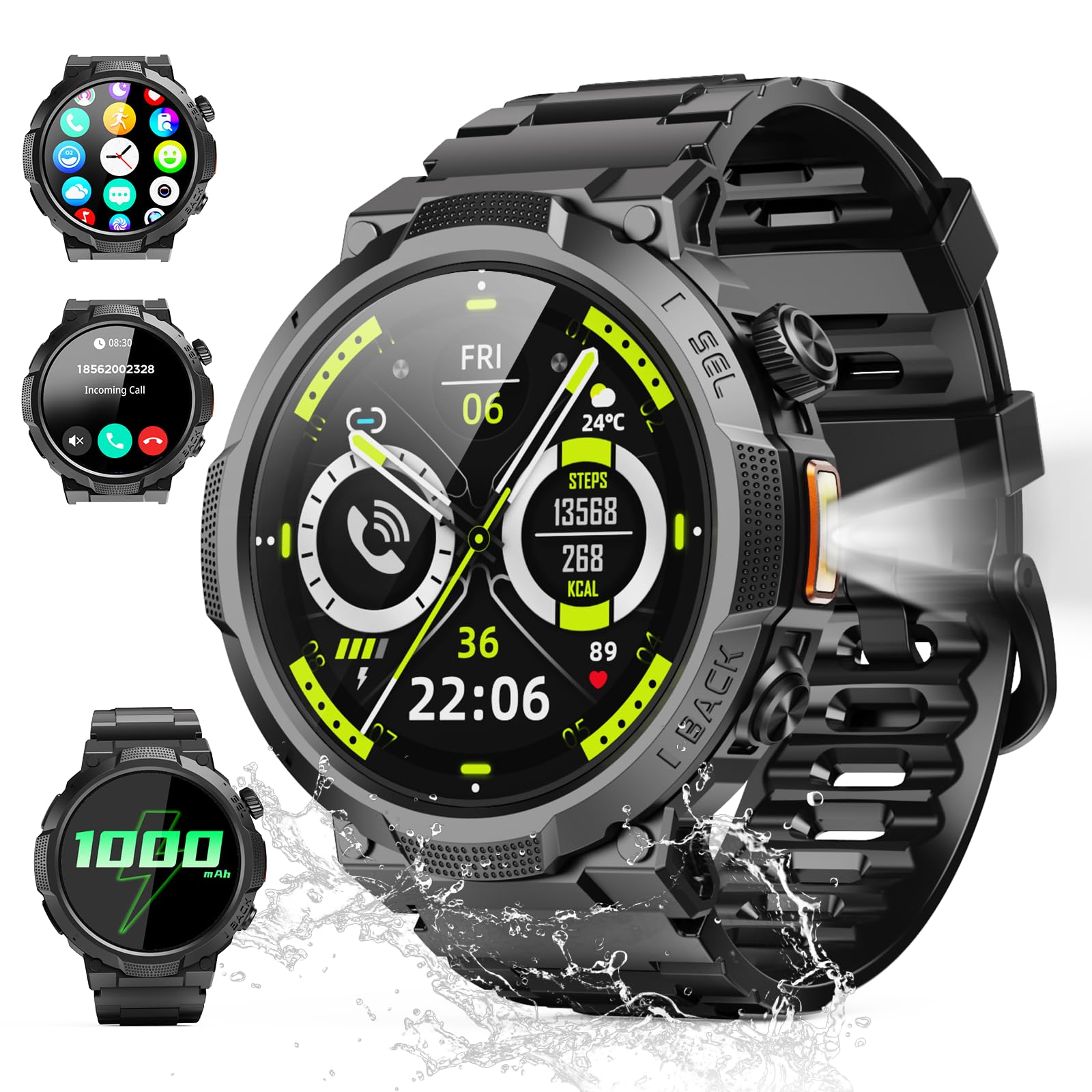
The Soudorv S50 packs a massive 1000 mAh cell that delivers up to 50 days of standby and roughly 18 days of typical daily use. For the endurance-first buyer, this is the class leader — magnetic fast charging refills the battery in about two hours, meaning you can leave the cable at home on a multi-week trip.
Beyond the battery, the S50 features a rugged design that passed 12 military-grade tests, a built-in LED flashlight with a five-meter beam distance, and Bluetooth 5.3 for clear wrist-based calls. The 1.53-inch HD touch screen is sharp enough for quick glances, and the “Da Fit” app offers over 100 customizable watch faces.
For fitness use, the watch supports 110+ sports modes and IP68 waterproofing, though serious swimmers should note it’s rated for rain and hand washing rather than deep submersion. Heart rate and sleep tracking are solid at this tier, and the built-in flashlight alone makes it a standout for night runners or campers.
Why it’s great
- Industry-leading 1000 mAh battery for true multi-week charge cycles
- Rugged MIL-STD build with practical built-in flashlight
- Bluetooth 5.3 calls with crisp speaker and microphone
Good to know
- IP68 rating is splash/rain only — not for prolonged swimming
- Third-party app ecosystem is limited compared to Garmin or Apple
2. 2026 Smart Watch (Savi P08 Pro)
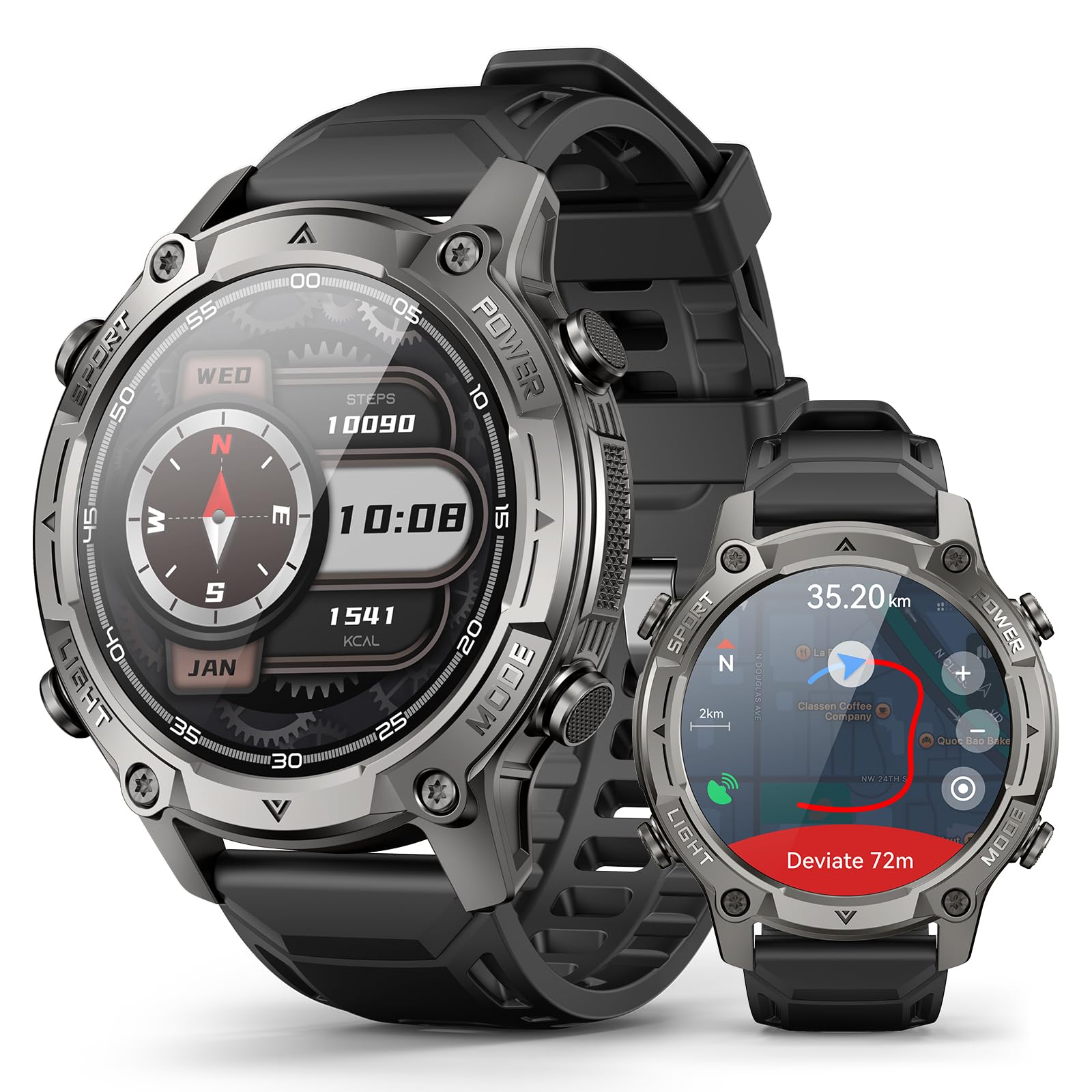
The Savi P08 Pro is a standout for anyone needing standalone GPS and offline topographic maps. Its 550 mAh battery delivers 10-21 days of regular use, with a power-saving mode stretching that further by 30%. The 2-hour magnetic fast charge is convenient, and 30 minutes of charging yields 60 hours of use — a significant boon for adventurers.
A 1.43-inch AMOLED display at 1000 nits ensures crisp readability in direct sunlight, while the zinc alloy frame and Panda Glass keep it light at 81.5 grams. The watch boasts 178 sports modes, a built-in compass, altimeter, barometer, and 5ATM water resistance (50 meters) with auto water-drain for swimming.
Health tracking covers 24/7 heart rate, SpO2, stress, and all-day sleep monitoring including naps. The AI assistant adds voice control, real-time language translation, and 4GB of storage for music and voice recordings. Dual-mic noise reduction keeps call quality clear even in windy conditions.
Why it’s great
- Built-in standalone GPS with offline topographic maps
- 5ATM water resistance with auto-drain for swimmers
- AI voice assistant with 24-language translation
Good to know
- Some software/firmware areas feel unfinished per user reports
- Zinc alloy frame adds slight heft for some wrists
3. Garmin Forerunner 965

The Forerunner 965 is Garmin’s premier running watch, delivering up to 23 days in smartwatch mode and 31 hours of GPS tracking. Its 260 mAh battery seems modest on paper, but Garmin’s power-optimized silicon and memory-in-pixel display management make it incredibly efficient. Multi-band GNSS with SatIQ technology automatically balances accuracy against power draw.
The 1.4-inch AMOLED touchscreen is bright and responsive, complemented by traditional button controls for wet or gloved hands. The titanium bezel keeps weight low, and the full-color built-in maps with turn-by-turn directions make route exploration seamless. Training features include daily suggested workouts based on recovery, HRV status, and training readiness.
Wrist-based running dynamics measure cadence, stride length, ground contact time, and running power — data that serious runners depend on. The watch also supports triathlon, duathlon, and brick workout profiles with one-button sport switching. Sleep tracking, Body Battery energy monitoring, and a morning report round out the wellness side.
Why it’s great
- Exceptional 23-day smartwatch battery with 31-hour GPS endurance
- Full-color offline maps with turn-by-turn navigation
- Comprehensive training metrics: running power, HRV, training readiness
Good to know
- No LTE option — calls require phone pairing
- Premium price positions it above casual fitness trackers
4. Amazfit Falcon

The Amazfit Falcon combines a premium TC4 titanium unibody and sapphire glass with a 500 mAh battery that delivers 14 days of typical use and up to 23 days under lighter usage. For outdoor explorers who demand toughness without recharging mid-expedition, this build quality is rare at its price point.
Dual-band GPS with support for six satellite systems provides precise location tracking, and offline map support lets you navigate without a phone. The watch is water-resistant to 200 meters, making it suitable for open-water swimming and snorkeling. Zepp Coach uses AI-driven insights to balance recovery and performance.
The 1.28-inch AMOLED display is sharp, and the always-on mode is manageable without destroying battery life. Users report the watch lasts a full week of heavy GPS use (80 miles of gravel biking) and still has charge left. The free app offers deep health analytics without a subscription.
Why it’s great
- TC4 titanium case with scratch-resistant sapphire glass
- 200-meter water resistance for serious aquatic activities
- Dual-band, six-satellite GPS with offline mapping
Good to know
- Some users report battery life degrades after 9-12 months
- Zepp app interface can feel cluttered with buried settings
5. Garmin Venu 4
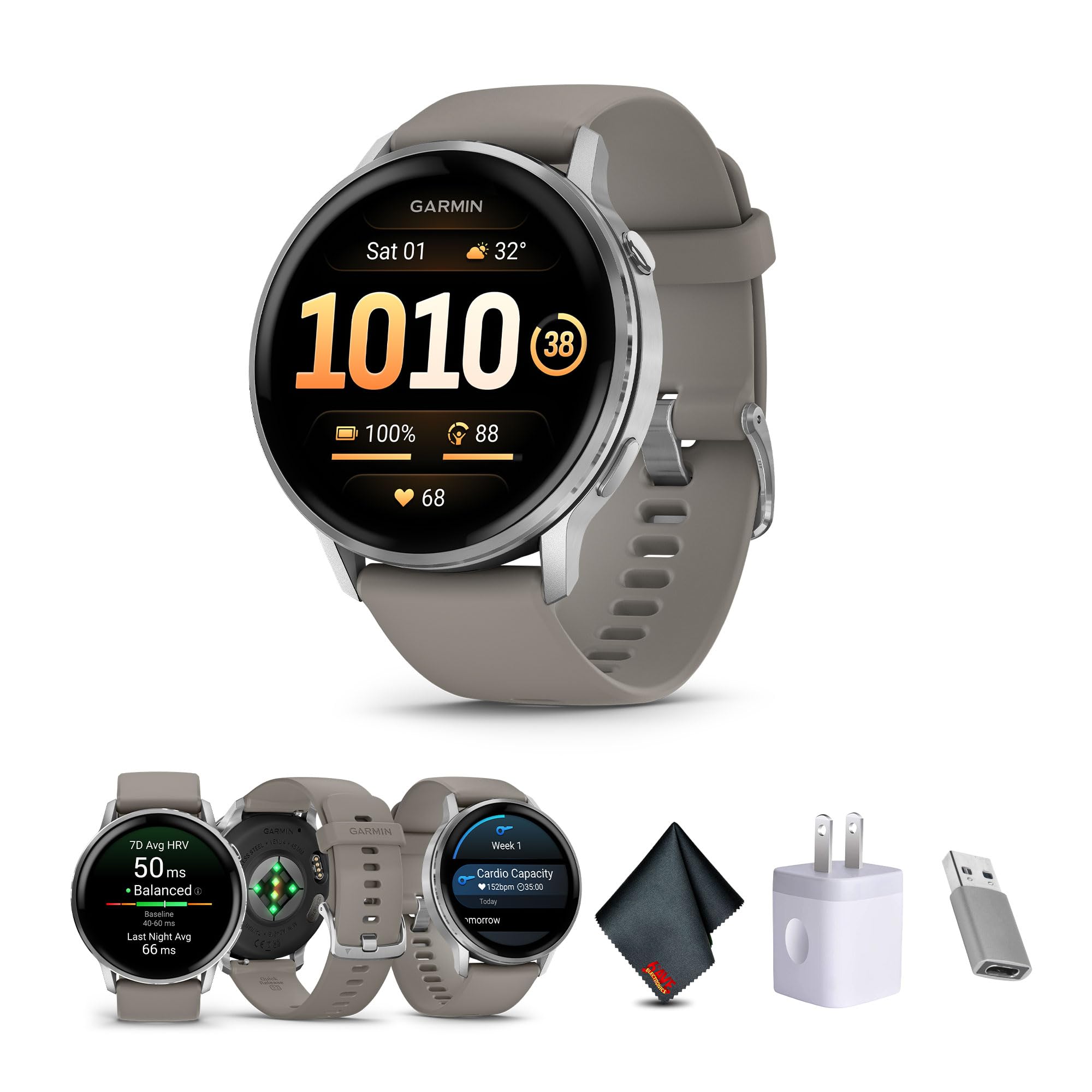
The Garmin Venu 4 brings a bright 1.4-inch AMOLED display to a 45mm metal design, delivering up to 12 days in smartwatch mode. Multi-band GPS with SatIQ technology locks in accurate positioning while optimizing power draw — a practical balance for daily runners, cyclists, and fitness-goers.
With 80+ built-in GPS and indoor sports apps, animated on-screen strength routines, and Garmin Coach adaptive training plans, it covers a broad range of activities. A built-in LED flashlight adds nighttime utility, and downloadable music storage from Spotify, Deezer, or Amazon Music enables phone-free listening.
Smart features include wrist-based calls and texts (when paired), Garmin Pay for contactless payments, and safety tracking for location sharing during activities. The Venu 4’s sleep tracking, Body Battery, and stress monitoring are well-regarded, though serious triathletes may find the multi-sport mode less fluid than the Forerunner series.
Why it’s great
- Vibrant AMOLED display with 12-day battery life
- Built-in microphone and speaker for wrist-based calls
- Music storage for offline playback via Spotify/Deezer
Good to know
- Multi-sport transition during swimming/running can be clunky
- No on-board maps for navigation like the Forerunner 965
6. Garmin Vívoactive 5

The Vívoactive 5 is Garmin’s best balance of price and endurance, offering up to 11 days in smartwatch mode from its 400 mAh battery. The AMOLED display is bright and responsive, and users consistently report getting a full week between charges even with GPS workouts and continuous heart rate enabled.
Health tracking is comprehensive: wrist-based heart rate, SpO2, stress, sleep scoring with HRV status, and Body Battery energy monitoring. The watch supports automatic nap detection and logging, plus menstrual cycle and pregnancy tracking. A wheelchair mode tracks pushes instead of steps — a thoughtful inclusion often missing at this tier.
With over 30 built-in GPS and indoor sports apps, plus Garmin Coach adaptive training plans, it covers most fitness needs. Music storage supports Spotify, Amazon Music, and Deezer. The morning report provides a useful daily snapshot, and the lightweight design (39g) makes it comfortable for 24/7 wear.
Why it’s great
- Excellent 7-11 day battery life with AMOLED display
- Lightweight, comfortable design for all-day and sleep wear
- Wheelchair mode and inclusive fitness tracking options
Good to know
- Nap detection can produce false positives that can’t be manually deleted
- No voice assistant or onboard maps for navigation
7. Withings Scanwatch Nova
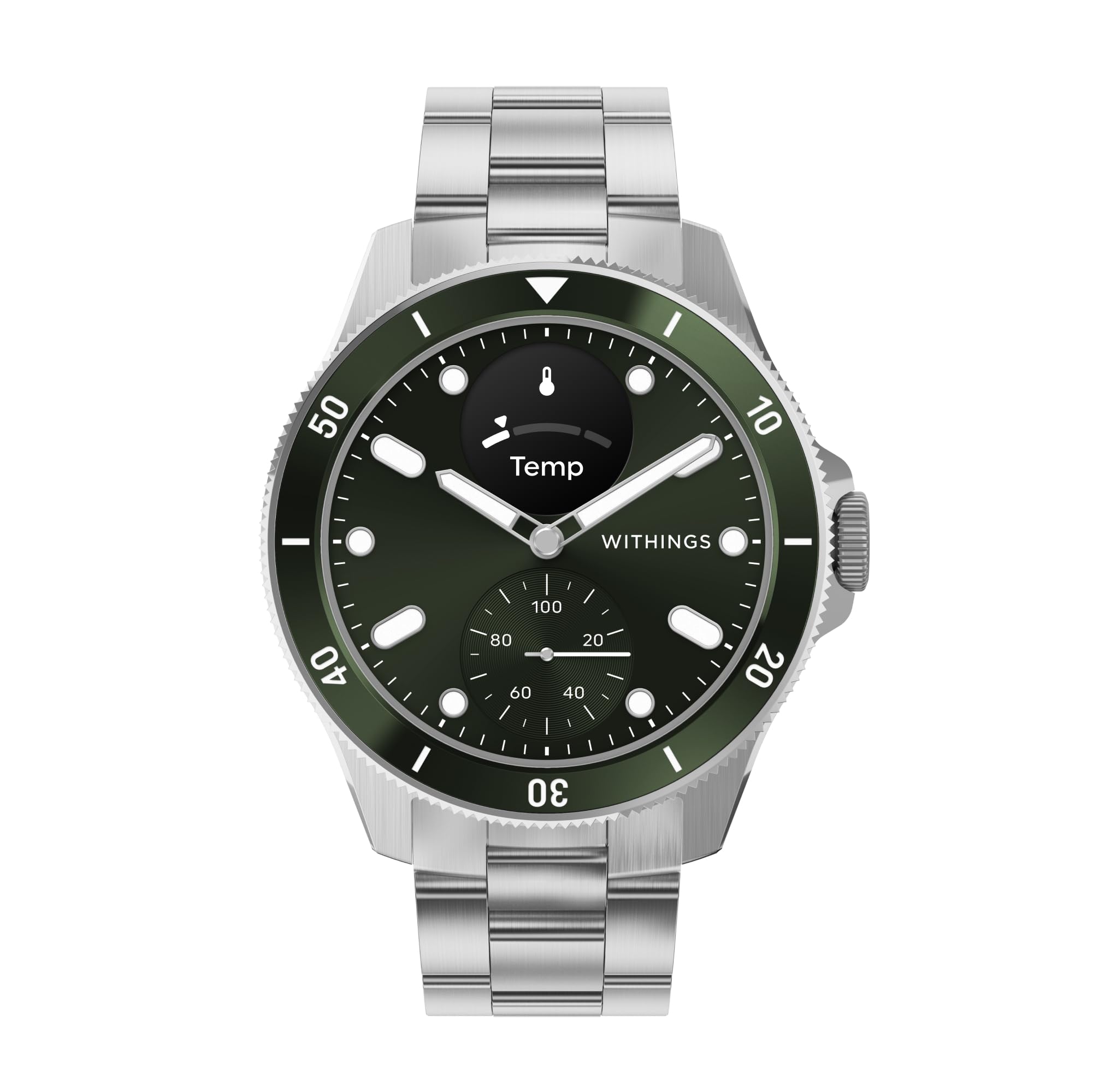
The Withings Scanwatch Nova is a hybrid smartwatch that looks like a classic analog timepiece but tracks health metrics for up to 30 days on a single charge. Its 180 mAh battery powers a subtle OLED sub-display, continuous heart rate, SpO2 spot-checks, and sleep analysis — all hidden beneath a premium stainless steel body with a scratch-resistant sapphire crystal.
For health monitoring, it offers 24/7 heart rate tracking with high/low notifications, overnight HRV analysis, a menstrual cycle guide, and sleep quality scoring. The connected GPS leverages your phone for route tracking during 40+ activity types. An ECG function and respiratory rate tracking are available via the companion app.
The real draw is the design — a 50mm silver case with a Swiss-style crown and genuine stainless steel bracelet. It looks like a dress watch, not a fitness tracker. Battery life is genuine: users report 20-29 days of mixed use. The main downside is the relatively basic on-watch alerts and the need to use the phone app for deeper data.
Why it’s great
- True 30-day battery in a classic luxury watch design
- Premium build with stainless steel case and sapphire crystal
- ECG and advanced sleep/HRV tracking in a discreet package
Good to know
- Small OLED screen shows limited info at a glance
- No on-board GPS — relies on phone for route tracking
8. Motorola Moto Watch 120

The Motorola Moto Watch 120 offers a competitive 10-day battery life in a polished package. Its 300 mAh cell, paired with a power-efficient AMOLED display, consistently delivers a full week of mixed use — including notifications, heart rate tracking, and sleep monitoring — with charge to spare.
The rose gold alloy bezel and stainless steel case give it a premium aesthetic that rivals watches costing twice as much. The 1.43-inch AMOLED display is vibrant, and the 22mm silicone band is comfortable for all-day wear. Health tracking covers heart rate, SpO2, and stress monitoring, with data presented clearly on the watch face.
Compatibility spans both iPhone and Android. Workout detection is solid for walking, running, and cycling, though the sports mode library is smaller than dedicated fitness watches. Some users have reported durability concerns after extended use, and customer support responsiveness appears inconsistent.
Why it’s great
- Genuine 7-10 day battery with vibrant AMOLED display
- Premium stainless steel build at a mid-range price
- Clear health metrics: heart rate, SpO2, sleep, stress
Good to know
- Limited sports mode library compared to Garmin alternatives
- Customer support and warranty response can be slow
9. Bestinn P900 Fitness Tracker

The Bestinn P900 is a budget-conscious entry point for anyone wanting basic fitness tracking without frequent charging. Its lithium polymer battery, while not specified with a high mAh figure, provides enough endurance for several days of mixed use — users report being able to charge every 3-5 days.
The 1.58-inch ultra high resolution display is larger than most at this price, with an always-on clock mode and full touch controls. Health monitoring covers 24/7 heart rate, blood pressure, and blood oxygen, plus sleep stage tracking. With 120+ sports modes and all-day step/calorie tracking, it rivals more expensive watches for activity coverage.
Notifications for calls and messages come through clearly, and the companion Da Fit app offers over 150 customizable watch faces. IP68 waterproofing handles rain and washing, though it’s not suitable for swimming. The replaceable strap and lifetime customer support add value for first-time users.
Why it’s great
- Very accessible price point for a feature-rich tracker
- 1.58-inch large display with always-on mode
- 120+ sports modes and comprehensive health sensors
Good to know
- Battery life is moderate — expect 3-5 days between charges
- Health sensor accuracy may vary compared to premium brands
FAQ
What is the real-world difference between standby days and smartwatch mode days?
Does a higher mAh capacity always mean better battery life?
How does always-on display affect battery life on a fitness watch?
Can I replace the battery in a fitness watch when it degrades?
Why does GPS mode drain the battery so much faster?
Final Thoughts: The Verdict
For most users, the battery life fitness watch winner is the Soudorv S50 because its 1000 mAh battery and 18-day typical life remove all charging anxiety while delivering rugged features and Bluetooth calling. If you want advanced training metrics and offline maps for serious running, grab the Garmin Forerunner 965. And for hybrid style that lasts 30 days without looking like a gadget, nothing beats the Withings Scanwatch Nova.