
Our readers keep the lights on and the weekend projects moving. As an Amazon Associate, I earn from qualifying purchases.
Nothing drains the joy from a camping trip faster than a dead phone when you need the map or a CPAP machine that stops breathing for you in the middle of a cold night. A battery pack for camping isn’t a convenience—it’s the difference between a peaceful reset and a frustrating, powerless ordeal that leaves you packing up early.
I’m Rikta — the co-founder and writer behind FitlyFast. I’ve spent years analyzing portable power station specs, battery chemistries, and real-world discharge rates so you can cut through the marketing and pick a unit that actually survives a weekend in the woods.
The right choice balances capacity, weight, and recharging flexibility, and this guide ranks the best battery pack for camping to match every adventure style and power need.
How To Choose The Best Battery Pack For Camping
Picking a camping battery pack comes down to three hard decisions: battery chemistry, capacity in watt-hours, and how fast you can refill it when you’re off-grid. Ignore any of these and you’ll either run out of power halfway through the trip or be stuck carrying a brick that’s heavier than your tent.
Battery Chemistry: Why LiFePO4 Wins
Lithium Iron Phosphate (LiFePO4) packs deliver 3,000 to 3,500 charge cycles before degrading to 80% capacity—roughly ten times the lifespan of standard lithium-ion. They also handle temperature swings better, which matters when a battery pack sits in a car trunk under the summer sun or near a tent flap in freezing fall air. If a unit uses standard lithium-ion, you’ll likely replace it within two seasons of regular use.
Watt-Hours vs. Weight: The Real Trade-Off
A 200Wh pack can recharge a smartphone about 10 times or run a CPAP machine for one night. Bump up to 1,000Wh and you can power a mini-fridge for a full weekend, but the unit will weigh 20+ pounds. Decide what you’re powering before you look at size. For car campers, weight barely matters; for backpackers, every watt-hour per pound counts.
Solar Input and MPPT Controllers
If you camp for three or more days without grid power, solar recharging becomes essential. A built-in MPPT (Maximum Power Point Tracking) controller harvests 30% more energy from a solar panel compared to a standard PWM controller. Look for a unit with at least 60W solar input—100W is better if you plan to recharge fully during a single sunny day.
Quick Comparison
On smaller screens, swipe sideways to see the full table.
| Model | Category | Best For | Key Spec | Amazon |
|---|---|---|---|---|
| EF ECOFLOW Delta 3 Classic | Premium | High-demand camping & home backup | 1024Wh LiFePO4, 1800W AC | Amazon |
| Jackery Explorer 2000 v2 | Premium | Extended off-grid stays | 2042Wh LiFePO4, 30dB quiet | Amazon |
| VTOMAN Jump 600X | Mid-Range | Car campers who want jump-start | 299Wh LiFePO4, 600W AC | Amazon |
| BLUETTI Elite 30 V2 | Mid-Range | Compact UPS & CPAP use | 288Wh LiFePO4, 600W/1500W surge | Amazon |
| DaranEner Portable Power Station | Mid-Range | Lightweight CPAP & device charging | 192Wh LiFePO4, 5.73 lbs | Amazon |
| Anker SOLIX C200 DC | Value | Ultra-portable daily carry | 192Wh LiFePO4, 39% smaller | Amazon |
| GRECELL EB300 | Budget | Budget-friendly tent camping | 288.6Wh LiFePO4, 5W wireless | Amazon |
In‑Depth Reviews
1. EF ECOFLOW Delta 3 Classic
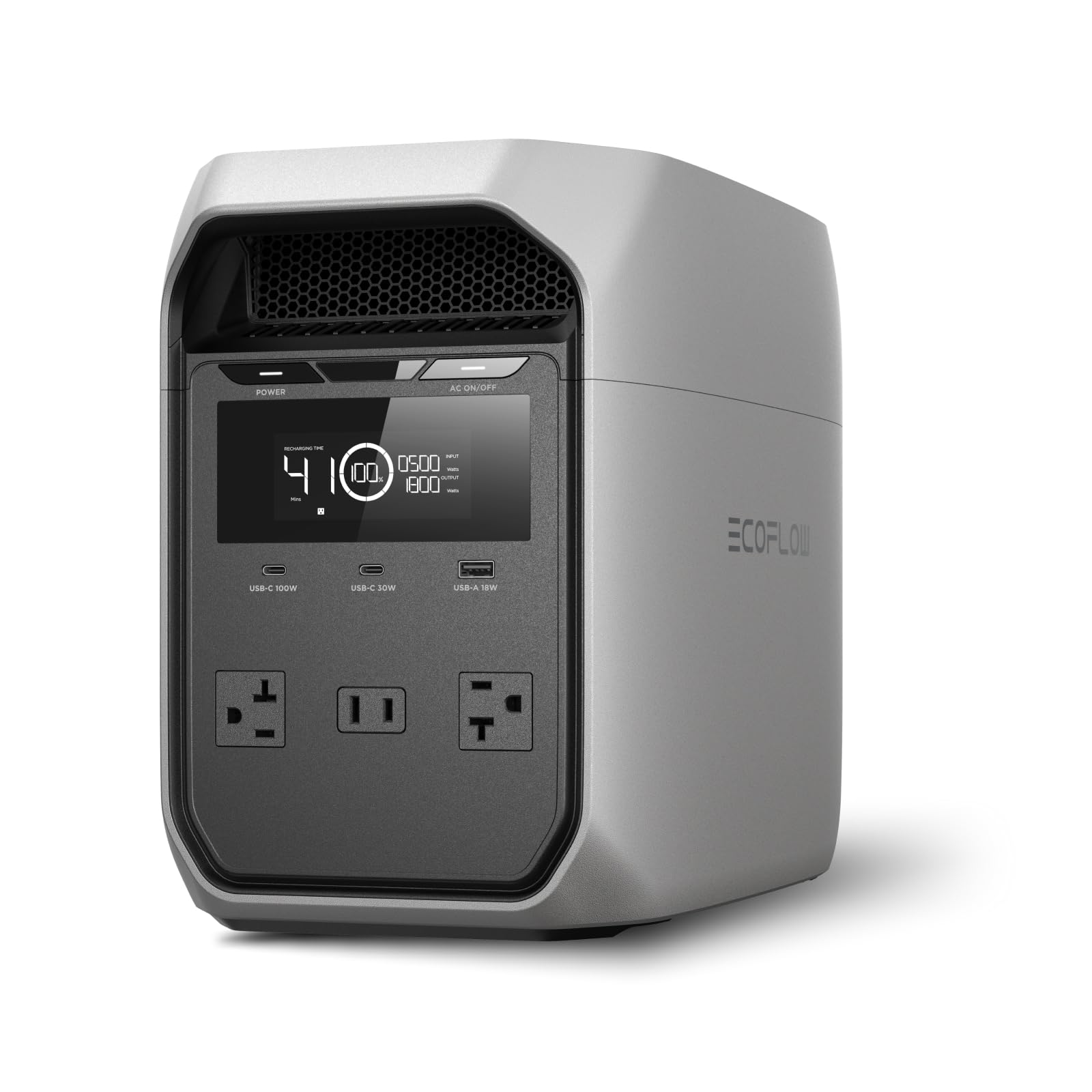
The EF ECOFLOW Delta 3 Classic delivers a genuine 1,024Wh with a 1,800W AC inverter that handles a microwave or refrigerator without hesitation. X-Boost technology pushes surge capacity to 3,600W, so even a skill saw or electric grill doesn’t trip the unit mid-job. The 45-minute 0–80% AC recharge time sets a new standard for this capacity class—most competitors need twice as long.
Its LiFePO4 cells are rated for a decade of daily use, with an EV-grade Cell-to-Body structure that makes the chassis both more rigid and 15% lighter than typical 1kWh stations. The <10ms UPS switchover protects sensitive gear like a CPAP machine or a PC during a blackout, and the app lets you schedule charging during off-peak hours or trigger Storm Alert for incoming weather.
Solar recharging hits full capacity in 2.5 hours with a 500W panel, making this the most versatile single unit for car campers who also want a home emergency backup. The only compromise is weight—33 pounds is manageable for rolling into a campsite but too heavy for backpacking.
Why it’s great
- Fastest AC recharge in its class at 45 minutes to 80%
- App-controlled energy management with UPS mode
Good to know
- At 33 pounds, best suited for car camping and RV use
2. Jackery Explorer 2000 v2

The Jackery Explorer 2000 v2 packs a massive 2,042Wh capacity into a chassis that’s 41% lighter and 34% smaller than typical 2kWh stations. That’s thanks to Cell-to-Body technology borrowed from EV manufacturing, which integrates the cells directly into the structural frame. At 39.5 pounds, it’s still heavy, but the integrated handle makes moving it around a campsite realistic for one person.
AC output hits 2,200W with three ports, and the USB-C PD 100W port charges a modern laptop at full speed. The 20ms UPS switchover allows seamless pass-through power to a fridge or router during an outage. Silent Charging Mode keeps noise below 30dB, so it won’t disturb sleep in a tent or RV—valuable for anyone who camps in close quarters.
Full AC recharge takes 102 minutes in emergency mode or about 6 hours with a 400W solar panel. The Bluetooth and network control via the Jackery app adds remote monitoring, and the battery is rated for 10 years of regular cycling. This is the right call for multi-week trips or anyone who wants serious reserve without the bulk of traditional 2kWh units.
Why it’s great
- Best power-to-weight ratio for a 2kWh-class station
- Silent Charging Mode below 30dB for quiet campsites
Good to know
- Slow solar recharge rate without high-wattage panels
3. VTOMAN Jump 600X

The VTOMAN Jump 600X earns its place with a rare dual function: a 299Wh portable power station and a car jump-starter in one box. That means one less device to pack and remember when you’re heading into remote camping areas where a dead car battery can strand you. The jump-start port works with full-size trucks, SUVs, and compact cars, and it functions even when the station itself is at a low charge state.
The 600W AC inverter (1,200W surge) runs small appliances, and the unique constant-power feature keeps delivering 600W even when the connected device tries to draw more—rather than shutting off like most competitors. Three regulated 12V DC outputs at 120W total are ideal for running a 12V cooler or CPAP machine directly. Capacity expands to 939Wh with an optional extra battery, stretching a single weekend to a full week.
Recharge from AC in about 3 hours, or use a 110W solar panel for off-grid refills. The built-in LED light offers five modes including SOS. At 14.6 pounds, it’s portable enough for car camping but heavy for hiking. Customer reports confirm it jump-started a Dodge Ram instantly from a 9% battery—real proof of the advertised capability.
Why it’s great
- Integrated car jump-start saves space and weight
- Regulated 12V DC outputs for coolers and CPAP
Good to know
- Expansion battery sold separately to reach 939Wh
4. BLUETTI Elite 30 V2
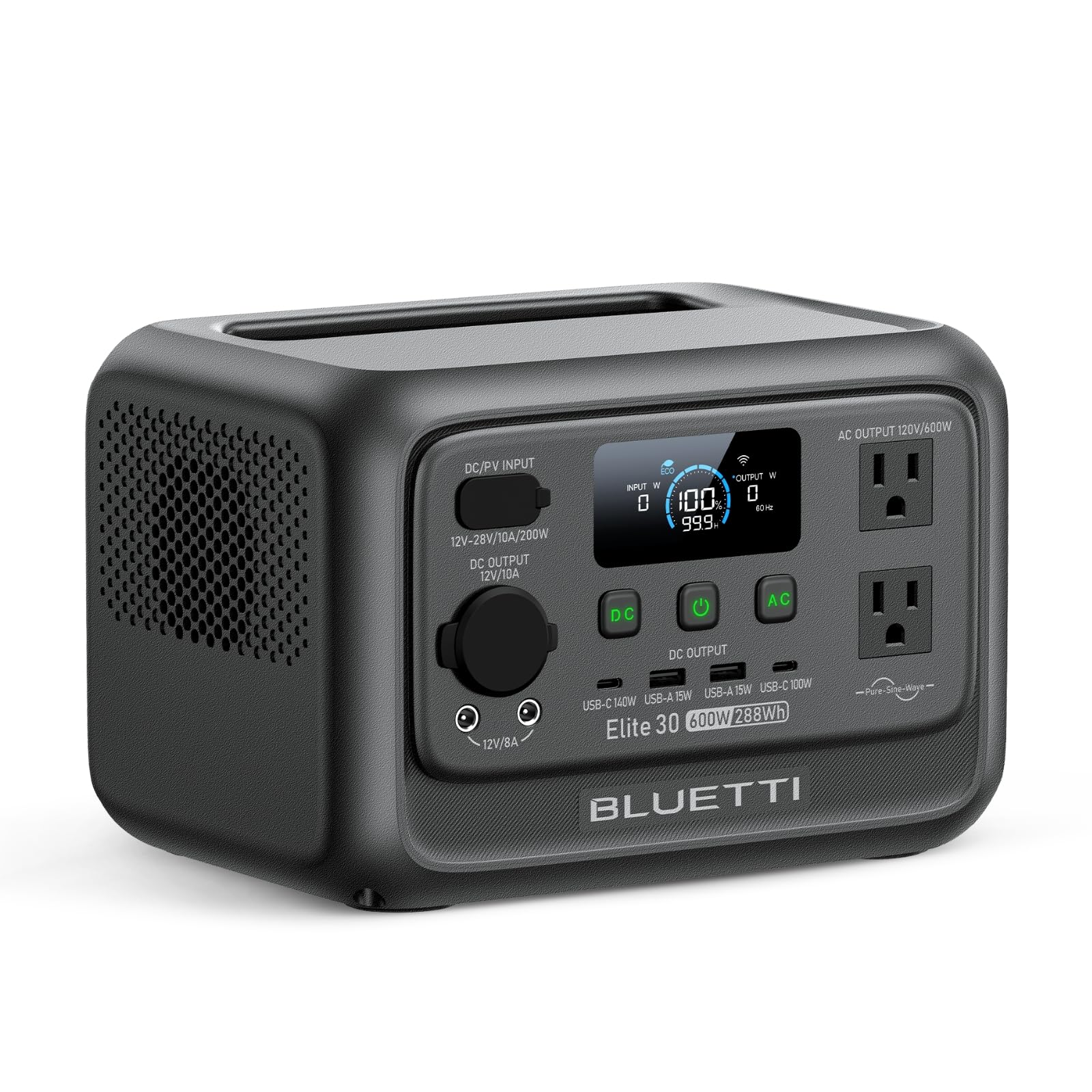
The BLUETTI Elite 30 V2 combines a compact 288Wh LiFePO4 battery with a 600W pure sine wave inverter that can surge to 1,500W in Power Lifting Mode. That capacity runs a CPAP machine for 2–4 nights or a television for 3.5 hours at 80W—covering most short camping trips and home outage scenarios. The 10ms UPS switchover is fast enough to keep a PC or router running through a blackout without a reboot.
It recharges from 0–80% in 45 minutes via AC (380W adjustable) and reaches full in 70 minutes—impressively fast for a sub-300Wh unit. Eight charging modes include solar, car, and AC, with an MPPT controller that boosts solar efficiency. The low 4.5W standby power consumption means you can leave it plugged in without draining unnecessary energy between trips.
The 9.4-pound weight with a handle makes it one of the most portable units in the mid-range segment, and the WiFi app adds remote monitoring. A few customer reviews mentioned initial off-gassing from the new unit—airing it out for an hour solves that. The Elite 30 V2 fits perfectly for campers who also want a backup UPS for home that doesn’t look out of place on a shelf.
Why it’s great
- 10ms UPS switchover protects sensitive electronics
- Fast AC recharge in 70 minutes to full
Good to know
- New units may emit a temporary odor—ventilate before first use
5. DaranEner Portable Power Station
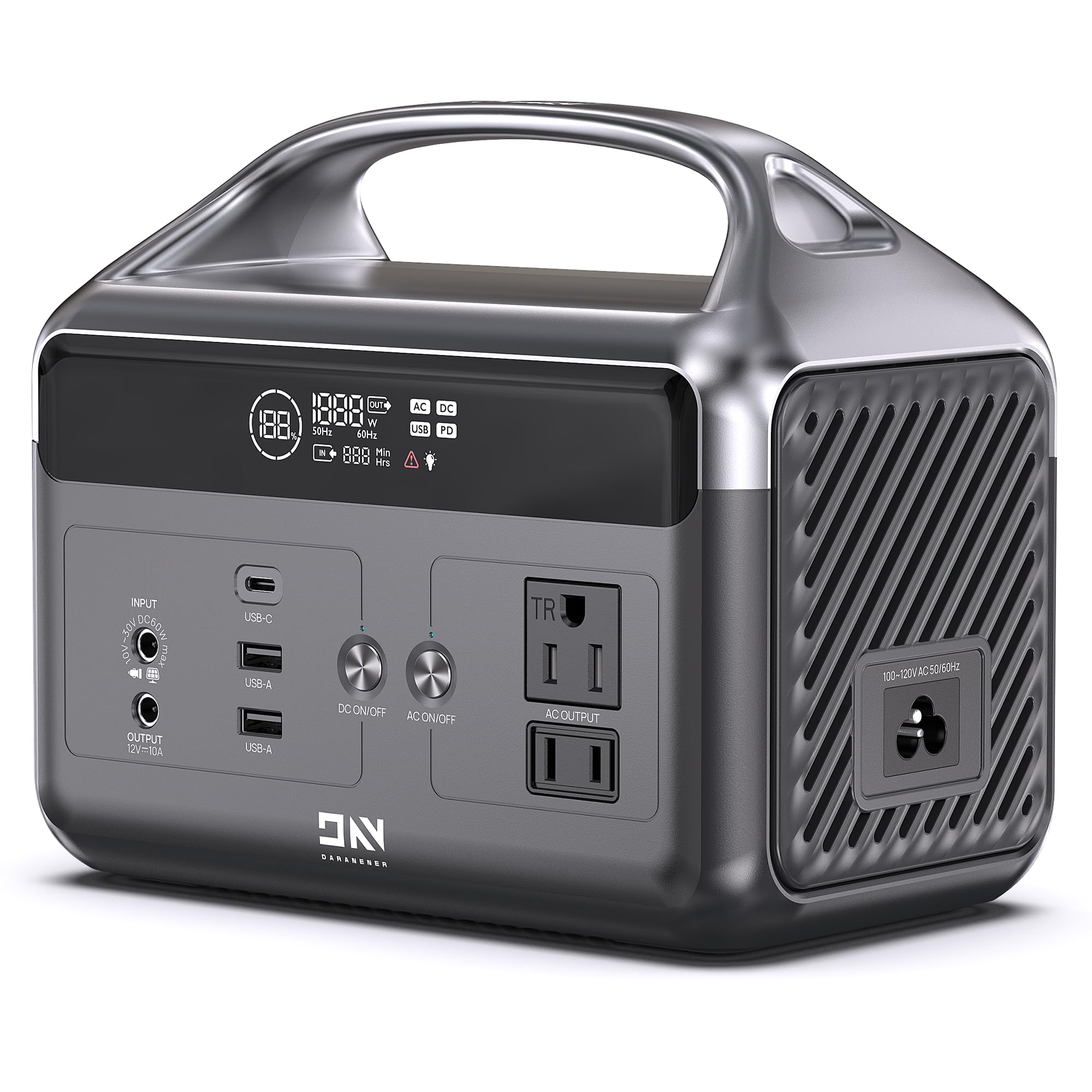
The DaranEner Portable Power Station weighs just 5.73 pounds yet packs 192Wh of LiFePO4 capacity with a 300W pure sine wave inverter (600W surge). That’s enough juice to run a fan for six hours while charging a tablet and smartphone simultaneously—or to power a CPAP machine for most of the night. The compact footprint (smaller than a toaster) slides into a backpack or tent corner without dominating your gear.
Six output ports include two AC outlets, a USB-C PD 60W port, two USB-A ports with QC 3.0, and a 12V DC output. The MPPT solar controller supports up to 60W solar input, and AC wall charging reaches full in about 3 hours. The integrated LED flashlight has four modes including SOS, adding practical utility for night-time camp tasks or roadside emergencies.
Customer feedback highlights excellent customer support—units with DC-side failures were replaced quickly without requiring a return. Some users noted that the battery can drain to 1% and then refuse solar charging until an AC source wakes it up, so keep a wall charger handy if you plan to rely on solar exclusively. For minimalist campers who value weight over raw capacity, this is a great fit.
Why it’s great
- Ultra-light at 5.73 lbs with true LiFePO4 safety
- Responsive customer service with quick replacements
Good to know
- Solar charging may not wake the unit if battery drops to 1%
6. Anker SOLIX C200 DC

The Anker SOLIX C200 DC is 39% smaller than comparable 192Wh stations, making it the most pocketable option for campers who prioritize footprint over all else. It features a two-way 140W USB-C PD 3.1 port that can charge the station itself or power a laptop at full speed—one of the highest single-port PD outputs in its class. Two additional USB-C ports (100W and 15W) plus two USB-A ports bring the total to five charging channels.
The LiFePO4 battery supports 3,000 cycles, and the 200W total output is more than enough for phones, tablets, drones, and gaming systems. Solar input reaches 100W, and AC recharging via a 140W PD charger gets you to 80% in just 1.3 hours. The station can also run on a car charger, making it a natural fit for overlanding setups where space is tight.
Customers confirm it powers a Starlink Mini for 6–8 hours via USB-C, and the pass-through charging works cleanly with a 140W input. The main catch is that no wall charger is included in the box, so you need to supply your own USB-C PD charger—an 18W minimum is required for AC recharging. If you already own a high-wattage laptop charger, this is a non-issue.
Why it’s great
- Industry-leading 140W two-way USB-C PD port
- 39% smaller than other 192Wh stations
Good to know
- No wall charger included—must supply your own
7. GRECELL EB300
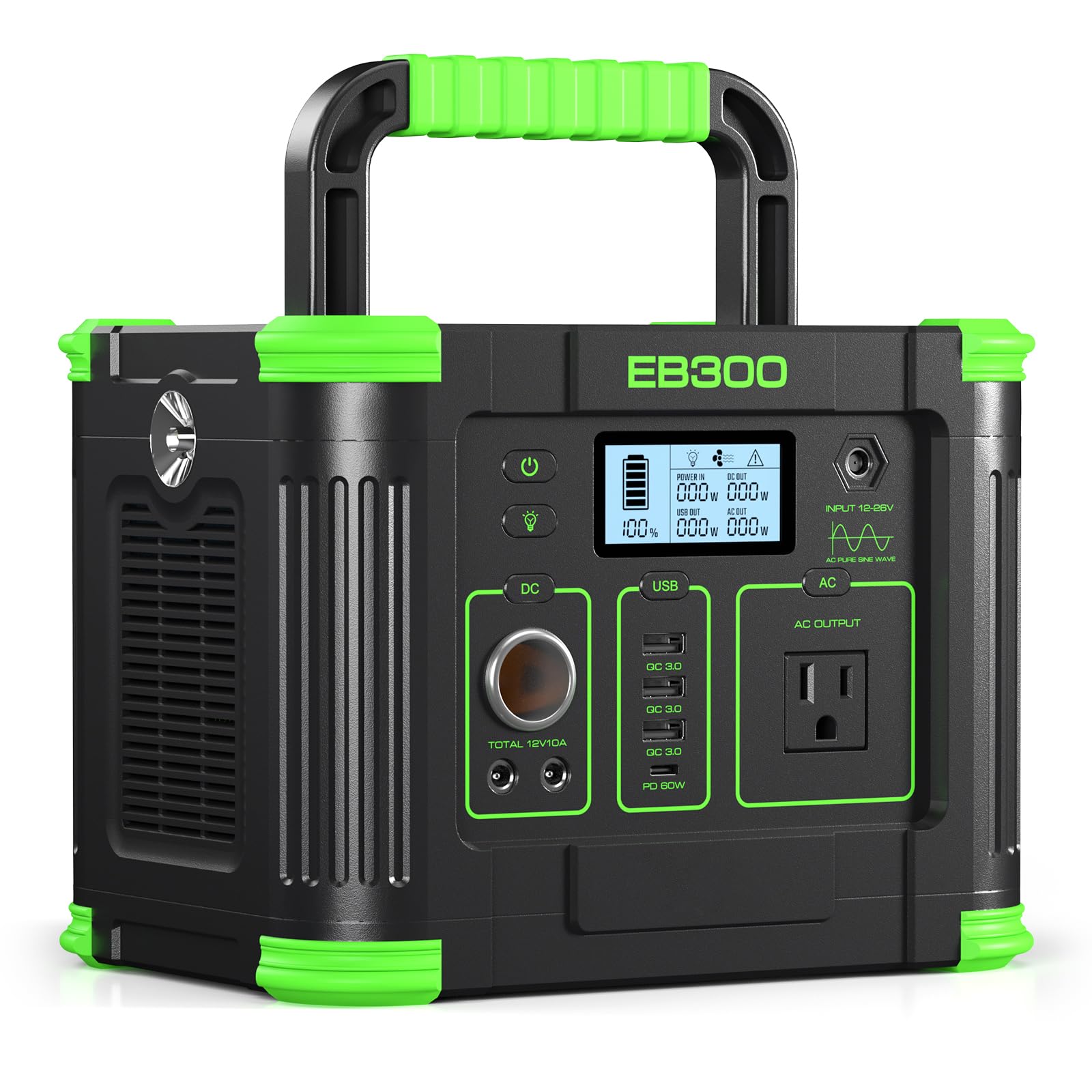
The GRECELL EB300 packs 288.6Wh and a 330W pure sine wave inverter (600W surge) at a budget-friendly price point that undercuts most competitors in the same capacity class. It powers a CPAP machine for 2–4 nights or a 32-inch TV for 3–4 hours per charge, and the nine output ports include a 60W USB-C PD port, dual USB-A with QC 3.0, two DC ports, a 12V car socket, and even a 5W wireless charging pad on top.
The built-in MPPT solar controller accepts 60–120W panels and recharges in 5–9 hours depending on sun conditions. AC wall charging takes about 6–7 hours. Dual whisper-quiet fans kick in automatically under heavy load to keep the BMS-managed LiFePO4 cells within safe temperature range. The 3W LED flashlight offers high, strobe, and SOS modes, using an independent circuit that won’t drain the main battery.
At 5.3 pounds stated weight (though the product page also lists 7.94 lbs depending on packaging), it’s portable enough for tent camping. Customer reviews praise its reliability for charging phones, laptops, and speakers during power outages and camping trips. The 24-month warranty adds peace of mind for budget shoppers. The main trade-off is slower AC recharge compared to premium units—but that’s expected at this price point.
Why it’s great
- Best capacity-to-price ratio in the budget segment
- Wireless charging pad reduces cable clutter
Good to know
- AC recharge takes 6–7 hours—slower than premium models
FAQ
Can I run a 12V car fridge on these battery packs?
How many nights will a 288Wh pack run a CPAP machine?
Is it safe to leave a LiFePO4 power station in a hot car?
Can I charge the power station and run devices at the same time?
What size solar panel do I need for a weekend camping trip?
Final Thoughts: The Verdict
For most users, the best battery pack for camping winner is the EF ECOFLOW Delta 3 Classic because it balances a large 1,024Wh capacity, ultra-fast 45-minute recharge, and a <10ms UPS mode that protects medical gear and laptops—all within a LiFePO4 frame built to last a decade. If you want a compact unit that can also jump-start your car, grab the VTOMAN Jump 600X. And for extended off-grid stays where every watt-hour matters, nothing beats the Jackery Explorer 2000 v2 with its lightweight 2kWh chassis and whisper-quiet operation.