
Our readers keep the lights on and the weekend projects moving. As an Amazon Associate, I earn from qualifying purchases.
A dead CPAP battery in the middle of a campsite isn’t just an inconvenience—it’s a health risk. Without your prescribed therapy, you face disrupted sleep, reduced oxygen levels, and next-day grogginess that ruins the entire outdoor experience. The core challenge isn’t simply finding a power source; it’s finding one that delivers clean, stable, pure sine wave power quietly enough to not disturb your tent, compact enough to pack, and with enough capacity to last the full night.
I’m Rikta — the co-founder and writer behind FitlyFast. I’ve spent countless hours cross-referencing capacity ratings, inverter types, output port configurations, and real-user runtime claims to separate the portable power stations that genuinely work for overnight medical device use from those that fall short.
Whether you’re planning a week-long RV trip, a weekend backpacking adventure, or simply preparing for power outages, finding the right battery to use for cpap camping requires understanding your device’s wattage draw, the difference between AC and DC power, and the battery chemistry that will reliably deliver through the night.
How To Choose The Best Battery To Use For CPAP Camping
Selecting a portable power station for your CPAP involves more than just grabbing the biggest number. You need to match the battery’s output voltage and capacity to your specific machine’s requirements, all while keeping weight and recharge options in mind for the outdoors.
Match Capacity to Your Nightly Draw
Your CPAP’s power consumption is measured in watts. Most machines draw between 30 and 60 watts with the humidifier off, and 60 to 120 watts with it on. Multiply your machine’s wattage by the hours you sleep to find your nightly watt-hour (Wh) requirement. A 50W draw over 8 hours needs at least 400Wh of usable battery capacity. Battery ratings (like 288Wh or 299Wh) represent total stored energy, but inverter inefficiency and battery management system overhead mean you should aim for 20-30% more capacity than your calculated need.
Prioritize DC Output Over AC
Running your CPAP through the AC inverter wastes 10-15% of the battery’s energy converting DC to AC, then your CPAP’s power brick converts it back to DC. A dedicated DC output port (12V, 15V, or 24V—matching your CPAP’s input voltage) lets you connect directly, eliminating conversion losses and dramatically extending runtime. Many purpose-built CPAP batteries include the specific DC cables for ResMed and Philips machines, making this the most efficient path for overnight use.
Choose the Right Battery Chemistry
Lithium-ion (Li-ion) batteries offer high energy density at a lower upfront cost but degrade faster, typically lasting 500 charge cycles before capacity noticeably drops. Lithium iron phosphate (LiFePO4) batteries cost more initially but deliver 3,000 to 3,500 cycles, making them significantly cheaper per night over the battery’s life. LiFePO4 also handles extreme temperatures better and is chemically safer, with virtually no risk of thermal runaway—an important consideration when the battery may be charging inside a tent or vehicle.
Weigh Portability Against Runtime
A battery that runs your CPAP for three nights is worthless if it’s too heavy to carry to your campsite. Batteries in the 7-to-10-pound range typically offer 280-300Wh of capacity, good for one to two nights with the humidifier off. For multi-night trips without recharging, you’ll step up to 15+ pound units with 600Wh-plus capacity. Car campers can comfortably manage heavier units with handles, while backpackers should look for sub-5-pound dedicated CPAP batteries (like the BLUETTI X30 at 4.1 pounds) that prioritize efficiency over total capacity.
Quick Comparison
On smaller screens, swipe sideways to see the full table.
| Model | Category | Best For | Key Spec | Amazon |
|---|---|---|---|---|
| BLUETTI X30 | Dedicated CPAP | Ultra-light CPAP backup | 297Wh / 3.9 lbs | Amazon |
| EASYLONGER ES960 | Dedicated CPAP | Multi-night LiFePO4 | 297.6Wh / 3000 cycles | Amazon |
| EF ECOFLOW RIVER 3 | Power Station | Fast-charging UPS | 245Wh / 1hr AC charge | Amazon |
| BLUETTI Elite 30 V2 | Power Station | High-output versatility | 288Wh / 600W output | Amazon |
| VTOMAN Jump 600X | Power Station | Car jump + CPAP | 299Wh / 14.6 lbs | Amazon |
| EASYLONGER ES720 PRO | Dedicated CPAP | Adjustable voltage CPAP | 276.48Wh / 3.3 lbs | Amazon |
| EBL Portable Power Station | Power Station | Budget camp starter | 288.6Wh / 7.94 lbs | Amazon |
| GRECELL 330W | Power Station | Value multi-device | 288.6Wh / wireless pad | Amazon |
| GRECELL Grey 330W | Power Station | Lightweight solar ready | 288.6Wh / 60W USB-C PD | Amazon |
In‑Depth Reviews
1. BLUETTI CPAP Battery Backup X30

The BLUETTI X30 was designed from the ground up as a CPAP-specific backup, and it shows. At just 3.9 pounds, it’s the lightest option in this review with a meaningful 297Wh capacity, making it genuinely backpack-portable. The unit comes with five color-coded DC cables covering ResMed S9, AirSense 10/11, AirCurve 10, Philips DreamStation, Transcend mini, and HDM Z1 machines—a complete kit that eliminates guesswork.
One real-world test with a Philips System One (humidifier off, setting 10) delivered five full nights at roughly 9 hours each, using only 80% of the battery. That’s roughly 16% drain per night, suggesting most users will comfortably get 4-6 nights per charge. The LiFePO4 chemistry promises over 2,000 recharge cycles, meaning this battery should still be delivering reliable runtime years from now.
The trade-off is output flexibility. The X30 powers only one device at a time through its DC ports—you cannot simultaneously charge a phone and run your CPAP. It also requires a 110V wall outlet for recharging, so you’ll need an inverter if you plan to recharge from a vehicle. The single-output limitation is a deliberate design choice that prioritizes efficiency and size over multi-device convenience.
Why it’s great
- Ultra-light 3.9 lb design for true portability
- Multi-night runtime (4-6 nights per charge)
- Includes 5 specific CPAP DC cables
- LiFePO4 chemistry with 2,000+ cycle life
Good to know
- Powers only one device at a time
- Requires 110V AC outlet for recharging
- Reported weight discrepancy (actual ~4.2 lbs)
2. EASYLONGER ES960 CPAP Battery Backup

The EASYLONGER ES960 packs 297.6Wh of LiFePO4 power into a slightly heavier 6.6-pound frame, prioritizing cycle life and voltage compatibility over ultra-light weight. The unit supports adjustable DC output and includes four dedicated cables for ResMed AirSense 10/11, AirCurve 10/11, AirMini, Philips DreamStation 1/2, and Luna G3 machines. It also broadens compatibility to include Sefam, Resvent, Apex, Löwenstein Prisma, F&P SleepStyle, and Breas Z1/Z2 series machines with the right adapter.
Real-world testing with an AirSense 11 showed roughly 8 hours of runtime using 52% of the battery with the heated hose and humidifier on. With those power-hungry features off, users report two to three full nights per charge. The pass-through charging capability is a major plus for RV or cabin use, letting you run your CPAP while the battery simultaneously recharges from solar or AC input.
This unit is not TSA-approved (exceeds 160Wh limit), so it’s strictly for car camping, RV trips, and home backup. The included carrying case and clear cable labeling make setup straightforward, but the 6.6-pound weight makes it a car-camping companion rather than a hiking partner. Some users experienced initial unit failures, though replacements performed as advertised.
Why it’s great
- Excellent 2-3 night runtime with humidifier off
- Broad CPAP brand compatibility
- LiFePO4 with 3,000+ cycle lifespan
- Pass-through charging works seamlessly
Good to know
- Heavy at 6.6 lbs for its capacity
- Not TSA approved for air travel
- Some quality control variability reported
3. EF ECOFLOW Portable Power Station RIVER 3

The ECOFLOW RIVER 3 redefines convenience with its 1-hour full recharge time, thanks to X-Stream fast-charging technology and GaN-based power electronics. Its 245Wh LiFePO4 battery is smaller than many competitors, but the trade-off is a recharge speed that lets you top off during a lunch break. At 7.8 pounds with a built-in handle, it’s easy to move between tent and vehicle.
The 20ms UPS switch time is genuinely useful—if grid power cuts out, your CPAP never blinks. The whisper-quiet operation (under 30 dB at 1.5 feet) means it won’t disturb your tent mate. X-Boost technology lets the 300W inverter briefly handle loads up to 600W, though sustained CPAP use stays well within its continuous rating. The app connectivity adds real-time monitoring of power draw and remaining runtime.
The 245Wh capacity is on the lower end—expect around one night of CPAP use with humidifier settings reduced. This unit is best suited for users who can recharge daily (via solar panel or vehicle) or who need a compact UPS for home use that doubles as a camping power source. The lack of a wireless charging pad is a minor omission at this price tier.
Why it’s great
- Industry-leading 1-hour AC recharge
- 20ms UPS for seamless power switching
- Under 30 dB whisper-quiet fan
- Compact 7.8 lb form factor
Good to know
- 245Wh capacity limits single-night runtime
- No wireless charging pad
- Premium price for smaller capacity
4. BLUETTI Elite 30 V2 Portable Power Station
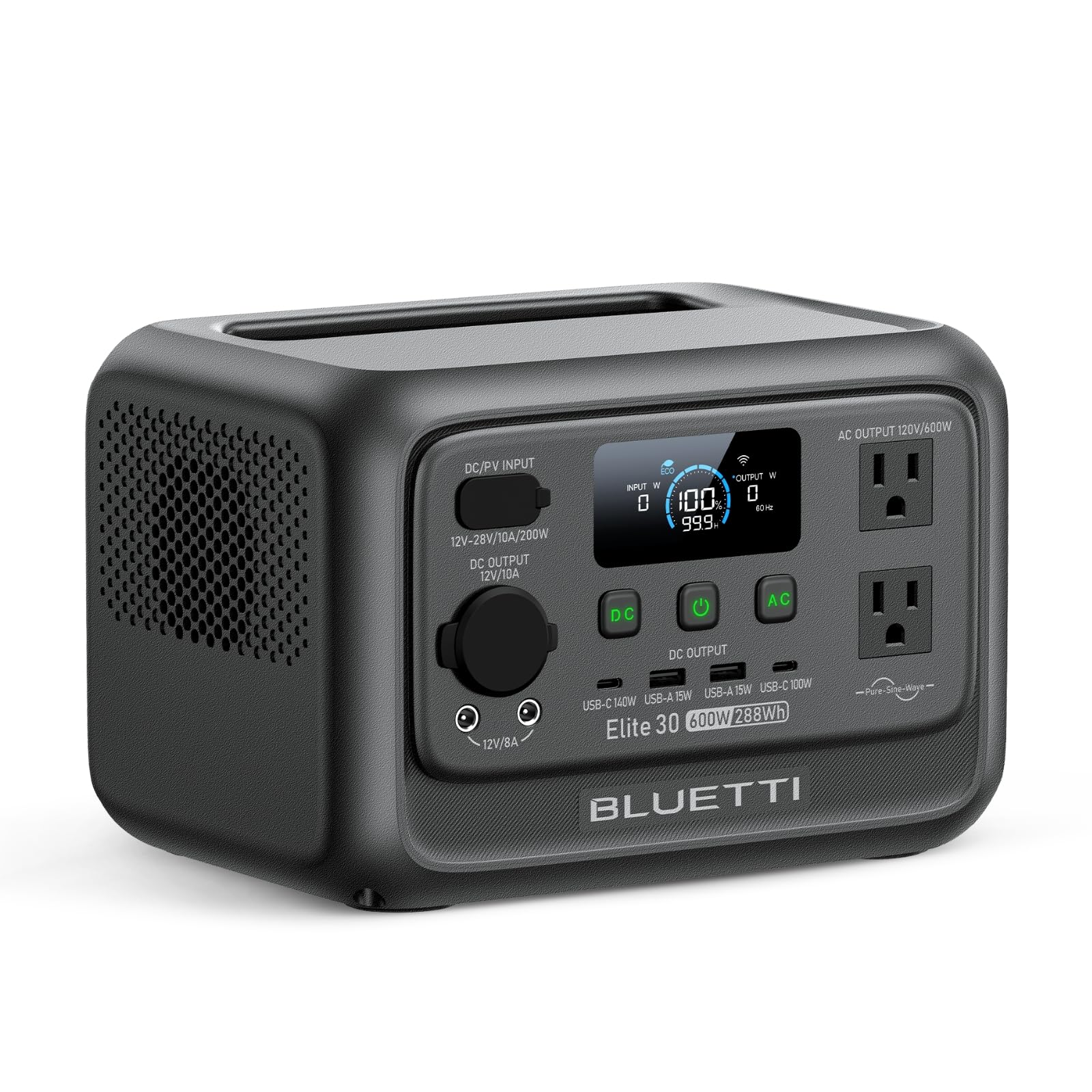
The BLUETTI Elite 30 V2 punches above its 288Wh rating with a 600W continuous output (1,500W surge in Power Lifting Mode). This overhead means your CPAP runs effortlessly even as the battery drains, with no voltage sag. At 9.4 pounds, it’s a mid-weight option that balances carrying comfort with the versatility to also power a small kettle or toaster during a camp breakfast.
The 10ms UPS switch protects your therapy session during blackouts with zero interruption. The unit recharges from 0-80% in just 45 minutes via AC, and the 50% lower standby consumption (just 4.5W) means the battery holds its charge for months between camping trips—no need to top it off before every outing. The dual USB-C ports (140W and 100W) handle modern laptop charging at full speed.
The AC charging cable is relatively short, which can be awkward when positioning the unit near a wall outlet. Some users report a temporary off-gassing smell when first using the unit, which dissipates after the first few charge cycles. The display is bright and informative, but there is no dedicated CPAP DC cable included—you’ll need to use the AC outlet or purchase a third-party DC adapter.
Why it’s great
- High 600W continuous output handles any CPAP
- 45-minute 0-80% fast AC recharge
- Ultra-low 4.5W standby drain
- 10ms UPS for uninterrupted therapy
Good to know
- No dedicated CPAP DC cables included
- AC charging cord is short
- Initial off-gassing smell reported
5. VTOMAN Jump 600X Portable Power Station

The VTOMAN Jump 600X is a unique hybrid that combines a 299Wh LiFePO4 power station with a car jump-start port. This dual functionality is a genuine space-saver for vehicle-dependent campers—one device handles both your CPAP runtime and a dead battery emergency. The 600W constant-power feature means it won’t shut off if your CPAP momentarily spikes above 600W; instead, it continues delivering power at the rated output.
The three regulated 12V/10A DC outputs are ideal for direct CPAP connection with the right adapter, maximizing runtime by avoiding AC inverter losses. The battery is expandable to 939Wh with an optional add-on battery, turning this into a multi-night solution for extended trips. User reports confirm it runs a CPAP for a full 10-hour night while still having reserve for phone and light charging.
At 14.6 pounds, this is the heaviest unit in the mid-range tier. The weight comes from both the larger LiFePO4 cells and the jump-start circuitry. The AC recharge takes about 3 hours, which is slower than the ECOFLOW but average for this class. The DC input port uses a less common barrel connector, so replacement cables can be harder to find. Jumper cables are sold separately, an added expense to consider.
Why it’s great
- Built-in car jump starter saves space
- 3 regulated 12V/10A DC ports for CPAP
- Expandable capacity up to 939Wh
- Constant-power feature handles surges
Good to know
- Heavy at 14.6 lbs
- Jumper cables not included
- Slower 3-hour AC recharge
6. EASYLONGER CPAP Battery Backup ES720 PRO
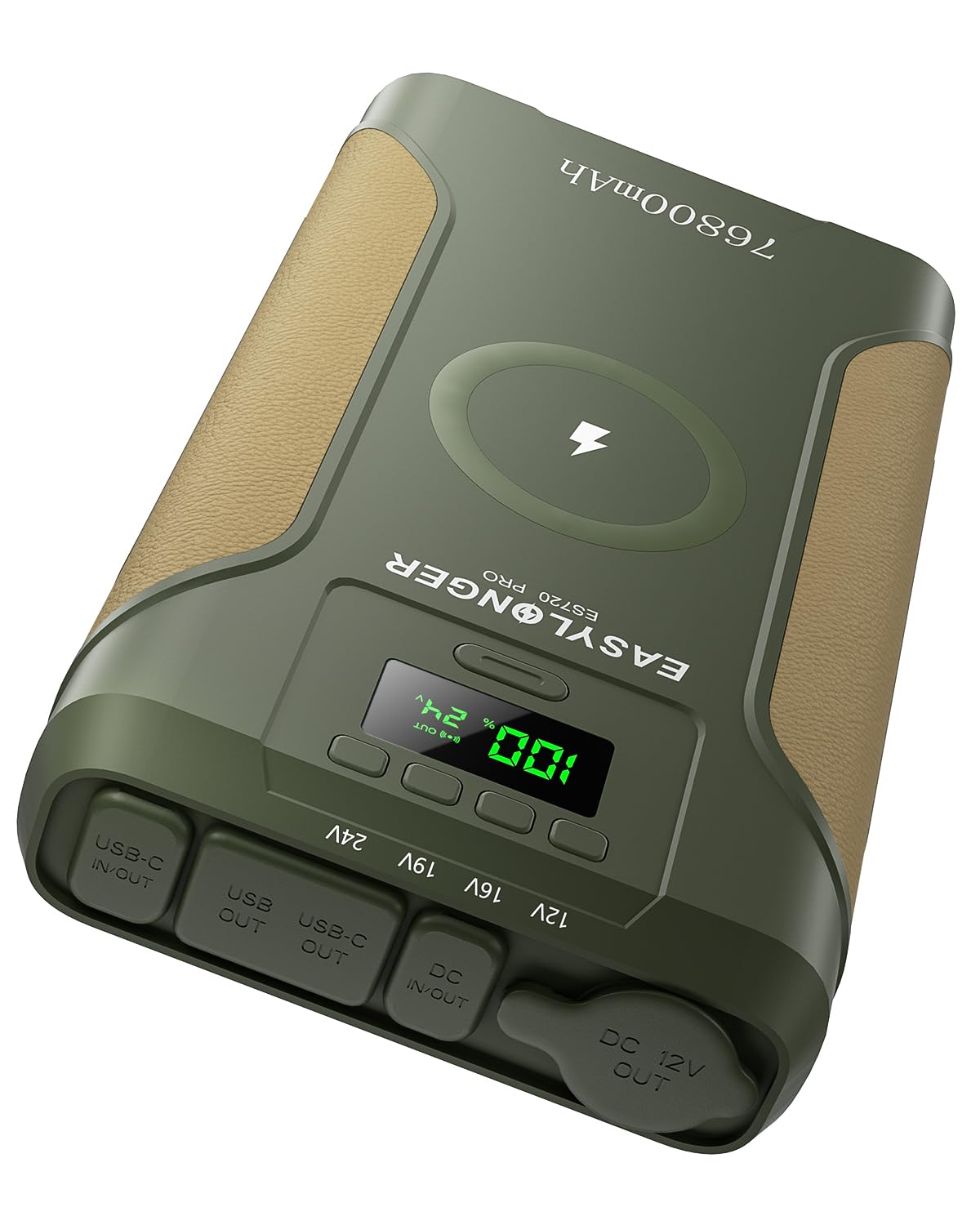
The EASYLONGER ES720 PRO distinguishes itself with adjustable DC voltage output (12V/16V/19V/24V), letting you match your CPAP’s exact input voltage for maximum efficiency. At just 3.3 pounds, it’s the lightest dedicated CPAP battery here—lighter than the BLUETTI X30—while still delivering 276.48Wh of capacity. The unit includes four specific DC cables covering ResMed AirSense 10/11, AirCurve 10/11, AirMini, Philips DreamStation, and Luna TravelPAP machines.
Real-world testing with an AirCurve 10 VPAP (a higher-pressure BiPAP machine) delivered three-plus nights of runtime with the humidifier off. The unit supports four recharge methods: 72W AC adapter (fastest), 60W USB-C PD, car cigarette lighter, and solar panel with MPPT controller. The smart display shows real-time battery level, voltage, and charging status, with dedicated buttons for voltage mode switching.
The voltage memory resets after each use—you must manually reset the output to 24V if that’s what your CPAP requires. This is a minor daily annoyance. The unit also cannot function as a true UPS; during a power outage, you must manually unplug your CPAP from the wall and plug it into the battery. Some users report the LED light leaks brightness, and the buttons require firm pressure to register presses.
Why it’s great
- Ultra-light 3.3 lb for backpacking
- Adjustable DC voltage (12-24V)
- 4 dedicated CPAP cables included
- MPPT solar charging controller
Good to know
- Voltage resets must be re-selected each use
- No true UPS pass-through
- Not TSA approved for air travel
7. EBL Portable Power Station 288.6Wh
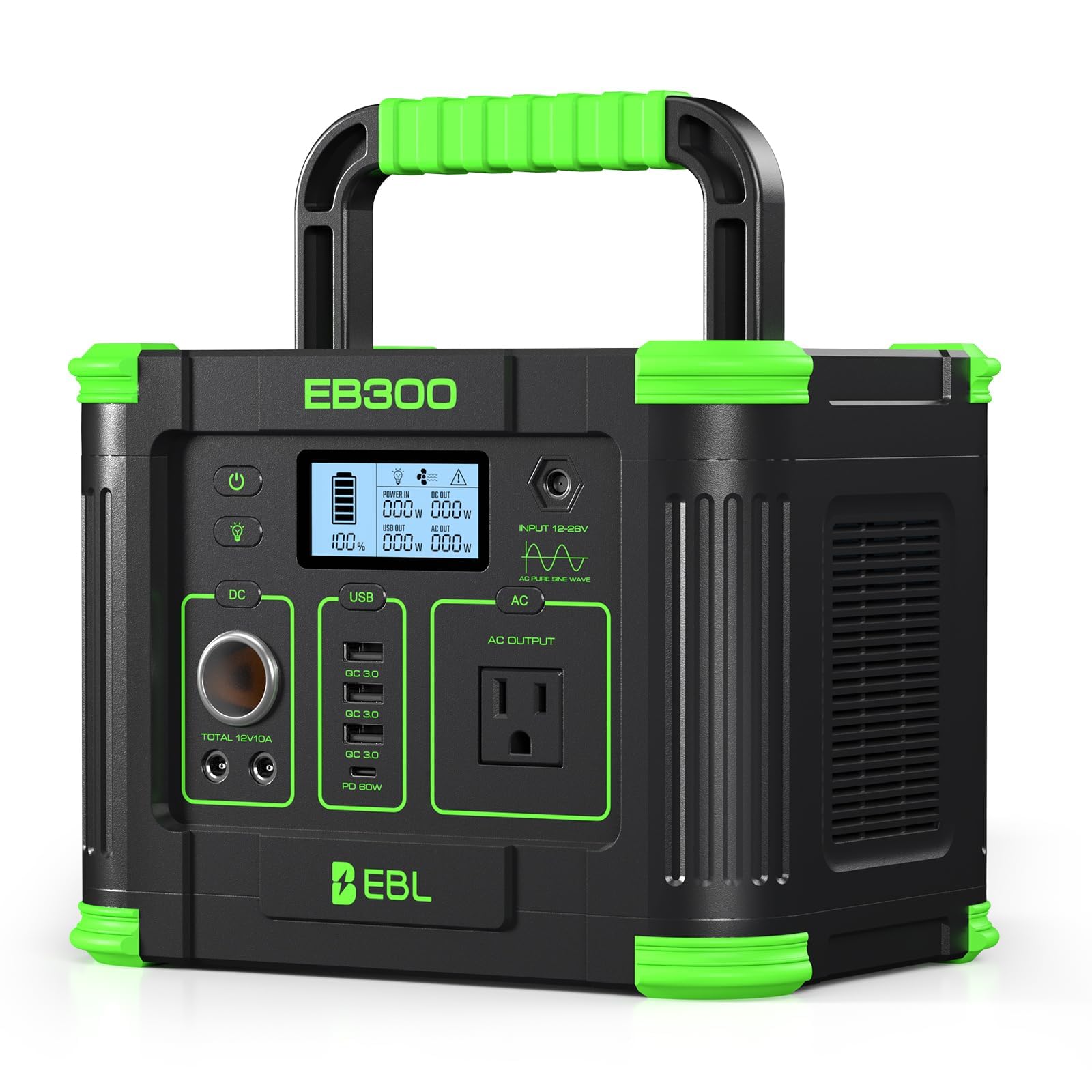
The EBL Portable Power Station offers 288.6Wh of capacity with a 330W pure sine wave inverter (600W surge) at a very approachable entry point. It includes a 5W wireless charging pad on top, a useful convenience for topping off your phone or earbuds case without cable clutter. The 7.94-pound weight is reasonable for car camping, and the folding handle with anti-collision strips adds durability.
Three recharge methods (AC wall adapter in 6-7 hours, car 12V in 7-9 hours, or 60-120W solar panels in 5-9 hours) offer flexibility. The independent SOS mode and 3W LED light operate without the main power being on, preserving battery for your CPAP. Users report the unit runs a CPAP comfortably through a full night, with enough reserve to charge phones and run a small fan.
The internal cooling fan is audible under higher loads, though it remains near-silent during light CPAP operation. The LCD display is somewhat basic, showing only a rough battery bar and output wattage without detailed runtime estimates. Some units have experienced bricking issues after brief use, so purchasing from a retailer with a solid return policy is advisable. The DC 5521 ports are 12V only (not adjustable), so a voltage converter may be needed for CPAPs that require higher DC input.
Why it’s great
- Affordable entry into CPAP camping power
- 5W wireless charging pad included
- Multiple recharge options including solar
- Independent SOS LED light
Good to know
- Basic LCD display with limited info
- Fan audible under load
- Quality control concerns reported
8. GRECELL Portable Power Station 330W
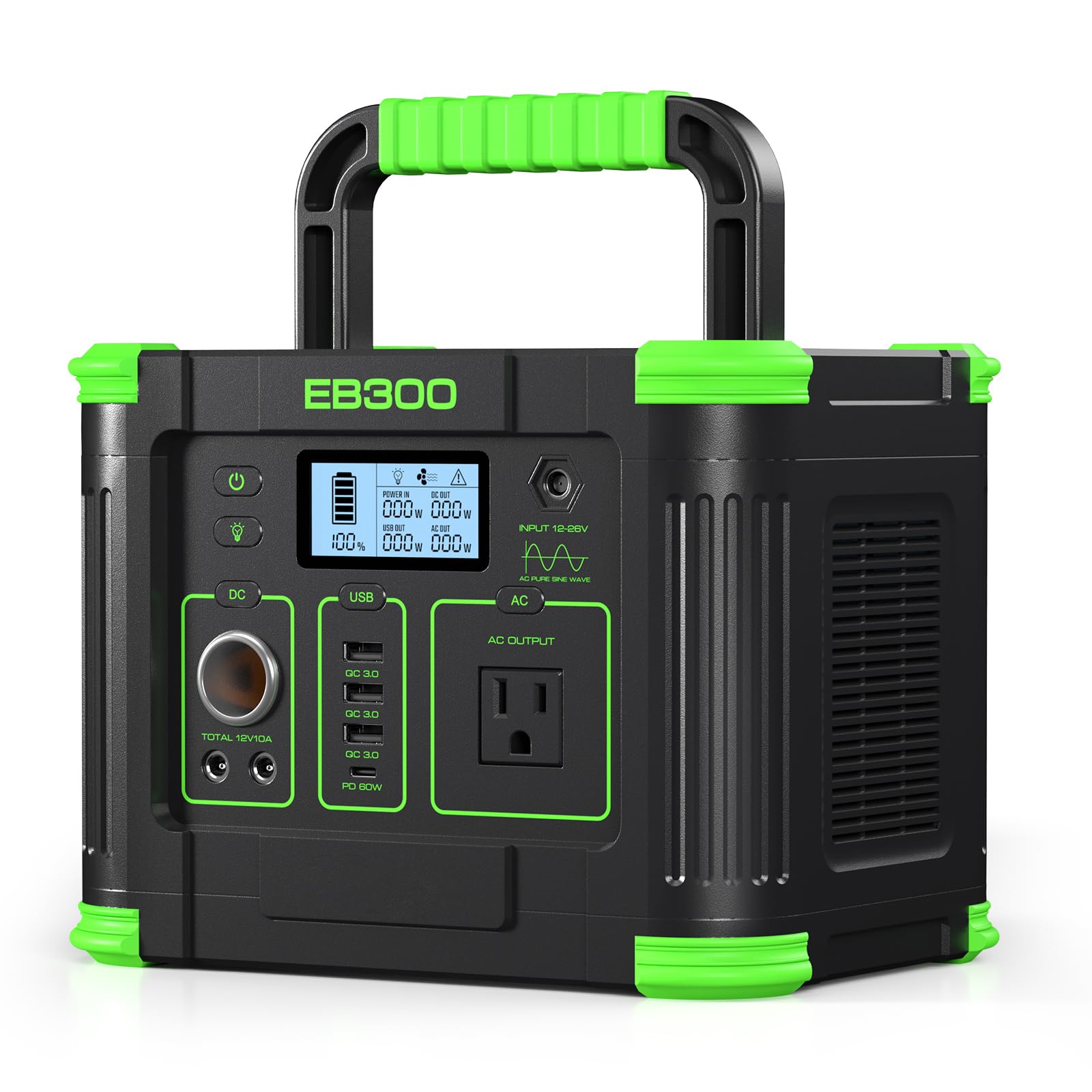
The GRECELL 330W power station shares many specs with the EBL unit (same 288.6Wh capacity, same 330W inverter, same manufacturer) but packages it with a slightly different port configuration and a 5W wireless charging pad. It charges up to 9 devices simultaneously, including one USB-C PD 60W port, three USB-A QC 3.0 ports, two DC 5521 ports, a 12V car port, and one AC outlet.
The built-in 3-level brightness LED flashlight with SOS mode is genuinely useful for camp setup and emergencies. Users consistently praise the unit’s value, noting it charges phones, laptops, lamps, and small appliances easily. The dual silent cooling fans keep temperatures in check without excessive noise during CPAP operation. The unit’s lightweight build (roughly 7-8 pounds) makes it easy to carry from car to tent.
Some users report the wireless charging pad requires the USB output to be manually activated before it works—a minor step that’s easy to forget. The AC charging time is notably longer than advertised by some measures; the unit’s 60Wh input rate means a full recharge from empty takes closer to 6-7 hours rather than the 4-5 hours some expect. The AC port also disables during pass-through charging, meaning you cannot run your CPAP while the unit recharges.
Why it’s great
- Excellent value-to-capacity ratio
- 9-device simultaneous charging
- Built-in LED flashlight with SOS
- Quiet dual cooling fans
Good to know
- Wireless charging requires manual USB power-on
- Long 6-7 hour AC recharge time
- No pass-through AC output while charging
9. GRECELL Portable Power Station 330W Grey
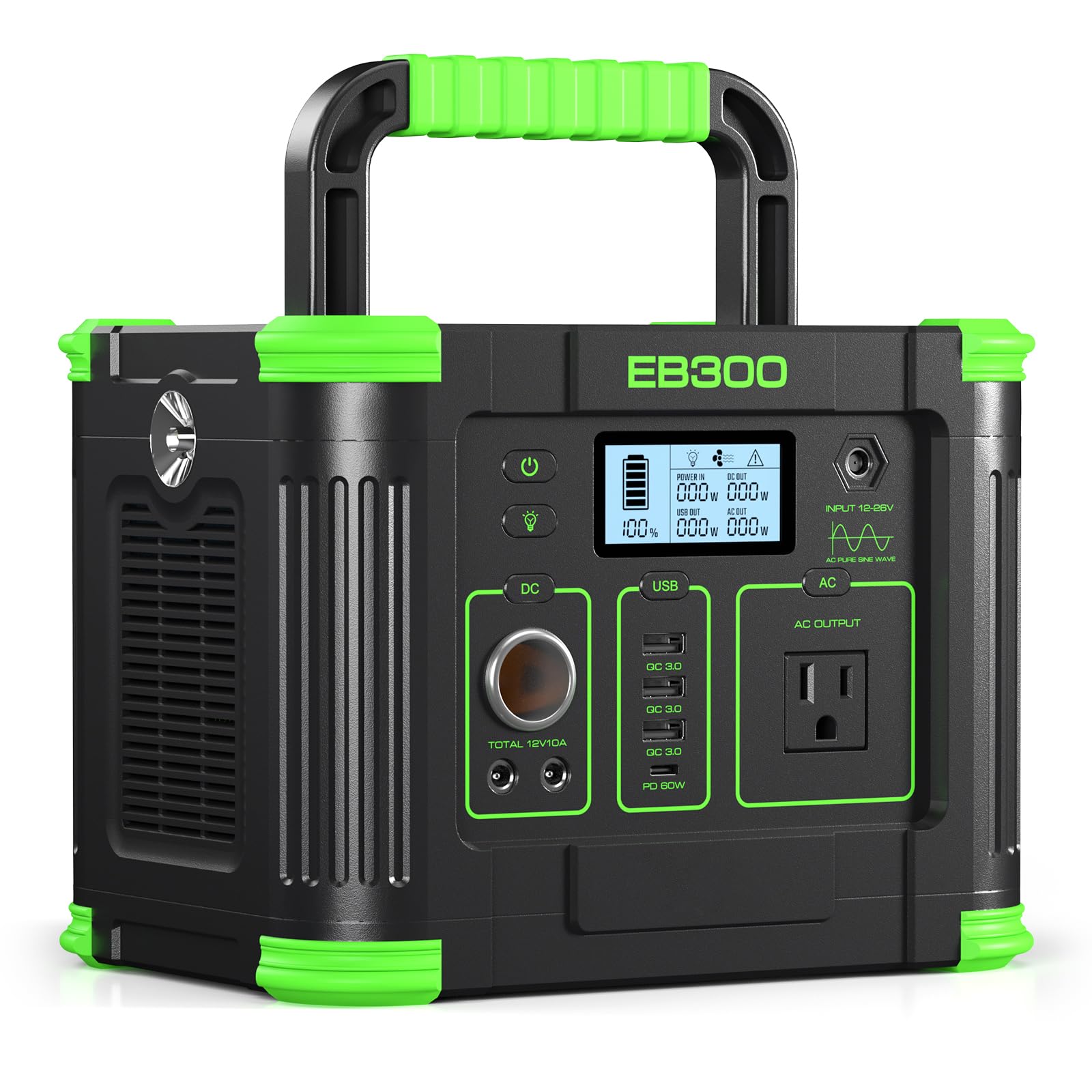
The GRECELL 330W in Grey updates the formula with a built-in MPPT solar charge controller that boosts solar charging efficiency by roughly 30% compared to standard PWM controllers. The 288.6Wh capacity and 330W pure sine wave inverter (600W surge) are paired with a 60W USB-C PD port, 18W USB-C, dual USB-A QC 3.0 ports, two DC outputs, a 12V car socket, and the 5W wireless charging pad. It weighs just 5.3 pounds based on manufacturer specs, making it one of the lightest in its capacity class.
The MPPT controller makes this unit particularly attractive for solar-dependent campers. Paired with a 100W solar panel, it can fully recharge in 5-9 hours depending on conditions, giving you a self-sufficient off-grid power loop. Users report the unit reliably runs CPAP machines for 2-4 nights with humidification settings reduced, and it handles 32″ TVs for 3-4 hours or mini-fridges for 5+ hours on a single charge.
Some specifications list the weight at 5.3 pounds while others report the actual unit closer to 8 pounds—verify before buying if weight is a critical factor. The 1x1x1-inch dimensions listed in some specs are clearly erroneous; the actual unit measures roughly 9.6×6.7×7 inches. The unit’s 24-month warranty and US-based support are reassuring, though the budget-tier pricing means the battery management system lacks the sophistication of premium brands like ECOFLOW or BLUETTI.
Why it’s great
- MPPT solar controller for 30% faster solar charging
- Lightweight design for easy transport
- 60W USB-C PD fast charging
- 24-month warranty with US support
Good to know
- Weight specifications are inconsistent
- Basic BMS compared to premium brands
- No pass-through AC while charging
FAQ
Can I run my CPAP with the humidifier on using a portable battery?
How do I know what voltage my CPAP needs for DC direct connection?
What size battery do I need for one night of CPAP camping?
Are CPAP batteries allowed on airplanes?
Can I charge my CPAP battery while using it to run my CPAP?
Final Thoughts: The Verdict
For most users, the battery to use for cpap camping winner is the BLUETTI X30 because it combines true backpack-friendly weight with dedicated CPAP DC cables and LiFePO4 longevity in a purpose-built package. If you want the fastest recharge speeds and seamless UPS functionality, grab the EF ECOFLOW RIVER 3. And for a car-camping multi-tool that jump-starts your vehicle while powering your CPAP, nothing beats the VTOMAN Jump 600X.