
Our readers keep the lights on and the weekend projects moving. As an Amazon Associate, I earn from qualifying purchases.
The difference between average BBQ and award-winning Q often comes down to one thing: the dry rub. You can have the most expensive smoker and the finest cut of meat, but a poorly balanced rub—one that is heavy on salt or loaded with anti-caking agents—will ruin the bark, dry out the muscle fibers, and leave you with a crust that tastes like dusty seasoning rather than the deep, layered flavor of a proper Texas-style or Memphis-style cook.
I’m Rikta — the co-founder and writer behind FitlyFast. I’ve spent years analyzing the chemical composition, particle size, and salt-to-sugar ratios of dozens of commercial BBQ rubs, cross-referencing pitmaster preferences with real-world feedback to separate the blends that simply color meat from the ones that build a true bark.
After sorting through countless containers of coarse black pepper, turbinado sugar, and smoked paprika, I’ve narrowed the field to the seven most effective options. This guide breaks down the best bbq dry rub choices by flavor profile, protein pairing, and bark-building ability so you can confidently pick the blend that matches your specific cook.
How To Choose The Best BBQ Dry Rub
Every BBQ dry rub is a deliberate balance of sweet, heat, salt, and spice. Before you choose a blend, you need to match its dominant profile to your target protein and cooking method. A pork shoulder can handle heavy sugar caramelization; a beef brisket needs a high-pepper, low-sugar base to form a proper bark.
Salt-to-Sugar Ratio
This is the chemistry behind the crust. Rubs with a high sugar content (first or second ingredient listed as brown sugar or turbinado) are designed for pork and chicken, where the sugar creates a mahogany-colored glaze during the maillard reaction. Rubs built for beef typically list salt and black pepper before any sweetener. A high-sugar rub on a 14-hour brisket will burn and taste bitter. A high-pepper rub on chicken thighs will not develop any bark at all.
Particle Size and Bark Formation
Finely ground rubs (powder consistency) stick instantly but do not build a thick bark—they dissolve into the meat’s surface moisture. Coarse-grained rubs with visible cracked pepper and granulated sugar create a physical layer that forms a hard, crunchy crust over long, low-heat smokes. For brisket and pork butt, aim for a rub with visible crystals. For quick grills and thin cuts like chicken wings, a finer grind coats more evenly without burning.
Heat Level and MSG Presence
Heat in a dry rub typically comes from cayenne, black pepper, or red pepper flakes. A “medium heat” rub is safe for a whole family; a hot rub can overpower subtle flavors. MSG is a common hidden addition—many rubs use it to boost umami without adding salt. If you are sensitive to MSG, check the ingredient list for “monosodium glutamate” or “yeast extract.” Gluten-free labeling is also common, but not all all-natural rubs are certified gluten-free.
Quick Comparison
On smaller screens, swipe sideways to see the full table.
| Model | Category | Best For | Key Spec | Amazon |
|---|---|---|---|---|
| Meat Church Honey Hog Combo | Combo Pack | Pork Butt & Ribs | 14 oz + 13 oz honey rubs | Amazon |
| Heath Riles Honey Rub | Honey Rub | Golden Color Bark | 12 oz, award-winning recipe | Amazon |
| Rufus Teague 3-Pack | Variety Pack | Versatile Grilling | 3 bottles, 19.2 oz total | Amazon |
| Grub Rub BBQ Blend | All-Purpose | Moisture Retention | 13 oz, tenderizer included | Amazon |
| Spiceology Derek Wolf | Smoky Sweet | Whole Muscle Cuts | 4.1 oz, small container | Amazon |
| SuckleBusters 1836 Beef Rub | Texas Beef | Bark on Brisket | 12 oz, cracked black pepper | Amazon |
| Adkins Western Style | Classic All Purpose | Value Bulk Cooking | 16 oz, gluten-free | Amazon |
In‑Depth Reviews
1. Meat Church Honey Hog BBQ Rub Combo

This combo delivers the best of both sweet worlds: the original Honey Hog (14 oz) for classic pork bark with a golden-brown finish, and Honey Hog Hot (13 oz) for grilling poultry or beef where a mild heat is preferred. The granulated sugar base in the original creates a thick, tacky bark that holds up through long smokes, while the hot version adds a subtle cayenne kick that does not overpower the honey sweetness.
These rubs are specifically engineered for pork shoulder and ribs—the high sugar content caramelizes beautifully around 275°F without burning, and the fine-to-medium grind adheres well to wet meat. Many backyard pitmasters report using Honey Hog on everything from chicken quarters to smoked mac and cheese because the flavor profile is sweet-forward but not cloying.
One practical consideration: the Honey Hog Hot is not genuinely hot—it offers a mild warmth similar to a paprika-based rub. If you need a high-heat rub for spicy wings or beef short ribs, you will likely need to supplement with cayenne. Also, Amazon shipping can be inconsistent; several customers noted delays, so order ahead of your planned cook.
Why it’s great
- Two-rub combo covers sweet and sweet-heat profiles
- Granulated sugar base builds a deep, mahogany bark
- Gluten free and widely compatible with pork and chicken
Good to know
- Hot version is not very spicy—mild warmth only
- Can take over a month to arrive via Amazon
- Not designed for beef brisket (too much sugar)
2. Heath Riles BBQ Rub – Honey Seasoning

If the Meat Church combo is the all-round tool, this Heath Riles rub is the focused precision instrument for pork ribs. With over 80 championship wins in MBN and KCBS, Riles has formulated this honey blend for one purpose: creating a beautiful golden crust on poultry and pork without the harsh salt edge that cheap rubs leave behind. The ingredient list is notably clean—no artificial preservatives, no MSG—and the 12-ounce container is reasonably sized for competitive or backyard use.
The biggest thing to understand about this rub is that it is not a bark-forcing rub on beef. The honey profile is delicate; it shines on chicken thighs, turkey breast, and especially pork ribs where a light, sweet crust is desired. Customers consistently report that the flavor is “light and delicious” rather than in-your-face bold, making it a great choice for family-friendly cooks.
Some pitmasters note that the sugar content is high enough that it can burn if you smoke at high temperatures (above 300°F) or leave the meat on direct heat. Use it on indirect smokers or in the oven at a moderate temperature to get the best caramelization without scorching. If you are cooking beef brisket or steak, this is not the right rub—save it for your next rack of spare ribs.
Why it’s great
- Competition-proven recipe from a champion pitmaster
- Clean ingredient list—no MSG or fillers
- Creates a beautiful golden color on ribs and chicken
Good to know
- Not suitable for beef brisket or high-heat searing
- High sugar content burns above 300°F
- Subtle flavor may not satisfy those who want bold heat
3. Rufus Teague Dry Rub Must-Haves Variety Pack
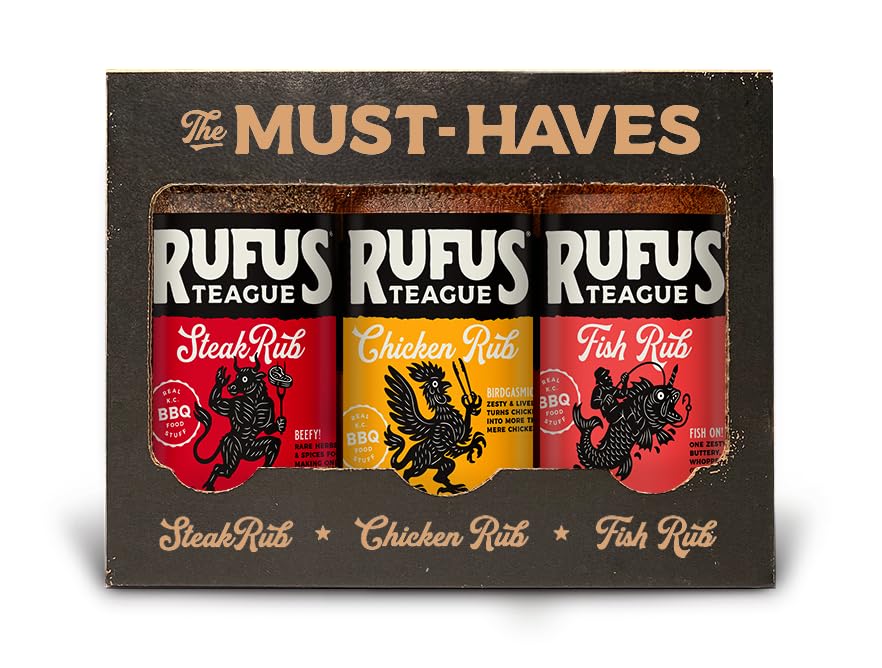
This 3-pack solves the “one rub fits all” problem by giving you a dedicated Steak Rub (bold with espresso undertones), a herbaceous Chick N’ Rub, and a savory Fish Rub. Each container is ground to a medium-coarse consistency that sticks well to proteins and develops a crust during high-heat grilling. The Steak Rub, in particular, features cracked black pepper and a hint of coffee that deepens the beefy flavor without adding sweetness.
The Chick N’ Rub works excellently on bone-in chicken parts and wings, while the Fish Rub is surprisingly good on salmon and white fish—it has a buttery base that does not clash with delicate seafood oils. All three bottles are gluten-free, Non-GMO, and kosher, making this a safe choice for guests with dietary restrictions.
The trade-off is flavor overlap: while the Steak Rub is distinct, several users note that the Chick N’ Rub and Fish Rub taste quite similar to each other. If you are buying this as a gift or for an occasional griller, it is excellent. If you are a serious pitmaster who already has favorite rubs for each protein, you may find only the Steak Rub truly unique in your rotation.
Why it’s great
- Three distinct rubs covering beef, poultry, and seafood
- Steak Rub features espresso for depth and complexity
- Kosher, non-GMO, and gluten-free across the board
Good to know
- Chick N’ Rub and Fish Rub are very similar in taste
- Not optimized for low-and-slow smoking (better for grilling)
- Variety pack is more about convenience than specialization
4. Grub Rub BBQ Blend
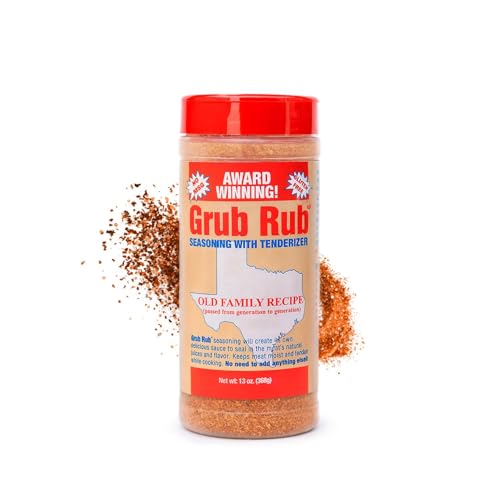
This old family recipe stands out because it claims to create its own sauce during cooking, effectively basting the meat from the inside out. The blend contains natural enzymes (usually from papaya or pineapple) that act as a tenderizer, breaking down connective tissue on tougher cuts like chuck roast or brisket. The all-natural ingredient list avoids gluten, preservatives, and MSG, and the medium-sweet profile works across beef, pork, and chicken without overpowering any single protein.
Users consistently report that Grub Rub keeps meat noticeably juicier than standard rubs, especially on leaner cuts like pork loin or chicken breast where moisture loss is common. The tenderizing effect means you can apply the rub up to 4 hours before cooking without turning the exterior mushy—a significant advantage over heavily acidic marinades.
The flavor is best described as a well-rounded, everyman blend: sweet enough for chicken, spicy enough for beef, and versatile enough for vegetables and fries. However, serious pitmasters may find it lacks the pointed character of a dedicated beef or pork rub. It also has a slightly finer grind than some specialty blends, which means it builds a thinner bark on long smokes.
Why it’s great
- Natural tenderizer improves texture on tougher meats
- All-natural ingredients, free from gluten and MSG
- Versatile across a wide range of proteins and veggies
Good to know
- Finer grind may not produce a thick bark
- Flavor profile is generic rather than specialized
- Tenderizing effect can alter texture if left on too long
5. Spiceology & Derek Wolf – Tennessee Smoke BBQ Seasoning
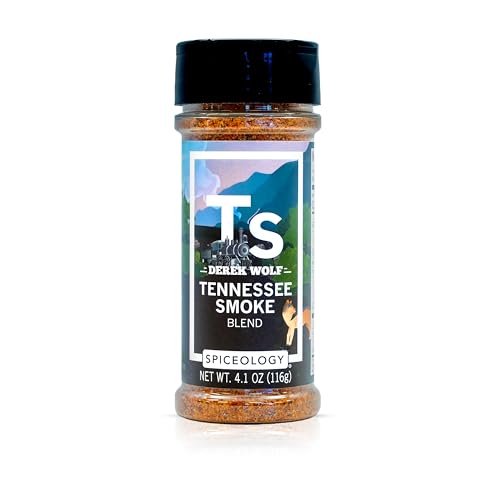
Derek Wolf’s Tennessee Smoke is a sweet-yet-smoky rub with a distinct Southern character that works well on everything from brisket to roasted jackfruit. The blend is built around smoked paprika and a mild brown sugar base, providing a clean, approachable smoke flavor that does not rely on liquid smoke or artificial flavorings. At just over 4 ounces, this is a small container, ideal for home cooks who want to test a premium blend without committing to a bulk bag.
Customer feedback consistently highlights the rub’s lack of clumping and its easy-spreading texture. It is coarser than typical supermarket blends, which helps it adhere to the meat’s surface without falling off during handling. The flavor profile is balanced enough to use as a straight rub on steak or as a base layer under a more aggressive finishing sauce on ribs.
Given its size and price point, this is the most expensive per-ounce option on the list. If you are cooking large quantities for a party or hosting a competition, you will burn through the 4.1-ounce container quickly. It is best used as a premium finishing rub for special cuts rather than a workhorse seasoning for bulk pork butts.
Why it’s great
- Clean, smoky flavor without artificial additives
- Coarse grind adheres well without clumping
- Works on plant-based proteins like jackfruit and mushrooms
Good to know
- Small 4.1-ounce container is low value for volume cooks
- Price per ounce is among the highest in this guide
- Sweet profile may not suit all beef preparations
6. SuckleBusters 1836 Beef Rub
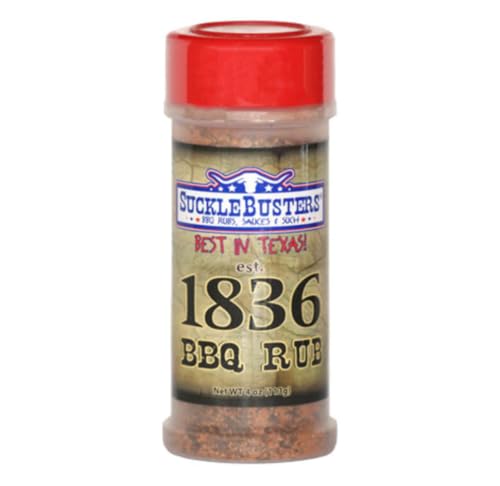
This is a Texas-style beef rub built around cracked black pepper—the defining flavor of true central Texas brisket. The coarsely ground pepper creates a physical crust that acts as a barrier, trapping moisture and forming the signature black bark that brisket enthusiasts seek. At 12 ounces with a medium heat level, it is designed for heavy application on beef but works surprisingly well on burgers and short ribs, where the pepper-forward profile complements the fat content.
The ingredient list is all-natural, gluten-free, and MSG-free, which aligns with the purist ethos of Texas BBQ. Many customers report that the rub produces exceptional bark even on relatively short 6-hour smokes, making it a great choice for those using pellet smokers or kamado grills that run a little hotter than traditional offsets.
The medium heat is primarily from black pepper, not cayenne, which means it is spicy in a “warm” rather than “hot” way. Some users find the pepper level a bit much for chicken or pork, so this is best reserved for beef-centric cooks. If you prefer a sweeter bark on pork ribs, look elsewhere—this rub is designed for one thing: brisket bark.
Why it’s great
- Cracked black pepper is perfect for Texas-style brisket bark
- All-natural, gluten-free, no MSG
- Large 12-ounce container provides good coverage
Good to know
- Pepper-forward profile is not ideal for poultry or pork
- Medium heat is not very spicy by chili-head standards
- Not a universal rub—specialized for beef
7. Adkins Western Style Barbecue BBQ Seasoning
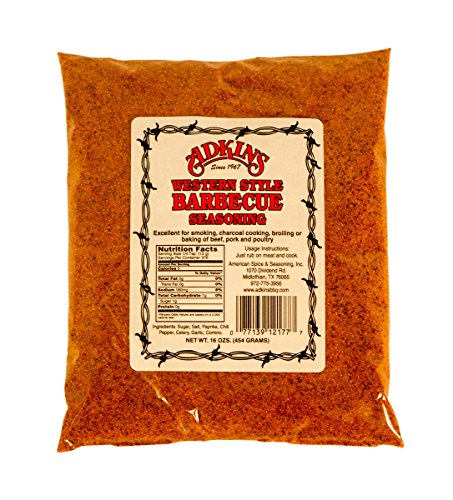
Adkins Western Style has been a go-to budget rub for backyard pitmasters since the 1970s. The 16-ounce container offers the largest volume in this guide at a very affordable price, making it a solid workhorse seasoning for anyone who cooks BBQ in large quantities—think whole brisket, whole hog, or dozens of chicken halves. The rub has a sweet-and-salty balance reminiscent of classic Kansas City style: heavy on brown sugar and salt, with a subtle background heat from paprika and chili powder.
The texture is a medium grind that sticks easily to both wet and dry meat. Several longtime users report using this rub for over 30 years, often citing its consistent flavor and availability in bulk (bags up to 25 pounds). It is gluten-free, all-natural, and MSG-free, which keeps the ingredient profile clean despite the low price point.
The main caveat is that Adkins Western Style is not a “craft” or “artisanal” blend—it is a classic commodity rub that tastes good but lacks the subtle complexity of small-batch competitors. Some pitmasters treat it as a base rub and add their own cayenne, black pepper, or garlic powder to build a custom blend. If you want a ready-to-use gourmet rub with a specific flavor profile, this is not that product. But if you want a reliable, high-volume rub that tastes like classic American BBQ, this is hard to beat.
Why it’s great
- Excellent value per ounce; available in bulk sizes
- Classic sweet-and-salty Kansas City profile
- All-natural, gluten-free, MSG-free
Good to know
- Lacks the complexity of small-batch artisan rubs
- Sweet base may not suit beef purists
- Often used as a base for custom blends
FAQ
Should I apply dry rub the night before or just before cooking?
Can I use the same dry rub for beef brisket and pork ribs?
What is the difference between a dry rub and a wet marinade for BBQ?
How much dry rub should I use per pound of meat?
Final Thoughts: The Verdict
For most users, the best bbq dry rub winner is the Meat Church Honey Hog Combo because it covers both sweet and sweet-heat profiles for pork and chicken, uses a granulated sugar base that builds excellent bark, and offers enough product for a full competition weekend or backyard party. If you want a specialized Texas-style beef rub focused entirely on brisket bark, grab the SuckleBusters 1836 Beef Rub. And for the best value-per-ounce for high-volume cooking or as a base for custom blends, nothing beats the Adkins Western Style BBQ Seasoning.