
Our readers keep the lights on and the weekend projects moving. As an Amazon Associate, I earn from qualifying purchases.
Choosing the wrong projector turns your home cinema dreams into a frustrating blur of washed-out blacks, audible fan noise, and the constant fiddling with keystone sliders. The difference between a mediocre image and a breathtaking cinematic experience comes down to understanding the interplay of light source, contrast, and processing — not just the resolution number on the box.
I’m Rikta — the co-founder and writer behind FitlyFast. My deep market research focuses on analyzing how laser light engines, pixel-shifting processors, and contrast ratios translate into real-world image quality for dedicated home theater buyers navigating the to range.
After sifting through hours of technical specifications and real user reports, I’ve identified the top performers that deliver genuine cinema-grade visuals at home — this guide will walk you through the best beamer for home cinema across every meaningful performance tier.
How To Choose The Best Beamer For Home Cinema
A home cinema projector is a multi-year investment, and the wrong choice can leave you with a dim, noisy unit that sits unused. Your decision boils down to three pillars: the light source, the resolution pathway, and the contrast capabilities. Understanding these will separate a genuinely cinematic experience from a glorified TV on the wall.
Light Source: The Engine of Image Quality
The light source is the single most important spec. Traditional lamp-based projectors are bright and affordable upfront, but bulbs degrade over time and require periodic replacement (typically every 3,000 to 5,000 hours). LED projectors offer longer life (20,000+ hours) but often struggle to match the brightness needed for a large screen in a dark room. Triple laser light sources are the gold standard — they deliver high brightness for a decade, a color gamut covering over 100% of the BT.2020 spectrum, and near-instant on/off cycles with no warm-up.
Resolution and Pixel Shifting
Native 4K projectors with true 3840 x 2160 panels are rare at mid-range prices. Most units use pixel shifting — a technology that rapidly shifts the image by half a pixel to double the perceived resolution. Well-implemented pixel shifting (like the 4K PRO-UHD on the Epson 5050UB or the XPR on ViewSonic models) produces an image that is visually indistinguishable from true 4K on a 120-inch screen. The key metric is the quality of the processing engine, not just the pixel count on the spec sheet.
Contrast Ratio and HDR Performance
Contrast ratio defines how deep the blacks look and how much detail you see in shadows. A projector with a 1,000:1 contrast ratio will look flat compared to one with 5,000:1 or higher. For HDR content, dynamic contrast and tone mapping are critical — a projector must be able to adjust its light output scene by scene to make bright highlights pop without crushing dark areas. Laser projectors with an iris or dynamic laser control excel here, while budget LCD units often wash out HDR due to a high black floor.
Quick Comparison
On smaller screens, swipe sideways to see the full table.
| Model | Category | Best For | Key Spec | Amazon |
|---|---|---|---|---|
| Lisowod L61Pro | Portable LED | Entry-level big screen with built-in apps | 50W Dolby Audio, 2500 lumens | Amazon |
| ViewSonic PX701-4K | Budget 4K | Gaming with 240Hz and low lag | 3200 lumens, 4.2ms input lag | Amazon |
| NEBULA Cosmos 4K SE | Hybrid Laser | Portable Dolby Vision with Google TV | 1800 lumens, HybridBeam tech | Amazon |
| BenQ TK710 | Laser 4K | Living room brightness with HDR | 3200 lumens, 600,000:1 contrast | Amazon |
| Hisense C2 | Triple Laser | Gimbal design with strong color volume | 2000 lumens, 1700:1 contrast | Amazon |
| AWOL LTV-3000 Pro | UST Laser | Ultra-short throw with built-in center speaker | 2000 lumens, 147% DCI-P3 | Amazon |
| Hisense C2 Ultra | Triple Laser | Brightest triple laser with optical zoom | 3000 lumens, 110% BT.2020 | Amazon |
| NEBULA X1 | Triple Laser | Ultra-bright with cinema-grade color | 3500 lumens, 5000:1 native | Amazon |
| Valerion VisionMaster Pro2 | Triple Laser | High contrast with optical zoom | 3000 ISO lumens, 15,000:1 | Amazon |
| XGIMI Horizon 20 Max | Triple Laser | Brightness monster with lens shift | 5700 lumens, 20000:1 contrast | Amazon |
| Epson 5050UB | 3LCD Lamp | Best black levels and color for dark rooms | 2600 lumens, 1,000,000:1 | Amazon |
In‑Depth Reviews
1. XGIMI Horizon 20 Max
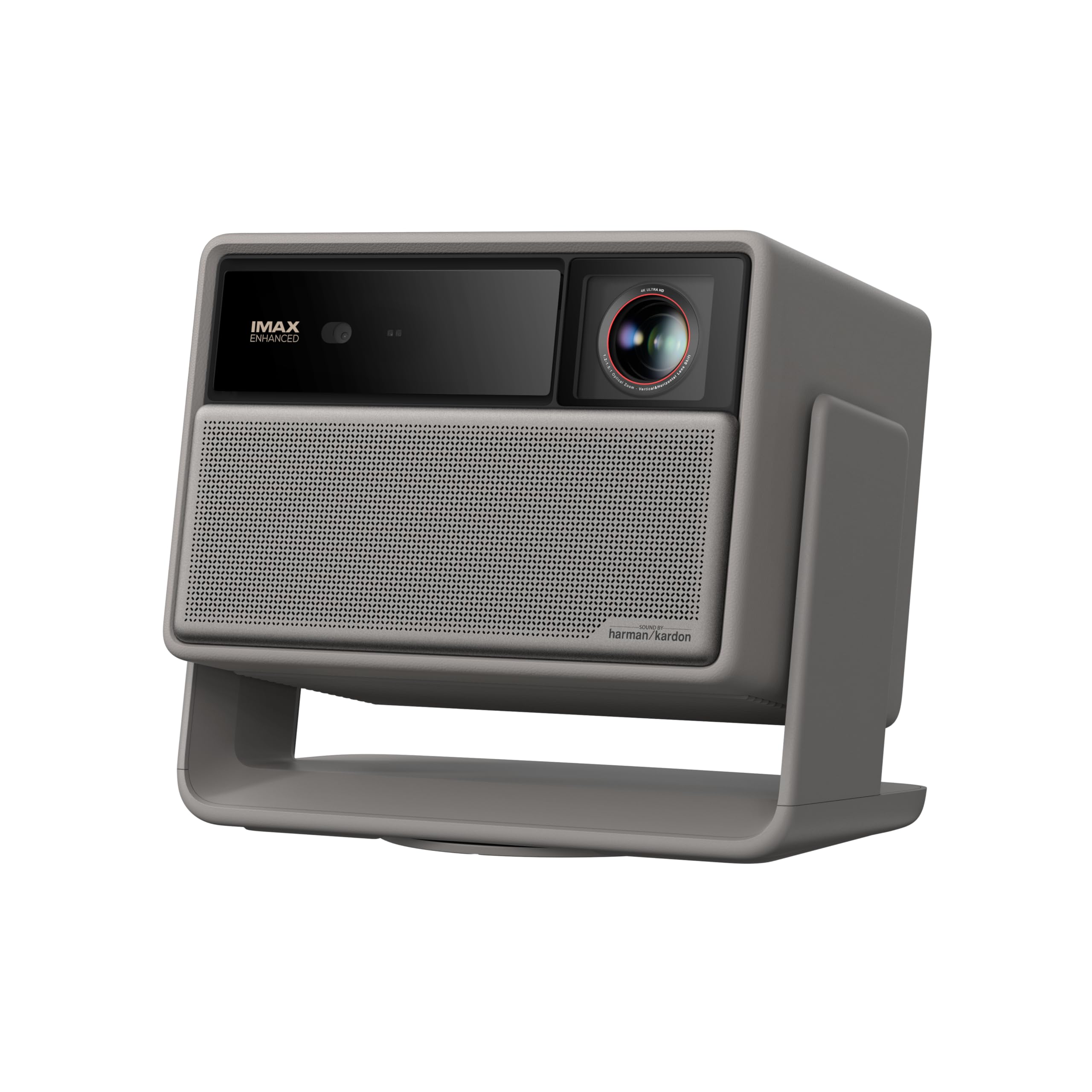
The Horizon 20 Max sits at the apex of daylight-ready home cinema. Its X-Master RGB triple laser engine pumps out a measured 5700 ISO lumens of brightness — enough to maintain a vibrant picture on a 170-inch screen even with ambient light spilling into the room. This is not a dark-room-only projector; it genuinely replaces a TV for daytime viewing when paired with an ALR screen.
The optical lens system includes motorized lens shift and a flexible zoom, giving you installation freedom that few portable laser projectors match. The 20,000:1 dynamic contrast ratio, combined with Dolby Vision and IMAX Enhanced support, produces deep blacks and HDR highlights that hold their own against dedicated theater projectors. The Harman Kardon speakers are well-tuned and clear, though most buyers will route audio through eARC.
Gamers will appreciate the 1ms input lag at 1080p and 240Hz refresh rate, making fast-paced shooters feel responsive. Some users report visible laser speckle on high-gain white screens, and the 3D implementation requires careful setup, but for sheer brightness and versatility, this unit is the benchmark.
Why it’s great
- Class-leading brightness handles ambient light beautifully
- Motorized lens shift and optical zoom for flexible placement
- Fast Google TV OS and 1ms gaming input lag
Good to know
- Laser speckle visible on some matte white screens
- 3D mode needs manual re-enabling and specific glasses
2. Epson Home Cinema 5050UB

The Epson 5050UB is a legend in the dedicated home theater space. Its 3-chip LCD design delivers 100% of the RGB color signal per frame, meaning you get zero rainbow effect — a dealbreaker for many viewers sensitive to DLP color wheels. The 1,000,000:1 dynamic contrast ratio, achieved through an advanced auto-iris, produces black levels that rival OLED TVs in a dark room.
The 4K PRO-UHD pixel-shifting processor is one of the best in the business, producing exceptionally sharp 4K images that fool the eye into seeing true native resolution. The motorized lens with memory allows you to store positions for 16:9 and 2.35:1 aspect ratios, automatically switching for letterboxed movies. The lens is large and heavy, requiring a ceiling mount rated for its 25-pound mass.
Input lag sits around 23-27ms at 4K, which is acceptable for casual console gaming but not competitive. The lamp-based light source is the only notable compromise — bulbs degrade and need replacement every 4,000 hours or so. However, for a buyer who prioritizes black-level depth and color accuracy above all else in a dedicated theater room, this remains the king.
Why it’s great
- Superb black levels with 1,000,000:1 dynamic contrast
- Zero rainbow effect from true 3-chip LCD design
- Motorized lens memory for aspect ratio switching
Good to know
- Heavy chassis at 25 pounds needs sturdy mount
- Lamp replacement needed every 3,000 to 5,000 hours
3. Valerion VisionMaster Pro2

The Valerion VisionMaster Pro2 punches far above its price bracket by delivering a 15,000:1 native contrast ratio — a figure usually reserved for projectors costing a thousand more. The Enhanced Black Level (EBL) technology ensures deep blacks even during dark HDR scenes without crushing shadow detail. The triple laser covers 110% of Rec.2020, producing rich, saturated colors with no rainbow artifacts.
The OpticFlex Lens System offers a 0.9-1.5x optical zoom, letting you fill a 150-inch screen from a flexible throw distance without losing resolution or brightness. The AI Super Resolution upscaling works well on 1080p content, adding crispness without artificial sharpness halos. The MediaTek MT9618 chipset with 4GB RAM and 128GB storage makes the Google TV interface feel snappy and responsive.
Gamers get 4ms input lag at 1080p 240Hz, with support for ultra-wide 21:9 and 32:9 aspect ratios — a niche but appreciated feature. The only real trade-off is the built-in speakers, which are acceptable for casual use but lack the low-end punch of dedicated sound. For a buyer wanting laser advantages at a mid-range price, this is the most compelling option.
Why it’s great
- Outstanding native contrast ratio of 15,000:1
- Optical zoom and lens shift for flexible installation
- Fast processor with ample RAM for smooth UI
Good to know
- Built-in speakers are mediocre for serious home theater
- Some users notice rainbow effect intermittently
4. NEBULA X1

The NEBULA X1 by Anker is a triple laser projector that prioritizes brightness and color accuracy above all else. With 3,500 ANSI lumens and a native contrast ratio of 5,000:1 (boosted to 56,000:1 dynamic), it produces a punchy, vibrant image that survives moderate ambient light. The ISF-certified calibration ensures out-of-box color accuracy that rivals professional-grade setups.
The custom 14-element all-glass lens delivers edge-to-edge sharpness on screens up to 300 inches, with no noticeable color fringing or soft corners. The auto-alignment system uses spatial sensors to detect your wall or screen and adjust the image in one click — a godsend for portable use between the living room and backyard. The built-in Google TV interface covers all major streaming apps natively.
Build quality feels premium, with a robust gimbal design. The main downsides are the 60Hz input limit that prevents 4K at 120Hz gaming, and occasional reports of inconsistent quality control out of the box. After the mandatory firmware update for enhanced dynamic contrast, the black level performance improves significantly, making this a strong contender for both dark and mixed-light environments.
Why it’s great
- ISF-calibrated color accuracy straight from the box
- Very high brightness and good dynamic contrast
- Excellent auto-alignment and spatial awareness
Good to know
- 60Hz input caps 4K gaming performance
- Quality control can be inconsistent on first unit
5. AWOL VISION LTV-3000 Pro

The AWOL LTV-3000 Pro is an ultra-short throw projector that sits inches from the wall, making it ideal for small spaces where a standard long-throw setup is impossible. It covers 147% of the DCI-P3 color gamut, producing cinema-grade color volume that matches high-end theater displays. The triple laser design eliminates the color wheel entirely, which means zero rainbow effect and excellent color stability over its lifespan.
A unique differentiator is the built-in center channel speaker, which maps dialogue directly to the screen — a genuine upgrade for vocal clarity without needing a separate soundbar. When paired with the AWOL ALR screen, the image remains watchable even in moderate room light. The 3D support with active shutter glasses is well-implemented, offering a convincing in-home 3D experience.
Setup requires a dedicated shallow cabinet or a motorized slider because the fixed 0.25:1 throw ratio demands precise placement. The black levels are good but not reference-grade in a fully darkened room, and some users report the need for firmware updates to unlock the full Dolby Vision capability. For a buyer limited by room size or wanting a discreet, TV-like footprint, this is a top-tier choice.
Why it’s great
- Ultra-short throw sits close to the wall, saving space
- Excellent color volume with 147% DCI-P3 coverage
- Built-in center channel improves dialogue clarity
Good to know
- Requires precise placement or accessory slider
- Black levels are good but not best-in-class
6. Hisense C2 Ultra

The Hisense C2 Ultra is the high-brightness champion of the C2 series, packing 3,000 ANSI lumens into a compact gimbal-mounted body. The triple laser light engine covers 110% of BT.2020, and with a 2000:1 native contrast ratio, it delivers punchy, saturated images that feel vibrant even in rooms with a bit of ambient light. The IMAX Enhanced certification is a genuine bonus for fans of that processing standard.
The 1.67x optical zoom is a rare and valuable feature at this price — it lets you fill a 100-inch screen from a short throw of 7.5 feet, or scale up to 300 inches from further back, all while maintaining full 4K resolution. The 360-degree horizontal rotation and 135-degree vertical tilt mean you can project onto a wall, ceiling, or even a slanted surface without repositioning the base. The JBL-tuned speakers are surprisingly robust for a portable unit.
This model is designed for Xbox with automatic game mode detection, and the 240Hz refresh rate at 1080p ensures smooth gameplay. The main compromise versus larger dedicated projectors is the native contrast ratio, which doesn’t match the deep black potential of the Epson 5050UB or Valerion Pro2. However, for users who need a bright, flexible, and portable primary cinema display, the C2 Ultra is a fantastic all-rounder.
Why it’s great
- Very high brightness for a portable laser projector
- Flexible 1.67x optical zoom and full gimbal mount
- Excellent color volume and IMAX Enhanced certification
Good to know
- Contrast ratio is good but not reference-grade
- Black levels can look slightly raised in dark scenes
7. BenQ TK710

The BenQ TK710 is a dedicated laser projector that brings 3,200 ANSI lumens of brightness and a true 4K UHD resolution to the living room. Its laser light source eliminates lamp replacements, offering 20,000+ hours of maintenance-free operation. The 600,000:1 dynamic contrast ratio (with auto-iris) adds pop to HDR content, and the HDR10/HLG support ensures broad compatibility with modern streaming and broadcast sources.
The vertical lens shift is a welcome installation convenience, allowing you to adjust the image height without moving the projector body. The 3D keystone and 1.3x optical zoom provide further placement flexibility. The 4ms response time at 1080p 240Hz makes it a strong option for competitive gamers who want a large screen without motion blur.
Color accuracy is solid out of the box, but the Rec.709 coverage is 95% — fine for most content but not as wide as premium laser units. The built-in speaker is functional but not impressive; plan for external audio. The TK710 is best suited for a user who wants a bright, reliable, lamp-free projector for mixed-use (movies and gaming) in a controlled to moderate-lit room.
Why it’s great
- Laser light source for long life and no lamp changes
- Install-friendly with lens shift and 1.3x zoom
- Fast 4ms response for 1080p 240Hz gaming
Good to know
- Rec.709 color gamut is narrower than triple laser units
- Built-in speaker is passable but not cinematic
8. Hisense C2

The Hisense C2 brings a true triple laser light source and a flexible gimbal mount to a price point that competes directly with premium LED models. The 2,000 ANSI lumens is enough for a vivid 120-inch picture in a dark room or controlled ambient light, and the 110% BT.2020 color coverage produces rich, natural hues that exceed typical LED performance. The 1700:1 native contrast ratio ensures that blacks remain deep and shadow detail is present.
The gimbal design offers 360-degree horizontal and 135-degree vertical rotation, giving you the freedom to project on walls or ceilings from a single fixed position. The Dolby Vision support is a genuine asset for streaming content, pulling more dynamic range from HDR sources. The JBL-tuned speakers provide clear dialogue and a surprising amount of bass for a portable unit.
The VIDAA OS is responsive but includes static banner ads on the home screen, which some users find distracting. The base model lacks the optical zoom of the C2 Ultra, so you must physically move the projector to change screen size. The C2 is best for a mobile user who wants a genuinely bright laser projector for both indoor and outdoor use, with the flexibility to point the image anywhere.
Why it’s great
- True triple laser with wide color gamut at an accessible price
- Versatile gimbal mount for ceiling or wall projection
- Dolby Vision support and good built-in JBL audio
Good to know
- No optical zoom; screen size adjustment requires moving the unit
- OS home screen includes static ad banners
9. ViewSonic PX701-4K

The ViewSonic PX701-4K targets the gamer-first buyer who refuses to sacrifice frame rate for screen size. Its 4.2ms input lag at 1080p 240Hz is blistering fast, and the 3,200 ANSI lumens ensure bright, vibrant gameplay even with some room light. The SuperColor technology delivers a wide color gamut that makes game worlds look punchy and saturated.
The 4K image is achieved via pixel shifting, and while it’s not true native 4K, the detail level on a 120-inch screen is genuinely impressive for the price. The HDR/HLG support adds depth to supported games and movies. Setup is straightforward with 1.1x optical zoom, H/V keystone, and 4-corner adjustment for tricky placements.
The lamp-based light source is the main concession — bulbs can fail after 1.5 to 3 years depending on usage, and replacement is a moderate cost. The built-in speaker is weak and tinny; external audio is essentially mandatory. For a competitive gamer who wants the lowest latency and highest refresh rate on a giant screen without spending premium money, the PX701-4K is a proven workhorse.
Why it’s great
- Excellent low input lag for competitive gaming
- High brightness works well in moderate ambient light
- Flexible keystone and 4-corner adjustment
Good to know
- Lamp-based; bulb replacement needed every 1.5-3 years
- Built-in speaker is weak; external audio recommended
10. NEBULA Cosmos 4K SE

The NEBULA Cosmos 4K SE leverages HybridBeam technology — a combination of LED and laser light sources — to deliver 1,800 ANSI lumens and 1.07 billion colors in a portable chassis. The Dolby Vision support, rare at this price, brings dynamic tone mapping to streaming movies for noticeably better highlight detail. The Google TV integration with a 4K-capable Netflix app eliminates the need for an external streaming device.
The IEA 4.0 Intelligent Setup suite handles autofocus, keystone correction, obstacle avoidance, and screen fit — one-button calibration that genuinely works in most rooms. The 200-inch maximum projection size is impressive for a unit that fits in a backpack. The Anker-built speakers are clear and can fill a medium-sized room without distortion.
The native 1080p panel with 4K decoding means you get a sharp 1080p image with 4K image processing, but pixel-level detail won’t match a true 4K chip. The 400:1 contrast ratio is the weakest spec here, limiting HDR perceived depth and black level performance. The Cosmos 4K SE excels as a portable, all-in-one cinema solution for users who prioritize ease of use and Dolby Vision compatibility over reference-grade black levels.
Why it’s great
- Dolby Vision support for enhanced HDR streaming
- One-button intelligent setup for effortless placement
- Compact and light enough for true portability
Good to know
- Native 1080p panel, not true 4K
- Contrast ratio is limited, affecting dark scene depth
11. Lisowod L61Pro
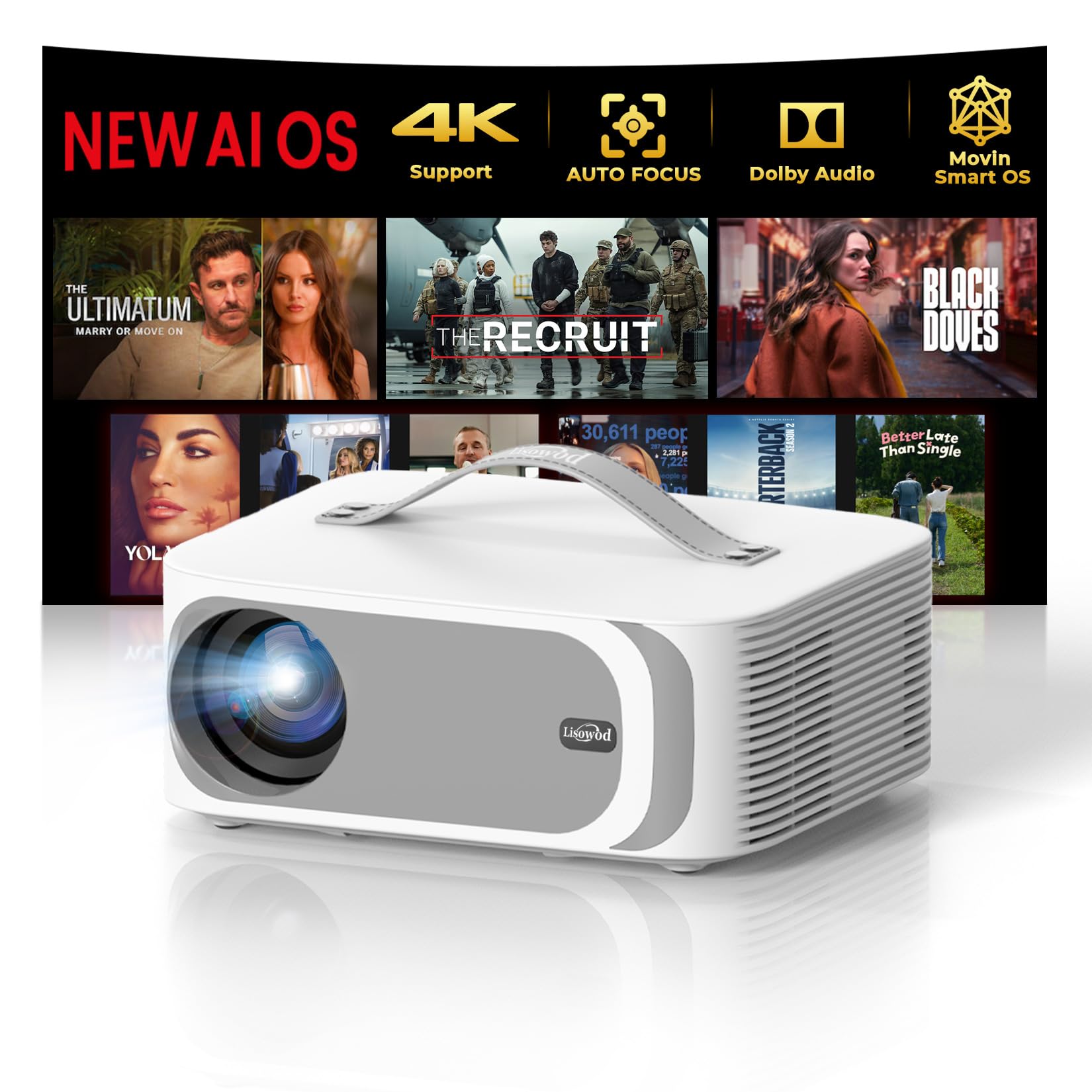
The Lisowod L61Pro is a feature-dense entry-level projector that packs official Netflix, Prime Video, and YouTube licenses into a compact 2.4-pound body. The AI Movin 2.0 OS handles app navigation smoothly, and the 50W Dolby Audio speakers produce room-filling sound that eliminates the immediate need for an external soundbar. The auto-focus and 6D auto-keystone correction work impressively well for a unit at this tier, delivering a sharp rectangular image in seconds.
The 2500 lumen brightness with 4K decoding support produces a respectable image on a 100-inch screen in a dark room or moderate ambient light. The 25000:1 contrast ratio adds some pop to SDR content, though HDR benefits are limited. The built-in handle and WiFi 6 support make it a true grab-and-go cinema solution for camping or backyard use.
The native 1080p resolution means you’re not getting true 4K sharpness, and some users report that the auto-focus occasionally needs a manual nudge. The fan noise is audible but not intrusive. For a buyer on a tight budget who wants a genuinely all-in-one smart projector with decent brightness and solid audio, the L61Pro represents exceptional value.
Why it’s great
- Official Netflix and streaming app licenses built-in
- Powerful 50W Dolby Audio eliminates need for soundbar
- Auto setup features work reliably for easy deployment
Good to know
- 1080p native resolution, not true 4K
- Auto-focus may need occasional manual override
FAQ
Is a triple laser projector worth the extra cost over a standard LED model?
Can a projector really replace a TV for everyday daytime viewing?
What screen size should I target for a dedicated home cinema room?
Does pixel shifting produce a true 4K image or is it a compromise?
What is the most common mistake people make when buying a home cinema projector?
Final Thoughts: The Verdict
For most users, the best beamer for home cinema winner is the XGIMI Horizon 20 Max because it combines the highest brightness in its class with motorized lens shift, Dolby Vision support, and responsive Google TV — a complete package that works equally well in a dedicated theater room or a bright living room. If you want the absolute best black levels and color accuracy in a fully dark room, grab the Epson Home Cinema 5050UB. And for a flexible, portable cinema setup that you can move from indoors to the backyard without sacrificing picture quality, nothing beats the Hisense C2 Ultra.