
Our readers keep the lights on and the weekend projects moving. As an Amazon Associate, I earn from qualifying purchases.
The difference between a good morning and a great morning often comes down to the first sip. A bean-to-cup espresso machine eliminates the stale grounds, the plastic pods, and the guesswork, delivering a shot pulled from freshly ground beans in under a minute. For anyone who has settled for mediocre coffee or spent a small fortune on café lattes, this machine is the upgrade that changes the daily ritual.
I’m Rikta — the co-founder and writer behind FitlyFast. I have spent over a decade analyzing the hardware, grinder quality, brew temperature consistency, and milk frothing systems of super-automatic espresso machines to understand what separates a reliable daily driver from a countertop frustration.
Whether you need a quick morning espresso or a fully automated latte, finding the right bean to cup espresso machine means balancing grind precision, milk system cleanliness, and long-term durability against your counter space and budget.
How To Choose The Best Bean To Cup Espresso Machine
Not all bean-to-cup machines are created equal. The grinder material, the milk system design, and the heating technology determine whether your machine delivers café-quality shots or watery disappointments six months in. Focus on these three pillars before anything else.
Grinder Type and Adjustability
The grinder is the heart of any bean-to-cup machine. Ceramic or hardened steel conical burrs produce a consistent particle size without overheating the beans, preserving delicate oils. Look for at least 13 grind settings to dial in from a fine espresso grind to a coarser drip profile. Avoid blade grinders entirely — they burn the coffee and create uneven extraction.
Milk Frothing System
Automatic milk systems range from simple steam wands to fully integrated carafes that froth, heat, and self-clean. A dedicated milk carafe with a single-tube design (like LatteGo) can be rinsed in seconds, while a traditional steam wand offers more control but requires manual skill and cleaning. If you drink plant-based milk, check for optimized settings — oat and almond milk behave differently under heat and pressure.
Brew Group and Maintenance
A removable brew unit lets you rinse away coffee oils and fines, extending machine life. Machines with built-in rinse cycles and automatic descaling programs reduce manual upkeep. Also consider the water tank capacity — larger tanks (60+ ounces) mean fewer refills, but the machine will take up more counter space. A bypass chute for pre-ground decaf is a small but valuable feature.
Quick Comparison
On smaller screens, swipe sideways to see the full table.
| Model | Category | Best For | Key Spec | Amazon |
|---|---|---|---|---|
| De’Longhi Eletta Explore | Premium | Cold brew & iced drinks | Cold Extraction Technology | Amazon |
| Breville Oracle Jet | Premium | Pro-level automation | 45 grind settings, 58mm portafilter | Amazon |
| Terra Kaffe TK-02 | Premium | App control & scheduling | App sync + 100K combos | Amazon |
| Jura E8 | Premium | Pure espresso quality | Pulse Extraction Process | Amazon |
| Breville Barista Touch Impress | Mid-Range | Guided puck prep | 22lb assisted tamp + Impress Puck | Amazon |
| De’Longhi Rivelia | Mid-Range | Bean switching (2 hoppers) | Dual 8.8oz bean hoppers | Amazon |
| Jura E4 | Mid-Range | Pure black coffee & espresso | Pulse Extraction Process | Amazon |
| Philips 5500 Series | Mid-Range | Wide preset variety | 20 presets, 4 user profiles | Amazon |
| Philips 4400 Series | Value | Quiet operation | 12 presets, SilentBrew | Amazon |
| Ninja Luxe Café Pro | Value | Multi-drink versatility | 4-in-1 (espresso, drip, cold brew, hot water) | Amazon |
| Bosch TIU20307 | Budget | Entry-level super-auto | Ceramic grinder + one-touch brewing | Amazon |
In‑Depth Reviews
1. De’Longhi Eletta Explore

The Eletta Explore stands out with its Cold Extraction Technology, producing a full-bodied cold brew in under three minutes — a rare feature for a super-automatic. It also includes two separate LatteCrema systems for hot and cold milk foam, meaning you can switch from a steaming cappuccino to an iced latte without cross-temperature issues. The 3.5-inch TFT touchscreen and smartphone app integration allow you to fine-tune extraction parameters per bean type, and the machine stores up to four user profiles for personalized drink settings.
Bean Adapt Technology guides you through an initial setup walkthrough, asking about roast level and flavor preference to automatically adjust grind size and water temperature. The 13-setting conical burr grinder delivers consistent particles, and the 60-ounce water tank reduces the need for constant refills. The included travel mug compatibility (16 ounces) is a thoughtful touch for commuters who want a single-cup-to-go solution without extra containers.
The main trade-off is the learning curve: the sheer number of presets and customization layers can feel overwhelming on first use. The self-cleaning cycles also consume a fair amount of water, requiring more frequent tank and drip tray attention. But for those who want a do-everything machine that handles hot, cold, and iced drinks with genuine extraction quality, this is a category leader.
Why it’s great
- Genuine cold brew in under 3 minutes, not just chilled espresso
- Dual LatteCrema systems for hot and cold milk without flavor transfer
- Bean Adapt Technology simplifies dialing in for different roasts
Good to know
- Frequent self-cleaning cycles use water quickly, requiring regular refills
- Milk drink serving temperature may be lower than pure coffee setting
2. Breville Oracle Jet
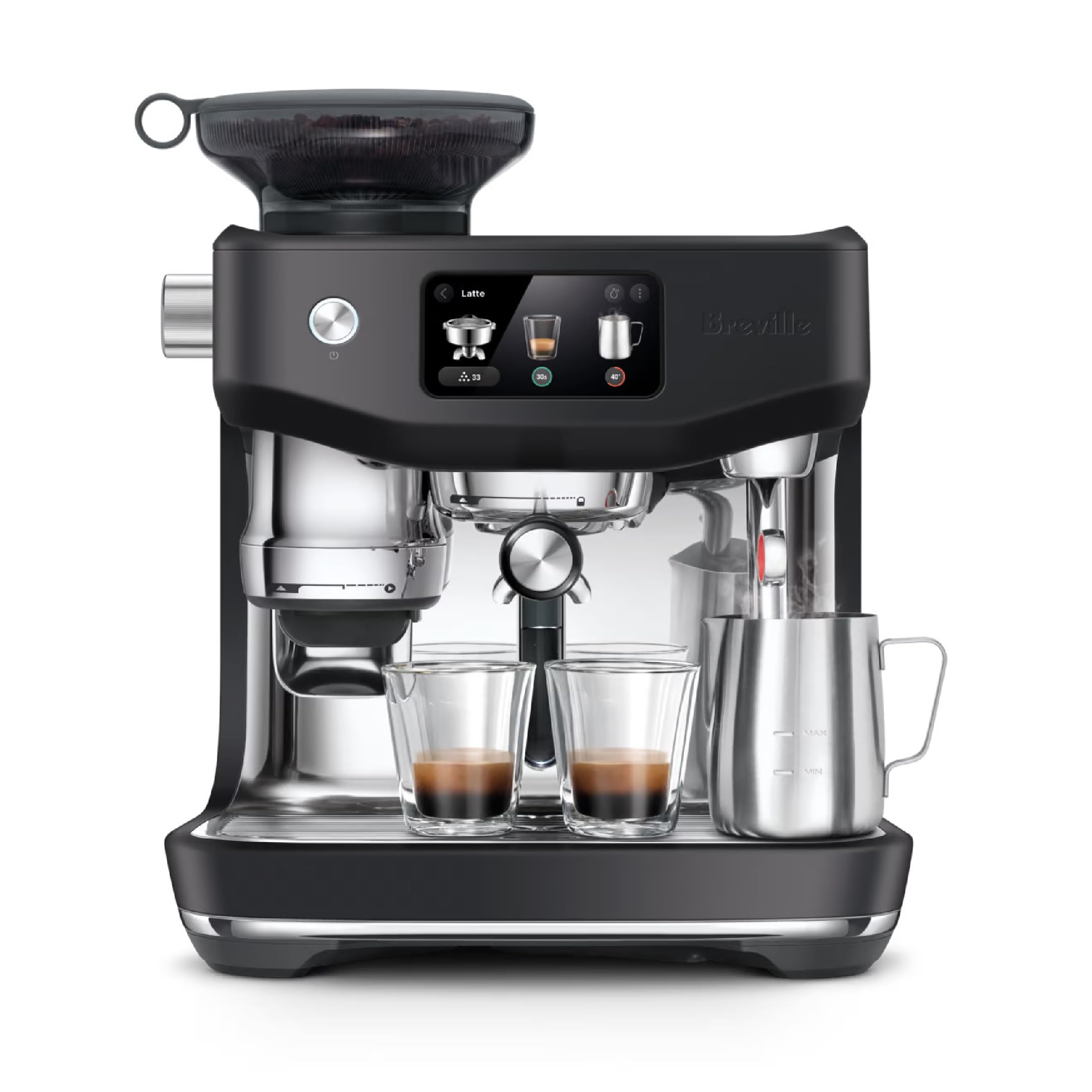
The Oracle Jet reduces the barista learning curve to nearly zero without sacrificing shot quality. Baratza European Precision Burrs with 45 grind settings feed a professional 58mm portafilter that auto-doses and auto-tamps at a consistent 22 pounds of pressure. The ThermoJet heating system reaches extraction temperature in three seconds, and the group head can be adjusted in 1-degree increments — a detail usually reserved for commercial machines.
Auto MilQ settings optimize steam temperature and air injection for dairy, oat, almond, and soy milk, delivering silky microfoam with consistent texture. The swipe-and-select touchscreen offers presets for cold brew, cold espresso, flat whites, and more, while Barista Guidance provides real-time feedback on extraction time to help you adjust grind size on the fly. The Auto Queue feature lets you steam milk and pull a shot simultaneously, cutting total prep time for back-to-back drinks.
The main concern reported by some users relates to software stability — occasional firmware issues have caused inconsistent tamping after automatic updates. The machine also requires a minimum 8-ounce cup height, which may not accommodate small espresso demitasse cups without a stand. Still, for consistent café-quality shots with minimal effort, the Oracle Jet is a benchmark in this class.
Why it’s great
- Fully automatic grind, dose, and tamp with 22lb pressure
- Auto MilQ customizes steam for dairy and plant-based milk
- 3-second heat up time with the ThermoJet system
Good to know
- Firmware updates have occasionally caused tamping inconsistencies
- Minimum cup height of 8 ounces limits small espresso cup use
3. Terra Kaffe TK-02
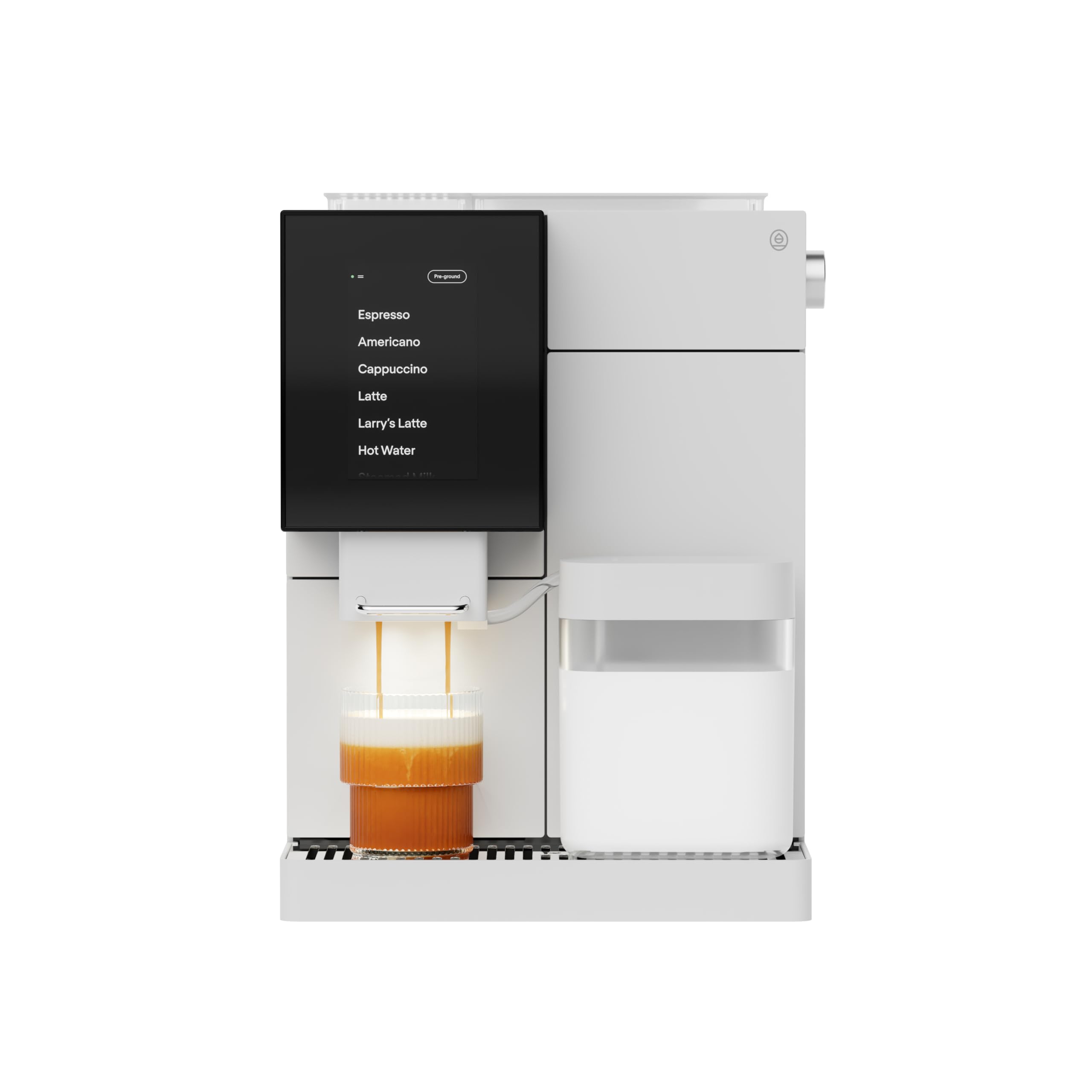
The TK-02 brings a software-first approach to the bean-to-cup category. The companion app allows you to set auto-wake and sleep times, create and save custom drink profiles, and scan QR codes on roasted coffee purchases to automatically load optimal brew parameters. The hybrid brew unit can handle both espresso and true drip coffee from whole beans or pre-ground coffee — a rare dual-mode capability.
With over 100,000 drink combinations available through the touchscreen interface, the TK-02 offers granular control over strength, volume, temperature, and shot timing. The stainless steel build and 75-ounce water tank are generous for households that consume multiple drinks daily. The automatic milk system handles all milk types, including plant-based, without requiring manual steam wand technique.
Some users report that the machine runs a heavy rinse cycle that drains the drip tray quickly, and the initial startup process can be slow. The drink temperature at the highest heat setting has been described as warm rather than hot by some reviewers. For tech-savvy coffee lovers who value app-driven customization and scheduling, the TK-02 delivers a connected experience that few competitors offer.
Why it’s great
- App-enabled scheduling and QR-based brew profiles for perfect dial-in
- Hybrid brew unit produces both espresso and drip coffee from beans
- Large 75-ounce water tank and generous stainless steel construction
Good to know
- Heavy rinse cycles drain the drip tray and water tank quickly
- Maximum brew temperature may not satisfy those who prefer very hot drinks
4. Jura E8

The Jura E8 is designed for drinkers who prioritize espresso and black coffee quality above all else. Its Pulse Extraction Process (PEP) delivers short, intense extraction bursts for ristretto and espresso, producing a thick crema and full-bodied flavor that rivals commercial machines. The Professional Aroma Grinder, a conical burr unit, claims 12.2% more aroma preservation compared to standard grinders, and maintains consistency over the entire lifespan of the grinder.
The 2.8-inch color display uses an AI-driven interface that learns your most-used drinks and adapts the menu positioning. Seventeen programmed specialties cover everything from a Cortado to a Flat White, with adjustable coffee strength, volume, and temperature per drink. The chrome-accented design and 64-ounce water tank fit well in a premium kitchen, and the machine is notably quieter than many competitors in its class.
The downside is the ongoing cost: proprietary Jura water filters, cleaning tablets, and milk system cleaner each add a monthly expense that can exceed . The machine also does not handle oily beans well — they can clog the grinder. And while the E8 excels at pure espresso-based drinks, it lacks a dedicated cold brew feature and its hot water spout may not reach a high enough temperature for proper tea steeping.
Why it’s great
- Pulse Extraction Process produces café-level crema and body
- Professional Aroma Grinder maintains consistent grind quality long-term
- AI-driven interface learns and adapts to user preferences
Good to know
- Proprietary filter and cleaner costs can add over per month
- Oily beans can clog the grinder and require careful bean selection
5. Breville Barista Touch Impress

The Barista Touch Impress bridges the gap between full manual and super-automatic by guiding you through the puck preparation process. The Impress Puck System uses intelligent dosing to measure coffee, then an assisted 22-pound tamp with a 7-degree twist compresses the puck automatically, auto-correcting the next dose if the previous puck was uneven. The ThermoJet heating system brings the machine to temperature in three seconds, and the PID group head maintains water temperature within 1 degree for consistent extraction.
The touchscreen interface walks you through each step, from grind size selection to frothing texture adjustment, making it accessible to beginners while still offering advanced customization for experienced users. The Auto MilQ feature provides three alternative milk settings optimized for dairy, oat, and almond milk, each calibrating air injection and temperature differently. The steam wand is powerful enough to produce latte-art-quality microfoam without requiring manual technique.
Some users report that the grind and dose calibration can drift between uses, requiring occasional re-dialing to maintain consistency. The machine also leaves some loose grinds on the counter after dosing, which may require a quick wipe after each session. For those who want the ritual of espresso preparation with a safety net of automation, this machine offers the best of both worlds.
Why it’s great
- Impress Puck System auto-corrects dose for consistent pucks each time
- Three-second heat up time with the ThermoJet heating system
- Auto MilQ customizes steam for dairy, oat, and almond milk
Good to know
- Grind and dose calibration may drift, requiring occasional re-dialing
- Some loose grinds escape during dosing, requiring a quick counter wipe
6. De’Longhi Rivelia

The Rivelia’s defining feature is the Bean Switch System — two 8.8-ounce removable bean hoppers that let you swap between a dark roast and a decaf, or a single-origin and a blend, with a simple twist. The machine automatically adjusts grind settings based on which hopper is active. The integrated 13-setting conical burr grinder adjusts the grind size based on bean type, guided by a step-by-step walkthrough on the 3.5-inch TFT touchscreen.
Beyond the bean switching, the Rivelia offers 18 preset recipes including cortado, flat white, iced coffee, and espresso over ice. The LatteCrema Hot system produces smooth microfoam from dairy or plant-based milk and has an auto-clean function that flushes the milk circuit after each use. Water tank capacity is 47 ounces, and the compact footprint makes it easier to fit under standard cabinets than many competitors.
Some users report that the machine can produce weak espresso when using the “Strong” setting with very fine grind — the puck may become too dense and restrict flow. The plastic components in the bean hopper and water tank feel less premium compared to the stainless steel builds of higher-priced machines. For households where two people prefer different beans, the dual-hopper system is transformative.
Why it’s great
- Two removable bean hoppers for instant switching between different beans
- LatteCrema Hot system produces silky foam with dairy and plant milk
- Compact design fits under most kitchen cabinets
Good to know
- Very fine grind settings can cause slow flow and weak extraction
- Plastic components feel less premium than all-metal machines
7. Jura E4
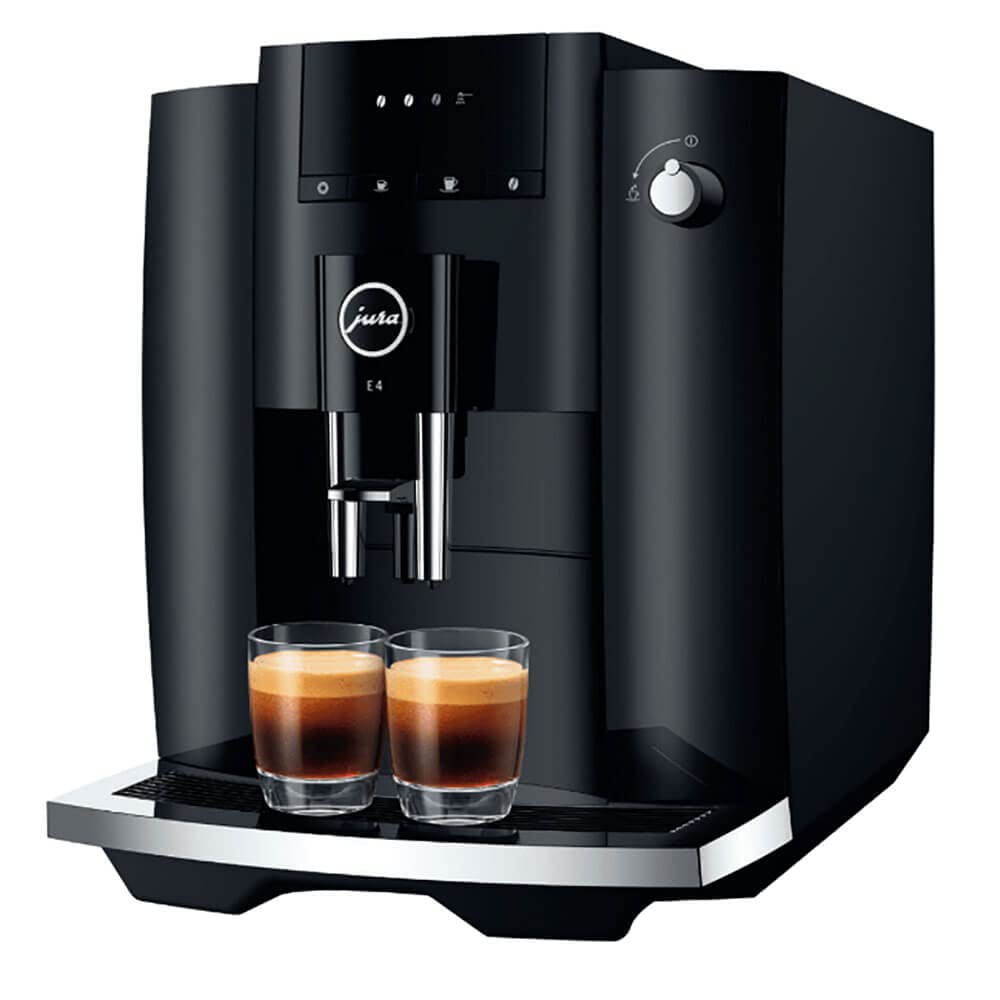
The E4 is Jura’s dedicated black-coffee machine — no milk system, no frother, just espresso, coffee, ristretto, and lungo with the same Pulse Extraction Process found in the flagship Giga series. This makes it one of the most efficient machines for pure espresso drinkers who don’t want to pay for a milk system they won’t use. The conical burr Professional Aroma Grinder delivers consistent particle size, and the bypass chute allows pre-ground decaf or a different bean for a single cup.
The 64-ounce water tank is generous, and the 10-ounce bean hopper is sufficient for a week of morning shots. The interface uses symbols for strength and volume rather than text labels, which keeps the design clean but can be confusing initially. The machine remembers programmed settings after the first setup, so you don’t need to adjust every time.
The major limitation is the lack of a hot water spout that reaches a high enough temperature for tea — the E8 addresses this, but the E4 does not. The glossy piano black finish shows fingerprints readily, and the machine uses proprietary Jura filters that add recurring cost. For espresso purists who want a compact, reliable machine with no milk plumbing to clean, the E4 is a focused and durable option.
Why it’s great
- Pulse Extraction Process delivers excellent crema on pure espresso shots
- No milk system means significantly less cleaning and maintenance
- Bypass chute allows pre-ground coffee for single-cup variety
Good to know
- Hot water dispenser may not be hot enough for proper tea steeping
- Proprietary Jura filters add recurring purchase cost
8. Philips 5500 Series (EP5544/94)
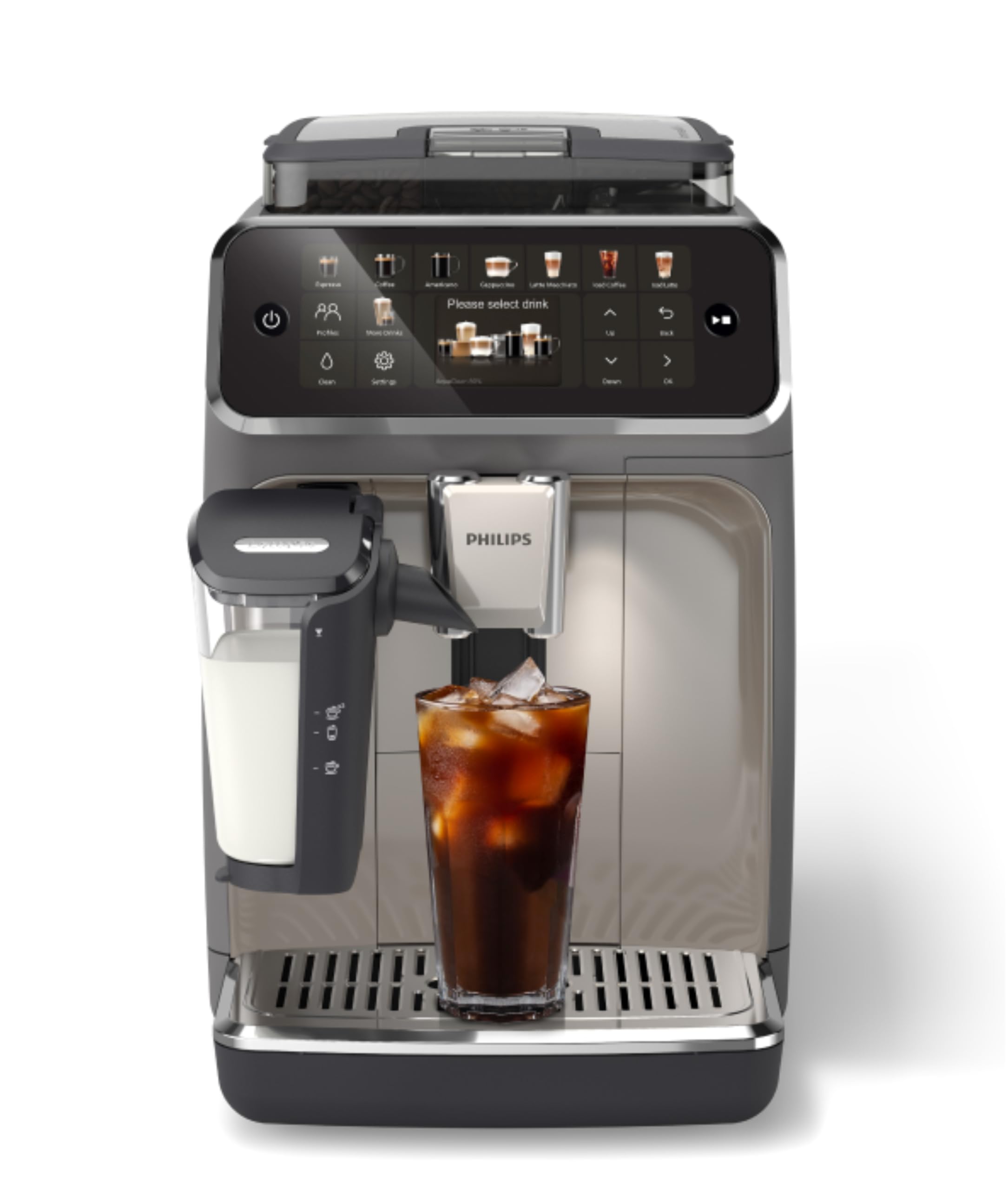
The 5500 Series expands on the 4400 with 20 pre-programmed recipes (up from 12), including iced coffee and hot water options, and supports up to 4 user profiles on the color display. The core experience revolves around the LatteGo milk system — a two-piece design with no internal tubes, rinsing clean in about 10 seconds under the faucet or going straight into the dishwasher. The 15-bar Italian pump paired with the ceramic grinder produces adequately balanced shots, though achieving a truly rich ristretto may require setting the grinder to a finer calibration than the default.
SilentBrew technology keeps noise levels noticeably lower than earlier Philips generations, and QuickStart has the machine ready in 3 seconds. The brew unit is removable from the front for periodic rinsing, and the self-descaling program runs with minimal user intervention. The 1.8-liter water tank is adequate for moderate daily use, though heavy drinkers will need to refill every 3-4 back-to-back drinks.
The main trade-off is build quality — the plastic housing and metal accents feel sturdy but not luxurious compared to Jura or De’Longhi premium models. Some users report that the machine triggers the “add beans” alert prematurely, requiring a shake of the hopper to keep it from interrupting. For someone entering the super-automatic space who wants a capable, easy-to-clean machine with broad drink selection, this is a solid step-up.
Why it’s great
- LatteGo milk system rinses clean in seconds with no hidden tubes
- 20 presets and 4 user profiles offer extensive drink customization
- Copper-colored accents and a deeper preset library than the 4400
Good to know
- Bean hopper sensor may trigger false low-bean alerts
- Plastic housing feels less premium than higher-priced competitors
9. Philips 4400 Series (EP4444/90)
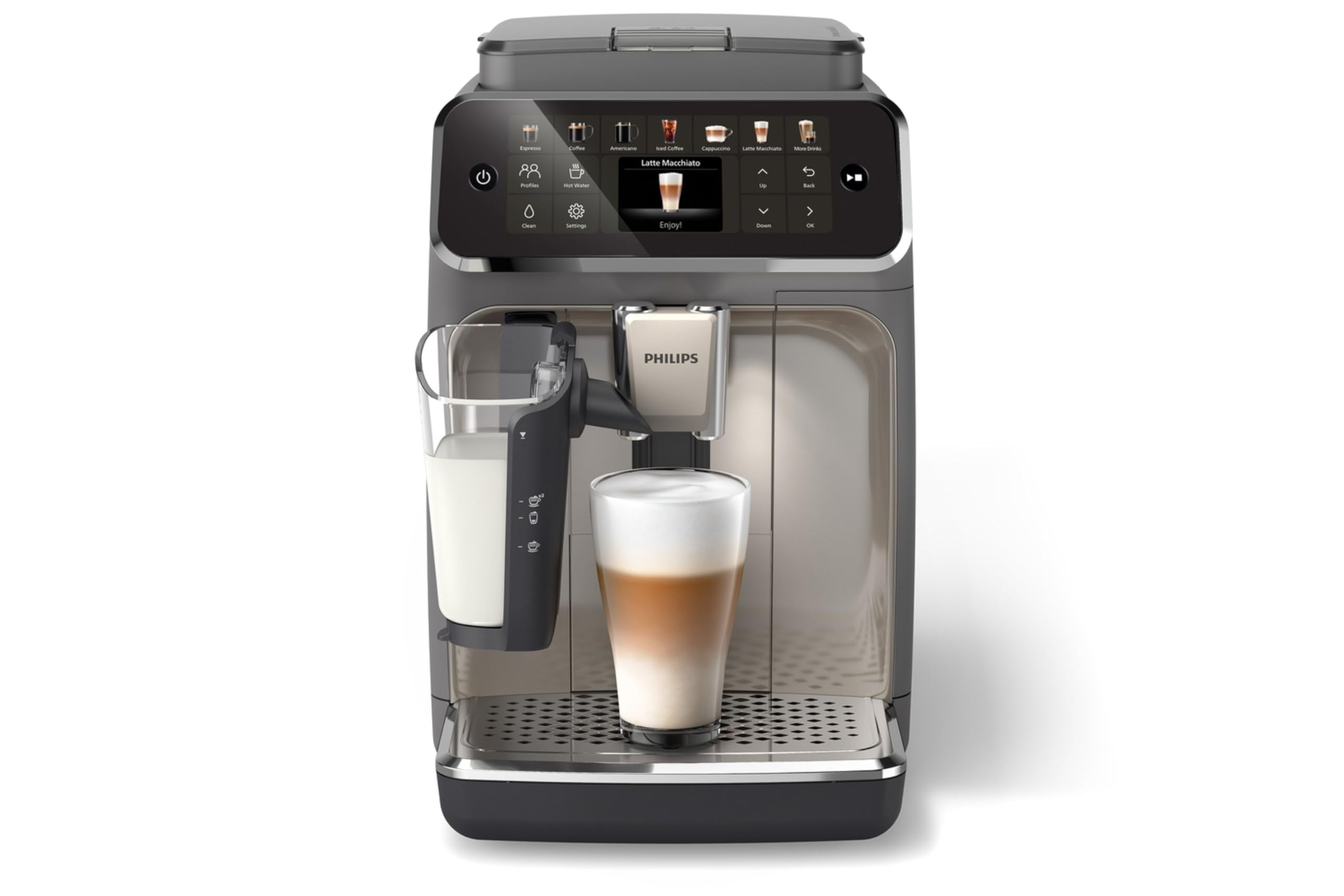
The 4400 Series is Philips’ answer to those who want the same LatteGo milk system and ceramic grinder as the higher-end models, but at a more accessible price point. It offers 12 hot and iced presets, a 15-bar pressure pump, and QuickStart technology that reaches brewing temperature in 3 seconds. The SilentBrew sound shielding has earned Quiet Mark certification, making it one of the quietest bean-to-cup machines in its class — useful if you’re brewing while others are still asleep.
The LatteGo milk system is the standout feature here: three dishwasher-safe parts with no internal milk tubes means cleaning takes under 30 seconds. The AquaClean filter reduces the need for descaling (up to 5,000 cups claimed), and the brew unit is removable for thorough cleaning. The color display is intuitive, showing drink icons and customization options clearly without a steep learning curve.
The primary limitation is that extracting a truly concentrated espresso may require grinding at the finest setting (2 or 3) rather than the default 5–6, as some users report weak first shots. The water tank is on the smaller side at 1.8 liters, and the 4400 lacks a dedicated hot water spout for Americanos or tea. For a reliable, quiet, low-maintenance entry to the category, the 4400 Series delivers consistent performance with minimal fuss.
Why it’s great
- LatteGo milk system is exceptionally fast and easy to clean
- SilentBrew technology makes it one of the quietest super-automatics
- QuickStart delivers brewing temperature in 3 seconds
Good to know
- Shots may be weak at default grind settings, requires fine-tuning
- No dedicated hot water spout for Americanos or tea
10. Ninja Luxe Café Pro ES701

The Ninja Luxe Café Pro breaks the bean-to-cup mold by combining espresso, drip coffee, cold brew, and a hot water system in a single machine. The integrated conical burr grinder has 25 grind settings, and the Assisted Tamping lever compresses the puck without loose grounds or manual effort — a feature that dramatically reduces counter mess. Barista Assist Technology monitors each brew and suggests grind size adjustments based on the previous extraction, eliminating the trial-and-error cycle that frustrates beginners.
The Dual Froth System Pro uses a combination of steaming and whisking to produce hot or cold microfoam from dairy and plant-based milk, hands-free. The XL milk jug can froth enough for two drinks at once. The machine also offers weight-based dosing via a built-in scale, grinding by weight rather than time, which significantly improves shot consistency compared to timed-only grinders.
Where the Ninja falls short is in pure espresso quality: some users report that the quad shot can be watery, and the brew temperature and pressure may not match the consistency of dedicated espresso machines from Breville or Jura. The machine is also bulky at 27 pounds. However, for households that want espresso, drip coffee, and cold brew from one appliance, the versatility is unmatched at this tier.
Why it’s great
- Weight-based dosing via built-in scale improves shot consistency
- Assisted Tamping lever eliminates mess and manual technique
- Four appliances in one: espresso, drip, cold brew, hot water
Good to know
- Quad shot setting can produce watery extraction
- May not achieve the same pressure consistency as dedicated espresso machines
11. Bosch TIU20307
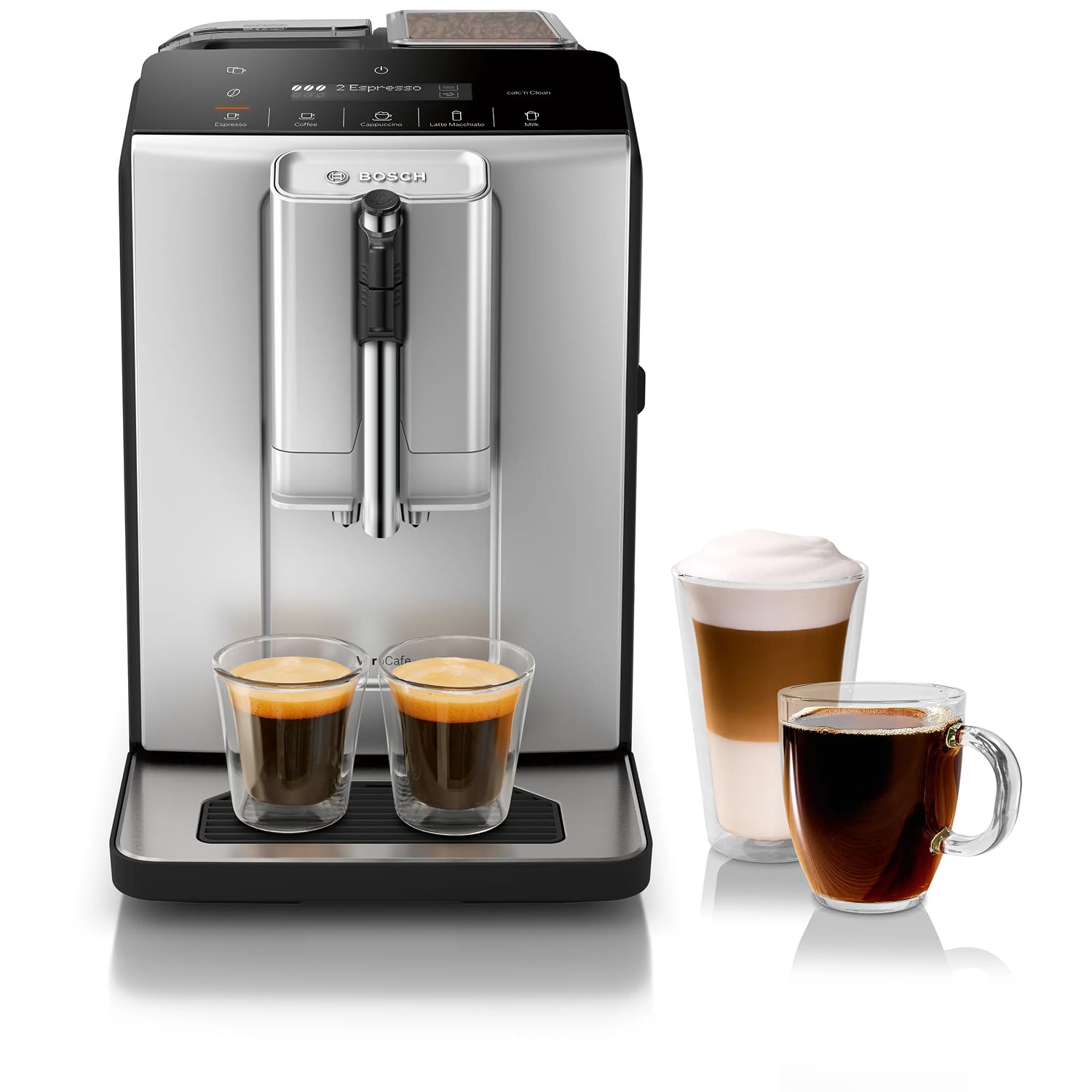
The Bosch TIU20307 is a straightforward entry-level bean-to-cup machine designed for individuals or couples who want fresh-ground espresso and milk drinks without navigating complex interfaces. Its durable ceramic grinder delivers even particle size without overheating the beans, preserving aroma — a thoughtful detail at this level. The one-touch brewing system offers espresso, cappuccino, and latte macchiato from whole beans, and the adjustable milk frother creates foam directly into the cup, reducing extra cleanup.
The removable brew unit and Calc’n Clean descaling program make maintenance manageable. The 2.9-pound bean hopper is generous, and the front-access design allows you to rinse the brew unit without moving the machine. The footprint is compact at 16.5 inches deep and 9.75 inches wide, fitting under most cabinets.
The main limitations are the lack of a second bean hopper for decaf (you must empty the hopper to switch beans) and a reported “fill water tank” error from airlock issues in some units. The milk frother, while convenient, does not heat milk to the same temperature as a dedicated steam wand. For someone taking their first step from pod coffee to whole-bean brewing, the Bosch offers a solid, fuss-free introduction to the category.
Why it’s great
- Ceramic grinder preserves bean aroma without overheating
- Front-accessible removable brew unit simplifies maintenance
- Compact footprint fits well in small kitchens
Good to know
- No second bean hopper — must empty to switch between bean types
- Milk frother doesn’t heat milk as hot as a steam wand
FAQ
What is the difference between a bean-to-cup machine and a semi-automatic espresso machine?
How often do I need to descale a bean-to-cup espresso machine?
Can I use pre-ground coffee in a bean-to-cup machine?
Why is my bean-to-cup espresso machine producing weak shots?
Final Thoughts: The Verdict
For most users, the bean to cup espresso machine winner is the De’Longhi Eletta Explore because it combines genuine cold brew capability, dual milk systems, and Bean Adapt Technology for automatically dialing in different roasts — all in a single footprint. If you want pro-level automation with the best puck preparation system and the ability to fine-tune extraction temperature in 1-degree increments, grab the Breville Oracle Jet. And for value-conscious buyers who want quiet operation plus the incredibly easy-to-clean LatteGo milk system, nothing beats the Philips 4400 Series.