
Our readers keep the lights on and the weekend projects moving. As an Amazon Associate, I earn from qualifying purchases.
The search for a single ingredient that delivers substantial plant-based protein, high dietary fiber, and enough versatility to anchor breakfast, lunch, and dinner is surprisingly narrow. Most pantry staples lean heavily on one macro, leaving your meal plan unbalanced unless you combine multiple sources. Beans are the rare exception — they pull double duty as both a protein and a fiber powerhouse, but the difference between a bag of mediocre legumes and truly outstanding beans comes down to origin, freshness, and how intact they remain after cooking.
I’m Rikta — the co-founder and writer behind FitlyFast. I’ve spent countless hours analyzing the micronutrient profiles, cooking behaviors, and sourcing practices of dozens of bean varieties to separate the bags that deliver consistent texture and nutrition from those that crumble into mush or taste flat.
This guide covers only beans that earn their place in your kitchen by delivering measurable protein and fiber per serving while maintaining reliable texture through soaking and cooking. Whether you need a quick canned option or a bulk bag for weekly meal prep, these selections represent the best beans for protein and fiber you can buy right now.
How To Choose The Best Beans For Protein And Fiber
Selecting a bean that maximizes both protein and fiber without sacrificing texture or flavor requires understanding three distinct variables: variety, processing type (dried vs. canned), and freshness. Each decision point shifts how the bean behaves in your cooking and how much of its nutritional payload survives to your plate.
Bean Variety: Protein Density Meets Fiber Profile
Not all legumes are created equal. Black beans deliver roughly 7.6 grams of fiber and 7.6 grams of protein per half-cup cooked, making them one of the most balanced choices. Lentils edge higher in fiber per gram, while chickpeas (garbanzo beans) offer a slightly higher protein-to-fiber ratio. Pinto beans land in the middle — solid on both macros — but their creamy texture makes them ideal for refried applications where you need the fiber to remain intact. Matching the variety to your intended dish (firm black beans for salads, creamy pintos for burritos, quick-cooking lentils for soups) ensures you get the full macro benefit without fighting texture.
Dried vs. Canned: Nutrient Retention and Sodium Control
Dried beans give you complete control over sodium and cooking texture. The dry weight-to-cooked ratio varies by bean (roughly 2.5 to 3 times volume after soaking), and this is where freshness matters — beans from the current harvest season cook faster and split less. Canned beans offer zero-prep convenience and often retain fiber and protein well, but you must check sodium content. Low-sodium or no-salt-added versions preserve the macro profile without forcing you to rinse repeatedly.
Freshness Indicators: Soak Time and Split Rate
A bag of dried beans that has sat on a shelf for two years will take twice as long to cook and lose a meaningful percentage of its beans to broken skins and mushy interiors. Reliable indicators of freshness: uniform size within the bag (indicates single-varietal sorting), minimal dust at the bottom of the bag, and a clean earthy smell (no musty or stale notes). Beans labeled with harvest year or “new crop” give you the highest confidence in cook-time consistency.
Quick Comparison
On smaller screens, swipe sideways to see the full table.
| Model | Category | Best For | Key Spec | Amazon |
|---|---|---|---|---|
| High Plains Pinto Beans 10 lb | Dried Bulk | Family meal prep & refried beans | 10 lb bag; high protein & fiber | Amazon |
| Food to Live Garbanzo Beans | Dried Bulk | Salads, hummus & sprouting | 3 lb bag; sproutable chickpeas | Amazon |
| Goya Organic Black Beans | Canned | Quick lunches & low-sodium needs | Low sodium with sea salt | Amazon |
| Ortega Black Beans | Canned | Mexican dishes & family meals | Original flavor; 12-pack | Amazon |
| Yupik Organic Brown Lentils | Dried | Soups, salads & meat alternatives | 2.2 lb; high fiber & protein | Amazon |
| Yupik Organic Black Turtle Beans | Dried | Soups, salads & dips | 2.2 lb; uniform cook size | Amazon |
| Food to Live Organic Black-Eyed Peas | Dried | Southern dishes & batch cooking | 2 lb; product of USA | Amazon |
In‑Depth Reviews
1. High Plains Pinto Beans 10 lb Bag

These pinto beans come from a multi-generational farming cooperative in the High Plains region, and the freshness difference is immediately noticeable. Reviewers consistently report that these beans require no overnight soak — a 30-minute quick soak or direct Instant Pot cooking yields a creamy interior with skins that stay intact. The 10-pound burlap-style bag is ideal for households that cook beans weekly for refried dishes, chili, or burrito meal prep.
On the macro front, a half-cup cooked serving delivers roughly 7 grams of protein and 6 grams of fiber, putting this squarely in the balanced-legume category. The beans are light-colored and fresh, which translates to a shorter cook window: about 45 minutes on the stovetop after a quick soak, or 25 minutes in a pressure cooker. Some buyers note the bag arrives a few ounces shy of the stated weight, but the price per pound still undercuts grocery-store pintos of similar quality.
For those who prioritize maximum fiber yield in a creamy bean that doesn’t turn to paste, these pintos outperform most grocery-store alternatives. The burlap packaging also makes them a strong candidate for emergency food storage or pantry rotation where you need a long shelf life without freezer space.
Why it’s great
- Fresh crop beans cook quickly without soaking
- Creamy texture holds shape in chilies and burritos
- Bulk bag offers best per-serving fiber value
Good to know
- Bag weight may be slightly under 10 lb
- Pinto variety is lower in protein per gram compared to black beans
2. Food to Live Garbanzo Beans, 3 Pounds

Chickpeas sit at the top of the protein-per-gram scale among common legumes, with about 7.3 grams of protein and 6.2 grams of fiber per half-cup cooked. This 3-pound bag from Food to Live delivers consistent quality across multiple batches — the beans are uniform in size, free of floaters (indicating minimal insect damage), and sprout reliably if you need a raw enzyme-boosted option. Multiple reviewers confirm these cook to a plump, creamy texture in an Instant Pot without pre-soaking.
One standout detail is the freshness. Beans from older inventory tend to remain gritty or unevenly cooked, but these chickpeas produce a uniform butter-soft interior after about 40 minutes under pressure. The 3-pound format hits a sweet spot: larger than a trial-size bag but small enough to cycle through before the beans lose moisture. Buyers using these for hummus report a smooth blend without the chalky aftertaste that afflicts older chickpeas.
For anyone looking to maximize protein in a single bean without layering multiple varieties, garbanzo beans are the densest option available. This specific bag earns its premium placement because the sproutability and low split rate give you flexibility — you can cook them, sprout them, or grind them into flour with predictable results.
Why it’s great
- High protein density compared to other legumes
- Sproutable, which boosts digestibility and nutrient absorption
- Uniform size ensures even cooking in pressure cookers
Good to know
- Requires longer cooking than lentils or split peas
- Not ideal for cold salads unless marinated
3. Goya Organic Black Beans, Low Sodium, 15.5 Ounce (Pack of 8)
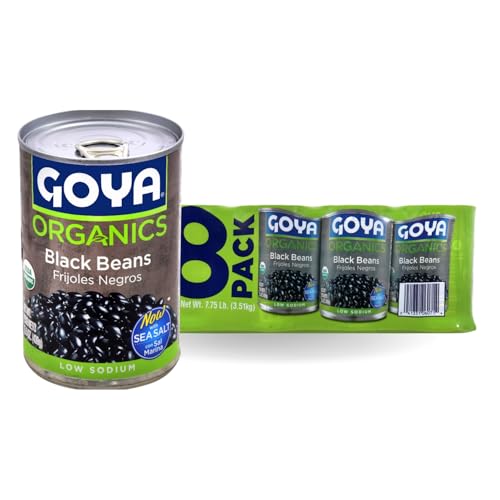
Goya’s organic black beans come seasoned with sea salt only, giving you a clean slate to work with. Each half-cup serving contains roughly 7 grams of fiber and 7 grams of protein — the same macro balance as the dried version — with the added convenience of zero prep. The cans arrive filled mostly with beans rather than liquid, which means you aren’t paying for water weight. Reviewers consistently note the beans are small, firm, and hold their shape well after reheating.
The low-sodium formulation is critical for anyone trying to control blood pressure or simply avoid the heavy salt load common in canned beans. You can drain and rinse to further reduce sodium without losing texture. The pack of 8 covers roughly two weeks of daily bean servings for a single person, making it a viable pantry rotation staple for mid-week cooking when you don’t want to soak dried beans.
One consistent drawback: shipping quality varies. Multiple reports mention dented cans arriving, and in a few cases the damage was severe enough to compromise the seals. If you plan to store these long-term, inspect each can on arrival and use any dented units first. The actual bean quality inside, however, is excellent — organic, firm, and reliably consistent across cans.
Why it’s great
- Low sodium with no added sugar or soy
- Cans are bean-dense, not liquid-heavy
- Organic certification with consistent texture
Good to know
- Shipping damage is common — inspect packaging
- Small bean size may feel less substantial than dried cooking
4. Ortega Black Beans, Original Flavor, 15 Ounce (Pack of 12)

Ortega black beans offer a pre-seasoned shortcut without sacrificing the fiber and protein macros you expect from black beans. The “Original Flavor” carries a subtle cumin and mild jalapeño note — not spicy hot, but enough warmth to make these a standalone side dish straight from the can. Each half-cup serving delivers around 7 grams of protein and 6 grams of fiber, though the added seasoning contributes roughly 2 grams of sugar per serving, which some reviewers find noticeably sweet.
These beans are a time-saving win for families who want to layer beans into tacos, burrito bowls, or huevos rancheros without pulling out a spice cabinet. The 12-pack keeps your pantry stocked for a month of casual use. The texture is slightly softer than scratch-cooked beans, but they hold together in casseroles and dips without dissolving into mush.
The sweetness factor is the main split point. Some buyers love the rounded flavor profile; others find the 2 grams of sugar out of place in what should be a savory bean. If you are strict about zero added sugars, rinse the beans after opening to reduce the seasoning layer, though that also washes away the jalapeño character that sets these apart.
Why it’s great
- Pre-seasoned with cumin and mild jalapeño — ready to eat
- 12-pack volume covers high-frequency meal rotations
- Good protein and fiber for a canned option
Good to know
- Contains 2g added sugar per serving
- Soft texture may not suit cold salads
5. Yupik Organic Brown Lentils, 2.2 lb

Brown lentils are the fastest-cooking legume on this list — no soaking required, and they reach tenderness in 15 to 20 minutes on the stovetop. That speed does not come at the expense of fiber: a half-cup of cooked brown lentils delivers about 8 grams of fiber and 9 grams of protein, making this one of the highest-fiber options per serving. Yupik’s organic batch consistently earns praise for uniform size and minimal debris after sorting.
Reviewers highlight how these lentils hold their shape in curries and salads while still breaking down enough to thicken soups naturally. The 2.2-pound bag is a pragmatic size for someone who cooks lentils weekly but doesn’t have bulk storage. Multiple buyers who switched from store-brand lentils report a noticeable improvement in creamy texture and a reduction in gritty mouthfeel — a sign of fresher inventory.
One important caveat: the label explicitly warns that some foreign material may be present despite mechanical cleaning. Sorting and rinsing is mandatory, not optional. This is standard for dried legumes, but the warning appears more prominently here than in some competing brands. For fiber-focused buyers who want the fastest cook time without compromising on macro density, these lentils are the top choice.
Why it’s great
- Highest fiber per serving among all options on this list
- No soaking required — cooks in under 20 minutes
- Organic, kosher, and gluten-free certified
Good to know
- Requires careful sorting for debris
- Brown lentils have a softer texture than black or green lentils
6. Yupik Organic Black Turtle Beans, 2.2 lb

Black turtle beans from Yupik are the classic all-rounder for fiber and protein balance. Each half-cup cooked delivers about 7.6 grams of fiber and 7.6 grams of protein, making this a perfectly symmetrical macro bean. Reviewers consistently note that these beans are dry and uniform, with minimal dust or broken pieces in the bag, and they hold their shape through soaking and cooking without splitting open.
The 2.2-pound bag is a good entry point for someone transitioning from canned to dried beans. The beans are certified organic and kosher, and they cook evenly within a predictable time window — roughly 1 hour after a standard overnight soak. The clean, earthy flavor works across cuisines: Cuban black bean soup, vegetarian tacos, or a simple bean salad with lime and cilantro.
Some reviewers note that the beans are on the smaller side compared to other brands, which can affect texture in applications where you want a hearty bite. If you prefer larger beans that feel more substantial in the mouth, you may want to explore the Goya or High Plains options. For a reliable, affordable organic black bean that hits the macro sweet spot, this bag delivers.
Why it’s great
- Perfect 1:1 protein-to-fiber macro ratio
- Consistent, uniform beans with minimal breakage
- Organic and kosher certification at a value price point
Good to know
- Smaller bean size than some competing brands
- 2.2 lb bag runs out quickly for heavy bean users
7. Food to Live Organic Black-Eyed Peas, 2 Pounds
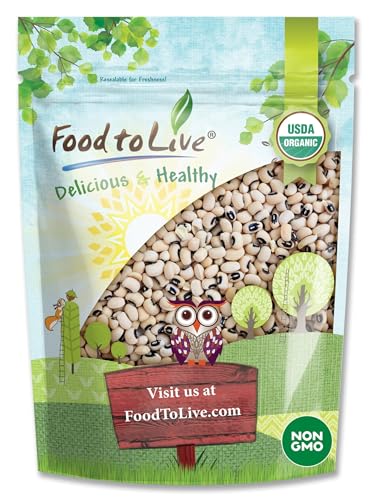
Black-eyed peas sit slightly lower on the protein scale than black beans or chickpeas — roughly 6.5 grams of protein and 5.5 grams of fiber per half-cup cooked — but they bring a creamy, buttery texture that pairs well with greens and grains. Food to Live’s organic version comes from US farms and arrives as large, whole peas that hold up exceptionally well under pressure canning or slow cooking. Several reviewers who home-can report these peas pressure-cook beautifully without turning to paste.
The 2-pound bag is practical for single households or couples who cycle through legumes at a moderate pace. These black-eyed peas are notably larger than standard grocery-store peas, which gives them a more satisfying bite in salads and side dishes. The organic certification and USA sourcing add traceability that budget imported brands cannot match.
One practical tip from experienced buyers: soak these for 12 to 24 hours with a tablespoon of vinegar per cup of water, changing the water halfway through. This reduces phytic acid and halves the cooking time. Without soaking, expect a 45-minute to 1-hour simmer. For fiber-focused eaters who want a change from the black-bean-and-chickpea rotation, these peas offer a distinct nutritional path with equally reliable cook results.
Why it’s great
- Large, uniform peas with creamy cooking texture
- Grown in the USA with organic certification
- Excellent for home pressure canning
Good to know
- Lower protein and fiber per serving vs. black beans or lentils
- Longest recommended soak time of any bean on this list
FAQ
Which bean has the most combined protein and fiber per serving?
Do canned beans retain the same fiber content as dried beans?
How do I know if my dried beans are too old to cook well?
Final Thoughts: The Verdict
For most users, the beans for protein and fiber winner is the High Plains Pinto Beans because the 10-pound bulk format, farm-fresh flavor, and consistent creamy texture make it the single most practical bean for families who cook from dried. If you want the highest fiber per serving with the fastest cook time, grab the Yupik Organic Brown Lentils. And for zero-prep convenience without sacrificing macro balance, nothing beats the Goya Organic Black Beans — just inspect the cans on arrival.