
Our readers keep the lights on and the weekend projects moving. As an Amazon Associate, I earn from qualifying purchases.
Specs are compiled from manufacturer listings and verified buyer reviews and can change over time — please confirm the key details on the product page before buying.
For most home caregivers, the Smart Caregiver Wireless (RP-433BR1-SYS) is the bed alarm for dementia patients you will actually use: a 300-foot (about the length of a football field) wireless pager that alerts you wherever you are in the house, with a 2-3 second delay that stops false alarms from simple rolling. It lets you move freely while still knowing the moment your loved one stands, without startling them awake with a bedside siren. If you need a totally silent bedside to protect dignity, the Lunderg Basic model is your alternative. For a patient who will push or rip away anything visible, the invisible Lunderg Under Mattress model is the only reliable fix.
This guide compares published specs and verified customer reviews to highlight each pick’s real strengths and trade-offs.
The right bed alarm for dementia patients balances a fast alert with a design your loved one will not fight, giving you back your sleep and their safety.
Quick Picks
- Smart Caregiver Wireless Bed Pad Alarm System (RP-433BR1-SYS) — Best Overall
- Lunderg Wireless Bed Alarm System (Basic Bed Kit) — Premium Pick
- Lunderg Under Mattress Bed Alarm (PreRise) — Stealth Design
- Secure Safety Solutions Bed Exit Alarm (45BSET-5) — Facility Grade
- Patient Aid Bed Alarm (PA-505B) — Budget Champion
- Smart Caregiver Bed Exit Alarm with Wireless Pager — Premium Wireless
How To Choose The Best Bed Alarm For Dementia Patients
Choosing a bed alarm for dementia patients means prioritizing tamper resistance, sensitivity, and bedside quiet over sheer volume. A dementia patient’s bed alarm must be difficult for them to disable, sensitive enough to catch a sit-up motion, and quiet at the bedside so you do not startle them awake. These three specs separate a useful system from a frustrating one.
The Sensor Pad: Size, Placement, and Feel
The sensor pad is the system’s core component. A standard 10″ x 30″ pad works under the shoulders, but if your loved one moves a lot at night, the pad can shift and cause false alarms. Some pads are thin and flexible enough to go under the mattress entirely — ideal if the patient will pull off or kick away anything they can feel. Others are waterproof vinyl that sits on top of the sheet and wipes clean. Choose a pad type based on what your loved one will tolerate.
Wired vs. Wireless: The Real Trade-Off
A wired alarm keeps the sounder in the patient’s room and uses a foot switch or button to silence it. It is simple and cheap but means you hear the alarm only if you are nearby. A wireless system sends the alert to a pager you carry, so you can be in the kitchen or another bedroom and still know the moment they stand up. Wireless costs more, but for many caregivers it is the difference between confidence and listening for a sound you might miss.
Tamper Resistance and False Alarm Protection
A dementia patient may attempt to disable a visible or audible alarm. Some systems require you to press a three-button sequence to silence them — hard for confused hands to do. Others put the control box out of reach entirely. Meanwhile, a slight delay (2–3 seconds) in the sensor triggering can stop the alarm from going off when the person simply rolls over. That 2–3 second delay reduces false alarms while still catching a real bed exit.
Quick Comparison
| Model | Best For | Alert Type | Max Volume | Range | Amazon |
|---|---|---|---|---|---|
| Smart Caregiver Wireless (RP-433BR1-SYS) | Long-range wireless monitoring | Wireless pager | Adjustable (not specified) | 300 ft | Amazon |
| Lunderg Wireless (Basic Bed Kit) | No bedside noise, dignity-first design | Wireless pager | 120 dB | 300 ft | Amazon |
| Lunderg Under Mattress (PreRise) | Patients who refuse any visible alarm | Wireless pager (PreRise early alert) | Adjustable | 300 ft | Amazon |
| Secure Safety Solutions (45BSET-5) | Facility-grade tamper resistance | Wired in-room + optional nurse call | 120 dB | In-room | Amazon |
| Patient Aid (PA-505B) | Budget-friendly wired solution | Wired in-room | 90 dB | In-room | Amazon |
In‑Depth Reviews
1. Smart Caregiver Wireless Bed Pad Alarm System (RP-433BR1-SYS)
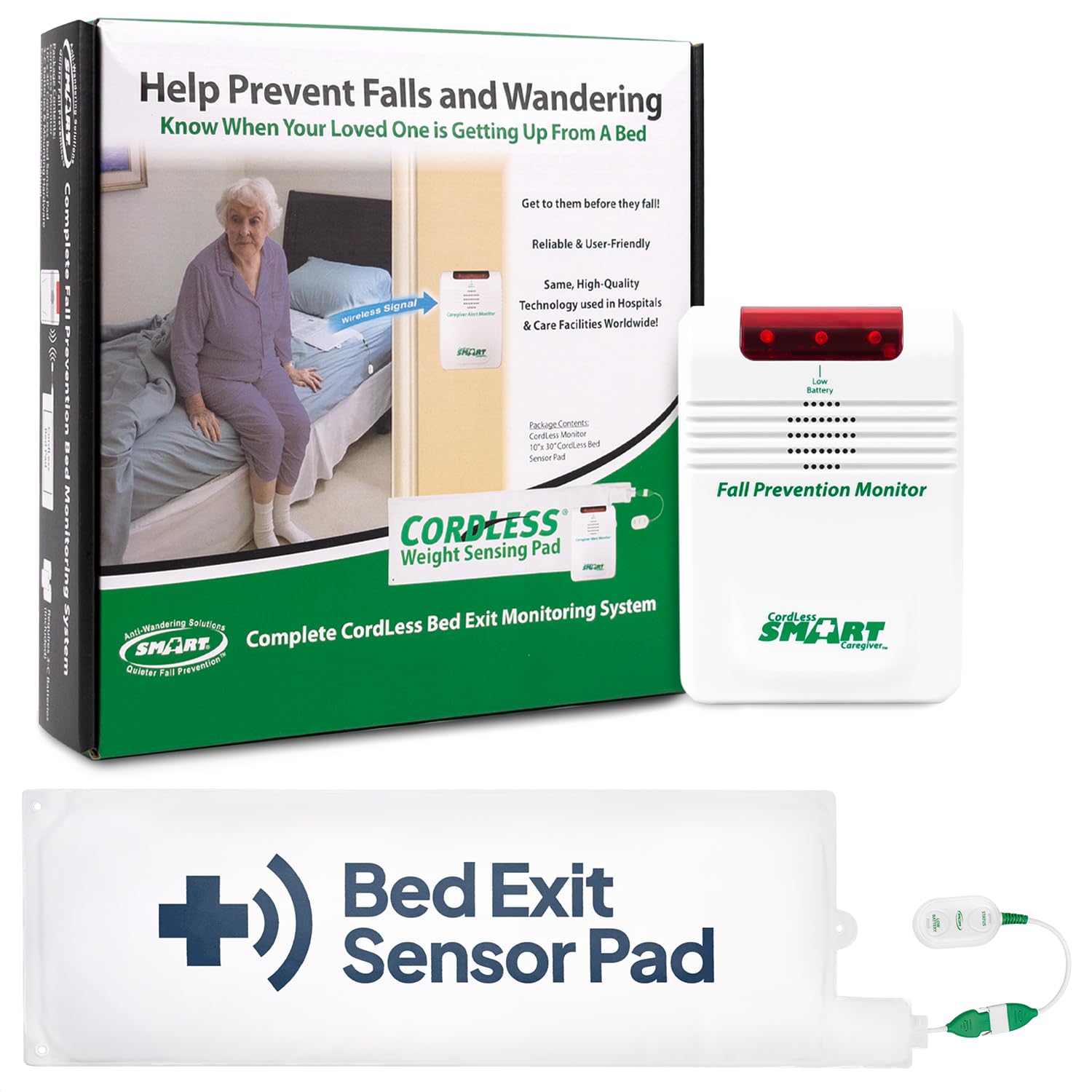
This wireless monitor alerts you anywhere in the house, with no bedside noise to startle your loved one.
You get a full 300-foot range (that is about the length of a football field), so you can be in the basement, the garage, or the far end of the house and still get the alert when your loved one stands up. The included 10″ x 30″ weight-sensing pad goes under the fitted sheet, made of soft latex-free vinyl with a thin foam interior. There is no sound at the bedside, only on the monitor you carry — that protects their dignity and keeps them calm.
A clever 2-3 second engineered delay is built in. It stops the alarm from triggering when the person simply rolls over or shifts in bed, cutting false alarms way down. The pager can also monitor up to six Smart Caregiver sensors at once (door alarms, chair pads, call buttons), so you can expand the system later into a full wandering-prevention network. Buyers report it works perfectly for a 92-year-old mother and that the alarm box is well built, though one noted the pad may crack over time. Compared to the wired Patient Aid model, this one gives you far more freedom to move around the home without losing awareness.
The downside is that the system runs on 3 C batteries (included) and there is no included AC adapter, so keep spares on hand. One reviewer had their unit fail after nine months, but the manufacturer offers a 1-year warranty.
Why it excels
- 300-ft wireless range allows full-house coverage
- Built-in 2-3 second delay prevents false alerts from tossing and turning
- Can monitor up to 6 sensors for a complete safety network
The trade-offs
- 3 C batteries drain over time; no AC adapter included
- One review reported failure after 9 months of use
Your best bet if: You need to move around the house freely while knowing the moment your loved one gets up — the wireless monitor and false-alarm delay make this the most practical system for home caregivers. skip it if you need a completely invisible solution that goes under the mattress — the pad here sits on top of the sheet and can be felt or pushed aside.
2. Lunderg Wireless Bed Alarm System (Basic Bed Kit)

Every alert goes to your pager, not their room — dignity and safety in one system.
This system was designed in direct response to 2017 federal CMS guidance that classified in-room bed alarms as a potential restraint — they can cause agitation, fear, and loss of dignity. Lunderg sends every alert wirelessly to the pager you carry. The bedside stays silent. Your loved one keeps their calm, and you keep your confidence.
The 10″ x 30″ sensor pad includes anti-slip stickers to stop the #1 cause of false alarms: a shifting pad. The pager reaches up to 300 feet, lets you choose high, low, or vibration-only alerts, and is lightweight enough to pocket or clip on your waistband. Owners mention it works great for dementia patients and they love the ability to adjust volume so the alarm can wake you up without waking the whole house. One reviewer noted it needs to be replaced about yearly but called the setup easy and the system sensitive. It is also FSA/HSA eligible, meaning you can use pre-tax dollars to buy it.
Unlike the Smart Caregiver system above, this one offers anti-slip stickers to keep the pad anchored, which is a major advantage if your loved one moves a lot at night. The trade-off is that the pad sits on top of the mattress, so a patient who is determined to push it away can still do so.
Why it stands out
- No alarm noise at the bedside — protects patient dignity and reduces agitation
- Anti-slip stickers keep the pad in place and cut false alarms
- FSA/HSA eligible for pre-tax purchase
The catch
- Pad sits on top of the mattress — a determined patient can push it aside
- Some users find the button layout confusing between stop and volume functions
Reach for this if: You want zero bedside noise to preserve your loved one’s calm and dignity — the silent bedside is a real design choice, not an afterthought. This is the model to pick over the Smart Caregiver if quiet is your top priority. pass on it if your patient will push away anything on the bed — you need the under-mattress version below.
3. Lunderg Under Mattress Bed Alarm (PreRise)

Completely hidden under the mattress — they never know it is there.
This is the system for the patient who refuses every visible monitor. The sensor pad slides entirely under the mattress (works with mattresses 13 inches or thinner). No wires, no crinkly pad, nothing to push away. Your loved one never knows a monitoring system exists, and you get every alert on the portable pager. It is the only way to monitor a stubborn or combative dementia patient without triggering a fight.
The patented PreRise early-alert technology is designed to catch the moment your person sits up in bed — before they stand, when falls actually happen. Customers note it prevents a husband post-stroke from sliding out of a hospital bed and that the batteries in the sensor last about 8 months. The pager offers high, low, or vibration-only modes. The company claims the sensor pad lasts 15 months, versus the 12-month lifespan of many competitors. Unlike the standard Lunderg above, this one is invisible — that is its entire point. It is also FSA/HSA eligible.
The trade-off is that the pad batteries are non-replaceable — when the pad dies after about 15 months, you must buy a new pad. And it only works on mattresses 13 inches or thinner, so check your bed depth before ordering.
Why you need this
- Totally invisible — the only choice for patients who fight visible alarms or pads
- PreRise technology alerts you before they stand, when falls happen
- Sensor pad batteries last 8+ months in real-world use
The real limitation
- Pad batteries are non-replaceable — you replace the whole pad when it dies (about every 15 months)
- Only works with mattresses 13 inches or thinner
Buy this for: Anyone with dementia who will rip out wires, push away pads, or refuse visible devices — the under-mattress design is the only reliable workaround. it’s not for you if you have a thick pillow-top mattress over 13 inches — it will not sense through that much foam.
4. Secure Safety Solutions Bed Exit Alarm (45BSET-5)
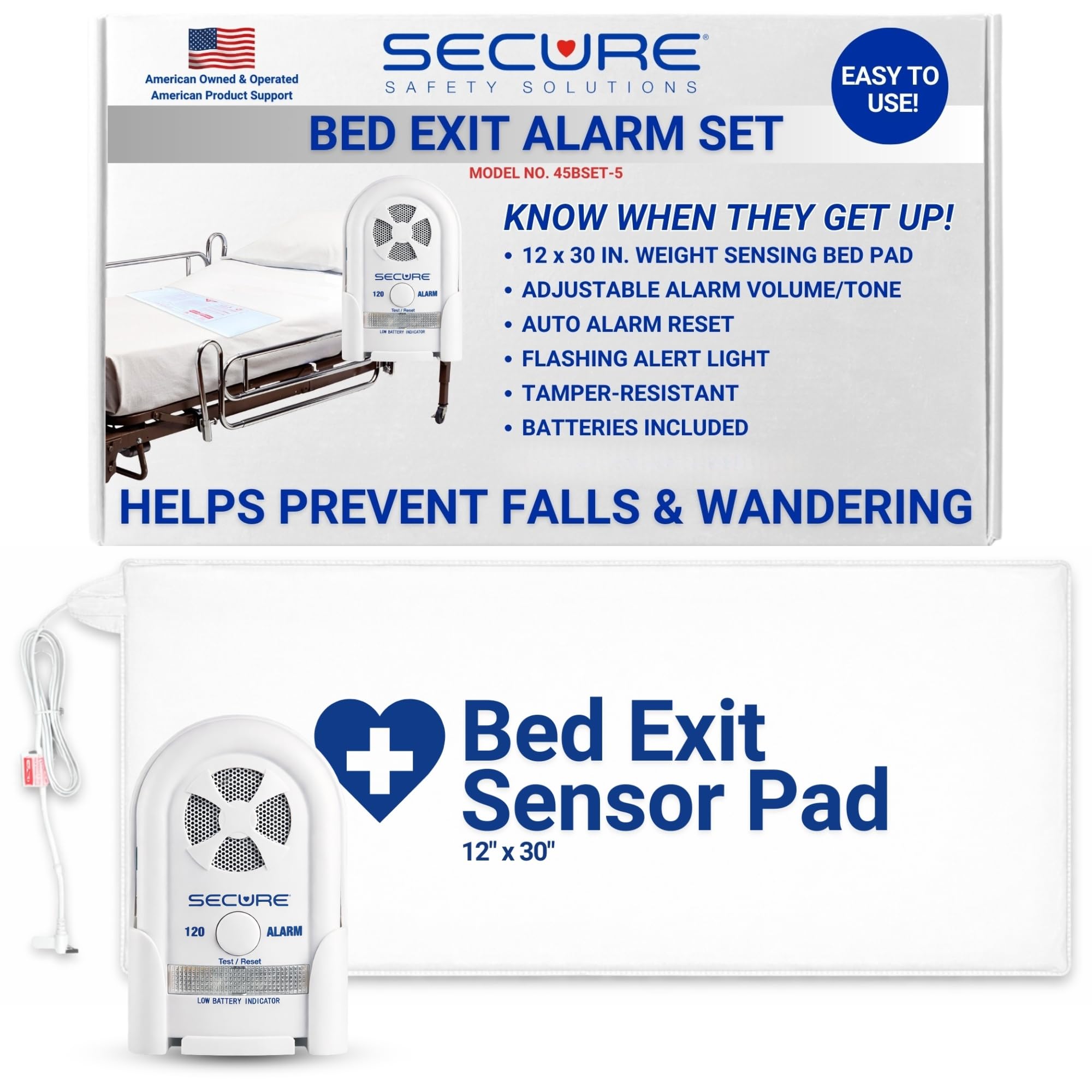
A loud, tamper-proof in-room alarm that even a confused patient cannot silence.
This one is built for situations where the patient might try to turn off the alarm themselves. The SUA-120 monitor uses a tamper-resistant three-press reset — you have to hold the button three times to silence it, which is basically impossible for someone with dementia to figure out. The 12″ x 30″ waterproof, latex-free pad has a durable metal connecting pin instead of the fragile plastic connectors other pads use, so it lasts longer in high-use settings like nursing homes or busy family homes.
Volume adjusts from 80 dB up to 120 dB (enough to hear two rooms away, as reviewers point out). There are two distinct alert tones and a flashing light for caregivers who are hard of hearing. It can also connect to an existing nurse call system (cable sold separately) for facility use. One reviewer used it for 9 months with a baby monitor for a 92-year-old mother with a broken hip and said it prevented falls. Another, working at a nursing facility for intellectually disabled individuals, called it very helpful for alerting nurses when a client gets up.
Unlike the wireless models above, this one is wired — the alarm sounds in the patient’s room, not on a pager. That means you need to be close enough to hear it. And one buyer mentioned the button malfunctioned after one month, making the alarm impossible to turn off once triggered.
What makes it effective
- Three-button reset prevents patient from silencing the alarm
- Metal connecting pin is more durable than plastic connectors on other pads
- 120 dB max volume with flashing light for hearing-impaired caregivers
Where it falls short
- Wired — alarm stays in the room; you must be nearby to hear it
- One review reported the button malfunction after one month of use
Choose this for: A patient who will try to turn off the alarm — the tamper-proof reset is a real safety layer you will not find on most options. Consider a wireless option if you are not in the same room most of the night — a pager-based system gives you freedom to move around the house.
5. Patient Aid Bed Alarm (PA-505B)

Simple, loud, and under $ — a basic wired alarm that just works.
If you want an affordable no-frills option that still does the job, this is it. The 10″ x 30″ pad is thin, tear-resistant vinyl, placed under the shoulders. When the patient lifts their weight off the pad, the alarm sounds in the room at either 80 dB or 90 dB. Shoppers say the alarm is loud enough to be heard two rooms away and that the pad is barely noticeable under the sheets. It is powered by a 9V battery (included), and has an AC adapter option for continuous use without draining batteries.
You get two sound options (alarm or music) and accessories for mounting — clip it to the bed rail with the U-bracket, mount it on the wall, or use velcro on a flat surface. One reviewer tested three different alarms and said this was their favorite because of the choice of low/high volume, the single-button reset, and the flat thin cord. Another reviewer appreciated that the pad triggers instantly on lift.
This is the budget pick for a reason: it is significantly cheaper than the wireless options above, but it is wired, so you or a monitor must be in earshot. It also cannot be used on a patient with a pacemaker or defibrillator, per the manufacturer.
The value case
- Very affordable entry point into bed alarms
- Pad triggers instantly on lift — no delay
- Includes 9V battery and multiple mounting options
The honest limits
- Wired — alarm only sounds in the room, so you need a baby monitor or the same room
- Battery drains fast (under 1 week); you will want the AC adapter for reliable use
- Not compatible with patients who have a pacemaker or defibrillator
Perfect for: Tight budgets where a simple, loud in-room alarm is enough, especially if you already use a baby monitor to hear it from another room. look elsewhere if you need a long battery life or a wireless pager — the battery drain is real, and both the Smart Caregiver and Lunderg systems offer better solutions for only a bit more money.
6. Smart Caregiver Bed Exit Alarm with Wireless Pager
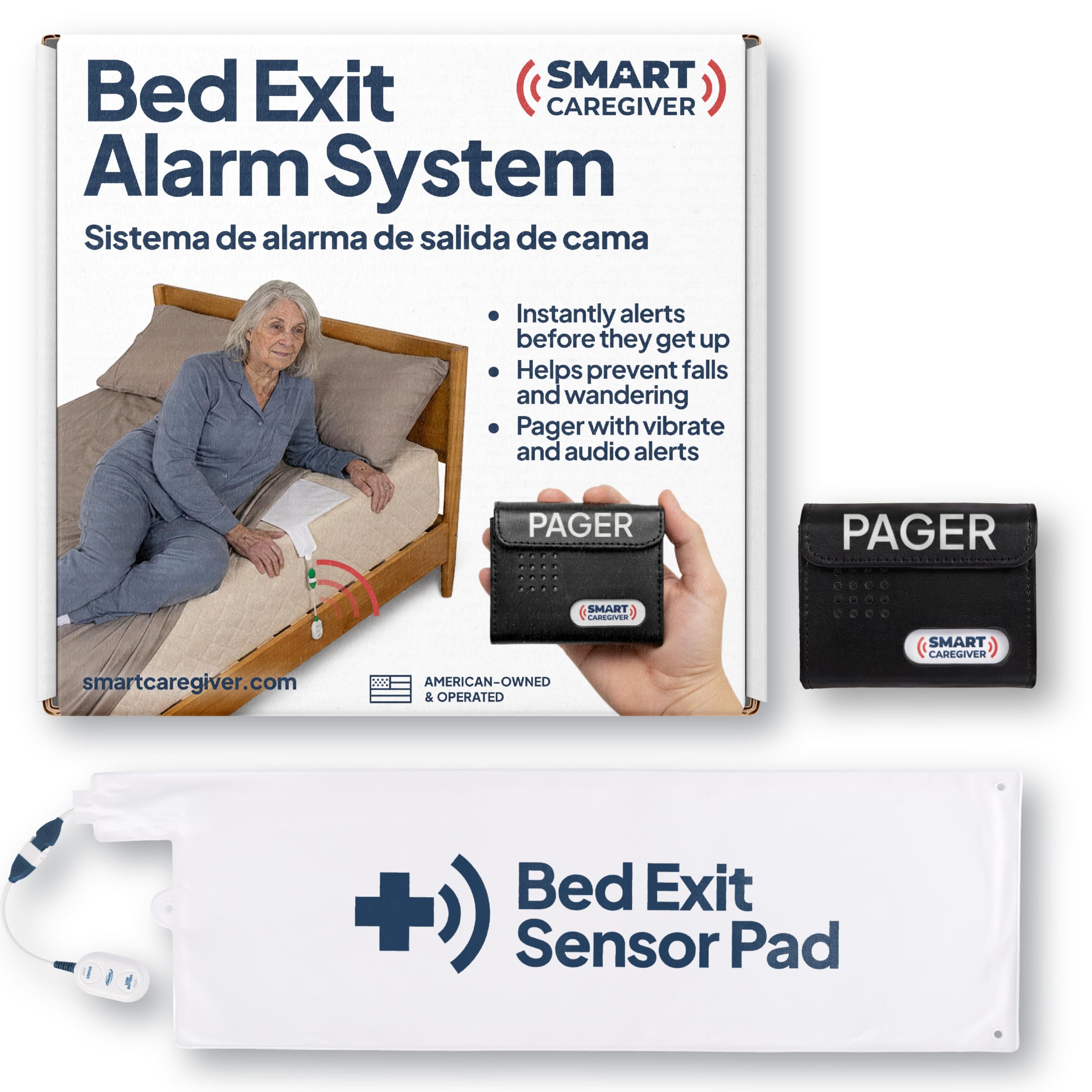
A wireless bedside alarm that gives you both sound and vibration alerts on the remote pager.
This is a slightly different take from the Smart Caregiver wireless system above — it includes a dedicated pager that offers both sound and vibrate modes. The bed pad is a full-coverage 10″ x 30″ weight sensor. The system is designed to give an early alert as the patient starts to sit up, which is the critical moment before a fall. One buyer uses it for a father with dementia and has the pager set to “vibe” because the tone is too loud — they use double-sided tape to hold the pad in place since their father moves a lot at night.
The pager supports up to six different Smart Caregiver sensors, so you can add a chair alarm, a door exit alarm, or a floor mat later — building a complete wandering-prevention network. Smart Caregiver is a US-based company with 30 years in this space and responsive customer support, which matters when a medical device fails. One owner reported a roughly 30-second delay after the patient exits the bed before the pager alerts, but actually sees that as a plus — it helps filter out tossing and turning so you are not woken up unnecessarily.
The main difference from the other Smart Caregiver wireless system is that this pager has both vibrate and sound options, while the RP-433BR1-SYS uses sound only. That vibration mode is a big advantage if you want a quiet alert. The trade-off is that this model is a bit more expensive, and the pad can shift if the patient moves heavily at night.
what separates it
- Pager has both vibrate and sound alert modes for flexible notification
- Works with up to 6 Smart Caregiver sensors for whole-home monitoring
- US-based company with 30-year track record and responsive customer support
The downsides
- Slight delay (about 30 seconds) before the alert — you catch the exit but not the sit-up
- Pad can shift during heavy movement; some users need double-sided tape to keep it in place
Ideal if: You want a wireless system with vibration alerts so the alarm does not wake the whole house — and you plan to expand into a multi-sensor network later. Given its longer alert delay, this is a solid add-on to the #1 pick rather than a replacement.
Understanding the Specs
Decibels (dB): What Loud Enough Means
The dB rating tells you how far the alarm sound carries. 80 dB is about as loud as a vacuum cleaner — fine if you are in the same room. 90 dB (the Patient Aid max) is loud enough to hear two rooms away. 120 dB (the Secure Safety Solutions max) is as loud as a fire alarm and will wake you from a deep sleep in a distant bedroom. The trade-off: a very loud bedside alarm can frighten a dementia patient. Wireless systems solve this by keeping all noise on the pager you carry, so the bedside stays quiet.
Wireless Range: How Far You Can Roam
Measured in feet, this tells you the maximum distance between the sensor pad and the pager or monitor. A 300-foot range (found on all three wireless models here) means you can be at the far end of a large house or even in the backyard and still get the alert. Wired systems have no range — the alarm sounds in the room, and you need to be close enough to hear it. For most home caregivers, the wireless range is the single most important spec because it determines whether you can sleep in your own bedroom or do chores in the kitchen while still being aware.
FAQ
Can a bed alarm be used with a patient who has a pacemaker?
How do I stop the alarm from going off when the patient just rolls over?
How long does the sensor pad last before it needs replacing?
What is the difference between a wired and a wireless bed alarm?
Can I use a bed alarm with a hospital bed at home?
Is a bed alarm covered by insurance or FSA?
What if the patient tries to turn off the alarm themselves?
Can I use a baby monitor with a wired bed alarm?
What size sensor pad do I need for a twin vs a queen bed?
How do I clean the sensor pad if it gets soiled?
Final Thoughts: The Verdict
For most buyers, the bed alarm for dementia patients winner is the Smart Caregiver Wireless Bed Pad Alarm System because the 300-foot wireless range and built-in false-alarm delay give you real freedom around the house without waking up to every roll in the night. If you want a silent bedside to protect your loved one’s dignity, grab the Lunderg Wireless Bed Alarm System. And for the patient who refuses any visible monitor or pushes away every pad they feel, the standout is the completely invisible Lunderg Under Mattress Bed Alarm.
How We Picked
We do not accept paid placement. Every pick is matched to a real buyer and a real use-case; we do not hands-on test units.
Sources & Methodology
Specifications: manufacturer listings and product documentation. Review insights: verified customer reviews, as of July 2026. Pricing: not shown on this page (it changes often); check the current price via the retailer link.
As an Amazon Associate, FitlyFast earns from qualifying purchases. This does not affect which products we feature.