
Our readers keep the lights on and the weekend projects moving. As an Amazon Associate, I earn from qualifying purchases.
Waking up with fresh welts on your arms and legs is the unmistakable signal that bed bugs have moved in. Their resistance to common pesticides has turned once-effective treatments into expensive failures, leaving homeowners trapped in a cycle of washing, spraying, and sleepless nights.
I’m Rikta — the founder and writer behind FitlyFast. I analyze active-ingredient concentrations, residual efficacy data, and real-world mortality rates to separate the few formulas that actually erase infestations from the many that just make the bugs angry.
After reviewing dozens of sprays based on kill speed, egg-sterilization data, and surface safety, I built this guide to help you choose the most effective bed bug spray for home without wasting time or money on treatments that won’t solve the problem.
How To Choose The Best Bed Bug Spray For Home
Not all sprays kill the same bugs. The bed bug population in many regions has developed resistance to pyrethroid compounds, which means the spray that worked five years ago may now just annoy them. Understanding the chemistry behind each formula is the only way to avoid a repeat infestation.
Active Ingredient and Resistance Profile
The most critical spec on any label is the active ingredient list. Sprays based on pyrethrins or permethrin may fail against resistant strains. Look for formulas that include neonicotinoids like imidacloprid, or combination chemistries that attack multiple nerve pathways simultaneously. Desiccant dusts like silica gel are entirely mechanical killers and face no resistance issues.
Residual Protection Duration
A spray that kills on contact but disappears overnight forces you into a weekly spraying cycle that is both tedious and expensive. The best sprays leave a thin active film on surfaces that continues killing nymphs and adults for weeks after the initial application. Products offering at least 14 to 30 days of residual protection reduce the total number of treatments needed to break the life cycle.
Safety on Mattresses and Fabrics
Bed bugs live closest to where you sleep, so direct mattress application is a requirement for any home spray. Water-based formulas dry clear and odorless, making them suitable for upholstery, box springs, and bed frames. Oil-based alternatives last longer but can leave a visible residue and take longer to air out, which may not be ideal for immediate use of sleeping surfaces.
Quick Comparison
On smaller screens, swipe sideways to see the full table.
| Model | Category | Best For | Key Spec | Amazon |
|---|---|---|---|---|
| Harris 5 Minute Kill | Premium Spray | Fast kill + 30-day residual | EPA Reg. No. 1021-2793-3 | Amazon |
| Crossfire Aerosol | Aerosol Concentrate | Resistant bed bug strains | Non-repellent technology | Amazon |
| Cimexa Insecticide Dust | Silica Dust | Long-term wall void protection | 100% silica gel | Amazon |
| JT Eaton Kills Bedbugs II | Water-Based Gallon | Large-area coverage | 128 oz with sprayer | Amazon |
| JT Eaton 209-W1G | Multi-Pest Gallon | Budget-friendly bulk | 128 oz with sprayer | Amazon |
| Good Night Bed Bug Spray | Odorless Water-Based | Allergen-sensitive homes | 16 oz water-based | Amazon |
| JT Eaton 204-O Bed Bug Killer | Oil-Based Quart | Hard-to-reach crevices | 32 oz oil-based | Amazon |
In‑Depth Reviews
1. Harris 5 Minute Kill Time Bed Bug Killer Spray

The Harris formula is the most complete single-bottle solution for home infestations. It kills adults, nymphs, and eggs within five minutes of direct contact, and its three-dimensional residual profile continues killing newly hatched nymphs for up to 30 days after the spray dries. The water-based formula is odorless and non-staining, making it safe to apply directly on mattress seams, box springs, and baseboards without yellowing fabric or leaving a sticky film.
What separates this spray from cheaper alternatives is the EPA registration (1021-2793-3) combined with a kill speed that matches professional-grade products. Users with heavy infestations reported total eradication within a month of bi-weekly applications, saving between and compared to exterminator costs. The non-staining property means you can treat upholstered headboards and couches without worrying about visible residue.
Some users noted that the residual effect shortens in high-traffic areas where dust accumulates on the treated surface. Regular vacuuming before reapplication maintains the active barrier. For most home scenarios, this spray hits the perfect balance of speed, safety, and lasting protection.
Why it’s great
- Kills all life stages including eggs within 5 minutes
- EPA registered for direct mattress use
- Odorless, non-staining, dries clear
Good to know
- Residual may weaken in dusty areas between cleanings
- Requires consistent bi-weekly application for heavy infestations
2. Crossfire Aerosol with Gloves

Crossfire uses a non-repellent chemistry that bed bugs cannot detect, which solves the most frustrating problem with standard sprays: bugs simply avoid the treated area. The aerosol foam expands into cracks and crevices where bed bugs hide during daylight, then kills by contact and prevents egg hatch from treated surfaces. This makes it one of the few products genuinely effective against pyrethroid-resistant strains.
The 17-ounce can includes a pair of USA Supply gloves, though the aerosol produces a wet foam that requires careful aiming to avoid overspray. Users who had struggled for months with other treatments reported complete elimination in one to two applications when they treated every room, including baseboards, crown molding, and bed frames. The formula is approved for direct application on mattresses and is non-staining.
The primary drawback is the cost per ounce, which is higher than water-based concentrates. The foam also leaves a visible wet layer that takes about 15 minutes to dry, so you cannot immediately make the bed after treatment. For homes dealing with resistant bugs, this product delivers the highest first-application success rate.
Why it’s great
- Non-repellent chemistry works on resistant strains
- Prevents egg hatch from treated surfaces
- Kills on contact with no lingering odor
Good to know
- Higher cost per application compared to concentrates
- Foam leaves visible wet layer that must dry before use
3. Rockwell Labs Cimexa Insecticide Dust

Cimexa is not a spray; it is a 100% silica gel dust that works through a completely mechanical mode of action. The microscopic particles adhere to bed bugs and absorb the waxy protective layer on their exoskeleton, causing fatal dehydration within hours. Because it kills through physical damage rather than nerve chemistry, no bed bug population has ever developed resistance to silica dust.
Applied as a fine, near-invisible layer to baseboards, wall voids, and mattress encasements, Cimexa remains effective for up to 10 years in undisturbed areas. Users reported 100% mortality rates on bed bugs within two weeks of a single dusting inside mattress encasements. The dust is pet-friendly when applied properly, though inhalation should be avoided, and a puffer tool or paintbrush helps achieve the light coating needed for maximum effectiveness.
The application method takes patience, and a heavy dusting actually repels bugs rather than killing them. Fine silica particles can cause skin irritation and require protective gear during application. For ongoing prevention in wall voids and cracks, Cimexa offers unmatched longevity and efficacy that no liquid spray can match.
Why it’s great
- No resistance possible — mechanical kill mechanism
- Lasts up to 10 years in undisturbed applications
- Odorless, non-staining, pet-safe when used correctly
Good to know
- Requires light application — heavy dusting is less effective
- Respirator recommended during application to avoid inhalation
4. JT Eaton Kills Bedbugs II Water-Based Spray
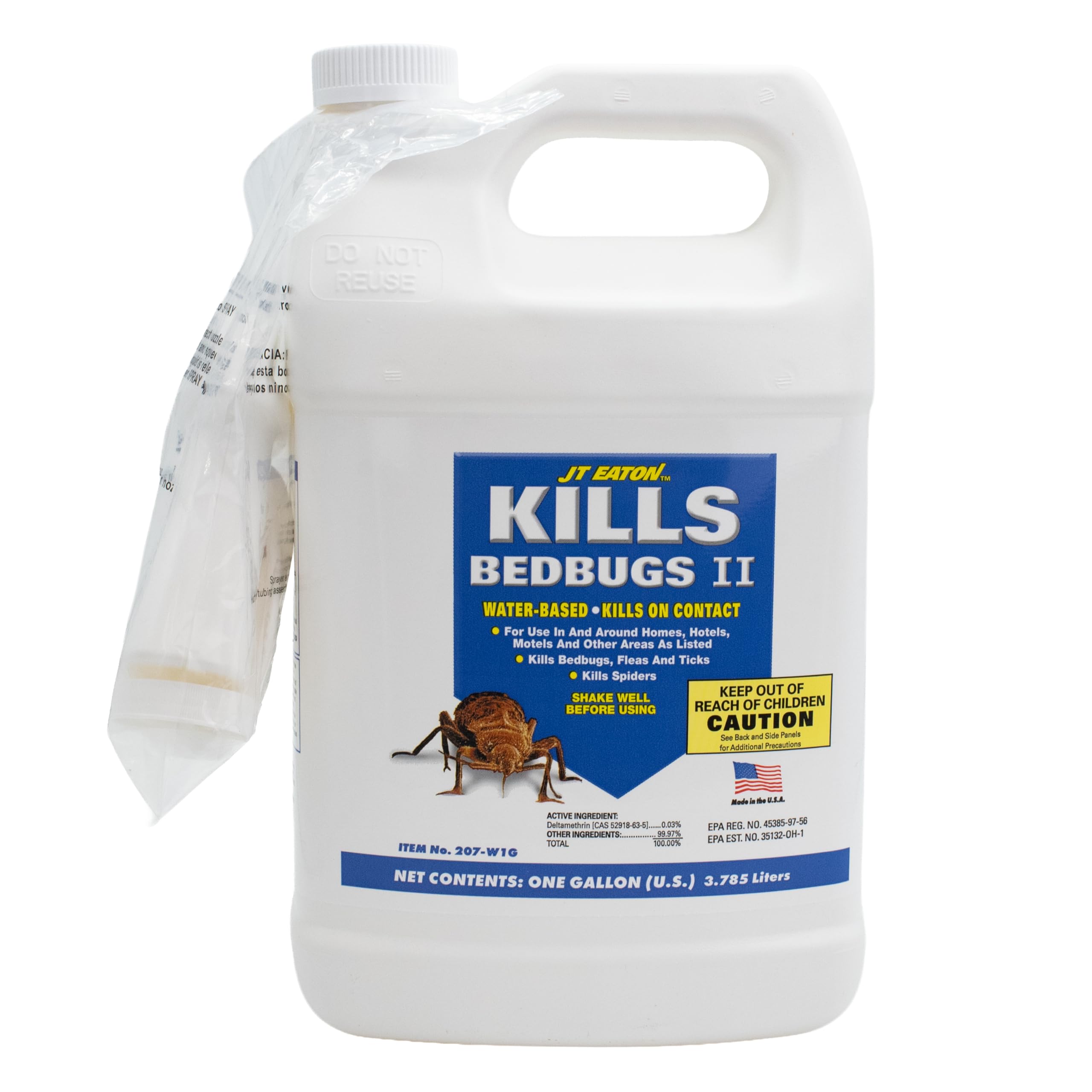
The JT Eaton Kills Bedbugs II delivers the lowest cost per ounce among premium-tier water-based sprays. The gallon container with an included sprayer provides enough volume to treat an entire three-bedroom home across multiple applications, and the water-based formula dries clear with no caustic odor. Users reported that a single gallon lasted through an entire eradication protocol with reapplication every two weeks.
The formula kills bed bugs on contact and leaves a residual barrier that remains active for several weeks, though it does not sterilize eggs. This means you must reapply on a two-week schedule to catch newly hatched nymphs before they reach reproductive maturity. The included sprayer delivers a wide fan pattern that covers baseboards and furniture efficiently, though some users replaced it with a pump sprayer for better control.
Because this spray does not kill eggs, pairing it with a desiccant dust like Cimexa in wall voids and cracks creates a comprehensive treatment protocol. The lack of strong odor makes it suitable for occupied homes where family members have respiratory sensitivities. For value per gallon, this is the most economical choice.
Why it’s great
- Lowest cost per ounce among effective sprays
- No harsh odor, dries clear on fabrics
- Gallon size with sprayer covers entire home
Good to know
- Does not kill bed bug eggs
- Requires consistent two-week reapplication schedule
5. JT Eaton 209-W1G Water-Based Spray
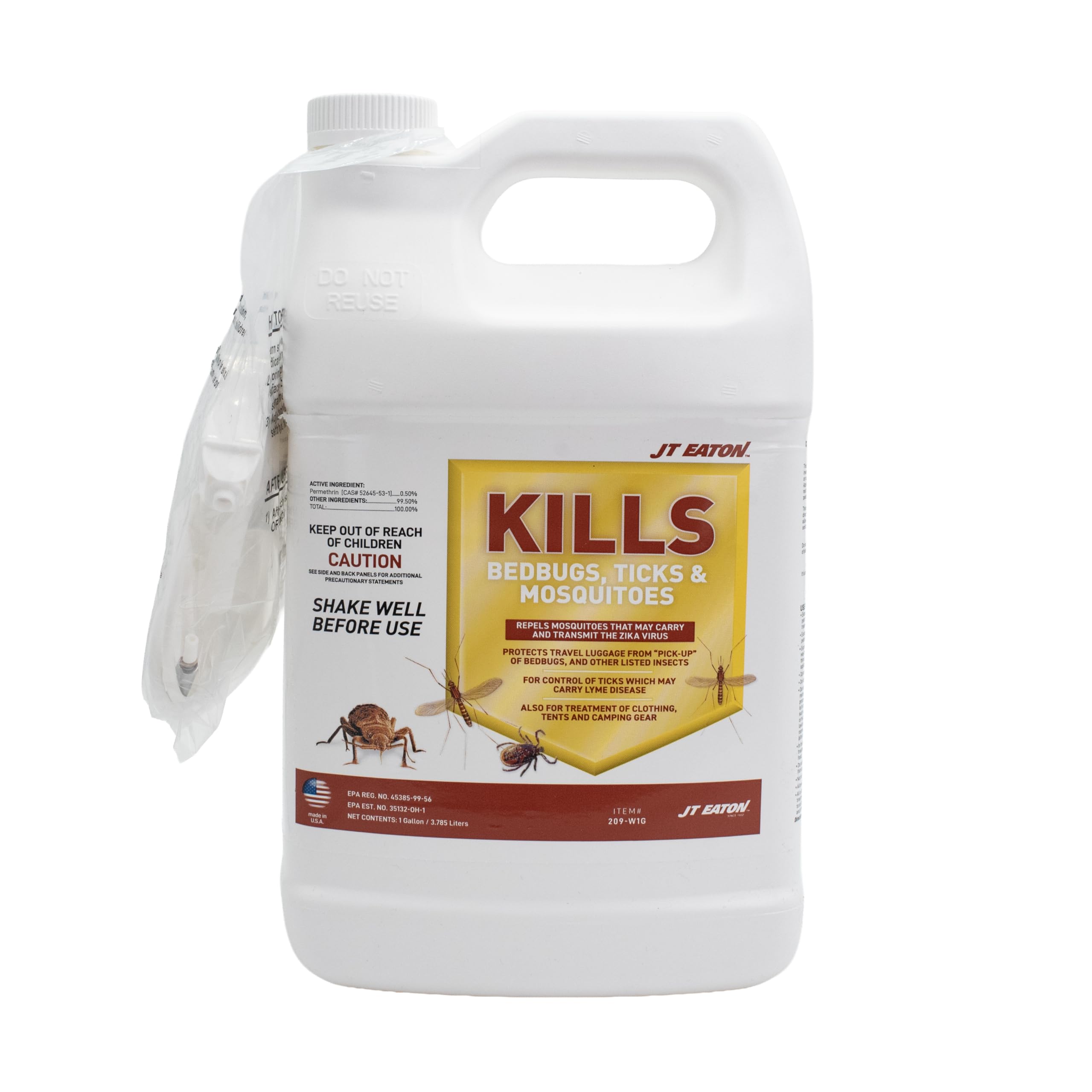
The JT Eaton 209-W1G is a water-based spray that targets bed bugs, ticks, and mosquitoes, making it a practical choice for homes where outdoor pests also pose a problem. The active ingredient kills bed bugs within an hour of direct contact and leaves a residual that lasts between four and six weeks on treated surfaces, including outdoor clothing, camping gear, and pet harnesses. Users who spend time hiking or foraging reported complete tick protection for the entire season.
The gallon jug with included sprayer attachment makes bulk application simple, and the formula is safe for use on mattresses, tents, and clothing after drying. The spray is odorless immediately after application, though a faint chemical scent can emerge in enclosed spaces during the first hour. Dog owners noted that it provides effective flea control when used on pet bedding and kennels.
The formula is toxic to cats, so households with felines cannot use this spray indoors. Additionally, it kills bees and other beneficial insects if applied near flowering plants. For mixed indoor-outdoor use, this spray delivers excellent coverage and duration at a budget-friendly price point.
Why it’s great
- Effective against bed bugs, ticks, and mosquitoes
- Safe for outdoor gear, tents, and clothing
- Four to six weeks of residual protection
Good to know
- Toxic to cats — not suitable for cat-owning homes
- Kills beneficial insects like bees if applied outdoors
6. Good Night Bed Bug Spray, 16oz

The Good Night spray uses a water-based formula that is labeled as odorless, making it a comfortable option for households where strong chemical smells cause headaches or allergic reactions. It kills bed bugs, fleas, ticks, lice, and dust mites on contact, and users with young children have relied on it for years as a first-line treatment. The 16-ounce bottle is compact enough to keep in a travel bag or dorm room.
While the spray is effective for light to moderate infestations, its residual period is shorter than premium formulations, requiring more frequent reapplications. Some users noticed a slight scent upon initial application that fades within minutes — not the advertised “completely odorless” experience, but still significantly milder than oil-based alternatives. The spray does not stain fabrics or leave residue on finished wood surfaces.
The small bottle size becomes a limitation for whole-home treatment. Users treating large areas will need multiple bottles, making the cost per square foot higher than a gallon-size concentrate. For apartments, dormitories, or targeted spot treatment, this spray offers convenience without sacrificing safety.
Why it’s great
- Minimal odor, safe for allergy-prone users
- Kills fleas, mites, and lice in addition to bed bugs
- Non-staining and dries clear on fabric
Good to know
- Short residual time requires frequent reapplication
- Small bottle size limits whole-home treatment
7. JT Eaton 204-O Bed Bug Killer Ultra

JT Eaton 204-O is an oil-based formula designed to penetrate deep into cracks, crevices, and upholstery seams where bed bugs hide during the day. The oily base carries the active ingredient into porous wood and fabric fibers where water-based sprays cannot reach, providing a longer-lasting residual effect in those protected areas. Users reported eliminating bed bugs, fleas, and spiders after a single application extended over several days.
The trade-off for deep penetration is a longer dry time. The spray leaves a visible oily residue that can take up to three days to fully air out, and the lingering odor may be noticeable in confined rooms. The sprayer nozzle on the quart bottle is prone to breaking after a few uses, and some users found the spray pattern too narrow for covering large surfaces efficiently.
Efficacy reports were mixed. While many users saw immediate elimination of visible bugs, some did not achieve full eradication after multiple applications. The oily residue also means you cannot sleep on a treated mattress until it is completely dry, which can disrupt your treatment schedule. For targeted application in furniture joints and baseboard gaps, this spray performs well, but it is less suited for broad surface treatment.
Why it’s great
- Oil-based formula penetrates deep into porous surfaces
- Longer residual in cracks and crevices than water-based sprays
- Effective against spiders, fleas, and ticks
Good to know
- Long drying time and lingering odor
- Sprayer nozzle prone to breaking
FAQ
How often should I reapply bed bug spray for home use?
Can I spray bed bug killer directly on my mattress while I sleep on it?
Why do some bed bugs survive after I spray the entire room?
Final Thoughts: The Verdict
For most users, the bed bug spray for home winner is the Harris 5 Minute Kill because it combines a five-minute kill speed with a full 30-day residual period and EPA registration for direct mattress use. If you need to break through pyrethroid-resistant infestations, grab the Crossfire Aerosol. And for budget-sensitive whole-home treatment with no residue odor, nothing beats the JT Eaton Kills Bedbugs II gallon.