
Our readers keep the lights on and the weekend projects moving. As an Amazon Associate, I earn from qualifying purchases.
Redness on the sacrum or hips that doesn’t fade after an hour is the first signal of skin breakdown. For anyone confined to a bed or wheelchair for long stretches, that persistent pressure creates deep tissue damage that can take months to heal. A dedicated pressure redistribution surface isn’t a comfort upgrade—it’s a clinical necessity that directly determines whether bed sores progress or resolve.
I’m Rikta — the co-founder and writer behind FitlyFast. I’ve spent hundreds of hours analyzing hospital-grade foam densities, alternating air cell cycles, and gel bladder viscosities to separate the products that actually reduce interface pressure from the ones that just look like they do.
Whether you’re caring for a bedridden parent, recovering from surgery, or managing a mobility limitation, this guide breaks down the exact materials, pump performance, and design features that define a real bed sore cushion versus a generic pillow that does nothing.
How To Choose The Best Bed Sore Cushion
Choosing the wrong surface can accelerate skin breakdown rather than prevent it. The three decisions that matter most are the pressure redistribution technology (alternating air vs. static gel vs. standard foam), the material’s ability to wick moisture away from the skin, and the overall dimensions relative to the body parts most at risk—typically the sacrum, coccyx, and ischial tuberosities.
Alternating Air Pressure vs. Static Foam
Static foam cushions rely on material density to spread weight, which works for short sitting sessions but fails bedridden patients who cannot shift position. Alternating air pressure systems cycle inflation and deflation across cells every six to twelve minutes, actively changing the contact points on the body. This dynamic redistribution is the gold standard for stage 0 to stage 1 prevention because it mimics natural repositioning without requiring the patient to move.
Gel Cores: Viscous Damping for High-Risk Areas
Gel-filled bladders provide excellent pressure redistribution on wheelchair seats and chair cushions because the viscous liquid conforms to bony prominences without bottoming out. The key spec is gel bladder thickness—a minimum of two to three inches ensures the gel doesn’t displace completely under body weight. Look for gel encased in a fire-retardant polyurethane foam shell to prevent the bladder from puncturing during transfers.
Waterproofing and Cleanability
Incontinence, sweat, and wound drainage are direct threats to skin integrity. A medical-grade waterproof cover—typically urethane-coated nylon or medical-grade vinyl—prevents fluids from soaking into the foam or air cells where bacteria proliferate. Removable, machine-washable covers double the lifespan of the cushion by keeping the surface hygienic without requiring the entire unit to be replaced.
Quick Comparison
On smaller screens, swipe sideways to see the full table.
| Model | Category | Best For | Key Spec | Amazon |
|---|---|---|---|---|
| HOMBYS Memory Foam | Memory Foam | Bedridden sacrum care | 17.3 x 15.7 x 3.1 inches | Amazon |
| MedVance Alternating Air | Alternating Air | Quiet overnight use | Under 20 dB pump | Amazon |
| ComfiLife Gel & Memory Foam | Gel Memory Foam | Wheelchair & office sitting | Cooling gel layer top | Amazon |
| Drive Medical Gel E | Gel Core | Wheelchair ulcer management | 16 x 16 x 3 inches | Amazon |
| Alcedo Alternating Air | Alternating Air | Heavy bedridden patients | Supports up to 300 lbs | Amazon |
| KEKOY Alternating Air | Alternating Air | 130-cell redistribution | 130 bubble air cells | Amazon |
| Foam Global Egg Crate | Convoluted Foam | Budget mattress topper | 2 x 33 x 72 inches | Amazon |
In‑Depth Reviews
1. HOMBYS Memory Foam Bed Sore Cushions for Butt
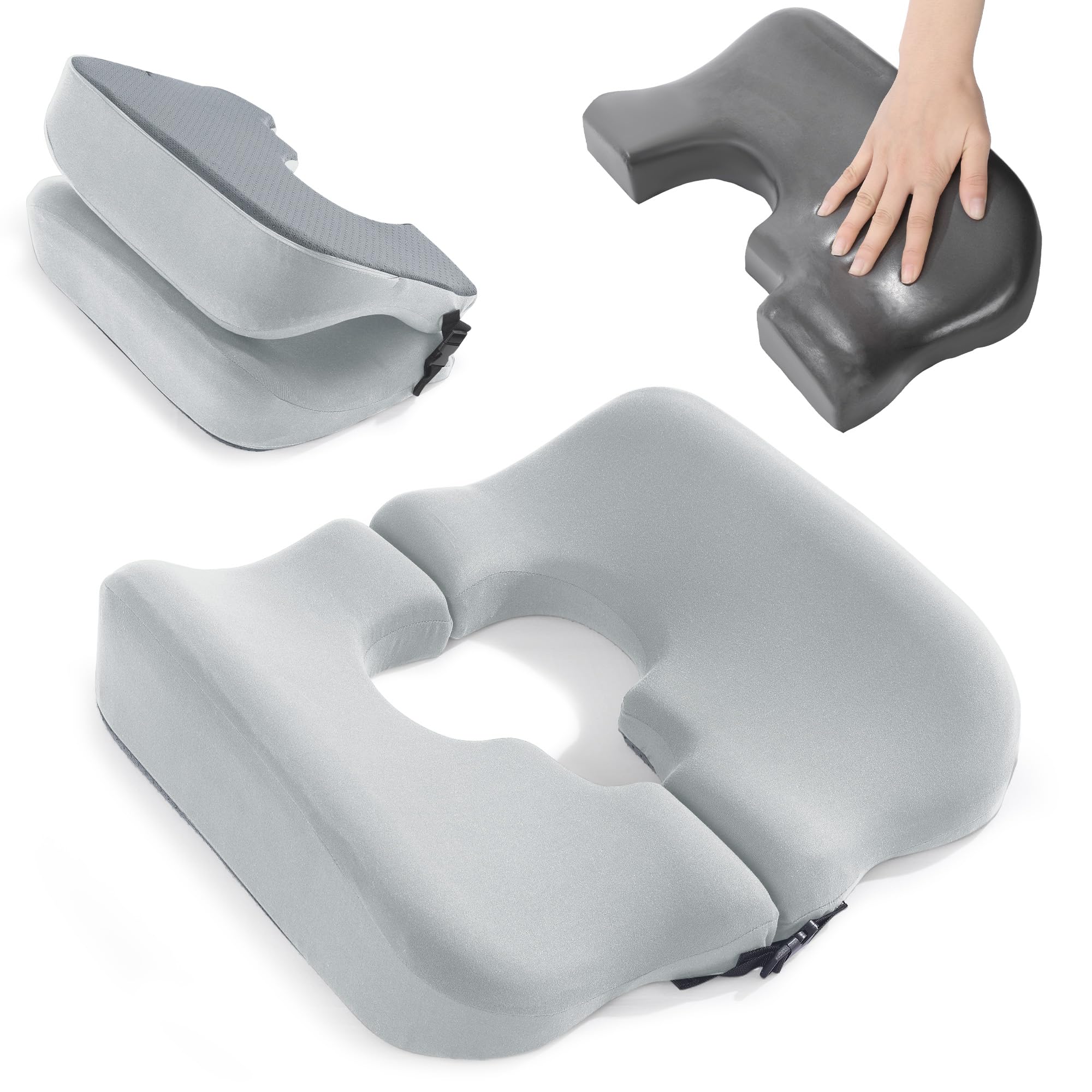
The HOMBYS cushion earned the top spot because its T-shaped hollow design specifically targets the ischium and coccyx—the two bony areas where bed sores form fastest when a patient lies supine. The hollow cutout removes direct pressure from these high-risk points while the surrounding memory foam supports the broader gluteal area. At 3.1 inches thick, the foam provides enough depth to prevent bottoming out even for heavier patients, and the slow-rebound formulation molds to the body without losing shape over hours of immobility.
What sets this apart from standard coccyx cushions is the two-piece design connected by heavy-duty Velcro. Caregivers can separate the halves to turn a bedridden patient without lifting—open the Velcro, tilt one side, and reposition. This single feature dramatically reduces shear forces on fragile skin during transfers, which is often overlooked in static foam cushions. The 17.3 by 15.7 inch footprint fits standard hospital beds and most recliners.
The polyester cover unzips for machine washing, which is critical when managing wound drainage or incontinence. Multiple reviewers caring for elderly parents with stage 1 sacral sores reported visible healing within days, and home health aides specifically praised the Velcro-turn feature as superior to any single-piece cushion they had used in facilities.
Why it’s great
- T-shaped cutout offloads ischium and coccyx simultaneously
- Two-piece Velcro design allows side-by-side patient turning without lifting
- Removable, machine-washable polyester cover
Good to know
- Memory foam compresses over time with continuous 24-hour use
- Not suitable for wheelchair use due to the two-piece separation risk
2. MedVance Premium Alternating Air Pressure Mattress Pad
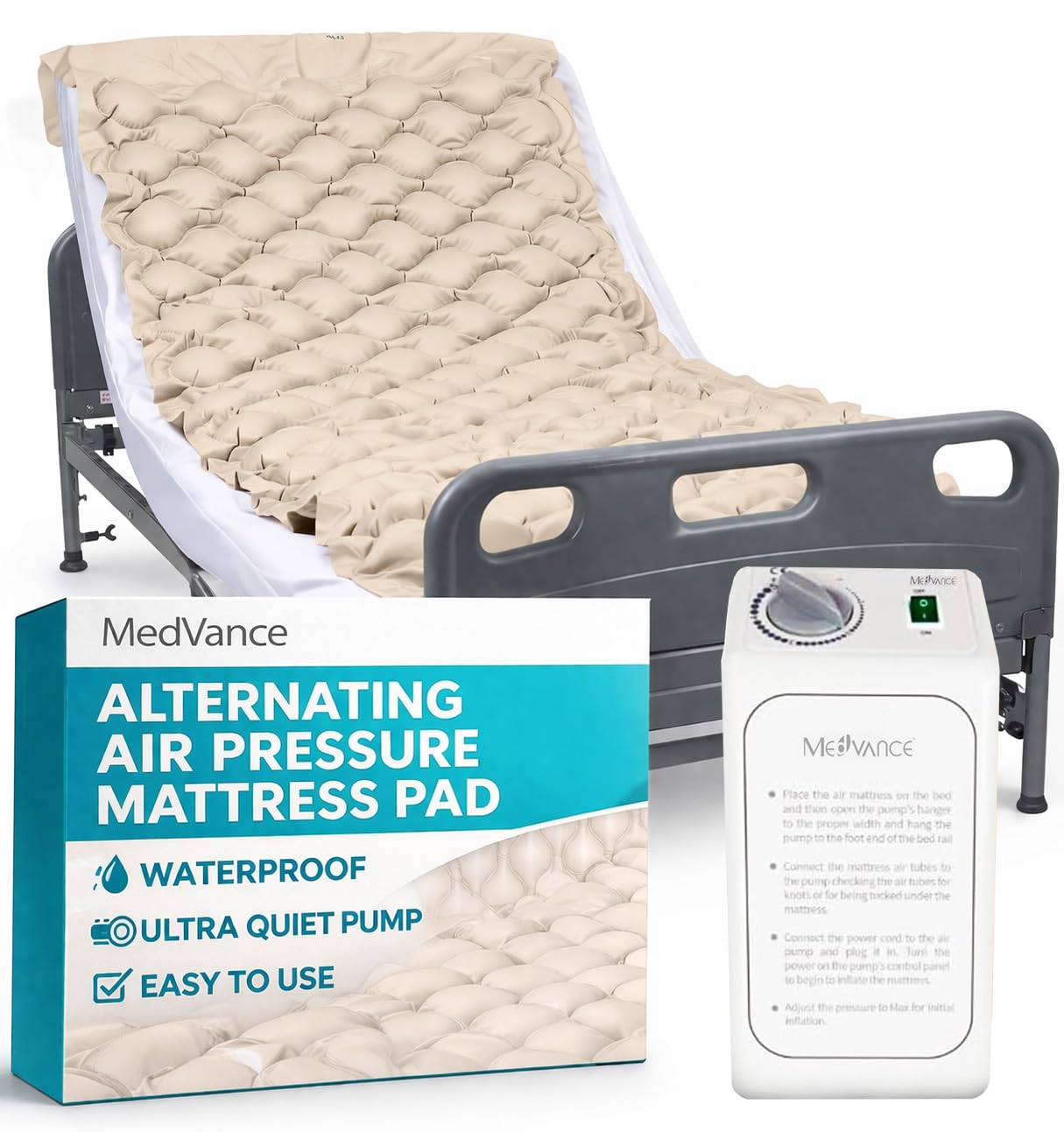
The MedVance alternating air pad is the best choice when the patient will sleep on the cushion overnight because the pump operates at under 20 decibels—quieter than a typical room fan. Many caregiving aids sacrifice noise for pressure relief, but this unit uses dual pump cores that deliver consistent airflow without the rhythmic hum that disturbs light sleepers. The alternating cycle runs every six minutes, which is clinically optimal for preventing tissue ischemia in bedridden patients who cannot self-reposition.
The medical-grade vinyl top is both waterproof and breathable. Patients with stage 1 or stage 2 sores need a surface that doesn’t trap moisture against broken skin, and the vapor-permeable membrane allows air exchange while blocking urine and wound fluid. The pad fits standard 36-inch-wide hospital beds and stays put without shifting, which prevents the shear damage that occurs when an unsecured pad wrinkles underneath a patient during repositioning.
Real-world feedback from caregivers of bedridden elderly patients confirms that this pad healed existing bed sores within 10 to 14 days when combined with regular turning schedules. The digital control panel includes an alarm that alerts caregivers if pressure drops, adding an extra safety layer for unattended overnight use.
Why it’s great
- Ultra-quiet pump under 20 dB for uninterrupted sleep
- Six-minute alternating cycle meets clinical repositioning standards
- Waterproof, vapor-permeable vinyl top prevents moisture damage
Good to know
- Some users add a thin memory foam topper over the air cells for initial comfort
- Pump must stay plugged in continuously—no battery backup
3. ComfiLife Premium Gel & Memory Foam Seat Cushion

The ComfiLife cushion is technically a seat cushion rather than a full bed pad, but it’s the top performer for wheelchair users and patients who spend eight-plus hours sitting in a chair during the day. The dual-layer construction pairs a cooling gel top with a medium-firm memory foam base. The gel layer absorbs and dissipates heat—a common cause of skin maceration in standard foam cushions—while the U-shaped coccyx cutout suspends the tailbone away from the surface entirely.
The non-slip rubber bottom is essential for wheelchair and car seat use. A cushion that slides during transfers creates friction that abrades fragile skin; the ComfiLife stays locked in place on vinyl, leather, and fabric surfaces. The velour cover is machine-washable and the zipper closure allows easy removal without wrestling the foam core. At 2.8 inches thick, it’s slim enough to fit under a seated patient without raising their hips too high for safe foot placement on wheelchair footrests.
Patients managing sciatica, herniated discs, or coccydynia reported that the gel-memory foam combo provided immediate relief from sitting pressure. The cooling layer is particularly effective in warm climates or for patients who run hot due to medication side effects. The lifetime warranty from the manufacturer covers material defects, which is rare at this price tier.
Why it’s great
- Cooling gel layer prevents heat buildup and skin maceration
- Non-slip rubber base eliminates dangerous sliding during transfers
- Machine-washable velour cover with full zipper removal
Good to know
- Not designed for bed use—optimized for seated surfaces only
- Gel layer adds weight; not ideal for frequent travel or repositioning
4. Drive Medical 14891 Skin Protection Gel E Wheelchair Seat Cushion

The Drive Medical Gel E cushion is a no-frills clinical tool that has been on the market since 2007 because its liquid gel core works. Unlike gel-and-foam hybrids where the gel layer sits on top, this cushion uses a viscous gel bladder encased in a polyurethane foam shell. When a patient sits, the gel displaces laterally to match their individual ischial shape, eliminating high-pressure hotspots that cause ulcers in wheelchair users who remain seated for hours.
The top cover is urethane-coated nylon that is low-shear—meaning it reduces friction against the skin during weight shifts—and the vinyl bottom is fully waterproof. At three inches thick, this cushion provides deeper pressure redistribution than most two-inch alternatives, which matters for patients with existing stage 1 or stage 2 sores who need complete offloading. The 16 by 16 inch size fits standard wheelchair seats snugly without overhang.
Customers using this cushion for desk work, wheelchair seating, and long-term care all note that it eliminates buttock pain within the first week. The gel core does not deflate, leak, or degrade over time like air-filled alternatives, and the firmness remains consistent even after years of daily use. The cover is removable and replaceable, which extends the total lifespan of the unit.
Why it’s great
- Liquid gel bladder conforms to individual ischial shape in real time
- Low-shear top cover reduces friction on fragile skin during transfers
- Three-inch depth provides complete offloading for existing sores
Good to know
- Gel feels firm initially before warming and conforming to body shape
- Slick nylon cover may require a cotton pillowcase for breathability
5. Alcedo Alternating Air Pressure Mattress Pad
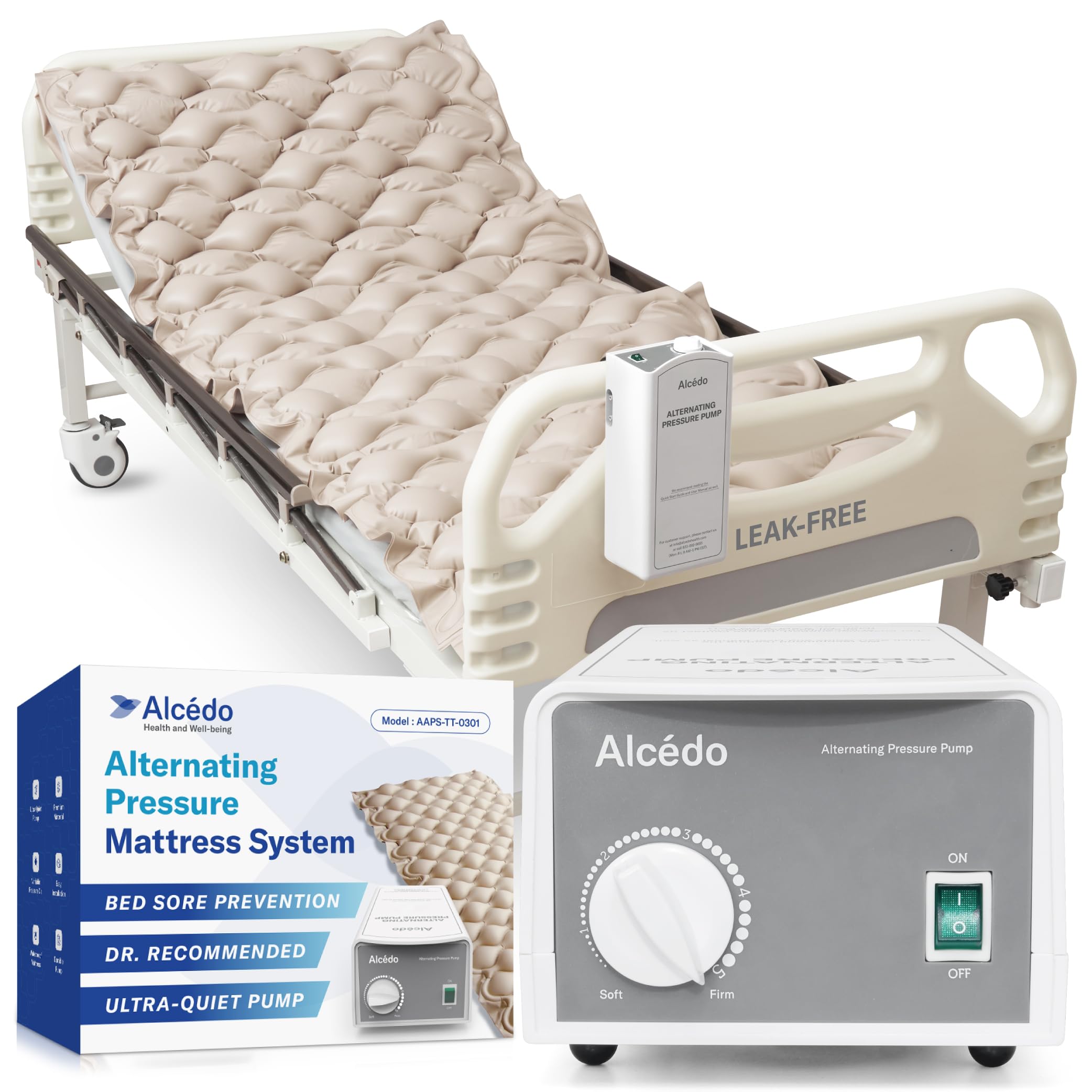
The Alcedo alternating air pad distinguishes itself with a 300-pound weight capacity from its high-density material construction, making it the best option for bariatric patients or larger individuals confined to a bed. Most alternating air pads max out around 250 pounds, but the Alcedo uses reinforced seams and a thicker gauge vinyl that doesn’t stretch or deform under higher body mass. The inflated bubble area measures 75 by 35 inches, fitting standard hospital beds without overhang.
The digital pump offers five adjustable pressure levels. Level 1 is suitable for frail patients with low body weight where excessive pressure could cause discomfort, while level 5 delivers firm support for heavier patients who need deeper cell displacement. The pump runs quietly, and the alternating cycle prevents pressure buildup on the sacrum, hips, and heels—the three most common bed sore locations. The pump includes metal hooks for secure attachment to the bed frame, preventing accidental disconnection during sleep.
Caregivers of bedridden family members reported that the Alcedo pad was more comfortable than hospital-grade pads used in skilled nursing facilities. The waterproof surface cleans easily with a damp cloth, and the lack of a fabric cover reduces laundry burden. The 60-day warranty is shorter than some competitors, but the build quality typically outlasts the warranty period.
Why it’s great
- 300-pound weight capacity from high-density reinforced materials
- Five adjustable pressure levels to match patient body weight
- Secure metal hooks prevent pump disconnection during sleep
Good to know
- 60-day warranty is shorter than some premium competitors
- Vinyl surface may feel warm without a cotton sheet barrier
6. KEKOY Alternating Air Pressure Mattress Pad

The KEKOY pad packs 130 bubble air cells into the same 75 by 35 inch footprint that most competitors cover with 80 to 100 cells. This higher cell density means each individual air chamber is smaller and more numerous, which distributes pressure across a larger number of contact points. For a patient at the very beginning of pressure sore formation—stage 0 with persistent redness that doesn’t blanch—this higher resolution of pressure redistribution can prevent the progression to stage 1 where the skin actually breaks.
The pump operates below 28 dBA and cycles every 10 to 12 minutes rather than the typical 6-minute cycle. The longer cycle is gentler for lightweight or elderly patients whose skin may be irritated by too-frequent inflation changes. The pump has five pressure settings and is made with an aluminum core for consistent 24-hour operation. A repair patch kit is included for the rare puncture, and the mattress is FSA/HSA eligible for those with healthcare spending accounts.
The medical-grade PVC material uses high-temperature sealing technology that improves air retention. Caregivers who purchased this pad for post-surgery recovery or hospice care noted that the 130-cell design was noticeably more comfortable than standard alternating pads, and that bed sores healed completely within weeks when combined with a turning schedule. The material does retain some body heat, but a fitted sheet mitigates this effect.
Why it’s great
- 130 air cells provide the highest cell density for pressure distribution
- 10 to 12 minute alternating cycle is gentler for lightweight patients
- Includes repair patch kit and is FSA/HSA eligible
Good to know
- PVC material retains body heat; cotton sheet recommended
- Requires 48-hour air-out period after unpackaging
7. Foam Global Egg Crate Mattress Topper

The Foam Global egg crate topper is the most affordable entry point for bed sore prevention, but it operates on a fundamentally different principle than the alternating air pads. The convoluted foam surface—the egg crate pattern—creates air channels that promote circulation around the body. While this does reduce pressure better than a flat hospital mattress, it is a static solution: it does not actively change contact points, so patients who cannot self-reposition still need manual turning every two hours.
The foam is CertiPUR-US certified, meaning it’s free from ozone depleters, heavy metals, and formaldehyde. This matters for patients with chemical sensitivities or compromised immune systems. At two inches thick, the topper adds just enough cushioning to soften a hard hospital bed without raising the patient so high that bed rails become unsafe. The 33 by 72 inch hospital fit is narrower than standard twin sheets, so buyers should verify their bed dimensions before ordering.
The reviews consistently praise the topper for making a previously unuseable hospital bed comfortable enough for patients to sleep through the night. For stage 0 prevention—no broken skin yet—this topper combined with a strict turning schedule is adequate. It is not sufficient for stage 2 or higher sores where active offloading is required. The foam expands fully within 24 to 36 hours after unboxing and retains shape well over months of use.
Why it’s great
- CertiPUR-US certified foam with no harmful chemicals or heavy metals
- Egg crate design improves air circulation around the body
- Made in the USA from medical-grade hypoallergenic foam
Good to know
- Static pressure relief only—cannot replace active alternating therapy
- Two-inch depth is insufficient for patients with existing stage 2+ sores
FAQ
Can a static foam cushion prevent bed sores in a bedridden patient?
How do I clean an alternating air mattress pad without damaging the air cells?
What is the difference between an alternating air pad and an egg crate foam topper for pressure relief?
Final Thoughts: The Verdict
For most users, the bed sore cushion winner is the HOMBYS Memory Foam Cushion because its T-shaped cutout and two-piece Velcro design solve the two hardest problems in bed sore care: offloading the sacrum and coccyx simultaneously, and allowing caregivers to turn the patient without shear force. If you need an alternating air system for overnight pressure cycling, grab the MedVance Alternating Air Pad with its whisper-quiet pump. And for wheelchair-based daytime sitting, nothing beats the ComfiLife Gel Memory Foam Cushion with its cooling gel layer and slip-proof base.