
Our readers keep the lights on and the weekend projects moving. As an Amazon Associate, I earn from qualifying purchases.
Bed sores develop fast when pressure, moisture, and friction trap skin against a mattress for hours. The right pad doesn’t just cushion the spot — it wicks away sweat, redistributes weight, and keeps the wound sealed from bacteria so healing can happen uninterrupted.
I’m Rikta — the founder and writer behind FitlyFast. I’ve spent years analyzing wound care hardware, comparing foam densities, adhesive border widths, and pump decibel ratings to separate genuinely effective pressure relief from marketing fluff.
This guide breaks down seven distinct approaches to pressure ulcer care so you can confidently choose the best bed sore pads for your specific care situation.
Please note: these products can help prevent and manage pressure sores, but they are not a substitute for medical care. For any existing bed sore, or if a sore is not improving, consult the patient’s doctor, wound-care nurse, or home health provider for a proper treatment plan.
How To Choose The Best Bed Sore Pads
Bed sore pads fall into three functional families: adhesive foam dressings that seal and absorb at the wound site, medical sheepskin that prevents pressure buildup on intact skin, and alternating air mattresses that cycle pressure across the entire body. Your choice depends on wound stage, patient mobility, and care setting.
Adhesive Technology and Wound Contact Layer
Silicone adhesive is the gold standard for dressings that contact fragile skin. Unlike acrylic adhesives, silicone forms a seal without sticking to the wound bed itself — it adheres only to dry surrounding skin, so removal pulls zero new tissue. Look for a five-layer build that includes a non-woven spreading layer (to distribute exudate evenly into the foam core) and a semi-permeable polyurethane film that blocks liquid while passing oxygen and vapor.
Absorbency and Exudate Management
Moderate to heavy drainage requires a foam core that holds at least ten times its weight in fluid and converts liquid to gel on contact. If the pad saturates too quickly, the wound macerates; if it’s too thick, it creates a pressure point at the edge. For sacrum or heel wounds, a 4×4-inch absorbent pad with a 2.4-inch inner pad zone hits the sweet spot between coverage and conformability.
Pressure Redistribution Mechanism
For prevention on intact skin, choose between static and dynamic redistribution. Static options like medical sheepskin use dense, shorn merino wool to spread weight across a larger surface area. Dynamic options like alternating air pads use two sets of interlocking cells that inflate and deflate on a six-minute cycle, shifting pressure points automatically — critical for bedridden patients who cannot self-reposition.
Quick Comparison
On smaller screens, swipe sideways to see the full table.
| Model | Category | Best For | Key Spec | Amazon |
|---|---|---|---|---|
| Desert Breeze Medical Sheepskin | Sheepskin | Prevention on bed/wheelchair | OEKO-TEX 100 Merino wool, 24×41″ | Amazon |
| Lunderg Queen Alternating Air Pad | Air Mattress | Full-body pressure cycling | 23 dBA pump, static mode, 53×77″ | Amazon |
| MedVance Alternating Air Mattress | Air Mattress | Quiet hospital-bed topper | <20 dBA pump, 6-min cycle | Amazon |
| Natural Sheepskin 17×17″ | Sheepskin | Targeted seat/heel cushioning | 1″ pile, New Zealand wool | Amazon |
| ZMZPA 50-Pack 4×4 Foam | Foam Dressing | High-volume daily changes | 15x fluid weight, 2.4″ pad | Amazon |
| EVERLIT Sacrum Foam 7×7″ | Foam Dressing | Sacrum wound coverage | 5-layer silicone border, 10-pack | Amazon |
| Carbou Sacrum Foam 9×9″ | Foam Dressing | Large sacral wound seals | 9×9″ border, gel-forming foam | Amazon |
In‑Depth Reviews
1. Desert Breeze Distributing Medical Sheepskin
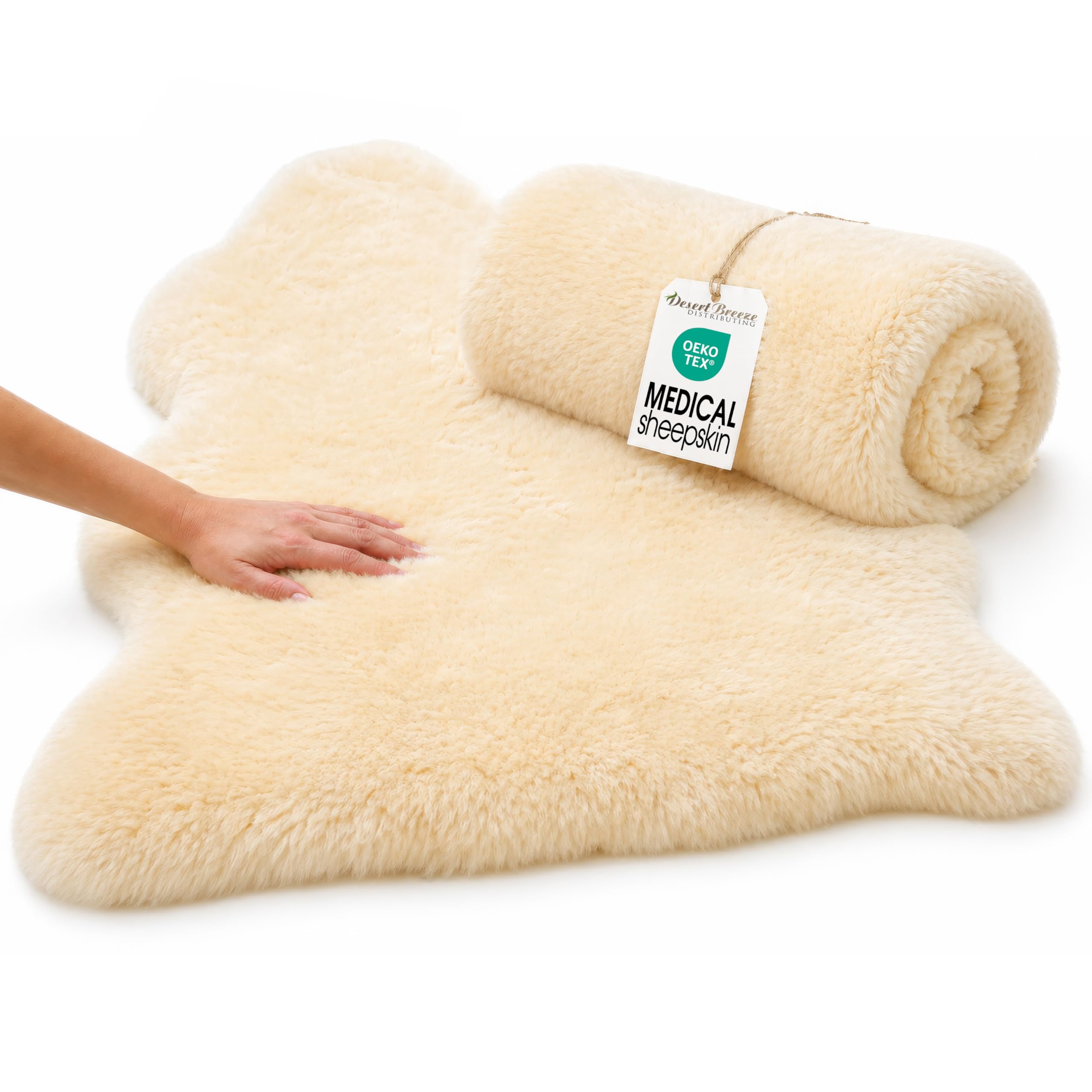
This single-pelt Australian Merino sheepskin carries OEKO-TEX STANDARD 100 certification, meaning every step of the tanning and wool processing is free from substances that could irritate fragile skin. The dense shorn pile — roughly 1.2 inches thick — distributes weight evenly across the entire contact area, which is exactly how a static pressure-redistribution surface prevents capillary closure and the cascade that leads to stage 1 ulcers.
At 41 inches long, this pad drapes over the full torso-to-knee zone of an average adult, covering the sacrum, hips, and heels in one piece. The leather backing is supple enough to conform to a recliner or wheelchair seat without bunching, and the wool resists matting through repeated gentle-cycle washes. The manufacturer describes the wool as naturally moisture-wicking and breathable, which can help keep skin drier between repositioning.
The trade-off is that genuine sheepskin requires proper washing discipline — machine drying is off-limits, and the lanolin-preserving wool wash is sold separately. The pad also cannot be folded into a tight pillow shape like foam dressings can, so its utility is limited to surfaces with enough footprint to accept the full 41-inch length.
Why it’s great
- Genuine Australian Merino wool pile resists matting after washes
- Large single-pelt size covers sacrum, hips, and heels simultaneously
- OEKO-TEX certified free from harmful substances
Good to know
- Requires gentle-cycle wash with specialized wool cleaner
- Cannot be used as a targeted dressing for open wounds
2. Lunderg Queen Size Alternating Air Pressure Mattress Pad
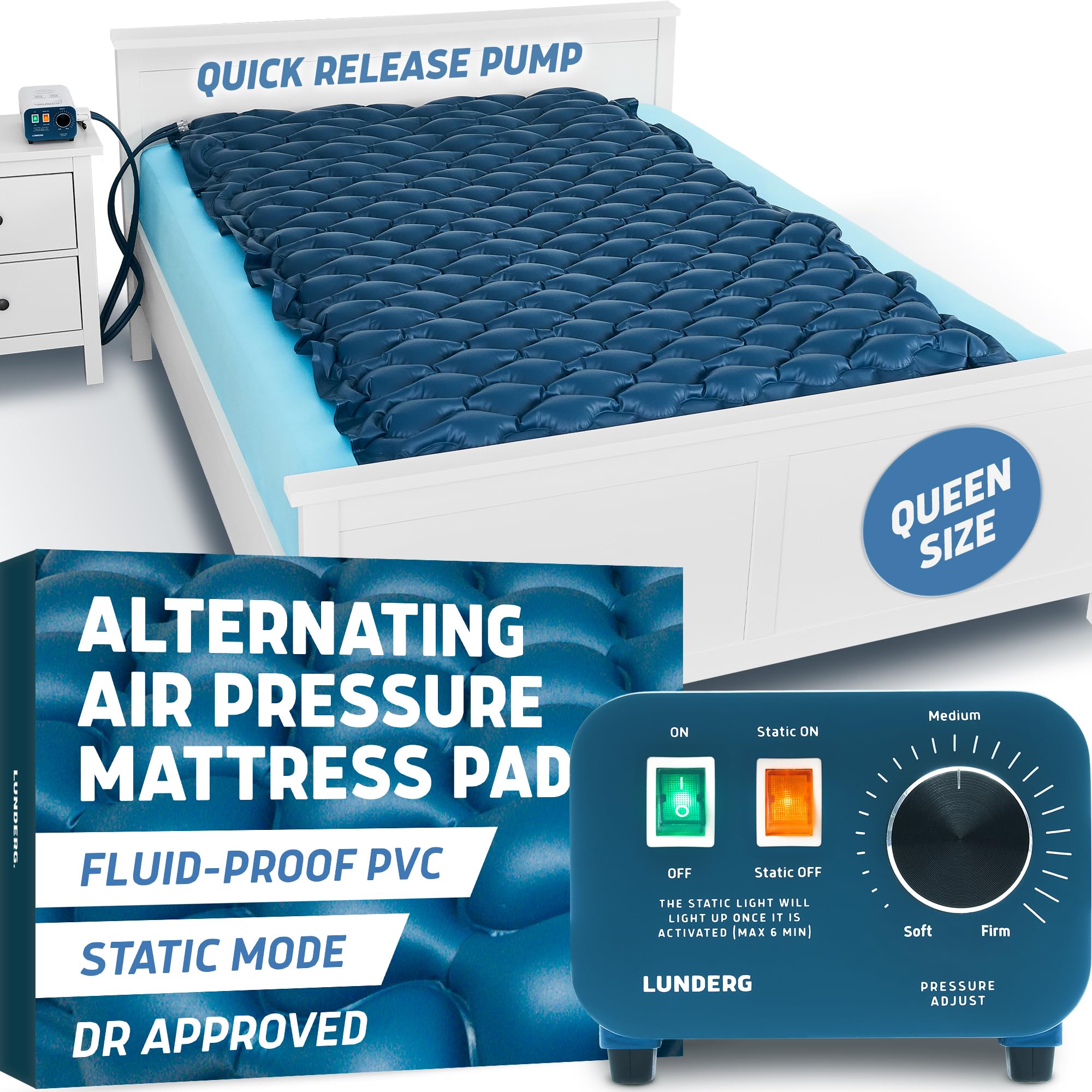
Lunderg’s system uses two interlocking sets of air cells that inflate and deflate on a continuous six-minute cycle, redistributing pressure across the entire back and hips. The pump operates at just 23 dBA, which is quieter than a library — essential for a pad that runs 24/7 in a bedroom. A dedicated static mode fully inflates all cells so the patient can sit propped up or sleep without the alternating sensation when they prefer a stable surface.
The pad measures 53 by 77 inches, which fits queen beds without overhang and supports up to 320 pounds. The PVC construction is waterproof and can be wiped down with mild soap, and the quick-connector hoses make setup a single-click operation — no threading tubes through sheet slits. The side-hose design is intended to let a standard fitted sheet sit over the pad without compressing the air cells.
Note that the pad is designed for prevention on intact skin — it is not a wound dressing and does not absorb exudate. Also, the alternating sensation can feel unfamiliar to new users for the first night or two, though most acclimate quickly and report improved sleep quality once the pressure relief kicks in.
Why it’s great
- Whisper-quiet 23 dBA pump suitable for shared bedrooms
- Static mode offers flexibility when alternating sensation is unwanted
- Queen size fits standard beds with no overhang
Good to know
- Alternating motion may feel odd for the first night
- Not a dressing — does not absorb wound drainage
3. MedVance Premium Alternating Air Pressure Mattress Pad
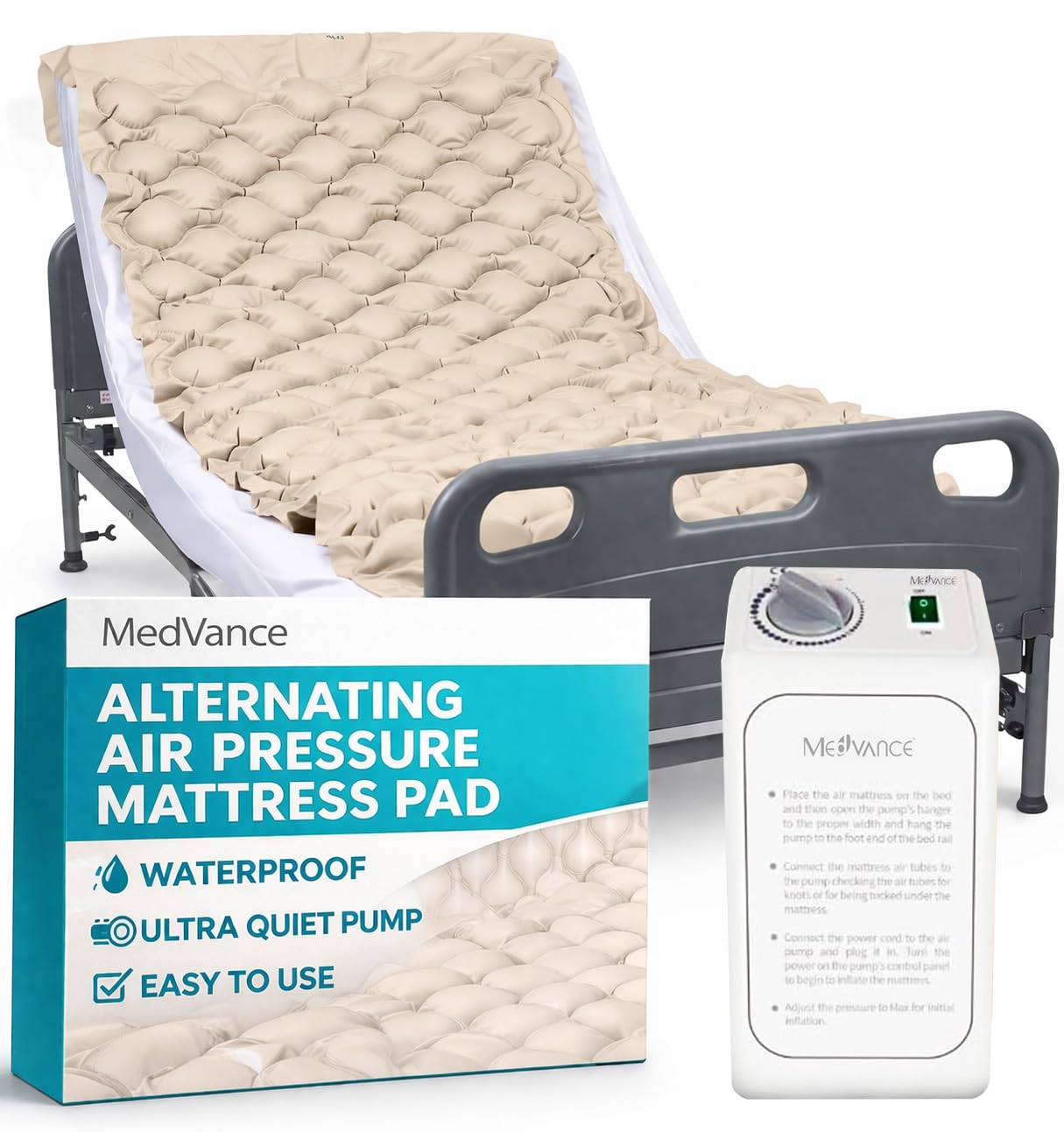
MedVance achieves a pump noise level under 20 dBA — nearly inaudible at normal conversation distance — making it a strong choice for home care where the patient sleeps in the same room as the caregiver. The alternating cycle runs every six minutes, and the digital control panel includes alarms that alert if pressure drops, which is a practical safety net for overnight use when a leak could go unnoticed for hours.
The mattress topper is constructed from medical-grade vinyl that is both waterproof and breathable, allowing vapor to escape while blocking liquid from soaking into the underlying mattress. The full-size topper fits standard hospital beds. This type of alternating-pressure surface is intended to help prevent and manage pressure injuries when combined with regular repositioning, but it is not a substitute for medical wound care — talk to the patient’s doctor or wound-care nurse about a treatment plan for any existing sore. The vinyl surface also wipes clean easily, which reduces the risk of cross-contamination between dressing changes.
The trade-off is that the pad is firmer at higher pressure settings — some users find the cells feel “pokey” against bony prominences when inflated fully. Reducing the pressure setting or adding a thin memory foam topper (less than two inches) resolves this, but that adds another layer to launder. The pump’s air hose is also relatively stiff, so placing the pump at the foot of the bed reduces hose kinking.
Why it’s great
- Sub-20 dBA pump is near-silent for overnight use
- Digital alarm alerts caregivers to pressure loss
- Waterproof vinyl prevents mattress contamination
Good to know
- High pressure can feel firm — may need a thin topper
- Air hose stiffness requires careful placement
4. Natural Sheepskin for Bed Sores 17×17″
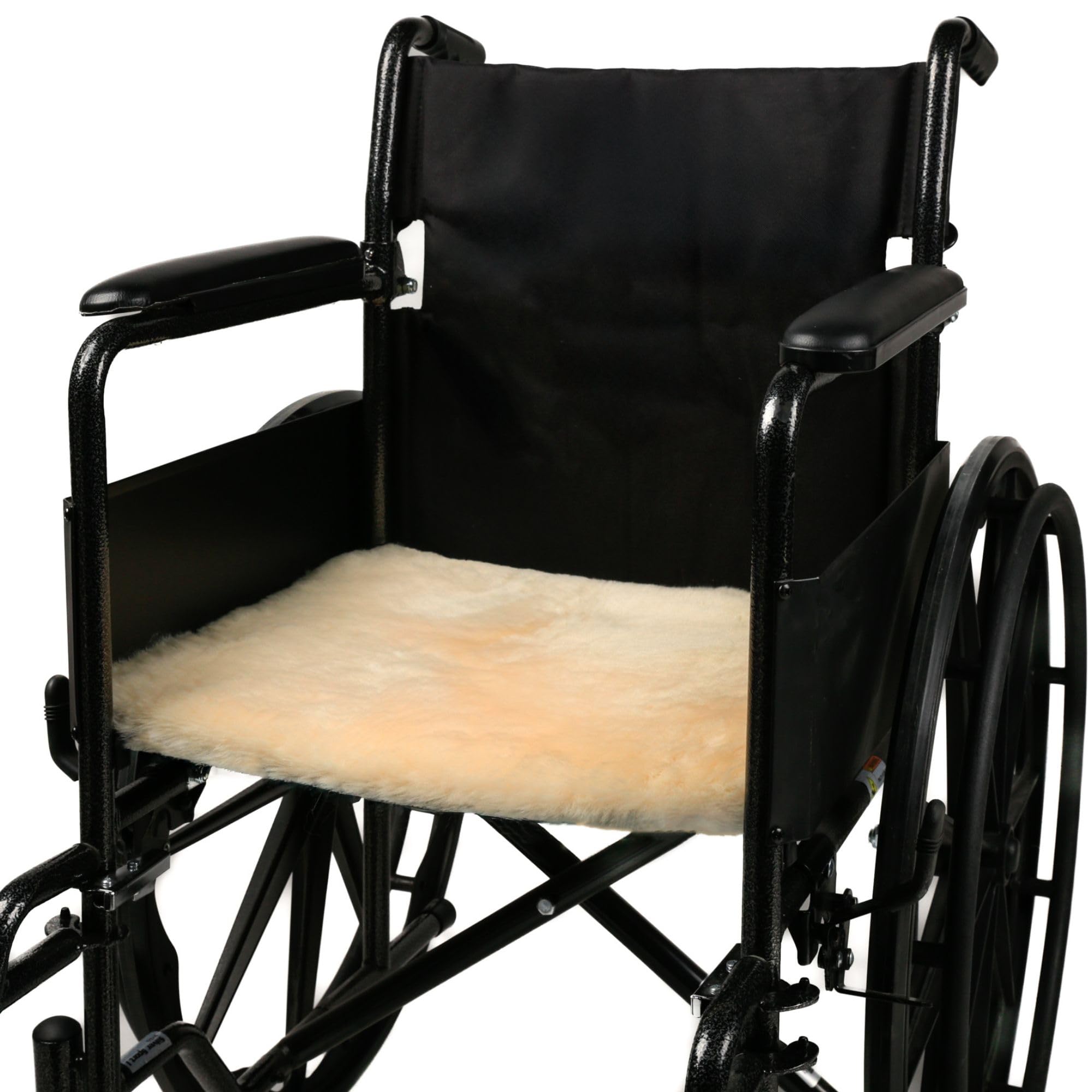
This 100-percent New Zealand sheepskin pad comes in a compact 17-inch square form factor, designed specifically for targeted cushioning on a wheelchair seat, office chair, or a small section of a hospital bed. The wool pile is sheared to a uniform one-inch height, which provides enough loft to offload pressure from the ischial tuberosities (sit bones) without raising the user so high that their feet dangle unsafely from the footrests.
The non-slip backing keeps the pad from sliding forward during transfers, which is a common complaint with loose sheepskin throws. The manufacturer markets this pad as a way to offload pressure and wick moisture for skin at risk of pressure sores, but individual results vary — check with a doctor or wound-care nurse if you notice persistent redness or skin breakdown.
The 17-inch size limits its use to small seating surfaces — it cannot cover the full length of a bed like the 41-inch Desert Breeze pad can. Also, the pad requires dry cleaning to maintain its loft; machine washing causes the leather backing to stiffen and the wool to develop an odor over time.
Why it’s great
- Compact 17-inch square fits wheelchairs and recliners precisely
- Non-slip backing prevents dangerous sliding during transfers
- Natural wool wicks moisture to reduce skin maceration
Good to know
- Too small for full-length bed coverage
- Requires dry cleaning to avoid odor and stiffness
5. ZMZPA 50-Pack Silicone Foam Dressing 4×4
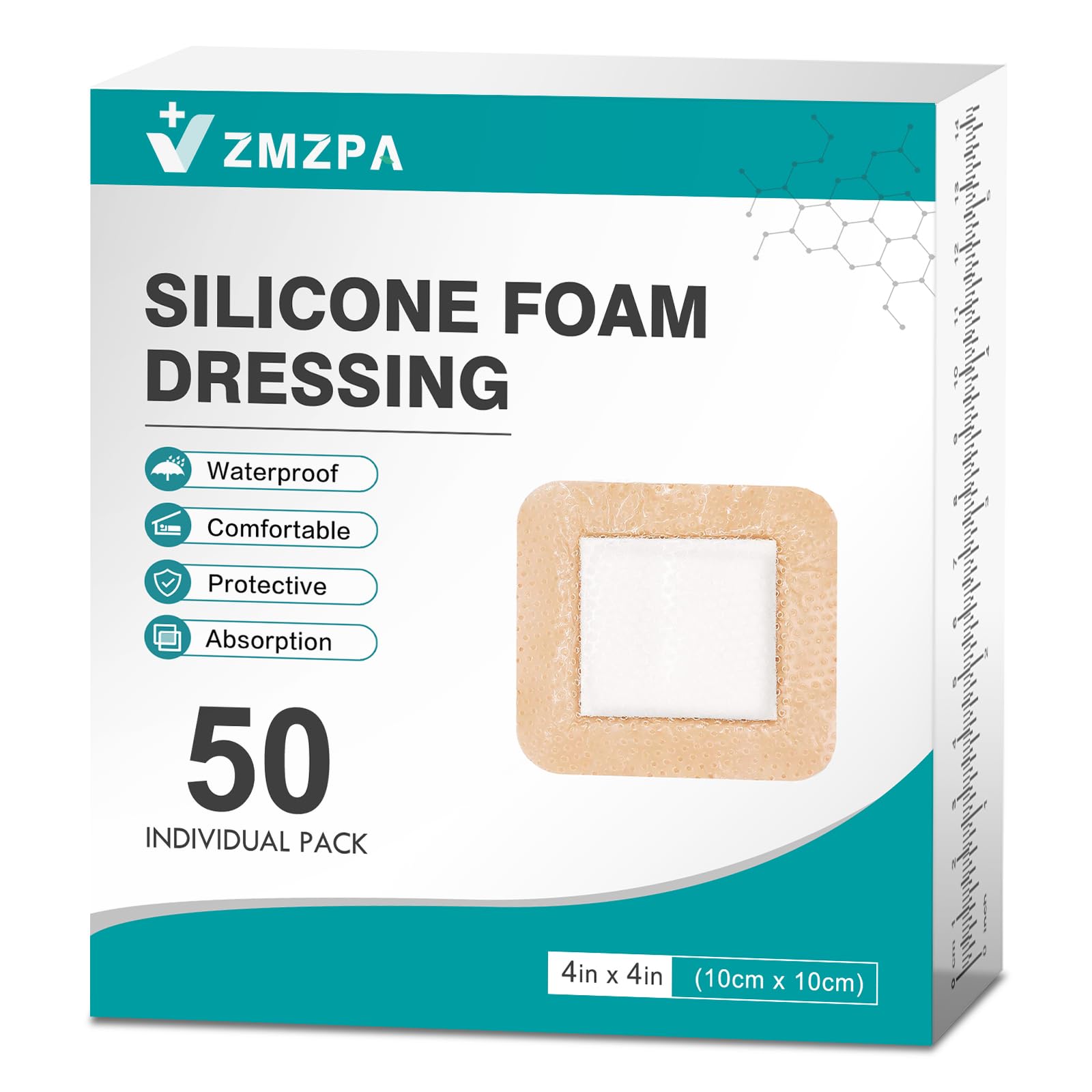
This 50-count box of bordered silicone foam dressings is engineered for high-volume daily changes on wounds with moderate to heavy exudate. The four-layer core absorbs up to 15 times its weight in fluid, converting drainage to a gel on contact — this gel lock prevents lateral spreading that macerates healthy skin around the wound edge. The 4×4-inch outer dimension with a 2.4-inch absorbent pad zone is designed to cover pressure areas on the heel, trochanter, and elbow without excess border overlap.
The medical-grade silicone adhesive is hypoallergenic and latex-free, and it forms a seal on dry skin without sticking to the wound bed itself. The flexible border is designed to conform to curved body surfaces and resist edge curling, a common failure point on cheaper acrylic-based dressings. Each dressing is individually sterile-packaged, which is critical for maintaining a clean wound environment when dressing changes happen in a non-clinical home setting.
The adhesive border is noticeably wider than some competing brands, which improves staying power but can create a larger footprint that may not fit snugly in tight intertriginous areas like the gluteal cleft. Also, the 50-pack is a significant upfront commitment — if the wound exudate level changes during healing, a different absorbency grade may become more appropriate before the box is empty.
Why it’s great
- Core absorbs 15x its weight and gel-locks drainage
- Wide silicone border resists edge curling for extended wear
- 50 individually sterile dressings reduce per-change cost
Good to know
- Wide border may not fit tight gluteal cleft spaces
- Large box requires care plan stability to avoid waste
6. EVERLIT Sacrum Silicone Foam Dressing 7×7″ 10-Pack

EVERLIT’s sacrum dressing uses a five-layer build designed specifically for the high-friction, high-moisture environment of the lower back. The bottom silicone contact layer provides gentle adhesion without ripping granulation tissue, while the super-absorbent core layer retains exudate and a non-woven spreading layer ensures the fluid distributes evenly across the foam — preventing pooling that can cause edge leakage. The waterproof outer film seals out urine and fecal matter, which is critical for sacral wounds in incontinent patients.
Each dressing measures 7 by 7 inches with a heart-shaped contour that matches the anatomical curve of the sacrum, reducing corner lift when the patient shifts side-to-side in bed. The 10-pack provides a two-to-three-week supply for daily dressing changes. As with any wound dressing, follow a doctor’s or wound-care nurse’s guidance for how a specific sore should be treated and monitored — this product is not a guaranteed cure and healing time varies by patient.
These dressings, like most foam dressings, can trap moisture against the skin if the patient sweats heavily, which can cause maceration at the wound edges if left on longer than 24 hours. Changing every 12 hours in hot conditions resolves this, but that doubles the consumption rate and makes the 10-pack last only five days. Also, the heart shape is optimized for sacrum placement only — it does not conform well to heel or elbow wounds.
Why it’s great
- 5-layer core with spreading layer prevents exudate pooling
- Heart-shaped contour reduces corner lift on sacrum
- Waterproof film blocks urine and fecal contamination
Good to know
- May trap moisture on heavy sweaters — change every 12 hours
- Sacrum-specific shape is unsuitable for heel or elbow wounds
7. Carbou Silicone Sacrum Foam Dressing 9×9″ 5-Pack

Carbou’s sacral dressing is the largest bordered foam option on this list at 9 by 9 inches, providing a 4.5-inch-wide adhesive border around the absorbent core. The extra border real estate ensures the dressing stays sealed even when the patient moves frequently or sits upright in a wheelchair, where shear force tries to peel the edges upward. The polyurethane foam core converts exudate into a gel on contact, locking fluid inside the dressing so the wound bed stays moist but not wet.
The silicone contact layer is hypoallergenic and designed with a larger bottom border — a subtle ergonomic cue that helps caregivers orient the dressing correctly on the sacral curve without measuring. The semi-permeable PU outer film allows oxygen and water vapor to pass through while forming a waterproof barrier, which reduces the risk of skin maceration from trapped sweat. The manufacturer markets it as durable and able to stay sealed during incontinence episodes, though a caregiver should still check the seal regularly.
The biggest consideration is the 5-count pack size — each dressing is individually sterile, but five pieces may not last a full week if the wound requires daily changes, making the per-dressing cost relatively high. Also, the generous border width means the dressing can overlap onto healthy skin beyond the sacral hollow, which some patients find bulky when lying supine.
Why it’s great
- 9×9-inch border provides maximum adhesion security
- Gel-forming core locks exudate and prevents leakage
- Larger bottom border aids proper ergonomic placement
Good to know
- 5-count pack runs out quickly with daily changes
- Wide border adds bulk on supine patients
FAQ
How often should I change a silicone foam dressing on an active bed sore?
Can I layer alternating air pads with foam dressings on the same wound?
What stage of bed sore should I use a medical sheepskin pad instead of a foam dressing?
How do I know if an alternating air pad’s pump is quiet enough for home use?
Final Thoughts: The Verdict
For most users, the best bed sore pads winner is the Lunderg Queen Alternating Air Pressure Pad because it combines near-silent 23 dBA operation, a useful static mode, and true queen-size coverage in one system — it prevents pressure buildup across the entire back and hips without disrupting sleep. If you want a natural, chemical-free prevention layer for wheelchair or bed, grab the Desert Breeze Medical Sheepskin. And for active wound management on the sacrum, nothing beats the EVERLIT Sacrum Foam Dressing for its five-layer core and sealed waterproof perimeter.