
Our readers keep the lights on and the weekend projects moving. As an Amazon Associate, I earn from qualifying purchases.
A bedwetting alarm is a tool that helps kids recognize a full bladder while they sleep, slowly training their brain to wake up rather than wet the bed. These alarms use a small moisture sensor connected to a loud sound or strong vibration to break the habit for good.
I’m Rikta — the co-founder and writer behind FitlyFast. I’ve spent many hours analyzing sensor responsiveness, alarm volume levels, and the real-world feedback from parents to identify which alarms actually deliver lasting dry nights.
To separate effective models from gimmicks, I’ve reviewed the top units on the market based on sensitivity, durability, and child comfort to build this guide to the best bed wetting alarm for kids.
How To Choose The Best Bed Wetting Alarm For Kids
Not all bedwetting alarms are created equal. Some rely on flimsy sensors that produce false alarms from sweat, while others use a single tone that deep sleepers quickly tune out. Focus on three core areas: the sensor’s reliability, the alarm’s ability to rouse your child, and the day-to-day usability for both parent and kid.
Sensor Design and Sensitivity
Look for a sensor that clips securely to the underwear without pins that can pop off in the night. The best models detect the very first drop of urine (Quick Detect technology) rather than waiting for a full accident. Avoid sensors that require tape or become unreliable after a few washes. A sensor that is easy to clean and reposition matters for consistent performance night after night.
Alarm Volume, Vibration, and Tone Variety
A single loud beep may scare a child once, but a deep sleeper quickly adapts to a repeated sound. Alarms offering six or more selectable tones prevent habituation. Vibration alone works well for sensitive sleepers, while a combination of 85+ decibel sound and strong vibration is better for heavy sleepers. Adjustable volume control lets you balance wake-up power with household peace.
Wireless versus Wired
Wireless alarms eliminate the cord that runs from the pajama top to the underwear, making them safer for younger children and less restrictive during sleep. The trade-off is that the wireless transmitter and receiver units are smaller and easier to misplace. Wired models are often more reliable with zero signal interference, but the cord can be a strangling hazard for kids under five.
Quick Comparison
On smaller screens, swipe sideways to see the full table.
| Model | Category | Best For | Key Spec | Amazon |
|---|---|---|---|---|
| DryEasy Pro Wireless | Premium | Wireless comfort and volume control | 6 selectable sounds + 6 volume levels | Amazon |
| Wet-Stop3 Kit (with Pad) | Premium | Complete system with mattress pad | 6 alarm tones + waterproof pad included | Amazon |
| Malem Ultimate | Premium | Deep sleepers needing light + sound + vibration | 1 oz weight, 3 alert methods (light, sound, vibration) | Amazon |
| Wet-Stop 3 Blue | Mid-Range | Proven wired reliability with multiple tones | 6 alarm tones, 80 dB sound level | Amazon |
| TENQIU Wireless (Blue) | Mid-Range | Cost-effective wireless with strong alarm | Wireless range 10–20 meters, USB rechargeable | Amazon |
| FENCY Wireless | Mid-Range | Wireless simplicity for one child | Wireless transmitter + receiver, 3 modes | Amazon |
| TENQIU USB Rechargeable (Orange) | Budget-Friendly | Entry-level wired alarm with rechargeable battery | USB-C rechargeable, 3 working modes | Amazon |
In‑Depth Reviews
1. DryEasy Pro Wireless Bedwetting Alarm
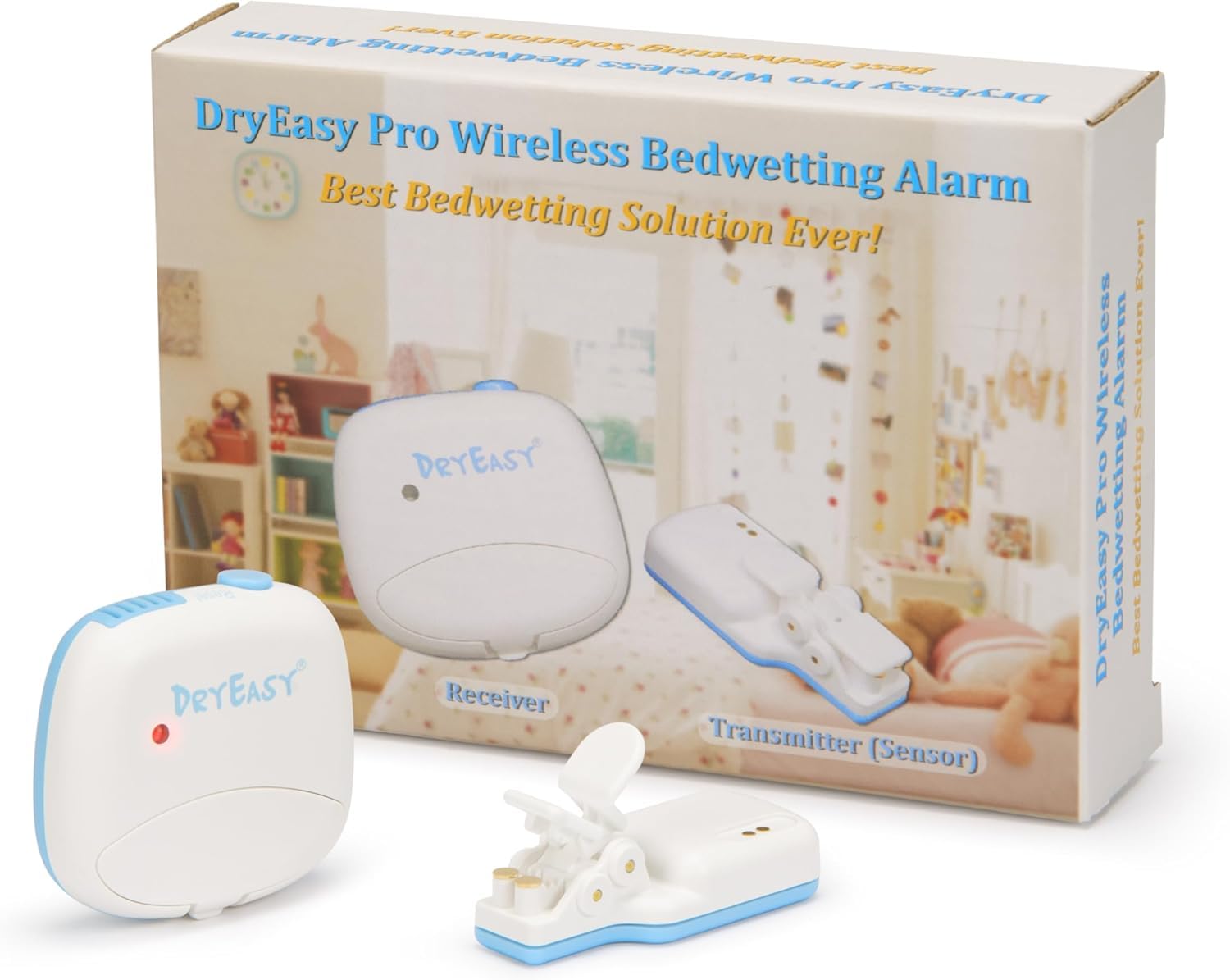
The DryEasy Pro stands apart with its new improved toggle clamp that holds the transmitter securely to the underwear — no tape, no pins, no slipping off mid-sleep. The wireless design eliminates the cord running from the pajama top to the underwear, making it far safer for younger children and less annoying for older ones. Users report excellent battery life lasting over a month between charges, which reduces the nightly prep burden.
This model features six selectable sounds plus a random-play mode, preventing the child from habituating to a single tone. The six levels of digital volume control let you fine-tune the alarm’s loudness to match your child’s sleep depth without waking the entire household. The three operation modes (sound only, vibration only, or both) give flexibility for sensitive sleepers who might find pure vibration more effective.
Feedback from parents of children with ADHD and autism highlights the wireless design as a major advantage — the child feels less restricted. While the receiver unit is small and can be misplaced, the company’s responsive customer service and the unit’s reliable detection of the first urine drop make this the top choice for families seeking a long-term solution. The alarm works well with both pull-ups and regular underwear.
Why it’s great
- Wireless design eliminates strangling cord, safer for young kids
- Six selectable sounds plus random mode prevent habituation
- Volume control with six levels fits any sleep depth
- Excellent battery life — over a month per charge
Good to know
- Small receiver unit can be easily misplaced
- Transmitter clip sometimes forgotten in the wash
2. Wet-Stop3 Kit: Bedwetting Alarm with Waterproof Pad

The Wet-Stop3 Kit bundles the proven Wet-Stop3 alarm with a reusable waterproof bed pad, creating a complete system that simplifies cleanup. The pad absorbs accidents without soaking the mattress, and it washes easily, reducing middle-of-the-night sheet changes. The alarm itself uses the same six-tone and vibration system as the standalone unit, offering a proven solution for heavy sleepers.
Parents report that the alarm is exceptionally loud — loud enough to wake deep sleepers and even scare siblings if the child doesn’t respond quickly. The patented clip-on sensor is easy to clean and effective when placed correctly in the underwear. The kit includes a reward chart and star stickers, which many families use successfully as a positive reinforcement system alongside the alarm.
The wired design means there is a cord running from the sensor to the alarm unit, which some reviewers note can be a strangling risk for children under five. However, for older kids aged seven and up, the wire is manageable when routed through pajamas. The included mattress pad receives consistent praise for its absorbency and durability. Many families achieve dry nights within 2-8 weeks using this system.
Why it’s great
- Kit includes reusable waterproof bed pad for easy cleanup
- Very loud alarm reliably wakes deep sleepers
- Reward chart and star stickers motivate progress
- Proven track record — many families see results in 2–4 weeks
Good to know
- Wired cord poses a strangling hazard for very young children
- Sensor clip can come undone if not properly fastened
3. Malem Ultimate Bedwetting Alarm (Blue)

Malem’s Ultimate alarm uses three simultaneous alert methods — a bright flashing light, a loud tone, and strong vibration — to rouse even the deepest sleepers. Weighing just one ounce and measuring two inches square, it attaches comfortably to the pajama collar or waistband without feeling bulky. The two-step shutoff method requires both pressing the button and drying the sensor, preventing accidental turn-offs during the night.
The Secure Grip sensor clips firmly to underwear without pins or tape, and the Quick Detect technology senses the first drop of urine for immediate response. Clinical trials back Malem’s effectiveness, and pediatricians commonly recommend this model. Multiple parents report that children who had never had a dry night achieved consistent dryness within three to six weeks of use.
The unit runs on two AA batteries (included) rather than a rechargeable battery. Some users note the alarm can be complicated for a groggy child to turn off, which may lead to the child ignoring it or accidentally disabling it while still asleep. The one-year warranty provides peace of mind, and the company’s customer service receives high marks for responsiveness. This alarm is best for families willing to invest more for a clinically backed, durable solution.
Why it’s great
- Three alert methods (light, sound, vibration) wake deep sleepers reliably
- Secure Grip sensor clips without pins or tape
- Clinically proven with one-year warranty
- Ultralight design at only 1 ounce
Good to know
- Requires AA batteries — no rechargeable option
- Two-step shutoff can be confusing for a sleepy child
4. Wet-Stop 3 Blue Bedwetting Enuresis Alarm

Wet-Stop 3 is a wired standard that has helped thousands of children achieve dry nights. It uses six varying alarm tones plus a strong vibration mode, giving you enough options to find the combination that works for your child’s sleep profile. The compact alarm unit runs on two AAA batteries and clips to the pajama collar, keeping the weight low and the design child-friendly.
The patented sensor is extremely sensitive to moisture — reviewers note it can trigger from humidity or sweat if not placed correctly, but a simple hack of wrapping the sensor with a paper towel and tape blocks false alarms while still detecting liquid. The two-step shutoff method prevents a sleepy child from turning it off without addressing the accident. Many families report that after the initial 1-2 week adjustment period, the child begins waking on their own before the alarm sounds.
Parents should note that this is a wired model with a cord running from the sensor to the alarm. For children under five, the cord presents a potential safety hazard. The alarm is quite loud at 80 decibels, which may scare some children at first. The included reward chart and star stickers, along with the free downloadable “The Complete Bedwetting Book,” add educational support that many families find valuable.
Why it’s great
- Six alarm tones prevent habituation over time
- Very sensitive sensor catches first drops of urine
- Reward chart and star stickers included
- Proven effectiveness — hundreds of positive reviews
Good to know
- Wired cord may be a hazard for children under five
- Sensor can trigger false alarms from sweat or humidity
5. TENQIU Wireless Bedwetting Alarm (Blue)
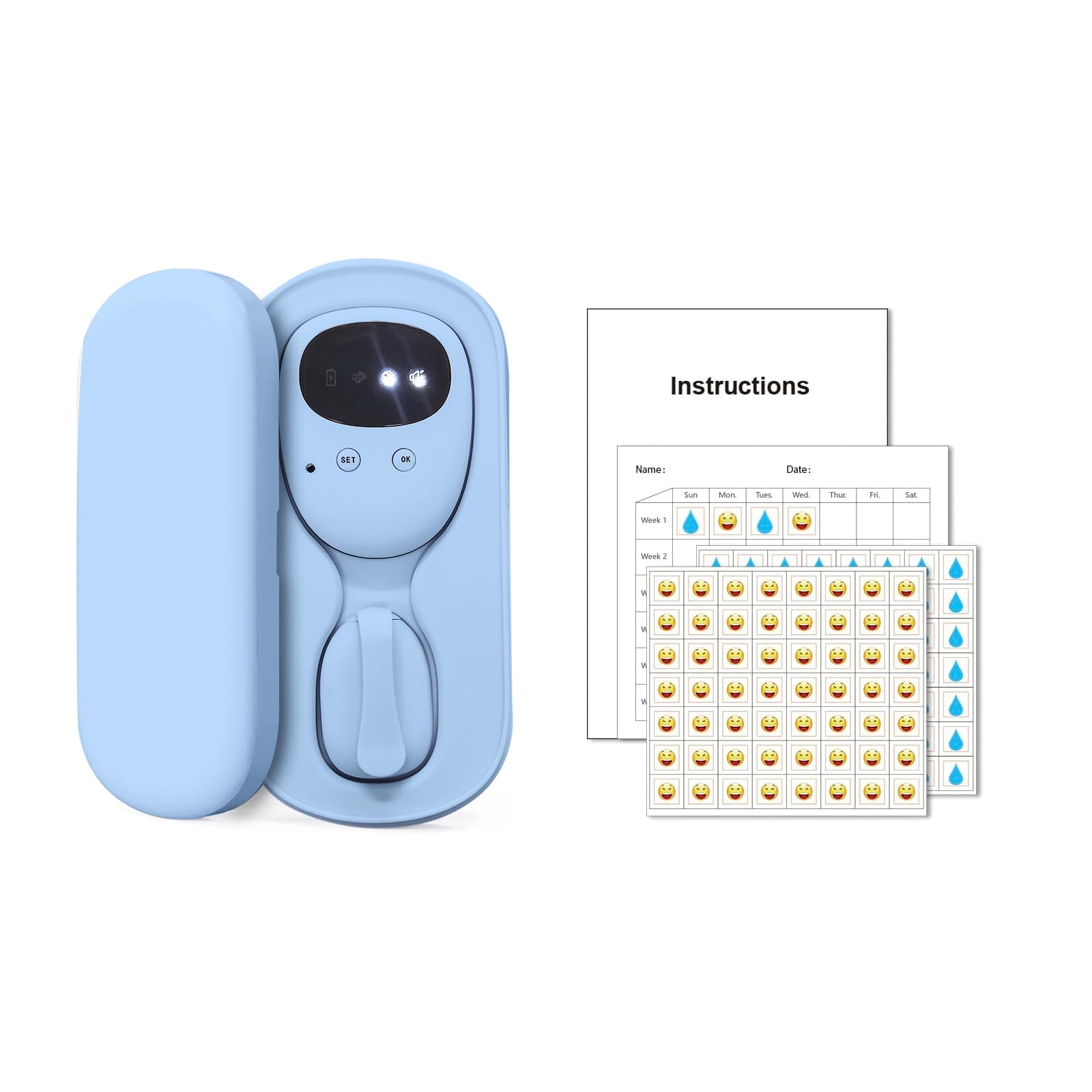
TENQIU’s wireless alarm uses a transmitter clipped to the underwear and a separate receiver that can be placed on the bedside table or in another room up to 20 meters away. This design eliminates the cord and allows parents to monitor the child’s status from a distance. The unit features three modes — sound only, vibration only, or both — and the alarm is described as very loud, effective for deep sleepers.
The sensor is highly sensitive and catches even humidity, which some reviewers found useful for early morning detection. The USB rechargeable battery lasts through the night without needing daily charging. Reviewers caution that the wireless signal is shared between two units if you have multiple children — one child’s accident will trigger both alarms, making this model best for single-child households.
Some users experienced reliability issues with the unit stopping working after a few months, and the alarm does not work effectively with pull-ups because the absorbent material prevents the sensor from detecting moisture quickly. The product works best when the child wears regular cotton underwear. Despite these drawbacks, many families report successful dry nights within two to three weeks of consistent use.
Why it’s great
- Wireless design with long 10–20 meter range
- USB rechargeable — no battery replacements
- Very loud alarm wakes deep sleepers effectively
Good to know
- Does not work well with pull-ups — best with cotton underwear
- Signal shared between multiple units causes cross-triggering
- Some units stopped working after a few months
6. FENCY Wireless Bedwetting Alarm

FENCY’s wireless design separates the sensor transmitter from the alarm receiver, so the child wears only the small transmitter clipped to the underwear while the receiver sits on the nightstand. This setup avoids any cord and minimizes embarrassment for older children. The alarm is described as very loud by most users and offers three modes: sound, vibration, or both.
The receiver has an effective range of 10 to 20 meters, which is enough to place it in the parent’s room if needed. Some parents have found this alarm useful not just for nighttime bedwetting but also for daytime potty training when used with waterproof training pants. Reviewers report that the alarm worked quickly — often within 2-3 weeks — for children who were deep sleepers and had never experienced a dry night.
A critical flaw: the wireless signal is shared between units. If you are using two FENCY alarms for two children, one child’s accident triggers both receivers, making this alarm unsuitable for multi-child homes. Additionally, some units reportedly did not work at all out of the box. The unit is USB rechargeable, so no battery replacements are needed. For a single child, this wireless alarm presents a solid mid-range option with strong reports of effectiveness.
Why it’s great
- True wireless design — no cords, less restrictive for kids
- Loud alarm reliably wakes heavy sleepers
- Can be effective for daytime potty training as well
Good to know
- Signal sharing makes it useless for multiple children in the same home
- Some units failed to work on arrival
7. TENQIU USB Rechargeable Bedwetting Alarm (Orange)

This entry-level wired alarm from TENQIU focuses on simplicity and low cost. It uses a USB-C rechargeable battery — a welcome feature at this price point — eliminating ongoing battery costs. The alarm clips to the child’s arm with an elastic band, and the sensor attaches to the underwear via a separate clip. It offers three modes: sound, vibration, or both, providing enough flexibility for most children.
The sensor is highly sensitive, which reviewers consistently praise for detecting the first drops of urine reliably. Parents report that children as young as five adjust to the alarm within 2-3 nights, and the included progress chart and sticker reward system help maintain motivation. The unit works well for children, teenagers, and even adults, making it a versatile option for families on a budget.
The elastic arm band tends to loosen during the night, requiring nightly readjustment. The alarm sound is described as adequate but not as loud as premium models like the Wet-Stop or Malem, so very deep sleepers might not respond as reliably. A few users noted the unit stopped working after a few months. For the price, this alarm offers a low-risk way to test whether a bedwetting alarm works for your child before investing in a higher-end model.
Why it’s great
- USB-C rechargeable — saves money on batteries long-term
- Highly sensitive sensor detects first drops reliably
- Includes progress chart and stickers for motivation
- Low entry price makes it an accessible trial option
Good to know
- Elastic arm band loosens and needs nightly adjustment
- Alarm volume may be insufficient for very deep sleepers
- Some units stopped working after a few months of use
FAQ
At what age should I start using a bedwetting alarm for my child?
How long does it take for a bedwetting alarm to work?
Will a bedwetting alarm work for my deep sleeper?
Can I use a bedwetting alarm with pull-ups instead of underwear?
Final Thoughts: The Verdict
For most users, the bed wetting alarm for kids winner is the DryEasy Pro Wireless because its six selectable sounds, adjustable volume, and wireless design combine safety and flexibility without sacrificing reliability. If you want a complete kit that includes a waterproof mattress pad for easy cleanup, grab the Wet-Stop3 Kit. And for deep sleepers who need maximum stimulus, nothing beats the Malem Ultimate with its triple-alert system of light, sound, and vibration.