
Our readers keep the lights on and the weekend projects moving. As an Amazon Associate, I earn from qualifying purchases.
Dust, ammonia fumes, and soggy bedding are the three fastest ways to turn a brooder into a health hazard. Baby chicks spend every waking hour pecking, scratching, and sleeping on whatever you lay down, so the material underneath them directly shapes their respiratory health and growth rate in those first critical weeks. Choosing the wrong bedding means more work, more smell, and more risk of illness.
I’m Rikta — the co-founder and writer behind FitlyFast. This guide is built on deep market research comparing absorbency rates, dust levels, ammonia control claims, and material safety across the top options available, so you can pick with confidence.
After sorting through dozens of brooder setups and analyzing over a thousand buyer experiences, I’ve narrowed the field to the seven most reliable contenders that make up the very best bedding for baby chicks available right now.
How To Choose The Best Bedding For Baby Chicks
Chicks are not small chickens — their immune systems are still developing, and their respiratory tracts are extremely sensitive to airborne particles and ammonia released from droppings. The wrong bedding can cause respiratory distress, pasted vent, or even mortality within the first week. Focus on four factors to get it right.
Dust Levels Above All Else
Dust is the single biggest threat in a brooder environment. Chicks breathe close to the ground and stir up particles constantly while scratching. Look for bedding labeled 99% dust‑free — any product that claims to be “low dust” but lacks a percentage is often dustier than advertised. Paper and hemp options dominate this category; pine shavings vary wildly by brand and batch.
Absorbency and Ammonia Lock
Chick droppings are high in moisture and nitrogen, which breaks down into ammonia within hours if not absorbed. Ammonia irritates the respiratory tract, damages eye tissue, and suppresses growth rates. Target bedding that absorbs at least 2x its weight in liquid and includes odor‑locking technology. The best options keep ammonia undetectable for 5–7 days under normal brooder density.
Softness and Foraging Safety
Chicks need a surface that cushions their developing legs and allows natural scratching and pecking. Materials that are too coarse — like large pine flakes or long straw — can cause leg splay or be mistakenly eaten, leading to crop impaction. Fine paper fibers and chopped hemp provide the ideal texture for tiny feet and beaks.
Ease of Spot Cleaning and Full Changeout
You will be spot‑cleaning wet spots daily and doing a full bedding change every 5–10 days depending on brooder size and chick count. Bedding that clumps when wet is easier to scoop out; loose materials that scatter require more effort. Consider whether the bedding compacts for disposal — lightweight paper expands significantly fresh but compresses when removed.
Quick Comparison
On smaller screens, swipe sideways to see the full table.
| Model | Category | Best For | Key Spec | Amazon |
|---|---|---|---|---|
| CritterCare Natural Paper | Paper | All‑around brooder bedding | 99% dust free, 60L | Amazon |
| Kaytee Clean & Cozy | Paper | Maximum absorption & value | Absorbs up to 6x weight, 100L (2pk) | Amazon |
| Eaton Hemp | Hemp | Deep litter & odor control | Absorbs 2x more than traditional | Amazon |
| Carefresh 99% Dust‑Free | Paper | 10‑day odor control | 10 day ammonia suppression | Amazon |
| CareFresh Confetti | Paper | Colored, long‑lasting bedding | Odor control up to 1 week+ | Amazon |
| Fresh News Recycled | Paper | Eco‑friendly & hypoallergenic | 99% dust free, Ammonia Locker | Amazon |
| Standlee Chopped Straw | Straw | Outdoor coops & larger setups | Chopped approx. 4 inch pieces | Amazon |
In‑Depth Reviews
1. CritterCare Natural Paper Small Pet Bedding
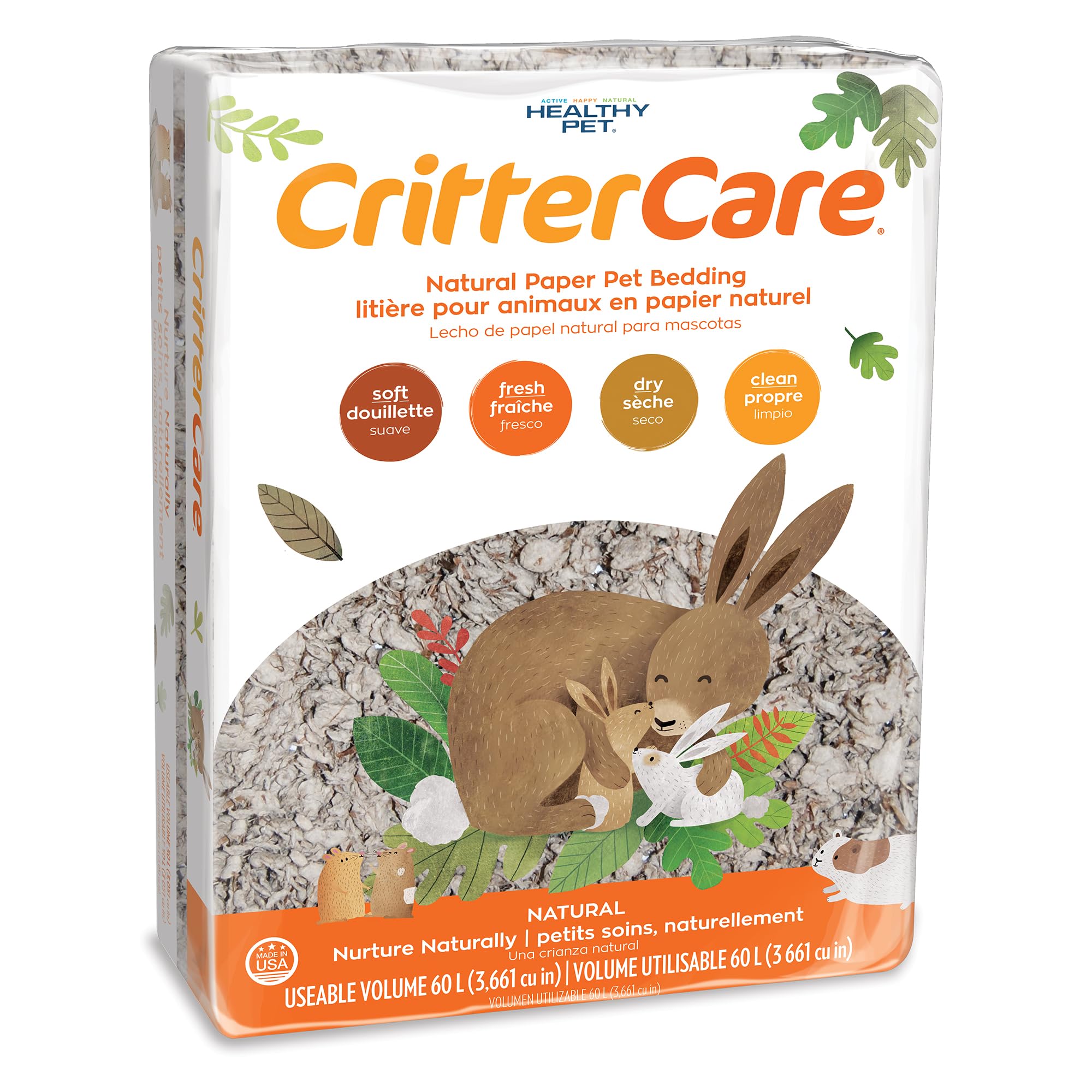
CritterCare hits the perfect balance of softness, absorbency, and dust control for a brooder environment. The natural paper fibers encourage chicks to scratch and forage naturally, and the unscented formula means no artificial fragrance irritating their sensitive respiratory systems. At 60 liters, one bag is enough to line a standard brooder pan with a generous depth for the first two weeks.
The material clumps reasonably well around wet spots, making daily spot cleaning straightforward. Users report that odor stays manageable for around five to seven days under moderate chick density, and the 99% dust‑free claim holds up in real use — very little airborne debris even when chicks kick vigorously. The neutral off‑white color makes droppings easy to spot.
Longtime guinea pig and rabbit owners have relied on CritterCare for years, and those same qualities translate directly to chick care. It is not the most absorbent option on this list, but its consistent quality, reasonable price point, and broad availability make it the safest default choice for first‑time and experienced chick raisers alike.
Why it’s great
- Reliably 99% dust free — safe for sensitive chick lungs
- Soft texture encourages natural scratching and foraging
- Unscented with pet‑safe odor control
Good to know
- Absorbency is adequate but not top‑tier for high‑density brooder setups
- Bag size is mid‑range; heavy users may need two bags for deeper litter
2. Kaytee Clean & Cozy White Paper Bedding (Pack of 2)

Kaytee Clean & Cozy is engineered specifically for high‑absorbency environments, and that shows immediately in a brooder. The fibers expand significantly when fluffed — a single bag from this two‑pack can fill a surprisingly deep layer, and the material absorbs up to six times its own weight in moisture. That means fewer wet spots and less ammonia buildup between changes.
The white color is a practical advantage for chick owners: you can spot soiled areas at a glance without digging through dark bedding. It is also 99% dust‑free and fragrance‑free, so there is no chemical masking of odors. Users consistently report that odor stays neutral for nearly two weeks in rabbit and guinea pig setups, which translates to a strong performance window for chicks as well.
The two‑pack format gives you a full brooder season worth of bedding in one purchase. The main tradeoff is bulk — the fluffed material takes up storage space before use, and the packaging is large. But if you prioritize maximum dryness and fewer changes, this is the most cost‑effective high‑performance option.
Why it’s great
- Exceptional 6x liquid absorption keeps brooder drier longer
- White color makes spot cleaning fast and efficient
- Two‑pack provides excellent total volume per dollar
Good to know
- Expands dramatically — can be deceiving before fluffing
- Storage space needed for the bulky two‑pack
3. Eaton Pet and Pasture Hemp Bedding

Hemp bedding is a standout for deep litter management, and Eaton’s version is about as clean as it gets. Grown without pesticides or herbicides, this product produces virtually no dust — even less than most paper beddings — and the hemp fibers absorb moisture approximately twice as effectively as traditional pine shavings or straw. For a brooder running on the deep litter method, this is the top contender.
Chick owners report that the natural earthy scent is pleasant rather than chemical, and the soft flake texture is easy on tiny feet. The material does not compact into hard clumps like paper, so sifting is straightforward. Users with outdoor coops have noted that hemp bedding stays fresh and bug‑free for months when managed with the deep litter approach.
The main limitation is bag size — at 28 liters, one bag is enough for a single brooder setup but not for ongoing deep litter replenishment. It is more expensive per liter than paper options, so it works best for owners who prioritize dust‑free air quality over raw volume. For chicks with existing respiratory sensitivity, this is the safest pick.
Why it’s great
- Near‑zero dust ideal for respiratory‑sensitive chicks
- 2x absorbency vs. traditional bedding reduces wet spots
- Naturally pest‑resistant in deep litter setups
Good to know
- Bag size is small for the price — not the most economical option
- Not widely stocked in brick‑and‑mortar farm stores; shipping may be slow
4. Carefresh 99% Dust‑Free White Natural Paper Bedding

Carefresh has long been a benchmark in small animal bedding, and their 99% dust‑free white formula lives up to the reputation. The manufacturer claims up to 10 days of ammonia suppression, and real‑world feedback confirms that odor stays below noticeable levels for at least a week under normal chick density. That is a meaningful advantage when the brooder is in an indoor space.
The “Comfyfluff” fiber structure is pillowy soft, which cushions chick legs and encourages natural burrowing behavior. It is also 2x more absorbent than wood shavings, keeping the top layer dry even when the bottom is saturated. The white color makes it easy to differentiate wet from dry areas, reducing wasted bedding during spot cleaning.
Some users have noted a recent decline in quality consistency — occasional hard clumps or a chemical smell in certain batches. These reports are not widespread, but they are worth noting for buyers who are sensitive to product variability. Overall, when the batch is good, this is one of the best odor‑fighting paper beddings available.
Why it’s great
- Proven 10‑day ammonia suppression for indoor brooders
- Pillowy soft texture safe for delicate chick legs
- Biodegradable and compostable
Good to know
- Some recent batches reported with hard clumps or chemical smell
- 50‑liter bag runs out faster in large brooders
5. CareFresh Complete Natural Paper Bedding Confetti

The Confetti version of CareFresh adds visual variety with its multicolored fibers, but the performance is what keeps buyers coming back.
The colored fibers do not bleed or transfer onto chicks, and the soft texture remains consistent throughout the bag. It is also fragrance‑free, so the odor control comes from absorption and ammonia‑locking chemistry rather than artificial scent masking. Chick owners who also keep small mammals will find this works across species without issue.
The smaller bag size (23 liters) means this is best suited for small brooders or short‑term use. It costs more per liter than the larger Carefresh white bag, so it is primarily a choice for owners who appreciate the aesthetic or want a backup option. Performance is solid, but the volume‑to‑price ratio limits it to niche use in chick brooding.
Why it’s great
- Strong odor control lasting over one week
- Soft, safe fibers with no dye bleeding
- Visually distinct — easy to see droppings against multicolor
Good to know
- Small bag size is less economical for large brooder setups
- Premium cost per liter compared to standard paper bedding
6. Fresh News Recycled Paper Bedding

Fresh News is one of the few beddings made entirely from post‑consumer recycled paper, and it is also 99% dust‑free and 100% non‑allergenic. That makes it a strong candidate for chick owners who prioritize environmental footprint without sacrificing safety. The material is soft and fluffy, with smaller fiber pieces that are easy for chicks to scratch through.
The Ammonia Locker technology is real — users switching from other recycled beddings report noticeably less smell after several days. The bedding is lightweight, so a 40‑liter bag goes further than you might expect, but that also means it compresses easily during removal. Spot cleaning is simple because the material clumps reasonably well around wet patches.
On the downside, some bags have been reported to contain small plastic debris or other foreign material, likely a byproduct of the recycling process. While not common, it is worth inspecting the bedding before spreading it in the brooder. For the price and the eco‑conscious design, this is a solid mid‑range choice with good odor performance.
Why it’s great
- 100% post‑consumer recycled paper — strong eco credentials
- Effective Ammonia Locker technology for odor control
- Non‑allergenic and safe for sensitive chicks
Good to know
- Occasional plastic or debris in the bag
- Lightweight material can scatter outside the brooder easily
7. Standlee Hay Company Wheat or Barley Chopped Straw

Standlee Chopped Straw is a different animal from the paper and hemp options above — it is a coarse, long‑fiber material designed for larger livestock bedding and outdoor coops. The pieces are cut to roughly 4 inches, which is longer than ideal for a small brooder but works well in spacious setups or as a top layer over paper. It is clean, dry, and compressed tightly in a 25‑pound bag.
The biggest advantage of straw is that it does not retain moisture the way paper or wood shavings can — moisture wicks through and evaporates rather than being trapped. This makes it excellent for outdoor coops where ventilation is high and humidity is a concern. It is also heat‑treated to kill weed seeds, so you will not get unwanted sprouts in the brooder.
For indoor brooders, straw is not the top choice. The coarse texture is less comfortable for tiny chick feet, and the longer pieces can be more difficult for chicks to navigate in a confined space. Some owners use it as a base layer with paper on top. It is best reserved for older chicks transitioning to an outdoor coop or for supplemental bedding in nest boxes.
Why it’s great
- Massive 25‑pound bag offers excellent coverage per dollar
- Does not trap moisture — good for high‑ventilation coops
- Heat‑treated and clean with no chemical additives
Good to know
- Coarse texture less suitable for young chicks in a brooder
- Longer pieces make spot cleaning less precise
FAQ
Can I use pine shavings for baby chicks?
How often should I change chick brooder bedding?
Is straw or hay better for chicks?
Final Thoughts: The Verdict
For most users, the best bedding for baby chicks winner is the CritterCare Natural Paper because it combines reliable 99% dust‑free construction with good absorbency and a price that works for any brooder size. If you want maximum moisture locking and fewer changes, grab the Kaytee Clean & Cozy for its 6x absorption and outstanding value two‑pack. And for the safest possible air quality in a deep litter system, nothing beats the Eaton Hemp Bedding with its near‑zero dust and superior odor control.