
Our readers keep the lights on and the weekend projects moving. As an Amazon Associate, I earn from qualifying purchases.
Selecting the right material for your chicken coop floor means the difference between a fresh, dry environment and a damp, ammonia-heavy space that invites respiratory issues and pest problems. The wrong bedding holds moisture, rots quickly, and requires constant replacement, while the right choice naturally manages odor and provides insulation during cold snaps.
I’m Rikta — the co-founder and writer behind FitlyFast. My research for this guide involved cross-referencing hundreds of verified owner experiences with material science data on moisture absorption, dust content, and compostability in coop-specific environments.
Whether you raise heritage breeds in a small backyard setup or manage a larger flock, finding the right bedding for chicken coop floor depends on understanding the unique properties of straw, hemp, pine pellets, and natural fiber pads.
How To Choose The Best Bedding For Chicken Coop Floor
Chicken coop bedding serves three primary functions: absorbing moisture from droppings, providing cushioning for the birds’ feet, and offering insulation against ground temperature fluctuations. The material you choose dictates how often you clean, how much dust enters the air, and whether the spent bedding can be composted directly into your garden.
Moisture Absorption and Ammonia Control
Wet bedding breaks down into ammonia vapor, which damages chickens’ respiratory systems and causes eye irritation. Straw — with its hollow stems — wicks moisture downward and stays dry on top, while hemp absorbs roughly twice its weight in liquid, keeping the floor surface drier for longer. Pelletized pine expands into sawdust when wet, trapping moisture within the pellet core.
Dust Levels and Respiratory Safety
Chickens have highly sensitive lungs; dusty bedding can trigger chronic respiratory issues and even lead to mortality in severe cases. Chopped straw and hemp typically produce less airborne dust than pine shavings or hay. “Low dust” or “99% dust-free” claims should be verified through customer feedback about respiratory irritation in enclosed coops.
Compostability and End-of-Life Use
Spent bedding mixed with manure becomes a nitrogen-rich compost ingredient. Straw breaks down fastest in a compost pile, typically within three to six months. Hemp and aspen fiber decompose more slowly but still produce finished compost suitable for flower beds. Pine pellets take longer to break down and are better suited for pathways than vegetable gardens.
Quick Comparison
On smaller screens, swipe sideways to see the full table.
| Model | Category | Best For | Key Spec | Amazon |
|---|---|---|---|---|
| Eaton Hemp Bedding 28L | Hemp | Deep litter method, odor control | Absorbs 2x more moisture than wood | Amazon |
| Standlee Chopped Straw | Wheat/Barley Straw | Outdoor coops, winter insulation | 4-inch chopped length, 23.8 lb bag | Amazon |
| Small Pet Select Pine Pellets | Pine Pellet | Odor control, easy spot cleaning | Expands on contact, 20 lb bag | Amazon |
| My Favorite Chicken Nesting Pads | Aspen Fiber Pad | Nesting boxes, egg cleanliness | 13×13 inch pads, pack of 10 | Amazon |
| Out-Grow Wheat Straw 1 cu ft | Wheat Straw | Budget-friendly, feral cat shelters | 4 lbs, 1 cubic foot box | Amazon |
| Natural Wheat Straw 1 LB | Wheat Straw | Small repairs, seed covering | 1 lb vacuum-pack | Amazon |
| HoazHoald Herbs & Flowers | Herb Blend | Nest box freshener, mite deterrent | 8-herb blend, 21 oz bag | Amazon |
In‑Depth Reviews
1. Eaton Pet and Pasture Hemp Bedding 28L

This hemp bedding stands apart because it absorbs roughly twice as much moisture as pine shavings, which directly translates to fewer deep-clean cycles and more stable ammonia levels in enclosed coops. Users running the deep litter method report going six months without any noticeable smell when pairing this with a secondary lime product. The flake form breaks apart easily while still maintaining structural integrity underfoot.
Hypoallergenic properties matter here because hemp contains no aromatic oils or resins that can irritate chicken respiratory tracts — a frequent complaint against cedar and some pine products. The material stays dry on the surface even when the lower layer saturates, which prevents caked-on bedding from sticking to hens’ feet and dragging manure into nesting boxes.
Being farmer-owned and produced without herbicides or pesticides adds traceability that budget-brand straw cannot match. The bag size at 28 liters skews smaller than some alternatives, so owners of larger coops needing full-floor coverage may need to buy multiple bags per bedding change.
Why it’s great
- Superior moisture absorption extends time between full cleanouts
- Near-zero dust protects respiratory health of flock
- Biodegradable and compostable after use
Good to know
- Bag size is modest for larger coop floors
- Not widely available in local feed stores
2. Standlee Chopped Straw 23.8 lb

Standlee’s chopped wheat or barley straw is heat-treated during processing to kill any viable weed seeds — a critical detail for owners who intend to compost spent bedding directly into garden beds. The approximately four-inch chop length makes it easy to fluff into nesting boxes while also staying deep enough on the coop floor to absorb daily moisture without becoming matted.
The hollow stem structure of straw naturally repels water, which means the top layer stays dry even when the ground beneath is damp. This quality makes it superior to hay (which retains moisture and rots) for outdoor coops exposed to rain or snow, and users specifically report it keeps feral cat shelters warm during below-freezing nights without freezing solid.
At nearly 24 pounds compressed, this bag delivers substantially more material per dollar than smaller retail bags of straw. Some recent buyers noted reduced compression in newer shipments, so inspecting the bag feel upon arrival helps confirm you are getting the usual density.
Why it’s great
- Heat-treated to eliminate weed seed germination in compost
- Hollow stems provide natural insulation and moisture wicking
- Large compressed bag offers strong value for coverage area
Good to know
- Bag compression can vary between production batches
- May contain trace barley or wheat seeds that could sprout in damp conditions
3. Small Pet Select Pine Pellet Bedding 20 lb

These pine pellets function differently from loose bedding: each pellet expands into fine sawdust upon contact with moisture, trapping urine and manure inside the pellet core rather than allowing it to spread across the floor. This mechanism drastically reduces the surface area exposed to air, which directly lowers ammonia vapor release between cleanings. Users running rabbit litter boxes report odor control lasting days longer than with shavings.
The triple-screening process claims 99% dust-free output, which is notable for an enclosed coop where dust particles hang in the air longer than in open habitats. Because the pellets do not stick to fur or feathers, daily spot cleaning consists of simply removing the expanded pellets with a scoop rather than replacing the entire floor layer. This extends bedding life significantly compared to straw or hemp.
The 20-pound bag is made from sustainably sourced pine shavings from already downed trees, and the material is fully compostable after use. A small number of early shipments reportedly carried a synthetic detergent odor, but later batches have reverted to the expected natural pine scent.
Why it’s great
- Pellet expansion traps moisture and odor inside, not on the floor
- Near-zero dust reduces respiratory load on flock
- Spot cleaning is fast because only expanded pellets need removal
Good to know
- Some batches had a temporary detergent smell issue
- Less cushioning for feet compared to loose straw or hemp
4. My Favorite Chicken Nesting Pads with Herbs 10-Pack

These pre-formed pads are made from excelsior aspen fiber — a wood that splinters finely rather than breaking into sharp shards — which provides secure footing for newly hatched chicks and reduces the risk of splayed legs. The integrated kraft paper backing helps the pad hold its shape even when hens scratch vigorously, keeping the nest area tidy and eggs elevated off the floor.
The herbal blend incorporated into each pad includes organic botanicals and edible flowers that naturally deter mites while producing a mild, pleasant scent without artificial fragrances. This makes them particularly useful for owners who want a drop-in solution for nesting boxes without measuring loose herbs or dealing with scattered straw bits mixing into egg collection.
Each pad measures 13 by 13 inches, fitting standard nesting boxes snugly. The pack of ten provides roughly two to three months of coverage for a small flock of four to six hens, depending on how aggressively they peck at the fibers. Replacing pads only when hens begin tearing them apart keeps costs manageable.
Why it’s great
- Integrated herbs deter mites without chemical sprays
- Excelsior fiber provides anti-slip surface for chicks
- Pre-formed shape stays intact longer than loose bedding
Good to know
- Per-pad cost is higher than loose straw alternatives
- Not designed for full-coop floor coverage
5. Out-Grow 100% Natural Wheat Straw 1 cu ft

This wheat straw arrives in a one-cubic-foot box that weighs four pounds, offering a moderate amount of material ideal for small coops, brooder boxes, or supplementing an existing straw base. Out-Grow grows the wheat on-site, which means they control quality from seed to harvest, resulting in noticeably fewer weed seeds and less dust than commodity straw sold in feed stores.
Users consistently note that the straw repels moisture effectively — a cat shelter user reported it remaining dry through multiple below-freezing nights where hay would have frozen solid. The lack of chemical additives makes it safe for direct contact with eggs and chicks, and the material composts well when mixed with manure for garden use.
One previous customer found a large foreign object in their box, suggesting occasional quality lapses in packaging.
Why it’s great
- Grown on-site with consistent quality control
- Hollow stems naturally repel moisture and resist freezing
- Low weed seed count compared to unbranded straw
Good to know
- One report of foreign debris in the box
- Compressed volume may appear smaller until fluffed
6. Natural Wheat Straw by Acostop 1 LB

This one-pound vacuum-pack of sun-dried wheat straw is best understood as a small-quantity solution for touch-ups, seed covering, or emergency bedding rather than a primary floor material. The vacuum seal keeps the straw clean and dry during storage, which eliminates the musty odor that can develop in loose straw bags stored in damp garages or sheds.
The straw itself is 100% natural and soil-safe, containing no chemical additives or weed seeds that could interfere with organic gardening plans. Users who spread it over newly seeded grass patches found it stayed in place during wind and rain thanks to the tacky texture of the stems, unlike some cheaper local straws that blow away. It also works well for stuffing around wood piles to keep stray cats warm during cold snaps.
The main limitation is the quantity — one pound produces a patch roughly the size of a 17-inch laptop when fluffed. For owners needing to cover a standard 4×6-foot coop floor, this would require purchasing multiple packs, making it less economical than bulk alternatives.
Why it’s great
- Vacuum seal keeps straw fresh and prevents mold during storage
- Chemical-free and safe for organic garden compost
- Stays put in wind better than some unbranded straw
Good to know
- Very small quantity — not intended for full coop coverage
- Higher per-pound cost relative to bulk straw options
7. HoazHoald Chicken Nesting Herbs & Flowers 21 oz
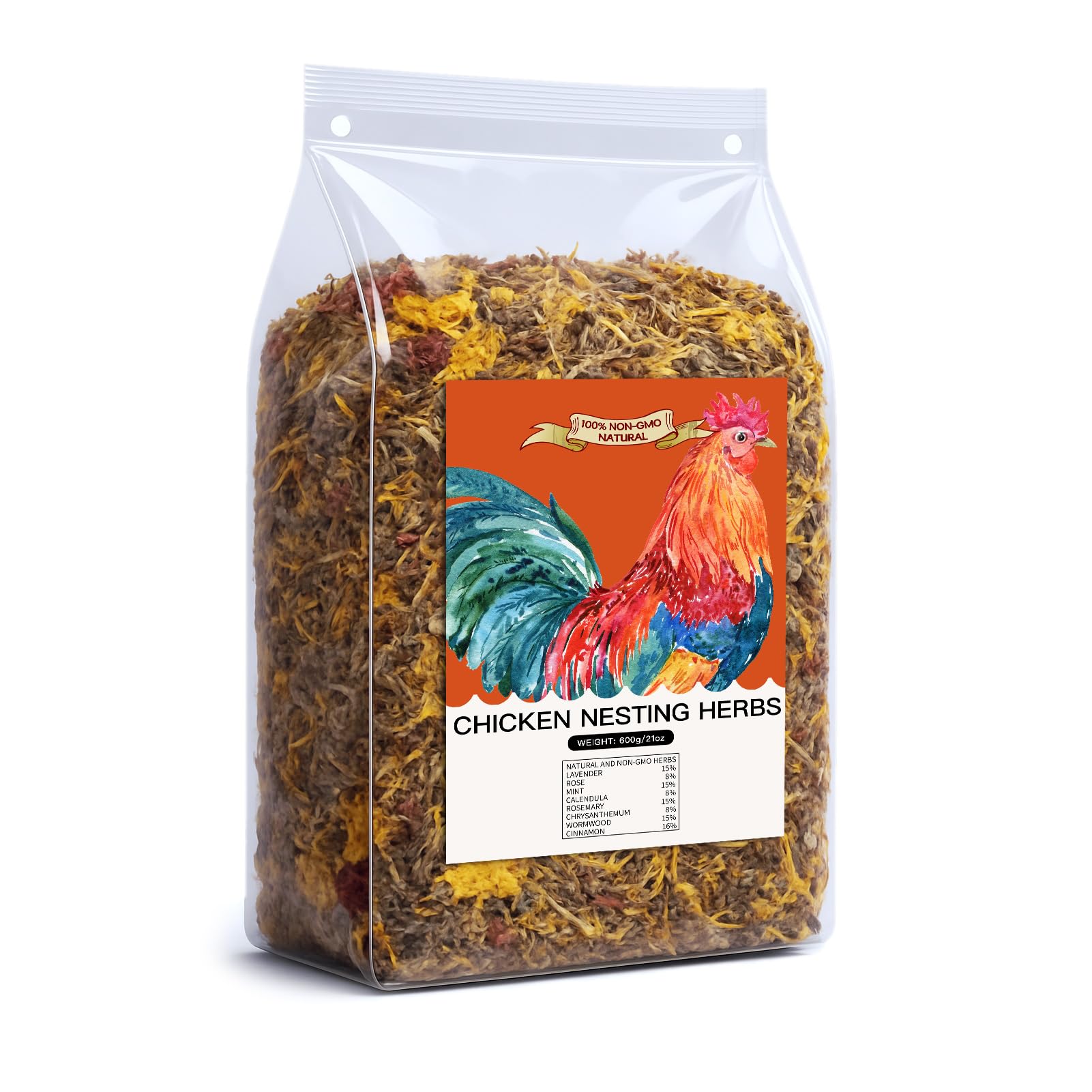
This is not a primary floor bedding but rather a targeted additive that you sprinkle into nesting boxes, dust bath areas, or mix into existing straw or hemp bedding. The blend contains lavender, rose, mint, calendula, rosemary, chrysanthemum, wormwood, and cinnamon — each herb chosen for specific properties such as mite deterrence, calming scent, or nutritional supplementation when pecked at by the hens.
The dried herbs naturally release aromatic oils that mask the ammonia smell from droppings without using artificial fragrances. Wormwood and calendula have traditional reputation for repelling external parasites, which reduces the need for chemical mite treatments in the nesting box environment. Some users have observed their hens actively foraging through the herbs, which provides environmental enrichment that encourages natural scratching behavior.
At 21 ounces, the bag provides enough coverage for regular sprinkling across four to six nesting boxes over several weeks, depending on how generously you apply. Note that this is a supplement to your main floor bedding — it will not absorb moisture or provide insulation on its own.
Why it’s great
- Natural mite-deterrent properties reduce chemical use in nests
- Pleasant scent masks ammonia without artificial perfumes
- Edible herbs provide supplemental nutrition and enrichment
Good to know
- Cannot replace primary floor bedding — needs a base material
- Some herbs may lose potency if exposed to high humidity for long periods
FAQ
Can I use hay instead of straw for chicken coop bedding?
How often should I replace bedding in a deep litter system?
Does pine pellet bedding cause respiratory issues in chickens?
What does “certified noxious weed free” mean for straw bedding?
Can I compost bedding that contains chicken manure?
Final Thoughts: The Verdict
For most users, the winning bedding for chicken coop floor is the Eaton Pet and Pasture Hemp Bedding because its superior moisture absorption and near-zero dust make deep litter management practical even in small coops. If you prefer the rapid moisture-wicking and winter insulation of straw, grab the Standlee Chopped Straw. And for owners focused on minimizing odor and cleaning time, nothing beats the Small Pet Select Pine Pellets for spot removal and ammonia control.