
Choosing the wrong bedding for your leopard gecko can lead to serious health issues like gut impaction, a painful and often fatal condition caused when loose particles are accidentally swallowed during feeding. The perfect substrate isn’t just about looks—it’s about mimicking their arid natural habitat while ensuring complete safety for your reptile.
I’m Rikta — the co-founder and writer behind FitlyFast. I’ve spent years analyzing the chemical composition, dust levels, and moisture retention of reptile substrates to help owners make decisions that prioritize their pet’s long-term health.
After deep research into particle size, ingestibility, and humidity control, I’ve curated this list of the absolute best bedding for leopard geckos to ensure your gecko thrives in a secure, comfortable environment.
How To Choose The Best Bedding For Leopard Geckos
Leopard geckos are insectivorous ground dwellers from arid regions. They hunt by licking and striking, which means they frequently ingest small amounts of their substrate. This makes choosing a safe, digestible, or particle-free bedding more important than for almost any other reptile.
Particle Size and Impaction Risk
The number one cause of substrate-related death in leopard geckos is gut impaction. Any bedding with particles smaller than 1/4 inch that are not easily passed poses a risk. Coconut fiber can be safe if the fibers are fine and digestible, but larger, sharp chips are dangerous. Slate or tile is the most impaction-proof option, but it eliminates natural digging behavior.
Humidity and Shedding Support
Leopard geckos need a low ambient humidity (30-40%) but they rely on a humid hide during shedding. A substrate that can be lightly misted to create a localized humid microclimate without raising the whole enclosure’s humidity is ideal. Organic coconut fiber and soil mixes offer this duality, while synthetic mats do not.
Digging Enrichment vs. Cleanliness
Geckos are natural burrowers. A deep, diggable substrate allows for this instinctual behavior and provides hiding opportunities. However, loose substrates are harder to spot-clean than solid mats or carpet. Consider whether you prioritize a fully natural bioactive setup or a minimalist, hyper-clean enclosure.
Quick Comparison
On smaller screens, swipe sideways to see the full table.
| Model | Category | Best For | Key Spec | Amazon |
|---|---|---|---|---|
| Legigo 4 Pack | Organic Fiber | High humidity control & value | 4 x 1.4lb bricks of pure coco fiber | Amazon |
| Bio Dude Terra Sahara | Bioactive Mix | Natural bioactive vivariums | 6 quarts of premixed bioactive soil | Amazon |
| Halatool Coconut Husk Chips | Coconut Chips | Odor control & high drainage | 2 x 1.1lb bricks of 0.4–1.5 inch chips | Amazon |
| Halatool Coconut Fiber 2 Pack | Organic Fiber | Budget-friendly & humidity retention | 2 x 1.4lb bricks of fine coco fiber | Amazon |
| KABASI Carpet | EVA Mat | Easy non-stick cleaning | Non-adhesive EVA, 17.7×78.7 inch | Amazon |
| SISIPAI LIFE Carpet | Reptile Carpet | Joint safety & heat absorption | Thick fabric mat, 18×72 inch | Amazon |
| RLIEBUUM EVA Mat | EVA Mat | Large tanks & waterproof use | Thickened EVA, 18×118 inch | Amazon |
In‑Depth Reviews
1. Legigo 4 Pack Coconut Fiber Substrate
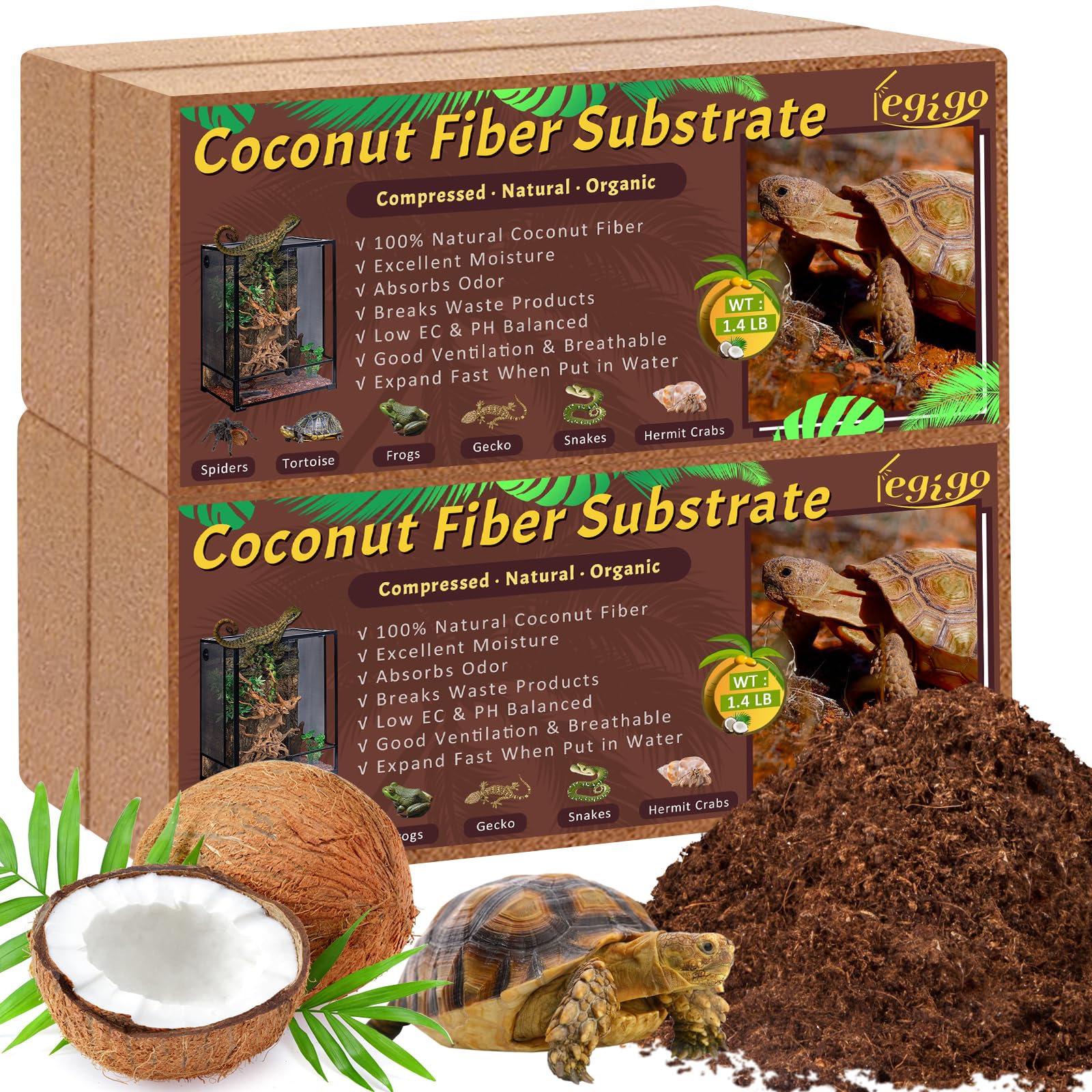
The Legigo 4 Pack offers four 1.4lb bricks of pure, natural coconut fiber, providing an exceptional amount of bedding for a mid-range setup. This compressed substrate expands significantly when hydrated, creating a soft, diggable environment that holds humidity beautifully without becoming waterlogged. The fine coir fibers are digestible if accidentally ingested, making it one of the safer loose options for your gecko.
This substrate excels at odor control by absorbing waste and breaking it down naturally, which extends the time between full enclosure cleanings. Owners report that their leos actively burrow and dig tunnels in this material, fulfilling their natural instincts. It is also suitable for bioactive setups when paired with a clean-up crew, as it supports microorganism life well.
One minor note is that the bricks come without printed instructions, so first-time users should research the correct soaking ratio to avoid overly wet substrate.
Why it’s great
- Bulk 4-pack provides months of bedding for most enclosures.
- Fine coconut fiber is safe if swallowed, reducing impaction risk.
- Excellent moisture retention supports healthy shedding without raising ambient humidity.
Good to know
- No preparation instructions on the packaging.
- Over-hydrating can lead to mold if not allowed to dry out between mistings.
2. The Bio Dude Terra Sahara Bioactive Substrate

This is the premier choice for keepers wanting a true bioactive desert ecosystem. The Terra Sahara is a precise blend of sand, soil, clay, and organic matter that is formulated to hold burrows, support arid plants, and sustain a clean-up crew of isopods and springtails. It does not raise the humidity of the enclosure, which is critical for preventing respiratory issues in leopard geckos.
The substrate has a natural earthy aroma and is engineered to drain properly, preventing stagnation in the bottom layers. Leopard geckos love digging into this mix, and the structural integrity of the tunnels they create is impressive. Owners report excellent results with succulents and air plants thriving directly in this bedding without additional soil.
The primary caution with this product is that it contains larger chunks that could pose a risk of impaction for smaller geckos if ingested. It is best suited for adult leos or for use with a feeding dish to minimize substrate intake. The price is higher per quart than simple coconut fiber, reflecting its complex, biological formulation.
Why it’s great
- Perfectly balanced for a self-cleaning bioactive vivarium.
- Holds burrow tunnels without collapsing, allowing natural digging.
- Supports live desert plants like succulents and cacti.
Good to know
- Large particles can cause impaction in juvenile geckos.
- More expensive than standard fiber or mat options.
3. Halatool 2-Pack Coconut Husk Chips
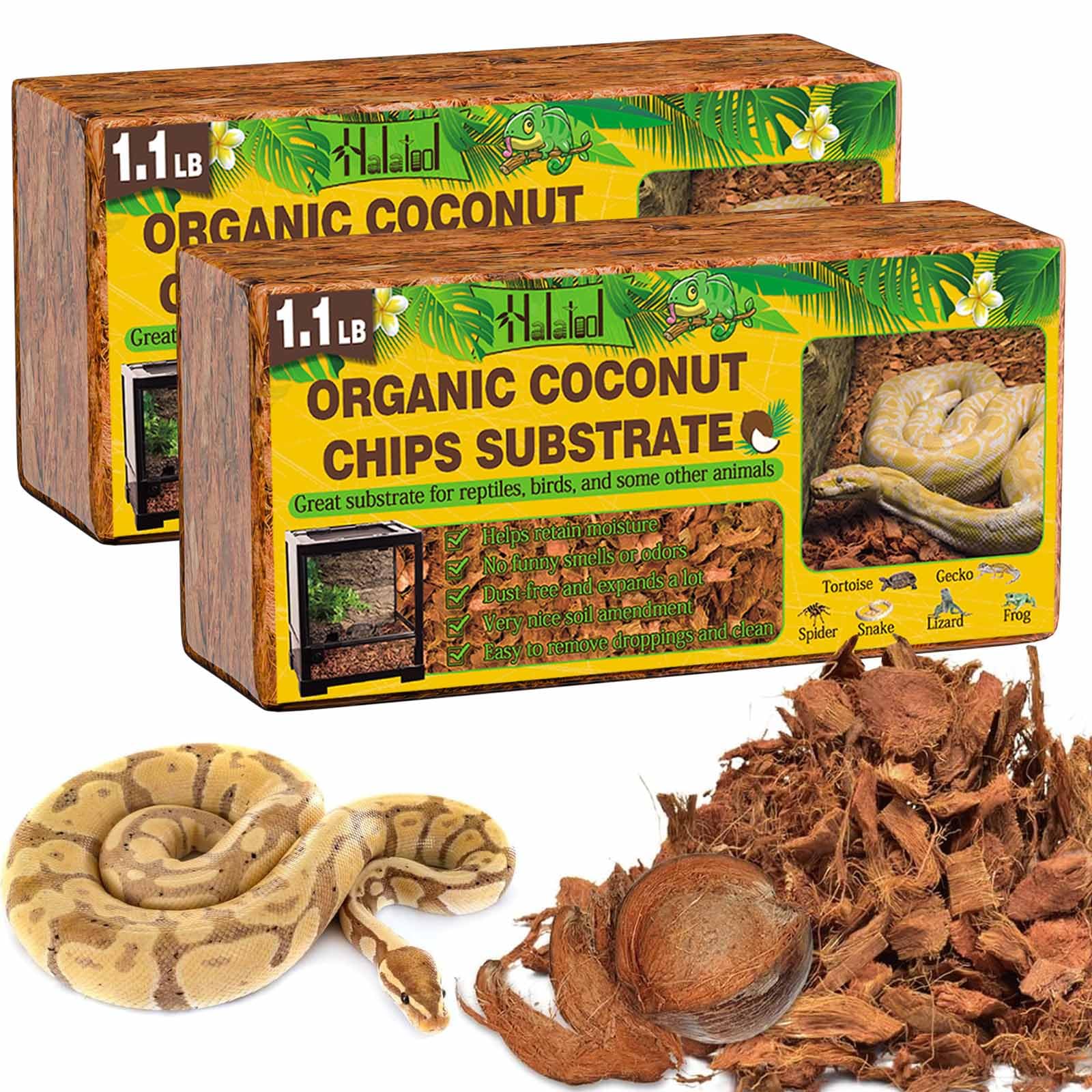
Halatool’s coconut husk chips offer a coarser alternative to fine fiber, with each chip measuring between 0.4 and 1.5 inches. This chunky texture provides excellent drainage and aeration, making it ideal for species that need a drier surface but with high moisture retention below. The vacuum-sealed bricks expand quickly with warm water and create minimal dust compared to peat-based substrates.
This substrate is highly effective at absorbing and neutralizing odors from reptile waste, keeping the enclosure smelling fresh for longer. The coarse structure also mimics the rocky, semi-arid terrain that leopard geckos naturally inhabit. However, because the chips are larger, they are not suitable for juvenile geckos as the pieces could be mistaken for food and cause intestinal blockage.
Some users note that the substrate dries out relatively quickly on the surface if the enclosure has strong ventilation, which is fine for arid species but may require more frequent misting if you rely on it for humidity. It is an excellent choice for adult leos in a well-ventilated tank, especially when combined with a humid hide.
Why it’s great
- High drainage prevents waterlogging at the bottom of the tank.
- Natural odor absorption keeps the enclosure fresher between cleanings.
- Chunky texture encourages natural foraging and digging behaviors.
Good to know
- Not safe for juvenile leopard geckos due to impaction risk.
- Surface layer dries out quickly in arid setups.
4. Halatool Coconut Fiber Substrate 2 Pack
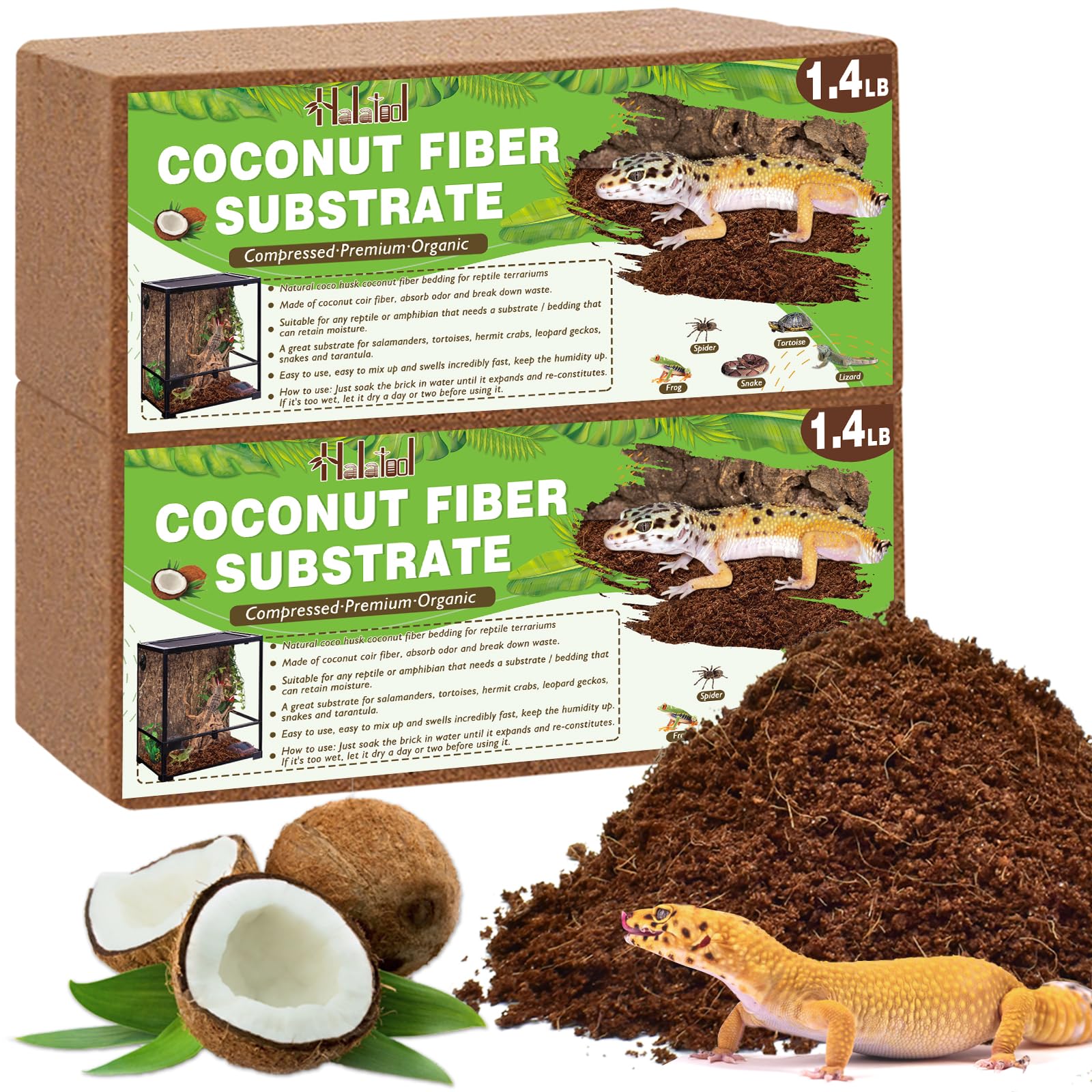
This Halatool 2-pack provides a very cost-effective entry into organic coconut fiber bedding for leopard geckos. Each brick expands to roughly three times its compressed size, easily filling a standard 20-gallon enclosure. The fiber is exceptionally clean, with no dirt or foreign substances, and the fine texture is safe for geckos of all ages, including hatchlings.
This substrate excels at humidity retention, maintaining levels between 60-80% when hydrated, which is fantastic for creating a humid hide or for species that need higher moisture. The fibrous structure also prevents the belly scale abrasions that can occur on rougher, sandy substrates. It is completely digestible if small amounts are accidentally consumed, which is the gold standard for leopard gecko safety.
Users advise that the bricks can be difficult to break apart by hand when dry, and the final texture may contain slightly larger chunks if not broken up thoroughly during hydration. It is recommended to blend or crumble the bricks while dry before adding water to achieve a uniform, fine-particle consistency perfect for burrowing.
Why it’s great
- One of the most budget-friendly loose substrate options on the market.
- Fine, digestible fibers eliminate impaction concerns for all age groups.
- Excellent moisture retention reduces the need for frequent misting.
Good to know
- Dry bricks are tough to break apart and require soaking.
- Can be too moist immediately after expansion; needs 1-2 days to dry.
5. KABASI Reptile Substrate Liner Carpet

The KABASI liner is a thickened EVA mat designed for owners who prioritize zero impaction risk and effortless cleaning. It is completely non-adhesive and non-abrasive, with a textured surface that provides traction without irritating your gecko’s belly or claws. This carpet is waterproof and does not absorb waste; you simply rinse it off under a tap or wipe it down for daily spot cleaning.
This liner is available in a generous 17.7×78.7 inch size that can be cut to fit nearly any tank shape. The EVA material absorbs heat from the tank’s under-tank heater, helping to maintain a consistent warm side temperature. It is a top choice for keepers who prefer a minimalist, highly sanitary enclosure that replicates a sterile hospital environment.
The downside is that this liner does not support natural digging or burrowing behaviors, which some owners consider enrichment. Reptiles with very sharp claws may eventually scratch the surface over months of use. It is perfect for quarantine tanks, hatchlings, or owners who value cleanliness above all else and are willing to provide enrichment in other forms.
Why it’s great
- Zero impaction risk; completely inert and cannot be ingested.
- Waterproof and easy to rinse clean in seconds.
- Absorbs and distributes heat from under-tank heaters effectively.
Good to know
- Does not allow for any natural digging or tunneling behavior.
- May show scratches from active reptiles over time.
6. SISIPAI LIFE Reptile Carpet Bedding

The SISIPAI LIFE carpet is a high-density fabric mat that is thicker than most standard reptile carpets, offering superior cushioning for your gecko’s joints. The seamless, textured surface provides excellent grip, preventing slips that can lead to joint injuries, a common concern for heavier adult leos. It is non-adhesive and certified as a food-grade material, making it completely safe for your pet to walk on.
This carpet is particularly good at absorbing heat from the tank and regulating humidity within the enclosure. The material is tear-resistant and reusable, and owners report that it significantly reduces the need for a separate heat mat in smaller tanks. Cleaning is straightforward: shake off debris, wipe with a damp towel, or rinse and hang dry.
The fabric nature of this mat means it can absorb liquids if not cleaned immediately, and loose threads may develop at cut edges over time. It is best used in a 20-40 gallon tank where its 18×72 inch size can be tailored with scissors. It strikes a balance between the safety of a solid mat and the comfort of a soft surface.
Why it’s great
- Thick, cushioned surface protects joints and prevents slipping.
- Food-grade, non-toxic material certified safe for reptiles.
- Holds heat well, potentially reducing the need for supplemental heating.
Good to know
- Fabric absorbs liquid waste if not spot-cleaned immediately.
- Cut edges can fray slightly after multiple washes.
7. RLIEBUUM Large Non-Stick Reptile Carpet
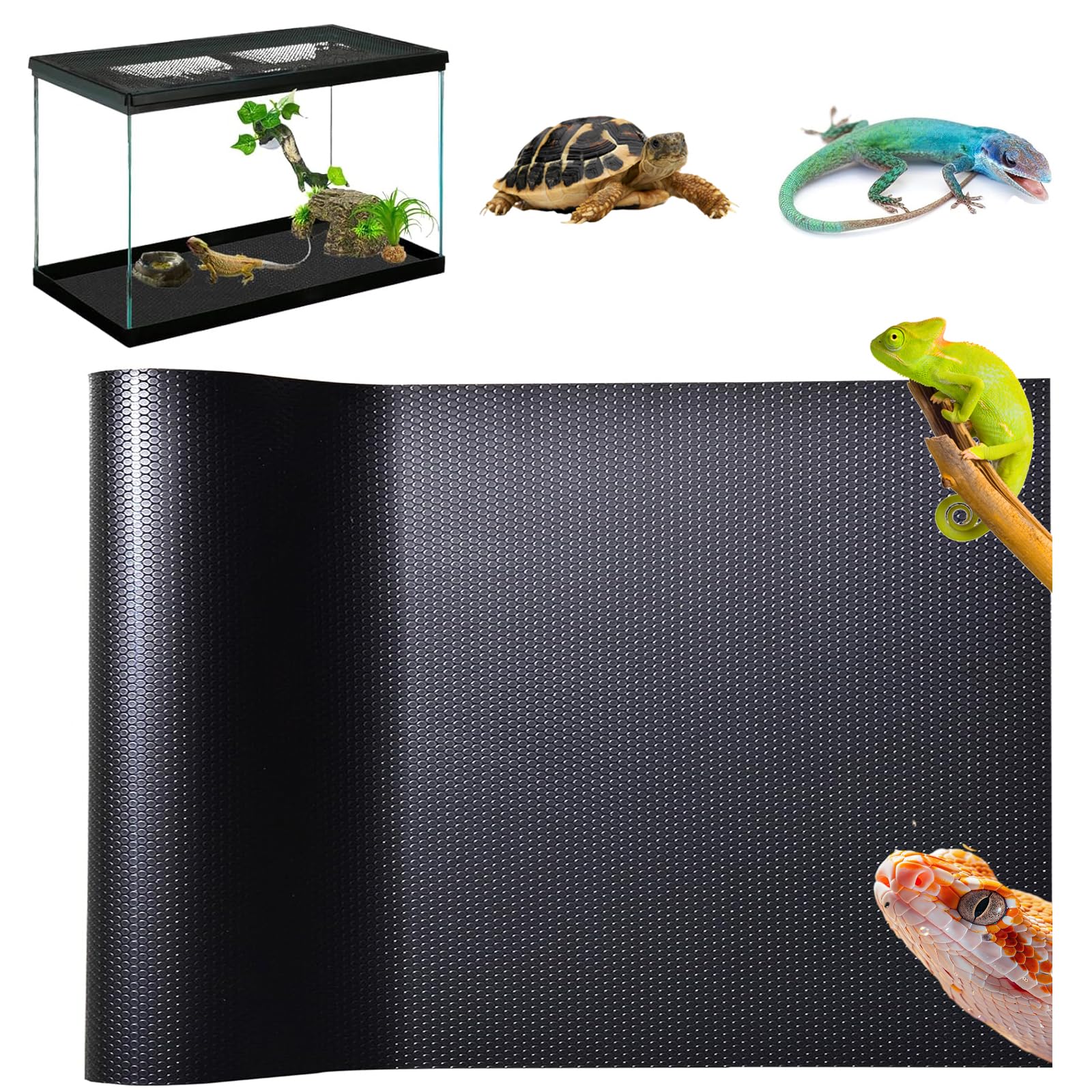
For keepers with extra-large or custom-built enclosures, the RLIEBUUM mat offers an enormous 18×118 inch sheet of waterproof, non-stick EVA material. This liner is designed to be cut precisely to any tank shape, making it a fantastic option for 75-gallon tanks or multi-level vivariums. The textured surface provides a secure grip for leopard geckos, preventing slips on smooth surfaces.
This mat is exceptionally durable and tear-resistant, withstanding the wear and tear of claws and heavy use. It is completely waterproof and does not absorb any waste, so a quick rinse is all it takes to return it to a pristine state. It is also reusable indefinitely, making it a very low-maintenance, long-term investment.
The primary limitation is that this mat cannot be used with heating pads directly underneath it, as the EVA is not resistant to high temperatures. It absorbs ambient heat but should be placed on top of a heat source, not directly over one. Additionally, it offers no enrichment value for digging, so you must provide other forms of stimulation for your gecko.
Why it’s great
- Massive size fits the largest custom reptile enclosures.
- Completely waterproof and impervious to liquid waste.
- Extremely durable and tear-resistant for long-term use.
Good to know
- Not safe to use directly over a heating pad; heat must be ambient.
- No substrate enrichment for natural digging instincts.
FAQ
Is sand safe to use as bedding for leopard geckos?
How often should I change my leopard gecko’s loose substrate?
Can I use paper towels as a permanent bedding?
What is the best bedding for a bioactive leopard gecko enclosure?
Do leopard geckos need a humid hide separate from the bedding?
Final Thoughts: The Verdict
For most users, the best bedding for leopard geckos winner is the Legigo 4 Pack Coconut Fiber Substrate because it combines safety, value, and natural enrichment in one package. If you want a self-cleaning, bioactive paradise, grab the Bio Dude Terra Sahara. And for the absolute safest, zero-risk, hyper-clean environment, nothing beats the KABASI Reptile Carpet.