
Our readers keep the lights on and the weekend projects moving. As an Amazon Associate, I earn from qualifying purchases.
Russian tortoises require a substrate that balances humidity retention with dry basking zones, and the wrong mix can lead to respiratory issues or shell rot. Choosing the right bedding means understanding the specific moisture and burrowing needs of this species.
I’m Rikta — the co-founder and writer behind FitlyFast. I’ve spent many hours analyzing the specifications of reptile substrates to help owners identify the most suitable options for their tortoise’s health and natural behavior.
After reviewing the market, I’ve compiled this guide to help you find the ideal bedding for russian tortoise that supports proper humidity, encourages natural digging, and is safe for long-term use.
How To Choose The Best Bedding For Russian Tortoise
Selecting the right bedding for a Russian tortoise isn’t just about aesthetics; it’s about replicating the semi-arid steppe environment they come from. The substrate must retain enough moisture in the lower layers to prevent dehydration, while staying dry on the surface to avoid shell rot and respiratory problems.
Moisture Retention vs. Surface Dryness
Russian tortoises need a humidity gradient. The top two inches should be dry, while the bottom four to six inches should retain dampness. Substrates like coconut fiber and cypress mulch hold moisture well without becoming waterlogged, allowing you to achieve this balance. Bone-dry sand or dusty aspen will not provide the necessary microclimate for healthy shedding and hydration.
Burrow Support and Safety
These tortoises are natural diggers and need a substrate that holds the shape of a burrow without collapsing. Coconut coir fibers and finely milled cypress mulch allow for stable tunnels. Avoid sharp wood chips or large pieces of bark that can cause injury. The substrate should also be free of additives, fertilizers, or artificial dyes.
Dust and Allergy Considerations
Excessive dust from substrates can irritate a tortoise’s respiratory tract. Look for materials labeled as low-dust or dust-free. Recycled paper bedding is an excellent choice for owners concerned about dust, as it is over 99% dust free, though it may not hold a burrow as well as coconut fiber or mulch.
Quick Comparison
On smaller screens, swipe sideways to see the full table.
| Model | Category | Best For | Key Spec | Amazon |
|---|---|---|---|---|
| Josh’s Frogs Super Cypress Mulch | Cypress Mulch | Burrow Stability | 10 Quarts; Double-Milled Fibers | Amazon |
| Repti360 Coconut Chip Substrate | Coconut Chip | Value & Volume | 10 lb Block; Expands to 72 Quarts | Amazon |
| REPTI ZOO Coconut Chip Substrate | Coconut Chip | Moisture Retention | 72 Quarts; 10.17 lb Block | Amazon |
| Zoo Med Eco Earth Coconut Fiber | Coconut Fiber | Natural Odor Control | 3-Brick Pack; Expands to 21-24 Liters | Amazon |
| Halatool Coconut Fiber Bricks | Coconut Fiber | Budget Starter Pack | 6 Bricks; Expands 8-10x by Weight | Amazon |
| BNOSDM Reptile Soil Substrate | Fine Soil | Incubation & Soft Soil | 1.32 Gallons; Fine-Strand Soil | Amazon |
| Fresh News Recycled Paper Bedding | Paper Bedding | Dust-Free Setup | 40 Liters; 99% Dust Free | Amazon |
In‑Depth Reviews
1. Josh’s Frogs Super Cypress Reptile Mulch

Josh’s Frogs Super Cypress Mulch is a premium mid-range option. It is made from 100% pure cypress with no added pine or cedar, which can be toxic to reptiles. The fibers are double-milled, creating a soft texture that supports your tortoise’s natural burrowing behavior without damaging its shell or skin.
This substrate excels at maintaining humidity, which is critical for Russian tortoises that require a moisture gradient for healthy shedding and hydration. The mulch is also mold-resistant, a common concern in humid environments. Reviews from tortoise owners specifically mention that their pets love digging in it and that the bedding stays clean without bugs.
While the bag size at 10 quarts is modest, the quality and safety of the material make it a top-tier choice. Some users note that larger pieces can be present, so sifting may be needed to prevent ingestion. For a single tortoise enclosure, this is a reliable, species-appropriate option.
Why it’s great
- Pure cypress with no toxic wood chips
- Approved for burrowing by tortoise owners
- Mold resistant for humidity control
Good to know
- Bag size is relatively small for deeper enclosures
- Some large pieces may need to be removed
2. Repti360 Coconut Chip Substrate
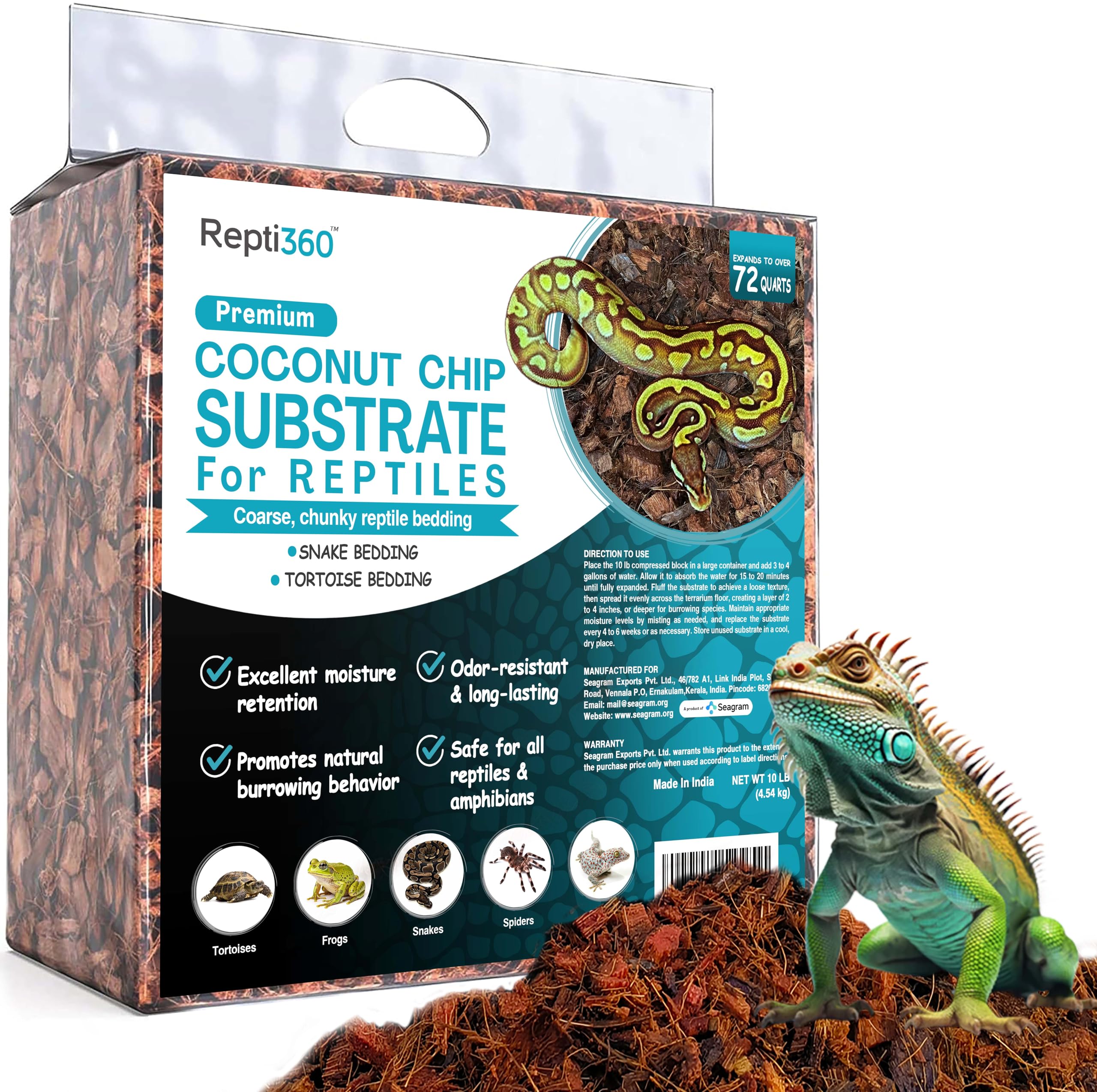
The Repti360 Coconut Chip Substrate offers exceptional value for large enclosures. This 10-pound compressed block expands to 72 quarts, enough to create a deep 3-4 inch layer in a large tortoise table. The coconut chips are larger than fine coir, which helps prevent substrate from sticking to food items.
Humidity retention is a strong suit here. The chips are made from natural coconut husk and are suitable for bioactive setups.
Some owners mention that the block can be difficult to break apart if you don’t need the full volume. It requires about 0.5 gallons of water per pound to expand properly. This is a mid-range product that punches above its price tier in terms of total volume and performance.
Why it’s great
- Massive 72-quart expansion for deep bedding
- Holds moisture for over a week without spraying
- Natural and safe for bioactive enclosures
Good to know
- Block requires significant water to expand
- Not the best for fine soil feeders
3. REPTI ZOO 72 Quart Coconut Chip Substrate

REPTI ZOO’s coconut chip substrate is another premium block option that prioritizes moisture retention. The 72-quart block expands to 2.5 cubic feet, providing ample material for deep substrate layers. The chip pieces are softer than standard bark, reducing the risk of injury to your tortoise’s plastron.
This product is designed to simulate a tropical microclimate, which can be beneficial if you need to boost humidity levels. The natural coconut shell material helps decompose odors, keeping the enclosure fresh. Users report that the substrate lasts longer than standard wood chips before needing replacement.
One downside is that the compressed block is extremely dense and can crack plastic storage totes if expanded inside them. Use a large metal or heavy-duty container for expansion. The quality is consistent, and the company has 16 years of experience in reptile equipment, adding confidence to the purchase.
Why it’s great
- Excellent humidity retention for tropical conditions
- Soft chip texture safe for tortoise shells
- Biodegradable and free from impurities
Good to know
- Block can crack plastic containers during expansion
- Requires careful water measurement for correct consistency
4. Zoo Med Eco Earth Compressed Coconut Fiber
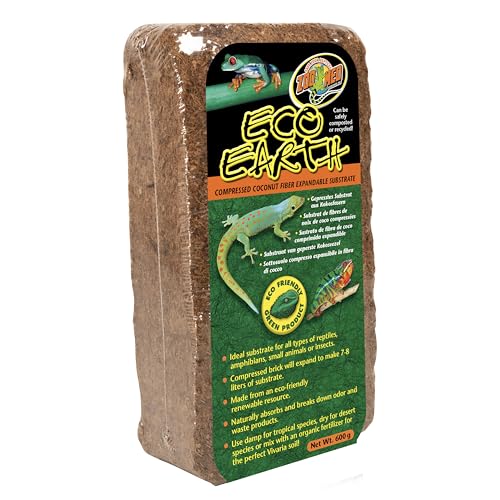
Zoo Med Eco Earth is a classic mid-range coconut fiber substrate. This 3-brick pack expands to 7-8 liters per brick, giving you a total of 21-24 liters of bedding. The texture is fine and fluffy, making it excellent for burrowing and natural odor absorption.
Owners of box turtles and tortoises praise this product for its ability to hold moisture when needed, while still being easy to re-moisturize. It has a natural earthy smell that many keepers prefer over the chemical scents of other bedding. The material is eco-friendly and renewable.
A few users note that the substrate can dry out quickly if the enclosure has low ambient humidity, requiring more frequent misting. However, it’s highly absorbent and expands to a surprising volume. This is a solid choice for keepers who want a trusted brand with proven results.
Why it’s great
- Naturally absorbs and breaks down odors
- Eco-friendly and renewable resource
- Fine texture supports deep burrowing
Good to know
- May dry out quickly in low-humidity rooms
- Price per brick is slightly higher than bulk options
5. Halatool 6 Pack Coconut Fiber Bricks
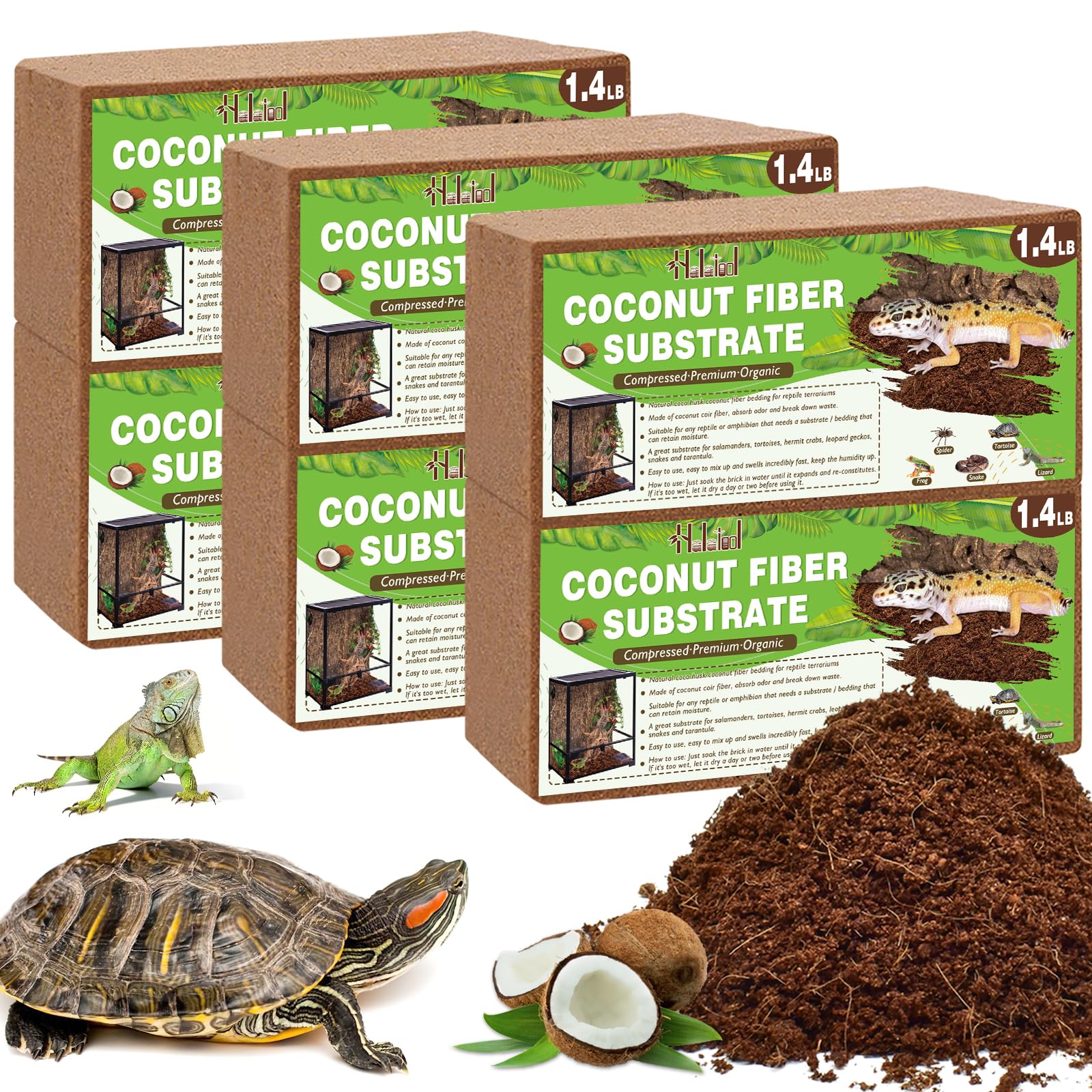
Halatool’s 6-pack of coconut fiber bricks is an entry-level option that offers significant expansion. Each 1.4-pound brick expands up to 8-10 times its weight in water, making this a cost-effective way to fill a large enclosure. The fibers are organic and free from dirt or foreign substances.
This substrate is very easy to use: just soak the brick in water, let it expand, and spread it. It’s suitable for a wide range of reptiles, and tortoise owners specifically confirm it works well for their habitats. The natural coconut coir helps minimize odor and break down waste.
The main drawback is that the bricks are extremely compressed, requiring significant hand effort to separate and fluff the fibers. Some users recommend cutting or breaking the bricks before soaking to speed up the process. Overall, this is a great budget-friendly way to get a large volume of natural bedding.
Why it’s great
- Excellent expansion per brick (8-10x water weight)
- Organic and free from impurities
- Good for multiple enclosures or large habitats
Good to know
- Compressed bricks are difficult to separate by hand
- May need a feeding dish to prevent ingestion
6. BNOSDM Reptile Soil Substrate
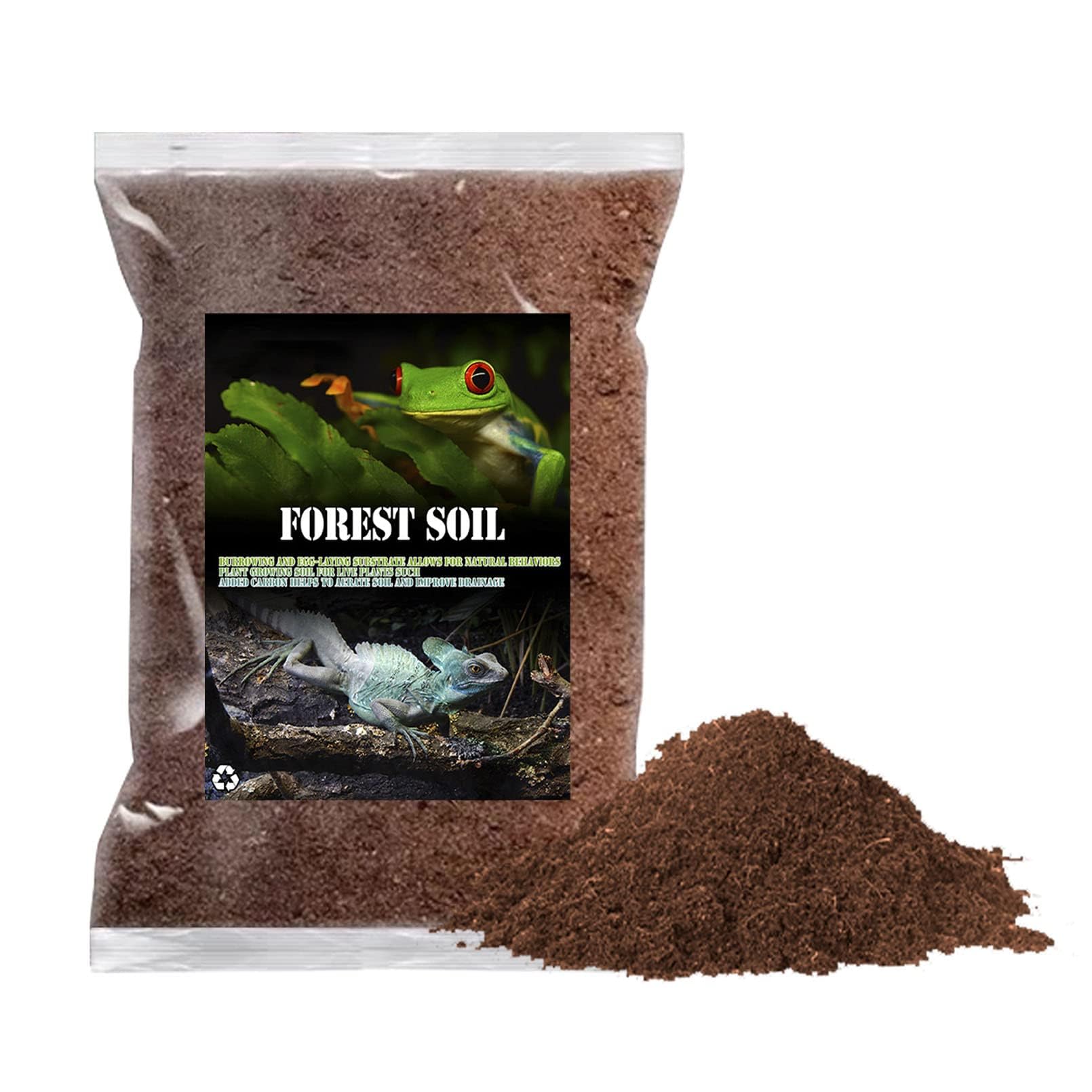
The BNOSDM Reptile Soil is a fine-strand substrate designed to mimic natural soil. It’s ideal for tortoises who like to dig, as the particles are small and easy to move. The soil also has good moisturizing properties, helping to control water loss during hibernation periods.
This substrate is versatile and can be used for incubating eggs or as a general bedding. Owners of various reptiles confirm it works well, though the bag size of 1.32 gallons is quite small for a full enclosure. You would likely need multiple bags to achieve a deep layer for a Russian tortoise.
Users consistently note the high quality of the soil, but many also comment that the bag is smaller than expected. It’s best used as a supplement to a larger volume of coconut coir or cypress mulch, or for small quarantine enclosures. The fine texture is great for soft-shelled tortoises.
Why it’s great
- Fine, dust-free soil perfect for digging
- Helps maintain humidity during hibernation
- Good for egg incubation and general use
Good to know
- Very small bag for the price
- Requires multiple bags for full enclosure
7. Fresh News Recycled Paper Bedding

Fresh News Recycled Paper Bedding is a budget-friendly option that prioritizes respiratory health. It’s made from 100% post-consumer recycled paper and is over 99% dust free, making it one of the safest choices for tortoises with sensitive lungs. The material is also non-allergenic.
While paper bedding doesn’t hold a burrow as well as coconut fiber or cypress mulch, it excels at odor control. The Ammonia Locker technology neutralizes smells effectively, which is useful if the enclosure is in a living area. Users report it lasts for days without needing a change.
One key consideration is that Russian tortoises are natural diggers who need a substrate that supports tunneling. Paper bedding is better as a top layer or for smaller species. For owners who prioritize a dust-free environment above all else, this is a valid, health-conscious choice.
Why it’s great
- Over 99% dust free for respiratory safety
- Excellent odor control with Ammonia Locker
- Eco-friendly and biodegradable
Good to know
- Does not hold burrow shape well
- Not ideal for deep digging behavior
FAQ
Can I use sand as bedding for my Russian tortoise?
How deep should the substrate be for a Russian tortoise?
Is coconut fiber better than cypress mulch for humidity?
Final Thoughts: The Verdict
For most users, the bedding for russian tortoise winner is the Josh’s Frogs Super Cypress Mulch because it offers the best balance of burrow stability, humidity retention, and safety with its pure cypress material. If you want maximum volume for a large enclosure, grab the Repti360 Coconut Chip Substrate. And for owners who prioritize a completely dust-free environment, nothing beats the Fresh News Recycled Paper Bedding.