
Our readers keep the lights on and the weekend projects moving. As an Amazon Associate, I earn from qualifying purchases.
Finding the wrong substrate can lead to scale rot, respiratory issues, or impaction that can shorten a snake’s life. The ideal bedding balances humidity retention, burrow support, and ease of spot-cleaning while eliminating toxic oils or dusty particulates that irritate a snake’s sensitive respiratory tract.
I’m Rikta — the co-founder and writer behind FitlyFast. I’ve spent hundreds of hours cross-referencing product specs, customer reviews, and herpetology community recommendations to isolate the exact material science that separates a smart substrate buy from a dangerous one.
Whether you own a ball python that needs 70% humidity or a corn snake that thrives on dry aspen burrows, this guide covers the top contenders to help you choose the right bedding for snakes.
How To Choose The Best Bedding For Snakes
Not all snake bedding is equal. The wrong choice can create a breeding ground for bacteria, cause dehydration, or physically harm your snake. Focus on three core factors before buying.
Humidity Retention & Your Snake Species
Ball pythons and green tree pythons need humidity levels between 60% and 80% for proper sheds. Coconut coir and cypress mulch excel here because they absorb water and release it slowly. Conversely, corn snakes and kingsnakes prefer arid conditions where aspen chips or paper-based bedding work better by staying dry on the surface.
Chip Size & Impaction Risk
Small hatchlings can ingest large, sharp chips while feeding, leading to intestinal blockages. Fine coconut fiber or ground aspen is safer for young snakes. Adults with strong digestive tracts can handle medium coconut chips or larger aspen chunks that offer better burrow structure.
Chemical Safety & Aromatic Oils
Cedar and pine shavings contain phenols that are toxic to reptiles and can cause liver damage or respiratory failure. Always choose aspen, coconut husk, or paper-based products labeled specifically for reptile use. Heat-treated substrates eliminate most bacteria and pests but should still be frozen if stored for long periods.
Quick Comparison
On smaller screens, swipe sideways to see the full table.
| Model | Category | Best For | Key Spec | Amazon |
|---|---|---|---|---|
| Zoo Med Eco Earth 3-Pack | Coconut Fiber | High humidity species | Expands to 7-8 liters per brick | Amazon |
| Josh’s Frogs BioBedding Tropical | Bioactive Mix | Bioactive vivariums | 10 quarts, charcoal-enriched | Amazon |
| Zoo Med Aspen Snake Bedding 3-Pack | Aspen Shavings | Burrowing snakes | 191% absorbency rating | Amazon |
| BabiChip Coconut Chip 6 Quart | Coco Husk Chip | Small snakes & hatchlings | Ready-to-use loose chips | Amazon |
| RediChip Medium Coconut Chip 12 Quart | Coco Husk Chip | Ball pythons & tropical setups | Medium chip size, 12 quart bag | Amazon |
| Legigo Coconut Fiber 4-Pack | Coconut Coir Brick | Budget humidity control | 1.4 lb per brick, expands 8x | Amazon |
| Zilla Snake & Lizard Litter 24 Quart | Aspen Chips | Dry-species spot cleaning | Heat-treated, hypo-allergenic chips | Amazon |
In‑Depth Reviews
1. Zoo Med Eco Earth Compressed Coconut Fiber Substrate 3-Pack
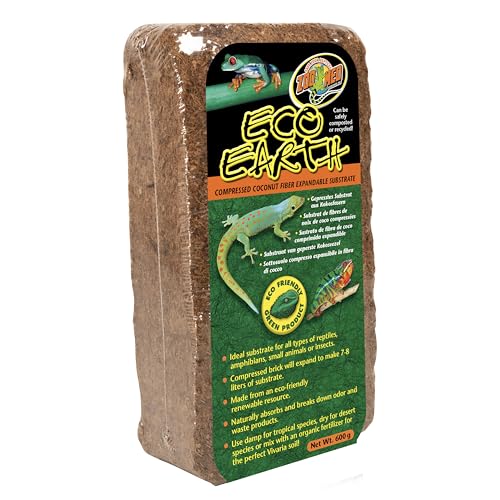
Each brick in this three-pack expands to 7-8 liters of fine coconut fiber, giving you roughly 21-24 liters of total substrate. The finely ground texture is ideal for species that require high humidity, such as ball pythons and Amazon tree boas, because the coir absorbs water rapidly and releases moisture slowly over several days.
The 3.99-pound total weight means you get substantial volume for multiple enclosure changes. Customers report that one pack fills a standard 40-gallon breeder tank with a 3-inch layer. The natural fiber breaks down odors rather than masking them, and the earthy scent fades quickly after initial hydration.
Some users note that the substrate dries faster than coconut chips or cypress mulch when used in screen-top enclosures. Frequent misting or mixing with sphagnum moss helps maintain consistent humidity for species that need tropical conditions. The volume-to-price ratio makes it one of the most economical premium choices on the market.
Why it’s great
- Expands significantly, offering generous coverage per brick
- Absorbs and neutralizes waste odors naturally
- Finely ground texture safe for hatchlings
Good to know
- Dries faster than chip-based substrates in open enclosures
- Requires hydration before use
2. Josh’s Frogs BioBedding Tropical Bioactive Substrate (10 Quarts)

This is not a disposable bedding — BioBedding is designed to support a self-sustaining bioactive cycle when paired with springtails and isopods. The 10-quart mix contains charcoal fines for filtration, decomposed coconut fiber, and a low organic content that prevents the substrate from rotting when kept moist. It supports live plant root systems that plastic replicas cannot match.
Users report that the substrate stays wet without becoming anaerobic, thanks to the charcoal inclusion that promotes drainage and aeration. The natural appearance closely mimics a tropical forest floor, which reduces stress for species that rely on camouflage.
One caution: because the substrate is bioactive-ready, it can introduce microfauna like mites if not sourced from a clean supplier. Customers recommend quarantining the bag and inspecting for hitchhikers before adding to a snake enclosure. The 2.61-kilogram weight feels dense compared to loose fiber, reflecting its heavy cast of soil and charcoal.
Why it’s great
- Eliminates full bedding changes when paired with cleanup crew
- Charcoal content prevents souring and odors
- Supports live plant growth naturally
Good to know
- Potential for hitchhiker organisms if not frozen first
- Heavier and denser than loose chip substrates
3. Zoo Med Aspen Snake Bedding (Pack of 3) 24 Quarts Each

This three-pack gives you a total of 72 quarts of heat-treated aspen shavings. Aspen is the standard recommendation for professional herpetoculturists because it contains none of the toxic aromatic oils found in cedar or pine. The shavings are long-strand and interlock, allowing snakes like corn snakes, king snakes, and sand boas to create stable tunnels that do not collapse.
The 191% absorbency rating means each shaving holds nearly double its weight in moisture, keeping the surface layer dry while trapping liquid waste underneath. This makes spot cleaning fast — you simply lift the soiled patch without replacing the entire enclosure. The three-bag case suits owners who maintain multiple snake racks or a large collection.
Customers who have used this product for years note that it produces virtually no dust, which is critical for species prone to respiratory infections. However, the shavings can stick to wet food items like pinkies, so feeding on a separate surface or using a dish is recommended for young snakes. Freezing each bag for 48 hours before use kills any potential parasite eggs.
Why it’s great
- Holds tunnels without collapsing for natural burrowing
- 191% moisture absorbency keeps surface dry
- No toxic oils or phenols
Good to know
- Shavings can stick to wet feeder items
- Large volume may be excessive for single-enclosure owners
4. BabiChip Coconut Chip Substrate 6 Quart
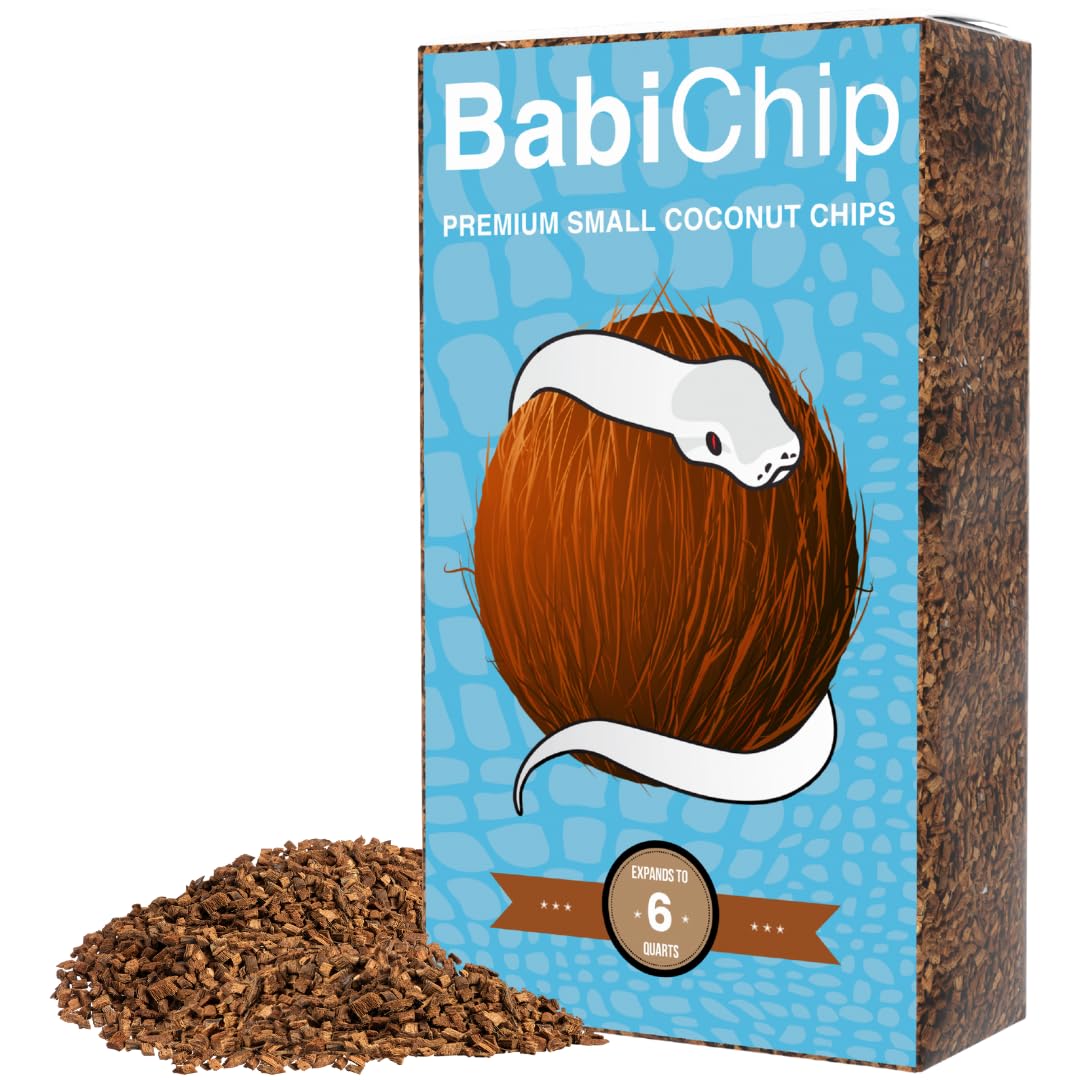
BabiChip uses small-sized coconut husk chips that are finer than standard medium chunks but coarser than powdered coir. This middle ground makes it particularly suitable for juvenile snakes or species with smaller mouths where impaction from large chips is a genuine risk. The chips come loose in the bag — no soaking or expansion needed — which saves preparation time.
The substrate has been sorted and refined in the United States to reduce dust and debris. Customers frequently mention that it smells fresh and does not develop mold even in humid tropical enclosures. The 6-quart size is compact but sufficient for a single 20-gallon tank with a 2-inch layer, making it a convenient trial size for owners switching from other substrates.
Some owners of larger corn snakes found the small chips too sharp for their snake’s ventral scales during heavy burrowing. For snakes over 4 feet, the BabiChip microchip version is a better fit. The 1-pound bag is light, so shipping costs remain low, but owners with multiple enclosures will need several bags.
Why it’s great
- Fine chip size reduces impaction risk in small snakes
- Ready to use directly from the bag
- Low dust and fresh natural smell
Good to know
- Chips may feel sharp for large, heavy-bodied snakes
- 6-quart volume goes quickly in larger tanks
5. RediChip Medium Coconut Chip Substrate 12 Quart

RediChip uses medium-sized coconut chips that bridge the gap between fine coir and large orchid bark chunks. The 12-quart bag is heavier than it looks at 2.68 pounds because the chips are dense and already rehydrated. Out of the bag, the substrate holds enough residual moisture to create an immediate 60-70% humidity level in a closed PVC enclosure.
Ball python owners report that this substrate maintains perfect shed cycles without scale rot — a common issue with overly wet coir. The chips are chunky enough to allow air circulation through the bedding, preventing anaerobic bacteria growth. Customers also mix it with orchid bark and sphagnum moss to create a custom blend for specific humidity targets.
One bag covers a 40-gallon breeder tank with about 2 inches of depth. For bioactive setups, RediChip can be layered over a drainage mesh and topped with leaf litter. However, several buyers note that the bag size feels smaller than advertised for the price, so owners of large enclosures may need to order multiple bags or mix with a bulk substrate.
Why it’s great
- Medium chips allow airflow while holding humidity
- Does not cause scale rot like finer coir
- Mixable with other substrates for custom blends
Good to know
- Bag volume is modest for the price point
- Some dust noted at the bottom of the bag
6. Legigo 4 Pack Coconut Fiber Substrate
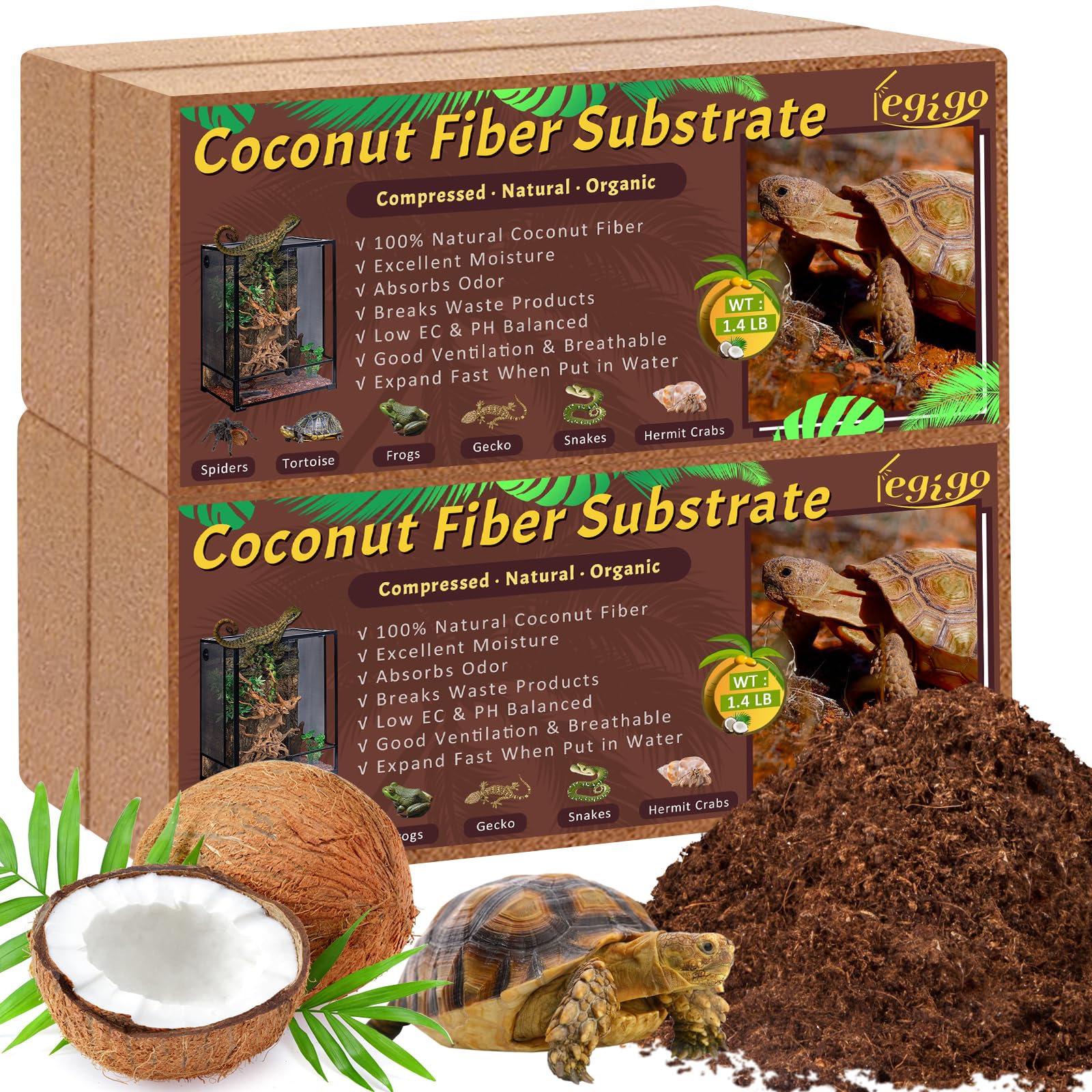
This four-pack of compressed coconut fiber bricks provides a cost-effective entry point for owners who need high volume on a tight budget. Each brick weighs 1.4 pounds and expands to roughly 8 times its dry size when hydrated, giving you a total potential volume comparable to larger premium bags. The coir is grade-A natural fiber with no synthetic additives or chemical binders.
Tortoise and snake owners alike praise the material for its odor decomposition — the fibers physically trap ammonia and break down waste compounds. The bricks store compactly and are easy to hydrate: submerge in warm water for 15 minutes, then break apart. For snakes that require borrowing, the expanded coir holds simple tunnels but lacks the structural rigidity of aspen or chips.
A few customers note the packaging does not include detailed instructions, so first-time users may need to research expansion ratios. The 5.7-pound total weight means you are getting substantial dry material, but one user found that four bricks only covered a 55-gallon tank to about 1.5 inches depth. Consider this a solid base layer that can be topped with bulkier substrates.
Why it’s great
- High expansion ratio provides excellent value per pound
- Natural coir decomposes waste odors effectively
- Compact storage before hydration
Good to know
- Lacks tunnel stability for heavy burrowers
- No printed instructions on the packaging
7. Zilla Reptile Terrarium Bedding Substrate Snake and Lizard Litter 24 Quart

Zilla’s snake and lizard litter is made from heat-treated aspen chips that are smaller and more uniform than traditional aspen shavings. The 24-quart bag weighs 9.85 pounds, giving you dense coverage. Because the chips are heat-treated, they are hypo-allergenic and free from the aromatic oils that cause respiratory distress in sensitive reptiles.
The primary advantage of this small-chip design is clean spot removal. Urine pools in tight clumps rather than soaking deep into the bedding, so you can scoop out soiled areas with minimal waste. Corn snake and Kenyan sand boa owners report that their snakes burrow actively without getting chips stuck in eyes or nostrils — a problem with larger, sharper substrates.
The bedding does not hold tunnels as well as longer-strand aspen shavings, so species that require extensive subterranean networks may prefer the Zoo Med aspen product. Additionally, the small chips can stick to moist feeder items, increasing ingestion risk for hatchlings. The light wood scent that some users notice typically dissipates after a day of airing out.
Why it’s great
- Heat-treated to eliminate bacteria and oils
- Low dust and easy spot cleaning
- Good for species prone to eye irritation
Good to know
- Does not hold burrow tunnels like longer shavings
- Can stick to wet food items
FAQ
Can I use cedar or pine shavings for my snake?
How often should I completely change the bedding in a snake enclosure?
What substrate is safest for a baby ball python prone to impaction?
Final Thoughts: The Verdict
For most users, the bedding for snakes winner is the Zoo Med Eco Earth 3-Pack because it offers exceptional humidity retention, safe fine-grade fiber, and a volume-to-cost ratio that works for both single enclosures and collections. If you run a fully bioactive vivarium, grab the Josh’s Frogs BioBedding Tropical for its self-sustaining ecosystem design. And for dry-habitat species that love to dig, nothing beats the Zoo Med Aspen Snake Bedding 3-Pack for tunnel stability and professional-grade absorbency.