
Our readers keep the lights on and the weekend projects moving. As an Amazon Associate, I earn from qualifying purchases.
Selecting the wrong substrate can turn a tortoise enclosure into a respiratory hazard or cause dangerous impaction. The market is flooded with wood shavings, soil blends, and coconut fibers, but only specific materials deliver the humidity, burrow stability, and dust-free texture your shelled companion needs to thrive.
I’m Rikta — the founder and writer behind FitlyFast. I analyze reptile substrate formulas, particle size distribution, and hydration ratios the way a hardware analyst benchmarks processors, translating raw material data into actionable bedding decisions.
Tortoises require a substrate that balances moisture retention for healthy shell growth with a texture that allows natural digging without caking or molding. I’ve sorted through dozens of formulations to pinpoint the best bedding for tortoise enclosures, focusing on what actually keeps your pet comfortable and your maintenance low.
How To Choose The Best Bedding For Tortoise
Selecting the correct substrate goes beyond grabbing the first bag you see. Tortoises have specific environmental needs that differ from snakes or bearded dragons. A subpar bedding choice can lead to respiratory irritation, shell rot, or digestive blockage. Here are three critical factors to evaluate before buying.
Particle Size and Texture
Particles that are too fine — like sand or powdered coir — can be inhaled or ingested, causing respiratory issues or impaction. Conversely, oversized chips create gaps that fail to retain humidity and make burrowing unstable. The sweet spot for most tortoise species is a chip size between 10 mm and 35 mm, large enough to pass safely if ingested but small enough to pack together for tunneling. The loose coconut chip substrates from BabiChip and ZeeDix fall within this optimal range, offering a fluffy structure that holds its shape when slightly damp.
Moisture Management and Humidity
Tortoises from tropical or Mediterranean climates depend on consistent humidity levels between 50% and 80% for proper shell development and shedding. Bedding that dries out within hours forces you to mist constantly, creating surface mold risks. Coconut husk chips and coir fiber naturally retain moisture without becoming waterlogged. Compressed bricks — like the Halatool 6-pack or the Legigo 10-pound block — expand dramatically and provide deep moisture reservoirs that last several days between sprayings. Look for substrates that can be re-moistened without clumping or turning into mud.
Odor Control and Material Purity
A healthy tortoise enclosure shouldn’t smell sour or ammoniated. High-quality coconut-based substrates encapsulate waste and slow the release of odor by absorbing liquids into the chip structure rather than letting them pool at the bottom. Materials free of chemical additives, dyes, and synthetic fertilizers are essential because tortoises often nibble on their surroundings. All the products reviewed here use 100% organic coconut husk or coir, but the processing quality varies — some compressed bricks contain gravel or dust, which requires sifting before first use.
Quick Comparison
On smaller screens, swipe sideways to see the full table.
| Model | Category | Best For | Key Spec | Amazon |
|---|---|---|---|---|
| BabiChip Coconut Chip | Loose Fill | Dust-sensitive setups | 12 quart bag, ready-to-use, dust-free sorted chips | Amazon |
| Repti360 Premium Chip | Compressed Brick | Large enclosures, bulk value | 10 lb block expands to 72 quarts | Amazon |
| Halatool 6-Pack Coco Fiber | Compressed Brick | Multi-tank setups, small enclosures | 6 bricks, each expands to ~7-8 quarts | Amazon |
| ZeeDix 10lb Coconut Chip | Compressed Brick | High-humidity terrariums | 10 lb block, chip size 10mm-35mm | Amazon |
| Legigo 10lb Natural Husk | Compressed Brick | Burrowing species | 10 lb block expands to 72 quarts, fluffy texture | Amazon |
| REPTI ZOO Coconut Chip | Compressed Brick | Established brand reliability | 10 lb block expands to 72 quarts, 2.5 cu ft | Amazon |
| Zoo Med Eco Earth 3-Pack | Compressed Fiber Brick | Small tanks, trial runs | 3 bricks, each expands to 7-8 liters | Amazon |
In‑Depth Reviews
1. BabiChip Coconut Chip Substrate

BabiChip arrives as a loose, ready-to-use substrate, eliminating the guesswork of hydration that compressed bricks demand. The small coconut chips are refined and sorted in the United States, removing the dust and debris common in unprocessed husk products. For tortoise owners who prioritize air quality inside the enclosure, this means zero fine particles floating around during setup or maintenance.
The chip size stays manageable — roughly 10 to 20 mm — which is ideal for smaller tortoise species or juveniles that need substrate they can dig into without the risk of impaction. Out of the bag, it works straight for arid species, but a light misting transforms it into a moisture-retaining base for tropical tortoises. Superb humidity retention has been verified by multiple keepers of ball pythons, and the same principle applies to tortoise enclosures that require consistent ambient moisture without sogginess.
Odor encapsulation is another strong suit. The chip surface area traps waste solids and slows the breakdown of ammonia compounds, keeping the tank smelling neutral between full cleanouts. The bag yields about 12 quarts — enough for a 40-gallon breeder tank at a 2-inch depth — and the texture supports burrow stability better than pure coir fiber, which tends to collapse when disturbed.
Why it’s great
- Zero dust content straight from the bag
- Chip size is small enough for juveniles but large enough to prevent impaction
- Absorbs odor without masking it
- Can be used dry or moistened without turning muddy
Good to know
- Some customers report sharp edges on certain chips, but this is rare
- Volume is limited to 12 quarts; larger enclosures may need multiple bags
2. Repti360 Premium Coconut Chip Substrate
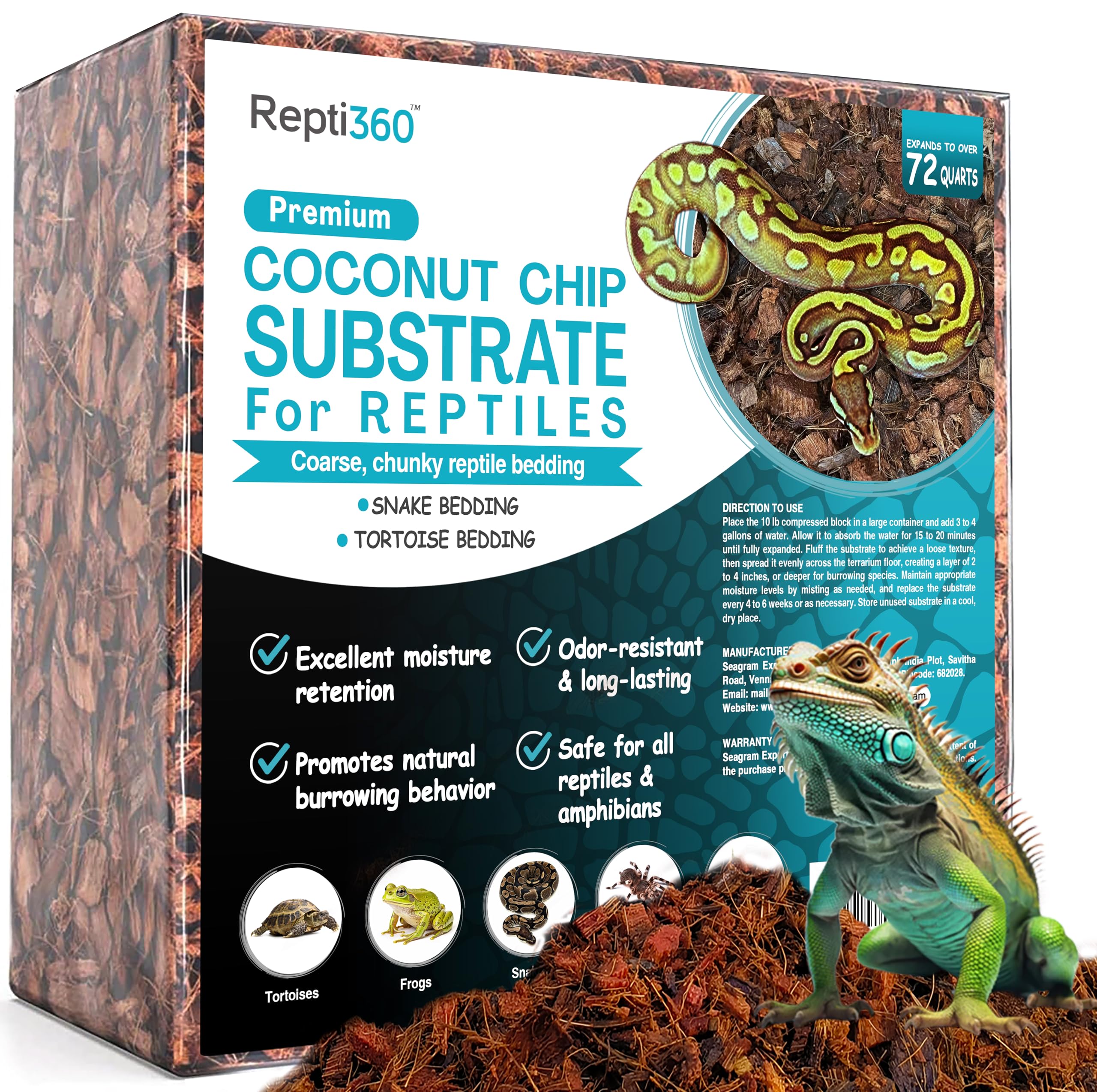
Repti360 delivers a massive 72 quarts of expanded substrate from a single 10-pound compressed block, making it one of the highest-value options for owners with multiple enclosures or large tortoise tables. The block comes inside a sturdy carton box rather than a flimsy polybag, which keeps the brick intact during shipping and prevents crumbling before you are ready to hydrate.
Hydration is straightforward — add half a gallon of water per pound and wait 15 to 20 minutes. The chips expand consistently and fluff up with minimal effort, creating a deep, airy layer that holds its structure for weeks. This makes it a smart pick for anyone who travels or cannot mist daily.
The neutral substrate smell avoids the musty odor that some compressed bricks develop during storage. Multiple user reviews confirm no mites or mold upon opening, and the chips break apart easily by pulling from the edge of the block rather than hacking at it with a knife. For breeders or hobbyists maintaining multiple tanks, the 72-quart yield significantly reduces per-use cost without sacrificing chip quality.
Why it’s great
- Highest expansion ratio in this lineup — one block fills a 4×2 foot tortoise table
- Carton packaging prevents damage during shipment
- Moisture holds for over a week between mistings
- Breaks apart easily without tools
Good to know
- Compressed block must be hydrated 20 minutes before use; not instant
- Slightly heavier shipping weight than loose-fill alternatives
3. Halatool 6 Pack Coconut Fiber Tortoise Substrate
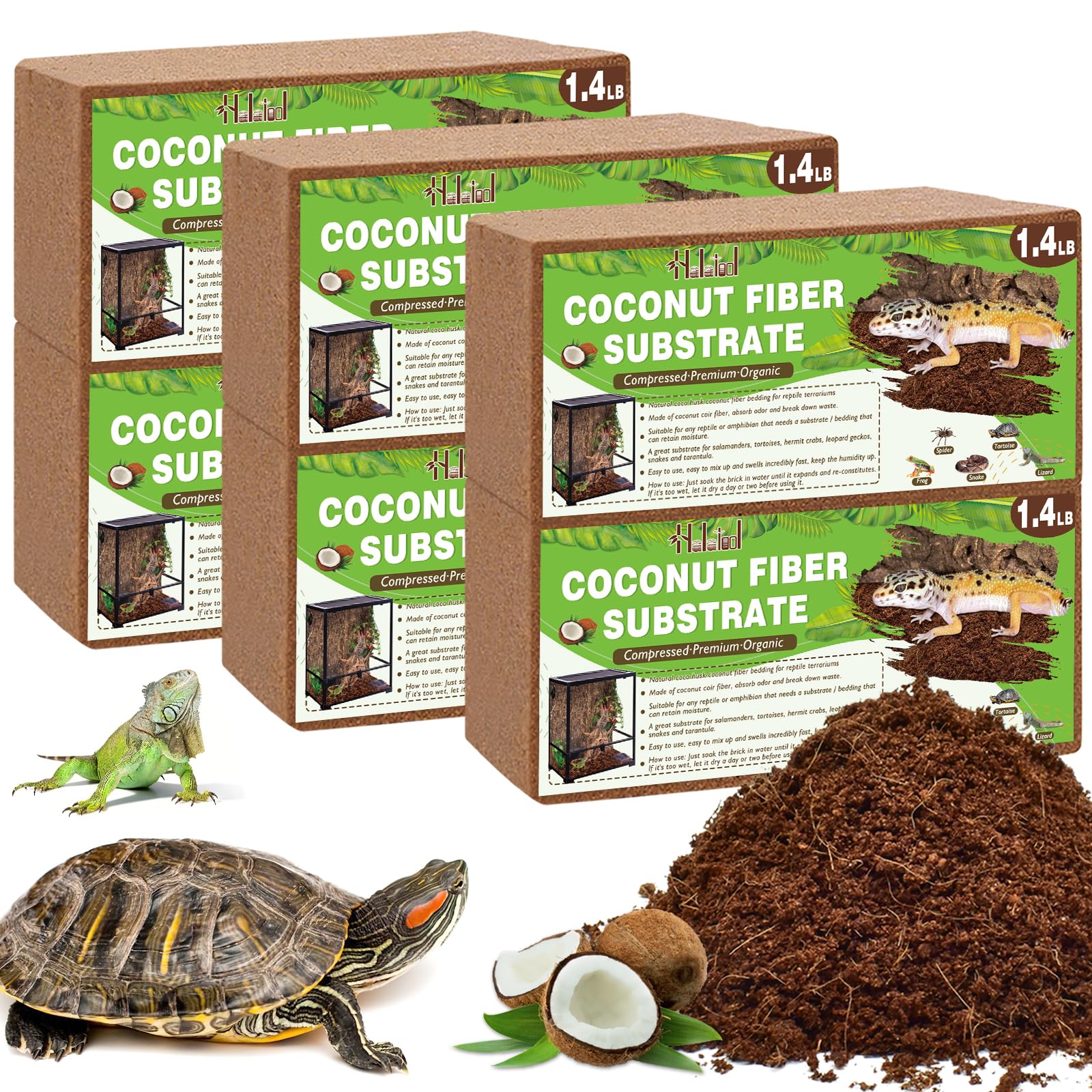
Halatool’s six-pack format offers unmatched flexibility for tortoise keepers who maintain separate enclosures for different species or life stages. Each individual brick weighs roughly 1.4 pounds and expands to about 7 to 8 quarts of loose fiber, allowing you to hydrate only what you need and store the rest dry. This prevents the common problem of rehydrating a massive block and having leftover substrate degrade before the next use.
The material is straight coco coir fiber, not husk chips, which means the texture is finer and more soil-like. This works exceptionally well for tortoise species that prefer to dig shallow burrows rather than deep tunnels, because the fiber holds a moist shape without packing into hard clumps. Sponge-like water absorption — up to eight to ten times its weight — makes this substrate excellent for tropical tortoises that need consistently damp conditions. The bricks soak up water quickly and expand in minutes, though breaking the fiber apart entirely requires some hand-mixing or blending pre-soaked chunks to save effort.
On the odor front, the fiber structure traps waste particles effectively, and the natural coir smell is mild and earthy. Users report the substrate remains fresh for weeks in properly maintained tanks. The biggest advantage here is the portion control: use one brick for a quarantine tank, two for a standard 40-gallon, and keep the remaining bricks sealed for later. This reduces waste and ensures every batch is as fresh as the first.
Why it’s great
- Six individually wrapped bricks allow portioned use
- Excellent water absorption — expands to 8x dry weight
- Fine fiber texture ideal for shallow burrowing species
- No dust or foreign substances in the bricks
Good to know
- Fiber can be difficult to separate fully; pre-soaking helps
- Not suitable for tortoises that need large chip structure for deep burrowing
4. ZeeDix 10LBS Coconut Husk Chip Substrate
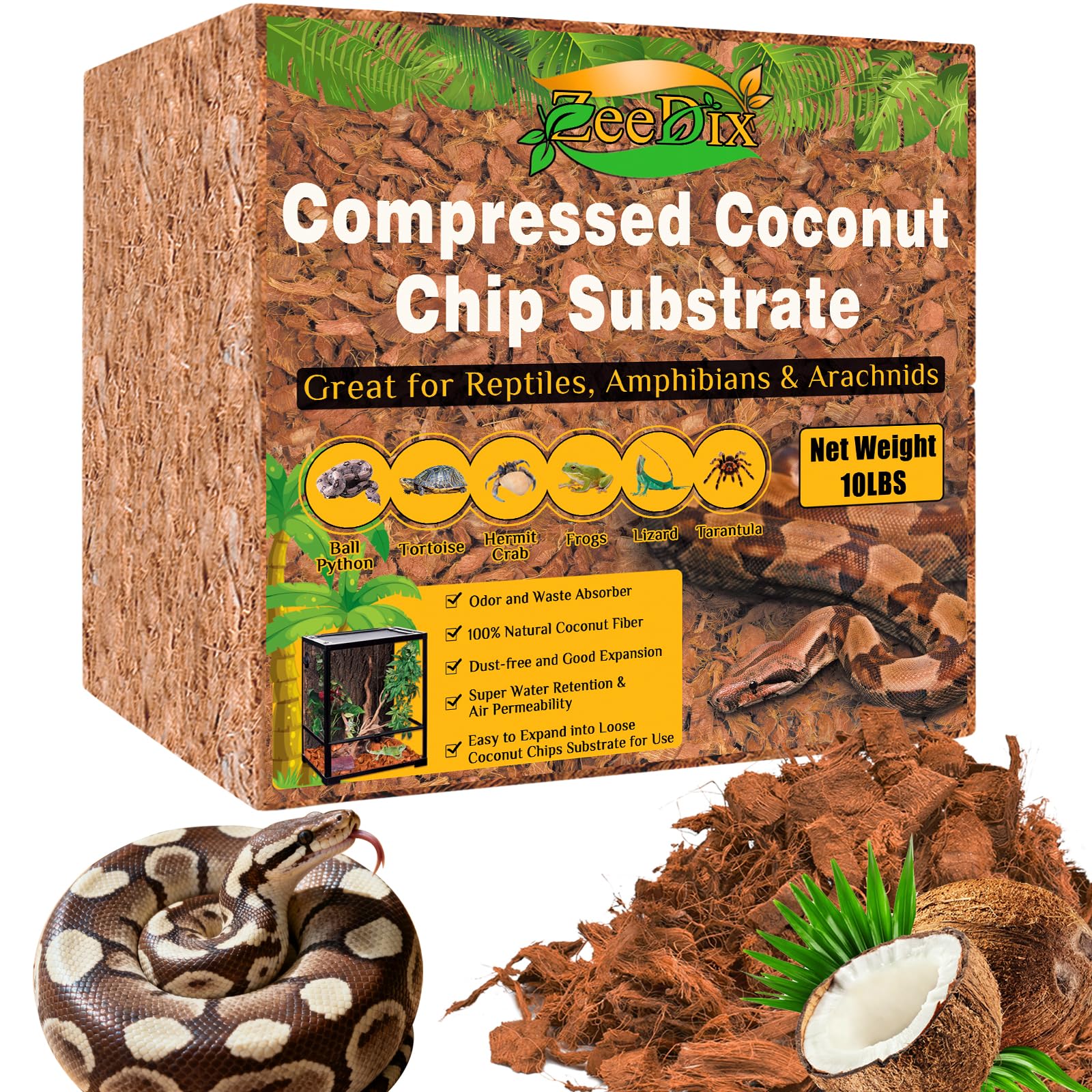
ZeeDix focuses on chip size precision — the 10 to 35 mm range hits the sweet spot for tortoises that need deep, stable burrows without the risk of respiratory irritation from fine dust. The compressed 10-pound brick swells into a high-volume loose substrate that fills a 4×2 foot enclosure to a depth of 3 to 4 inches with room to spare. Hydration is predictable: add water, let it soak, fluff, and spread.
The chips absorb liquids and waste quickly without becoming muddy, which is crucial for maintaining a clean microclimate inside the hide areas. Tortoises that spend hours buried will not emerge with damp plastrons because the chip structure wicks excess moisture away from direct contact. Users with ball pythons report complete sheds without sogginess — a strong indicator that humidity stays consistent rather than spiking and dropping.
One notable concern surfaced in customer reviews: a small number of users found gravel-like stones in the substrate after expansion. While this appears to be an occasional quality control issue rather than a systemic problem, it means you should spread and inspect the substrate by hand before introducing your tortoise. The overall value remains high for the volume delivered, and the dust-free claim holds true for the vast majority of batches.
Why it’s great
- Optimal 10-35mm chip size prevents impaction and supports burrowing
- Expands into a large volume from a compact brick
- Wicks moisture without turning muddy
- Controls odors effectively between full cleanouts
Good to know
- Occasional gravel pieces reported — inspect before first use
- Requires warm water and 15-20 minutes to fully expand
5. Legigo 10LBS Coconut Chip Substrate
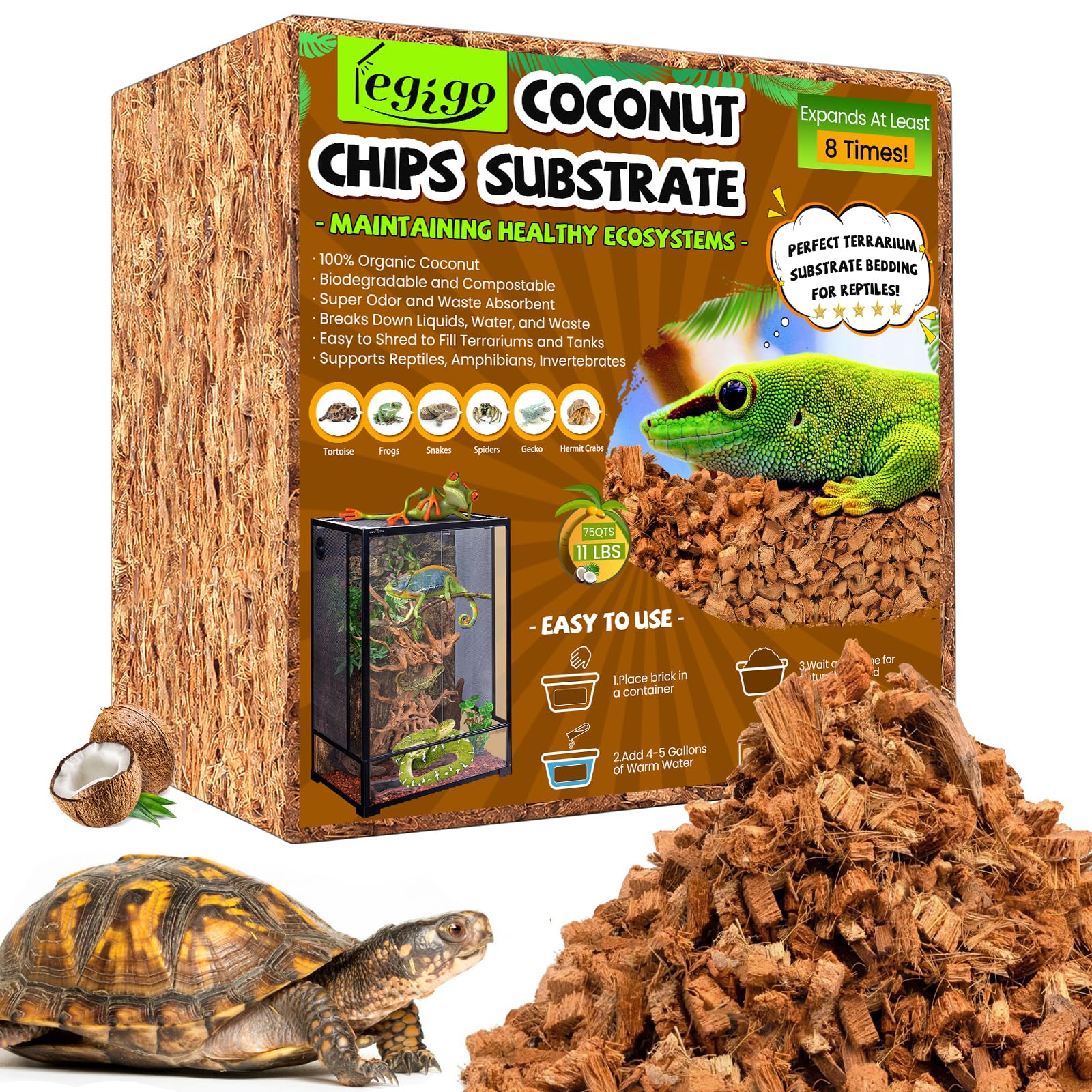
Legigo emphasizes a fluffy, natural texture that mimics the loose topsoil tortoises encounter in the wild. The coconut husk chips are selected for their softness — user reports specifically note that the material does not have the sharp edges found in some competing chip brands. This makes it a safer choice for tortoises that rub their faces against the substrate while burrowing or during feeding.
The 10-pound compressed block yields 72 quarts of bedding, matching Repti360 in raw output. Where Legigo differentiates itself is in how easily the block breaks apart. Hydrating with warm water and pulling from the edges produces an even, airy consistency without requiring aggressive mixing or chopping. Tortoises take to it immediately — multiple owners note that their animals began burrowing within minutes of being introduced to a fresh Legigo setup.
Odor absorption is built into the chip structure rather than relying on chemical additives. The natural husk material traps feces and urine breakdown byproducts, and dried-out sections can be rehydrated by misting without needing a full substrate change. The only caution comes from reptile keepers who use it for bearded dragons — the chip size can be accidentally ingested by lizards that hunt on loose substrate. For tortoises, which are more deliberate feeders, this risk is much lower, but it is worth monitoring during feeding time.
Why it’s great
- Soft chip edges reduce irritation risk during burrowing
- Breaks apart easily for quick setup
- Encourages natural digging behavior immediately
- Can be rehydrated without full replacement
Good to know
- Not ideal for species that accidentally ingest substrate while feeding
- Must be hydrated before use — not ready-to-go from the bag
6. REPTI ZOO 72 Quart Coconut Chip Substrate

REPTI ZOO brings 16 years of reptile industry experience to this 72-quart compressed block, and the consistency shows. The chips are derived from real coconut shells and processed to remove dirt, impurities, and excess fines. The black bag packaging includes clear hydration directions — 30 liters of water recommended for full expansion — and the resulting substrate fills a 2.5 cubic foot volume, enough for a 6×2 foot tortoise table at a 2-inch depth.
The texture strikes a balance between chip and fiber: thick enough to provide burrow structure, soft enough to prevent scale abrasion. Tortoises housed on REPTI ZOO substrate tend to dig and explore more actively compared to denser alternatives. Humidity retention is strong, creating a microclimate that stays warm and damp in the lower layers while the surface remains dry. This gradient is exactly what tortoises need to thermoregulate and maintain healthy keratin growth on their shells.
One practical detail — the compressed block is dense enough that splitting the tote during hydration is a reported risk. Use a container with reinforced walls and add water slowly to prevent the expanding substrate from cracking the plastic. Once expanded, the material lasts 4 to 6 weeks before needing replacement, and spot cleaning is straightforward because the chips do not stick together in wet clumps.
Why it’s great
- Long-established brand with consistent quality control
- Creates a humidity gradient — moist below, dry on top
- Encourages natural burrowing and exploring behavior
- Large volume suitable for big enclosures
Good to know
- Block expands forcefully — use a strong hydration container
- Some users prefer ready-to-use loose fill for convenience
7. Zoo Med Eco Earth Compressed Coconut Fiber 3-Pack
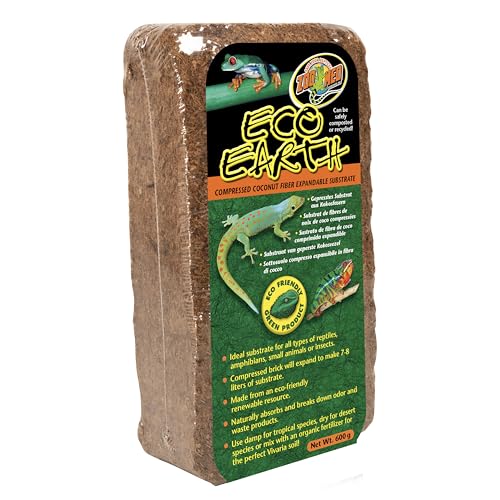
Zoo Med Eco Earth is the legacy option in this category — a brand that has defined reptile substrate expectations for years. The 3-pack format gives you three individual compressed fiber bricks, each expanding to 7 to 8 liters of loose coir. This is the smallest footprint in the lineup, making it ideal for quarantine tanks, hatchling enclosures, or keepers who want to test the substrate before committing to a bulk purchase.
The fiber texture is fine and soil-like, with a fresh, earthy smell that many reptile owners find preferable to the neutral or plastic-smelling alternatives. It retains moisture well — users report that a single misting keeps humidity up for a full day — though the material can dry out faster than chip-based substrates if the enclosure has low ambient humidity. Re-moisturizing is easy: just spray the surface and the fiber reabsorbs the water without beading or pooling.
For tortoises, the primary consideration is depth. Because each brick yields only 7 to 8 liters, achieving a deep burrowing layer requires using multiple bricks or supplementing with another substrate. The 3-pack covers a 20-gallon long tank to about 2 inches. The fine texture is excellent for species that prefer to nestle rather than tunnel, and the natural coconut fiber breaks down odor without artificial fragrances. Price per volume runs higher than the bulk compressed blocks, but the convenience and brand reliability justify the cost for smaller setups.
Why it’s great
- Trusted brand with consistent quality across batches
- Pleasant natural coir smell without chemical additives
- Expands quickly and reabsorbs water easily
- Perfect for small tanks or temporary enclosures
Good to know
- Higher cost per quart compared to bulk compressed blocks
- Fine fiber may not hold deep burrow structure for larger tortoises
- Dries faster than chip-based substrates in open enclosures
FAQ
How often should I replace tortoise bedding?
Can I mix different coconut substrates together?
Is coconut substrate safe for baby tortoises?
How do I know if the bedding has too much moisture?
Final Thoughts: The Verdict
For most users, the bedding for tortoise winner is the BabiChip Coconut Chip Substrate because it combines dust-free sorted chips with ready-to-use convenience and the precise particle size that prevents impaction while supporting burrowing. If you want the best bulk value for a large enclosure or multiple tanks, grab the Repti360 Premium Coconut Chip Substrate. And for a trial-friendly option that lets you portion out exactly what you need, nothing beats the Halatool 6-Pack Coco Fiber Bricks.