
Our readers keep the lights on and the weekend projects moving. As an Amazon Associate, I earn from qualifying purchases.
Nothing ruins a backyard afternoon faster than the low buzz of a threat overhead. Wasp nests appearing under your eaves, ground bees colonizing the lawn, or hornets building in the grill cover—the tension is immediate. You need fast-acting, reliable chemistry that eliminates the problem without risking a painful encounter. This guide focuses on the most effective aerosol sprays, foams, and residual dusts designed for contact kill and nest control, tested against common stinging insect scenarios.
I’m Rikta — the co-founder and writer behind FitlyFast. For this guide, I’ve spent weeks analyzing customer feedback, active ingredient efficacy, spray distance, and application safety across the leading products to identify which formulations actually deliver on their claims against wasps, hornets, and ground-nesting bees.
Whether you’re dealing with a paper wasp nest on your patio or an underground yellow jacket colony, choosing the right formulation is critical for safety and effectiveness. After comparing foam sprays, long-range aerosols, and injectable dusts, we have assembled a definitive list of the best bee and wasp killer options to suit every infestation type.
How To Choose The Best Bee And Wasp Killer
Selecting the right product hinges on matching the infestation type—aerial nest vs. ground colony—with the correct delivery method and active ingredient. A spray for a hanging paper wasp nest will fail you against yellow jackets nesting in a dirt mound. Understanding reach, kill mechanism, and residual action will prevent wasted money and dangerous return trips.
Spray Distance & Accuracy
An aerial wasp nest at 15 to 20 feet requires a product that can deliver a high-pressure stream without drifting back at you. Look for labels specifying “jet stream up to 20 feet” or “foaming coverage.” Products with a narrow cone reduce overspray on siding, wiring, and plastics. For nests tucked into soffits or wall voids, a foam formulation that expands and clings to vertical surfaces is superior to a liquid stream that drips out.
Active Ingredient Chemistry
Pyrethroid-based sprays (lambda-cyhalothrin, cyfluthrin) offer near-instant knockdown through nervous system overstimulation. They work fast but can degrade quickly in sunlight. Plant-based formulas with essential oils offer lower toxicity for pet-safe zones but lack the instant kill speed of synthetics. Dust products using cyfluthrin or permethrin provide residual control for ground nests—workers pick up the particles and carry them back to the queen, collapsing the colony within days. Fipronil-based foam (used in professional termiticides) offers a dual chemical punch that also penetrates deep into voids.
Foam vs. Aerosol vs. Dust
The delivery format dictates where the product works. Aerosol sprays with wide streams are best for exposed nests you can see and target. Foaming sprays (like those from Spectracide or Control Solutions) are designed for wall voids and cracks—the foam expands to fill the cavity and coats the insects rather than draining away. Dusts, such as Atticus Tirade, require a separate duster tool but provide weeks of residual activity, making them ideal for treating ground bee holes and yellow jacket mounds where you cannot directly hit the nest. Dusts also stay effective in dry conditions where sprays wash away.
Safety Considerations & Residual Effects
All bee and wasp killers are insecticides. Check the label for “plastic-safe,” “dielectric safe,” or “safe for use on most wood surfaces” to avoid damaging your home’s siding, painted wood, or electrical equipment. For pet owners, plant-based options or dusts with low mammalian toxicity allow application near areas your animals explore. Never apply insecticides directly to blooming flowers to avoid killing beneficial pollinators. Apply at dusk or early morning when wasps are less active and the nest is fully populated—this maximizes contact kill and reduces stinging risk.
Quick Comparison
On smaller screens, swipe sideways to see the full table.
| Model | Category | Best For | Key Spec | Amazon |
|---|---|---|---|---|
| CRC 14010 Wasp & Hornet Killer Plus | Aerosol Spray | Aerial nests at height | 20 ft spray reach | Amazon |
| Spectracide Wasp & Hornet Killer (3-Pack) | Foaming Aerosol | Nests in siding & soffits | 27 ft spray distance | Amazon |
| Atticus Tirade 1% Cyfluthrin Dust | Residual Dust | Ground bees & yellow jacket mounds | 1.25 lb powder (20 oz) | Amazon |
| Bonide Spider & Ground Bee Killer | Dust / Powder | Ground bee holes & nests | 10 oz each (2-pack) | Amazon |
| Control Solutions Fuse Foam | Expanding Foam | Wall voids & deep crevices | Fipronil + Imidacloprid | Amazon |
| STEM Kills Wasps, Hornets & Yellow Jackets | Plant-Based Aerosol | Pet-safe & sensitive areas | 10 fl oz botanical spray | Amazon |
| Spectracide Wasp & Hornet Killer 2-Pack | Budget Foam Aerosol | Small aerial nests on a budget | 40 oz total volume | Amazon |
In-Depth Reviews
1. CRC 14010 Wasp and Hornet Killer Plus
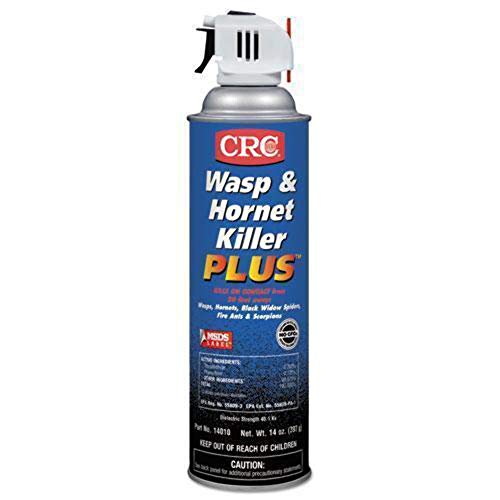
The CRC Wasp and Hornet Killer Plus is a benchmark product in this category. Its aerosol delivers a dense, accurate stream reaching over 20 feet, which puts even high eaves and ridge vents within striking distance without a ladder. The formula boasts a dielectric strength of 47,600 volts, making it safe for electrical applications—critical for utility workers and homeowners treating nests near exterior junction boxes or outdoor lights. Users consistently report instant knockdown on contact, with wasps dropping within seconds of exposure.
The ergonomic trigger is easy to control even with work gloves, and the included extension tube doubles as a locking mechanism to prevent accidental discharge in storage. Beyond wasps and hornets, the label covers black widow spiders, fire ants, and scorpions, adding versatility if you have mixed pest issues. Many long-term users have relied on this brand for decades, reporting successful elimination of underground yellow jacket nests as well as aerial paper wasp problems.
A small but notable caveat: the spray nozzle can come loose during use on some units, requiring two-handed operation to maintain stream accuracy. The chemical is potent—avoid inhalation and skin contact during application. It leaves no greasy residue on plastic surfaces, but direct overspray on painted wood should be wiped quickly. For the combination of extreme reach, electrical safety, and instant kill, this remains a top-tier choice for serious infestations.
Why it’s great
- Excellent 20-ft stream distance for high nests
- Instant knockdown on contact
- High dielectric strength safe around electrical components
- Effective against multiple stinging insects
Good to know
- Nozzle may detach under pressure on some units
- Potent formula requires caution during spray
- Pricier per ounce than basic consumer brands
2. Spectracide Wasp and Hornet Killer Aerosol (3-Pack)

This Spectracide 3-pack is the go-to when you have multiple nests or want to keep a can in the garage, shed, and house. The spray delivers an impressive 27-foot reach, which beats most competitors in raw distance. The foaming formula is the standout feature—it coats the nest in a thick, clinging foam that soaks through the paper layers to reach the brood inside, preventing any survivors from escaping and rebuilding.
Users report immediate effectiveness when spraying nests from the ground level, watching wasps drop as soon as the foam makes contact. The 27-foot range allows you to treat nests under second-story eaves or high gables without a ladder, significantly reducing fall risk during treatment. The three-pack provides excellent coverage for seasonal maintenance. Many homeowners treat their property twice a season with a single pack, making it a practical mid-range investment.
Some customers note that while the foam is excellent for paper wasp nests, it is less effective on yellow jackets that nest in underground cavities—the foam simply coats the entrance rather than penetrating the colony. Additionally, the foam can appear messy on siding if oversprayed, leaving a white residue that may require rinsing. For standard aerial nests at distance, however, this is a powerful, high-value option that gets the job done with minimal fuss.
Why it’s great
- Industry-leading 27-ft spray range
- Foam clings to nests for thorough saturation
- Excellent value per ounce in a 3-pack
- Safe for general home use
Good to know
- Foam can leave residue on siding
- Not ideal for ground bee colonies
- Requires shaking before use
3. Atticus Tirade 1% Cyfluthrin Dust Insecticide
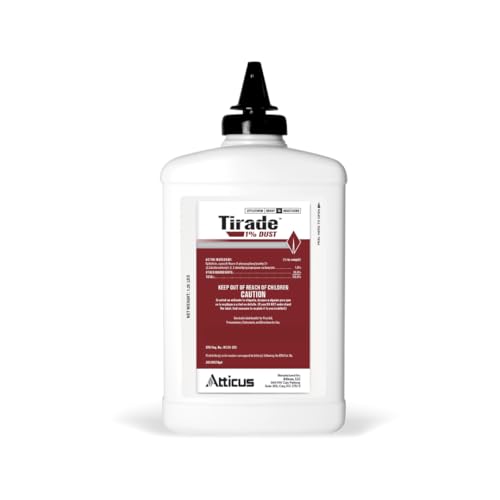
The Atticus Tirade dust represents a completely different strategy from contact sprays. It is a 1% cyfluthrin powder designed for residual control, especially effective against yellow jackets, hornets, and ground-nesting bees. Instead of direct knockdown, the dust works mechanically—stinging insects pick up particles on their exoskeleton as they crawl through the treated area, carrying the toxin back to the nest and killing the colony over 24 to 72 hours. This method is essential for yellow jacket nests inside a dead tree or wall void where direct spray application is impossible.
This product is ready-to-use but requires a separate hand duster or puffer to apply effectively. Users report near-total elimination of yellow jacket colonies after a single application at dusk, with no wasps returning for weeks. The residual effect continues as long as the dust stays dry, making it a superior option in hidden or hard-to-reach locations. The formula is also low-odor and non-staining, so it works well in attics, crawlspaces, and structural crevices.
The major limitation is that it is not a quick knockdown spray—you will not see wasps drop mid-flight. This dust also cannot be used on windy days or in wet conditions where it will wash away. A separate duster tool is an added cost. For homeowners fighting entrenched ground bee or yellow jacket colonies that sprays cannot reach, however, this is the most effective long-term solution available, providing weeks of prevention after a single treatment.
Why it’s great
- Kills entire colony via tracked dust particles
- Weeks of residual control
- Ideal for wall voids and ground nests
- Low odor and non-staining
Good to know
- Requires a separate dust applicator
- Not a quick contact kill spray
- Cannot be used in wet or windy conditions
- Not available in all states (AK, CA, HI, PR, VT)
4. Bonide 363 Spider and Ground Bee Killer (2-Pack)

The Bonide 363 is purpose-built for ground bees and spiders, making it a niche specialist product. It comes as a 0.25% permethrin dust in two 10-ounce bottles, each equipped with a snorkel tube applicator that allows precise injection of powder directly into ground bee holes, cracks, and wall voids. This directional control is critical for treating nests beneath porches, along foundations, and in garden soil where ground bees dig colonies.
Users with ground bee infestations report that a single application of this dust—often using only half a bottle—eliminates an active colony within a day. The powder stays where applied and does not blow away easily in light breezes. This is especially valuable if you or someone on the property has allergies to bee stings and cannot risk close approach. The 2-pack ensures you keep a back-up or can treat a large yard in one session.
On the downside, this product is labeled specifically for spiders and ground bees—not for aerial hornets or yellow jackets. The dust format also requires close-range application (you must get within a foot of the hole), which may be uncomfortable for some users. The dust can become clumpy if exposed to moisture. For ground bee control specifically, this is a focused and highly effective tool that outperforms general-purpose sprays.
Why it’s great
- Perfect for ground bee holes and cracks
- Snorkel tube directs dust precisely
- One application eliminates a colony
- Good 2-pack value
Good to know
- Not effective on aerial wasps or hornets
- Requires close-range application
- Dust clumps if moisture gets in
5. Control Solutions Fuse Foam Ready-to-Use Termiticide/Insecticide

The Control Solutions Fuse Foam is a professional-grade product normally used by exterminators for termite and structural pest control, but its foaming action and dual active ingredients (Fipronil 0.005% and Imidacloprid 0.02%) make it exceptionally effective against wasps, hornets, and bees nesting in wall voids, foam insulation, and deep structural cavities. The expanding foam fills the entire space, coating every surface the insects crawl over, and provides long-term residual protection.
The foam delivery is a major advantage over liquid sprays that drain out of voids before reaching the nest. It expands up to 30 times its liquid volume, ensuring deep penetration. The dual-mode action—Fipronil disrupts the central nervous system while Imidacloprid acts on nicotinic acetylcholine receptors—provides a synergistic kill that is fast and comprehensive. This is the choice for serious infestations inside the structure of the home where conventional sprays fail.
This product has a significant limitation: it is not sold to residents of Alaska, California, Connecticut, or Puerto Rico due to registration restrictions. It is also overkill for a simple exposed nest on a porch light—save it for true structural infestations. The can is small relative to its price, reflecting its professional concentration. For homeowners facing recurrent wasp entries through siding gaps or soffits, this foam is the permanent solution that standard aerosols cannot deliver.
Why it’s great
- Expanding foam fills structural voids
- Dual active ingredients for fast kill
- Long-term residual protection
- Professional-grade formulation
Good to know
- Not available in AK, CA, CT, PR
- Overkill for surface-level nest treatment
- Small can size for the price
- Requires reading full label for application
6. STEM Kills Wasps, Hornets and Yellow Jackets

STEM is a plant-based wasp killer that relies on botanical extracts rather than synthetic pyrethroids, making it a smart choice for households with pets, kids, or close proximity to vegetable gardens. The active ingredients are derived from botanical sources, and the spray has a fresh, non-chemical scent that lacks the harsh odor typical of conventional sprays. Entomologist-tested, the formula still achieves quick knockdown of wasps, hornets, and yellow jackets for small to moderate nests.
The spray reaches a practical 5 to 15 feet after shaking the can and removing the plastic tab, which is sufficient for nests on porch ceilings, under eaves at one-story height, or on fence posts. Users report that wasps hit with the spray drop within a couple of minutes and do not recover. It leaves a slightly oily residue that continues to deter pests for up to a month on treated surfaces. The botanical scent is mild and tolerable, unlike the strong chemical notes of competitors.
The downsides are that the oil-based spray can stain or leave a greasy film on surfaces like decking, vinyl siding, and camera lenses if not wiped promptly. The 10-ounce can is smaller than many competitor sprays, so it is suitable for spot treatments but not for large, heavy infestations across a big property. It also requires thorough shaking and tab removal before first use—some users missed this step and reported poor performance. For a safer, family-friendly option that still delivers reliable results on moderate nests, STEM is a clear winner.
Why it’s great
- Plant-based formula safer around pets and kids
- Pleasant mild scent, no harsh fumes
- Quick knockdown on contact
- Residual deterrence up to one month
Good to know
- Oily residue can stain surfaces
- Small can size, limited for large areas
- Requires thorough shaking before use
7. Spectracide Wasp & Hornet Killer 2-Pack
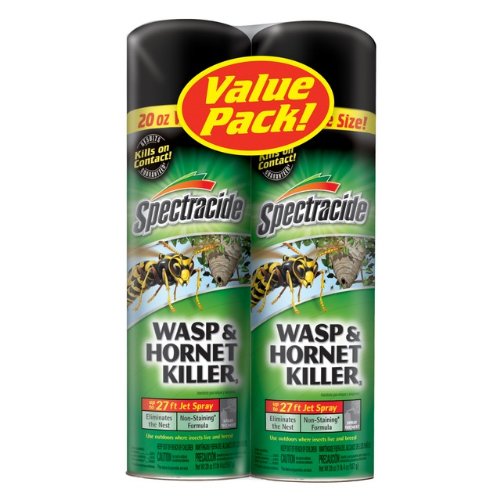
The Spectracide Wasp & Hornet Killer 2-Pack is an entry-level option that still delivers proven results. Each 20-ounce can uses a foaming formula that traps and eliminates wasps, hornets, and their eggs on contact. Despite its budget-friendly positioning, the foam expansion helps the product cling to vertical nests and soak through the paper structure, making it effective against established colonies in birdhouses, eaves, and shutters.
Users consistently praise the immediate knockdown effect, with one reviewer reporting complete elimination of a large colony inside a birdhouse in one application. The foaming action is particularly effective at coating larvae and eggs, preventing the nest from resurging. The 2-pack is a practical buy for homeowners who want to keep one can in the garage and one in the yard shed without spending significantly. It works well on wasps and hornets but has shown reduced effectiveness on yellow jackets, requiring a different approach for those species.
The spray range is shorter than premium competitors—you need to be comfortably within 10 to 12 feet for accurate application, which may feel close for nervous users. The foam can also leave visible white residue on dark siding or wood trim that may need cleaning afterward. For casual home defense against occasional paper wasp nests, this 2-pack is the most cost-effective way to keep your property protected through the season.
Why it’s great
- Foaming formula coats nests and eggs
- Immediate contact kill
- Great value 2-pack for seasonal use
- Reliable on paper wasps and hornets
Good to know
- Shorter effective range (10-12 ft)
- Less effective on yellow jackets
- Foam leaves white residue on surfaces
FAQ
Does the foam or stream format matter for treating a hidden nest inside a wall?
How long should I wait after spraying to remove a wasp nest?
Will bee and wasp killer spray harm my plants or flowers?
Final Thoughts: The Verdict
For most users, the best bee and wasp killer winner is the CRC 14010 Wasp and Hornet Killer Plus because it combines an industry-leading 20-foot reach with instant knockdown and high dielectric safety, making it the most versatile and safe spray for the widest range of aerial nest scenarios. If you want a high-volume solution for multiple nests across the season, grab the Spectracide Wasp and Hornet Killer 3-Pack. And for ground-based yellow jacket or bee infestations that resist conventional sprays, nothing beats the residual power of the Atticus Tirade 1% Cyfluthrin Dust.