
Our readers keep the lights on and the weekend projects moving. As an Amazon Associate, I earn from qualifying purchases.
A sting through your glove isn’t just painful — it erodes the trust you need to work calmly with your colonies. Finding a pair of beekeeping gloves that balance true sting resistance with the finger dexterity required for frame inspections and queen handling is the single biggest gear challenge new and experienced beekeepers face.
I’m Rikta — the co-founder and writer behind FitlyFast. I’ve spent hundreds of hours analyzing material thickness, seam construction, cuff designs, and ventilation systems across dozens of models to separate marketing claims from real-world protection.
Whether you are opening hives for the first time or managing multiple apiaries, the right pair transforms a nervous chore into a confident routine. This guide breaks down the top contenders for beekeeping gloves by material, fit, and actual sting-stopping performance.
How To Choose The Best Beekeeping Gloves
Gloves are your first line of defense during hive inspections, but choosing poorly means sacrificing either safety or feel. The material type, gauntlet length, seam construction, and ventilation design each play a distinct role in how a glove performs when you are elbow-deep in a hot brood box.
Goatskin vs Cowhide Leather
Goatskin is prized for its supple feel and close fit — it breaks in quickly and allows precise finger movements for tasks like gripping frames or locating the queen. Cowhide is thicker, more durable, and offers higher puncture resistance, but it comes with a stiffer break-in period and less tactile feedback. Choose goatskin when dexterity matters most and cowhide when aggressive colonies demand maximum protection.
Gauntlet Length and Closure
A short cuff leaves your wrist and lower forearm exposed to stings when your sleeve rides up during lifting. Full-length gauntlets that reach the elbow and include an elastic or drawstring closure seal out bees and prevent the glove from slipping. Ventilated cuffs improve airflow on hot days but should still provide a snug seal around the sleeve of your bee suit.
Seam Placement and Stitch Quality
Stings most often penetrate through seams, not the leather itself. Gloves with repositioned stitching on the finger sides — away from the high-contact areas — dramatically reduce sting-through events. Double-stitched or reinforced seams add longevity, especially on the thumb crotch where wear concentrates from repeated frame gripping.
Ventilation and Hand Fatigue
Sweaty hands inside thick leather cause discomfort and reduce grip control over extended inspections. Look for gloves with breathable back panels, mesh inserts, or perforated leather sections that allow moisture to escape without compromising the barrier. Ventilation features are especially valuable during summer months when temperatures inside a hive can exceed 95°F.
Quick Comparison
On smaller screens, swipe sideways to see the full table.
| Model | Category | Best For | Key Spec | Amazon |
|---|---|---|---|---|
| Humble Bee 112 Goatskin | Mid-Range | Ventilated all-day comfort | Ventilated wrist cuffs | Amazon |
| Apis Tactical Heavy Duty Cowhide | Premium | Maximum sting protection | 5mm cowhide + extended cuff | Amazon |
| Bees & Co V57 Goatskin | Premium | Soft feel, full-length arm coverage | Full-length canvas sleeves | Amazon |
| Humble Bee 111 Cowhide | Mid-Range | Heavy-duty cowhide protection | Durable cowhide + canvas sleeves | Amazon |
| Apis Tactical Goatskin (Ventilated) | Mid-Range | Dexterity for precision tasks | Patented ventilation + tight fit | Amazon |
| Apis Tactical Goatskin (Original) | Mid-Range | Snug wrist-length fit | Patented ventilation + wrist length | Amazon |
| Mechanix Wear Cow Driver | Budget | Entry-level thin leather | Water-resistant cowhide | Amazon |
In‑Depth Reviews
1. Humble Bee 112 Goatskin Beekeeping Gloves with Ventilated Cuffs

This pair hits the sweet spot between protection and all-day wearability. The goatskin hands are noticeably soft out of the box — no hard break-in period — and the medium-weight canvas sleeves offer a balanced mix of breathability and sting resistance. The ventilated wrist cuffs are a practical standout, channeling airflow to reduce sweat buildup during hot summer inspections without creating gaps where bees can crawl inside. The mid-length sleeves seal well over a bee suit sleeve, and the elastic cuffs keep everything in place as you move around the hive.
User feedback consistently highlights the excellent fit for smaller hands, with XS sizes matching women’s hands snugly and eliminating the loose fingertip material that causes fumbling during frame manipulation. The stitching is uniform and the seams are well-positioned, though a few users noted the thumb crotch runs slightly loose — a minor fit quirk that does not compromise sting protection for most hand shapes. The gray color hides dirt well and looks professional.
What keeps this from being a pure heavy-duty glove is the medium-weight canvas construction. It prioritizes comfort and dexterity over the absolute thickness of a full cowhide gauntlet. For beekeepers managing gentle to moderately defensive colonies who value precision over maximum puncture protection, this is the gold standard. The ventilated design alone makes it the most comfortable choice for multi-hour yard work in warm climates.
Why it’s great
- Soft goatskin requires almost no break-in time
- Ventilated cuffs dramatically reduce hand sweat
- Accurate sizing, especially for small hands
Good to know
- Medium-weight canvas may wear faster than heavy-duty competitors
- Thumb fit can feel slightly loose for some users
2. Apis Tactical Heavy Duty Beekeeping Gloves, Extended Cuff, 5mm Cowhide

When colony temperament demands no compromises, the 5mm cowhide construction on this glove delivers the most reassuring barrier in the lineup. The thick leather blocks stings that would sail through thinner material, and the extended cuff protects the wrist and lower forearm — a zone where suits often gap open during lifting. Despite the heft, the cowhide is cut and stitched to allow reasonable hand closure; it is not the stiff, unbending slab some heavy gloves become. The patented ventilation system adds perforated panels that vent heat, which is critical given the natural insulation of thick cowhide.
Beekeepers working aggressive hives report zero sting penetration through the leather, with the rare sting occurring only at seam junctions when gripping tightly. The trade-off is undeniable: dexterity is reduced compared to goatskin options. Tasks like picking up a dropped frame pin or reattaching a loose excluder require more deliberate finger movements. Sizing runs small, so ordering one size up from your typical measurement is a common strategy among experienced users.
This glove is purpose-built for apiary work where protection precedence governs equipment choice. It is heavier, warmer, and less tactile than mid-range options, but for beekeepers managing hot yards or teaching new handlers who need extra confidence, that weight is a feature, not a bug. The build quality and thick material suggest a lifespan that justifies the investment even under frequent use.
Why it’s great
- Thick 5mm cowhide stops stings from aggressive colonies
- Extended cuff protects wrist and forearm gaps
- Ventilation helps manage heat from heavy leather
Good to know
- Bulky feel reduces fine-motor dexterity
- Runs small — order one size larger than normal
3. Bees & Co V57 Goatskin Beekeeper Gloves with Extended Sleeves
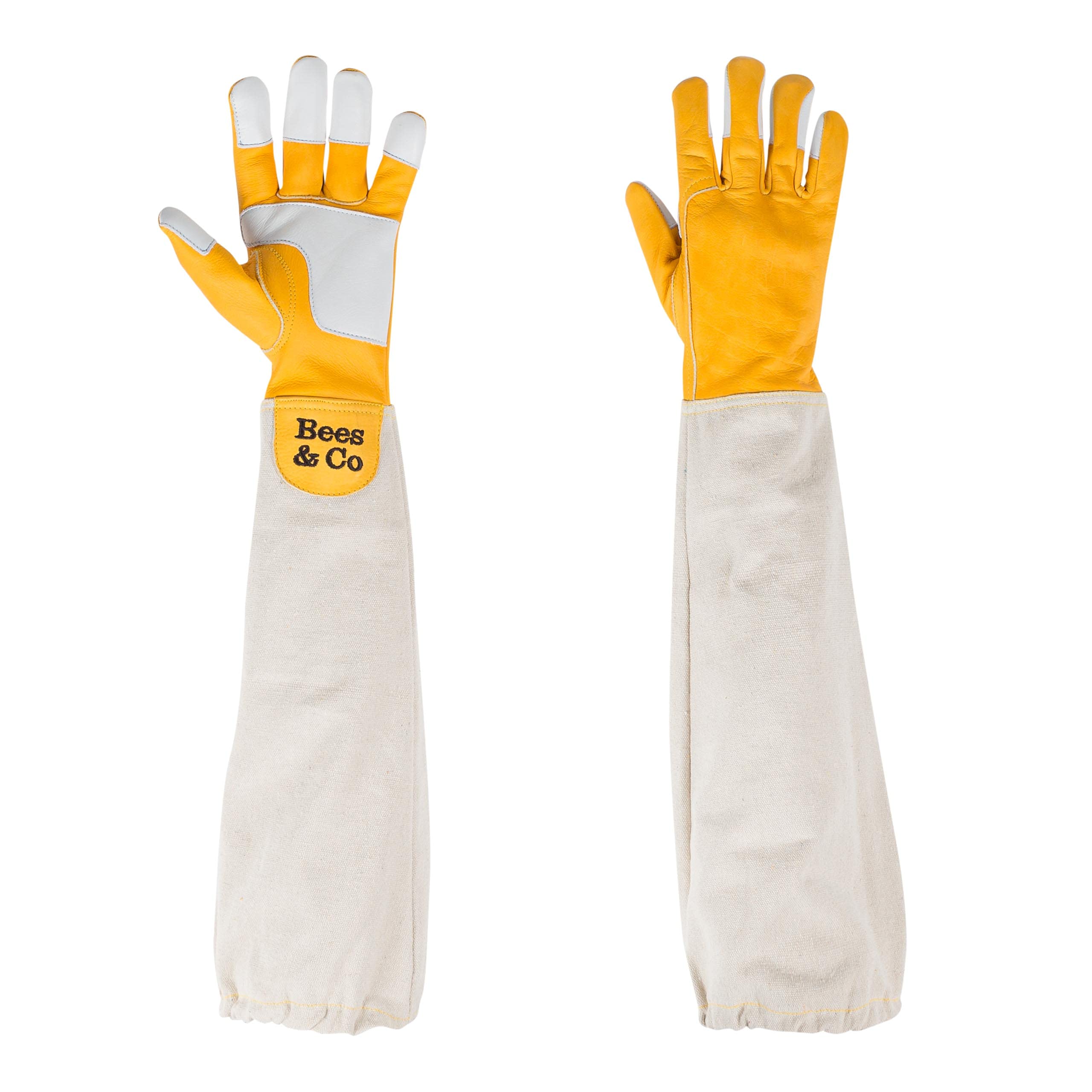
Few gloves in this category match the reach of the V57’s sleeves — they extend nearly to the armpit, creating a continuous barrier that eliminates the forearm exposure gap common with shorter gauntlets. The goatskin hands are supple from the first wear, conforming to the hand shape after just a couple of inspections. The leather itself has a smooth, almost buttery feel that allows confident handling of delicate tasks like marking a queen or scraping propolis off a frame top bar. The yellow color is highly visible, making them easy to spot if set down in tall grass or clover.
Fit is the standout strength here. Users with both very small and very large hands report that the sizing accommodates unusual dimensions better than many competitors. The fingers are cut with enough length to avoid the bunching problem that causes pinch points, yet the overall volume is slim enough to avoid the floppy, oversized glove look that compromises feel. The elastic cuffs at the sleeve opening seal securely over the bee suit sleeve without needing additional straps or rubber bands.
The most consistent critique focuses on sleeve durability. Several users reported that the canvas material on the arms showed wear — fraying or small tears — after the first season of regular use. The leather hands themselves hold up well, but the sleeve material does not match the longevity of the goat leather. For hobbyists with a few hives who prioritize comfort and full coverage over ultra-rough durability, these are excellent. Heavy commercial users may want to reinforce the sleeves or rotate pairs.
Why it’s great
- Exceptionally long sleeves protect the full forearm
- Supple goatskin feels broken in immediately
- Accommodates both small and large hand sizes well
Good to know
- Canvas sleeves can show wear after one season of regular use
- Not ideal for heavy commercial beekeeping workloads
4. Humble Bee 111 Cowhide Beekeeping Gloves with Extended Sleeves

The Humble Bee 111 brings thick cowhide protection at a price point that undercuts most heavy-duty competitors. The leather hands are durable enough to withstand aggressive hive handling and repeated scraping against frame edges, while the heavy-weight canvas sleeves provide a formidable secondary barrier that resists tears and punctures. The full-length sleeve design offers good coverage, and the elastic cuffs keep the gloves seated during extended wear. The classic yellow color is the traditional beekeeping look many hobbyists prefer.
Fit feedback is broadly positive, but the sizing chart requires careful attention. Several users noted that the chart runs slightly off — ordering a size up from the table recommendation produced the best fit for most. Once the correct size is identified, the gloves offer a tailored feel without excess material at the fingertips. The cowhide is genuine heavy leather, not a thin split, and multiple users reported only a single sting reaching their hand after many sessions with defensive colonies.
The main drawback is the canvas gauntlet’s stiffness initially. The heavy cotton material takes longer to break in than lighter alternatives and can feel restrictive at the wrist until it loosens after several wears. The medium-weight canvas on the Humble Bee 112 is more flexible from the start. For beekeepers who want the protection of cowhide at a budget-friendly cost and are willing to work through a short break-in, this glove delivers outstanding value per dollar.
Why it’s great
- Durable cowhide stands up to aggressive frames and scraping
- Heavy canvas sleeves add sting resistance without bulk
- Excellent sting protection for the price point
Good to know
- Sizing chart is unreliable — order a size up from the table
- Canvas gauntlet feels stiff and requires break-in time
5. Apis Tactical Professional Goatskin Beekeeping Gloves, Premium 5mm (Ventilated)
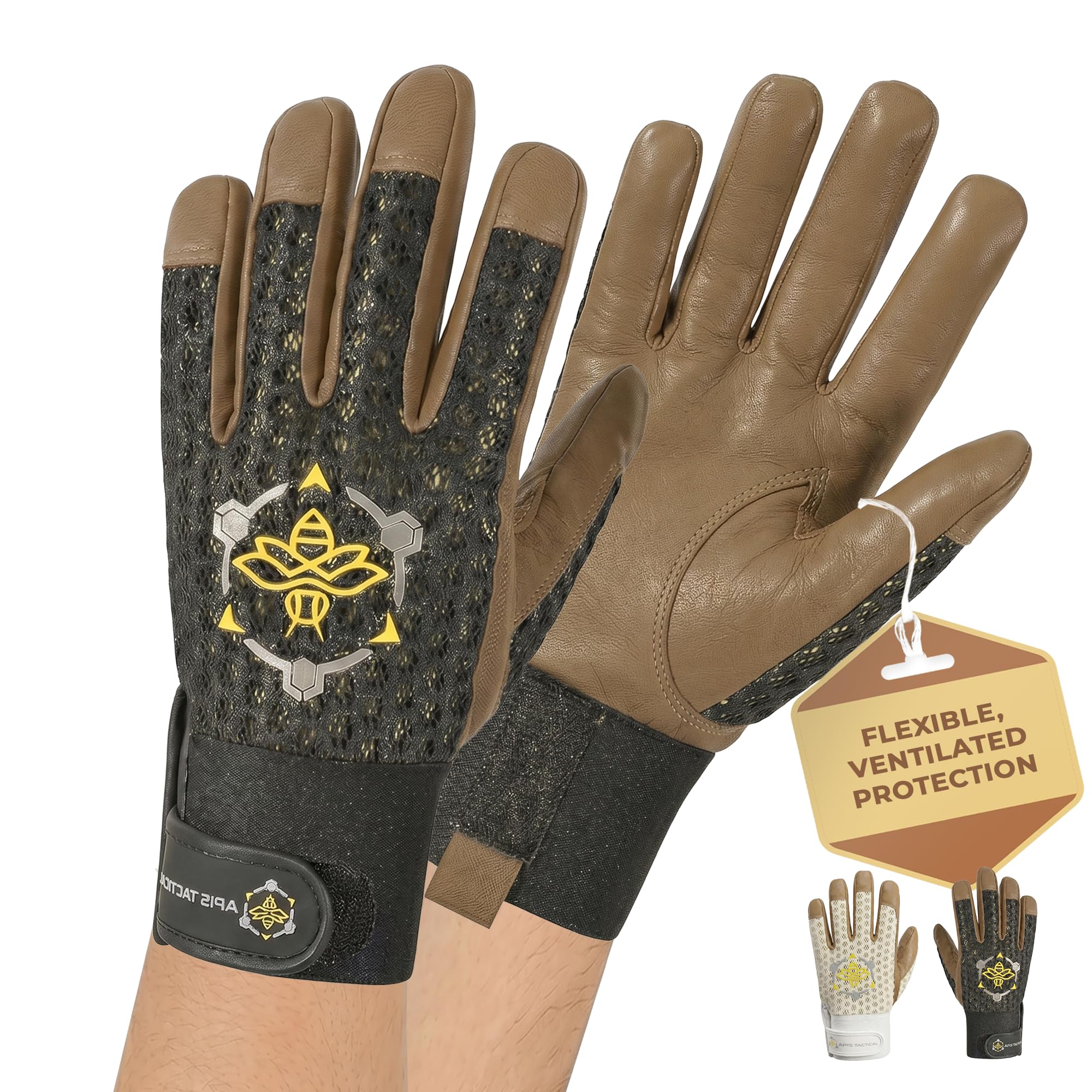
This 5mm goatskin version from Apis Tactical delivers an upgrade in thickness without abandoning the close, tactile fit that goatskin provides. The patented ventilation system — mesh panels integrated into the back of the hand — is the key differentiator here, allowing significant airflow that keeps hands cooler during long inspections. The fit is snug and precise, with long finger cuts that accommodate slender hand shapes without leaving empty leather at the tips. The elastic at the wrist seals effectively against the suit, preventing bees from crawling up the arm.
Beekeepers praise the break-in quality: the 5mm goatskin softens rapidly and molds to the hand, creating a custom-like feel after just a few uses. The dexterity is good enough to peel tape off a roll or adjust a hive tool grip without removing the glove. Sting protection is strong, with most users reporting that the leather stops all but the most determined stings, and those that do penetrate hit only seam areas during high-pressure gripping.
The ventilation panels reduce sweat, but they are not a cure for extreme heat. Users in very humid environments still experience some moisture buildup after extended wear, just less than non-ventilated goatskin gloves. The price sits at the higher end of the mid-range bracket, making them a considered purchase. For beekeepers who prioritize hand feel and temperature management while still wanting above-average goatskin thickness, this model is a top-tier compromise.
Why it’s great
- 5mm thickness provides excellent sting resistance with goatskin suppleness
- Patented ventilation reduces sweat buildup in warm weather
- Snug, precise fit with great finger dexterity
Good to know
- Ventilation helps but still allows some moisture in very humid conditions
- Premium features come at a higher mid-range cost
6. Apis Tactical Premium Goatskin Beekeeping Gloves (Original Ventilated)
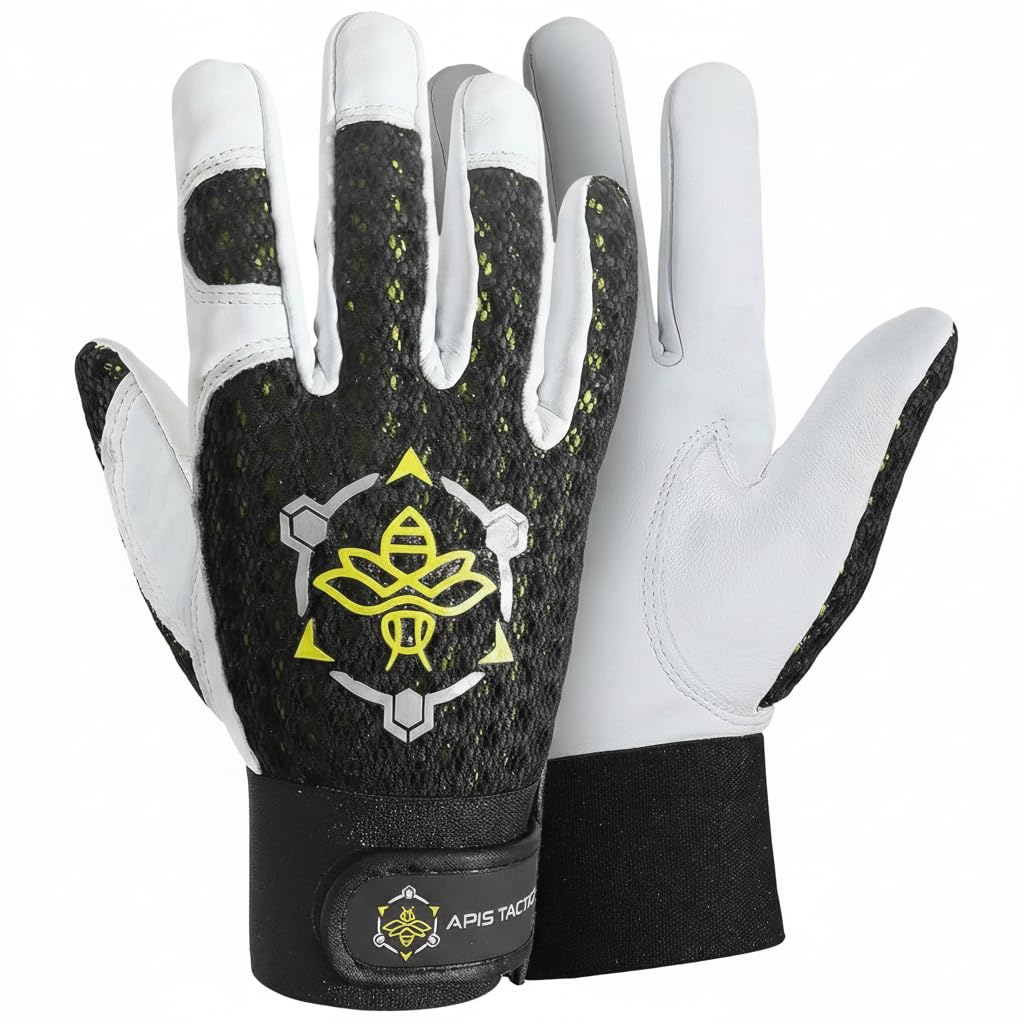
This wrist-length goatskin glove from Apis Tactical is the most minimalist design in the premium range, offering the highest finger dexterity of any option here. The ventilation system is identical to the professional model, but the shorter cuff — ending at the wrist rather than extending up the forearm — makes it ideal for quick inspections, feeding checks, or work in warm climates where full gauntlets cause overheating. The leather is high-quality goatskin that softens quickly and forms to the hand shape, providing a second-skin feel that is unmatched for tasks like locating and marking a queen.
The included sizing guide is effective, and users consistently report that the gloves fit as expected when measurements are followed. The ventilation works well enough that users coming from traditional full-leather gloves notice a significant reduction in hand sweat. However, the wrist-length design requires a bee suit with tight-fitting sleeves that tuck into or overlap the glove cuff, otherwise an exposed band of skin invites stings. Some users add rubber bands over the suit sleeve for extra security.
The trade-off for the high dexterity and ventilation is reduced sting protection on the forearm and wrist area. Users confirm that stings can penetrate the seams, particularly on the tops of the fingers where the thin goatskin meets the stitch line during gripping. Several experienced beekeepers advise applying a small strip of tape over the finger seams as reinforcement. This glove excels for precision work but is not recommended for defensive colonies or prolonged heavy handling.
Why it’s great
- Best-in-class dexterity for queen handling and fine tasks
- Effective ventilation reduces hand sweat
- Sizing guide delivers accurate fit
Good to know
- Wrist-length design leaves forearm exposed without careful suit overlap
- Seams on finger tops can allow stings during tight gripping
7. Mechanix Wear Leather Cow Driver Gloves

The Mechanix Wear Cow Driver is a general-purpose work glove adopted by some beekeepers as a budget entry point. The cowhide leather is water-resistant and thin enough to maintain reasonable finger dexterity for light hive tasks like brushing bees off frames or minor inspections. The Gunn cut finger design moves seams away from the high-contact gripping surfaces, which helps reduce sting penetration at the fingertips. The elastic cuff makes on-and-off quick, and the pull-on style is convenient for moving between multiple hives.
Positive fit feedback centers on the accurate sizing and the soft, break-in-free feel of the cowhide. The gloves are comfortable for extended wear and do not cause hand fatigue as quickly as stiffer leather options. Users note that the gloves hold up well to general shop and yard work — they are durable enough for assembling woodenware, painting, or handling hive tools. The thinness that makes them comfortable also makes them limited for serious beekeeping: they offer only light sting resistance, and a determined bee can sting through the leather on the palm or finger pads.
This glove is not designed as a dedicated beekeeping glove — it lacks the gauntlet, heavy seams, and forearm protection that define proper apiary gear. It works best as an introductory glove for absolute beginners who are unsure about committing to specialized equipment, or as a backup pair for non-beekeeping tasks around the apiary. For anyone moving past the novice stage or working with moderately defensive bees, the sting protection deficit becomes noticeable quickly.
Why it’s great
- Low cost makes it an easy entry point for beginners
- Thin, soft leather offers good dexterity for light tasks
- Durable for general yard and shop work
Good to know
- Not a dedicated beekeeping glove — minimal sting resistance
- No gauntlet or forearm coverage exposes wrists
- Bees can sting through thin palm leather
FAQ
Will any leather glove protect against bee stings?
Should I buy goatskin or cowhide for aggressive colonies?
How do I know what size beekeeping glove to buy?
How often should I replace beekeeping gloves?
Final Thoughts: The Verdict
For most beekeepers, the beekeeping gloves winner is the Humble Bee 112 Goatskin because it delivers supple leather, smart ventilation, and accurate sizing that suits the widest range of hand shapes and hive temperaments. If you run defensive colonies and need maximum puncture resistance, grab the Apis Tactical Heavy Duty Cowhide — its 5mm thickness and extended cuff provide the most reassuring barrier. And for hobbyists who value full arm coverage and buttery-soft feel above all else, nothing beats the Bees & Co V57 Goatskin for comfort during long, deliberate inspections.