
Our readers keep the lights on and the weekend projects moving. As an Amazon Associate, I earn from qualifying purchases.
Plucking that first roll on a banjo is a self-contained joy — the percussive snap, the twang that cuts through a room, the feeling of a rhythm locking in under your fingers. But for a right-handed beginner, the sheer range of cheap imports, confusing kit bundles, and conflicting advice about “action,” “tone rings,” and “geared tuners” makes choosing a first instrument feel like the hardest part of the journey.
I’m Rikta — the founder and writer behind FitlyFast. I’ve spent years digging into the specifications that separate a frustration-free practice banjo from a wall-hanger that kills motivation, helping beginners find the instrument that actually rewards daily play.
Whether you plan to learn melodic bluegrass rolls or old-time clawhammer, the right beginner banjo right handed can make the difference between three weeks of enthusiasm and a lifetime of music-making.
How To Choose The Best Beginner Banjo Right Handed
A beginner banjo isn’t just a cheap guitar with a round body — it’s a percussive instrument with its own mechanical quirks. Choose based on tuning stability, build materials that resist warping, and a design that fits your musical goals (bluegrass, folk, or clawhammer). The right pick keeps you playing; the wrong one collects dust after two weeks.
Geared 5th Tuner vs Friction Peg
The short fifth string is notorious for slipping out of tune on budget models. A geared 5th tuner (metal gears inside a sealed housing) holds pitch reliably and allows micro-adjustments. Friction pegs, common on cheap kits, depend on wood-on-metal pressure and drift after a few minutes of play. Always verify the 5th string has a geared tuner — it’s the single most important upgrade for a beginner.
Remo Head and Bracket Count
The drum head is the banjo’s voice. A genuine Remo head (frosted or milky skin) provides consistent tension and a crisp, balanced tone. The number of brackets securing the head — 18 versus 24 — determines how evenly you can tension it. 24 brackets allow finer adjustment and better tone control, which matters as you develop your ear. Budget kits often use unbranded heads that sound flabby even when tuned correctly.
Open Back vs Resonator (Closed Back)
Open-back banjos produce a warmer, quieter tone that works well for clawhammer and practice at home — the body absorbs some sound, making it more forgiving for family members. Resonator banjos, with a wooden back cover, project a louder, brighter tone suitable for bluegrass jams and playing in a group. Many beginner models now include a removable resonator, letting you try both styles as you grow.
Quick Comparison
On smaller screens, swipe sideways to see the full table.
| Model | Category | Best For | Key Spec | Amazon |
|---|---|---|---|---|
| Gold Tone AC-1 | Mid-Range | Long-term value, light travel | Composite rim, zero-glide nut | Amazon |
| Vangoa VBJ-40 | Mid-Range | Versatile open/closed back | Mahogany body, 24 brackets | Amazon |
| Mulucky MB1101 | Mid-Range | Clawhammer and folk | Maple body, Remo head | Amazon |
| Ashthorpe Closed Back | Premium | Bluegrass tone in a kit | Mahogany/purpleheart, Remo head | Amazon |
| AKLOT Maple Open Back | Mid-Range | Bright sound, solid kit | All-maple body, Remo head | Amazon |
| Donner DBJ-200 | Mid-Range | Full size with Remo head | Mahogany, 24 brackets | Amazon |
| Pyle Sun Burst | Premium | Classic design with resonator | Sapele resonator, Remo head | Amazon |
| Kmise Full Size | Mid-Range | Loud open/closed flexibility | Okoume neck, sapele back | Amazon |
| Costzon 24 Bracket | Budget | Lowest cost entry point | Sapele wood, geared tuner | Amazon |
In‑Depth Reviews
1. Gold Tone AC-1

Gold Tone is a respected American brand, and the AC-1 brings their quality into a beginner-friendly package. Its composite rim is remarkably light — under 5 lbs — making it a genuine travel banjo that doesn’t sacrifice tone. The zero-glide nut system improves tuning stability and reduces string binding at the nut, a common pain point on wood-neck banjos at this tier.
The open-back design produces a warm, mellow tone that suits both bluegrass and clawhammer playing, and the 12-point setup from Gold Tone means the bridge, nut, and tailpiece arrive properly aligned — rare at this price. Owners consistently praise its intonation and bluegrass twang right out of the box. The included gig bag is thin with minimal padding, so you’ll want a sturdier case for regular travel.
The AC-1 earns the top spot because it eliminates the two biggest beginner headaches: slipping tuning and poor intonation. It’s not the flashiest banjo on this list, but it’s the one most likely to keep you playing through the first six months without fighting your instrument.
Why it’s great
- Exceptional tuning stability from zero-glide nut and geared tuners
- Very light composite rim (under 5 lbs) for comfortable practice
- Factory 12-point setup saves hours of adjustment
Good to know
- Included gig bag is thin and offers limited protection
- Sharp fret ends reported by some buyers after shipping
2. Vangoa VBJ-40

The Vangoa VBJ-40 hits a sweet spot for beginners who aren’t sure which style they’ll prefer. Its mahogany body comes with a removable resonator, letting you switch from a loud, bright bluegrass banjo to a quieter open-back folk instrument by removing four screws. The Remo frosted head and 24 brackets deliver a crisp snap with good note separation during fast rolls.
Sealed geared chrome-plated tuning pegs, including the critical geared 5th tuner, keep the banjo in tune after the initial string-stretch period. The kit includes a bridge-setting guide, clip-on tuner, fingerpicks, and an Allen key for the 2-way truss rod — everything a beginner needs except a better strap. The included strap clips are thin and can scratch the finish.
Several buyers noted that Vangoa’s customer service is responsive, replacing damaged items or answering setup questions quickly. The laminated mahogany body isn’t solid wood, which affects long-term resonance, but at this price point the trade-off is acceptable for someone just starting their banjo journey.
Why it’s great
- Removable resonator offers open and closed back flexibility
- Genuine Remo head with 24 brackets for even tensioning
- Comprehensive starter kit with setup guide and tools
Good to know
- Laminated mahogany body, not solid wood
- Included strap clips are low quality and may scratch the finish
3. Mulucky MB1101

The Mulucky MB1101 is built around an all-maple pot and neck, a construction choice that yields a brighter, more articulate tone than mahogany alternatives. Paired with a Remo head and 24 chrome brackets, the sound is transparent with clear overtones — ideal for clawhammer players who need each note to ring distinctly. The open-back design naturally mellows the volume, making it suitable for home practice.
The geared 5th tuner and adjustable truss rod are exactly what a beginner needs to keep the instrument playable. The kit includes a wide range of accessories: clip-on tuner, two tuning wrenches, four finger picks, strap, cleaning cloth, and a padded gig bag. Several owners noted that a 30-minute setup (adjusting bridge placement for intonation, tightening the drum head) transformed the banjo into an instrument that rivals models costing significantly more.
The main downside is the soft, untreated maple neck — it’s comfortable to play but prone to staining from sweat or moisture over time. A quick wipe-down after each session solves the issue, but it’s worth noting if you live in a humid climate. Overall, the Mulucky delivers exceptional value for players who want a lightweight, open-back banjo with a clear, bright voice.
Why it’s great
- All-maple body produces bright, articulate tone for clawhammer
- Geared 5th tuner and adjustable truss rod included
- Comprehensive accessory kit with quality gig bag
Good to know
- Soft, untreated neck can stain from sweat
- Requires 30-60 minute setup for optimal intonation and head tension
4. Ashthorpe Closed Back 5-String

The Ashthorpe 5-string brings a level of build quality that often exceeds expectations at this price. The mahogany neck with a purpleheart fretboard feels smooth under the fingers, and the high-gloss finish looks more upscale than the price suggests. The closed-back resonator is removable, so you can switch to open-back play for a quieter, warmer tone — a great option for beginners who live in apartments.
The Remo frosted head delivers the bright, cutting tone that bluegrass demands, and the 24 chrome brackets allow precise tension adjustments. The geared 5th tuner with 15:1 ratio provides smooth, accurate tuning — far better than the friction pegs found on cheaper models. The premium fabric padded gig bag is notably better than most kit bags, with thick padding and a pocket for accessories.
Some owners report minor cosmetic flaws — white specks on the fretboard, painted inlays instead of real mother-of-pearl — and the resonator finish can wear where the strap contacts it over time. The included celluloid picks are basic. Daily play for a year is common, with only the original strings needing replacement after 8-10 months.
Why it’s great
- Real mahogany neck with purpleheart fretboard
- 15:1 geared 5th tuner for smooth, stable tuning
- High-quality padded gig bag with thick padding
Good to know
- Resonator finish can wear from strap contact
- Painted inlays and minor cosmetic imperfections noted
5. AKLOT Maple Open Back

AKLOT’s maple open-back banjo is one of the few budget-friendly models that uses all-maple construction — the pot, neck, and the decorative tiger maple on the head are all maple. This gives it a bright, clear voice that cuts through a room without being harsh. The Remo Fiberskyn head adds a slightly warmer, vintage character compared to a standard frosted head, which clawhammer players in particular appreciate.
The sealed geared tuners hold pitch well after an initial break-in period of 30-40 minutes of repeated tuning. The kit includes a bridge-setting ruler, which makes the initial setup much easier compared to models that leave you guessing on bridge placement.
Sharp fret ends are the most common complaint, usually fixable with a fine file. The 5th string tuner is stiff out of the box, and the fretboard may arrive dry — a light oil treatment helps. For the price, the tone and volume projection are impressive, and the padded gig bag is well-constructed for casual transport.
Why it’s great
- All-maple body delivers bright, clear tone
- Remo Fiberskyn head for warmer vintage sound
- Includes bridge setting ruler for easy setup
Good to know
- Fret ends often sharp and require dressing
- 18 brackets provide less tension control than 24-bracket models
6. Donner DBJ-200

The Donner DBJ-200 is a full-size 5-string banjo with a genuine Remo head and mahogany neck, sides, and back. The 24 brackets give you precise control over head tension, and the high-gloss finish looks polished and professional. The tone is warm and full, with enough projection for small group sessions — a solid choice for a beginner who wants a traditional bluegrass sound in a complete package.
The kit includes a tuner, extra strings, a ruler for bridge placement, and a truss rod wrench, but notably omits finger picks (it includes flat picks instead, which aren’t ideal for banjo). The friction 5th string tuner is the weak point — several owners report it slipping during practice. The end screw can be tightened to reduce slippage, but a geared tuner would be a welcome upgrade.
Setup requires bridge installation and tuning machine tightening, which takes about 30 minutes for a first-timer. The gig bag is decent but not padded enough for heavy travel. Overall, the DBJ-200 is a solid mid-range option for someone who wants a Remo head and 24 brackets without paying for premium features they may not need.
Why it’s great
- Genuine Remo head with 24 brackets for crisp tone
- Mahogany construction offers warm, balanced sound
- Includes truss rod wrench and bridge ruler for setup
Good to know
- Friction 5th tuner can slip; tighten end screw to fix
- Kit includes flat picks instead of finger picks
7. Pyle Sun Burst
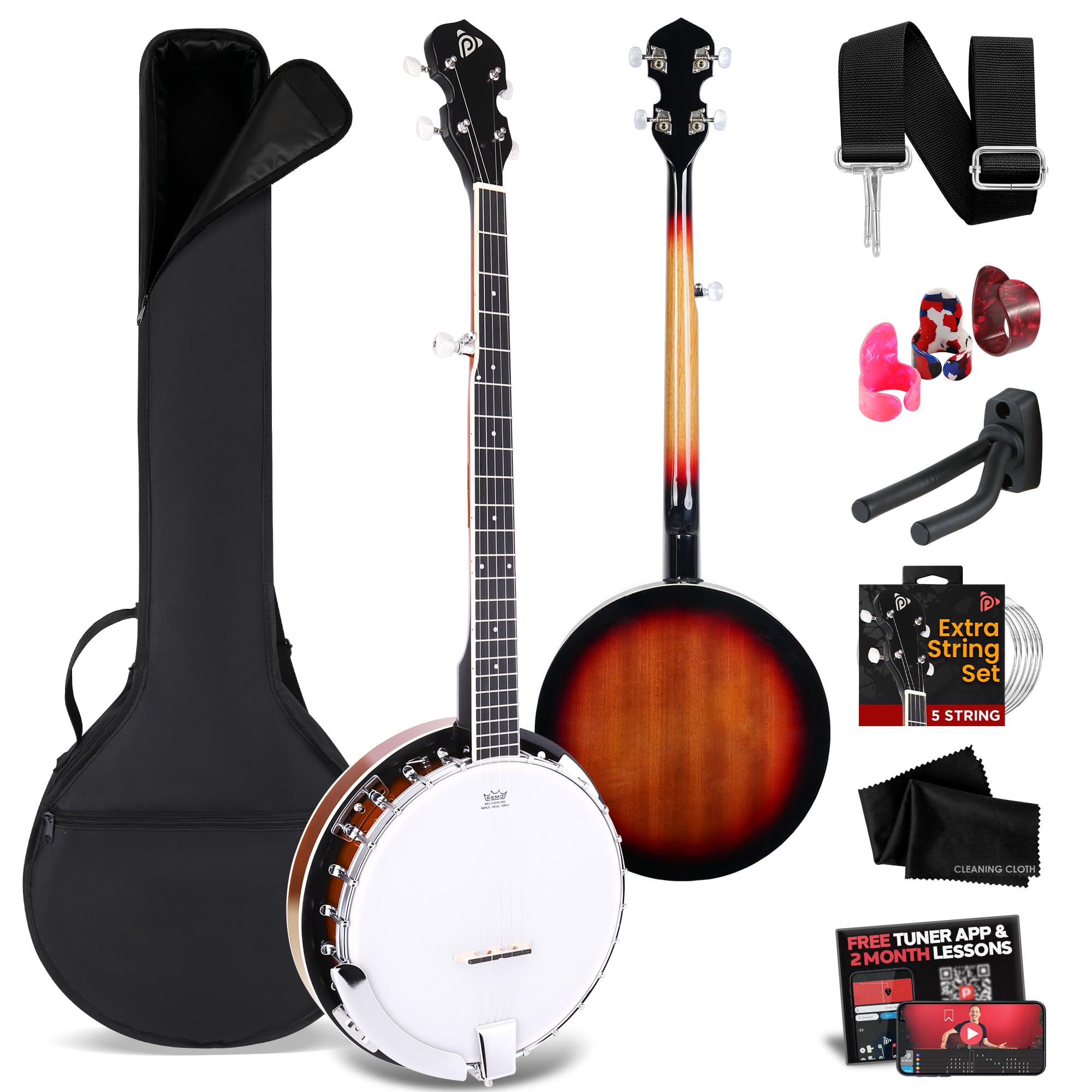
Pyle’s Sun Burst banjo stands out with its classic sunburst finish and sapele resonator, giving it a vintage aesthetic that looks more expensive than it is. The Remo milky skin head produces a warm, rich tone with good sustain, and the 24 brackets let you dial in the head tension precisely. The resonator is attachable, so you can play it closed-back for projection or open-back for a mellower sound.
The kit is generous: gig bag, spare strings, three plastic finger picks, cleaning cloth, shoulder strap, and a tuning wrench. The plastic picks are not great for serious play — serious beginners will want to upgrade to metal picks immediately. The included strap clips are cheap and prone to failure, which can be terrifying mid-song. Several buyers recommend replacing the strap before using it in any performance setting.
Build quality is solid for the price, with good intonation and playability right out of the box. The neck is comfortable, and the fretboard feels smooth. Some owners noted that the warranty requires posting a social media review, which feels gimmicky. For a beginner who values aesthetics and doesn’t mind upgrading the strap and picks, the Pyle delivers a polished experience.
Why it’s great
- Beautiful sunburst finish with sapele resonator
- Remo milky skin head for warm, rich tone
- Versatile open/closed back design
Good to know
- Included strap and plastic picks are low quality
- Warranty requires social media post for activation
8. Kmise Full Size
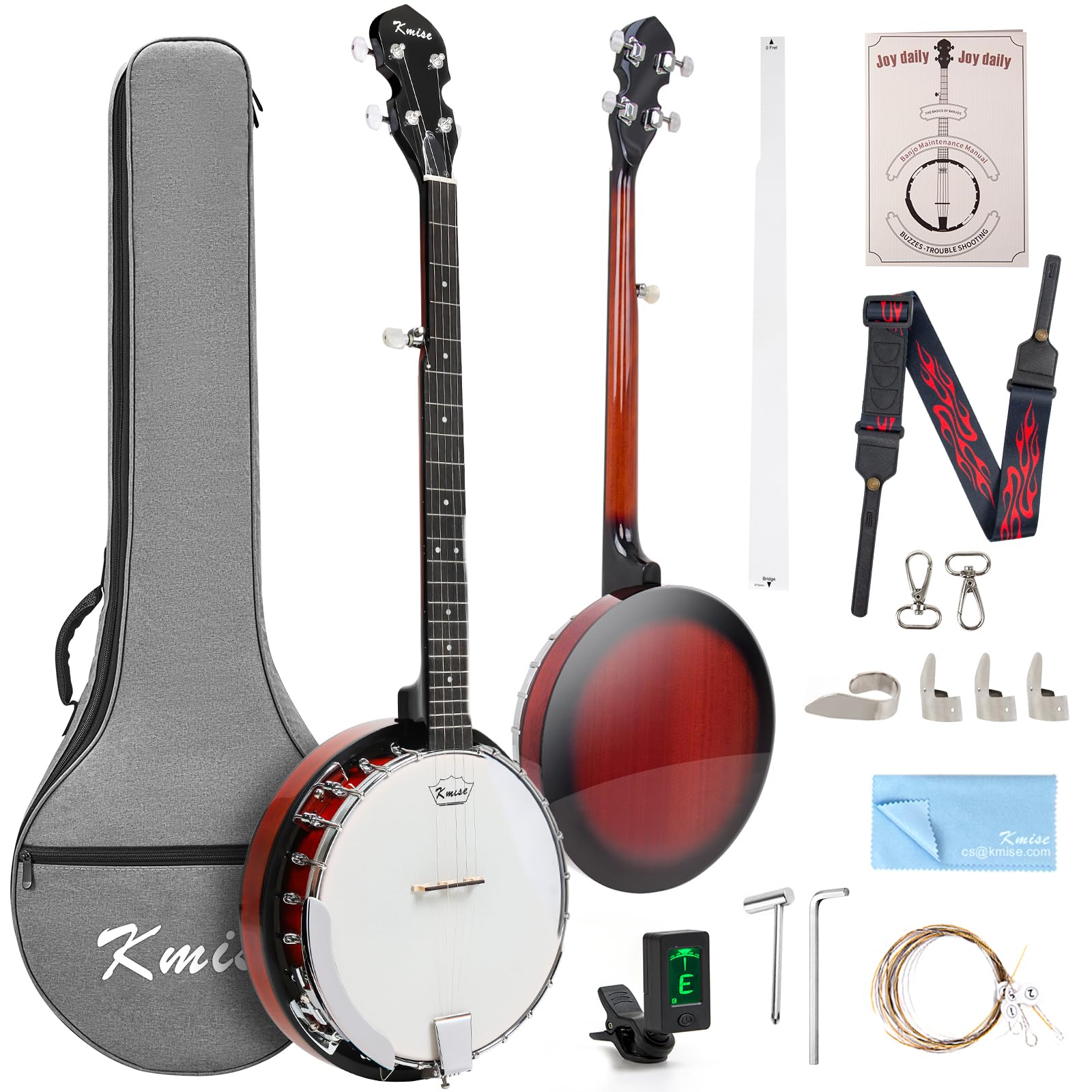
The Kmise 5-string banjo uses an okoume wood neck paired with a sapele back, resulting in a balanced tone with decent volume. The lacquered removable back cover allows open-back or closed-back play — removing it gives a cleaner, brighter sound, while attaching it produces a fuller, more resonant tone. The polished chrome armrest is comfortable and well-positioned for right-handed players.
The kit includes a padded nylon gig bag, strap, extra strings, clip-on tuner, polishing cloth, Allen wrench, and metal finger picks — a more complete accessory set than many competitors at this price. The geared 5th tuner holds tuning well, though some owners report the 5th string can be prone to slipping if not properly tightened during setup. The bridge often arrives uninstalled, which is standard, but the included instructions are minimal.
Sharp fret edges at higher positions are a common complaint, and a few buyers received their banjo missing accessories like picks or strap due to fulfillment issues. Kmise’s customer service has mixed reviews — some report quick replacements, others no response at all. For the price, the tone and build are solid, but the inconsistency in packing and support is worth noting.
Why it’s great
- Okoume and sapele wood combo produces balanced, loud tone
- Removable back cover for flexible open/closed play
- Includes metal finger picks and padded gig bag
Good to know
- Sharp fret edges need smoothing at higher positions
- Customer service and fulfillment can be inconsistent
9. Costzon 24 Bracket

The Costzon 5-string banjo is the most affordable option on this list, and it manages to include important features like a geared 5th tuner and 24 adjustable brackets that are typically missing from ultra-budget models. The body is a mix of sapele wood and plywood, with a rosewood fingerboard — materials that are functional rather than premium, but they hold up well for a starter instrument that may not see daily professional use.
The kit includes a digital clip-on tuner, strap, and a 420D Oxford cloth bag, along with a wiper and three picks. Several owners note that the banjo performs significantly better after a proper setup — replacing the stock strings (many recommend D’Addario at a minimum), oiling the fretboard, and adjusting the bridge position. After these adjustments, the sound quality is surprisingly good for the price, with a pleasant tone that works for folk and bluegrass practice.
Common complaints include a lifted fret, an armrest bolt that blocks resonator removal, and the last few frets producing nearly the same note even after setup. The accessories (strap, picks) are essentially unusable — plan to replace them immediately. This is the definition of a budget-friendly entry point: it gets you playing for the least money, but you’ll need time and basic tools to unlock its potential.
Why it’s great
- Geared 5th tuner and 24 brackets at the lowest price point
- Sounds good after proper setup with fresh strings
- Includes digital clip-on tuner for easy tuning
Good to know
- Stock strings and accessories are very low quality
- Requires significant setup; some frets may play flat
FAQ
What is the difference between open back and resonator banjos for a beginner?
How important is a geared 5th tuner on a beginner banjo?
Does a beginner banjo need a Remo drum head?
Should I buy a banjo kit or just the instrument?
Will a beginner banjo need setup out of the box?
Final Thoughts: The Verdict
For most users, the beginner banjo right handed winner is the Gold Tone AC-1 because it combines reliable tuning stability, lightweight construction, and a factory setup that minimizes early frustration. If you want the flexibility to switch between open-back and closed-back sounds, grab the Vangoa VBJ-40. And for the best bright, open-back tone at a mid-range price, nothing beats the Mulucky MB1101 for clawhammer and folk players.