
Our readers keep the lights on and the weekend projects moving. As an Amazon Associate, I earn from qualifying purchases.
The first computerized sewing machine you buy can either unlock months of frustration-free creativity or grind your motivation to a halt with skipped stitches and tangled bobbins. Beginners often assume any machine with an LCD screen will automatically deliver great results, but the real difference lies in how the motor handles thick denim, how intuitive the stitch selection is, and whether the built-in needle threader actually works on the first try.
I’m Rikta — the co-founder and writer behind FitlyFast. Over the past several weeks, I’ve parsed through hundreds of hours of customer feedback, spec sheets, and technical documentation to isolate the machines that deliver real, consistent performance without the typical beginner headaches.
Whether you want to hem a pair of jeans, quilt a throw blanket, or embroider a monogram, locking in the right piece of equipment saves you time, thread, and sanity. This guide covers the nine models that define the winning standard for a beginner computerized sewing machine.
How To Choose The Best Beginner Computerized Sewing Machine
Buying your first computerized sewing machine is exciting, but the sheer number of stitch options, presser foot types, and frame materials can quickly overwhelm. Instead of focusing on flashy numbers, anchor your decision on the three things that actually affect your daily sewing experience: motor power, bobbin system, and ease of threading. A machine that stiches cleanly through four layers of denim without stalling, a top-loading drop-in bobbin that you can swap in seconds, and an automatic needle threader that works every single time will keep you sewing happily for years.
Stitch Count Versus Practical Versatility
Seeing a machine listed with 586 stitch applications sounds incredible, but the truth is most beginners use only a handful of utility stitches: straight, zigzag, and one type of buttonhole. What actually matters is how easily you can select those stitches, whether the machine remembers your last settings after power-off, and if the stitch quality holds up at different speeds. Prioritize machines with at least one automatic one-step buttonhole and a dedicated stretch stitch for knits; the remaining decorative stitches are nice extras, not deal-makers.
Metal Frame Versus Plastic Construction
The internal frame determines how long your machine stays accurate. A full metal frame dampens vibration at high speeds, keeps the needle bar aligned, and handles heavy fabrics like canvas or layered quilting without twisting. Machines with plastic or mostly plastic frames are lighter and cheaper but tend to wobble when you push thicker material through, leading to uneven stitch quality. If you plan to sew any denim, upholstery, or multiple layers, invest in a model that explicitly lists a metal frame in its build.
Free Arm and Extension Table Usability
Not all free arms are created equal. A detachable accessory compartment reveals the slim free arm used for sewing cuffs, sleeves, and pant hems, but some machines have a shorter free arm that makes it awkward to slide a pant leg fully onto the bed. Similarly, an included extension table dramatically improves stability when quilting or handling large fabric rolls. Check the depth of the free arm in inches and whether the extension table snaps on securely without wobbling; a loose table will ruin straight stitches on any project larger than a pillowcase.
Quick Comparison
On smaller screens, swipe sideways to see the full table.
| Model | Category | Best For | Key Spec | Amazon |
|---|---|---|---|---|
| Janome JW8100 | Computerized | Quilting & garment sewing | 7-piece feed dog system | Amazon |
| SINGER 6800C | Heavy Duty | Thick fabrics & high stitch count | 586 stitch applications | Amazon |
| Brother SE700 | Sew/Embroider | Embroidery & monogramming | 4″x4″ embroidery field | Amazon |
| Juki HZL-F600 | Premium Quilter | Serious quilting & daily use | 255 built-in stitches | Amazon |
| SINGER 6700C | Heavy Duty | Versatile mid-range sewing | 411 stitch applications | Amazon |
| Janome MOD-50 | Compact | Portable & everyday sewing | 50 built-in stitches | Amazon |
| Poolin EOC02 | Value Computerized | Budget-friendly features | 200 built-in stitches | Amazon |
| VEVOR Computerized | Entry Level | Cost-effective starter | 200 stitch applications | Amazon |
| Brother CP100X | Quilting Combo | Transitioning from beginner | 100 built-in stitches | Amazon |
In-Depth Reviews
1. Janome JW8100

The JW8100 uses a seven-piece feed dog system that moves fabric evenly, preventing puckering on knits and shifting on cotton layers. Its metal internal frame provides the torsional rigidity needed to push through quilt sandwiches and multiple denim panels without the needle bar wandering. The included hard cover and extra-wide extension table make this a true home-quilting setup straight out of the box.
Experienced sewers upgrading from older mechanical machines praise the jam-proof drop-in bobbin and the consistent stitch quality across utility, stretch, and decorative patterns. The automatic needle threader is reliable enough to use as a daily driver, and the speed control slider lets you crawl through tricky curved seams or accelerate straight runs.
Customers coming from other brands note that the JW8100 is quieter than comparably priced Brothers and that the automatic buttonhole function produces identical, professional-sized holes every time. The only recurring wish is for a brighter LED lamp around the needle area, though aftermarket stick-on lights solve that easily.
Why it’s great
- Smooth seven-piece feed dog handles layered quilting with zero puckering
- Metal frame and powerful motor cut through thick denim without struggling
- Included hard cover and extension table add serious value for quilting
Good to know
- LED work light is adequate but not as bright as some competitors
- Needle doesn’t raise as high as premium Juki models for very thick stacks
2. SINGER Heavy Duty 6800C

The 6800C sits at the top of SINGER’s Heavy Duty computerized line with a motor that delivers sixty percent more piercing power than standard units, letting it chew through canvas, denim, and thin leather without hesitation. The LCD screen shows the actual stitch image and recommends the corresponding presser foot, which eliminates the guesswork for beginners who are still learning to identify feet.
With 586 stitch applications including two lettering fonts and nine one-step buttonhole styles, this machine gives you room to explore decorative sewing and monogramming without moving up to a dedicated embroidery unit. The top drop-in bobbin with transparent cover lets you monitor thread supply mid-project, and the built-in thread cutter is a time-saver when working on repetitive seams.
Reviewers consistently note that the accessory package is exceptional — ten presser feet including a walking foot and cording foot — and that the machine runs smoothly and quietly even after hours of continuous use. The auto needle threader works reliably, though early users sometimes need to watch the included tutorial video to get the thread path exactly right.
Why it’s great
- Motor pierces through heavy layers that stall lesser machines
- Huge stitch library includes two built-in lettering fonts
- Comprehensive accessory set with ten presser feet included
Good to know
- Printed manual is not included; instructions are digital only
- Throat space is small for large quilt projects
3. Brother SE700

The SE700 bridges the gap between a standard sewing machine and a dedicated embroidery unit by offering a four-by-four-inch embroidery field alongside 103 built-in sewing stitches. The large 3.7-inch color touchscreen makes on-screen design editing, rotating, and sizing straightforward, and the wireless LAN capability lets you transfer custom patterns from a PC or mobile device without plugging in a USB cable.
Sewing performance is on par with Brother’s dedicated machines — the automatic needle threader, jam-resistant drop-in bobbin, and speed control slider all function flawlessly. When you switch to embroidery mode, the included four-by-four-inch hoop is perfect for monogramming towels, tote bags, and shirt pockets. The Artspira mobile app allows you to draw patterns on your phone and send them straight to the machine.
First-time embroidery users report that the learning curve is manageable thanks to the touchscreen tutorials and the preview feature that shows exactly where each design will stitch. The machine handles thick quilt sandwiches for straight sewing, though the throat space is not large enough for free-motion quilting a full-size bedspread.
Why it’s great
- Combines sewing and 4×4 embroidery in one machine at a fair price
- Wireless pattern transfer from PC and Artspira mobile app
- Color touchscreen with on-screen editing and design preview
Good to know
- Throat space is tight for large quilting projects
- Embroidery rethreading can be finicky until you learn the exact path
4. Juki HZL-F600

Juki’s reputation among industrial sewers carries into the HZL-F600, a home machine built with a full metal chassis and an independent bobbin winding motor that lets you wind a bobbin without interrupting your sewing. The LCD screen with push-button stitch selection is intuitive, and the dual LED lights illuminate the needle area with zero shadows, which is a massive upgrade over single-bulb machines.
The 255 built-in stitches include stretch, decorative, and a full alphanumeric font. The automatic needle threader catches the eye on the first try almost every time, and the box feed system prevents skipped stitches even at high speeds on silky or stretchy fabrics. The included extension table is large enough to stabilize a full-sized quilt, and the free arm is generous enough to accommodate a complete pant leg without bunching.
Experienced sewers upgrading from older machines frequently mention that the HZL-F600 is the quietest computerized machine they have ever owned. The stitch quality is consistent across cotton, denim, jersey, and sheer fabrics, and the independent bobbin winder saves a noticeable amount of time during long sewing sessions.
Why it’s great
- Independent bobbin winder motor runs without affecting the main sewing
- Dual LED lights eliminate shadows around the needle
- Box feed system prevents skipped stitches on stretch fabrics
Good to know
- The price is significantly higher than other beginner machines
- Weight of 30 pounds makes it less portable
5. SINGER Heavy Duty 6700C

The 6700C occupies the middle tier of SINGER’s Heavy Duty computerized line, offering 411 stitch applications and a full metal frame that gives it the weight and stability to handle thick materials. The enhanced piercing power motor is the same architecture used in the 6800C, so it handles multiple denim layers and heavy canvas with the same authority, just with fewer total stitch options.
The LCD screen clearly shows stitch length, width, and the selected pattern, and the speed control slider lets you cap the maximum speed when working on delicate fabrics. The seven styles of one-step buttonholes cover everything from blouses to coats, and the tie-off button locks seams automatically without you needing to reverse manually. The accessory kit includes ten presser feet plus a walking foot and cording foot.
Users report that the machine performs flawlessly on silky, stretchy, and woven fabrics right out of the box with no tension adjustments needed. The foot lever is located on the right side rather than the rear, which takes a short adjustment period but becomes natural quickly. The throat space is relatively small, so large quilt projects still benefit from a dedicated quilting machine.
Why it’s great
- Piercing power motor handles six-plus layers of denim without stalling
- Ten presser feet included with walking and cording feet
- Seven one-step buttonhole styles for professional closures
Good to know
- Throat space is tight for free-motion quilting large quilts
- Printed manual not included; must reference online
6. Janome MOD-50

The MOD-50 keeps things straightforward with 50 built-in stitches, three one-step buttonholes, and a backlit LCD display that shows your selection clearly. The one-hand needle threader is one of the easiest to use in this price range, and the seven-piece feed dog system delivers the same smooth fabric feeding found on Janome’s higher-end models. At just 12.7 pounds, it is light enough to move between a sewing table and a class setting without strain.
The start/stop button and speed control slider allow pedal-free sewing, which is valuable for users with back issues or for those who prefer consistent speed control. The free arm is accessed by removing the front drop-in bobbin compartment, and it provides enough clearance for cuffs and sleeves. The drop feed mechanism is easy to engage for free-motion darning and quilting.
Experienced sewers who bought this as a portable backup note that the stitch quality is indistinguishable from heavier Janome machines and that the machine runs very quietly. The primary trade-off is the smaller stitch library — you won’t find alphanumeric fonts or dozens of decorative patterns — but for core garment sewing and light quilting, the MOD-50 does everything asked of it.
Why it’s great
- Lightweight and portable without sacrificing build quality
- Start/stop button enables pedal-free sewing for accessibility
- Janome’s seven-piece feed system produces consistent, even stitches
Good to know
- No decorative letters or numbers in the stitch library
- Extension table not included; must be purchased separately
7. Poolin EOC02
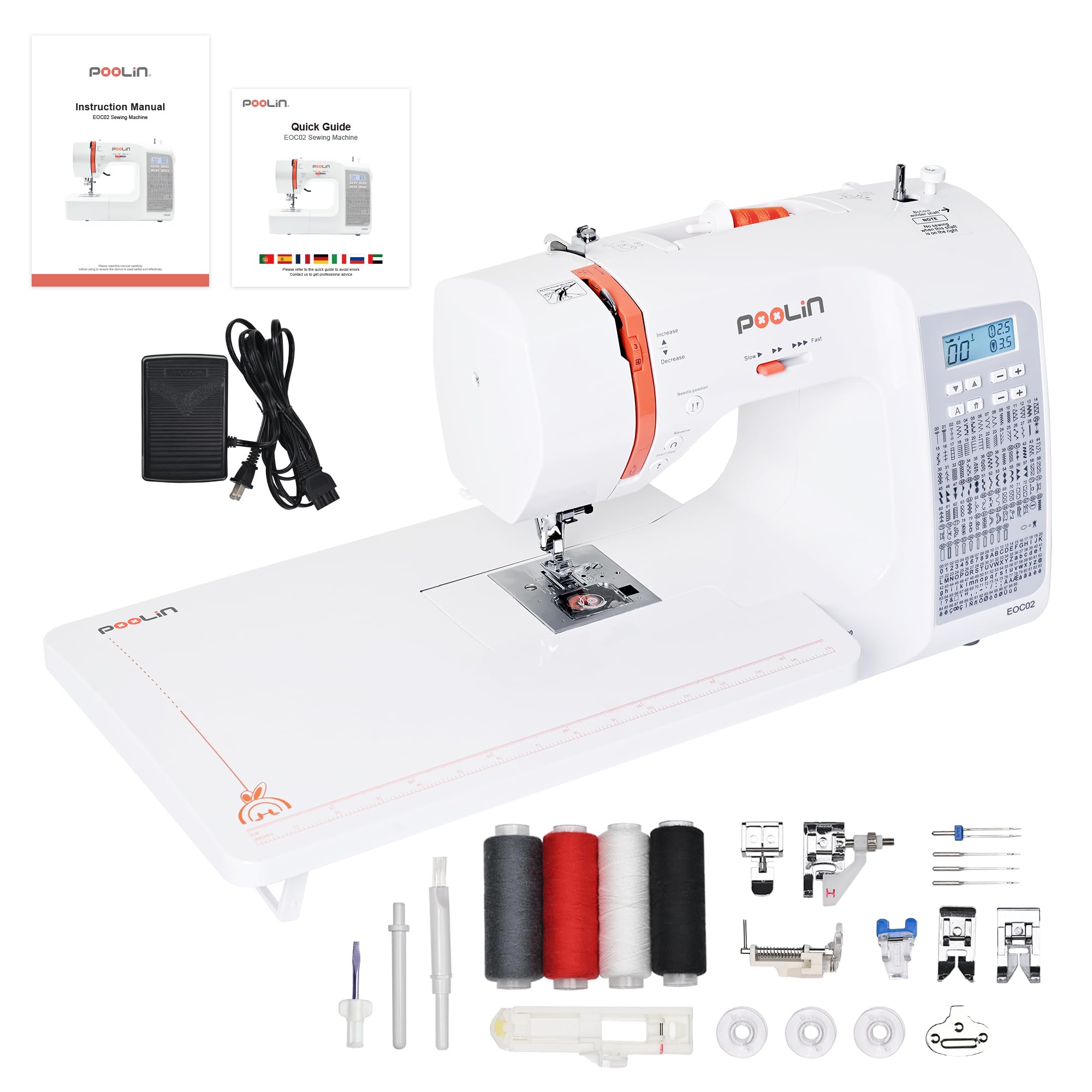
The EOC02 punches well above its price with 200 built-in stitches, an LCD screen, a wide extension table, and seven included presser feet. The automatic needle threader works consistently, and the start/stop button plus speed slider give you fine control without needing the foot pedal. The machine handles medium-weight cottons and linens easily and can push through denim and twill with the right needle selection.
The free arm is accessed by detaching the accessory box, and the extra-wide table provides a stable platform for quilting blocks and larger projects. The error prompt system displays specific fault codes on the LCD, which helps beginners diagnose thread jams or bobbin issues without guessing. Customers report that the instruction manual is comprehensive and that customer service offers step-by-step setup guidance.
Some users note that the walking foot is not included in the accessory pack and that very thick stacks require a stabilizer to maintain consistent stitch quality. The general consensus, however, is that the EOC02 rivals machines that cost significantly more in feature count, stitch consistency, and overall quiet operation.
Why it’s great
- Generous 200-stitch library plus alphanumeric patterns at this tier
- Wide extension table provides stability for quilting and large projects
- Very quiet operation with minimal vibration during sewing
Good to know
- Walking foot not included; must be purchased separately
- Thick stacks may require a stabilizer for best stitch quality
8. VEVOR Computerized Sewing Machine
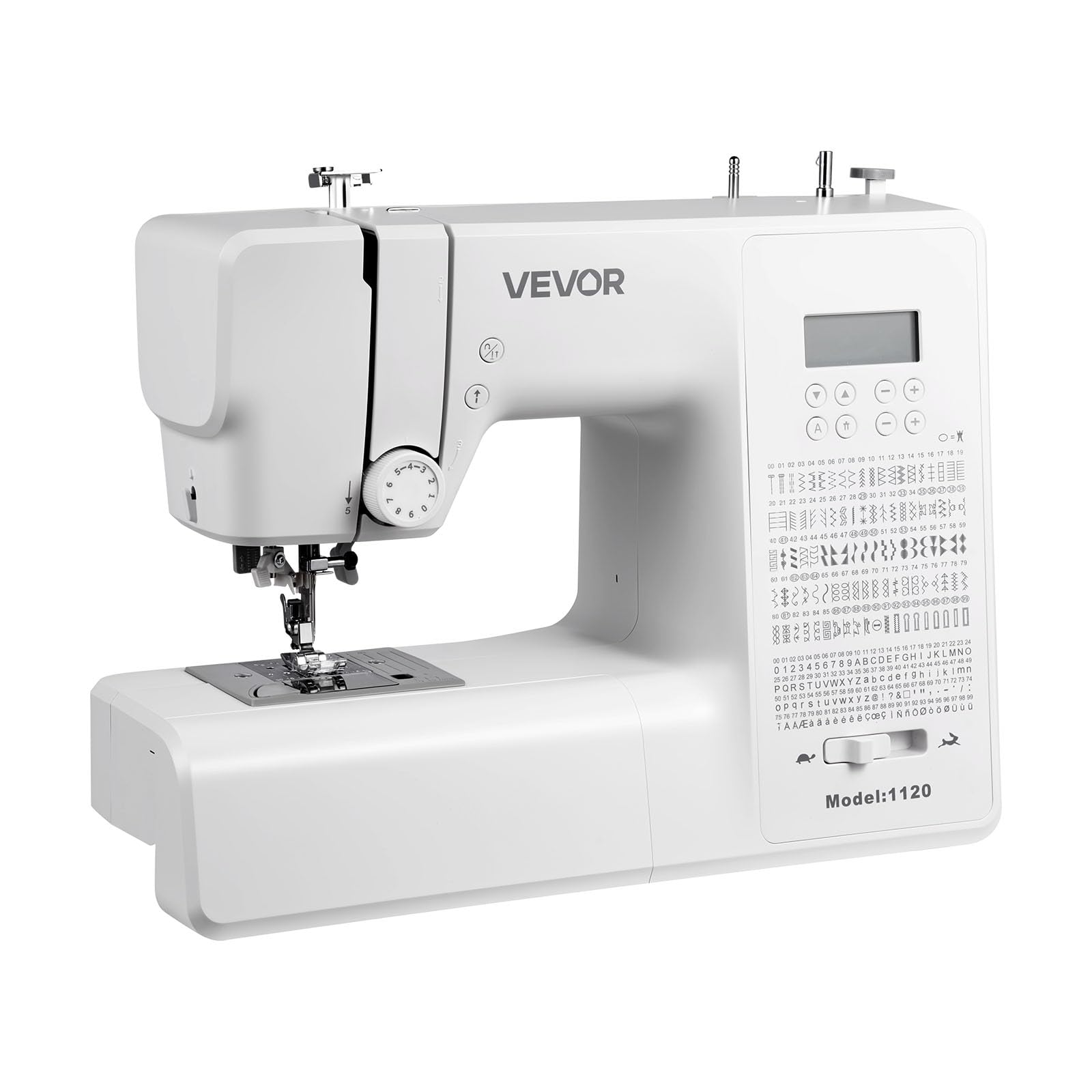
VEVOR’s entry-level computerized machine packs 200 stitch applications including letters, numbers, and symbols into a build that features a heavy-duty metal frame and a stainless steel bed. The LCD screen clearly displays the selected stitch, and the preset needle position, stitch length, and width reduce the setup time for beginners who are still learning ideal tension and width combinations. The machine handles up to 0.16-inch thick fabrics, which translates to about six layers of denim.
The automatic needle threader and adjustable thread tension make threading straightforward, and the clear horizontal bobbin lets you monitor remaining thread without removing the cover. The twin-needle sewing capability opens up decorative topstitching possibilities that are rare at this price point. The free arm mode is activated by removing the accessory box, giving you access to cuffs and sleeves.
Beginners who have used this machine report that it runs smoothly out of the box with minimal adjustment and that the included accessory set — including a blind hem foot, button sewing foot, and zipper foot — covers most starter projects. The soft dust cover is a practical inclusion, though the plastic body panels mean it is not as impact-resistant as all-metal machines.
Why it’s great
- Heavy-duty metal frame provides stability for thick fabric sewing
- 200 stitch applications include letters, numbers, and symbols
- Twin-needle capability adds decorative topstitching options
Good to know
- Plastic body panels are less durable than full metal construction
- Shipping delays reported by some early customers
9. Brother CP100X

The CP100X features 100 built-in stitches including utility, decorative, and heirloom functions plus eight auto-size buttonholes, all housed in a durable metal frame. The one-step automatic needle threader is improved over earlier Brother models, reliably pushing thread through the needle eye without repeated attempts. The speed control slider and start/stop button give you pedal-free operation, and the fixed needle bar ensures cleaner, straighter stitching on long runs.
The included wide table snaps on easily and provides generous workspace for quilting blocks and home décor projects. The accessory set includes ten sewing feet including a walking foot and quilting foot, plus a quilt guide and protective hard case. The free arm is accessed by removing the accessory compartment, and the drop feed engages quickly for free-motion work.
Users who upgraded from basic mechanical Brothers report that the CP100X is noticeably quieter and more stable when working with heavy fabrics. The bobbin winding system occasionally requires manual thread guidance to avoid inconsistent winding, but the overall value — including the hard case and wide table — makes this a strong choice for someone who plans to move beyond absolute beginner projects quickly.
Why it’s great
- Sturdy metal frame with wide table and hard case included
- 100 stitches with eight auto-size buttonholes cover growing skills
- Pedal-free start/stop button ideal for consistent speed control
Good to know
- Bobbin winding can be inconsistent without manual guidance
- Needle threader mechanism is slightly bulky compared to other models
FAQ
How many stitches do I actually need as a beginner on a computerized machine?
Can a computerized sewing machine handle thick denim and upholstery fabrics?
Is a start/stop button better than a foot pedal for beginners?
What does “free arm” mean and do I need it?
Final Thoughts: The Verdict
For most users, the beginner computerized sewing machine winner is the Janome JW8100 because it combines a metal frame, smooth seven-piece feed dog system, and a comprehensive accessory set that serves both garment sewers and quilters straight out of the box. If you want the highest stitch count and strongest motor for heavy fabrics, grab the SINGER Heavy Duty 6800C. And for those who want to dip into embroidery without buying a second machine, nothing beats the Brother SE700.