
Our readers keep the lights on and the weekend projects moving. As an Amazon Associate, I earn from qualifying purchases.
A beginner drone that doesn’t fly away, crash on the first descent, or produce footage that looks like it was shot through a shaking window is the real prize. The market is flooded with toy-grade quadcopters that claim GPS, camera, and brushless motors, but only a handful deliver the stability, safety, and image quality a first-time pilot actually needs.
I’m Rikta — the co-founder and writer behind FitlyFast. I’ve spent countless hours analyzing the hardware specifications, transmission systems, battery chemistries, and real-user flight logs across this entire beginner drone segment to separate the reliable flyers from the frustrating duds.
If you’re looking for the best beginner drone with camera and gps, the real test is whether it hovers without drifting, returns home when the battery is low, and records usable footage straight out of the box.
How To Choose The Best Beginner Drone With Camera And GPS
Choosing your first drone with camera and GPS isn’t about picking the highest number on the box. It’s about understanding which features actually matter for a safe, confidence-building first flight. The wrong choice can mean a drone that drifts uncontrollably, loses connectivity, or requires constant re-calibration, turning a fun hobby into a frustrating expense.
GPS Module and Return-to-Home Reliability
Without a genuine GPS module, a drone is a toy. A true beginner drone with GPS locks onto satellites before takeoff and uses that data to hold a steady hover and autonomously return home when the battery is low, signal is lost, or the pilot presses the button. Look for drones that explicitly state “GPS Auto Return” or “GPS-assisted hover,” and avoid models that rely solely on optical flow for positioning outdoors.
Camera Stabilization: Gimbal vs. EIS
Image stabilization is the difference between usable aerial footage and nauseating video. A 3-axis mechanical gimbal physically counteracts drone movement, delivering smooth, professional-grade results. Electronic Image Stabilization (EIS) crops the sensor to reduce shake, which works in good light but struggles in wind or fast motion. For a beginner, a 2-axis or 3-axis mechanical gimbal is far superior to relying on EIS alone.
Flight Time vs. Real Battery Life
Advertised flight times (40-48 minutes) almost always come from combining two batteries in the box. Each individual battery on a beginner drone with camera and GPS typically delivers between 18 and 35 minutes of actual flight, depending on wind conditions and flight mode. Check the per-battery specification — 20+ minutes per battery is a solid benchmark. Also note that larger battery capacity (3000mAh vs 1800mAh) often correlates to longer real-world flight times.
Weight and Registration Requirements
Drones under 249 grams (including battery and propeller guards) are exempt from FAA registration and Remote ID requirements in the United States. This is a huge convenience for beginners who want to fly without bureaucratic overhead. Every drone in this guide falls at or under this threshold, making them hassle-free for backyard flights, park adventures, and travel.
Quick Comparison
On smaller screens, swipe sideways to see the full table.
| Model | Category | Best For | Key Spec | Amazon |
|---|---|---|---|---|
| REDRIE HK33 | Beginner 4K | Entry-level value + GPS safety | 2-Axis Gimbal, 45min (2×1800mAh) | Amazon |
| Oddire HK11 | 4K GPS | Beginner who wants intelligent flight modes | 5G FPV, 48min (2×1800mAh 7.7V) | Amazon |
| REDRIE HK33 (V2) | Premium Entry | Stability with extra flight features | Brushless motor, 45min (2×1800mAh) | Amazon |
| Specta Mini | Gimbal 4K | Cinematic footage on a budget | 3-Axis Gimbal, 31min, 32800ft | Amazon |
| Potensic ATOM LT | Mid-Range Flyer | Long flights with 2.5K video | 80min (2×3000mAh), 4KM range | Amazon |
| DJI Neo 2 | Ultra-light | Hands-free selfies and easy flying | 151g, 4K, Gesture Control | Amazon |
| Gleesfun G11PRO | Pro Beginner | 6K photo with 3-axis gimbal | 3-Axis Gimbal, 70min (2×3200mAh) | Amazon |
| Bwine F7MINI | Complete Package | 8K photo + long transmission | 3-Axis Gimbal, 96min (3×2200mAh) | Amazon |
| HOVERAir X1 | Self-Flying | Follow-me adventure filming | 125g, 2.7K HDR, 32GB storage | Amazon |
In‑Depth Reviews
1. DJI Neo 2
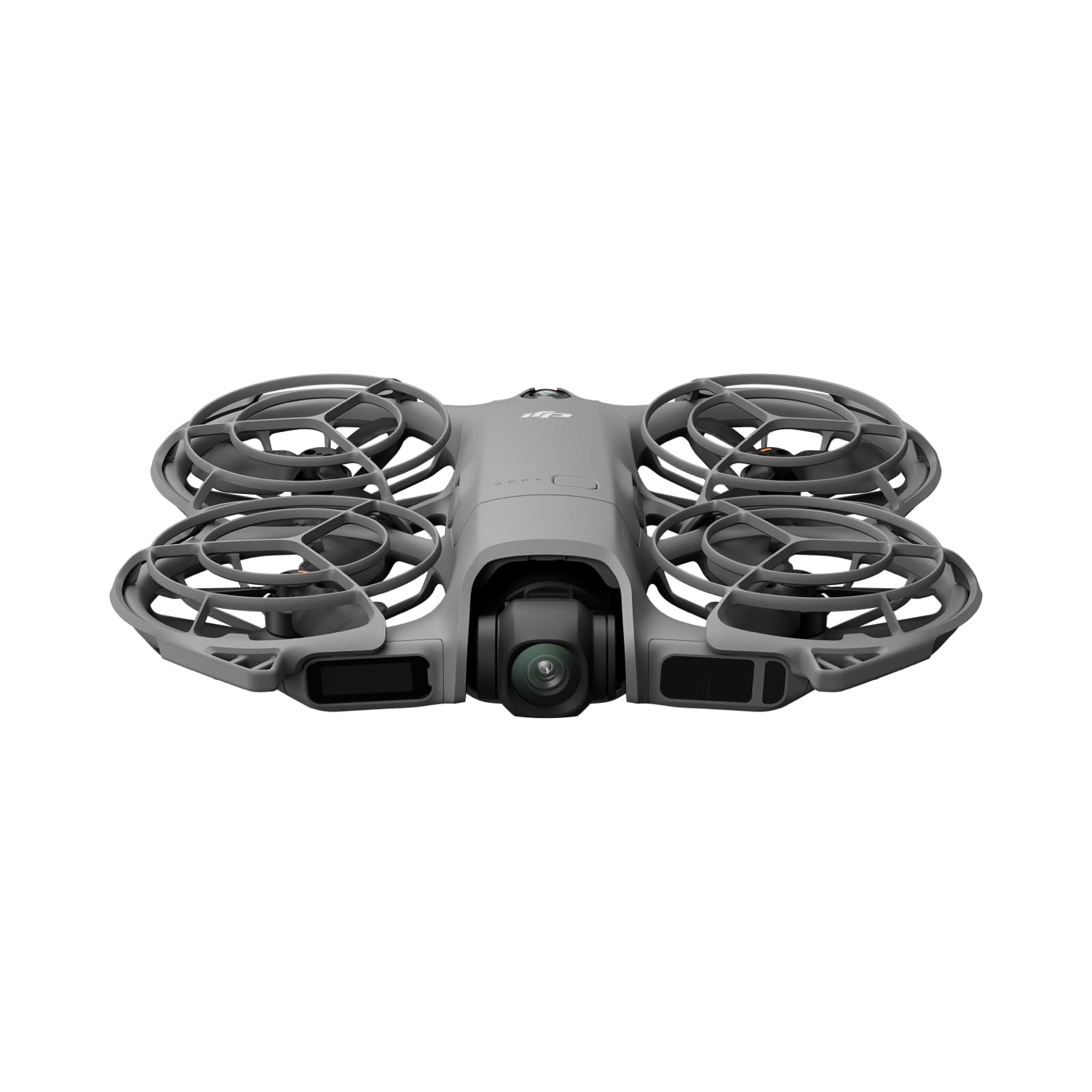
The DJI Neo 2 redefines what a beginner drone can be by packing omnidirectional obstacle sensing, palm takeoff/landing, and ActiveTrack into a 151g frame. The 4K camera with gimbal stabilization delivers sharp, stable footage that rivals much larger drones.
Gesture control adds a layer of hands-free convenience that is genuinely useful for solo travelers and content creators. You can launch it from your palm, capture a selfie or follow shot with a wave, and have it land back in your hand — no remote or phone needed for basic operation. The full-coverage propeller guards make indoor flights safer, and omnidirectional obstacle sensing prevents collisions in most directions.
The tradeoff is a relatively short per-battery flight time of around 18-19 minutes, and the drone-only package does not include a remote controller — you’ll use the DJI Fly app on your phone. For absolute beginners who want a stress-free, highly capable flying camera with layered safety features, the Neo 2 is a compelling entry point.
Why it’s great
- Omnidirectional obstacle sensing for crash prevention
- Palm launch/land and gesture control for hands-free flying
- 4K gimbal-stabilized footage in an ultra-light 151g body
Good to know
- Relatively short flight time per battery (~18 minutes)
- No dedicated remote controller included in the box
2. Bwine F7MINI
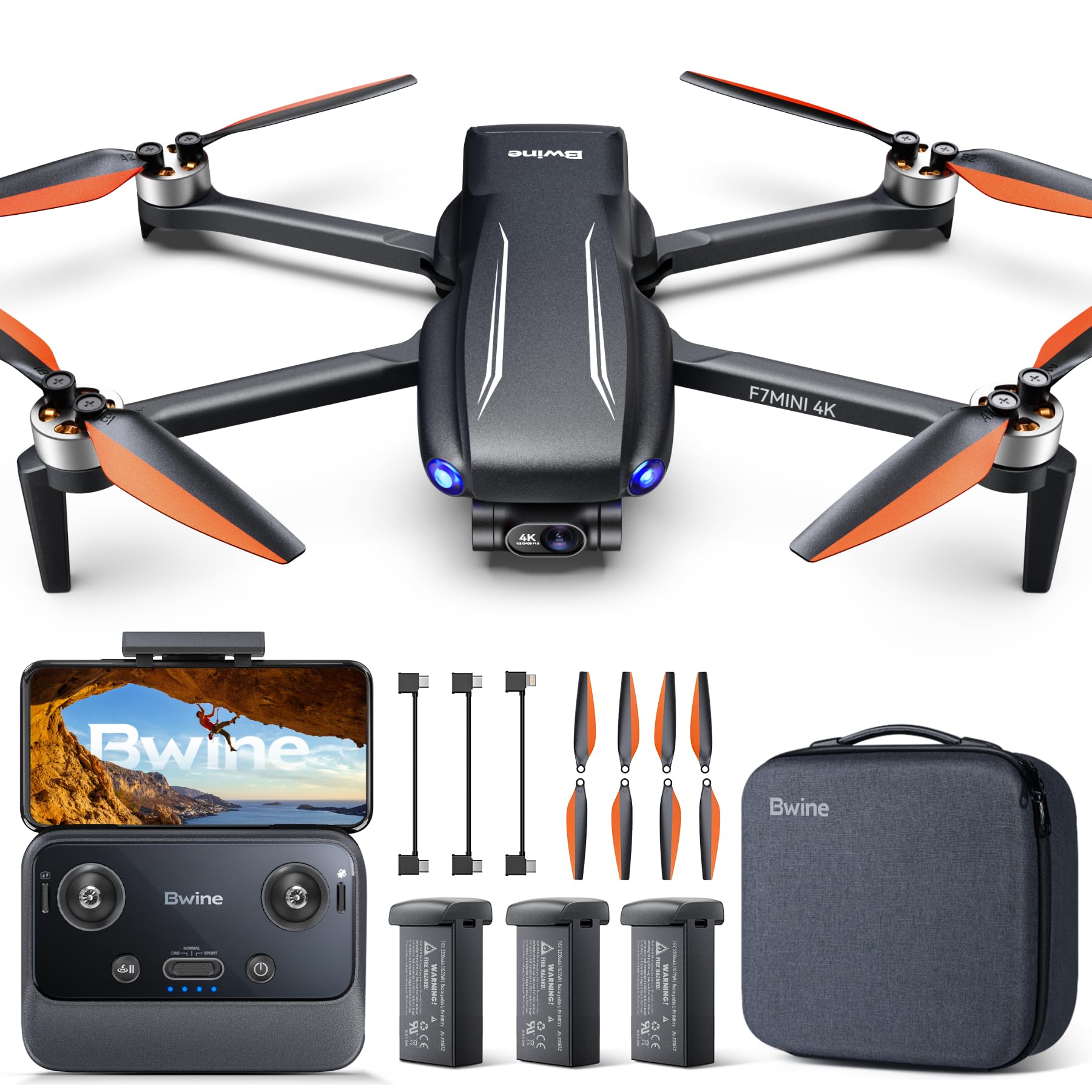
The Bwine F7MINI punches above its weight class with a 3-axis mechanical gimbal, 8K photo resolution, and 4K/30fps video, all housed in a sub-249g body that requires no FAA registration. The 1/2-inch CMOS sensor with an F1.8 aperture captures detail and clarity that outpaces many drones in the mid-range tier. The three-battery kit provides a total flight time of 96 minutes, allowing for extended sessions without constant recharging.
One standout feature is the built-in 5.5-inch screen on the controller, which eliminates the need to mount your phone. The screen is bright enough for outdoor use and connects to the drone instantly. The GPS system supports intelligent flight modes like Waypoint, Orbit, and Follow, plus a 120dB locator buzzer that helps you find the drone if it lands out of sight. The 6km digital transmission system maintains a steady feed with minimal latency.
The main downside is that transferring photos and videos from the drone to your phone via the app can be slow — it’s faster to connect the drone or SD card directly to a computer. For beginners willing to manage that download workflow, the F7MINI offers near-professional image quality and substantial flight time without the professional price tag.
Why it’s great
- True 3-axis mechanical gimbal for smooth, cinematic footage
- Built-in 5.5-inch controller screen, no phone needed
- 96 minutes total flight time with three batteries
Good to know
- Photo/video download to phone is slow via the app
- Higher price point than entry-level models
3. Gleesfun G11PRO

The Gleesfun G11PRO brings a 3-axis brushless gimbal and 6K photo capability to the beginner market, wrapped in an FAA-compliant design. Its GQ2.0 digital transmission system provides a 10,000-foot range, and the GL2.0 smart battery management system supports fast charging with up to 300 charge cycles, making the 70-minute total flight time (two 3200mAh batteries) more practical over the long term.
Build quality is a strong point — the remote feels solid and ergonomic, and the drone handles 20-30 mph winds better than most in this class. Cruise Control mode automates stability during flight, so beginners can focus on framing their shot rather than juggling controls. The follow-me function works reliably for tracking a subject on foot, and the auto-return-home feature activates promptly on signal loss.
Customer service from Gleesfun receives high marks from buyers, with responsive support for calibration issues and replacement requests. The G11PRO is a solid mid-range option for those who want a stable, long-range flyer with professional-grade stabilization without jumping to the premium tier.
Why it’s great
- 3-axis brushless gimbal delivers consistently smooth video
- Long 70-minute total flight time with intelligent battery management
- Handles windy conditions well for its weight class
Good to know
- Weighs 357g, requires FAA Remote ID registration
- Larger and less portable than sub-250g models
4. Potensic ATOM LT

The Potensic ATOM LT is engineered for longer flight sessions, with two 3000mAh intelligent batteries delivering up to 80 minutes of total flight time. Each battery provides a solid 40 minutes, which is excellent for a sub-249g drone. The 2.5K camera uses a Sony sensor and ShakeVanish 2.0 stabilization, offering clear, smooth footage that is well above average for a drone at this price point.
PixSync 2.0 transmission ensures a stable HD feed up to 4 kilometers, and the 4 GNSS satellite support (GPS, GLONASS, Galileo, BeiDou) provides fast satellite locking and accurate positioning. The SurgeFly 2.0 system includes three flight modes tailored for beginners, with a sport mode that reaches speeds around 35-40 mph for more dynamic flight.
One common user note is that GPS satellite acquisition can be slow on first use, and the drone requires open outdoor space to fly — it cannot operate indoors due to GPS-only flight mode. The camera is 2.5K rather than 4K, which matters if you need the highest resolution. For beginners focused on flight time, range, and reliable GPS performance, the ATOM LT is a strong contender.
Why it’s great
- Excellent 40 minutes per battery for extended flying sessions
- 4KM transmission range with minimal latency
- Supports 4 satellite systems for reliable GPS locking
Good to know
- Camera records at 2.5K, not true 4K resolution
- Requires open outdoor area, no indoor GPS flight
5. Specta Mini Drone
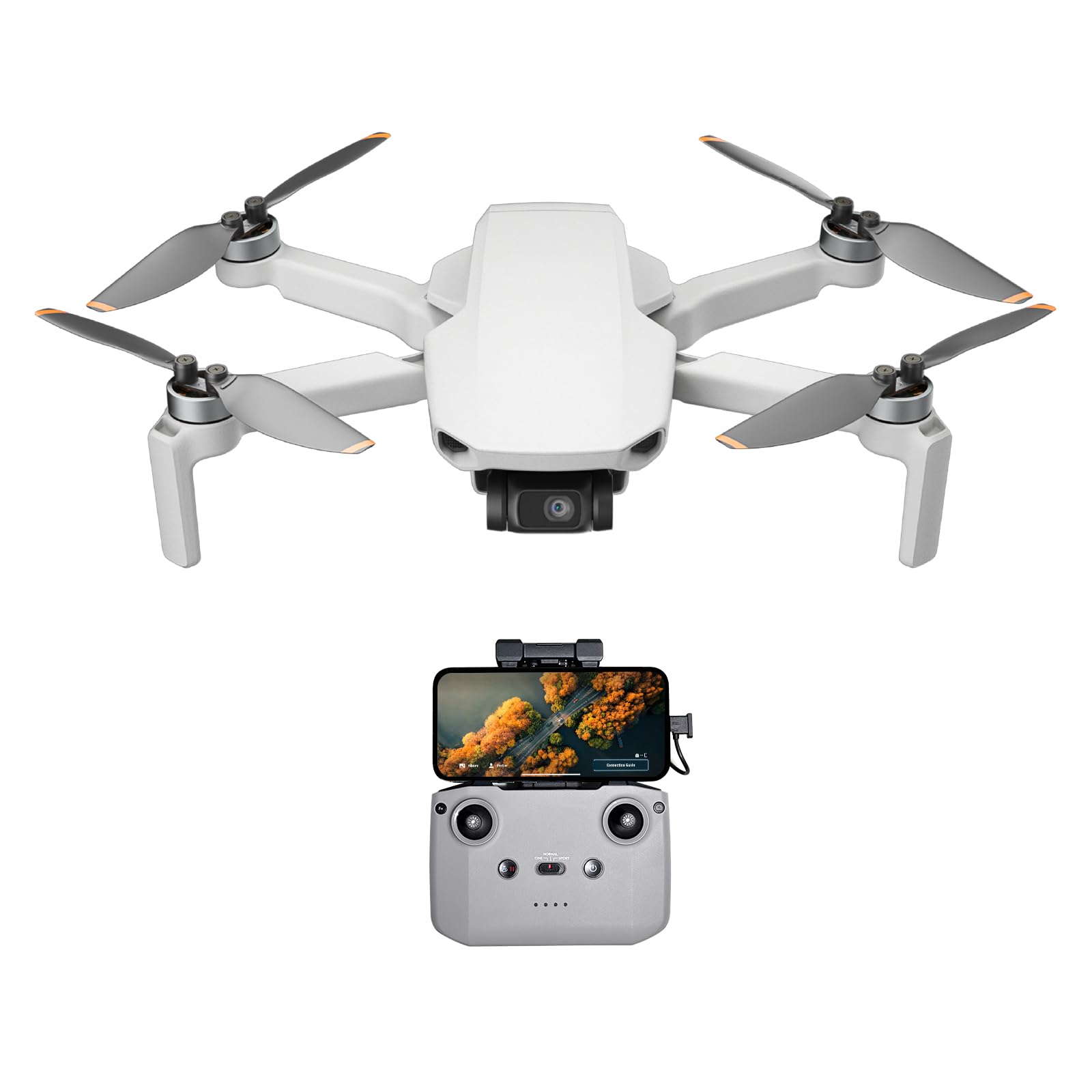
The Specta Mini Drone distinguishes itself by offering a 3-axis mechanical gimbal at a price point where most competitors rely on EIS or 2-axis stabilization. This hardware gimbal provides real-time physical compensation for pitch, roll, and yaw, resulting in exceptionally smooth 4K/30fps footage. The 32800-foot (10km) video transmission range is impressive for a drone in this price bracket, allowing long-distance exploration without signal drop.
Weighing under 249g, it avoids FAA registration requirements, and its compact folding design makes it genuinely portable. Level 5 wind resistance means it can handle a fresh breeze without becoming unstable. The one-button takeoff/landing and GPS return-to-home feature reduce the learning curve for first-time pilots.
The main caveats are that real-world user reviews are limited, making long-term reliability harder to gauge, and the battery life of 31 minutes per charge is decent but not class-leading. For beginners who prioritize smooth gimbal-stabilized 4K footage above all else, the Specta Mini delivers that capability at a sensible price.
Why it’s great
- Genuine 3-axis mechanical gimbal for smooth footage
- 10km video transmission range for long-range flights
- Under 249g and foldable for easy travel
Good to know
- Limited user review data available for long-term assessment
- 31-minute flight time is good but not the longest
6. HOVERAir X1

The HOVERAir X1 is a fundamentally different kind of beginner drone — designed as a self-flying camera rather than a traditional pilot-controlled quadcopter. At just 125g, it’s lighter than most smartphones and fits in a jacket pocket. Its fully enclosed propeller guards make it safe for close-range use, and palm takeoff/landing means you never need a flat surface to start or stop flying.
Pre-programmed flight paths (Hover, Follow, Zoom Out, Orbit, Bird’s Eye) allow hands-free operation. You select a mode, launch the drone, and it automatically frames and tracks you. This makes it ideal for cyclists, skaters, hikers, and solo travelers who want third-person footage without a camera operator. The 2.7K HDR video with triple stabilization produces vibrant, stable clips suitable for social media sharing.
The X1 has 32GB of internal storage, so no SD card is needed. The main compromises are a shorter per-battery flight time of about 11 minutes, a maximum 2.7K resolution (not 4K), and lower wind resistance (Level 4). It also does not fly well over water. For users who prioritize portability, ease of use, and automated follow-me footage, the X1 is a unique and very capable tool.
Why it’s great
- Ultra-light 125g design with fully enclosed safety guards
- Hands-free follow-me and pre-programmed flight paths
- Palm takeoff/landing, no controller needed
Good to know
- Short flight time (~11 minutes per battery)
- Video capped at 2.7K, not 4K, and struggles in wind
7. REDRIE HK33 (V2)
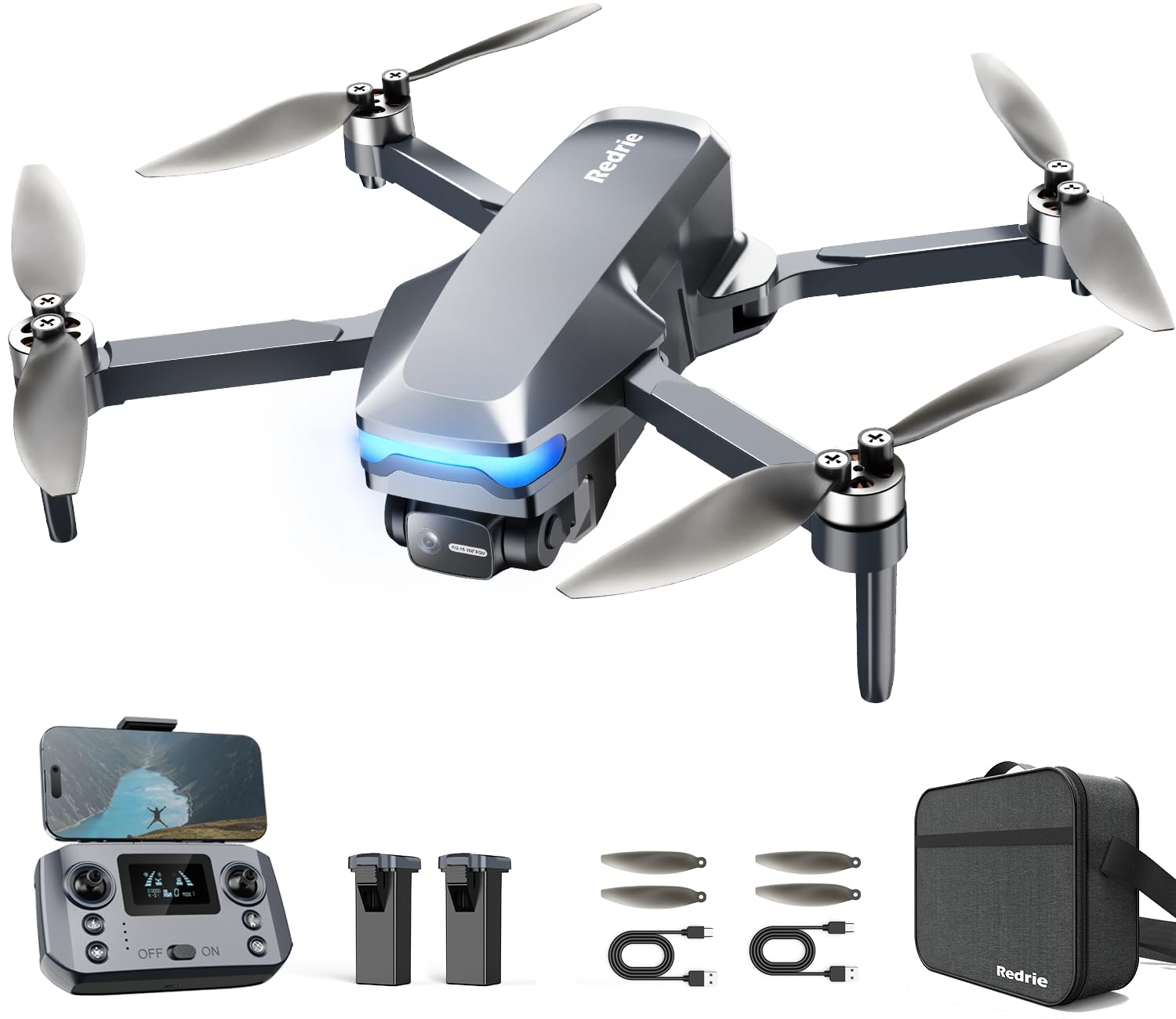
This REDRIE HK33 variant offers the same 4K camera with 2-axis gimbal and 45-minute total flight time as the base model, but adds an updated feature set for a slightly higher price. The brushless motors provide strong wind resistance up to Level 5, and the 5G WiFi transmission with a signal repeater extends the control range to 1640 feet. GPS functions include auto return-home, follow, route planning, and orbit modes.
The 90-degree remote-controlled camera angle adjuster gives you quick access to horizontal and vertical framing without landing. It weighs under 250g, so no FAA registration is required, and the included carrying case makes transport easy. Beginners note that the drone is stable in hover and easy to control, though the app interface could be more intuitive.
The same stabilization caveats apply as with the base HK33 — the 2-axis gimbal reduces shake but cannot fully eliminate it during aggressive maneuvers. For buyers who want a feature-rich package with GPS safety nets and decent 4K image quality at a moderate price, this V2 version is a worthy step up from the entry-level model.
Why it’s great
- Brushless motors with Level 5 wind resistance
- GPS auto return, follow, route, and orbit modes included
- Under 250g with foldable body and carrying case
Good to know
- 2-axis gimbal still allows some camera shake in fast flight
- App interface could be more user-friendly for beginners
8. Oddire HK11

The Oddire HK11 delivers a comprehensive beginner drone experience with true GPS functionality and a 4K adjustable camera at a budget-friendly price. The 7.7V 1800mAh batteries provide more power than the standard 7.4V or 3.7V cells found in cheaper drones, translating to better climbing performance and longer flight times — up to 48 minutes total with two batteries. The 5G WiFi transmission system maintains a stable connection up to 500 meters.
Smart flight modes including waypoint planning, orbit, follow-me, 3D flip, and gesture photo make it fun to explore different shooting styles without needing advanced piloting skills. The drone weighs 249g, which means no FAA registration is required. Build quality is solid enough to survive multiple beginner crashes, and the included carrying case and spare parts add further value.
One potential hitch is that some users report the drone requires compass calibration each time it’s powered on, and the app selection can be confusing — the correct app is XDRONE GO, not the main one listed. For budget-conscious beginners who want a reliable GPS drone with solid flight features and decent camera output, the Oddire HK11 is a well-rounded entry point.
Why it’s great
- Powerful 7.7V batteries for 48 minutes total flight time
- Full GPS smart modes including follow, orbit, and waypoint
- Durable enough to withstand beginner crashes
Good to know
- Requires compass calibration before each flight
- App download process can be confusing (use XDRONE GO)
9. REDRIE HK33 (Base)
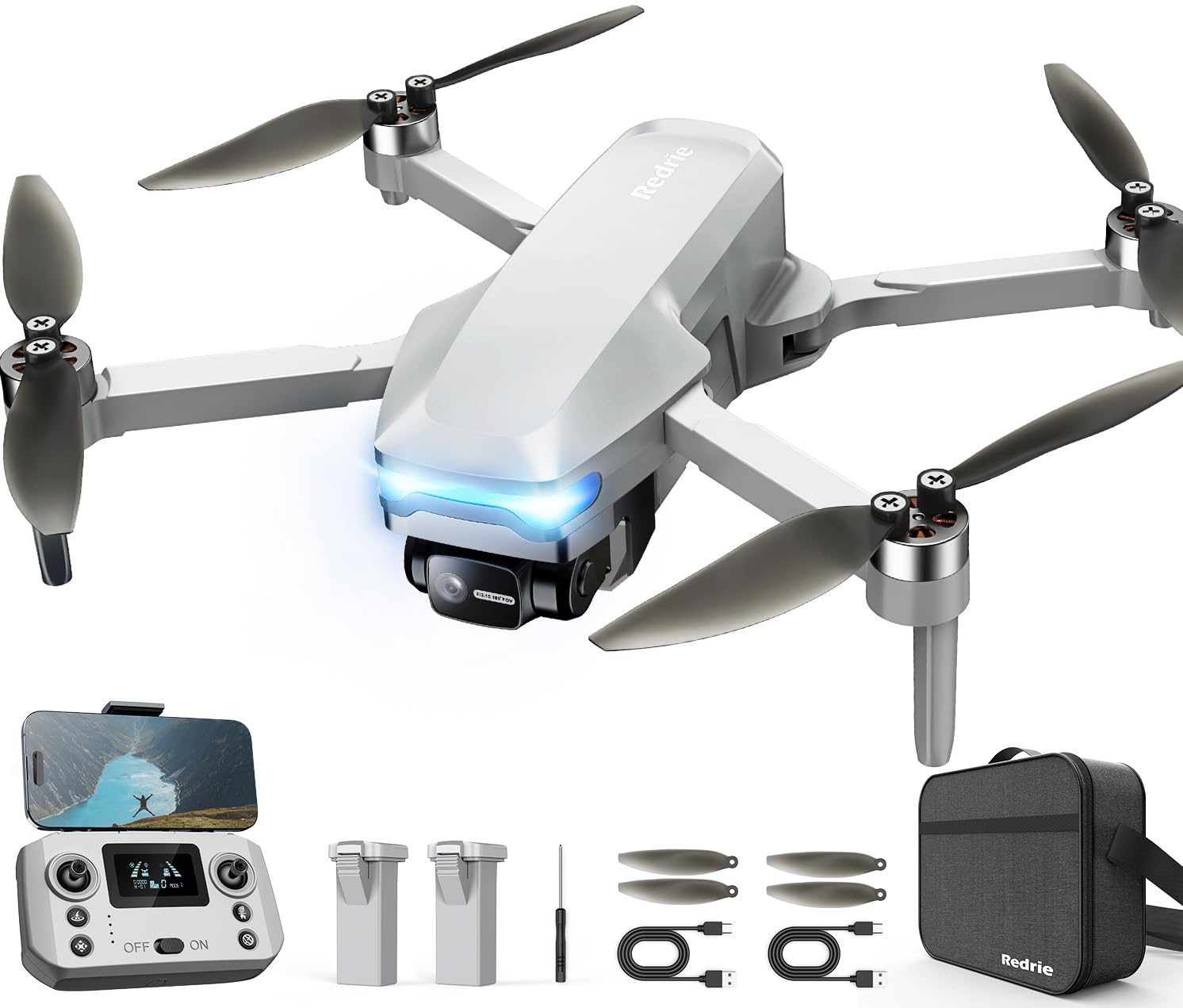
The REDRIE HK33 is the baseline entry point for anyone seeking a genuine beginner drone with camera and GPS without stretching their budget. It includes a 4K UHD camera with a 2-axis mechanical gimbal and a 110° wide-angle lens, capturing 4096x3072P photos and 2048x1088P videos. The two 1800mAh batteries provide a combined flight time of 40-45 minutes, which is adequate for multiple practice sessions in one outing.
GPS functionality includes automatic return-to-home on signal loss, low battery, or exceeding range — a critical safety net for new pilots. It also supports GPS Follow, Route Planning, and Fly Around modes, adding creative flexibility. The brushless motors handle Level 5 wind, and the 5G WiFi with a signal repeater extends the control range to about 500 meters.
Video stabilization is decent but not flawless — the 2-axis gimbal reduces vibration noticeably but won’t match the smoothness of a 3-axis system. The camera’s video quality is more 2K in practice than true 4K, which is common at this entry price. For a learner who wants the essential GPS safety features and a usable camera without a big financial commitment, the REDRIE HK33 delivers exactly that.
Why it’s great
- Entry-level price with genuine GPS return-to-home and follow modes
- Includes 2-axis gimbal for improved video stability
- Comes with case, two batteries, and spare parts
Good to know
- 2-axis gimbal less stable than 3-axis options
- Video resolution is closer to 2K than true 4K
FAQ
Do I need an FAA license to fly a beginner drone under 250g?
What does the “4K” camera mean on a budget beginner drone?
How important is a brushless motor on a beginner drone?
Final Thoughts: The Verdict
For most users, the best beginner drone with camera and gps winner is the Bwine F7MINI because it offers a true 3-axis gimbal, 8K photo capability, a built-in controller screen, and a 96-minute total flight time — all in a sub-249g, FAA-exempt package. If you want the most intuitive, crash-resistant flying experience, grab the DJI Neo 2 for its omnidirectional obstacle sensing and palm-based gesture controls. And for the best value with long flight sessions and reliable GPS, nothing beats the Potensic ATOM LT with 80 minutes of flight time and 4KM transmission.