
Our readers keep the lights on and the weekend projects moving. As an Amazon Associate, I earn from qualifying purchases.
Starting out with drones is thrilling until a gust of wind sends your new quadcopter straight into a tree branch. The sinking feeling of watching a costly mistake happen in real-time is the single biggest pain point for new pilots. A drone that can sense and dodge those obstacles changes the entire learning curve from stressful to enjoyable.
I’m Rikta — the co-founder and writer behind FitlyFast. I’ve spent countless hours analyzing flight performance data, obstacle detection systems, and user feedback to separate the marketing fluff from the gear that actually protects itself out of the box.
Whether you want to capture stunning aerial views or just master the controls without replacing a broken frame, finding the absolute right beginner drone with collision avoidance is the one decision that determines if you stick with the hobby or give up after one wreck.
How To Choose The Best Beginner Drone With Collision Avoidance
A beginner drone with collision avoidance is more than just a machine with sensors. The quality and coverage of that avoidance system, combined with flight time and ease of use, determines whether you master the controls or get frustrated. Focus on these three factors before buying.
Obstacle Avoidance Type and Coverage
Not all obstacle avoidance is equal. Entry-level models often use forward-facing infrared sensors that prevent you from flying straight into a wall but ignore sideways or backward threats. 360° systems, commonly found in mid-range and premium models, use multiple visual or LiDAR sensors to detect threats in all directions. For beginners practicing in tighter spaces, full-coverage avoidance provides a much wider margin for error.
Flight Time per Battery and Total Session Length
Learning to fly requires repetition. A drone with a single battery offering 15 minutes forces you to stop and recharge frequently, breaking your practice flow. Models that include two or three batteries and offer 25–30 minutes per battery let you stay in the air longer, making skill acquisition faster and more enjoyable. Prioritize total flight time over raw range for a better beginner experience.
Quick Comparison
On smaller screens, swipe sideways to see the full table.
| Model | Category | Best For | Key Spec | Amazon |
|---|---|---|---|---|
| DJI Mini 3 | Premium | Reliable brand, pro-level camera, flight time | 38-min flight, 4K HDR, 3-axis gimbal | Amazon |
| Holy Stone HS600D | Premium | Wind resistance, 3-axis gimbal stability, beginner modes | 80-min total flight, 6KM transmission | Amazon |
| DCX Volo X EZ AI | Premium | 360° LiDAR, US support, payload release | 45-min flight, 4-mile range, LiDAR sensors | Amazon |
| Bingchat Tablet Remote | Premium | Long flight time, rainproof, payload release | 84-min flight, 5-mile range, 7-level wind resistance | Amazon |
| Bwine F7MINI | Mid-Range | Under 249g, 3-axis gimbal, FAA exempt | 96-min total flight, 6KM transmission | Amazon |
| PLEGBLE Drone | Mid-Range | Built-in 5” screen, easy to operate, beginner friendly | 70-min flight, 4K EIS, 5” display on controller | Amazon |
| V918 8K Drone | Mid-Range | 360° obstacle avoidance, 5-inch HD screen, 3 batteries | 90-min total flight, 3KM range | Amazon |
| S119 4K Drone | Budget | Budget-friendly, long flight time, GPS features | 75-min total flight, 2000M range | Amazon |
| DJI Flip | Premium | Ultra-portable, palm takeoff, subject tracking | 31-min flight, 4K/60fps HDR, 13KM transmission | Amazon |
In‑Depth Reviews
1. DJI Mini 3

The DJI Mini 3 is the benchmark for beginner drones. Its 4K HDR camera with a 3-axis mechanical gimbal delivers exceptionally smooth footage that surpasses the electronic stabilization found on most budget competitors. The 38-minute maximum flight time per battery gives you generous practice windows before needing a swap.
While this drone does not feature full obstacle avoidance, its GPS-assisted auto return-to-home, precise hovering, and auto takeoff/landing create a safe envelope for learning. The under-249g weight means no FAA registration for recreational use, removing a barrier for new pilots. True Vertical Shooting is a standout for social media content.
The camera quality, brand reliability, and flight stability make it the best foundation for a beginner who wants professional-looking video from day one.
Why it’s great
- Outstanding 3-axis gimbal stabilization for buttery-smooth 4K video
- Long 38-minute flight time per battery reduces practice interruptions
- Under 249g means no FAA registration needed for recreational flying
Good to know
- Lacks forward or 360° obstacle avoidance sensors
- No microSD card included in the base kit
- Higher initial investment than entry-level models
2. Holy Stone Sentinel HS600D

The Holy Stone HS600D offers a professional-grade 3-axis gimbal and EIS stabilization combined with a 1/2-inch Sony CMOS sensor for crisp 4K HDR video and 48MP stills. Its robust 603g reinforced frame and powerful motors handle Level-6 wind resistance, making it stable in conditions that would ground lighter drones.
Beginner modes, one-button takeoff, and multi-sensor safety including TOF, GPS, and optical flow positioning reduce collision risks during early flights. The GNSS positioning plus 3-axis gimbal ensures stable footage even when you are learning to fly in moderate wind. The 80-minute total flight time from two batteries covers long practice sessions.
A few reviewers mention that the camera tends to overexpose and lacks manual ISO or exposure time adjustments. The 603g weight does require FAA registration, adding a small step for new pilots. Overall, this drone provides a very stable and forgiving platform for beginners ready for outdoor flying.
Why it’s great
- True 3-axis gimbal provides smooth footage even in strong wind
- Level-6 wind resistance lets you fly confidently in breezy conditions
- Comes with 2 batteries for 80 minutes of total flight time
Good to know
- Requires FAA registration due to weight over 250g
- Camera can overexpose, and lacks manual exposure controls
- Power-on sequence requires specific order to avoid compass issues
3. DCX Volo X EZ AI
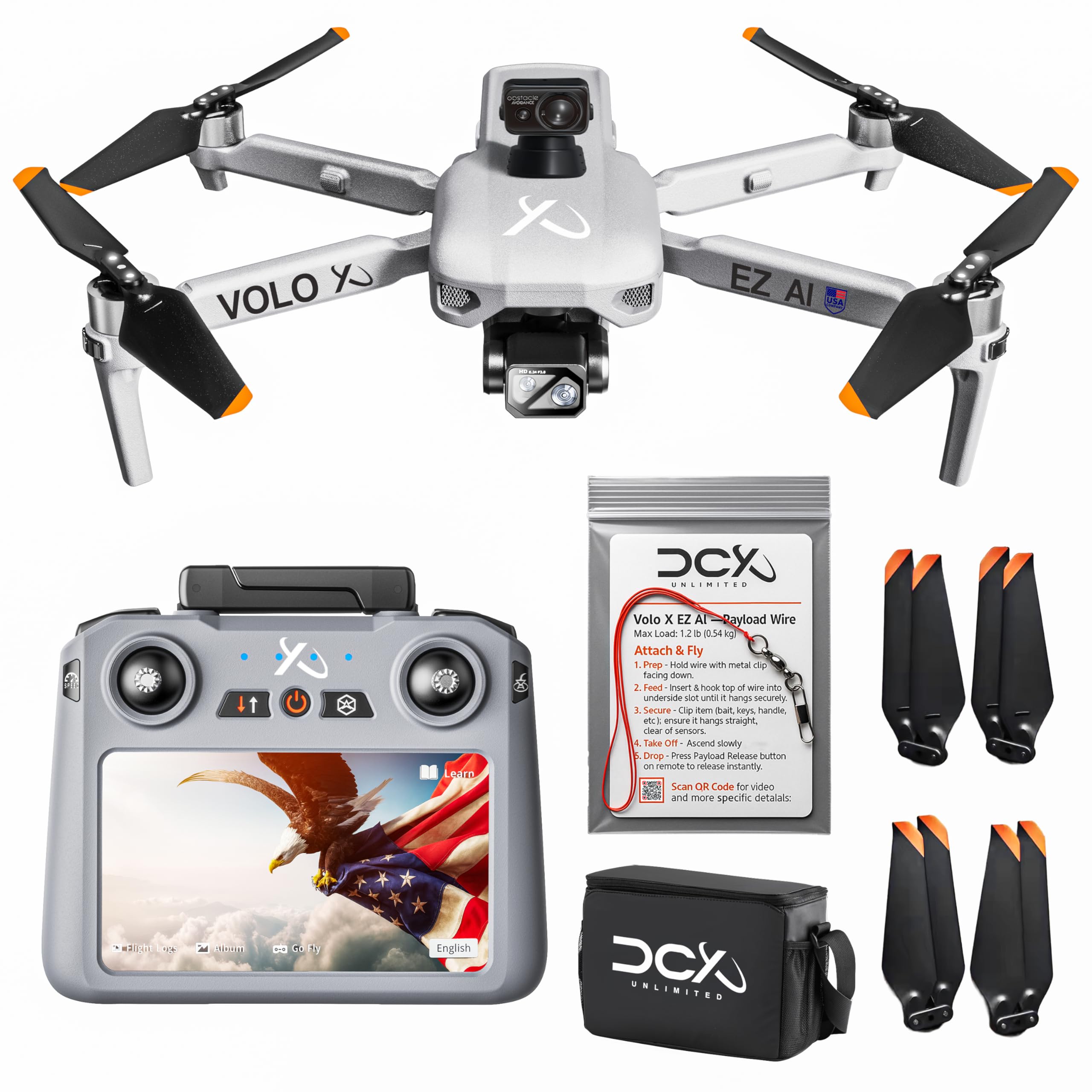
The DCX Volo X EZ AI stands out with true 360° LiDAR-based obstacle detection that works in all directions, not just forward. Combined with AI-assisted flight modes like Follow Me and Precision Return-to-Home, it offers the most comprehensive collision safety net for beginners on this list. The 4K camera is paired with a 3-axis gimbal and electronic image stabilization for smooth footage.
With up to 45 minutes of flight time per battery and a 4-mile range, this drone supports extended exploration without range anxiety. The built-in controller screen eliminates phone dependency, and the FAA Remote ID compliance ensures legal peace of mind. A unique payload release mechanism adds functional fun for dropping small objects.
Some users report an annoying power-on sequence and occasional sync issues between the controller and drone. The Wi-Fi connectivity can be less stable than dedicated transmission links. The beginner-friendly autonomous features and full-coverage LiDAR make it the safest bet for learning in varied environments.
Why it’s great
- 360° LiDAR sensors provide collision protection in all directions
- Long 45-minute flight time per battery for extended practice
- AI-assisted flight modes and built-in screen simplify operation
Good to know
- Power-on sequence can be cumbersome and confusing
- Controller may lose sync with drone during flight
- Wi-Fi transmission can be less stable than wired relay systems
4. Bingchat Tablet Remote
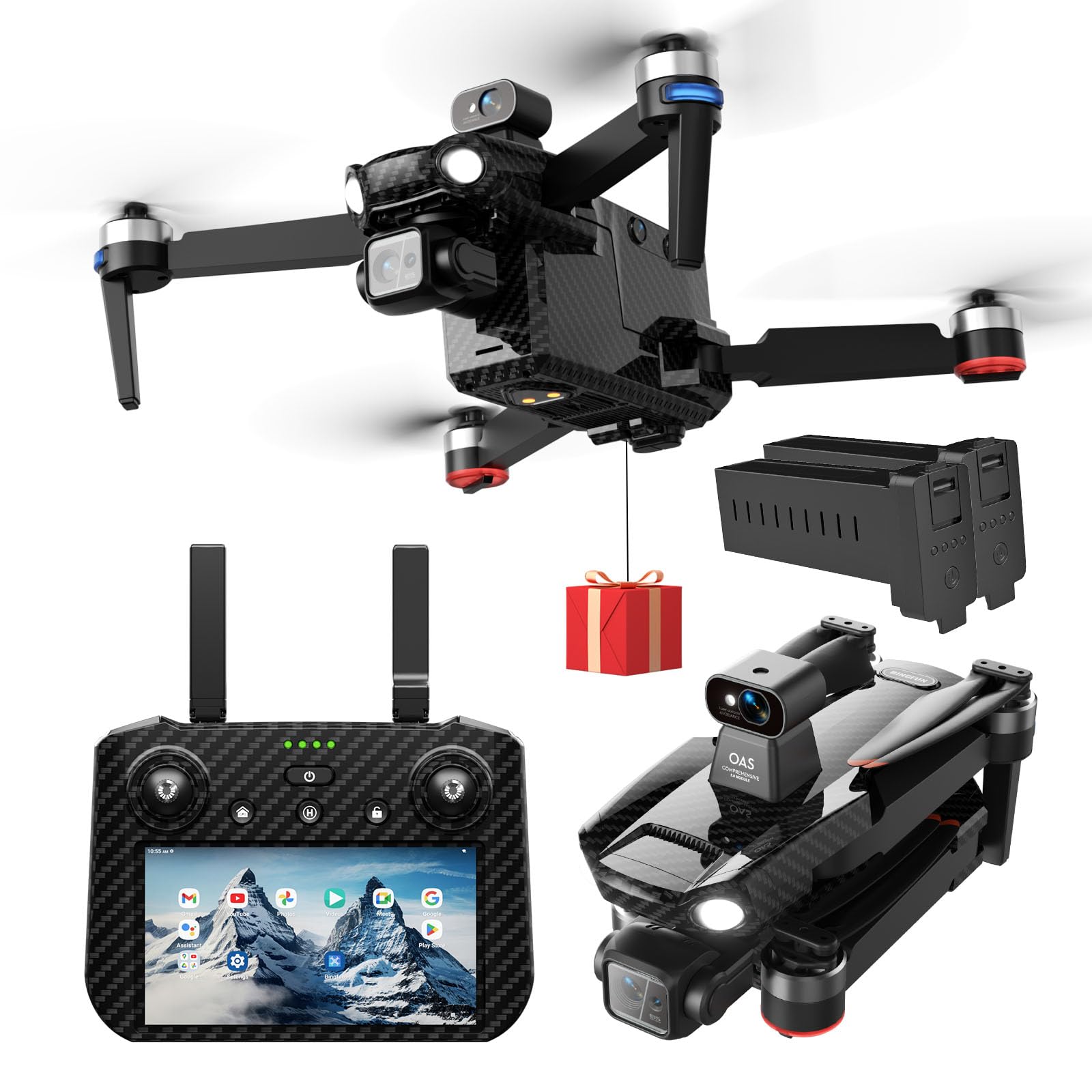
The Bingchat AE Pro packs a massive 84 minutes of total flight time from two 11.1V batteries, giving beginners ample airtime for mastering controls. Its 360° laser obstacle avoidance system works alongside a 3-axis gimbal and EIS stabilization to keep the 4K HD footage steady. The touchscreen controller runs Android with Google support, effectively functioning as a tablet.
Level 7 wind resistance and rainproof construction mean you can fly in conditions that would send most cheaper drones into emergency landing. The payload release function and 50x digital zoom add creative flexibility. FAA compliance removes legal headaches. The large size provides stable flight even in gusty storms.
Batteries take a long time to charge and do not support fast charging. The image transmission may freeze momentarily in areas with poor GPS signal. The tablet controller and robust weather resistance make this an excellent pick for beginners who plan to fly in less-than-perfect conditions.
Why it’s great
- 84-minute total flight time from two batteries is class-leading
- Rainproof and Level 7 wind resistance for flying in challenging weather
- Touchscreen Android controller doubles as a tablet with Google Play
Good to know
- Batteries take very long to charge with no fast charging
- Image transmission can freeze with weak GPS signals
- Larger frame may be less portable than foldable mini drones
5. Bwine F7MINI
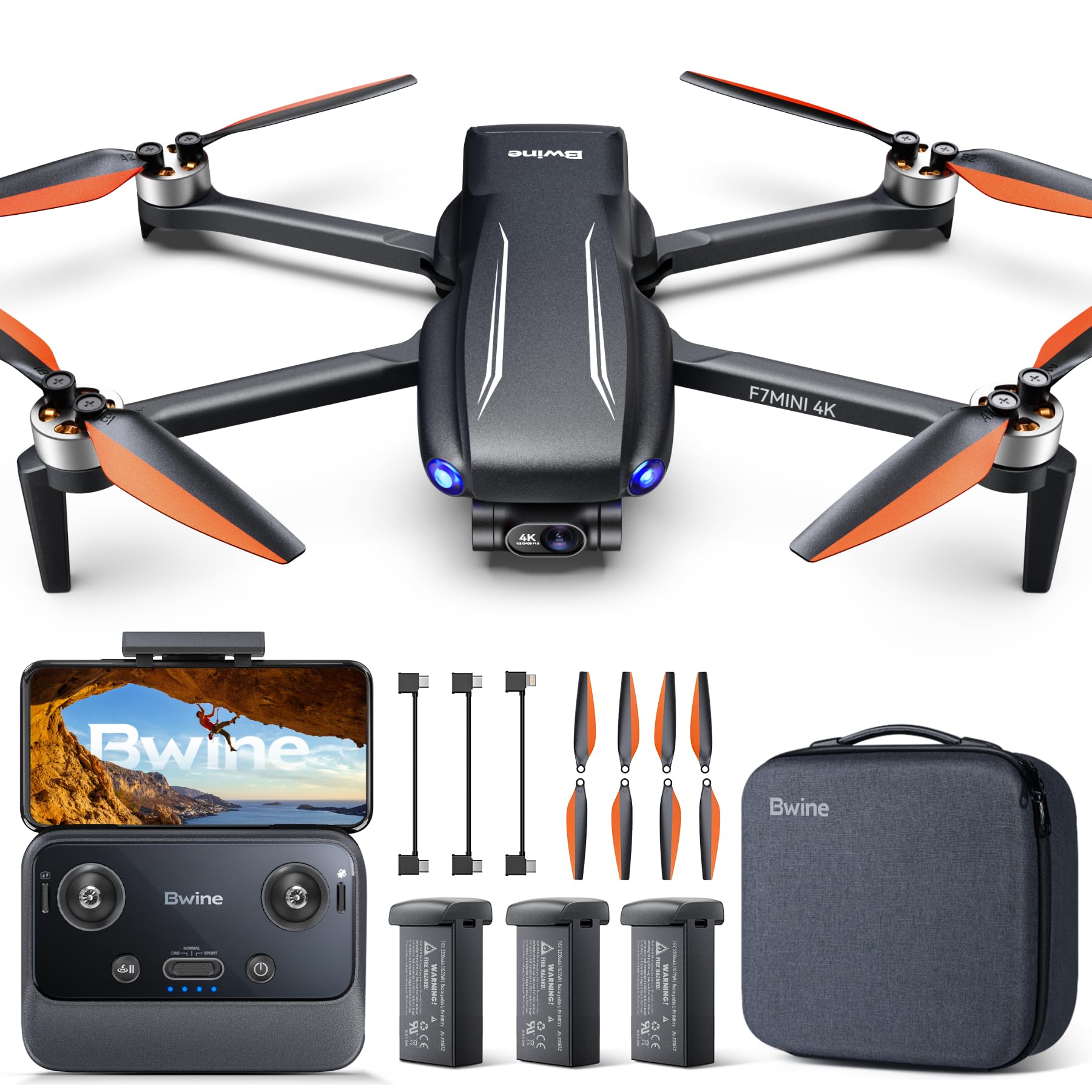
The Bwine F7MINI offers an impressive combination of a 3-axis stabilized gimbal, 4K/30fps video, and 48MP photo capability all in a 249g body that is FAA registration-exempt for recreational pilots. The built-in 5.5-inch touchscreen controller eliminates the need for a phone, providing a seamless and bright display for outdoor flying.
With three high-density batteries providing up to 96 minutes of total flight time, this drone allows for long practice sessions without constant recharging. GPS-assisted smart return-to-home, Follow Me, Waypoint, and Orbit modes make complex shots accessible to beginners. The 6KM digital transmission range with anti-interference keeps the feed stable over long distances.
Transferring photos and videos from the drone to a phone can be slow, requiring a computer for faster downloads. The camera, while good, does not match the low-light performance of larger sensor competitors. The value proposition of a 3-axis gimbal and long flight time at this weight class is hard to beat.
Why it’s great
- True 3-axis gimbal in a sub-250g drone for smooth footage
- 96-minute total flight time from three included batteries
- No FAA registration required for recreational flying
Good to know
- Slow photo and video transfer speed to smartphones
- Camera performance drops in low-light conditions
- Requires two microSD cards for full functionality
6. PLEGBLE Drone
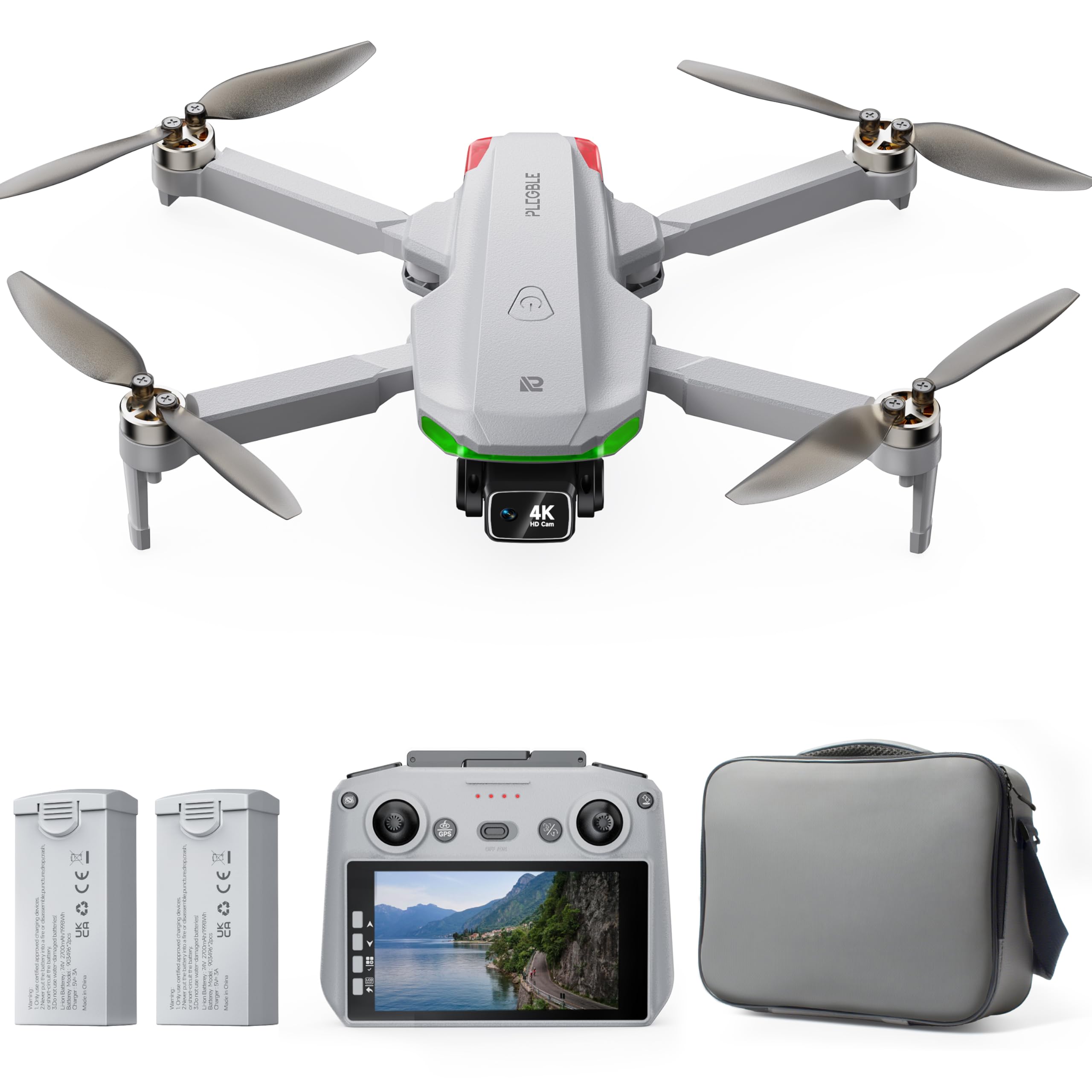
The PLEGBLE Drone is designed for absolute simplicity with its built-in 5-inch HD screen on the controller that eliminates the hassle of connecting a smartphone. It delivers 4K video at 30fps with EIS stabilization and a 130° wide-angle lens, producing smooth footage suitable for social media and travel memories. The under-249g weight keeps it FAA exempt.
GPS-assisted features including auto return-to-home, position lock, and altitude hold build confidence for first-time flyers. The two 2700mAh batteries provide up to 70 minutes of flight time, and the foldable design makes it highly portable. Level 5 wind resistance and brushless motors ensure stable flight outdoors.
Some users note that the drone’s speed is slower than more expensive models, and the range is limited to about 600 meters in real-world use. The controller screen is a standout convenience for those who dislike app-based flying. It is an excellent entry point for those prioritizing ease of use over raw performance.
Why it’s great
- Built-in 5-inch controller screen removes phone dependency
- 4K EIS camera delivers smooth, clear footage
- Lightweight and foldable with FAA-exempt under 249g
Good to know
- Real-world flight range is shorter than advertised
- Slower flight speed compared to premium drones
- Charging time for batteries is relatively long
7. V918 8K Drone
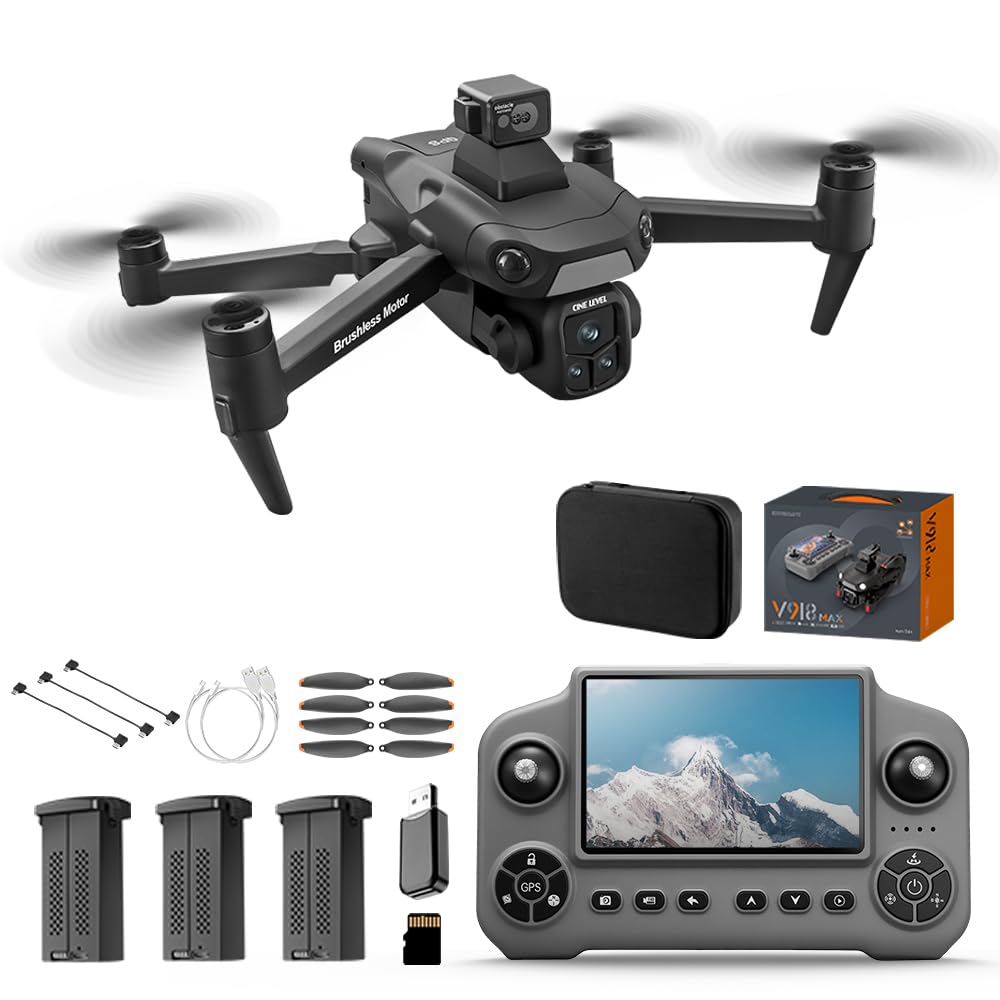
The V918 8K Drone is loaded with features that appeal directly to beginners who want a safe, long-flying platform. Its 360° obstacle avoidance system actively detects and avoids collisions from all directions, drastically reducing crash potential during early flights. Three high-capacity batteries deliver up to 90 minutes of total flight time.
The 5-inch HD display on the controller shows real-time FPV video from the 8K camera, and the 5GHz transmission provides a stable feed. GPS auto return-home, Follow Me, Waypoint Flight, and Circle Fly modes make capturing creative shots easy. The under-249g design avoids FAA registration requirements.
A few units have reported missing sensor lenses or a display that blacks out, indicating some quality control inconsistencies. The camera, while advertised as 8K, is likely interpolated and produces results more in line with good 4K. The comprehensive obstacle coverage and long flight time make it a compelling choice for cautious beginners.
Why it’s great
- True 360° obstacle avoidance reduces crash risk from any direction
- 90 minutes of total flight time with three included batteries
- Built-in 5-inch controller screen for easy FPV viewing
Good to know
- Some units have quality control issues like missing sensor lenses
- Camera resolution is interpolated, not true 8K
- Printed manual is poorly designed with unreadable text
8. S119 4K Drone
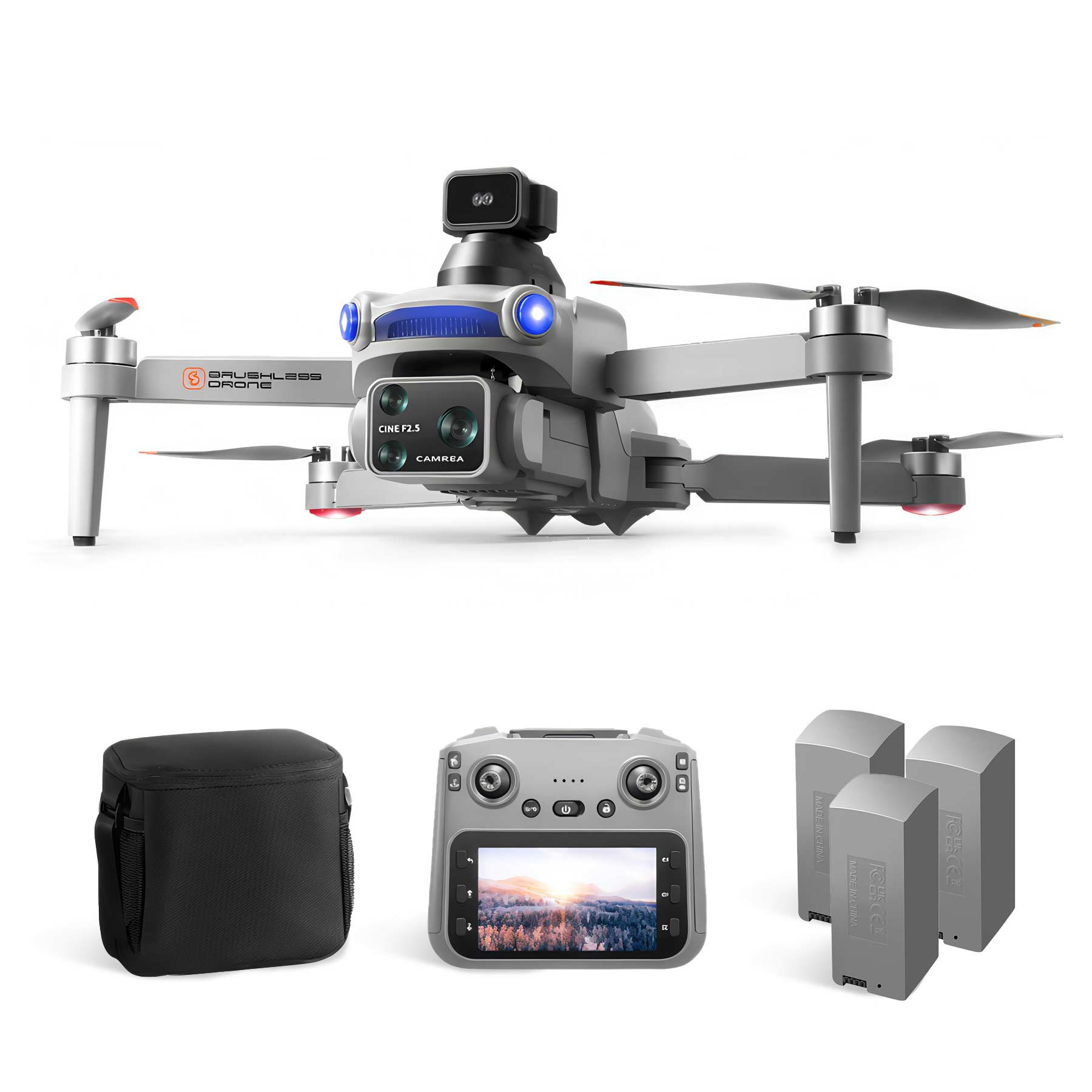
The S119 4K Drone is the most budget-friendly entry on this list, offering a surprising feature set for the price. It includes three modular 3800mAh batteries for a total of 75 minutes of flight time, GPS-assisted auto return and smart flight modes, and forward obstacle avoidance sensors. The brushless motors provide efficient and quiet operation.
The 5G screen remote and FPV transmission work well at close to medium ranges, and the dual camera with a 120° wide-angle lens captures usable footage. One-key takeoff, altitude hold, and headless mode make it accessible for absolute beginners. The GPS position lock helps maintain a stable hover.
Build quality is a concern, with multiple reviewers reporting that the plastic frame feels cheap and can break from minor falls. The obstacle avoidance system has been reported to fail in some units, leading to crashes. For the price, the flight time and GPS features are strong, but the construction compromises are real.
Why it’s great
- Generous 75-minute flight time from three batteries at a low entry cost
- GPS-assisted auto return and smart flight modes
- Brushless motors for efficient, quiet operation
Good to know
- Plastic build quality feels cheap and can break easily
- Obstacle avoidance system may fail in some units
- Camera quality and transmission lag at longer distances
9. DJI Flip

The DJI Flip reinvents the beginner drone experience with its full-coverage carbon fiber propeller guards and palm takeoff and landing capability. It is designed to fly fearlessly in close quarters and even launch directly from your hand. Despite its compact design, it packs a 1/1.3-inch CMOS sensor capturing 4K/60fps HDR video.
Subject tracking transforms the drone into a personal cinematographer that follows your movements during hikes or parties. The 31-minute flight time is respectable for its size, and the 13-kilometer video transmission range gives you plenty of room to explore. The under-249g weight, with propeller guards, keeps registration requirements simple for recreational users.
The controls can be operated via iPhone app and Apple Watch, removing the need for a dedicated controller for basic flying. Only forward obstacle avoidance is present, not full 360° coverage. Buying additional batteries, storage, and a case bumps the total investment higher. The DJI Flip is the most innovative and user-friendly design for absolute beginners.
Why it’s great
- Palm takeoff and landing makes it the most approachable drone to operate
- Full-coverage carbon fiber propeller guards protect against crashes
- Excellent 4K/60fps HDR video from a large 1/1.3-inch sensor
Good to know
- Only forward obstacle avoidance, not 360° coverage
- Requires additional spending on batteries, case, and storage
- No dedicated controller included in the base package
FAQ
Does obstacle avoidance work indoors for beginners?
Can obstacle avoidance prevent all crashes for a first-time pilot?
Final Thoughts: The Verdict
For most users, the beginner drone with collision avoidance winner is the DCX Volo X EZ AI because its 360° LiDAR sensors provide the most comprehensive collision protection in all directions, paired with AI-assisted flight modes that make learning safe and intuitive. If you want the best balance of camera quality and flight time, grab the Holy Stone HS600D. And for the most innovative, palm-launched experience that removes the intimidation factor, nothing beats the DJI Flip.