
Our readers keep the lights on and the weekend projects moving. As an Amazon Associate, I earn from qualifying purchases.
Nothing kills a beginner’s momentum faster than guitar strings that feel rough under the fingers, refuse to stay in tune, or go dull after two practice sessions. The wrong set turns every chord change into a frustrating workout, and that dead, lifeless tone makes you wonder if you’ll ever sound good. Choosing your first pack of strings is a surprisingly critical fork in the road — get it right and you’ll actually enjoy practicing.
I’m Rikta — the co-founder and writer behind FitlyFast. I’ve spent years digging through the technical specs, coating technologies, and player reviews that separate a string that fights you from one that practically plays itself.
Whether you are a first-time restringer or switching from a borrowed guitar, this guide breaks down every real-world difference so you can confidently grab the best beginner electric guitar strings and get back to playing.
How To Choose The Best Beginner Electric Guitar Strings
Beginners often grab the cheapest set they see, but that one decision determines how much your fingertips ache, how often you have to restring, and whether your guitar sounds bright or muffled. Three specs matter most: gauge, coating, and core construction. Ignore marketing fluff and focus on these.
Gauge: The Thickness That Controls Comfort
String gauge is the decimal number like .009 or .010 — the smaller the number, the thinner the string. Light gauges (.009) bend easily and hurt less, making them the standard pick for new players. Heavier gauges (.011 and up) produce a fuller tone but demand stronger fingertips and more pressure. Most beginners gravitate toward extra-light (.009-.042) or regular light (.010-.046) sets to avoid hand fatigue during those first weeks of practice.
Coating: Rust Protection vs. Natural Feel
Coated strings (Nanoweb, Optiweb, or polymer wraps) block sweat and moisture from corroding the metal, extending bright tone life by three to five times. The trade-off is a slightly slicker feel under the fingers. Uncoated strings feel more natural but die faster — especially in humid climates or if you tend to leave the guitar out of its case. For a beginner who may not clean strings after every session, a thin coating is usually the smarter investment.
Core Wire: Hex vs. Round
Most quality electric strings use a hex-shaped core wire (hex-core) rather than a round core. This design forces the outer wrap wire to grip tighter, producing better intonation up the neck and a more consistent feel across the full set. Budget strings sometimes skip this detail, leading to false notes when you fret higher up. Any string from a major manufacturer (D’Addario, Ernie Ball, Elixir) will use a hex-core design.
Quick Comparison
On smaller screens, swipe sideways to see the full table.
| Model | Category | Best For | Key Spec | Amazon |
|---|---|---|---|---|
| D’Addario EXL110 Bundle | Mid-Range | First string change + accessories | Light 10-46, nickel-plated | Amazon |
| Elixir Optiweb 11-49 | Premium | Longest-lasting crisp tone | Medium 11-49, Optiweb coating | Amazon |
| Ernie Ball 3-Pack 10-46 | Mid-Range | Budget-friendly bulk value | Regular Slinky 10-46, 3 sets | Amazon |
| D’Addario ESXL110 Double Ball | Mid-Range | Headless/Steinberger guitars | Light 10-46, double ball end | Amazon |
| Ernie Ball Hybrid 3-Pack 9-46 | Premium | Easy bends + full low-end | Hybrid 9-46, 3 sets | Amazon |
| Elixir Nanoweb 9-42 3-Pack | Premium | Ultra-soft feel, longer life | Extra light 9-42, Nanoweb coating | Amazon |
| Elixir Nanoweb 9-42 3-Pack (Bulk) | Premium | Stocking up for the long haul | Super light 9-42, 3 sets | Amazon |
In‑Depth Reviews
1. D’Addario EXL110 Bundle

This bundle gives a beginner everything needed for the first string change: one set of D’Addario’s iconic EXL110 nickel-plated strings in light 10-46 gauge, ten medium celluloid picks, and a black polypropylene strap with leather ends. The strings themselves are the same legendary hex-core design that has been a studio standard since 1974, delivering consistent intonation and a bright, versatile tone that works across rock, blues, and pop.
The strap adjusts from 35 inches to 59.5 inches, covering most body types, and the leather ends hold securely without slipping. The medium picks (0.70mm) are forgiving enough for strumming yet stiff enough for single-note picking — exactly what a learner needs to experiment with technique. Having all three items in one box removes the guesswork of buying accessories separately.
Customer reports mention that the strap runs slightly short for taller players, and the picks are basic celluloid that experienced players will eventually upgrade. But for someone tackling their first restring or building a starter kit, this bundle removes friction entirely. The strings themselves sound fresh for weeks of daily practice and hold tuning reliably after a quick stretch.
Why it’s great
- Includes strap, picks, and strings in one kit
- Bright, versatile tone that does not go dull fast
- Proven hex-core design for solid intonation
Good to know
- Strap may feel short for tall players
- Picks are basic — fine for learning, not for gigging
2. Elixir Optiweb 11-49
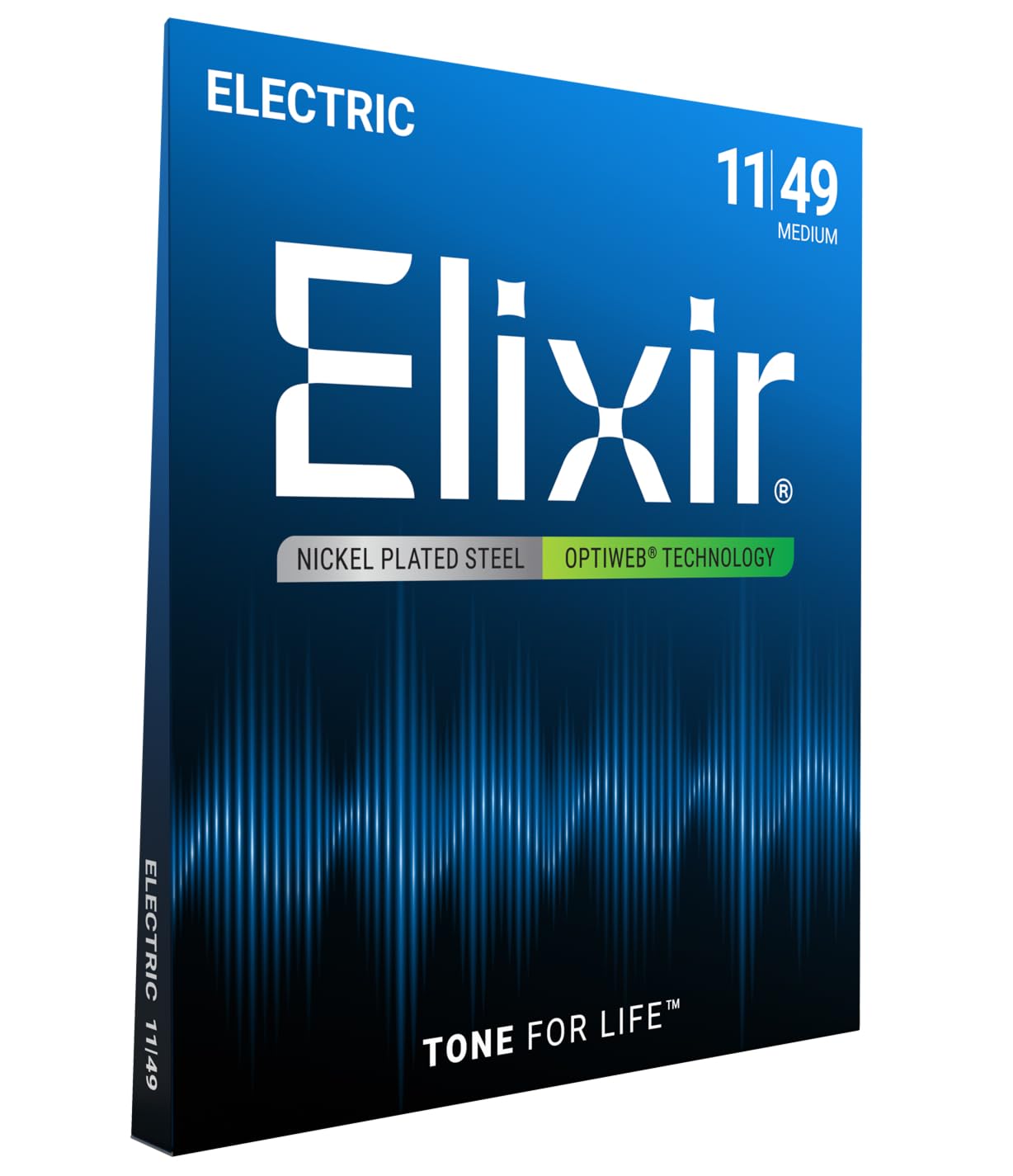
The Elixir Optiweb strings use a proprietary thin-film coating that wraps the entire wound string to block sweat, humidity, and rust — the primary killers of tone in uncoated sets. The coating is noticeably less slippery than the older Nanoweb formula, which means you get the corrosion protection without that greasy feel. Players report these strings retain their out-of-box brightness for two to three months of regular playing.
The medium gauge (11-49) produces a fuller, punchier sound than lighter sets, making power chords and single-note riffs sound thicker. Tuning stability is excellent after a single stretch, compared to the two or three stretches needed with uncoated alternatives. The high-end jangle cuts through cleanly without becoming harsh, which is a common complaint with some coated strings.
A few users have noted that the high E string can snap prematurely, so keeping a spare single string on hand is wise if you bend aggressively. The price per single set is higher than uncoated options, but the extended tone life often makes up for the cost over several months. For a beginner who wants to change strings less frequently, this is a strong upgrade.
Why it’s great
- Coating blocks corrosion for months of bright tone
- Medium gauge delivers thick, punchy sound
- Tuning locks in after one stretch
Good to know
- High E string can break during heavy bends
- Premium price per single set
3. Ernie Ball 2221 3-Pack 10-46

The Ernie Ball Regular Slinky 10-46 set is one of the most widely used string gauges in electric guitar history, found on countless vintage and modern recordings. This three-pack gives you three complete sets in one box, effectively cutting the per-set cost compared to buying singles. The nickel-plated steel winding over a tin-plated hex core produces a bright, balanced sound that works across any genre a beginner might explore.
Players consistently highlight how well these strings stay in tune after installation, even when using a tremolo bar. The feel is smooth without being slick, and the 10-46 gauge provides a middle ground — not too tough on the fingertips, but still fat enough to deliver a solid rock tone. The three-pack format means you can change strings fresh for a month or two without reordering.
Because these strings are uncoated, they will lose their brilliance faster than coated sets, especially if you play in a humid room or leave the guitar out. Some users report the winding can feel slightly rough if you slide aggressively. Still, for a beginner working on a budget who wants a proven workhorse string, this three-pack provides excellent value and a sound that has earned decades of trust.
Why it’s great
- Three sets for great bulk value
- Balanced, bright tone used on thousands of records
- 10-46 gauge is comfortable for most beginners
Good to know
- Uncoated — tone fades faster than coated strings
- Winding can feel slightly rough on slides
4. D’Addario ESXL110 Double Ball

This is a specialized version of D’Addario’s best-selling XL Nickel set designed specifically for headless guitars like Steinberger, Hohner The Jack, and other double-ball-end systems. The string construction uses the same nickel-plated steel wrap and hex-core innards as the standard EXL110, so the tone is identical — bright, articulate, and versatile. The critical difference is the double ball end, which eliminates the need for a traditional tuning peg and ball-end fitting.
Players report these strings hold up exceptionally well under heavy tremolo use and aggressive metal playing, with no cases of the ball-end slipping or breaking at the tailpiece. The light 10-46 gauge keeps finger pressure low, which is helpful when learning techniques like bending and vibrato. The recyclable VCI packaging also carries a code you can register for D’Addario Players Circle points.
The obvious limitation is compatibility: these strings will not work on a standard Stratocaster or Les Paul with conventional tuning pegs. If you own a headless guitar, this is the perfect fit — but it is a niche item. Standard-strat players should look at the regular EXL110 instead. The double-ball design also makes installation slightly trickier on some tremolo bridges until the ball end seats fully.
Why it’s great
- Perfect fit for headless/Steinberger guitars
- Same bright, versatile tone as standard EXL110
- Holds up well under heavy tremolo abuse
Good to know
- Does not fit standard tuning peg guitars
- Installation may require seating the ball end
5. Ernie Ball Hybrid Slinky 3-Pack 9-46

The Hybrid Slinky set combines the best of both worlds: light high strings (009, 011, 016) for effortless bending, and heavier bass strings (026, 036, 046) for thick, punchy low-end chords. This hybrid approach is perfect for beginners who want to attempt lead-style bends without sacrificing the weight of rhythm playing. The three-pack format provides excellent long-term value, just like the Regular Slinky bulk option.
Players consistently remark on how easy these strings feel on the fingertips compared to a straight 10-46 set, while maintaining a warm, full sound from the wound strings. Tuning stability is strong, and the nickel-wound construction keeps the tone balanced across all six strings. The polymer coating provides light corrosion resistance, though it is not as aggressive as Elixir’s full-wrap coating.
Because the high strings are lighter, beginners with aggressive strumming may snap the 009 high E more frequently early on. The hybrid gauge also means you cannot simply buy the same gauge replacement for every string — you have to remember the set is mixed. Still, for players who want easy bends without sacrificing low-end authority, this is a wonderfully designed compromise.
Why it’s great
- Light high strings for easy bending
- Heavier bass strings for full rhythm tone
- Three-pack offers great bulk value
Good to know
- Light high strings may snap under hard strumming
- Hybrid gauge complicates individual string replacement
6. Elixir Nanoweb 9-42 3-Pack
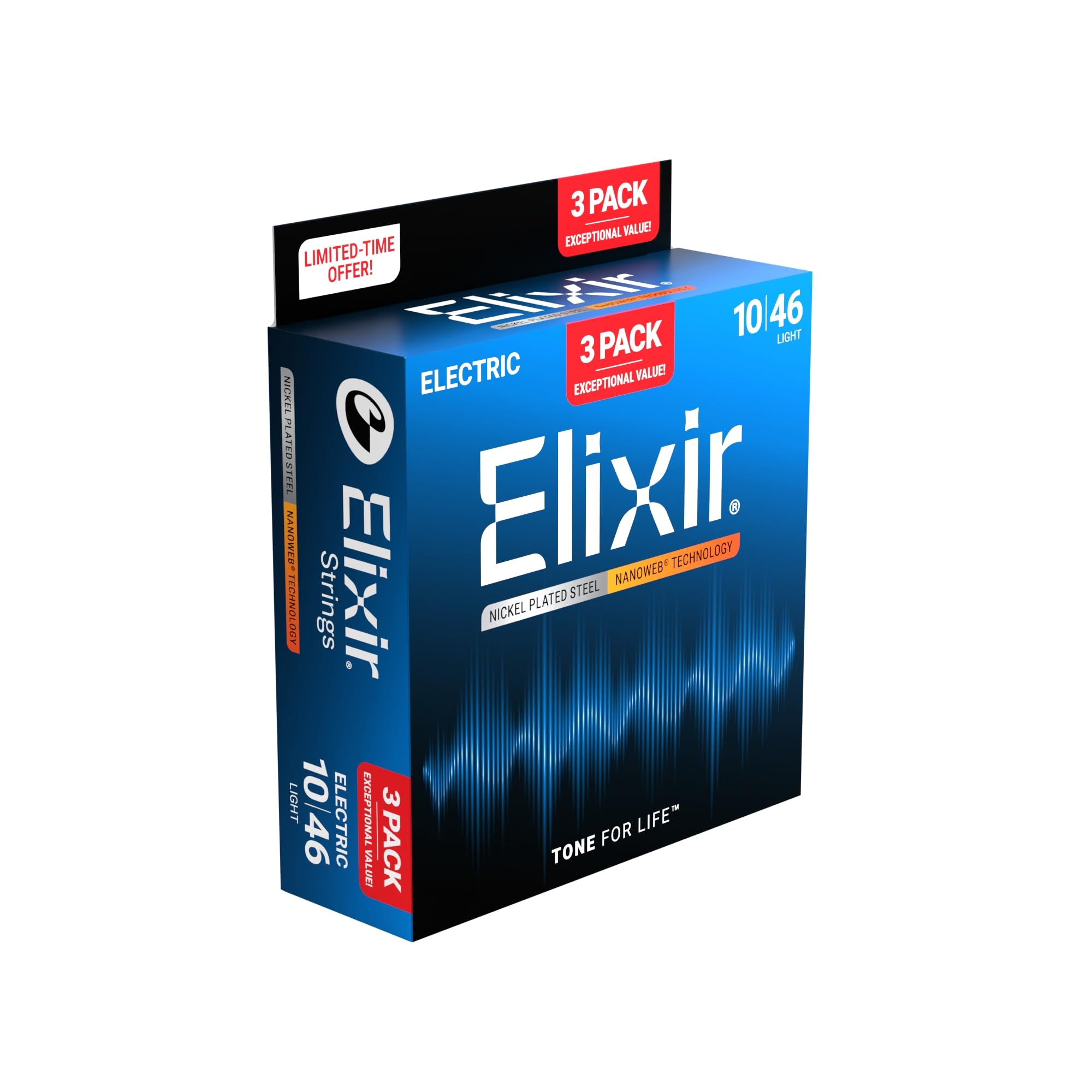
The Elixir Nanoweb 9-42 set is the gold standard for players who want a buttery-smooth feel and extended tone life without the slickness of the Optiweb coating. The ultra-thin Nanoweb coating wraps every wound string to block sweat and rust, preserving the bright out-of-box sound for three to five times longer than uncoated strings. The extra-light 9-42 gauge is the most beginner-friendly option available — minimal finger pressure required, and bends feel almost effortless.
Players report these strings remain playable for two to three months of daily practice, with no dead spots or dullness creeping in until well after that point. The 9-42 gauge is especially forgiving on short-scale guitars and for younger players or those with smaller hands. The three-pack format reduces the per-set sting, making this a smarter investment than buying singles if you plan to stick with this gauge.
Some experienced players find the Nanoweb coating slightly slippery compared to bare steel, though most beginners do not notice the difference. The price per set is higher than uncoated strings, but the longevity often means you change strings half as often, evening out the cost. For a new player who wants a soft touch and consistent tone, this set is a compelling step up.
Why it’s great
- Ultra-thin coating blocks corrosion for months
- Extra-light gauge reduces finger fatigue
- Three-pack improves value over singles
Good to know
- Coating feels slightly slick to some players
- Higher upfront cost than uncoated sets
7. Elixir Nanoweb 9-42 3-Pack (Bulk)

This SKU is essentially the same Elixir Nanoweb 9-42 product as the previous entry, but sold in a bulk three-pack under model number 12002. The strings are identical: the same ultra-thin coating, same nickel-plated steel wrap, same super-light 9-42 gauge that feels effortless under the fingers. The primary advantage here is the per-set cost, which drops noticeably when buying in this packaging format.
Players who have used these strings for decades report that the coating keeps them sounding new through months of daily practice, heavy whammy bar use, and humid environments where uncoated strings would rust within days. The reduced finger squeak is a welcome bonus for recording, though beginners are unlikely to notice it until they attempt slide techniques. Tuning stability is excellent, requiring just one or two stretches after installation.
The 9-42 gauge is the lightest of the standard options, meaning it sacrifices some low-end thickness compared to 10-46 or 11-49 sets. If your playing style relies on heavy, beefy power chords, you might prefer a heavier set. But for pure playability, comfort, and long-lasting tone, this bulk pack is a smart buy for any beginner planning to practice extensively over several months without restringing frequently.
Why it’s great
- Bulk pricing reduces per-set cost
- Coating keeps tone fresh for many months
- Super-light gauge is the easiest on fingertips
Good to know
- Light gauge lacks low-end punch
- Coated feel is not for everyone
FAQ
What gauge should a true beginner start with?
Are coated strings worth the extra money for a beginner?
How often should a beginner change electric guitar strings?
Final Thoughts: The Verdict
For most beginners, the best beginner electric guitar strings winner is the D’Addario EXL110 Bundle because it combines a proven, bright-sounding string set with the strap and picks you need to get started — removing the hassle of shopping for separate accessories. If you want strings that stay fresh for months without changing, grab the Elixir Optiweb 11-49 for its outstanding corrosion resistance. And for pure budget-minded bulk that still sounds great, nothing beats the Ernie Ball Regular Slinky 3-Pack as a reliable workhorse.