
Our readers keep the lights on and the weekend projects moving. As an Amazon Associate, I earn from qualifying purchases.
The difference between a disposable plastic camera and a proper film camera is the difference between a faded memory and a photograph you frame. Beginners often grab the first retro-styled box they see, only to discover light leaks, broken winding mechanisms, or plastic lenses that deliver muddy images. A great beginner film camera forgives your mistakes while teaching you the core principles of exposure, focus, and composition — all without draining your wallet on gear.
I’m Rikta — the co-founder and writer behind FitlyFast. I’ve spent years analyzing film camera specifications, from lens coatings and shutter accuracy to build durability across more than fifty vintage and modern models. My focus here is on real-world usability for someone loading their first roll.
This guide compares seven cameras that each bring a different strength to the table — instant prints, half-frame economy, SLR precision, or pure retro fun. After testing and cross-referencing specs with community feedback, I have narrowed down the field to help you find the best beginner film camera that matches your budget and shooting goals.
How To Choose The Best Beginner Film Camera
Choosing a film camera as a beginner is less about megapixels and more about how the camera handles light, film, and your own learning curve. The three biggest factors are the shooting format (full-frame, half-frame, or instant), the level of automation, and the common pitfalls of buying vintage gear online.
Full-Frame vs Half-Frame vs Instant
A standard 35mm full-frame camera gives you one exposure per frame — what you see is what you get. A half-frame camera, like the Kodak EKTAR H35, splits each frame in half, letting you shoot roughly 72 photos on a 36-exposure roll. This cuts your film and development costs nearly in half, which matters when you are learning. Instant cameras (like the Fujifilm Instax Mini 12) produce a physical print seconds after you press the shutter, but the film packs cost more per shot and the image quality is more toy-like than true 35mm film.
Automatic Exposure vs Full Manual Control
Fully automatic point-and-shoot cameras handle aperture, shutter speed, and flash on their own. That is great for getting started, but you do not learn much about exposure. Autofocus SLR models (such as the Canon Rebel 2000) offer program, aperture priority, shutter priority, and full manual modes — you can start in auto and gradually take over decisions. Fully manual cameras, like the vintage Canon AE-1, require you to set every parameter yourself, which is rewarding but steep for a first roll if you are not willing to study the Sunny 16 rule.
Trusting Refurbished vs Buying New
New plastic-bodied film cameras (Kodak Ultra F9, EKTAR H35) are affordable and guaranteed to work out of the box, but their lenses are simple and build quality is light. Refurbished 1990s SLR cameras (Canon Rebel 2000, Canon Rebel G) give you genuine glass lenses, autofocus, and durable metal mounts for a similar price. The catch is that you are buying a used electronic device that may have quirks. Look for sellers with good return policies and a detailed description of the camera’s condition — specifically whether light seals have been replaced and if the battery compartment is clean of corrosion.
Quick Comparison
On smaller screens, swipe sideways to see the full table.
| Model | Category | Best For | Key Spec | Amazon |
|---|---|---|---|---|
| Canon AE-1 | SLR Manual | Learning full manual control | Shutter 1/1000 – 2s + Bulb | Amazon |
| Canon Rebel 2000 | SLR Autofocus | Best overall learning SLR | 7-point AF, 28-80mm lens | Amazon |
| Canon Rebel G (Kiss) | SLR Autofocus | Solid autofocus alternative | ISO 100-3200, 35-80mm lens | Amazon |
| Fujifilm Instax Mini 12 | Instant Print | Instant physical photos | 2×3 in prints, selfie mirror | Amazon |
| Kodak EKTAR H35 | Half-Frame | Budget conscious, double shots | 72 shots per 36exp roll | Amazon |
| Kodak Ultra F9 | Point-and-Shoot | Simple, durable entry point | Built-in flash, 35mm | Amazon |
| EJXHKNF Retro Digital | Digital Retro | Digital convenience, retro look | 64MP, 2.7K video, 2in LCD | Amazon |
In‑Depth Reviews
1. Canon Rebel 2000 SLR Film Camera
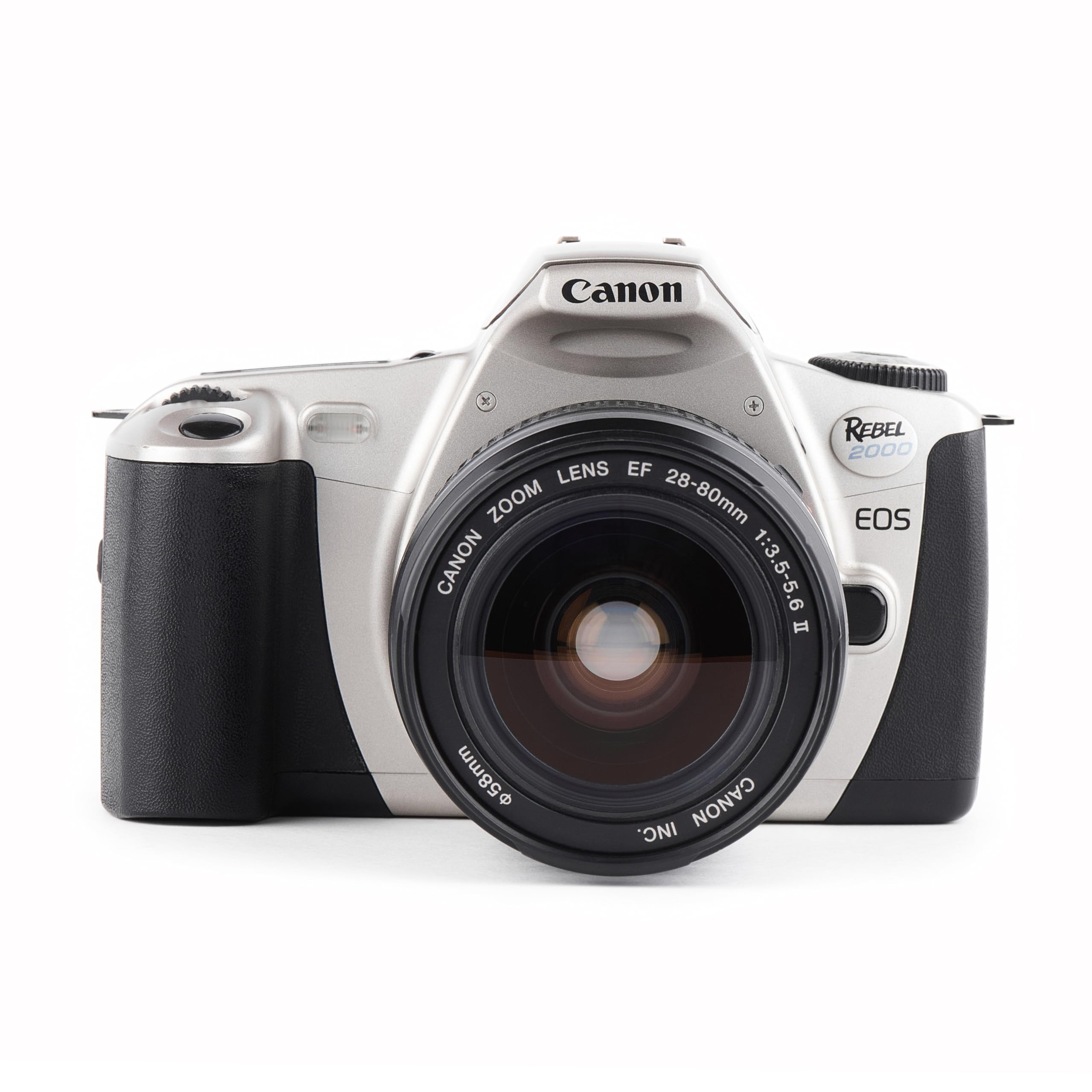
The Canon Rebel 2000 is the best blend of modern autofocus convenience and true SLR versatility for a beginner. Its 7-point autofocus system locks onto subjects quickly — even in dim indoor light — and the bundled 28-80mm EF zoom lens covers wide landscapes to tight portraits. You get program, aperture priority, shutter priority, and full manual modes, meaning you can start in auto and gradually take control of exposure decisions as your skills grow.
The camera body is lightweight polycarbonate with a comfortable grip, and it uses standard CR123A lithium batteries that are easy to find. Automatic film loading, advance, and rewind remove the intimidation of handling film for the first time. The built-in pop-up flash works well for fill light or low-light situations, and you can disable it when you want to rely on ambient light.
Reviews consistently highlight that this renewed camera arrives in near-pristine condition, with many users noting the camera looks and functions like new. The included QR code link to a manual is a huge help for beginners. The only downsides are the occasional shipping delay reported by a few buyers and the fact that the flash may need a moment to recycle after each shot — but that is standard for this era of film SLR.
Why it’s great
- Real autofocus with 7 points for sharp shots
- Multiple exposure modes let you learn at your own pace
- Renewed units often look and perform like new
Good to know
- Uses CR123A batteries, not standard AAs
- Some units may have minor cosmetic wear from refurbishing
2. Canon AE-1 35mm SLR Camera

The Canon AE-1 is the classic 35mm SLR that defined a generation of photographers. Its all-metal body feels substantial in the hand, and the included 50mm f/1.8 FD lens delivers sharp, contrasty images with beautiful background blur that no plastic point-and-shoot can match. The shutter speed range from 1/1000 down to 2 seconds plus Bulb mode gives you full creative control over motion blur and low-light exposure.
This camera uses a shutter-priority auto exposure mode — you set the shutter speed and the camera picks the aperture — which is a gentle way to learn exposure without going fully manual. The built-in TTL (through-the-lens) metering is surprisingly accurate for a camera from the late 70s, and the bright viewfinder makes composition easy. The camera accepts all Canon FD lenses, so you can expand into wide-angle or telephoto later.
Renewed units from reputable sellers come with replaced light seals and a clean battery compartment, which are the two most common failure points on vintage AE-1s. Reviews praise the refurbishing quality and quick customer service if a unit has issues. Keep in mind that this camera requires learning — there is no autofocus and no program mode — but the payoff in image quality and satisfaction is enormous.
Why it’s great
- Exceptional build quality with metal construction
- Fast f/1.8 lens produces beautiful portraits
- TTL metering is reliable even by modern standards
Good to know
- No autofocus — requires manual focusing practice
- Vintage electronics may need professional servicing over time
3. Canon New EOS Kiss (Rebel G)

The Canon New EOS Kiss (sold as the Rebel G in North America) is a near-twin to the Rebel 2000, but with a slightly different feature set that some beginners may prefer. It comes bundled with a 35-80mm EF lens, offering a moderately wider starting focal length. The autofocus system is a single wide-area point, which is simpler but still fast and accurate for most everyday shooting situations like portraits, street scenes, and travel snapshots.
The camera offers full auto, program, aperture priority, shutter priority, and manual modes — exactly the same flexibility as its more expensive sibling. The built-in flash is reliable and can be set to auto or forced off. The LCD panel on top shows your current settings clearly, and the controls are intuitive enough that you can operate them without looking away from the viewfinder after a few rolls.
User feedback is overwhelmingly positive, with many describing the camera as arriving in excellent condition for its age. One review mentioned a minor shutter issue that was fixable, but the vast majority report beautiful photos straight out of the first roll. The camera accepts standard 35mm film cartridges and uses a common 2CR5 lithium battery. For the price, this is a fantastic way to get a genuine Canon EF lens system with full autofocus capability.
Why it’s great
- Reliable autofocus with wide-area sensor
- Full range of exposure modes for learning
- Includes a useful 35-80mm zoom lens
Good to know
- Single AF point is less flexible than 7-point systems
- Uses 2CR5 battery, less common than CR123A
4. Fujifilm Instax Mini 12

The Fujifilm Instax Mini 12 is not a traditional film camera — it is an instant camera that produces a physical 2×3-inch print within seconds. That immediate feedback is addictive for beginners, especially kids and teens who want something tangible to share. The twist-to-turn-on lens mechanism is clever: rotating the lens powers the camera on and switches between normal and close-up modes with parallax correction, so your selfies are framed correctly.
Automatic exposure and flash control do the thinking for you, producing bright, well-exposed prints in most lighting conditions. The built-in selfie mirror next to the lens makes framing self-portraits easy. The camera uses Instax Mini film packs, which are widely available but cost roughly a dollar per shot — a recurring expense to keep in mind. Development takes about 90 seconds after the print ejects.
User reviews praise the camera’s adorable design, ease of use, and the surprising quality of the prints for an instant camera. The pastel blue color is a favorite. Downsides are minor: there is no optical viewfinder (you compose through the lens window), and the flash cannot be disabled. But as a fun, social camera that gets people excited about physical photography, the Instax Mini 12 is a fantastic entry point.
Why it’s great
- Instant physical prints with no waiting
- Automatic exposure and flash for foolproof shots
- Lightweight and portable with cute design
Good to know
- Film packs cost around a dollar per shot over time
- Flash is always on in low light — cannot be forced off
5. Kodak EKTAR H35 Half Frame

The Kodak EKTAR H35 is a half-frame 35mm camera that lets you shoot roughly 72 photos on a standard 36-exposure roll. That is the biggest selling point for beginners who want to experiment without burning through film and development costs. The camera is compact enough to slip into a jacket pocket, and the built-in flash is activated by rotating the silver ring around the lens — no switches or menus to fumble with.
Image quality is what you would expect from a plastic-lens point-and-shoot: soft, with some vignetting and chromatic aberration at the edges. But that imperfection is part of the charm, and many users love the retro, lo-fi aesthetic it produces. The camera works best in bright outdoor light; indoor shots with the flash are usable but flat. The included roll of Kodak Ultramax 400 film gets you started immediately — just add a single AAA battery.
Reviews consistently call this the perfect camera for beginners who want something fun and affordable. Users note that the half-frame format makes every shot feel more intentional because you know each frame is half the size. A few owners mention that the flash struggles to illuminate subjects beyond a few feet, and the camera is not weather-sealed, but for the price, it is a wonderfully low-risk way to dive into film photography.
Why it’s great
- Shoot 72 photos per roll — cuts film costs in half
- Extremely lightweight and pocket-friendly
- Includes a starter roll of Kodak Ultramax 400 film
Good to know
- Plastic lens produces soft, lo-fi images
- Flash is underpowered beyond a few feet
6. Kodak Ultra F9 Film Camera

The Kodak Ultra F9 is a straightforward 35mm point-and-shoot camera that strips away every unnecessary feature. There is no autofocus, no exposure modes, no LCD — just a fixed-focus lens, a built-in flash, and a simple film advance wheel. That simplicity is exactly what some beginners want: load the film, point, press the shutter, and wind to the next frame. No decisions, no mistakes, just photos.
The camera body is lightweight plastic, but user reviews indicate it survives drops and daily carry better than expected. One reviewer reported thousands of shots and multiple drops before the camera finally gave out. The flash is effective for indoor and low-light shots, and the camera works best with ISO 200 or 400 film. The included QR code manual is a little tricky on older phones, but the camera is so simple that the manual is barely needed after the first roll.
Image quality is what you expect from a fixed-focus lens: sharp in the center at mid-distances, softer at the edges and at close range. But for the price, that trade-off is reasonable. Buyers consistently call it a great starter camera, especially for kids or teens who want the film experience without the complexity of an SLR. The only real risk is that a few units may have minor light leaks — so test your first roll in bright sun before relying on it for important events.
Why it’s great
- Extremely simple — just point, shoot, and wind
- Durable plastic body survives drops well
- Lightweight and very affordable entry point
Good to know
- Fixed focus means soft edges and close-up blur
- Some units may have minor light leak issues
7. EJXHKNF Vintage Digital Camera
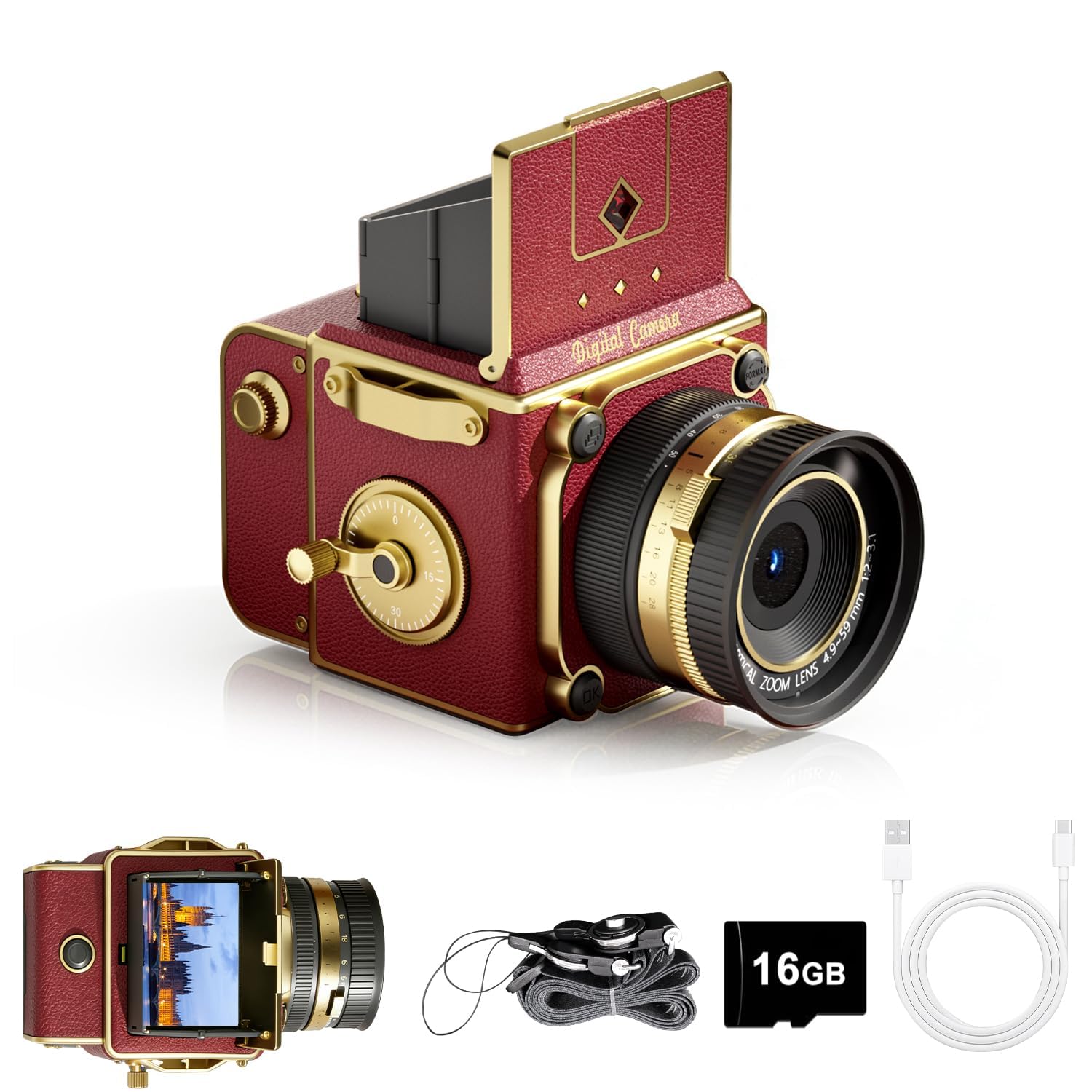
The EJXHKNF Vintage Digital Camera is a digital camera designed to look and feel like a retro film camera. It features a 64MP sensor, 2.7K video recording, a 2-inch IPS waist-level screen, and a unique butterfly-door design that folds open. The camera includes a 16x digital zoom, a manual joystick for navigating menus, and creative filters like vintage and black-and-white.
It is important to understand that this is not a film camera — it is a digital camera with a retro aesthetic. That distinction matters because the image processing and sensor behavior are purely digital. The camera is intended for beginners who want the look of a vintage camera without the learning curve of film. The included 16GB TF card, pouch, and wrist strap make it a complete kit right out of the box.
User reviews are mixed. Some buyers love the fun design and ease of use for kids and teens, calling it a gem for the right user. Others report that the zoom crank and focus knob feel non-functional, and that the build quality feels fragile. The camera works best in good lighting and produces decent 2.7K video. If you are looking for a true film experience, this is not it — but as a digital toy with vintage styling, it has a specific appeal.
Why it’s great
- Fun retro design with waist-level LCD screen
- Includes everything needed to start shooting
- Good 2.7K video quality in bright light
Good to know
- Not a film camera — purely digital image processing
- Zoom and focus controls feel non-functional to some
FAQ
Should I start with a fully manual SLR or an automatic point-and-shoot?
How many shots do I get from a half-frame camera on a 36-exposure roll?
Final Thoughts: The Verdict
For most users, the best beginner film camera winner is the Canon Rebel 2000 because it combines real autofocus, multiple exposure modes, and a genuine Canon EF lens into a package that is both affordable and forgiving for learning. If you want to shoot more photos for less money, grab the Kodak EKTAR H35 and enjoy 72 frames per roll. And for those who want a solid vintage SLR that teaches you everything from the ground up, nothing beats the Canon AE-1.