
Our readers keep the lights on and the weekend projects moving. As an Amazon Associate, I earn from qualifying purchases.
That first stroke from a fountain pen should glide, not scratch. Yet too many newcomers grab the cheapest option and wonder why the hobby feels frustrating instead of fluid. The wrong nib can turn a single paragraph into an arm workout, while the right one makes you look for reasons to keep writing.
I’m Rikta — the co-founder and writer behind FitlyFast. This guide distills hours spent analyzing nib materials, ink flow systems, grip ergonomics, and build quality across dozens of models to find the ones that actually deliver a smooth, frustration-free start for beginners.
After careful research comparing ink flow, nib smoothness, and weight balance, I’ve narrowed the field to the seven pens that let you focus on your handwriting, not the hardware. Here is my expert analysis of the best beginner fountain pen options available today.
How To Choose The Best Beginner Fountain Pen
Starting with a fountain pen doesn’t require a big budget, but it does require knowing which specs matter most. Nib size dictates line width and feedback, the grip shape determines writing comfort over long sessions, and the ink system affects how often you refill. Focus on these three areas first, and you’ll skip the frustration that sends most beginners back to ballpoints.
Nib Size and Material
The nib is the heart of the pen. Extra-fine (EF) nibs suit small handwriting and cheap paper, but many feel scratchy. Fine (F) nibs offer the best balance for daily writing — smooth enough to enjoy, thin enough to avoid feathering on standard notebook paper. Medium (M) nibs feel buttery but demand better paper. Stainless steel nibs are standard at this price; gold-plated options offer a slightly softer feel without the gold nib cost.
Grip Section Design
A comfortable grip keeps your hand relaxed. Triangular grips force a consistent hold, which helps new writers develop proper technique but can feel restrictive if your grip angle differs. Round, smooth grips suit those who rotate the pen slightly. Check whether the grip is the same material as the barrel — slippery plastic grips can cause hand fatigue during longer writing sessions.
Ink System: Cartridge vs Converter
Cartridge pens are the easiest starting point: pop in a pre-filled cartridge and write. Converter-compatible pens let you use bottled ink, which offers more color choices and lower long-term cost. Some entry-level pens include both a cartridge and a converter in the box, giving you the flexibility to try both systems without buying extra parts.
Quick Comparison
On smaller screens, swipe sideways to see the full table.
| Model | Category | Best For | Key Spec | Amazon |
|---|---|---|---|---|
| Lamy Safari Vista | Premium | Seeing ink level at a glance | Fine nib, 0.7mm line | Amazon |
| Pilot Metropolitan | Premium | Metal build and smooth writer | Fine nib, brass barrel | Amazon |
| Kaweco Classic Sport | Mid-Range | Ultra-portable pocket pen | EF nib, 23K gold-plated steel | Amazon |
| Pilot Kakuno (with CON-40) | Mid-Range | Complete starter kit with converter | Fine nib, triangular grip | Amazon |
| Pilot Kakuno (std) | Value | Best value for a reliable daily pen | EF nib, clear barrel | Amazon |
| GC Quill Calligraphy Set | Budget | Exploring varied nib styles | 7 interchangeable nibs | Amazon |
| Speedball Calligraphy Set | Budget | Decorative and calligraphic writing | 3 nib sizes included | Amazon |
In‑Depth Reviews
1. Pilot Metropolitan Collection

The Pilot Metropolitan has earned its reputation as the benchmark for entry-level fountain pens. Its brass barrel gives it a reassuring heft that feels significantly more substantial than its plastic competitors, while the stainless steel fine nib delivers consistent, smooth ink flow straight out of the box. The overall weight distribution makes it feel balanced whether posted or unposted.
The included squeeze converter lets you use bottled ink immediately, a welcome inclusion that many pens at this level omit. The fine nib produces a crisp line ideal for everyday note-taking and journaling without feathering on standard notebook paper. The matte finish on the barrel resists scratches well, keeping the pen looking clean after months of use.
One minor drawback is the smooth plastic grip section, which can feel slippery during extended writing sessions if your hands get warm. The step-down from barrel to grip is also slightly pronounced, which may bother writers who hold the pen higher. Despite these small ergonomic compromises, the Metropolitan delivers build quality and writing performance that punches well above its price tier.
Why it’s great
- Heavy brass barrel feels premium and durable
- Included converter for bottled ink use
- Smooth, consistent fine nib out of the box
Good to know
- Smooth plastic grip can get slippery
- Pronounced step between barrel and grip
2. Lamy Safari Vista

The Lamy Safari Vista offers a unique transparent design that lets you watch the ink slosh inside as you write. More importantly, its recessed grip section guides your fingers into a consistent position, which helps new writers maintain proper technique without feeling restrictive. The fine nib writes with a reliably smooth feel that Lamy is known for.
The clear polycarbonate body is lightweight and nearly indestructible, making this an excellent choice for students or anyone who carries their pen in a bag. You can see exactly how much ink remains in the cartridge or converter, eliminating the guesswork that comes with opaque pens. The snap cap seals tightly enough to prevent dry starts even after a few days of disuse.
That said, the Safari’s nibs are slightly wider than comparable offerings from Pilot and Kaweco — a fine Lamy lays down a line closer to a medium from other brands. The triangular grip also forces a specific finger position, which some writers find uncomfortable if they prefer a different hold. The clear plastic also shows scratches more readily than solid colors.
Why it’s great
- Transparent body shows ink level clearly
- Recessed grip guides proper hand position
- Tough polycarbonate build resists damage
Good to know
- Nib writes wider than indicated size
- Triangular grip may not suit all hand positions
3. Kaweco Classic Sport

The Kaweco Classic Sport is the definition of portable. When capped, it measures just over ten centimeters, small enough to disappear into a jeans coin pocket. Once you post the cap on the back, it extends to a full-length writing instrument that feels natural in the hand. The extra-fine nib is made from gold-plated steel with an iridium tip, delivering a precise, dry line that works well on lower-quality paper.
Writers who need to jot quick notes on random paper will appreciate the EF nib’s ability to produce a thin, controlled line without feathering or bleeding. The pen has remained reliable even after sitting unused for several days, starting without skipping or hard starts. The octagonal barrel prevents rolling off desks, a practical touch for a pen designed to be carried everywhere.
The biggest trade-off for its tiny size is the short writing length when not posted. Most users will need to post the cap for comfortable writing, which adds an extra step. The clip is also sold separately, meaning the pen can roll around loose in a bag unless you buy an accessory. The included ink cartridge was blue rather than black for some units, a small inconsistency worth noting.
Why it’s great
- Ultra-compact when capped for pocket carry
- Gold-plated nib writes smoothly for its size
- Reliable start even after days of non-use
Good to know
- Clip sold separately
- Short unposted length requires capping
4. Pilot Kakuno with CON-40 Converter
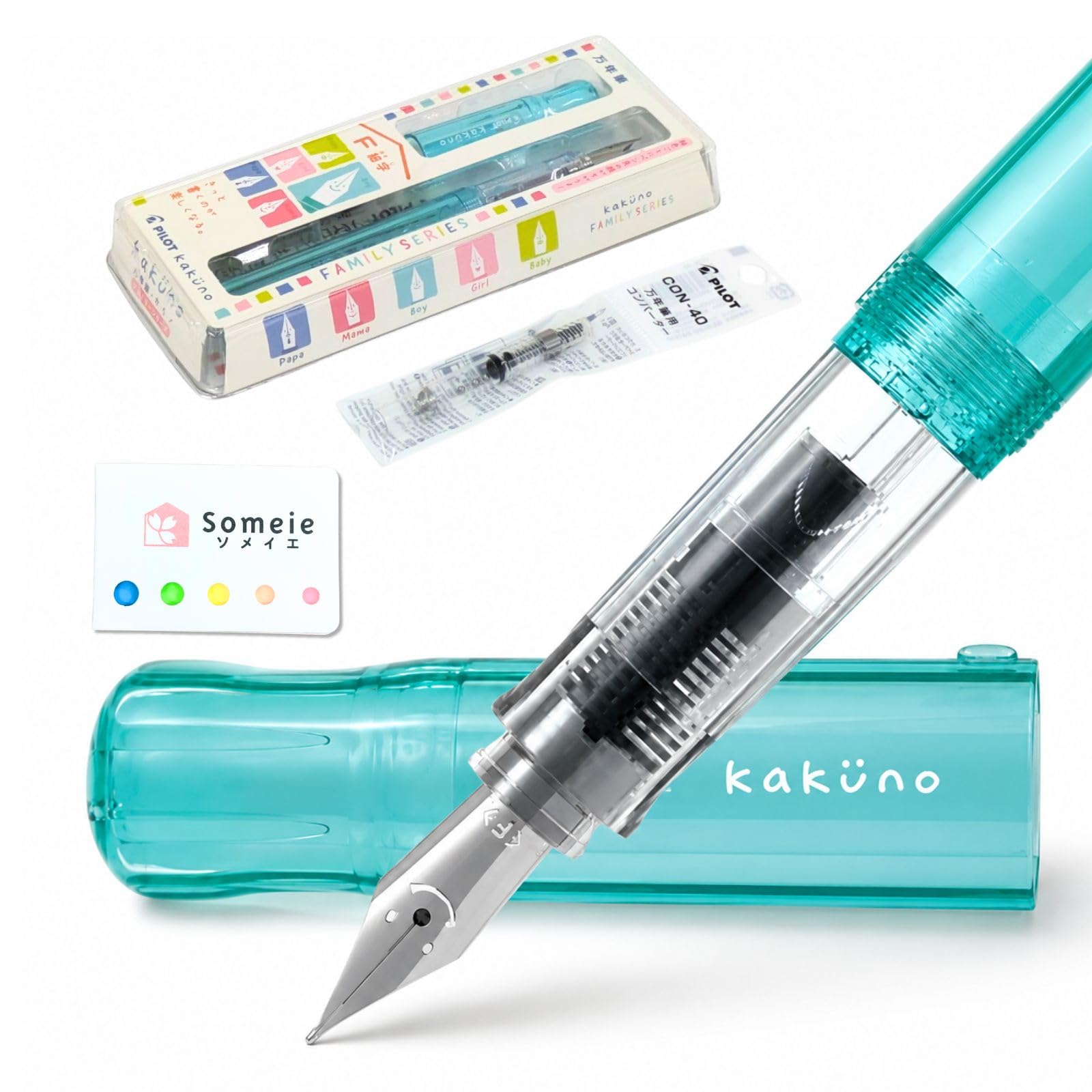
This bundle takes the already popular Pilot Kakuno and adds the CON-40 screw-type converter and a set of sticky notes, making it a complete starter package. The Kakuno itself features a lightweight recycled resin body with a triangular grip that helps new writers develop a consistent hold. The fine nib is smooth and delivers a crisp line without the scratchiness that plagues many extra-fine nibs at this level.
The inclusion of the CON-40 converter is the highlight here. Instead of buying cartridges repeatedly, you can draw ink directly from any bottled ink, which is more economical over time and opens up hundreds of ink colors. The fountain pen itself is lightweight enough for long writing sessions, and the hexagonal barrel prevents it from rolling away on your desk. The fine nib provides enough line variation to make your writing look elegant without being too broad for everyday use.
One downside is that the CON-40 converter has a small ink capacity of 0.4ml, requiring more frequent refills than standard cartridges. The pen body is entirely plastic, which some users find too light compared to metal options. The included sticky notes are a minor bonus but not a deciding factor.
Why it’s great
- Includes converter for bottled ink use
- Triangular grip guides proper hand position
- Lightweight and comfortable for long sessions
Good to know
- Converter has small ink capacity
- All-plastic body feels less premium
5. Pilot Kakuno
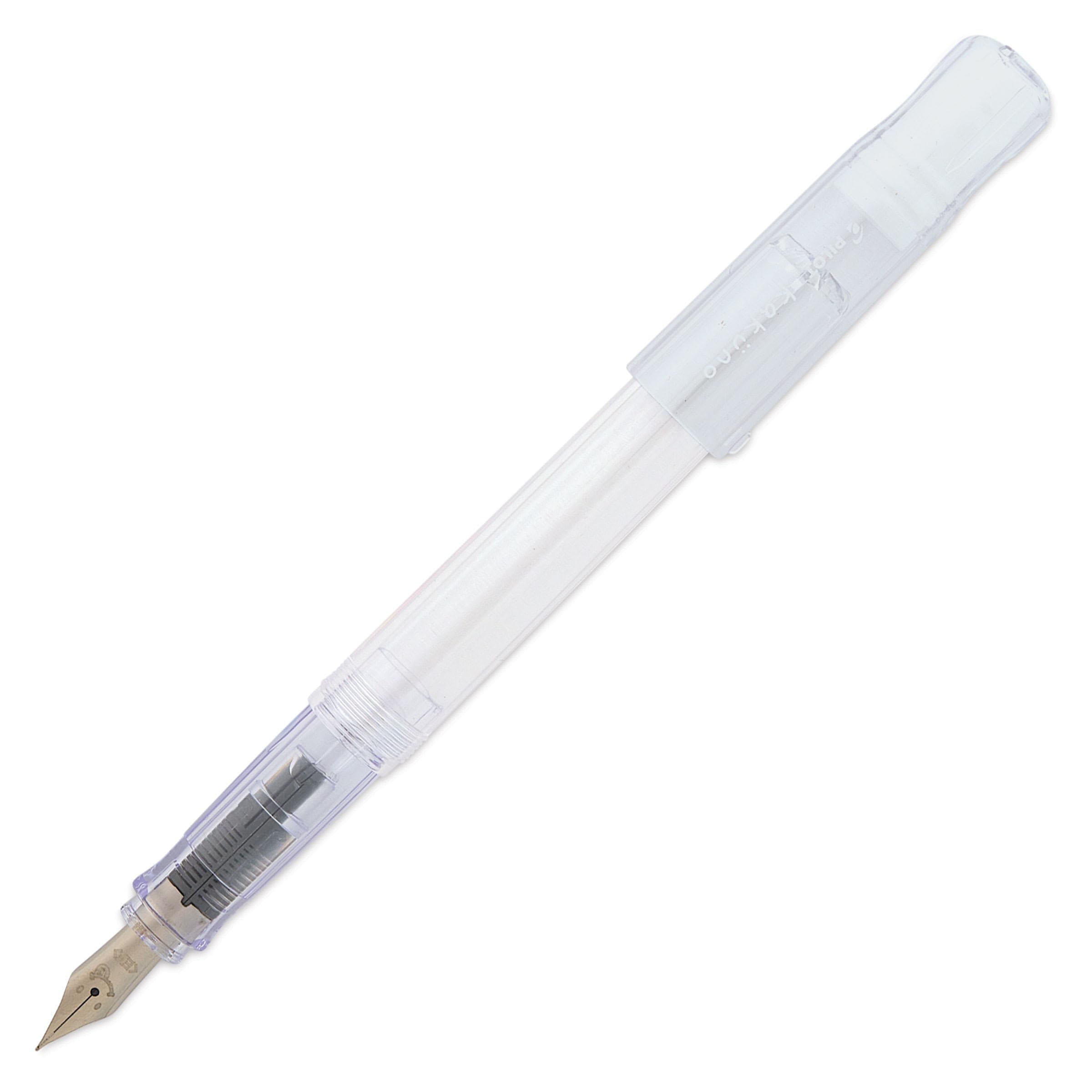
The standard Pilot Kakuno is the simplest entry point into fountain pens at a very accessible price. Its extra-fine nib features a smiley face engraved on the feed, a small touch that signals this pen was designed with beginners in mind. The hexagonal clear barrel lets you see the ink cartridge inside, adding a fun visual element that makes refills more intuitive.
Writers who prefer thin lines will appreciate the EF nib’s precision on standard notebook paper. The nib is smooth for its size, though it does feel scratchier on rough paper textures. The pen is lightweight and ambidextrous, with a dotted grip that provides some texture without forcing a specific hand position. The cap snaps on securely with an audible click.
Several users reported that ink can leak into the cap if the pen is stored nib-down, so keeping it horizontal or nib-up is recommended. The all-plastic construction feels less durable than metal options, though it survived a washing machine trip according to one reviewer. The standard Kakuno does not come with a converter, so you’ll need to purchase one separately if you want to use bottled ink.
Why it’s great
- Very affordable entry price point
- Clear barrel shows ink cartridge clearly
- EF nib produces thin, precise lines
Good to know
- No converter included for bottled ink
- Can leak into cap if stored nib-down
6. GC Quill Calligraphy Set

The GC Quill Calligraphy Set is a comprehensive kit that gives beginners three complete fountain pens, seven interchangeable nibs, and 54 ink cartridges in ten different colors. The nib selection includes double-layered calligraphy nibs in 1.5mm, 2.0mm, 2.5mm, and 3.0mm thicknesses, plus a bent nib for varied strokes and a standard EF nib for everyday writing. This range lets you experiment with different line widths without buying separate pens.
The pens include piston converters so you can switch to bottled ink whenever you’re ready. The soft, velvet-like grip on the barrel feels comfortable and provides good traction during longer calligraphy sessions. The included ink cartridges are numerous enough to last for weeks of practice, with enough color variety to keep creative projects interesting. The bent nib in particular offers a unique experience for signatures and artistic strokes.
The nibs are angled slightly more for right-handed writers, which left-handed users should note. The ink colors are somewhat lighter than expected based on the packaging, though this is typical for budget-friendly sets. The packaging arrived damaged in some cases due to inadequate padding, so inspect the box on delivery.
Why it’s great
- Generous nib variety for experimenting
- Includes piston converters for bottled ink
- 54 ink cartridges in 10 colors included
Good to know
- Nibs optimized for right-handed users
- Ink colors appear lighter than expected
7. Speedball Calligraphy Fountain Pen Set

The Speedball set provides two fountain pens and three interchangeable nibs in 1.1mm, 1.5mm, and 1.9mm sizes, plus 12 ink cartridges in six colors. The nibs feature slightly rounded tips that glide across paper smoothly, producing the sharp thick-and-thin line contrast that calligraphy demands. The pens themselves are lightweight with an ergonomic feel that reduces fatigue during practice sessions.
The variety of nib sizes gives you room to grow — start with the 1.1mm for everyday decorative writing and work up to the 1.9mm for dramatic flourishes. The included cartridges provide enough ink to get started immediately, with colors that pop nicely on white paper. The two-pen format lets you keep one filled with black and the other with a color for easy switching during a project.
The build quality has some notable shortcomings. Several users reported that the included cartridges can fall out during use, causing ink spills. The cap doesn’t always fit securely with certain nibs attached. Assembly instructions are absent from the packaging, and the pen can disassemble when removing the cap if not fitted correctly. These issues make this set better suited for users willing to troubleshoot rather than those seeking a trouble-free first experience.
Why it’s great
- Three nib sizes for varied calligraphy styles
- Two pens allow dual-color setup
- Smooth gliding nibs for crisp lettering
Good to know
- Cartridges can fall out during use
- Cap fit issues with some nibs
FAQ
Why does my extra-fine fountain pen feel scratchy?
Can I use any ink in a beginner fountain pen?
How do I clean a fountain pen when switching inks?
Why does my fountain pen skip or stop writing after a few lines?
Final Thoughts: The Verdict
For most users, the best beginner fountain pen winner is the Pilot Metropolitan because its brass build, included converter, and consistently smooth fine nib offer the most complete package for daily writing. If you want a transparent body that shows your ink level at a glance, grab the Lamy Safari Vista. And for ultra-portable convenience that disappears into a pocket, nothing beats the Kaweco Classic Sport.